

Pool construction in Bursa: what do frost, slopes and the Nilüfer plain change?
In Bursa, a pool is designed around a record low of -20.5 °C, 13 snow days a year, hillside excavation at the foot of Uludağ and the groundwater of the Nilüfer plain.
Project Manager · Mechatronics Engineer · Çilek Havuz
- Published
- Updated
- Reading
- 11 min read
- Category
- Pool Construction
In Bursa, a pool is designed around a record low of -20.5 °C, 13 snow days a year, hillside excavation at the foot of Uludağ and the groundwater of the Nilüfer plain.
Pool construction in Bursa is the delivery of a reinforced concrete pool project at the foot of Uludağ, at 100 m altitude, in the transition zone between Mediterranean and continental climates (Köppen: Csa).
In a city where the record low is -20.5 °C and snow falls on an average of 13.21 days a year, an outdoor pool differs from a pool on the Mediterranean coast in three ways: the shell and pipework are detailed for frost, excavation on hillside plots is done with a retaining calculation, and on the Nilüfer plain groundwater sits beneath the shell.
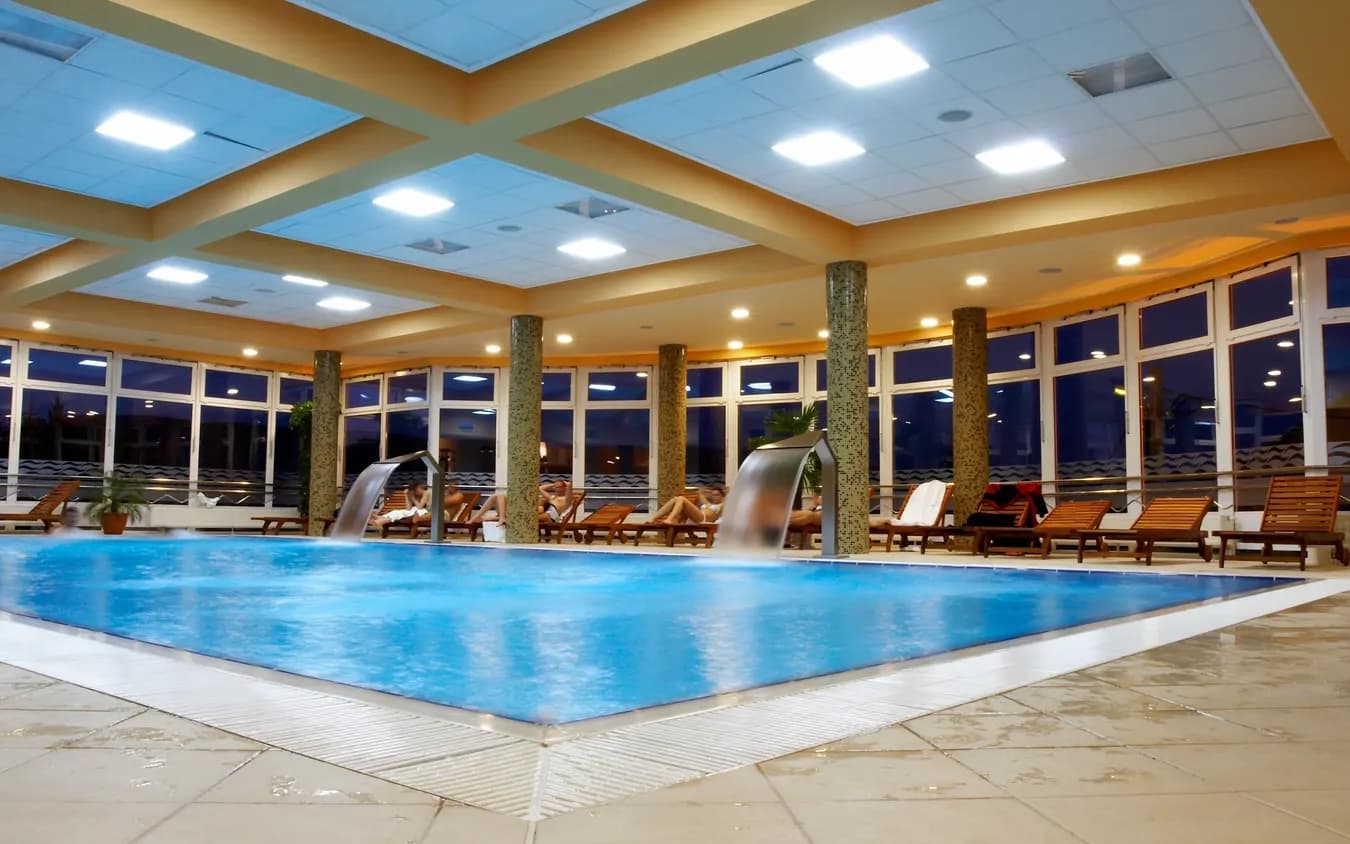
This article is not about budget items; it explains how climate and ground data determine the pool shell, drainage, heating and winterising. For villa and hotel projects in Bursa that want year-round use, the indoor pool option is also derived from the same data.
Bursa's annual mean temperature is 14.9 °C, the warmest month average (August) is 25.2 °C and the coldest month average (January) is 5.4 °C; the average low in January is 1.7 °C.
The highest temperature measured is 43.8 °C (July) and the lowest -20.5 °C (January). The annual 719.1 mm of precipitation is spread over 119.8 days; the wettest month is December with 93.9 mm and the driest is July with 14.3 mm. Annual sunshine is 2,026.8 hours and the annual average relative humidity is 69.4 percent.
| Month | Avg. temperature (°C) | Avg. low (°C) | Precipitation (mm) | Rainy days | Relative humidity (%) |
|---|---|---|---|---|---|
| January | 5.4 | 1.7 | 79.2 | 14.9 | 75.3 |
| February | 6.5 | 2.4 | 78.2 | 13.6 | 72.8 |
| March | 9.0 | 4.1 | 74.9 | 13.4 | 70.7 |
| April | 13.0 | 7.4 | 68.6 | 11.4 | 69.3 |
| May | 18.1 | 12.0 | 47.9 | 9.6 | 67.1 |
| June | 22.6 | 16.2 | 42.8 | 7.3 | 63.1 |
| July | 25.1 | 18.4 | 14.3 | 3.3 | 59.6 |
| August | 25.2 | 18.7 | 17.5 | 3.6 | 61.7 |
| September | 20.8 | 14.8 | 50.1 | 6.8 | 67.3 |
| October | 15.9 | 10.8 | 84.4 | 10.7 | 74.6 |
| November | 10.7 | 6.0 | 67.3 | 10.9 | 75.5 |
| December | 7.0 | 3.3 | 93.9 | 14.5 | 75.7 |
| Year | 14.9 | 9.6 | 719.1 | 119.8 | 69.4 |
From a pool engineering point of view, the two decisive rows of the table are January and August. In January the average low is 1.7 °C; this means night temperatures fall below zero for half the month, and still water in the pipework freezes. In August, a 25.2 °C average means unheated outdoor pool water stays around 26 °C; a comfort temperature of 28 °C is not reached without heating. In the four months from December to March there are 13 to 15 rainy days a month; the excavation and concrete programme avoids this window.
Water expands as it freezes; when water left inside a pipe or nozzle freezes, it cracks the plastic body, and in an outdoor pool the damp mortar under the coping stone crumbles through freeze-thaw cycles.
In Bursa the danger comes in two forms: night frosts in January and February, and multi-day freezes in extreme cold such as the record -20.5 °C. The first affects the pipework, the second the water surface and the overflow channel.
The pool design meets this load in three layers. The first layer is level: the pump and filter line and the skimmer, main drain and inlet pipes are laid below frost depth or with a fall that allows draining. The second layer is material: coping stones and joint mortar are chosen for freeze-thaw resistance; sprayed concrete combines high compressive strength, water-tightness and frost resistance, and the shell concrete is chosen by the same criteria. The third layer is operation: the pool enters winter with its water lowered below the overflow channel, its pipework drained and its surface covered; it is not fully drained.
Frost precautions for an outdoor pool in Bursa
- Laying pipe runs below frost depth or with a fall that allows full draining; not using nozzles and skimmers without winter plugs.
- Placing the plant room so that it is insulated, drained and stays above zero all winter; draining the pump housing and the bottom drain of the filter.
- Materials with certified freeze-thaw resistance for coping stones, joints and finish; a separate waterproof layer under the coping stone.
- In a pool with an overflow channel, the channel left empty above the winterising level and the balance tank drained.
- Covering the water surface with a winter cover; calculating cover tension and the support system for snow load.
- Placing the outdoor unit of the heat pump on a drained plinth where snow and ice will not build up.
Villa plots in the mountain-facing neighbourhoods of Osmangazi, Yıldırım and Nilüfer at the foot of Uludağ, and on the sea ridges of Mudanya, are often sloping.
On a sloping plot, the pool shell sits on the excavated slope on one side and on fill on the other. In this case the shell is also a retaining wall that takes the load of hillside soil and rainwater. If slope water collects behind the shell, the wall carries both earth pressure and hydrostatic pressure.
The specification meets this with three clauses: slope drainage behind the shell with perforated pipe in a gravel fill and a free outlet, the uphill wall calculated and reinforced as a retaining wall, and a toe extended under the wall on the fill side for overturning safety. On a hillside, pool construction usually also needs a garden terrace wall on the excavation side; this wall and the pool shell are separated by a joint as separate structures.
Bursa was founded on the banks of the Nilüfer River; plots on the plain at Nilüfer, Görükle and along the Mudanya road sit on river alluvium, and groundwater rises towards the surface seasonally.
Under Archimedes' principle, when the water table rises above the pool floor, the shell is pushed upwards with a force equal to the weight of water it displaces; the formula is Fb = ρf · g · Vdisp. When full, the pool water balances this force; when empty, only the weight of the concrete remains.
Example: for a reinforced concrete pool with a 10 x 5 m floor and 1.5 m depth, when the water table rises 1.0 m above floor level, 10 x 5 x 1.0 = 50 m³ of water is displaced and the uplift is in the order of 50 tonnes. With a 20 cm floor and 20 cm walls, the same pool has a concrete volume of roughly 10 + 9 = 19 m³ and, at 2,400 kg/m³, weighs around 46 tonnes; there is no safety margin. On a plain plot, the solution is a hydrostatic relief valve, a base toe and continuous perimeter drainage connected to a sump. That is why in Bursa a pool entering winter fully drained is ruled out twice over: by frost and by uplift.
| Case | Ground | Water table (relative to pool floor) | Specification clause |
|---|---|---|---|
| A: Nilüfer plain (Nilüfer, Görükle, Mudanya road) | River alluvium, clay and silt | Close to floor level, rises above it in spring | Perimeter drainage + sump, hydrostatic valve, toe-extended base, gravel bed under the blinding, C30/37 concrete with waterproofing admixture |
| B: Uludağ foothill slopes (Osmangazi, Yıldırım, Mudanya ridges) | Clayey soil, weathered rock, slope fill | Below floor level; slope water collects behind the shell | Slope drainage with a free outlet, retaining calculation for the uphill wall, toe, joint separating it from the garden terrace wall |
| C: Çekirge and the thermal belt | Limestone and travertine, hot springs | Variable; contact with thermal water possible | Void check in the ground investigation, 316L stainless steel and titanium heat exchanger on surfaces in contact with thermal water, separate thermal pool calculation |
Glossary
- Frost depth
- The greatest depth to which the ground freezes in winter; a pipe holding water above this level freezes. Pipework is laid below this level or with a fall that allows draining.
- Freeze-thaw resistance
- A material's resistance to crumbling as water in its pores freezes and thaws; a selection criterion for coping stones, joints and shell concrete.
- Retaining wall
- A wall that carries the earth and water pressure behind it; on a hillside plot, the uphill wall of the pool is calculated for this load.
- Uplift
- The upward force acting on an empty pool shell below the water table, equal to the weight of water displaced.
- Winterising level
- The level below the overflow channel and skimmer mouth at which pool water is kept through the winter; the pool is not drained.
- Dehumidification unit
- The unit that removes evaporated water from the air in an indoor pool and protects building elements from condensation; the largest equipment item of an indoor pool in Bursa.
An unheated outdoor pool in Bursa is used for about three months, from mid-June to mid-September; the August average of 25.2 °C keeps the water temperature around 26 °C.
An air source heat pump and a solar cover extend the season from early May to late October. A January average of 5.4 °C means the heat pump will run at low efficiency in winter; for year-round use, a heat pump alone is not enough.
That is why indoor pools come up more often in villa and hotel projects in Bursa than in Mediterranean cities. In an indoor pool, humidity control is a larger item than heating: 69 percent annual humidity and cold outer surfaces increase condensation, and the dehumidification unit is sized to the pool volume. The thermal springs at Çekirge open a third option; in a pool fed with thermal water, the mineral content changes the choice of heat exchanger and stainless steel, and this is a separate thermal pool calculation.
In Bursa, pool engineering brings together three pieces of geographical knowledge.
Uludağ, the mountain rising above the city and known in antiquity as the Mysian Olympus, is the source of the slope and snow on its foothills, and so of the retaining and frost details. The plain of the Nilüfer River brings the groundwater and uplift calculation. The Ottoman-era baths at Çekirge show that the relationship between thermal water and pool engineering has been known in this city for centuries.
The short rule follows from this: pool construction in Bursa starts with a ground investigation, on a hillside the shell is calculated like a retaining wall, on the plain drainage is built before the shell, pipework is laid to frost depth, and the pool never enters a winter empty. If year-round use is wanted, the decision is an indoor pool with humidity control; a heat pump alone does not cope with a Bursa winter.
Next step
Let us discuss your project in the way that suits you best.
You can fill in the form for a written quote, schedule a video project presentation or ask us to survey your project site.
Get a Quote
Send us your dimensions and expectations in writing.
Online presentation
Video project presentation
On-site survey
Inspection at your project site
// 01 · Product groups
Compare the products on this topic on their category pages.
Each card leads to a product category; models, technical sheets and list prices are there.
 Product category
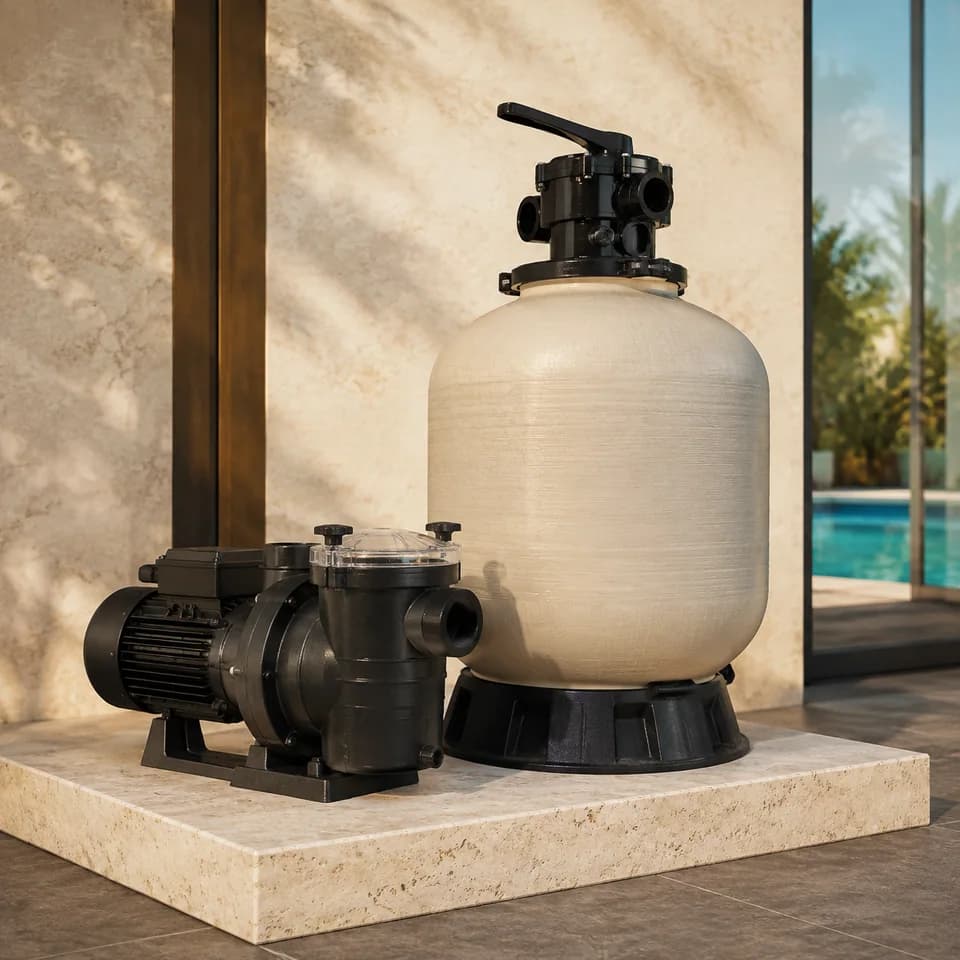
Pool Mechanical Equipment
Circulation pumps, filters, valves and automation: the mechanical infrastructure that forms the heart of the pool.
View- 65 products
 Product category
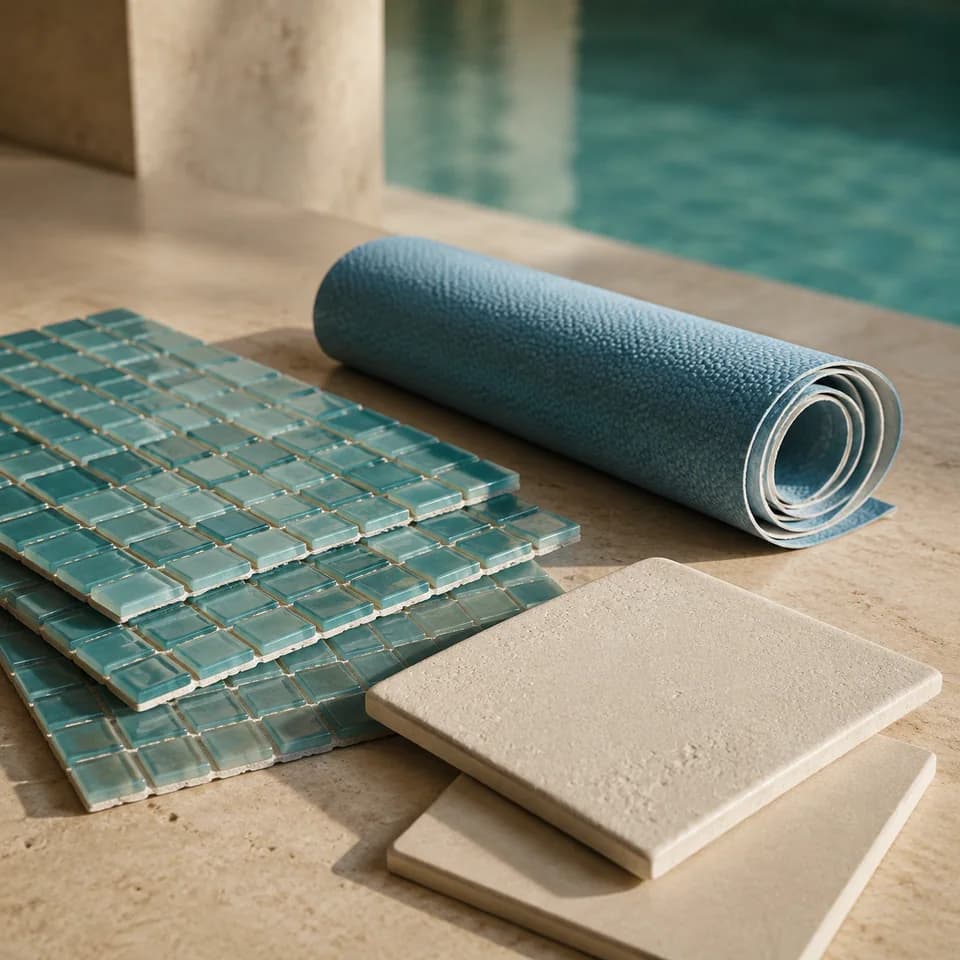
Pool Lining Systems
PVC liner, membrane, ceramic tile and glass mosaic: lining materials that make the pool watertight and form its finished surface.
View- 20 products
 Product category
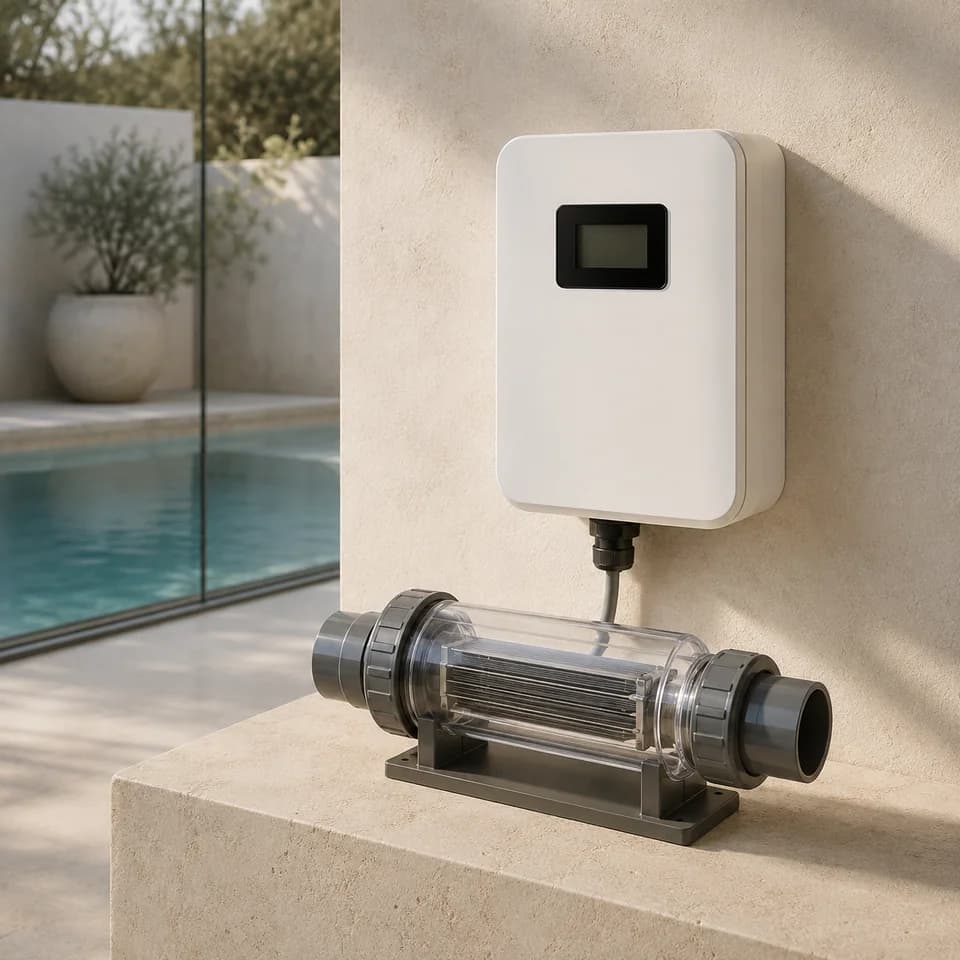
Pool Disinfection Systems
Fully automatic pool water disinfection that reduces chemical use with salt electrolysis, UV disinfection and smart dosing systems.
View- 52 products
Product category
Pool Mechanical Equipment
Circulation pumps, filters, valves and automation: the mechanical infrastructure that forms the heart of the pool.
65 productsProduct category
Pool Lining Systems
PVC liner, membrane, ceramic tile and glass mosaic: lining materials that make the pool watertight and form its finished surface.
20 productsProduct category
Pool Disinfection Systems
Fully automatic pool water disinfection that reduces chemical use with salt electrolysis, UV disinfection and smart dosing systems.
52 products
// 02 · Related service
The work in this article, we deliver from design to handover.
Çilek Havuz service
Swimming Pool Construction
Reinforced-concrete, prefabricated and infinity swimming pools, built turnkey for villa, residential and commercial projects.
Swimming pool construction is a turnkey build in which the site survey, structural and mechanical design, excavation, reinforced-concrete shell, waterproofing, finish, filtration plumbing and commissioning run under a single contract. The written project schedule follows the site survey.
How we work
- 01Initial meeting and site surveyWe inspect the site and listen to the brief.
- 02Design and quotationWe give the cost item by item, in writing.
- 03ExecutionThe same team builds to a written schedule.
- 04Handover and commissioningWe start the systems and explain their use.
- 05Maintenance and technical supportWe provide periodic maintenance and support.
// 03 · Guides
On Pool Construction, more articles to read.
First the articles directly related to this one, then the newest articles on the topic.
 Pool Construction
Pool construction in Ankara: what are the frost and heating loads in a continental climate?
Pool construction in Ankara means a reinforced concrete pool designed for freeze-thaw, winterising and heating load in a continental climate at 938 m altitude, with a January average of 0.9 °C.
View- 9 September 2026
- 9 min read
 Pool Construction
Pool construction in Samsun: what do climate and groundwater change?
Pool construction in Samsun is a reinforced concrete pool project shaped by a humid subtropical climate, 729.7 mm of rain a year and high groundwater in the delta alluvium.
View- 9 September 2026
- 9 min read
 Pool Construction
Concrete swimming pool construction: shotcrete or formwork?
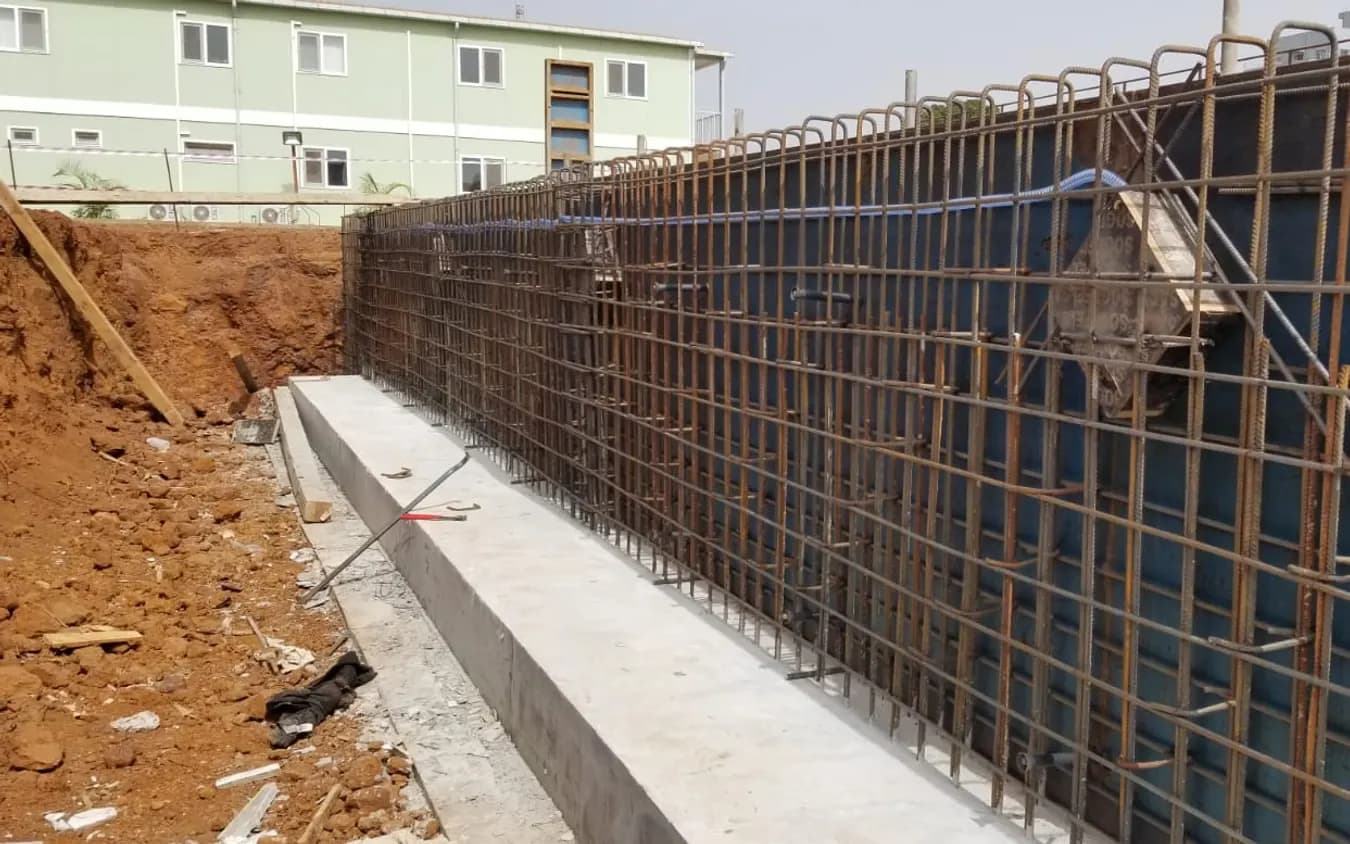
Shotcrete or double-sided formwork for the shell, C30/37 concrete, a water/cement ratio below 0.45 and the waterproofing details of a concrete pool.
View- 9 September 2026
- 10 min read
 Pool Construction
Choosing Pool Showers and Waterfalls: Shower Types, Water Curtains and Plumbing Needs
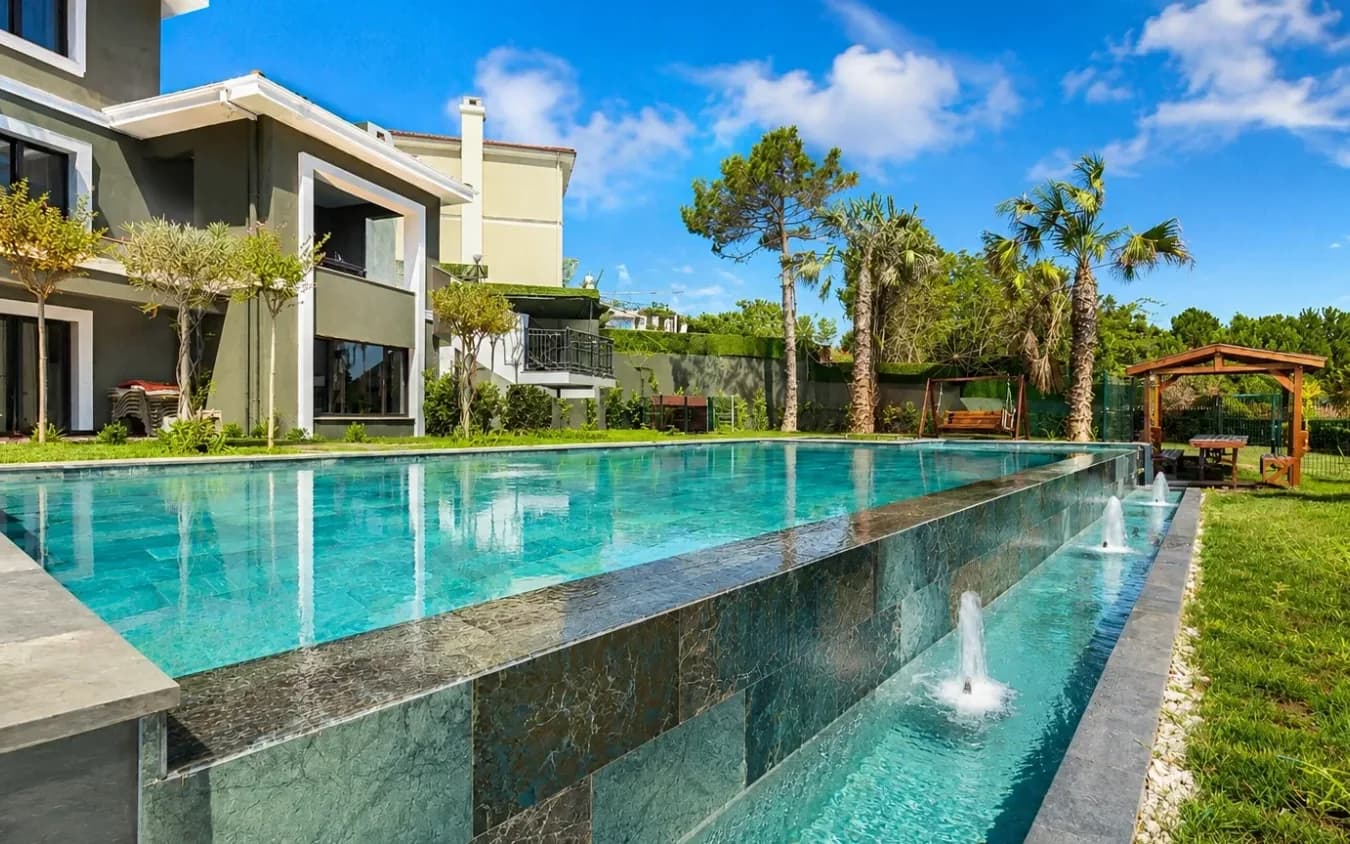
Choosing a pool shower, waterfall or water curtain depends on the material, where the water comes from and where it is mounted. We compare solar and stainless steel shower types and their pump and plumbing needs.
View- 2 October 2026
- 8 min read
 Pool Construction
Competition Pool Equipment: Which Pool Needs Which Equipment?
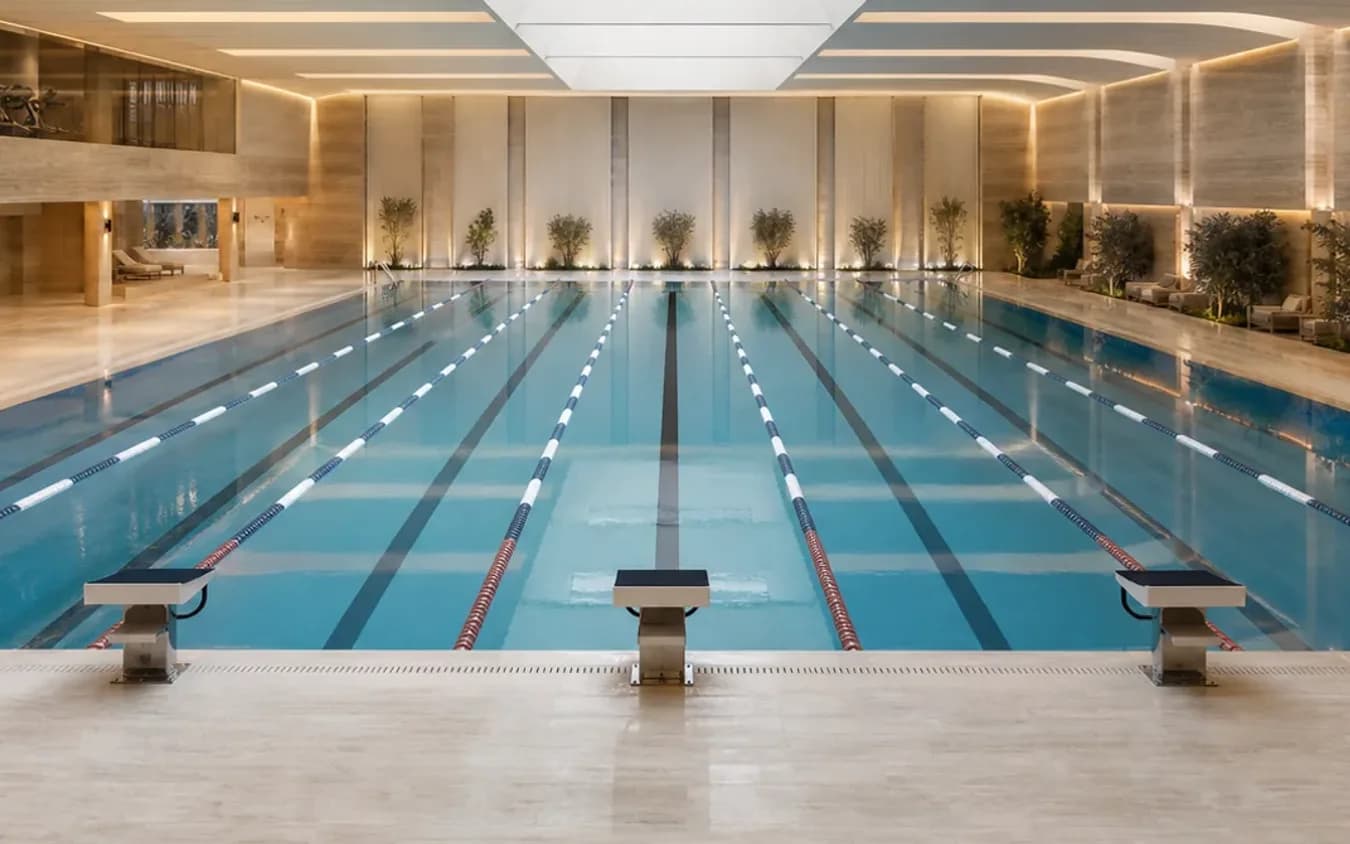
Starting blocks, lane ropes, warning and turn systems, underwater speakers and water polo goals are chosen according to how the pool is used. We explain which dimensions we check for each item.
View- 2 October 2026
- 7 min read
 Pool Construction
Building a pool or spa abroad: what drives the cost of an international project?
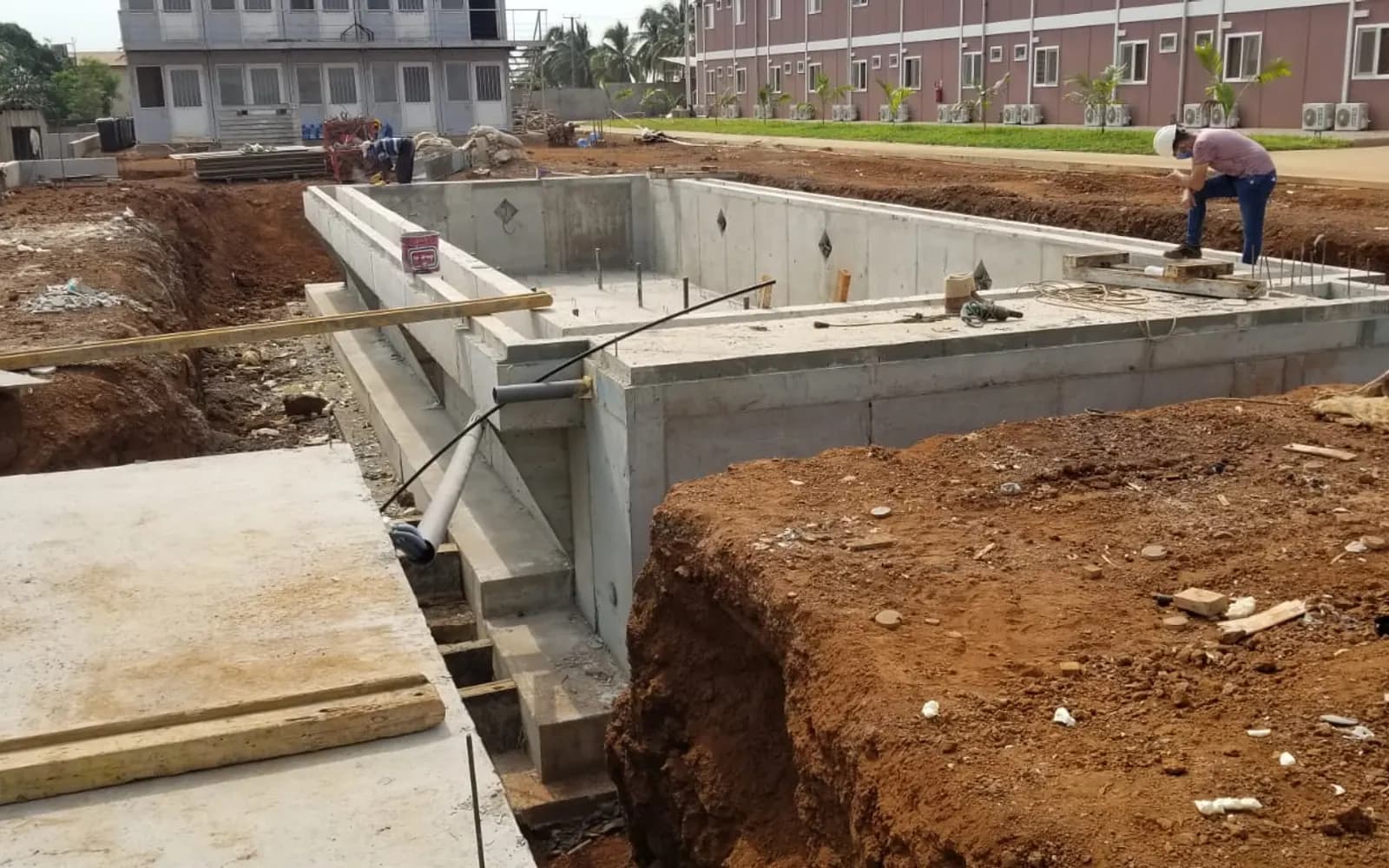
A pool, hammam or spa project delivered abroad from Turkey has no single price per square metre. We cover design, equipment, shipping, customs and schedule.
View- 29 September 2026
- 8 min read
- Pool Construction · 9 September 2026Pool construction in Ankara: what are the frost and heating loads in a continental climate?Pool construction in Ankara means a reinforced concrete pool designed for freeze-thaw, winterising and heating load in a continental climate at 938 m altitude, with a January average of 0.9 °C.9 min read
- Pool Construction · 9 September 2026Pool construction in Samsun: what do climate and groundwater change?Pool construction in Samsun is a reinforced concrete pool project shaped by a humid subtropical climate, 729.7 mm of rain a year and high groundwater in the delta alluvium.9 min read
- Pool Construction · 9 September 2026Concrete swimming pool construction: shotcrete or formwork?Shotcrete or double-sided formwork for the shell, C30/37 concrete, a water/cement ratio below 0.45 and the waterproofing details of a concrete pool.10 min read
- Pool Construction · 2 October 2026Choosing Pool Showers and Waterfalls: Shower Types, Water Curtains and Plumbing NeedsChoosing a pool shower, waterfall or water curtain depends on the material, where the water comes from and where it is mounted. We compare solar and stainless steel shower types and their pump and plumbing needs.8 min read
- Pool Construction · 2 October 2026Competition Pool Equipment: Which Pool Needs Which Equipment?Starting blocks, lane ropes, warning and turn systems, underwater speakers and water polo goals are chosen according to how the pool is used. We explain which dimensions we check for each item.7 min read
- Pool Construction · 29 September 2026Building a pool or spa abroad: what drives the cost of an international project?A pool, hammam or spa project delivered abroad from Turkey has no single price per square metre. We cover design, equipment, shipping, customs and schedule.8 min read
// Sources and regulations
Sources and regulations
The official documents behind the technical framework on this page; links open the institutions' own sites.
- Regulation on the Health Principles and Conditions for Swimming Pools (Official Gazette No. 27866, 6 March 2011)Official Gazette of Türkiye
- Regulation Amending the Swimming Pools Regulation (Official Gazette, 15 December 2011)Official Gazette of Türkiye
- Guidelines for safe recreational water environments, Volume 2: Swimming pools and similar environments
// 04 · Company & Contact
To talk about your project, call or write to us.
Legal Name
Çilek Havuz
Founded
1998 · Istanbul
Head Office
Çilek Plaza, Eyüp Sultan Mah. Yakacık Cd. Feshane Cd. No: 2 D:4 D:1, 34885 Sancaktepe / İstanbul
Service Area
All of Türkiye · exports to 14 countries
Branches
Kyrgyzstan · Egypt · Algeria · Iraq
Showroom
Plan a showroom visit
At our showroom in Çilek Plaza, Sancaktepe, you can discuss your project with our team. We recommend booking an appointment by phone before your visit.
Working Hours
- Monday – Friday · 08:00 – 17:30
- Saturday · 08:00 – 12:30
- Closed on Sunday
Frequently Asked Questions
About Pool construction in Bursa, frequently asked questions.
Çilek Havuz Corporate
Pool and Wellness Engineering
- Response Time
- Same day
- Channels
- Phone · Email · WhatsApp
If the answer you are looking for is not here, send your question directly to us and our team will reply as soon as possible.
+90 216 475 39 37May to September suits excavation and shell concrete; in these months there are 3 to 10 rainy days a month. From December to March there are 13 to 15 rainy days a month and night frosts; concrete curing and excavation become difficult in this window.
Çilek Havuz Corporate
The average January low is 1.7 °C, the record low is -20.5 °C, and snow falls on an average of 13 days a year. The water surface can freeze; the real damage comes from water left in pipes and nozzles freezing. The pipework is drained, the water level is taken below the overflow channel, and the pool is not drained.
Çilek Havuz Corporate
No. Rising groundwater on the Nilüfer plain pushes an empty shell upwards; for a 10 x 5 m pool this force can reach the order of 50 tonnes. Frost also strains the finish and joints of an empty pool. Water is left at winterising level and the hydrostatic valve is checked.
Çilek Havuz Corporate
Yes, but the uphill wall of the shell is calculated as a retaining wall. Slope drainage in a gravel fill is built behind it, and the garden terrace wall is separated from the pool by a joint. A standard shell drawn for level ground is not used on a hillside.
Çilek Havuz Corporate
Monthly average temperatures are above 20 °C only from June to September and do not exceed 25.2 °C. Unheated use is about three months; with a heat pump and a solar cover it extends from early May to late October. Year-round use needs an indoor pool and a dehumidification unit.
Çilek Havuz Corporate