

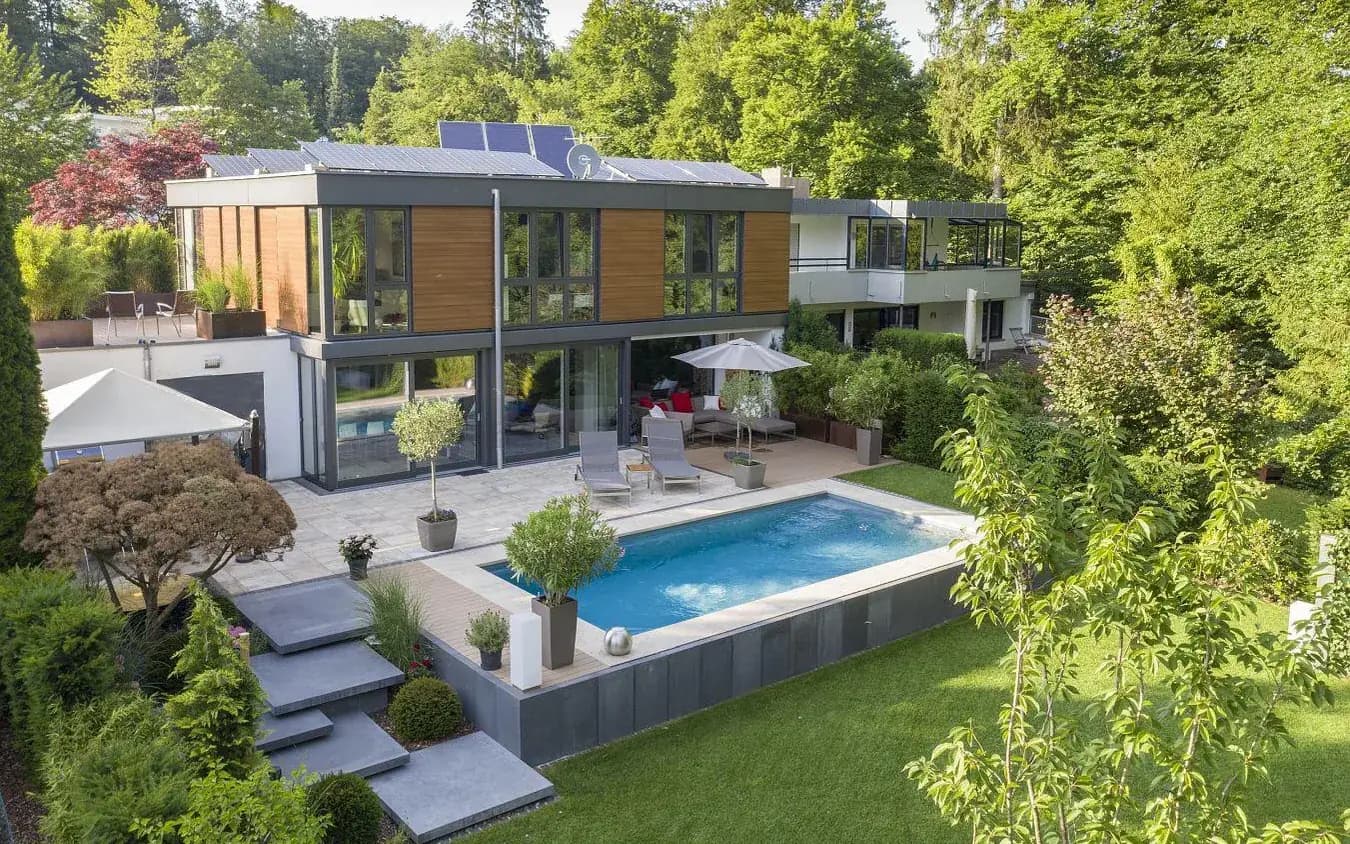
Pool construction in Samsun: what do climate and groundwater change?
Pool construction in Samsun is a reinforced concrete pool project shaped by a humid subtropical climate, 729.7 mm of rain a year and high groundwater in the delta alluvium.
Project Manager · Mechatronics Engineer · Çilek Havuz
- Published
- Updated
- Reading
- 11 min read
- Category
- Pool Construction
Pool construction in Samsun is a reinforced concrete pool project shaped by a humid subtropical climate, 729.7 mm of rain a year and high groundwater in the delta alluvium.
Pool construction in Samsun is the delivery of a reinforced concrete pool project in the humid subtropical climate of the Black Sea coast (Köppen: Cfa), with 729.7 mm of rain a year, on the alluvial ground of the Kızılırmak and Yeşilırmak deltas.
It differs from a pool project on the Mediterranean coast in two ways: in most places the shell sits within a water table close to the surface, and because the season is short, heating is the main item that sets how long the pool can be used.
This article is not a landscape or design guide. Whether prefabricated steel panel and polyester (fibreglass) pools suit Samsun is not covered here; the subject is how an in-ground reinforced concrete pool shell is sized for climate and ground conditions, how it is drained and which material grade it is fitted out with.
Samsun's annual mean temperature is 15.0 °C, the warmest month average (August) is 24.5 °C and the coldest month average (February) is 7.3 °C.
The lowest temperature measured is -9.8 °C (February) and the highest 39.0 °C (August). With 143.4 rainy days a year, 729.7 mm of rain and an average relative humidity of 71.2 percent, there are three concrete consequences for a pool project: there is no month in which the water rises above 24 °C on its own; rain is concentrated between October and January, that is, when the pool is closed; and because humidity stays between 64 and 78 percent all year, metal surfaces do not dry out.
| Month | Avg. temperature (°C) | Avg. low (°C) | Precipitation (mm) | Rainy days | Relative humidity (%) |
|---|---|---|---|---|---|
| January | 7.5 | 4.4 | 72.5 | 14.7 | 65.9 |
| February | 7.3 | 4.1 | 53.5 | 13.9 | 67.8 |
| March | 8.7 | 5.2 | 68.5 | 16.0 | 72.5 |
| April | 11.3 | 7.9 | 54.0 | 14.1 | 76.8 |
| May | 15.9 | 12.4 | 54.1 | 12.6 | 78.0 |
| June | 20.8 | 17.0 | 51.6 | 10.4 | 74.0 |
| July | 23.9 | 20.0 | 38.9 | 6.0 | 71.2 |
| August | 24.5 | 20.7 | 47.2 | 6.5 | 70.9 |
| September | 20.9 | 17.3 | 51.8 | 10.4 | 72.2 |
| October | 17.0 | 13.6 | 79.0 | 13.1 | 73.6 |
| November | 12.6 | 9.1 | 76.1 | 11.7 | 67.8 |
| December | 9.4 | 6.5 | 82.5 | 13.9 | 64.4 |
| Year | 15.0 | 11.5 | 729.7 | 143.4 | 71.2 |
From a pool engineering point of view, the two decisive rows of the table are December and July. December, with 82.5 mm, is the wettest month, and in this month the pool is either empty or at winterising level; the overflow and drainage calculation is made for this scenario. July, with 38.9 mm, is the driest month and, with 277.3 hours, the sunniest; the need for evaporation make-up and topping up is highest here. From May to September, average temperatures are in the 15.9 to 24.5 °C band; an unheated outdoor pool does not reach a comfort temperature of 28 °C in any month.
The two concepts most often confused by teams designing pools in Samsun are surface water created by rain and groundwater within the ground.
Groundwater is water held in the pores of rock and soil and in rock fissures below the ground surface; the water table is the depth at which the soil pores become completely saturated with water. Surface water, on the other hand, arrives with rain and is carried away by falls and gutters; the measure against the first is taken beneath the shell, and against the second in the surround paving and overflow channel.
The Kızılırmak Delta covers 560 km² and contains more than twenty lakes; the average depth of these lakes is 1.5 m, and in spring their water surface exceeds 9,000 hectares. The delta was formed by alluvium the river carried down from the upper basin, and this alluvium, a mix of fine sand and silt, extends from the Bafra plain to the city's coastal strip. On such ground, the water table can rise to 1 to 2 m below the surface depending on the season. Sloped paving and gutters built to carry away surface water do nothing to this water beneath the shell; the two systems have to be designed separately.
Archimedes' principle states that any body partly or fully immersed in a fluid is pushed upwards by a force equal to the weight of fluid it displaces.
The formula is Fb = ρf · g · Vdisp, where ρf is the density of the fluid, g is the acceleration due to gravity and Vdisp is the displaced volume. When the water table rises above the pool floor, the shell is pushed upwards like a boat; when full, the pool water balances this force, and when empty, only the weight of the concrete and the soil load remain.
Example: a reinforced concrete pool with an 8 x 4 m floor and 1.5 m depth displaces 8 x 4 x 1.0 = 32 m³ of water when the water table is 1.0 m above the pool floor. Taking the density of fresh water as about 1,000 kg/m³, the uplift is in the order of 32 tonnes. With a 20 cm floor and 20 cm wall thickness, the same pool has a concrete volume of roughly 6.4 + 7.2 = 13.6 m³ and, at 2,400 kg/m³, weighs around 33 tonnes; in other words, the safety margin is almost zero. If the water table rises to 1.5 m, the force reaches 48 tonnes and the pool floats. The calculation is redone on every project with the actual dimensions, toe and backfill weight.
Design measures against uplift
- Hydrostatic relief valve: a one-way valve in the pool floor that opens when external water pressure exceeds internal pressure; the cheapest and most common measure.
- Base toe: extending the base of the wall outwards by 30 to 50 cm adds the weight of the backfill above it to the weight of the shell.
- Continuous perimeter drainage: perforated pipe in a gravel bed below floor level, connected to a sump; it keeps the water table below the pool floor.
- Greater concrete thickness and reinforcement: raises the weight of the shell, but on its own is often not enough.
- Operating rule: the pool is never fully drained, especially between October and March; the winterising level is kept below the overflow channel.
Glossary
- Water table
- The depth at which the soil pores become completely saturated with water. In Samsun it rises seasonally; it is measured before excavation with a borehole or an observation well.
- Uplift
- The upward force acting on a pool shell below the water table, equal to the weight of water displaced. The pool is in its most dangerous state when empty.
- Hydrostatic relief valve
- A one-way valve fitted in the pool floor; it opens when external water pressure exceeds the pressure inside and lets groundwater into the pool, preventing it from floating.
- Alluvial ground
- Loose ground of sand, silt and clay carried and deposited by a river. Bearing capacity is low and permeability variable; the typical ground of delta plains.
- Overflow channel
- The channel running along the pool edge that carries surface water to the balance tank. It keeps the pool level steady during rain.
- AISI 316 / 316L
- A molybdenum-bearing austenitic stainless steel grade; more resistant to pitting corrosion than AISI 304 in chloride environments (sea salt, pool water).
The decision is made with the ground investigation carried out before excavation.
The investigation asks for two values: the summer and winter levels of the water table, and the type of soil. The table below summarises three situations commonly met for reinforced concrete pools in Samsun and the specification clauses for them; on every project they are confirmed by the borehole results.
| Case | Ground | Water table (relative to pool floor) | Specification clause |
|---|---|---|---|
| A: Coastal plain, delta | Alluvium, fine sand and silt | Above floor level, seasonally 1 to 2 m | Perimeter drainage + sump, hydrostatic valve, toe-extended base, 20 cm gravel bed under the blinding, C30/37 concrete, waterproofing admixture |
| B: Slopes, inland parts of Atakum and Canik | Clay, clayey sand | Close to floor level, rises with rain | Hydrostatic valve, perimeter drainage, gravel fill against clay swelling, C30/37 concrete |
| C: High ground, rocky | Rock, dense gravel | Below floor level | Standard drainage, hydrostatic valve optional, C25/30 or C30/37 concrete |
On corrosion, the decision is clearer. Up to a few kilometres inland from the shore, salt in the air and an average humidity of 71 percent start pitting corrosion within a few seasons on AISI 304 stainless steel ladders, lane rope fittings and skimmer lids. Chloride in the pool water amplifies this effect. The specification calls for AISI 316 or 316L for all stainless parts in contact with water and exposed to the open air, and electropolished 316L for seafront hotel pools. Anchors and fixings are chosen in the same grade; a 316 ladder fitted into a 304 fixing corrodes at the fixing because of the galvanic couple.
The heating decision is read directly from the climate table. An unheated outdoor pool in Samsun can be used for about three months, from mid-June to mid-September. With an air source heat pump, this extends from early May to late October; because Samsun's winter averages stay above 7 °C, the heat pump can run all year, though at lower efficiency than on the Mediterranean. The third option for hotel and villa pool projects is an indoor pool, with a fixed or opening roof; in this case humidity control (a dehumidification unit sized to the pool volume) becomes a larger equipment item than heating. In villa projects, a six-month season with a heat pump and solar cover is usually considered enough; in hotel pools, the target of year-round occupancy justifies an indoor pool.
Winterising in Samsun is also different from the south.
Although the record low is -9.8 °C, average monthly lows are around 4 °C in January and February; prolonged freezing of the pool water surface is rare. Winterising is therefore done for groundwater and rainfall load: the water level is kept below the overflow channel, the pipework is drained and the hydrostatic valve is checked. Draining the pool completely and leaving it empty through the winter is the most expensive mistake in this region.
The present shape of the Kızılırmak Delta grew as soil lost to deforestation and farming in the upper basin was carried down by the river and deposited at the coast.
The delta was registered as Ramsar site number 942 on 15 April 1998 and contains 11,600 hectares of wetland. The same alluvium is the ground of the coastal plain, at 4 m altitude, on which Samsun city centre was founded; new villa areas are developing towards the slopes at the edge of this plain.
The hydrostatic relief valve and perimeter drainage in a reinforced concrete pool shell were carried over from basement and water tank engineering in areas with high water tables; Archimedes' principle comes from naval engineering. When these two pieces of knowledge are combined, the short rule for pool construction in Samsun emerges: the project starts with a ground investigation, drainage is built before the shell, the shell is never left empty below the water table, and metal in contact with water is chosen from the AISI 316 grade.
Next step
Let us discuss your project in the way that suits you best.
You can fill in the form for a written quote, schedule a video project presentation or ask us to survey your project site.
Get a Quote
Send us your dimensions and expectations in writing.
Online presentation
Video project presentation
On-site survey
Inspection at your project site
// 01 · Product groups
Compare the products on this topic on their category pages.
Each card leads to a product category; models, technical sheets and list prices are there.
 Product category
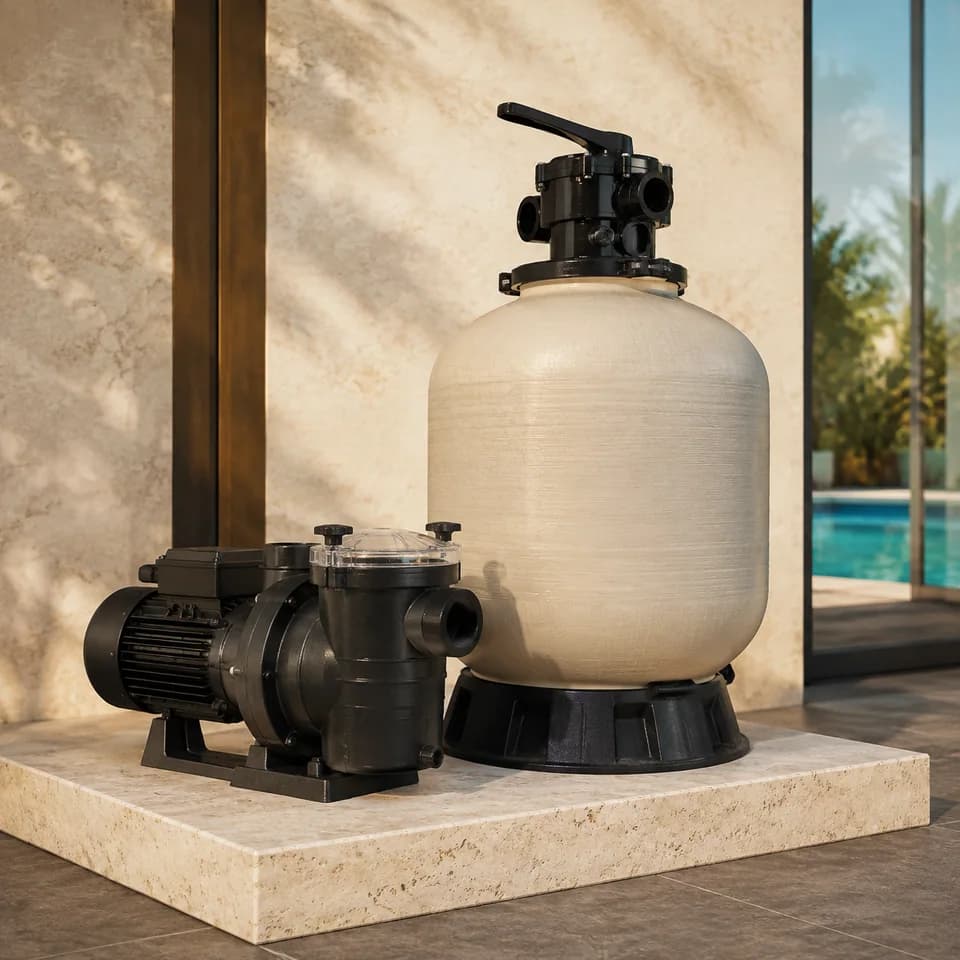
Pool Mechanical Equipment
Circulation pumps, filters, valves and automation: the mechanical infrastructure that forms the heart of the pool.
View- 65 products
 Product category
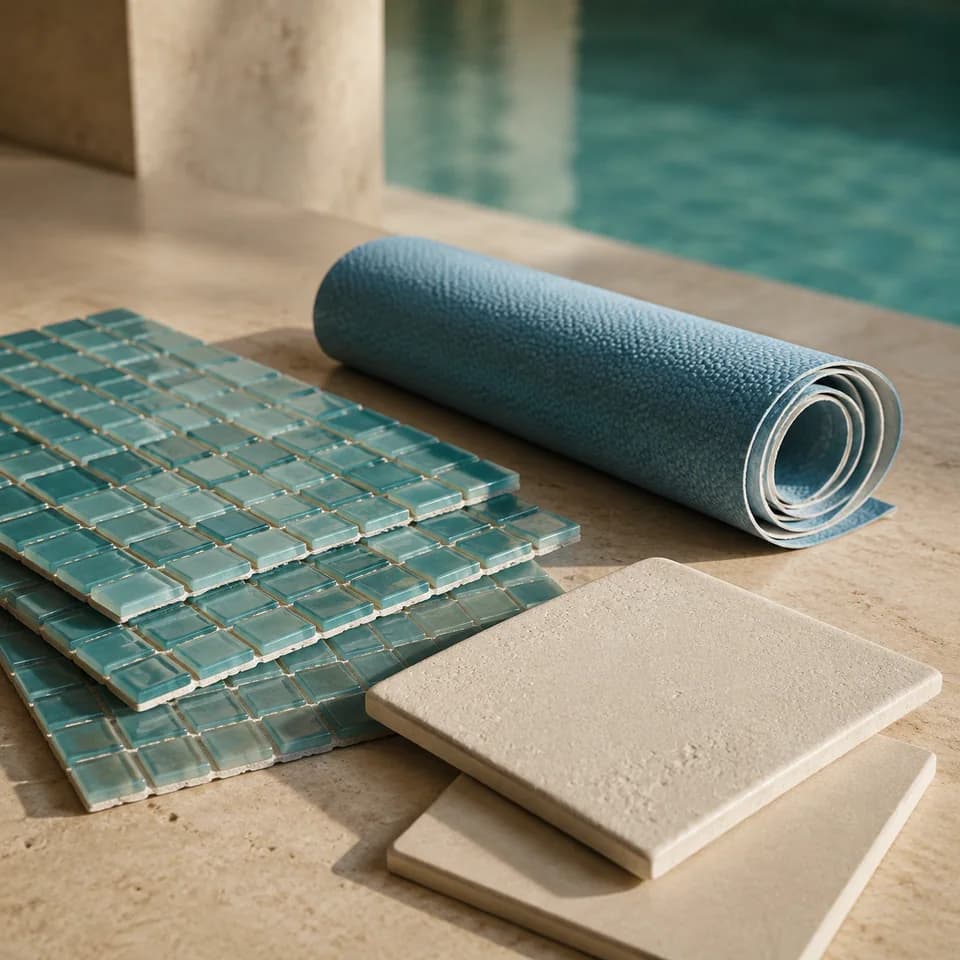
Pool Lining Systems
PVC liner, membrane, ceramic tile and glass mosaic: lining materials that make the pool watertight and form its finished surface.
View- 20 products
 Product category
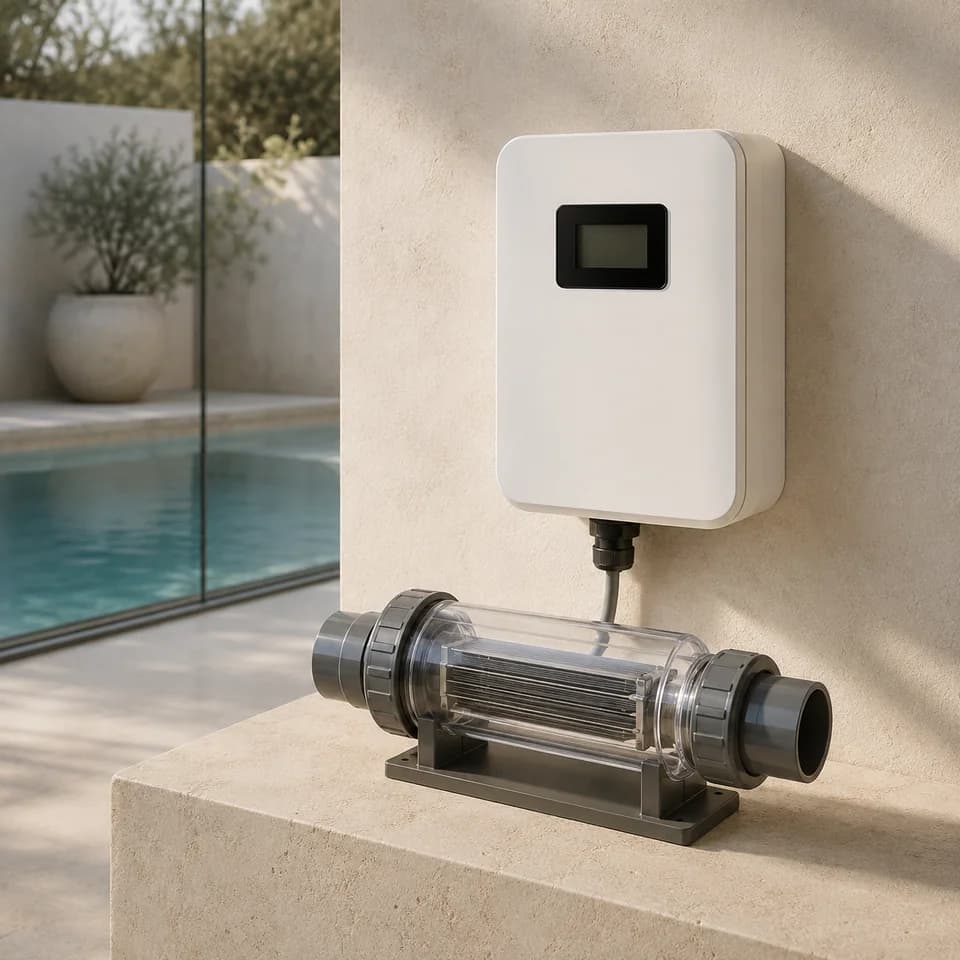
Pool Disinfection Systems
Fully automatic pool water disinfection that reduces chemical use with salt electrolysis, UV disinfection and smart dosing systems.
View- 52 products
Product category
Pool Mechanical Equipment
Circulation pumps, filters, valves and automation: the mechanical infrastructure that forms the heart of the pool.
65 productsProduct category
Pool Lining Systems
PVC liner, membrane, ceramic tile and glass mosaic: lining materials that make the pool watertight and form its finished surface.
20 productsProduct category
Pool Disinfection Systems
Fully automatic pool water disinfection that reduces chemical use with salt electrolysis, UV disinfection and smart dosing systems.
52 products
// 02 · Related service
The work in this article, we deliver from design to handover.
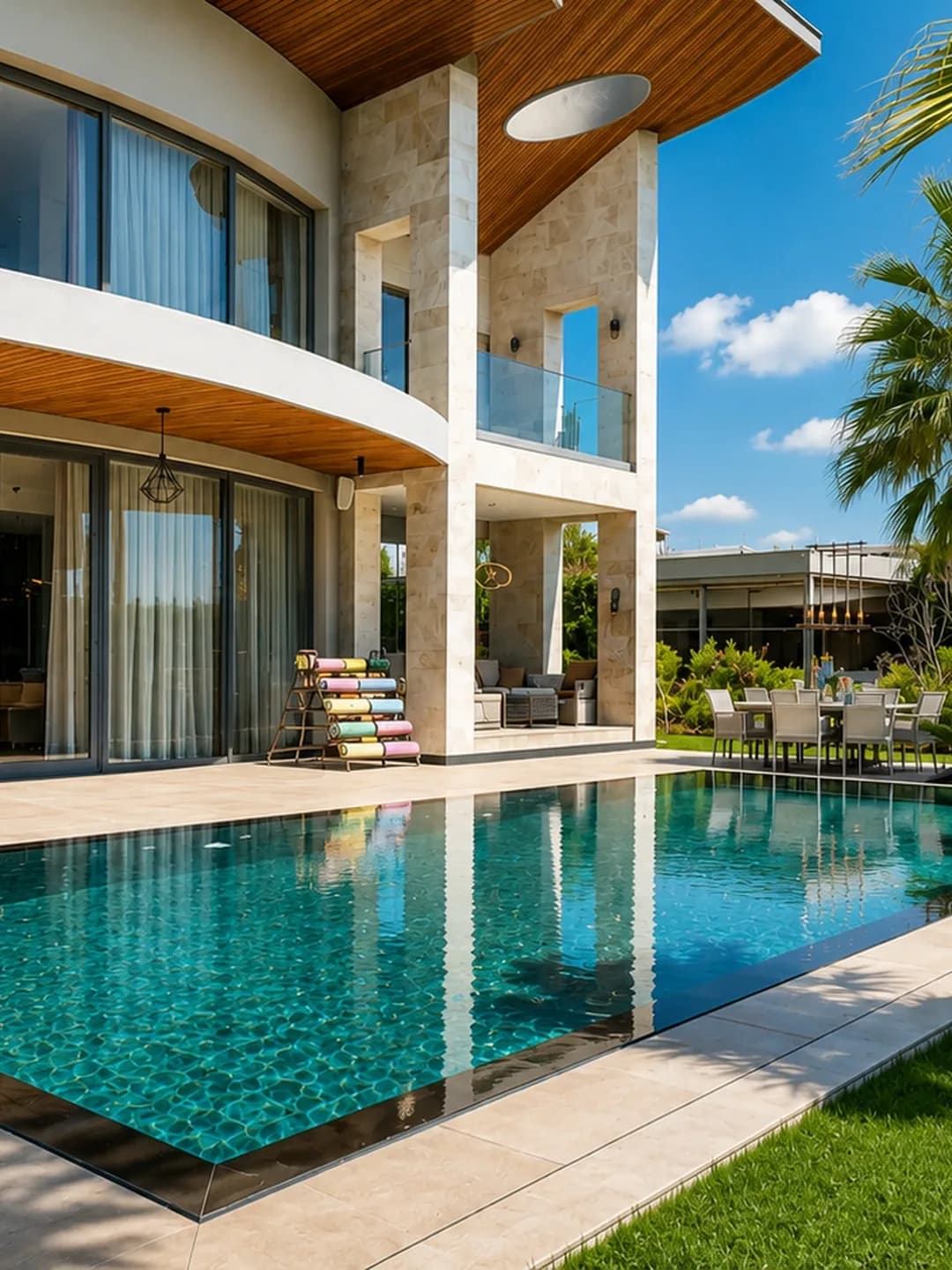
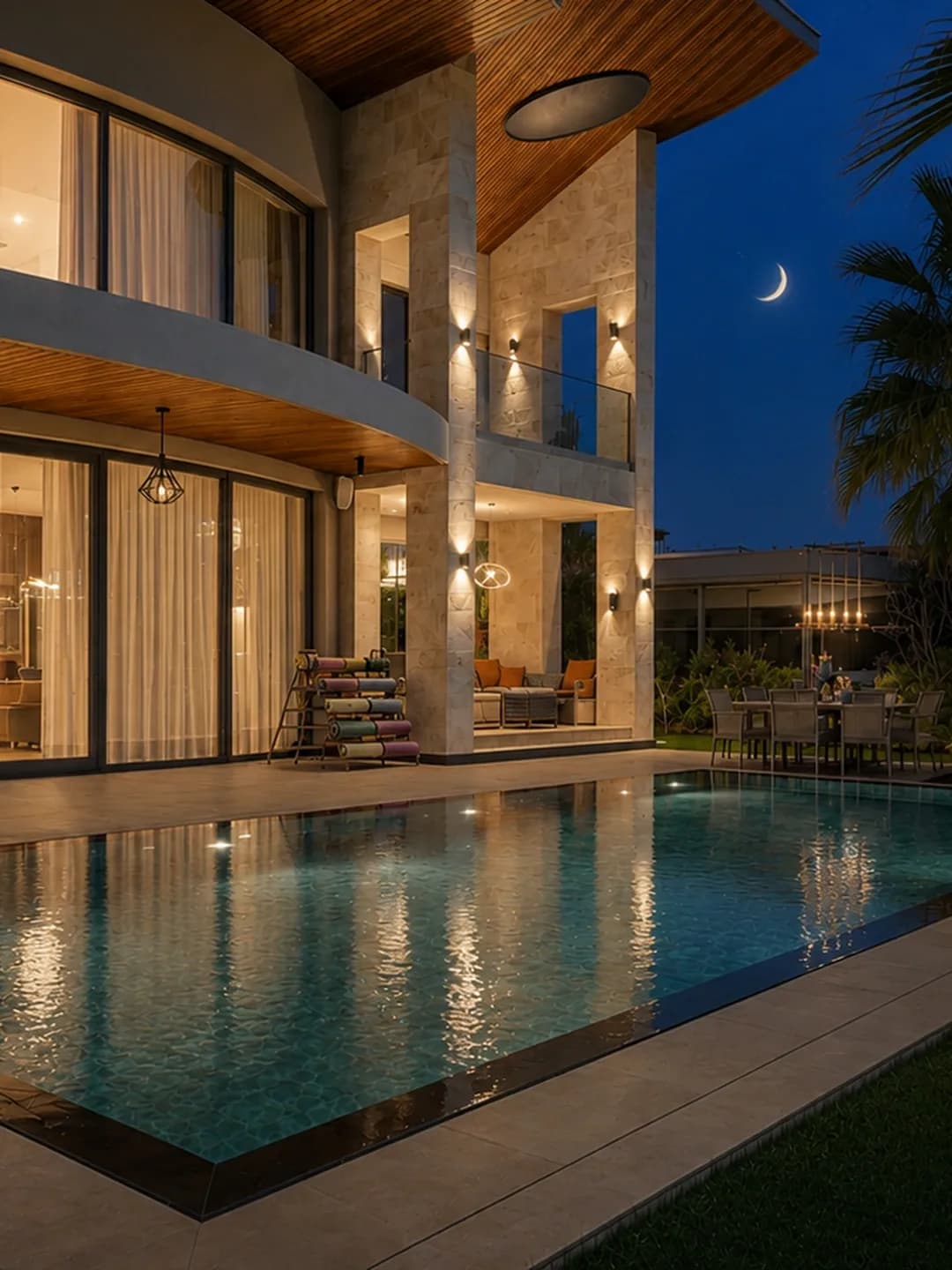
Çilek Havuz service
Swimming Pool Construction
Reinforced-concrete, prefabricated and infinity swimming pools, built turnkey for villa, residential and commercial projects.
Swimming pool construction is a turnkey build in which the site survey, structural and mechanical design, excavation, reinforced-concrete shell, waterproofing, finish, filtration plumbing and commissioning run under a single contract. The written project schedule follows the site survey.
How we work
- 01Initial meeting and site surveyWe inspect the site and listen to the brief.
- 02Design and quotationWe give the cost item by item, in writing.
- 03ExecutionThe same team builds to a written schedule.
- 04Handover and commissioningWe start the systems and explain their use.
- 05Maintenance and technical supportWe provide periodic maintenance and support.
// 03 · Guides
On Pool Construction, more articles to read.
First the articles directly related to this one, then the newest articles on the topic.
 Pool Construction
Pool construction in Algeria: Mediterranean climate, earthquakes and specifications
Pool building in Algeria means planning for 685 mm of winter rain, a record 48.7 °C, seismic rules after the 2003 Boumerdès quake and imported equipment.
View- 9 September 2026
- 9 min read
 Pool Construction
Pool construction in Ankara: what are the frost and heating loads in a continental climate?
Pool construction in Ankara means a reinforced concrete pool designed for freeze-thaw, winterising and heating load in a continental climate at 938 m altitude, with a January average of 0.9 °C.
View- 9 September 2026
- 9 min read
 Pool Construction
Pool construction in Bursa: what do frost, slopes and the Nilüfer plain change?
In Bursa, a pool is designed around a record low of -20.5 °C, 13 snow days a year, hillside excavation at the foot of Uludağ and the groundwater of the Nilüfer plain.
View- 9 September 2026
- 10 min read
 Pool Construction
Choosing Pool Showers and Waterfalls: Shower Types, Water Curtains and Plumbing Needs
Choosing a pool shower, waterfall or water curtain depends on the material, where the water comes from and where it is mounted. We compare solar and stainless steel shower types and their pump and plumbing needs.
View- 2 October 2026
- 8 min read
 Pool Construction
Competition Pool Equipment: Which Pool Needs Which Equipment?
Starting blocks, lane ropes, warning and turn systems, underwater speakers and water polo goals are chosen according to how the pool is used. We explain which dimensions we check for each item.
View- 2 October 2026
- 7 min read
 Pool Construction
Building a pool or spa abroad: what drives the cost of an international project?
A pool, hammam or spa project delivered abroad from Turkey has no single price per square metre. We cover design, equipment, shipping, customs and schedule.
View- 29 September 2026
- 8 min read
- Pool Construction · 9 September 2026Pool construction in Algeria: Mediterranean climate, earthquakes and specificationsPool building in Algeria means planning for 685 mm of winter rain, a record 48.7 °C, seismic rules after the 2003 Boumerdès quake and imported equipment.9 min read
- Pool Construction · 9 September 2026Pool construction in Ankara: what are the frost and heating loads in a continental climate?Pool construction in Ankara means a reinforced concrete pool designed for freeze-thaw, winterising and heating load in a continental climate at 938 m altitude, with a January average of 0.9 °C.9 min read
- Pool Construction · 9 September 2026Pool construction in Bursa: what do frost, slopes and the Nilüfer plain change?In Bursa, a pool is designed around a record low of -20.5 °C, 13 snow days a year, hillside excavation at the foot of Uludağ and the groundwater of the Nilüfer plain.10 min read
- Pool Construction · 2 October 2026Choosing Pool Showers and Waterfalls: Shower Types, Water Curtains and Plumbing NeedsChoosing a pool shower, waterfall or water curtain depends on the material, where the water comes from and where it is mounted. We compare solar and stainless steel shower types and their pump and plumbing needs.8 min read
- Pool Construction · 2 October 2026Competition Pool Equipment: Which Pool Needs Which Equipment?Starting blocks, lane ropes, warning and turn systems, underwater speakers and water polo goals are chosen according to how the pool is used. We explain which dimensions we check for each item.7 min read
- Pool Construction · 29 September 2026Building a pool or spa abroad: what drives the cost of an international project?A pool, hammam or spa project delivered abroad from Turkey has no single price per square metre. We cover design, equipment, shipping, customs and schedule.8 min read
// Sources and regulations
Sources and regulations
The official documents behind the technical framework on this page; links open the institutions' own sites.
- Regulation on the Health Principles and Conditions for Swimming Pools (Official Gazette No. 27866, 6 March 2011)Official Gazette of Türkiye
- Regulation Amending the Swimming Pools Regulation (Official Gazette, 15 December 2011)Official Gazette of Türkiye
- Guidelines for safe recreational water environments, Volume 2: Swimming pools and similar environments
// 04 · Company & Contact
To talk about your project, call or write to us.
Legal Name
Çilek Havuz
Founded
1998 · Istanbul
Head Office
Çilek Plaza, Eyüp Sultan Mah. Yakacık Cd. Feshane Cd. No: 2 D:4 D:1, 34885 Sancaktepe / İstanbul
Service Area
All of Türkiye · exports to 14 countries
Branches
Kyrgyzstan · Egypt · Algeria · Iraq
Showroom
Plan a showroom visit
At our showroom in Çilek Plaza, Sancaktepe, you can discuss your project with our team. We recommend booking an appointment by phone before your visit.
Working Hours
- Monday – Friday · 08:00 – 17:30
- Saturday · 08:00 – 12:30
- Closed on Sunday
Frequently Asked Questions
About Pool construction in Samsun, frequently asked questions.
Çilek Havuz Corporate
Pool and Wellness Engineering
- Response Time
- Same day
- Channels
- Phone · Email · WhatsApp
If the answer you are looking for is not here, send your question directly to us and our team will reply as soon as possible.
+90 216 475 39 37June to September, when rainy days stay between 6 and 10 a month, suits excavation and shell concrete. However, the water table is at its lowest in this period; a dry excavation does not mean drainage can be skipped, and the borehole should also give the winter level.
Çilek Havuz Corporate
Average monthly lows are around 4 °C in January and February; the record low is -9.8 °C. Brief icing on the surface can occur, but thick, prolonged freezing is rare. Winterising is planned more for rainfall and groundwater load.
Çilek Havuz Corporate
Under Archimedes' principle, a rising water table pushes the shell upwards. When the water table rises above the pool floor, the force equals the weight of water the shell displaces. When full, the pool water balances this force; when empty, only the weight of the concrete remains. A hydrostatic valve and perimeter drainage remove this risk.
Çilek Havuz Corporate
Near the shore and in air with an average humidity of 71 percent, AISI 304 gives way to chloride-induced pitting corrosion within a few seasons. For parts in contact with water and exposed to the open air, AISI 316 or 316L should be chosen, with anchors and fixings of the same grade.
Çilek Havuz Corporate
Monthly average temperatures are above 20 °C only from June to September and do not exceed 24.5 °C in any month. Unheated use is limited to about three months; with an air source heat pump and a solar cover, the season extends from early May to late October.
Çilek Havuz Corporate