

Pool maintenance
We manage pool water by measurement, and monitor the plant room on a schedule.
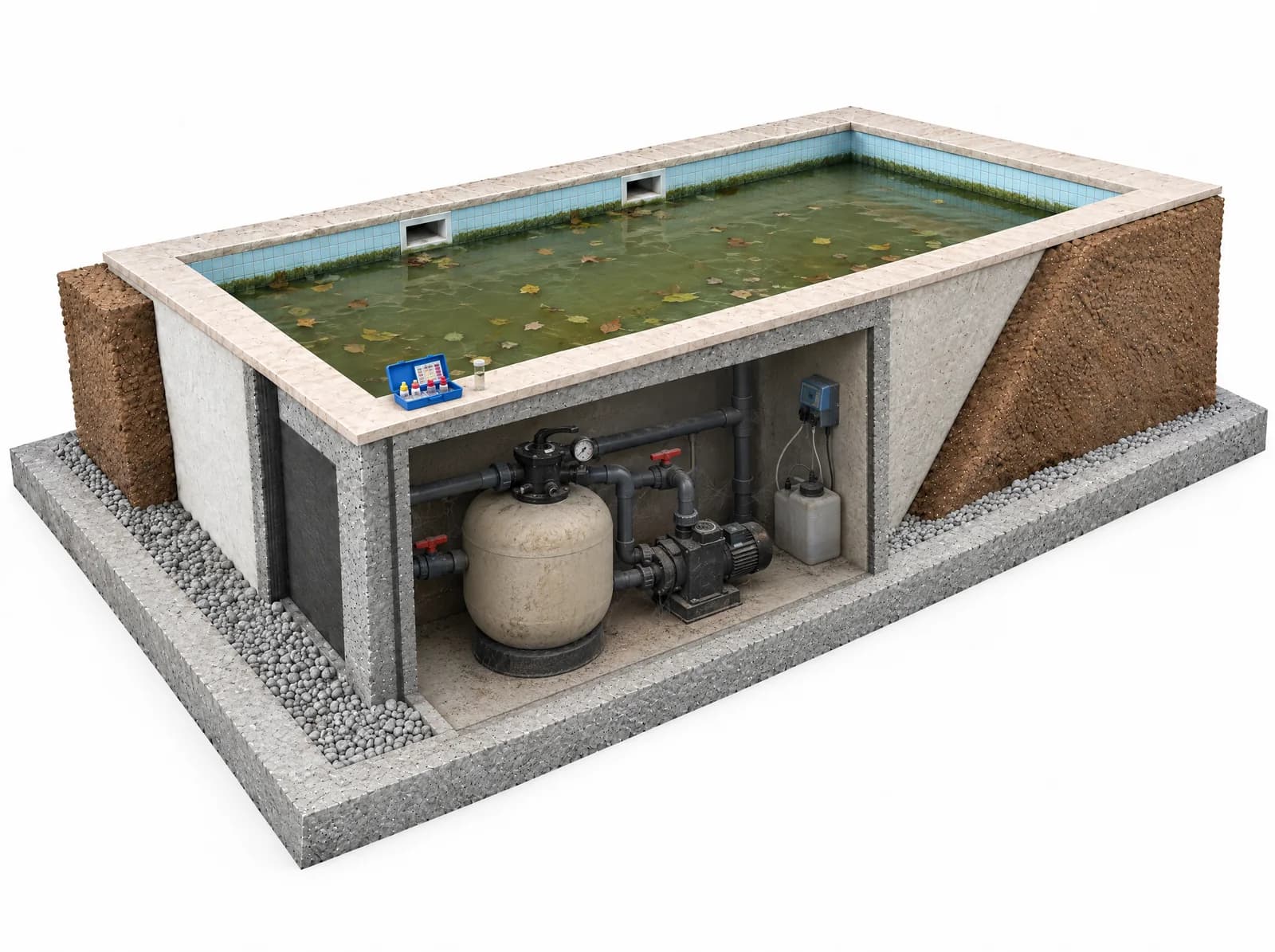
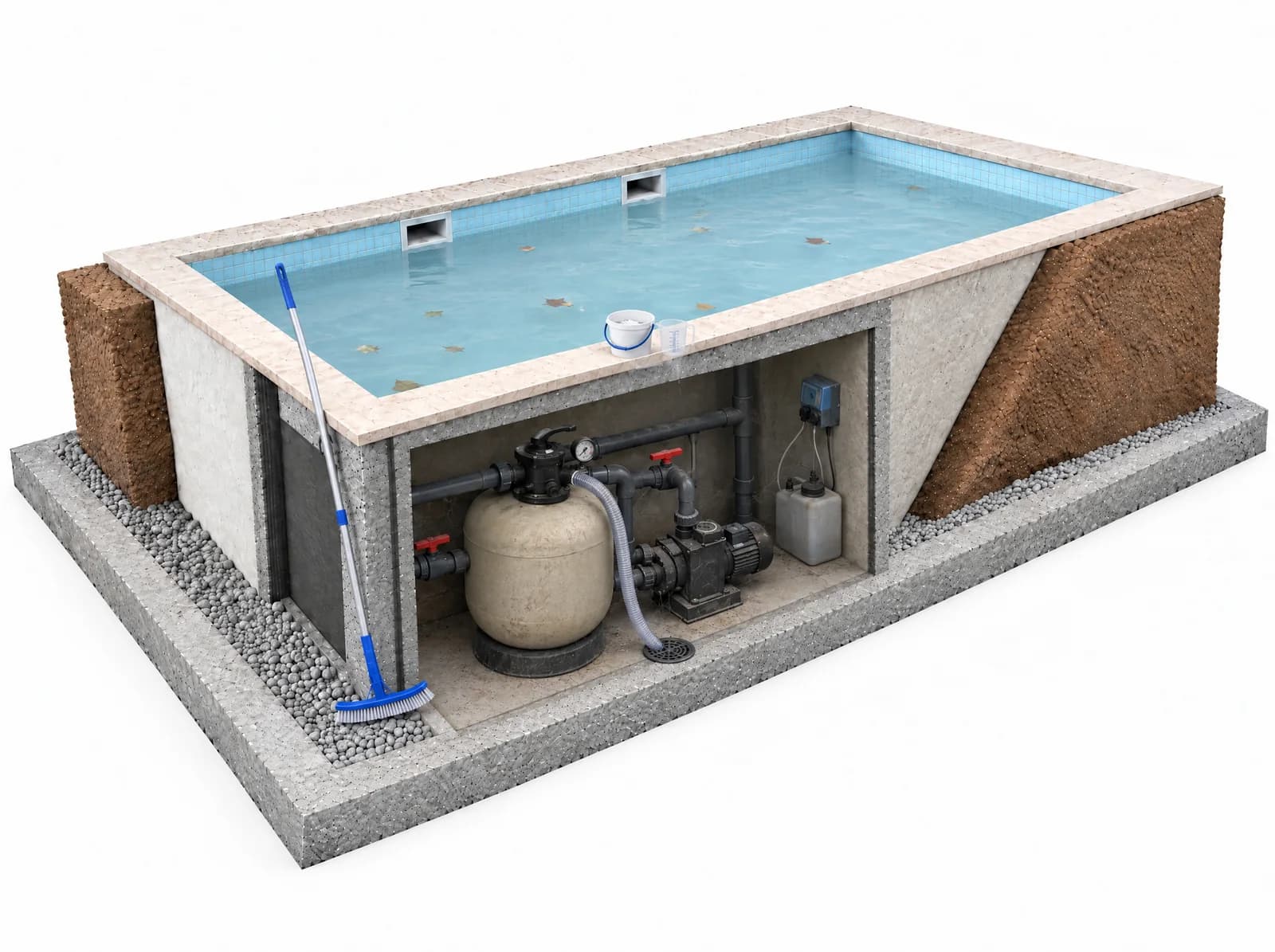
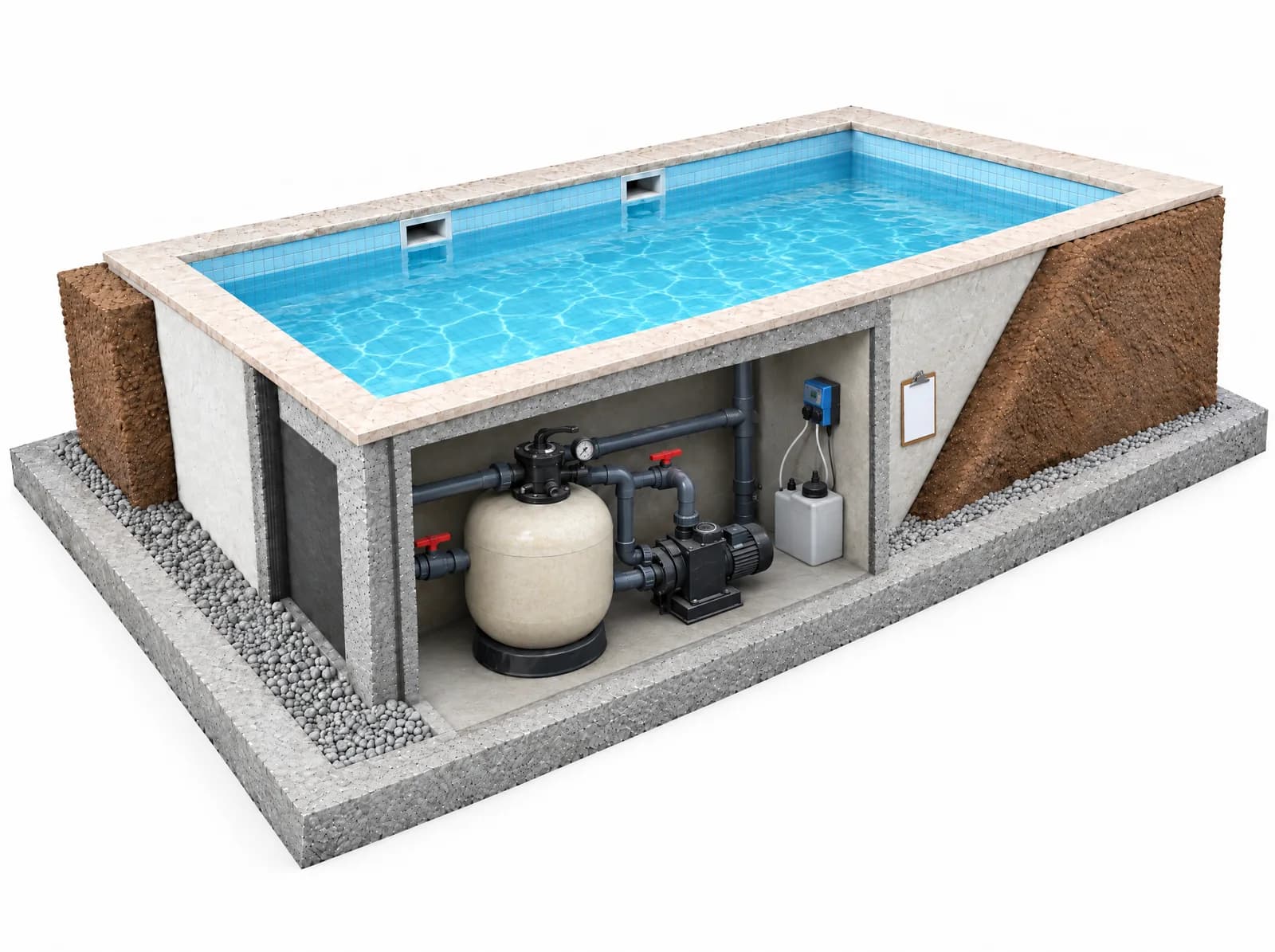
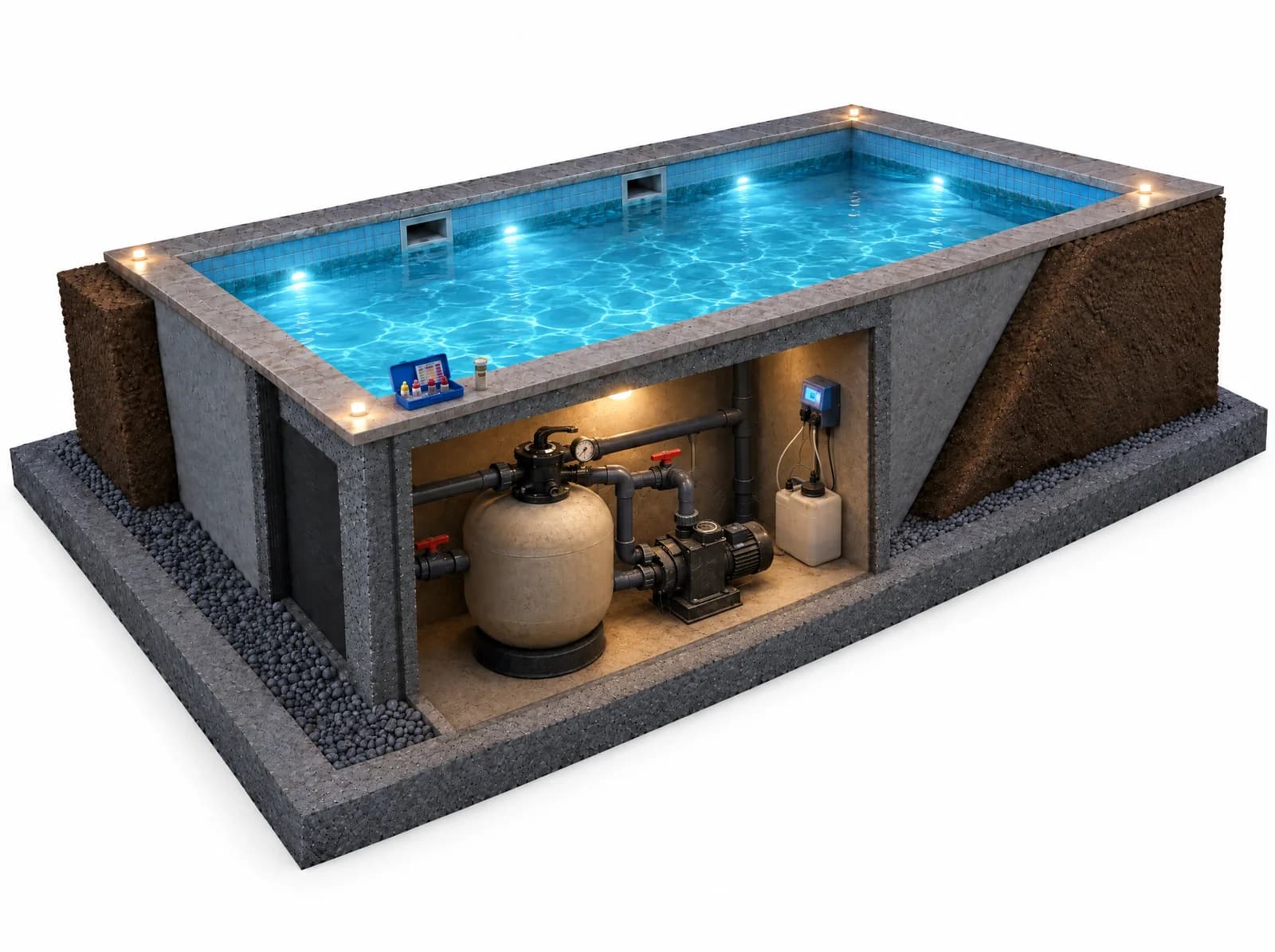
Pool maintenance process
01 / 04
Survey and diagnosis
Day 1- 01
- 02
- 03
- 04
Pool maintenance at Çilek Havuz
We carry out pool maintenance with the same engineering discipline as pool construction.
Testing, dosing, cleaning and plant room checks are handled by one team, and every visit closes with a written report.
- Year founded
- 1998
- Years in the sector
- 33+
- Export countries
- 14
- Workmanship warranty
- 2
// 01 · Decision
A maintenance plan starts with four questions, and the programme follows from the answers.
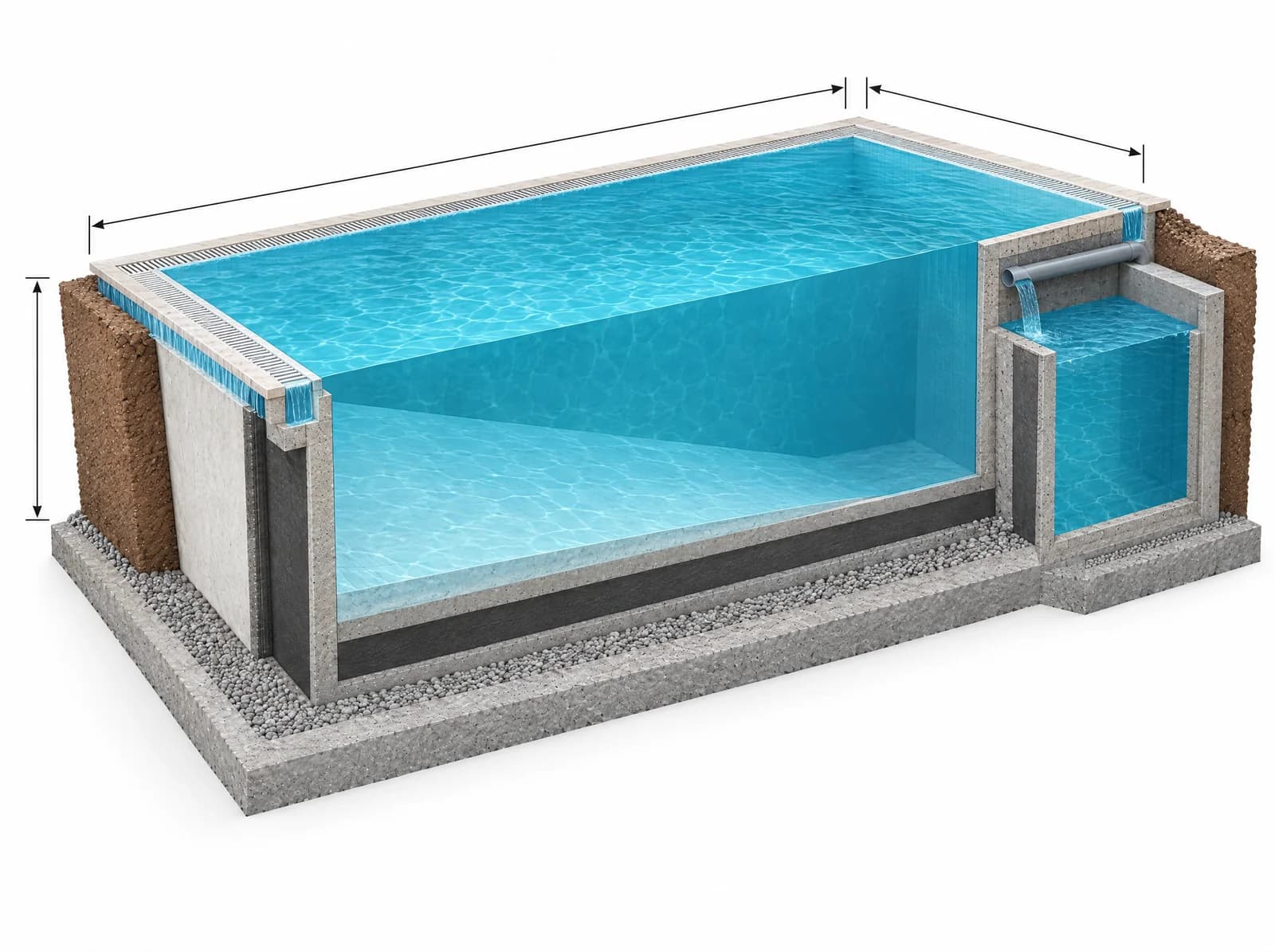
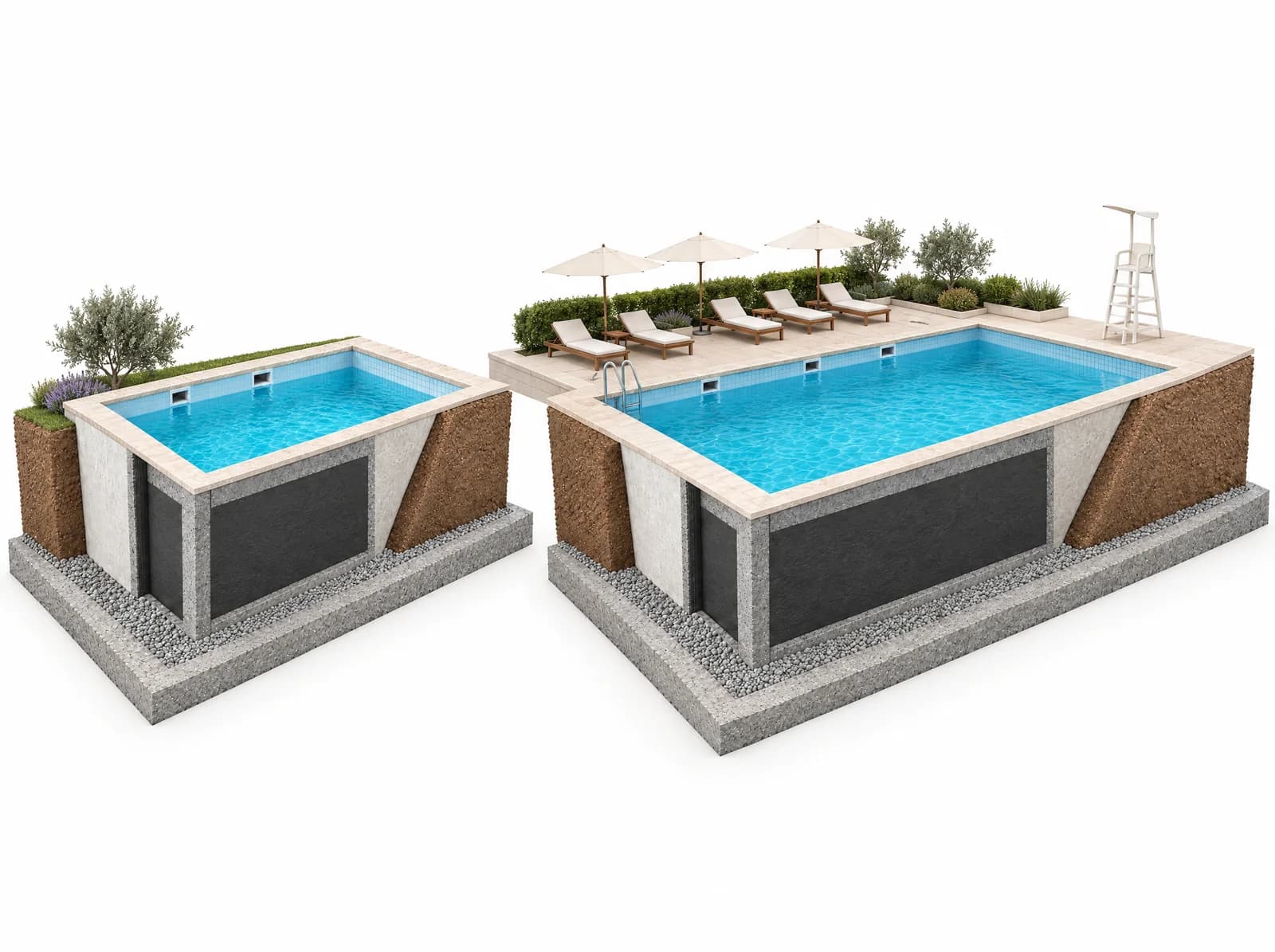
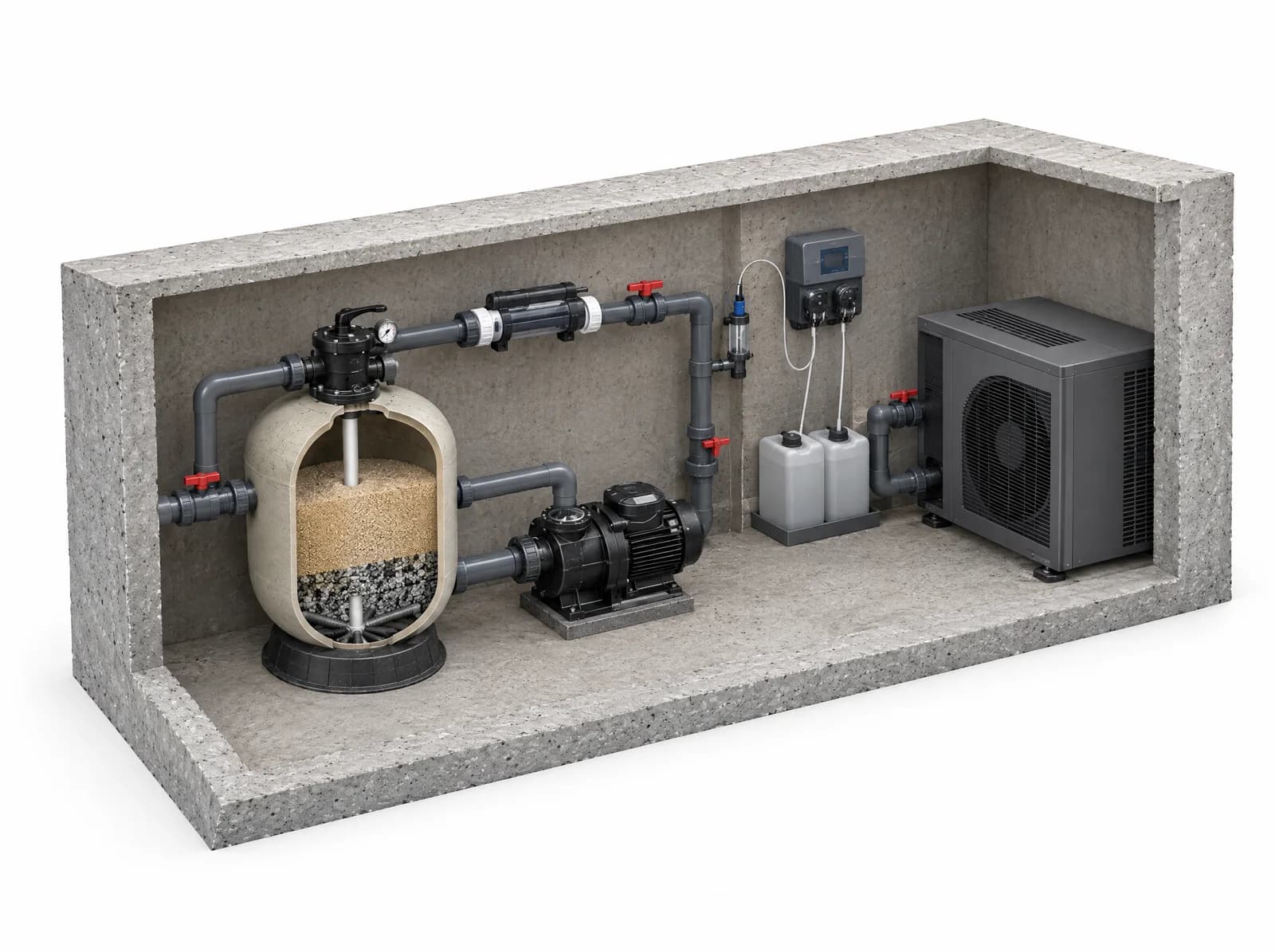
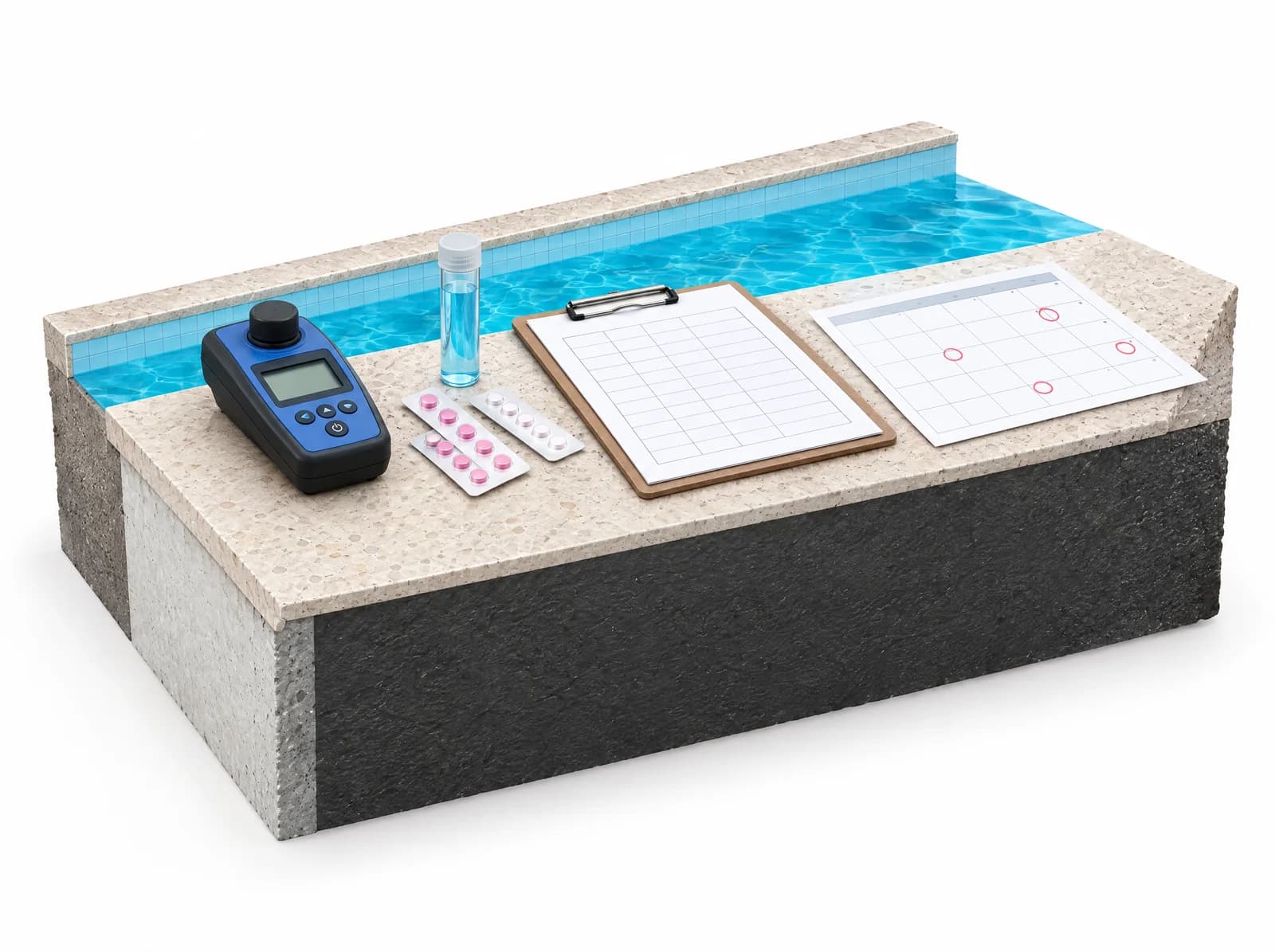
A pool's maintenance routine is set up before the first chemical goes into the water. We first establish the pool's volume and circulation, then who uses it and how often, and then its disinfection and filtration setup.
01
Pool volume and operation
Every chemical decision rests on the pool's water volume, found from length, width and average depth. In an overflow pool the balance tank, and in a sloped floor the depth difference, are added to the calculation separately.
- Actual water volume in cubic metres
- Skimmer or overflow circulation
- Pump flow rate and turnover time
02
Pool users and frequency of use
A villa pool used by one family does not run on the same programme as a residential complex, hotel or sports facility pool. Public pools fall under pool water regulations; testing, records and laboratory analysis are mandatory.
- Villa, complex, hotel or sports facility
- Outdoor or indoor pool
- Regulatory scope and record obligations
03
Disinfection and filtration setup
Manual chlorination, salt electrolysis, automatic dosing or UV assisted systems each create different maintenance work. Filters use sand, glass or zeolite media; the media type sets the backwash and replacement schedule.
- Chlorine product, salt electrolysis or automatic dosing
- Sand, glass or zeolite filter media
- Heater, robot and automation
04
Maintenance frequency and records
During the swimming season a weekly visit is the standard; a monthly panel tracks alkalinity, hardness and cyanuric acid. Season opening and winterising are added to the programme, and every visit closes with a written report.
- Weekly visit and monthly water panel
- Season opening and winterising
- Visit report and end of season summary
// 01 · Maintenance packages
There are six maintenance packages, chosen by pool and use.
We offer six pool maintenance packages: weekly periodic maintenance, complex and hotel pool operational maintenance, season opening, winterising, reset treatment and plant room service. The package is chosen during the survey according to pool type and usage intensity.
01 / 06
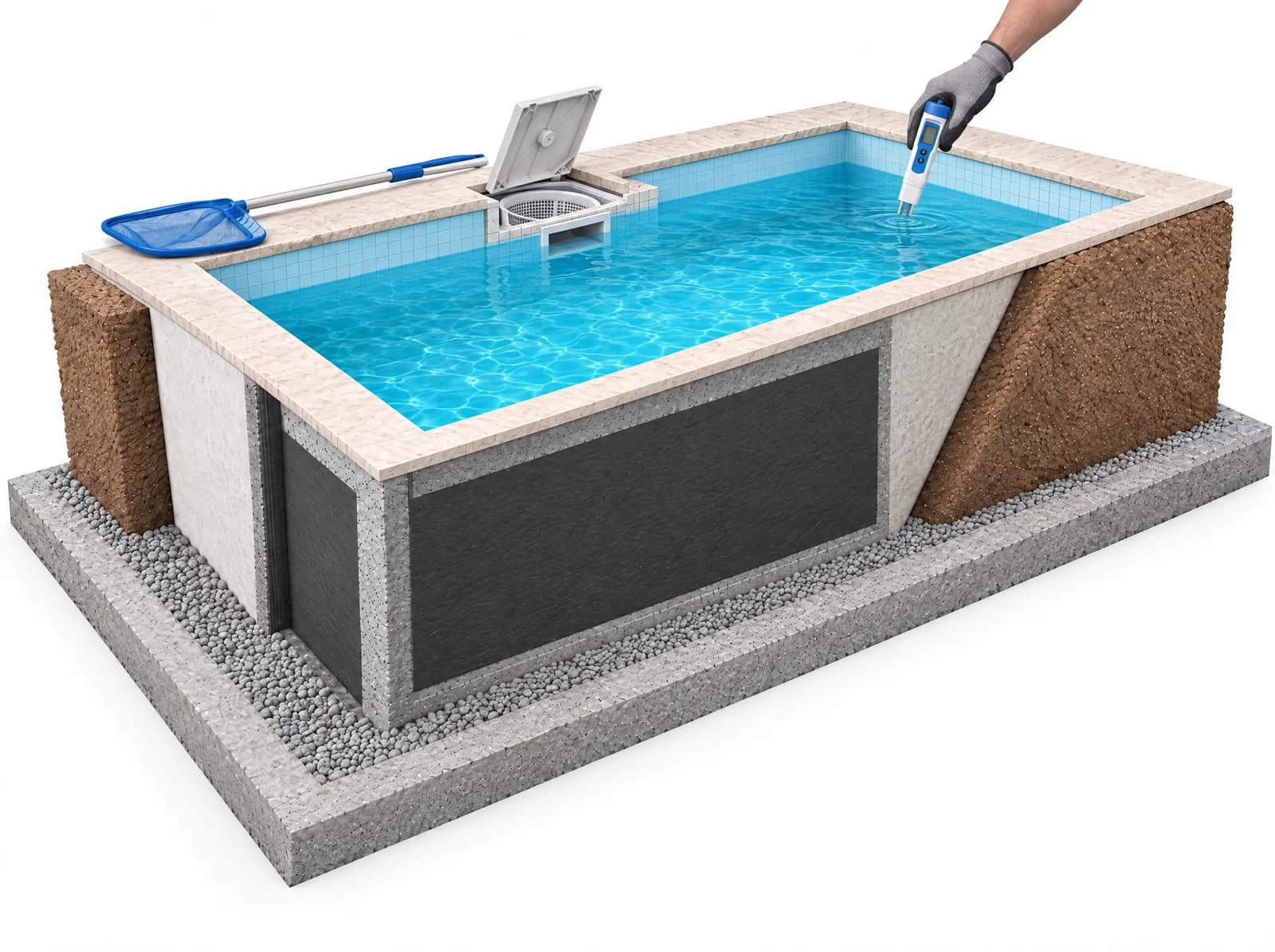
Weekly periodic maintenance
Testing, dosing and cleaning every week.
- Frequency
- One visit a week
- Scope
- Testing, dosing, cleaning
- Pool
- Outdoor and indoor pools
- Output
- Visit report
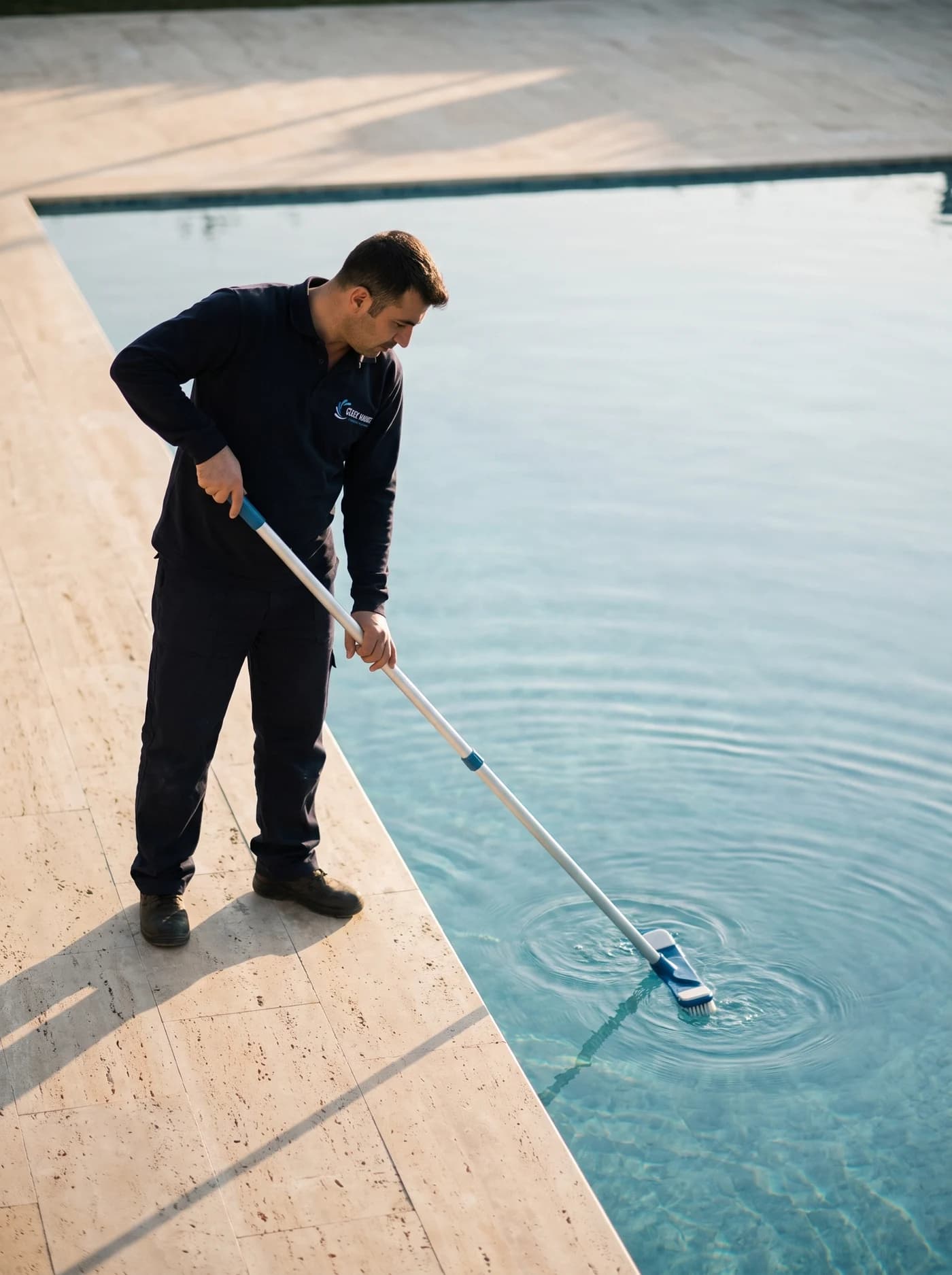
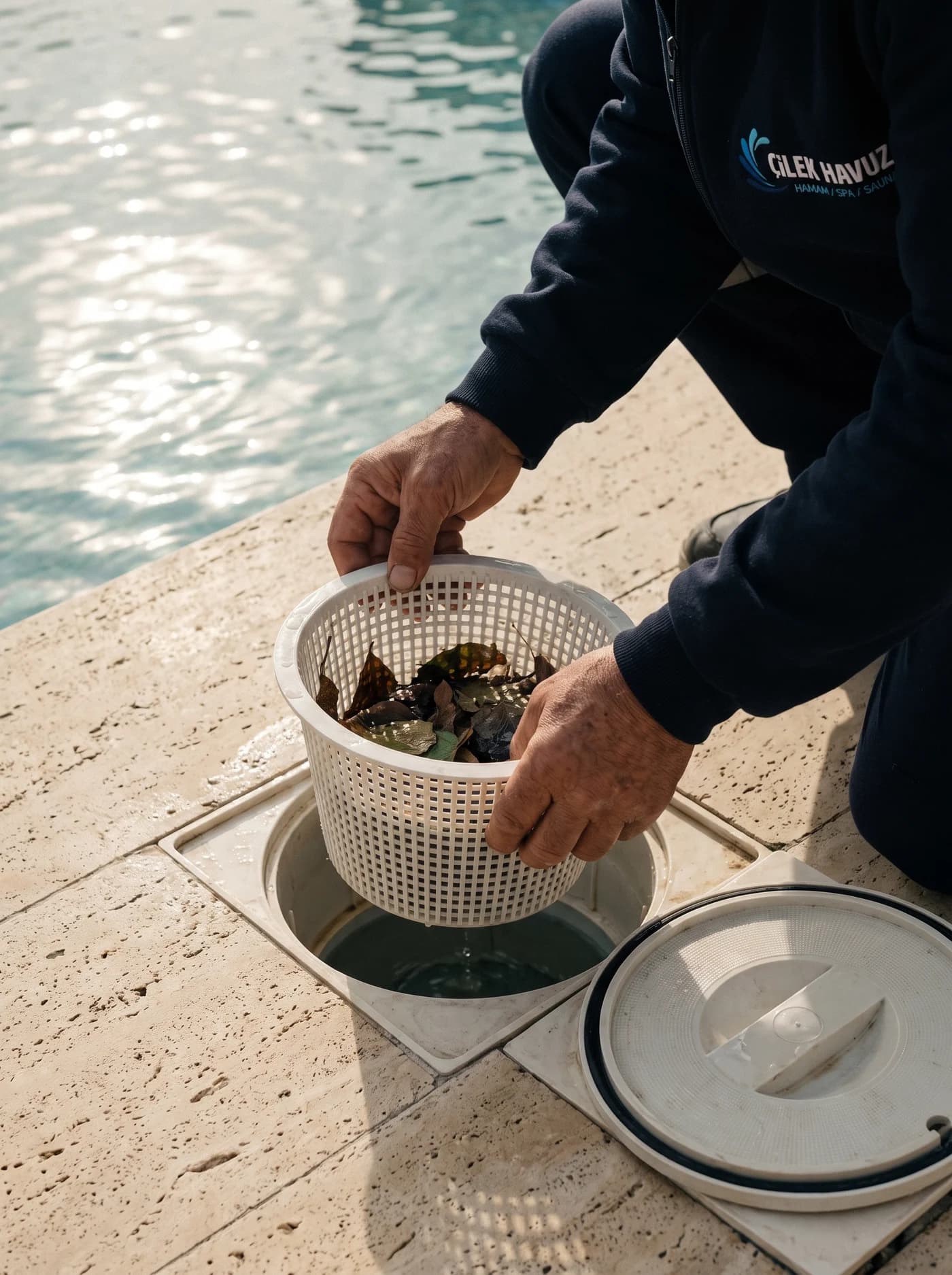
At every visit pH and free chlorine are tested, chemicals are dosed by volume, the surface and floor are cleaned, and skimmer and pump baskets are emptied. Filter pressure is read and the visit closes with a written report.
Best suited forVillas and detached houses
View in detail: Weekly periodic maintenanceTesting, dosing and cleaning every week.
- Frequency
- One visit a week
- Scope
- Testing, dosing, cleaning
- Pool
- Outdoor and indoor pools
- Output
- Visit report
At every visit pH and free chlorine are tested, chemicals are dosed by volume, the surface and floor are cleaned, and skimmer and pump baskets are emptied. Filter pressure is read and the visit closes with a written report.
Best suited forVillas and detached houses
View in detail: Weekly periodic maintenance01 / 06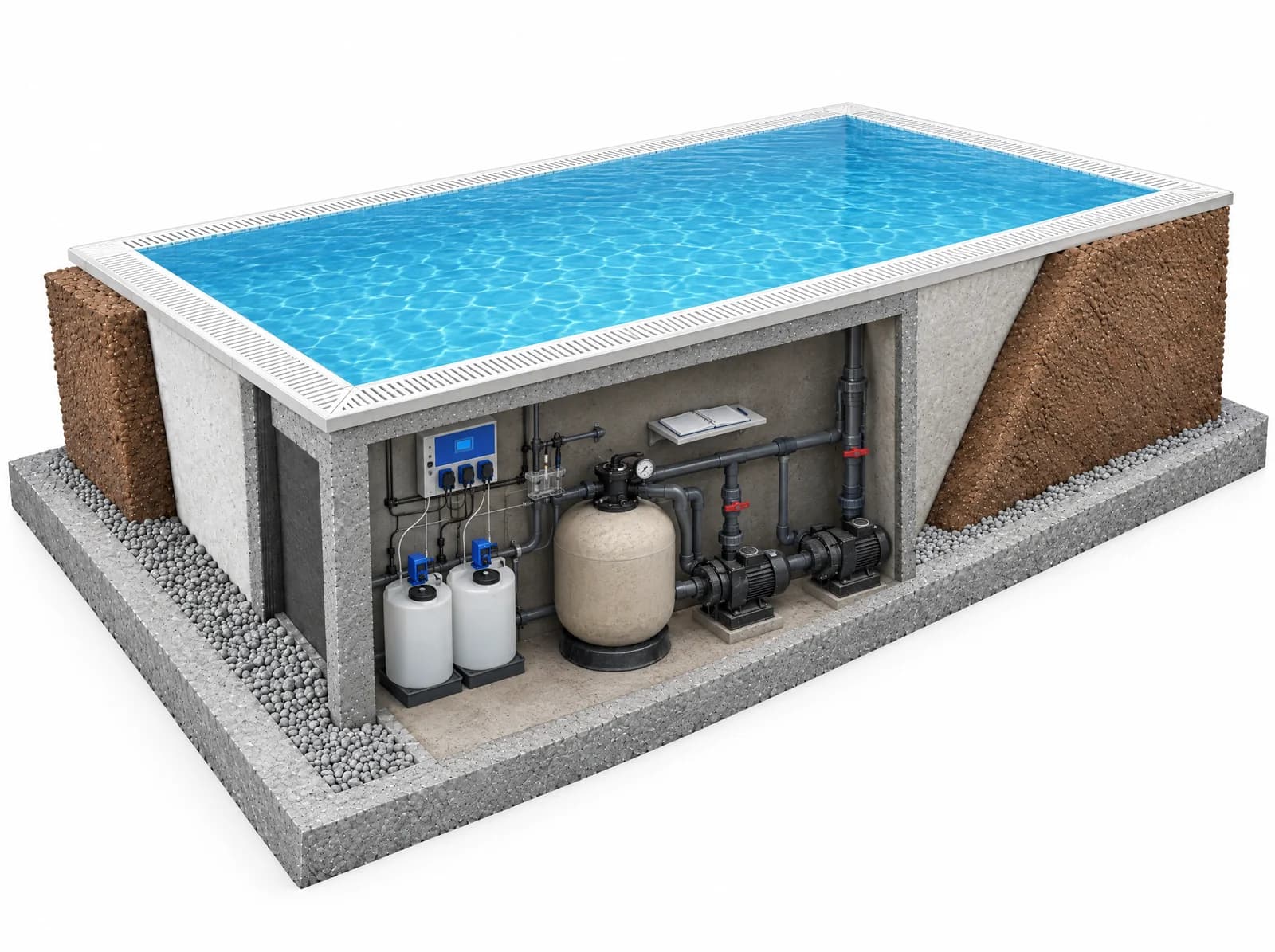
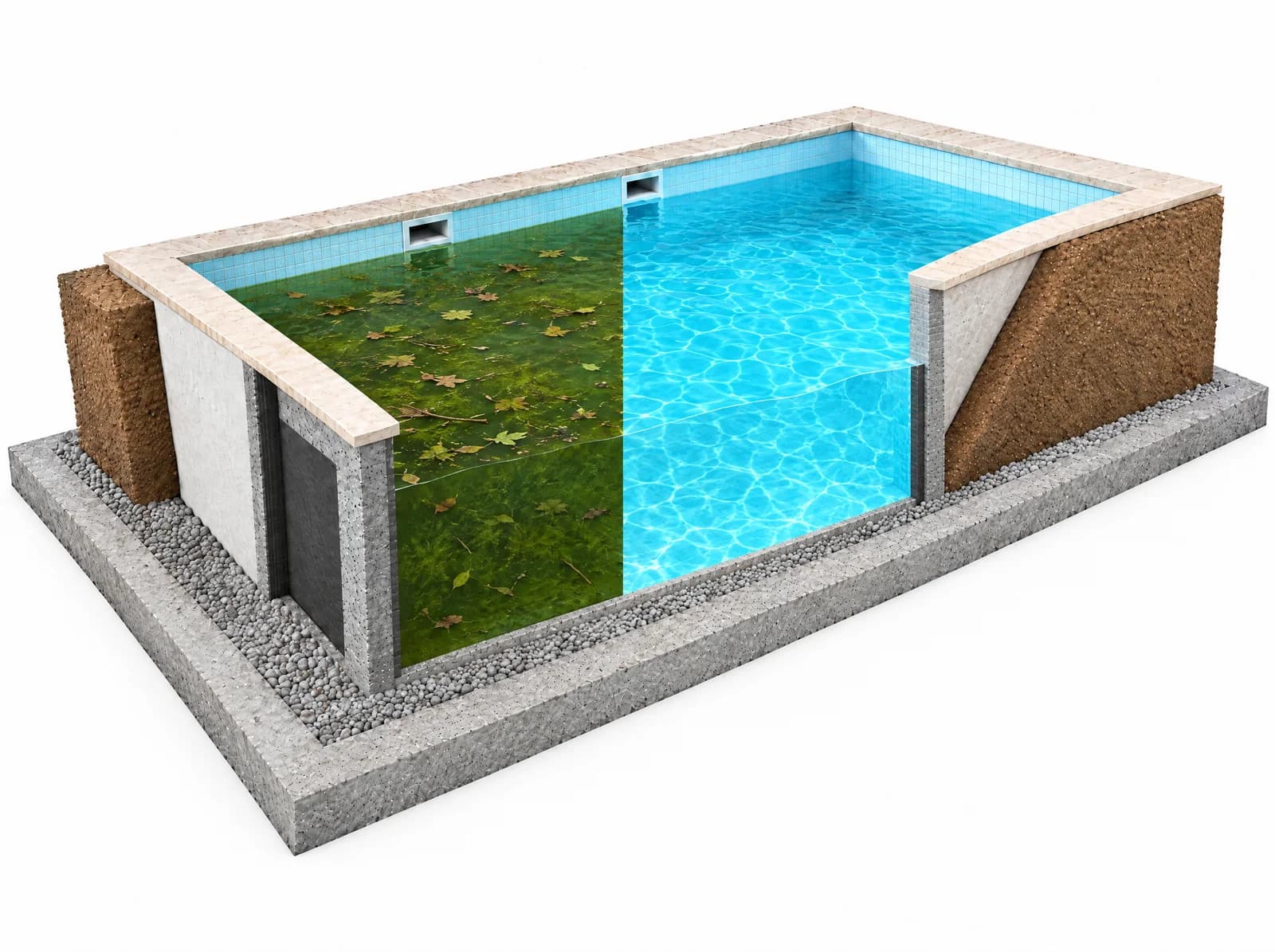
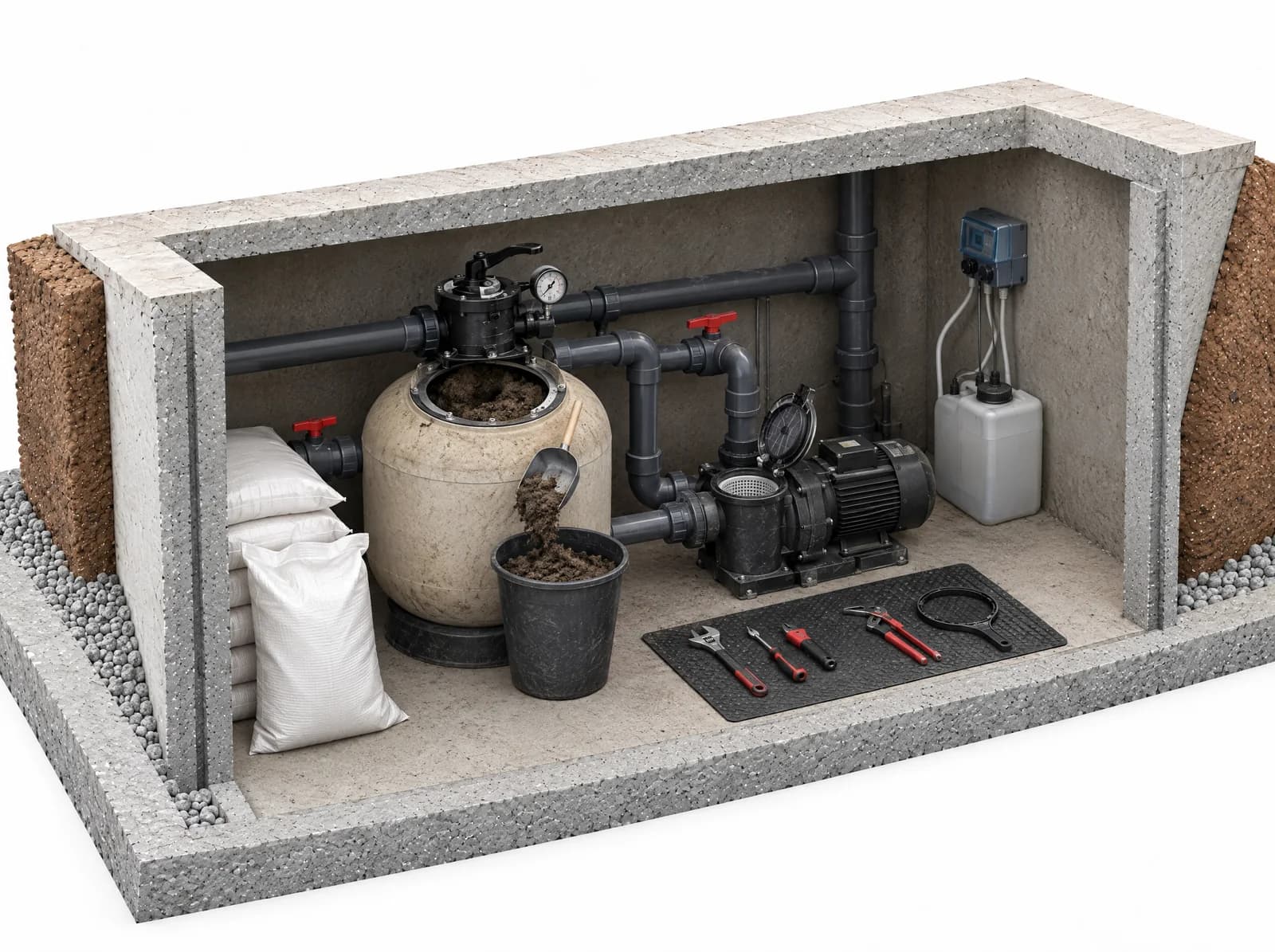
Weekly periodic maintenance
- Frequency
- One visit a week
- Scope
- Testing, dosing, cleaning
- Pool
- Outdoor and indoor pools
- Output
- Visit report
At every visit pH and free chlorine are tested, chemicals are dosed by volume, the surface and floor are cleaned, and skimmer and pump baskets are emptied. Filter pressure is read and the visit closes with a written report.
Best suited forVillas and detached houses
View in detail: Weekly periodic maintenanceComplex and hotel pool maintenance
- Frequency
- Programme by usage
- Scope
- Test log, dosing unit
- Pool
- Public pool
- Output
- Inspection file
In a public pool, pH and free chlorine are tested every operating day and logged, and microbiological analysis is carried out at an accredited laboratory at least once a month. The automatic dosing unit and test probe are part of this programme.
Best suited forComplexes, hotels and sports facilities
View in detail: Complex and hotel pool maintenanceSeason opening
- Frequency
- At the start of the season
- Scope
- Commissioning, water balance
- Pool
- Outdoor pool
- Output
- Swim ready water
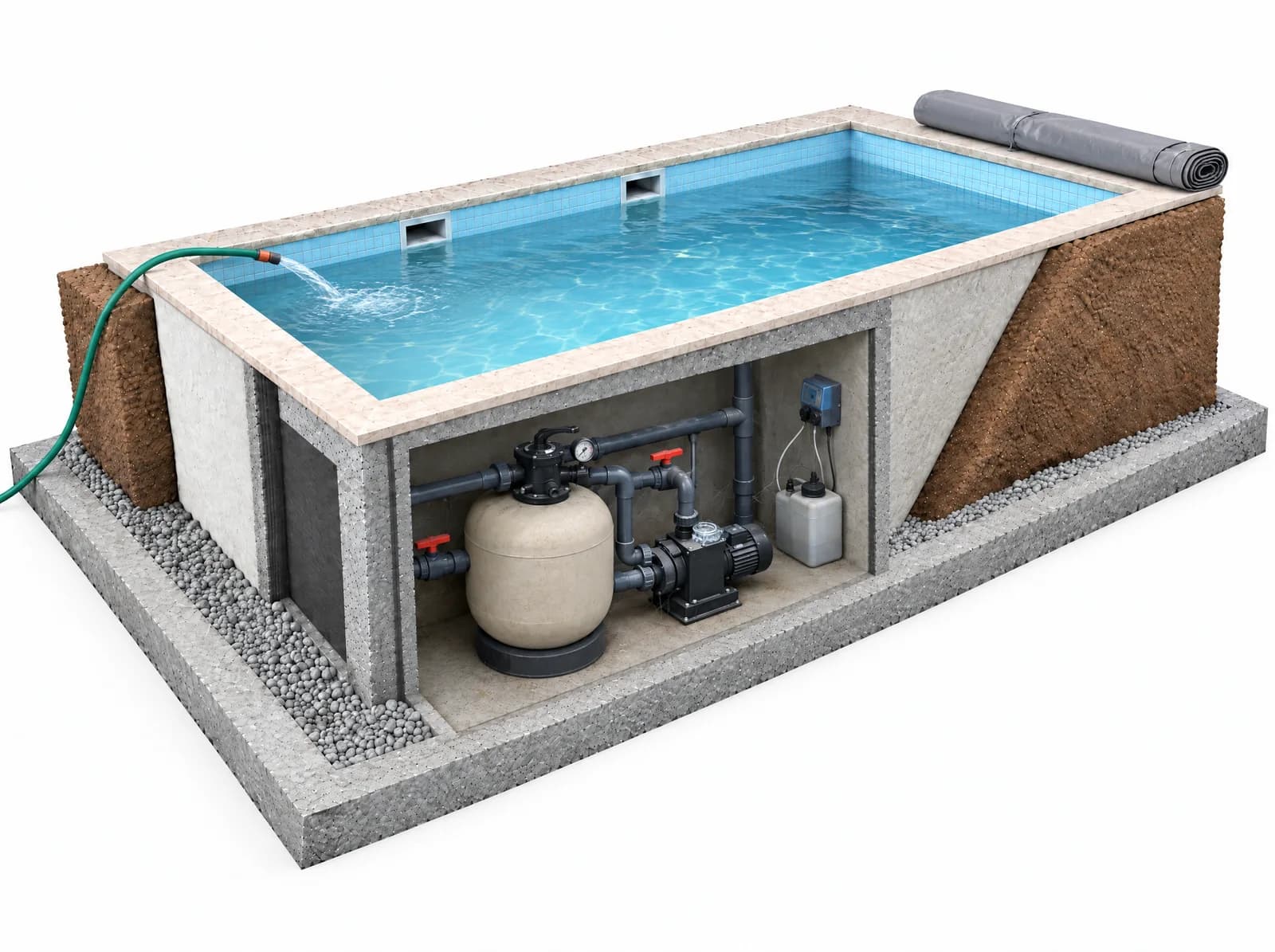
The cover is removed, coarse debris is collected and the water level is brought to skimmer height. The pump and filter are put into service, and the water is balanced first with alkalinity and pH, then with chlorine.
Best suited forSeasonally used pools
View in detail: Season openingWinterising
- Frequency
- At the end of the season
- Scope
- Shock, line draining, cover
- Pool
- Outdoor pool
- Output
- Winter preparation file
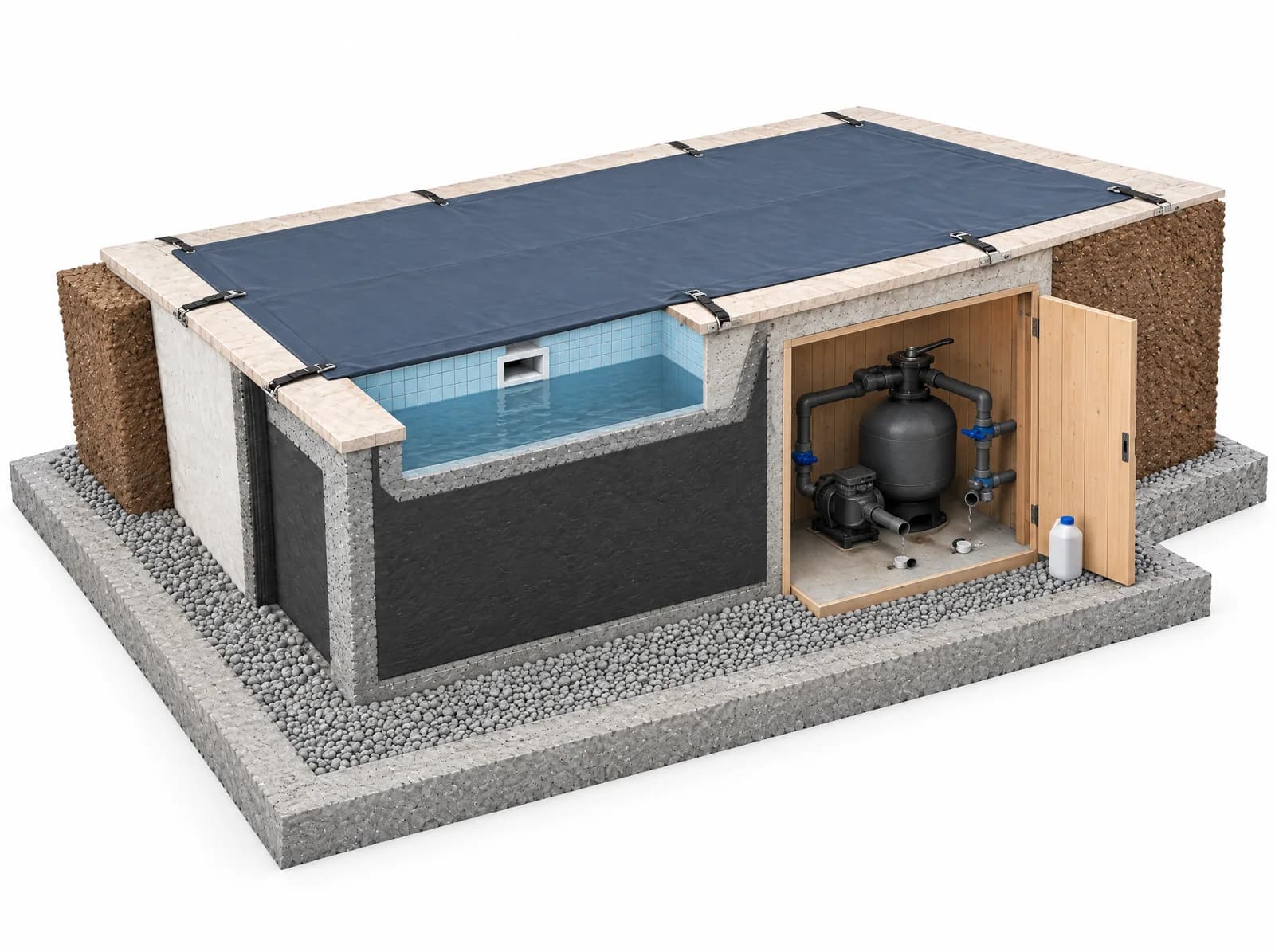
The water is balanced and shocked in the evening, the filter is backwashed and rinsed, and winter chemical is added. Lines are drained against frost risk, equipment is protected and the pool is covered.
Best suited forPools closed for the season
View in detail: WinterisingReset treatment
- Frequency
- One time
- Scope
- Diagnosis, shock, filtration
- Pool
- Outdoor and indoor pools
- Output
- Balanced water
Diagnosis comes first: colour gives a clue, the decision is made by testing. With shock dosing, intensive filtration and a clarifier where needed, the water is in most cases swimmable again within 24-48 hours; pools built by other companies are taken into maintenance the same way.
Best suited forTaken over and neglected pools
View in detail: Reset treatmentPlant room service
- Frequency
- Planned and on breakdown
- Scope
- Filter, pump, dosing, heating
- Pool
- Plant room
- Output
- Equipment condition report
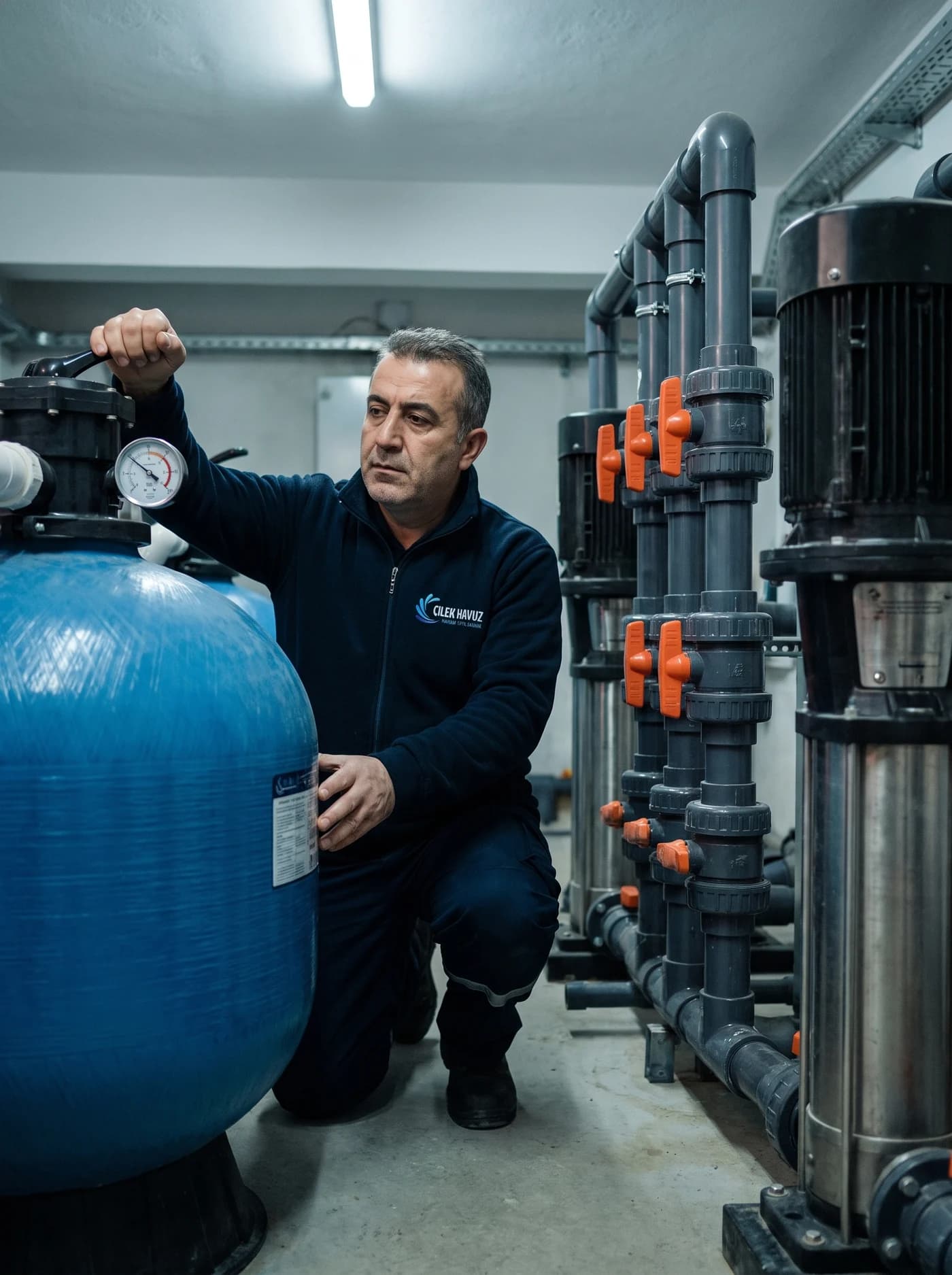
Filter media, laterals, pump seal, valve group, heater and dosing probe are inspected. Silica sand is renewed every 5-7 years; replacement is made with a quantity in kilograms calculated from the tank diameter.
Best suited forAll pool types
View in detail: Plant room service// 01 · Maintenance calculator
Enter your pool dimensions, and we calculate filter and dose.
Enter the pool's length, width, average depth and turnover time; water volume, turnover flow rate, required filter area, filter diameter, sand quantity and basic chemical doses are calculated instantly.
A 6 hour turnover is used for residential pools, 4 hours or less for public pools. Calculation rule: volume = length × width × average depth; turnover flow = volume ÷ turnover time. Filter area = flow ÷ filtration rate; at most 50 m³/h·m² for residential and 30 m³/h·m² for public pools. Raising free chlorine by 1 ppm takes 1 g of available chlorine per m³, about 1.8 g of a product with 56 percent available chlorine. With this product the shock dose is 10-20 g per m³ and weekly algaecide is 3-5 ml. The filter diameter is chosen at the public rate when the turnover time is 4 hours or less and at the residential rate above that; in the common series the sand fill is 60 kg for Ø400, 100 kg for Ø500, 150 kg for Ø600, 300 kg for Ø750 and 550 kg for Ø900. The exact dose is taken from the product label and the exact filter from its data sheet.
Get a quote with these dimensions
Send us the pool dimensions and usage; we inspect the plant room and the water during the survey and present the maintenance programme in an itemised quote.
| Item | Value |
|---|---|
| Water volume | 48.0 m³ |
| Turnover flow rate | 8.0 m³/h |
| Filter area, residential (50 m/h) | 0.16 m² |
| Filter area, public (30 m/h) | 0.27 m² |
| Recommended sand filter diameter | Ø500 mm |
| Silica sand fill | 100 kg |
| Raising free chlorine by 1 ppmproduct with 56 percent available chlorine | 86 g |
| Shock chlorination doseproduct with 56 percent available chlorine | 0.5-1.0 kg |
| Weekly algaecide | 0.1-0.2 L |
// 01 · Filter layers
A sand filter has five layers, and cleans the water in this order.
We build the pressure sand filter from top to bottom with a multiport valve, freeboard, silica sand, gravel underbed and lateral arms. Water enters the bed from the top and leaves at the bottom; during backwash the flow reverses and the dirt goes to the drain.
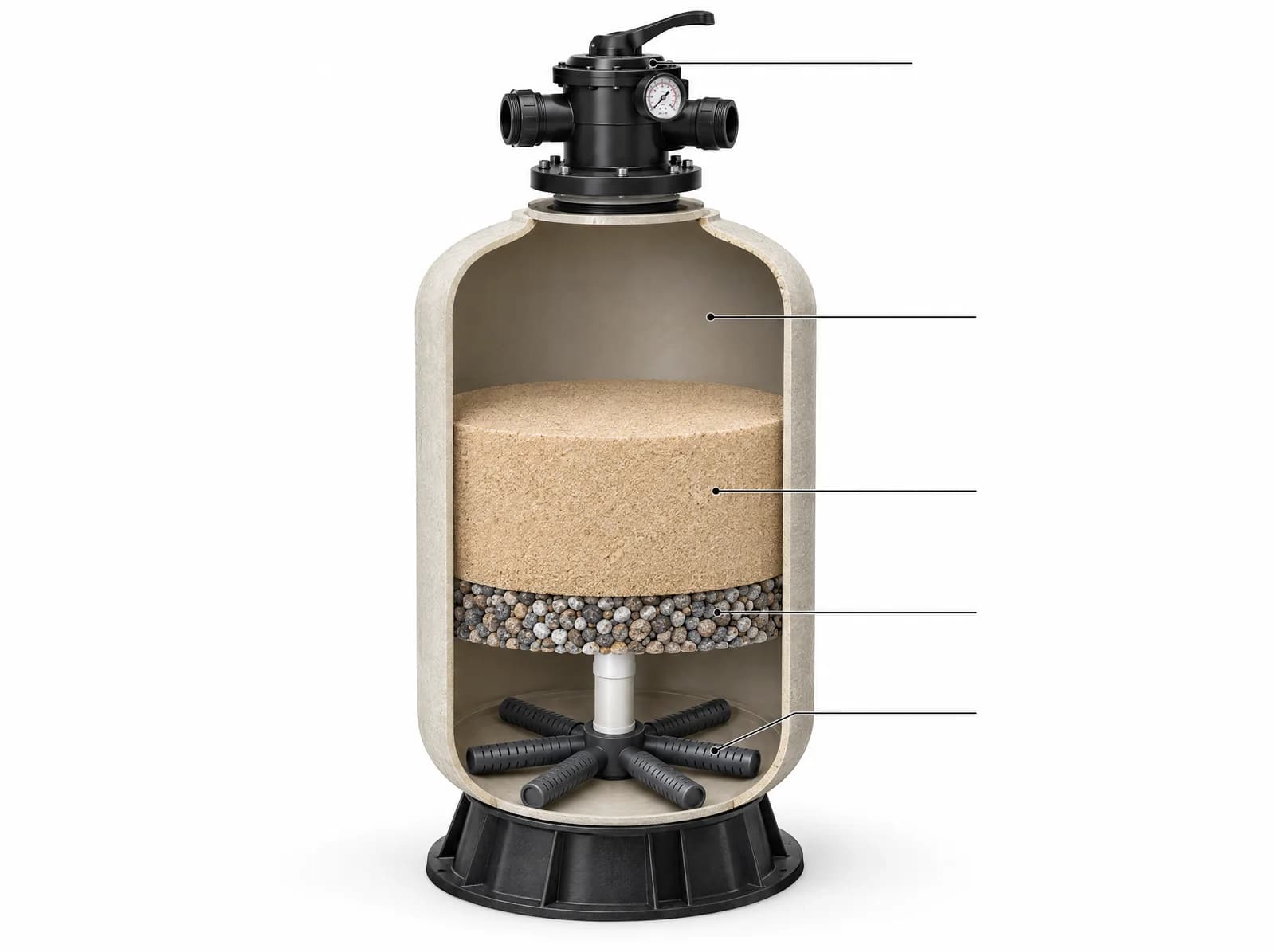
- Multiport valveControls the filter, backwash and rinse positions.
- FreeboardFree space above the bed; the sand lifts here during backwash.
- Silica sand0.4-0.8 mm grain; the main layer that traps suspended dirt.
- Gravel underbedCoarse gravel; covers the laterals and spreads the flow.
- Lateral armsSlotted arms; collect clean water and hold back sand.
// Reading plan
Before starting pool maintenance, read these six short articles.
The order follows the natural flow of a maintenance season: testing routine first, then dosing, the filter, the seasonal calendar, winterising and dealing with cloudy water.
Pool maintenance for beginners
Testing order and weekly routine in one article.9 minShort answer
Alkalinity is corrected first, then pH, then calcium hardness. Tests are taken while circulation runs and at least one turnover after the last dose; once the routine is set, weekly maintenance takes less than an hour.
- 01Survey and diagnosisDay 1Water testing, plant room and equipment inspection
- 02Reset treatmentDay 1-2Shock dosing, intensive filtration, backwash and rinse
- 03Water balanceDay 1Alkalinity, pH and chlorine adjustment, first test card
- 04Periodic visitsDay 7Weekly visit, dosing, cleaning and written report
Pool chemical dosing
From pool volume to grams and millilitres.9 minShort answer
Volume is found from length × width × average depth. Raising free chlorine by 1 ppm in 10 m³ of water takes about 10 g of available chlorine; in a 48 m³ pool that is about 85 g of a 56 percent product.
Filter backwashing
From gauge to valve, backwash step by step.6 minShort answer
Backwash when the gauge rises 0.3-0.5 bar above the clean starting reading. Wash for 1.5-3 minutes until the water runs clear, then rinse and return the valve to the filter position.
Year round pool maintenance
A calendar from spring opening to winter closing.9 minShort answer
pH and chlorine are tested daily, alkalinity weekly, hardness and cyanuric acid monthly. In summer filtration runs at least 8-10 hours a day, and the pool is winterised at the end of the season.
Preparing the pool for winter
Shock, winterising and equipment protection.10 minShort answer
Winterising starts with balanced water: pH 7.2-7.6, alkalinity 80-120 ppm. Then come evening shock, filter backwash, line draining and the cover; winter chemical does not remove the risk of frost.
Cloudy pool water
Causes and solution steps by colour.9 minShort answer
Cloudiness is a symptom; colour gives a clue, the decision is made by testing. Milky white water mostly comes from high pH, high hardness or poor filtration, green water from insufficient chlorine.
Showroom
Plan a showroom visit
At our showroom in Çilek Plaza, Sancaktepe, you can discuss your project with our team. We recommend booking an appointment by phone before your visit.
Working Hours
- Monday to Friday · 08:00-17:30
- Saturday · 08:00-12:30
- Closed on Sunday
// 02 · Cost
We price pool maintenance, by volume and programme.
Pool maintenance prices are set not by the pool's surface area but by its water volume, visit frequency and scope. The six factors below explain why two maintenance quotes differ; the exact amount is confirmed in an itemised quote after the survey.
Water volume
Volume sets chemical quantity, flow rate and filter load.
Visit frequency
A weekly, twice weekly or seasonal programme sets the labour.
Circulation type
Overflow pools add balance tank and grating maintenance.
Chemical scope
Whether chemical supply is in the package or quoted separately.
Use and regulation
Public pools need daily records and laboratory analysis.
Equipment and location
Condition of filter, dosing and heater; the pool's location.
// 03 · Process
Every visit follows four steps, always in the same order.
A visit starts with testing, continues with dosing by volume and goes on with surface, floor and skimmer cleaning. After the plant room check we record the measured values and the work done in a written report.
Testing and dosing
pH, free chlorine and monthly panel; dosing calculated per m³
Water brought into the ideal range
Mechanical cleaning
Surface, waterline, wall and floor cleaning; skimmers and baskets
Pool cleared of organic load
Plant room
Filter pressure, backwash, pump, seals and dosing probe
System with checked pressure and flow
Records and report
Test values, work done, early findings and recommendations
Written visit report
The four steps in detail
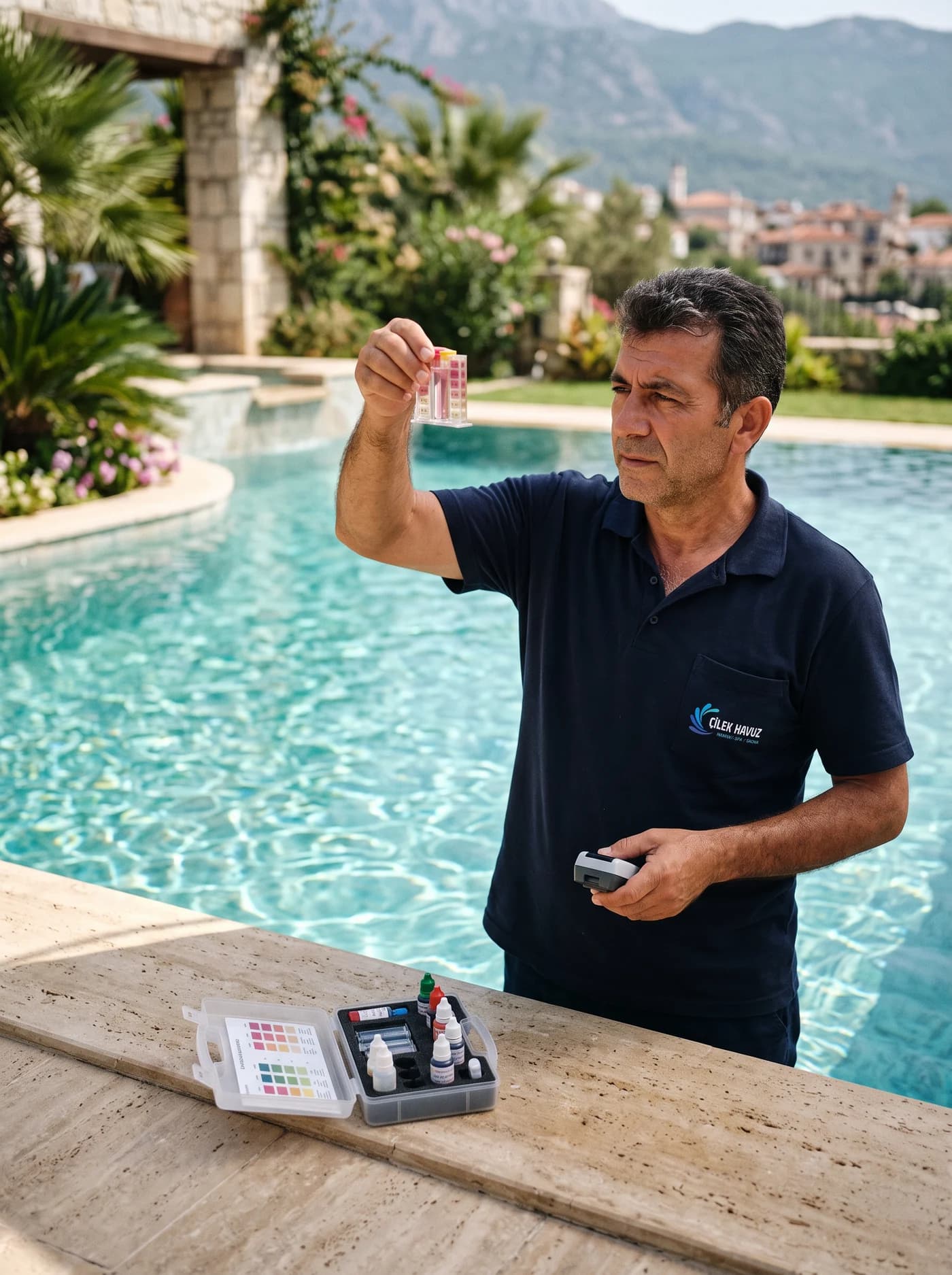
01 / 06
Water Testing and Measurement
Decisions Rest on Measurement
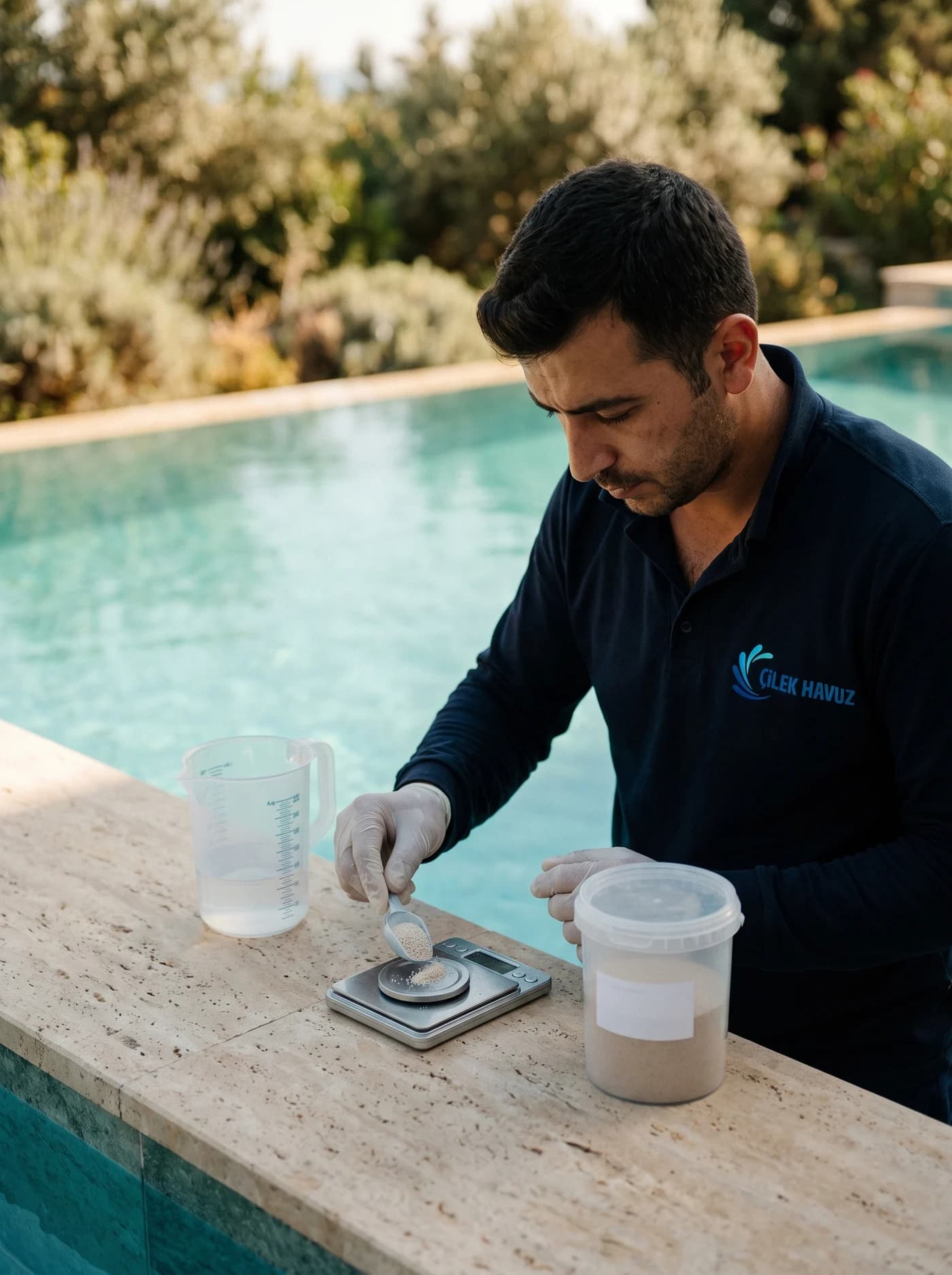
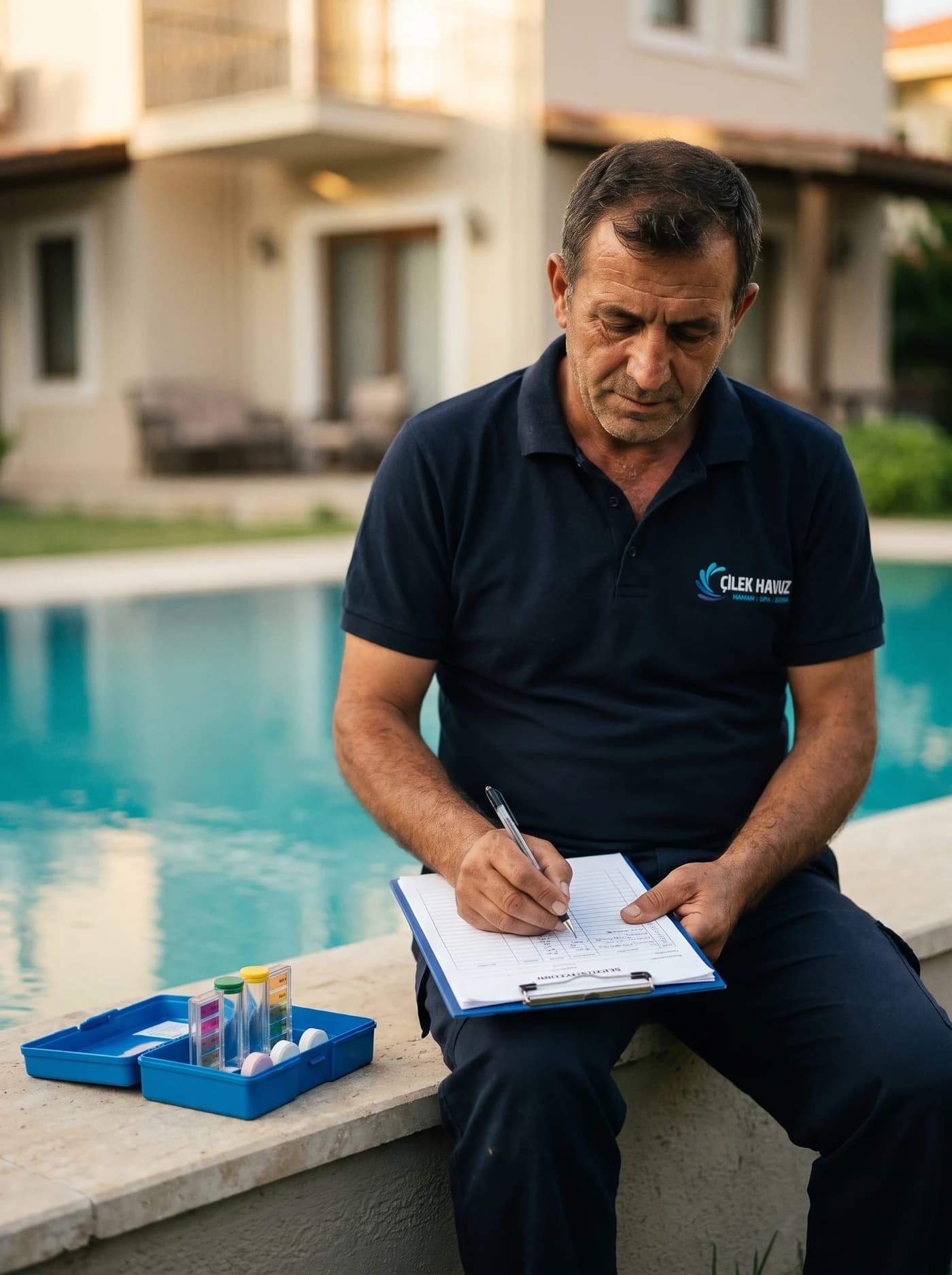
Every visit begins not with the water but with the numbers: pH and free chlorine are measured with a digital test, while alkalinity, calcium hardness and cyanuric acid are tracked on a monthly panel. The colour scale is only a cross-check, the verdict belongs to the instrument.
Every value measured is entered on the visit card. A single measurement is a photograph; the values accumulating on the card are a film: the trend reveals problems before they show any symptom.
- pH measurement (target 7.2-7.6)
- Free chlorine measurement (target 1-3 ppm)
- Monthly panel: total alkalinity (80-120 ppm)
- Monthly panel: calcium hardness (200-400 ppm)
- Monthly panel: cyanuric acid (30-50 ppm)
- Water temperature and general observation
- Taking the sample at the correct depth and point
- Entering the values on the visit card
Why it matters
Water that looks clear may not be healthy: the chlorine may be spent, the pH may have drifted. By the time you notice it by eye the problem has already grown; measurement brings the intervention forward, ahead of the crisis.
// 04 · Pool chemicals
Each chemical has a role, and testing sets the order.
In maintenance we use separate products for water balance, disinfection and protection. Alkalinity and pH are balanced first, then chlorine is adjusted, and algaecide is added last; chemicals are always added to water and products are never mixed together.
 01
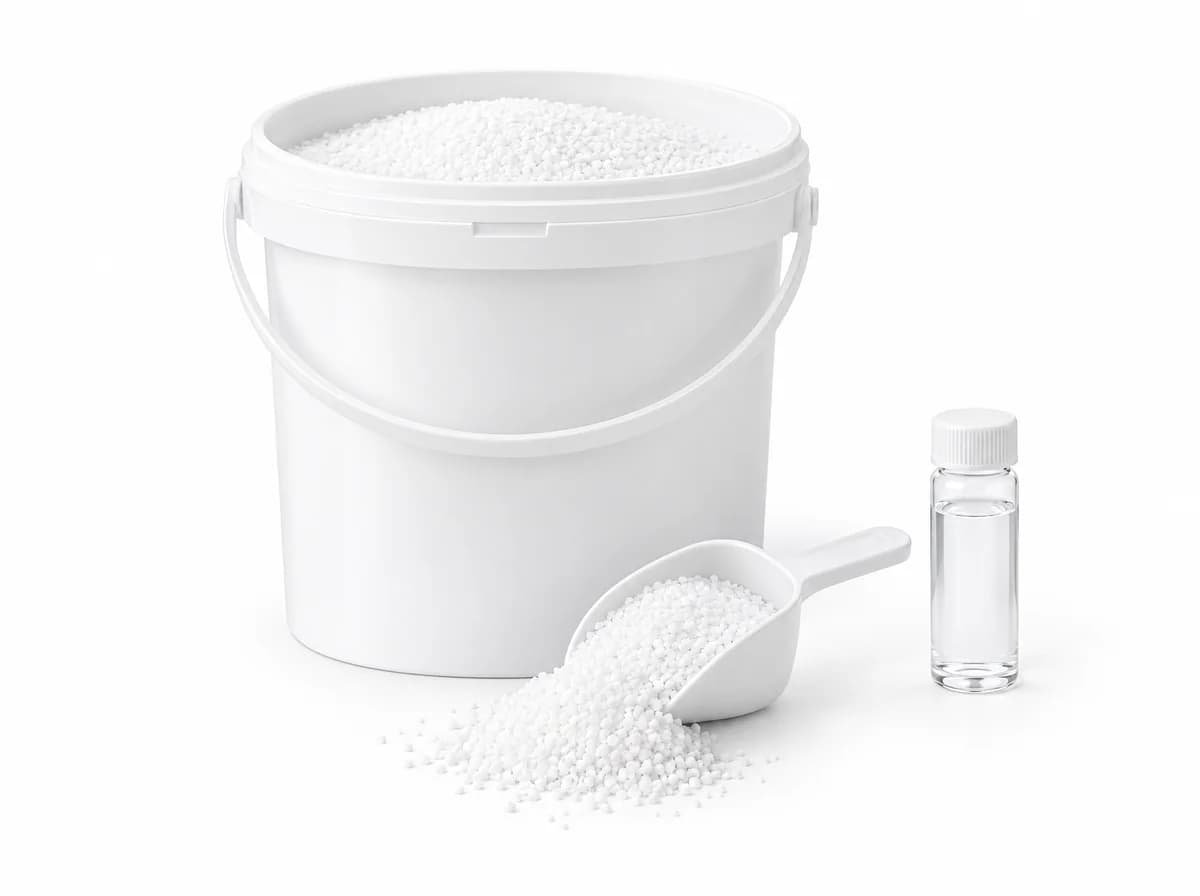
pH reducer
Based on sodium bisulphate or acid; brings a rising pH back to the 7.2-7.6 range. The amount depends on the water's alkalinity and is given in split doses while circulation runs.
Use
- Water balance
- Weekly
 02
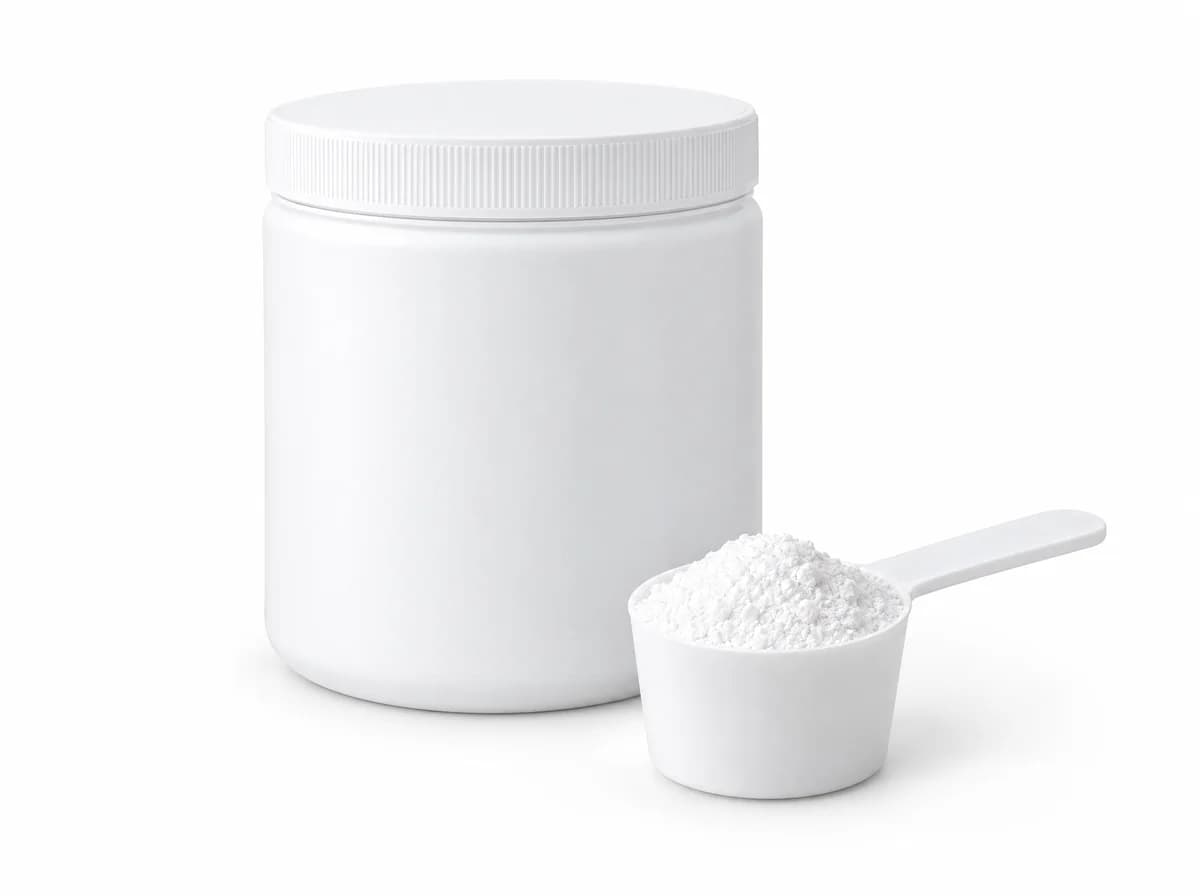
pH increaser
Based on sodium carbonate; raises a falling pH. After each adjustment the water is circulated for a few hours and tested again.
Use
- Water balance
 03
Alkalinity increaser
Based on sodium bicarbonate; brings total alkalinity into the 80-120 ppm band. Alkalinity is the buffer for pH; when it stays low, pH drifts within a day.
Use
- Water balance
- Monthly
 04
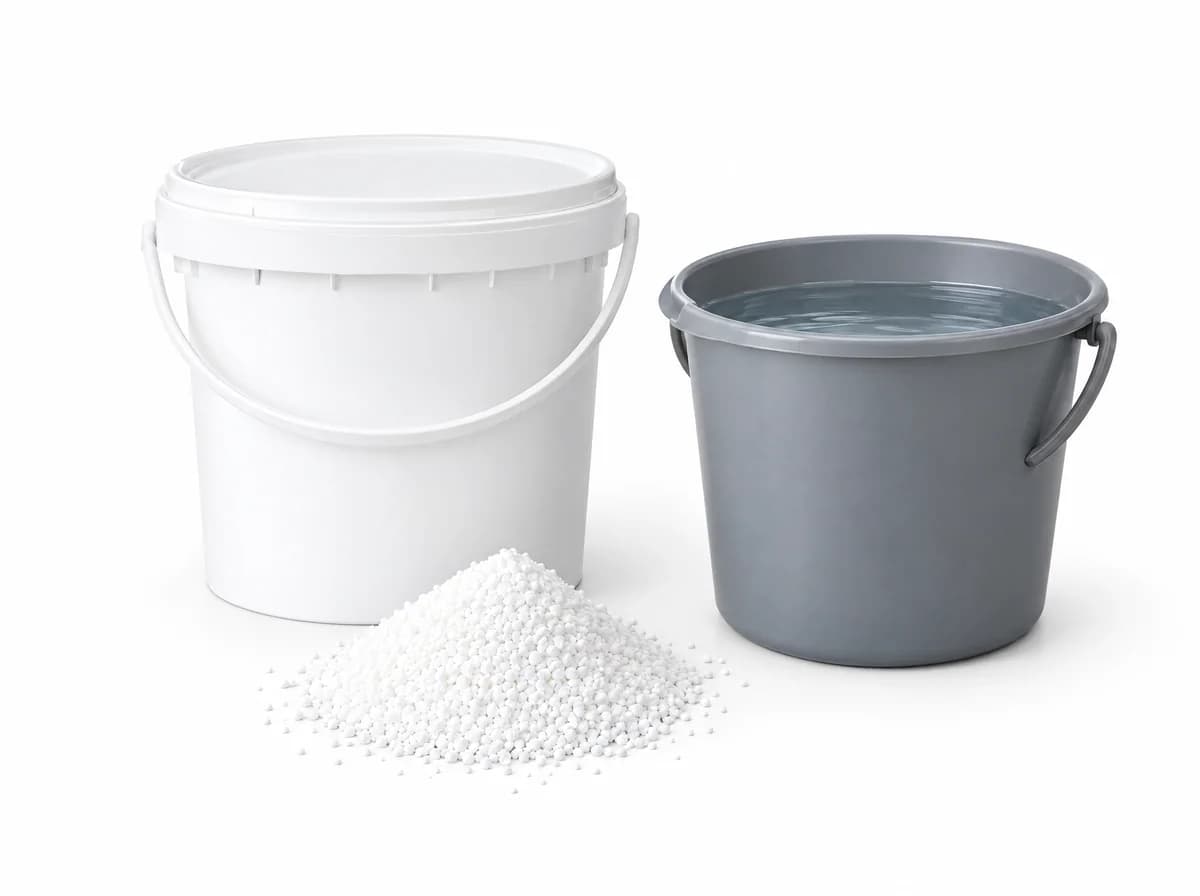
Granular chlorine
A fast dissolving dichlor type product containing about 56 percent available chlorine. Used for routine dosing and shock treatment; shock is always done in the evening.
Use
- Disinfection
- Shock
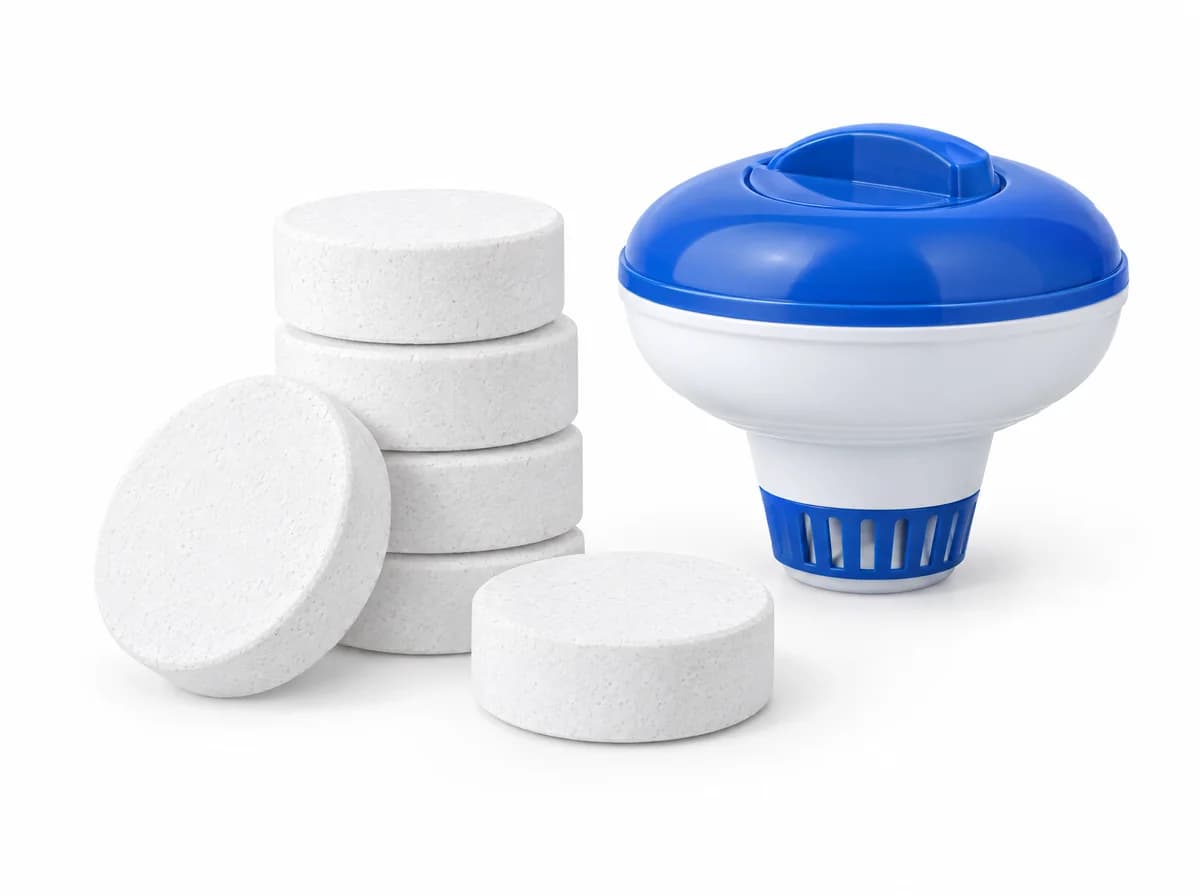 05
Chlorine tablets
Slow dissolving, stabilised trichlor tablets that push the water's pH down. Each tablet leaves cyanuric acid in the water, so its level is tested several times a season.
Use
- Disinfection
- Skimmer
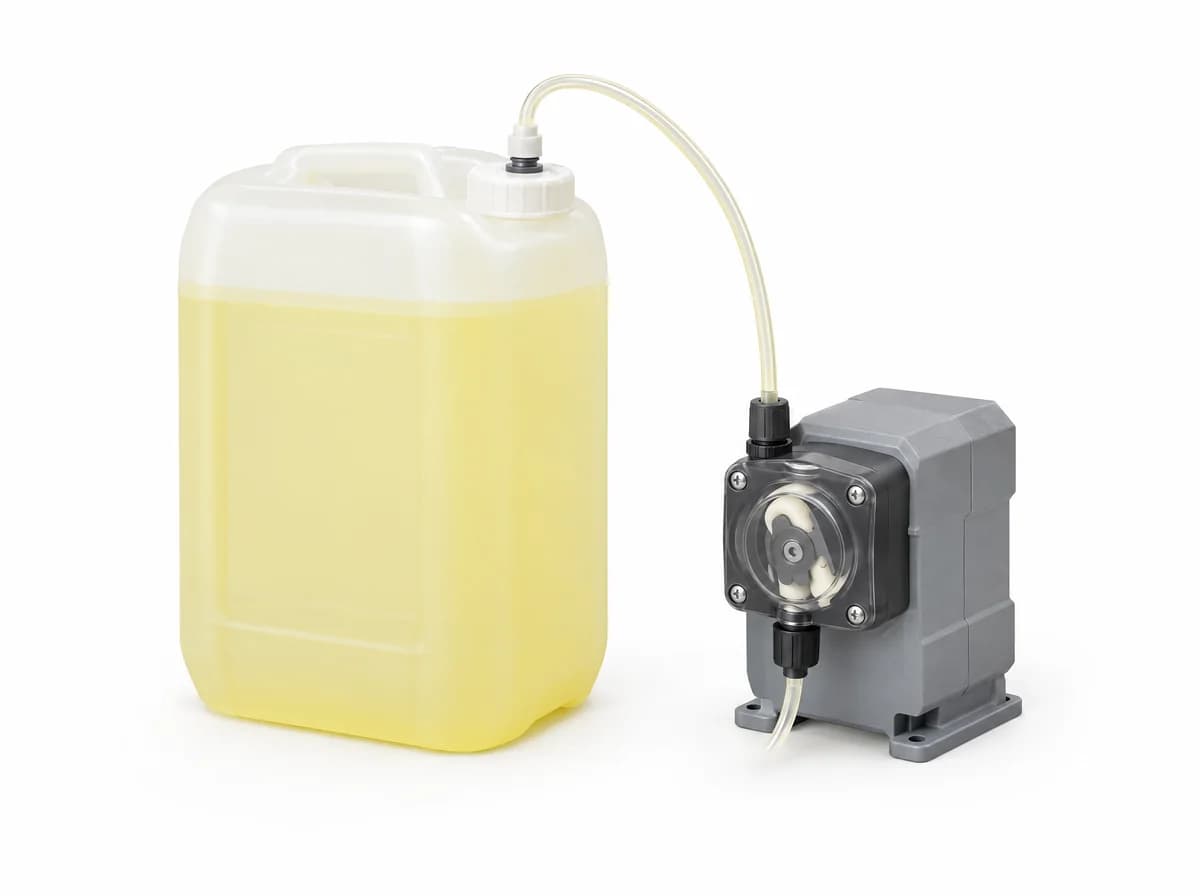 06
Liquid chlorine
A sodium hypochlorite solution that contains no stabiliser and pushes pH up. It is fed by the automatic dosing unit in response to the test probe.
Use
- Disinfection
- Automatic dosing
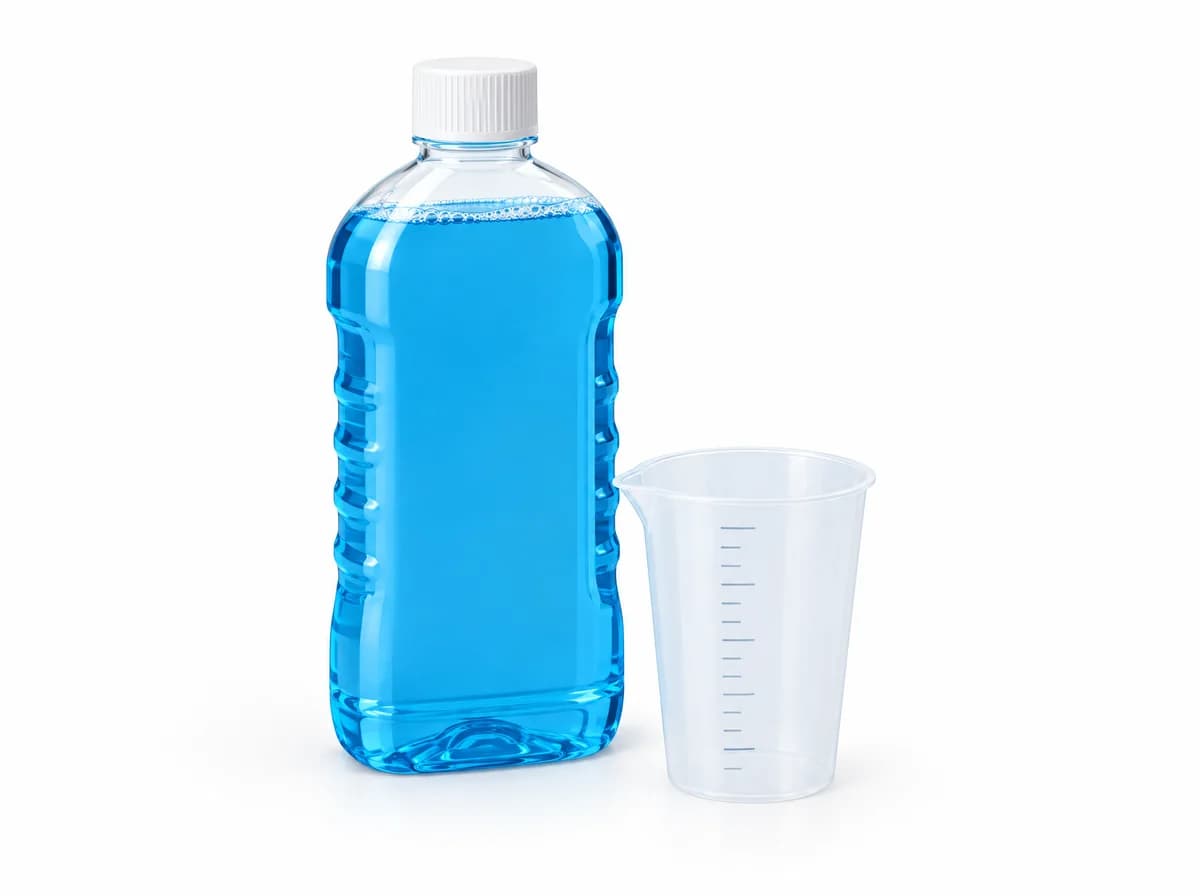 07
Algaecide
A preventive rather than a treatment product; in the weekly routine 3-5 ml per m³ is added. A non foaming product is chosen and added while the pump runs.
Use
- Protection
- Weekly
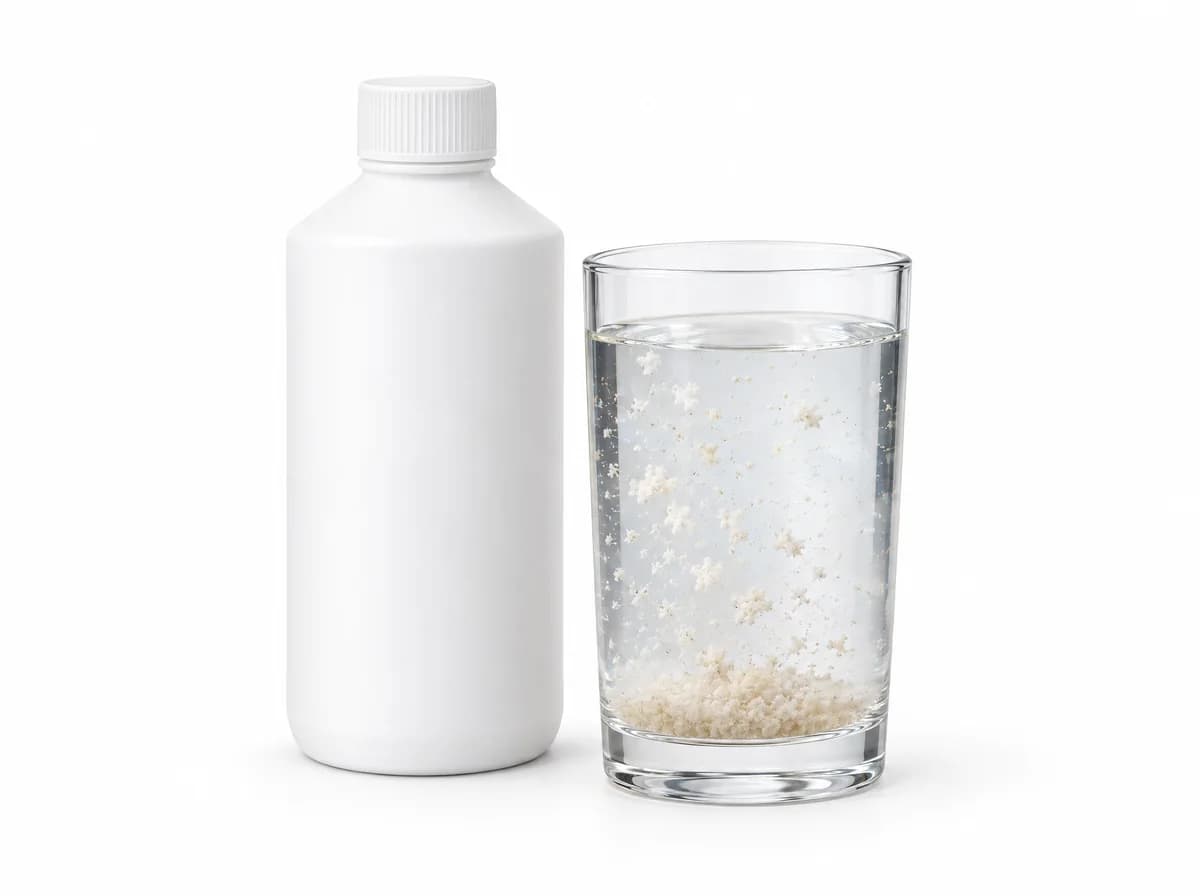 08
Clarifier
Clumps particles too fine to pass through the filter, making it easier for the sand bed to catch them. Used once the chemistry is balanced.
Use
- Cloudy water
- Filter
 09
Hardness increaser
Based on calcium chloride; brings hardness into the 200-400 ppm band. At low hardness the water leaches minerals from grout and render; brief cloudiness may appear after adding it.
Use
- Water balance
- Monthly
// 04 · Maintenance products
From chemicals to test devices, we choose maintenance products for the pool.
Our products include chlorine tablets and granules, pH adjusters, clarifiers, algaecides, test kits, photometers and smart water analysis devices. You can review each product's content and use on its own page.
// 05 · Projects
In the pools we built, we planned maintenance from the start.
In villa, complex and hotel pools we built the plant room, valve group and backwash line to make the maintenance team's work easier. You can review each project's dimensions and system on its own page.
// 05 · Service regions
Across Türkiye and abroad, we carry out pool maintenance.
We provide pool maintenance across Türkiye for villa, complex, hotel and commercial pools; we export to 14 countries and run projects abroad on site through our branches in Kyrgyzstan, Egypt, Algeria and Iraq.
Domestic
15- Istanbul
- Mugla / Bodrum
- Antalya
- Izmir / Cesme
- Ankara
- Bursa
- Kocaeli / İzmit
- Adana
- Mersin
- Tekirdağ
- Kandıra
- Sakarya
- Samsun
- Denizli
- Elazığ
Abroad
13- AlgeriaBranch
- EgyptBranch
- IraqBranch
- KyrgyzstanBranch
- France
- Germany
- Kazakhstan
- Libya
- Qatar
- Russia
- Saudi Arabia
- United Arab Emirates
- United Kingdom
// 06 · After the visit
Each visit closes with a report, and we continue the follow-up together.
After every visit we send you the measured values and the work done in writing. The values that build up in the records reveal a slowly rising filter pressure or a constantly drifting pH before any symptoms appear.
- 01Every visit
Visit report
pH, free chlorine, filter pressure and the work done are sent in writing; you do not need to be at home.
- 02Once a month
Monthly water panel
Total alkalinity, calcium hardness and cyanuric acid are tested and the dosing curve is updated.
- 03Twice a year
Season transitions
For outdoor pools, season opening and winterising are added to the programme; a winter preparation file is kept.
- 045-7 years
Filter media
Silica sand is renewed within this range; if backwashing does not bring pressure down, replacement is brought forward.
Related services
- Swimming Pool ConstructionReinforced-concrete, prefabricated and infinity swimming pools, built turnkey for villa, residential and commercial projects.
- Prefabricated PoolsFast-install modular prefabricated pool systems.
- Infinity PoolsPools that open onto the view, with water spilling over the edge into a balance tank.
- Thermal PoolsDurable pool systems built for thermal water.
- Landscape ArchitectureLandscape design that unites the pool with its garden and surroundings.
- Pool ConsultingEngineering consulting on project, materials and budget.
Prepared byAli SAVAŞ · Project Manager · Mechatronics Engineer
// 07 · Questions
About pool maintenance, frequently asked questions.
Çilek Havuz Corporate
Pool & Wellness Engineering
- Response Time
- Same day
- Channels
- Phone · Email · WhatsApp
If the answer you are looking for is not here, send your question directly to us and our team will reply as soon as possible.
+90 216 475 39 37During the swimming season a weekly visit is the standard. Water testing, chemical dosing, surface and floor cleaning and the skimmer basket are done every week. A monthly panel tests alkalinity, hardness and cyanuric acid; season opening and winterising are added at season transitions.
Çilek Havuz Corporate
The standard scope is water testing and dosing, surface and floor cleaning, and skimmer and basket care. A filter pressure check and backwash where needed, a pump and equipment check, and a written visit report are also included. Chemical supply, robotic cleaning and breakdown response are added depending on the package.
Çilek Havuz Corporate
The price is set by the pool's water volume, whether it is a skimmer or overflow pool, and visit frequency. Whether chemicals are included in the package, usage intensity and location also affect it. After the survey the scope and price are presented in writing, item by item.
Çilek Havuz Corporate
pH is kept in the 7.2-7.6 range, total alkalinity at 80-120 ppm and calcium hardness in the 200-400 ppm band. Free chlorine is 1-3 mg/L in outdoor pools and 1-1.5 mg/L in indoor pools under the regulation; combined chlorine should not exceed 0.2 mg/L.
Çilek Havuz Corporate
The pump runs long enough to pass all of the pool water through the filter within the turnover time. A 6 hour turnover is used for residential pools and a shorter one for public pools; in summer heat and heavy use, filtration rises to 8-10 hours a day.
Çilek Havuz Corporate
Green water usually comes from algae and insufficient chlorine, cloudiness from a filtration or water balance problem. It is first diagnosed by testing, then shock dosing, intensive filtration and a clarifier where needed are applied; in most cases the water is swimmable again within 24-48 hours.
Çilek Havuz Corporate
Basic dosing can also be done by a homeowner; the difference is in testing discipline. In professional maintenance pH, chlorine, alkalinity and hardness are assessed together, dosing is calculated per m³ and the values are recorded.
Çilek Havuz Corporate
It is time to backwash when the gauge rises 0.3-0.5 bar above the starting pressure of a clean filter. Wash until the water in the sight glass runs clear, then rinse; the valve is always turned with the pump switched off.
Çilek Havuz Corporate
Silica sand is renewed every 5-7 years. If pressure does not return to its former value after backwashing, if the backwash interval has halved, or if the water stays cloudy although the chemistry is correct, replacement is brought forward.
Çilek Havuz Corporate
It does; winterising prepares the water and the equipment for winter. The water is balanced and shocked, the filter is backwashed, winter chemical is added, lines are drained against frost and the pool is covered. In an indoor or heated pool that runs through the winter, the testing and maintenance routine continues as before.
Çilek Havuz Corporate
A robot takes over surface and floor cleaning; it does not test water chemistry, dose, backwash the filter or spot equipment faults. We pair the robot's daily cleaning with periodic maintenance that manages chemistry and equipment.
Çilek Havuz Corporate
In a public pool, pH and free chlorine are tested every operating day and entered in the daily log. Microbiological analysis is carried out at an accredited laboratory at least once a month. Records of chemical use, fresh water top up and filter backwashing are also kept in the operating file.
Çilek Havuz Corporate
We do. At the first survey the pool's structure, plant room and water values are inspected, and chronic problems such as leaks or insufficient filtration are reported. The water is then brought into balance with a reset treatment and the periodic programme begins.
Çilek Havuz Corporate
With experience built since 1993, Çilek Havuz provides maintenance for villa, complex, hotel and commercial pools across Türkiye. We export to 14 countries and run projects abroad through our branches in Kyrgyzstan, Egypt, Algeria and Iraq.
Çilek Havuz Corporate
// Sources and regulations
Sources and regulations
The official documents behind the technical framework on this page; links open the institutions' own sites.
- Regulation on the Health Principles and Conditions for Swimming Pools (Official Gazette No. 27866, 6 March 2011)Official Gazette of Türkiye
- Regulation Amending the Swimming Pools Regulation (Official Gazette, 15 December 2011)Official Gazette of Türkiye
- Guidelines for safe recreational water environments, Volume 2: Swimming pools and similar environments
Next step
Let us discuss your project in the way that suits you best.
You can fill in the form for a written quote, schedule a video project presentation or ask us to survey your project site.
Get a Quote
Send us your dimensions and expectations in writing.
Online presentation
Video project presentation
On-site survey
Inspection at your project site
// 08 · Company & Contact
To talk about your project, call or write to us.
Legal Name
Çilek Havuz
Founded
1998 · Istanbul
Head Office
Çilek Plaza, Eyüp Sultan Mah. Yakacık Cd. Feshane Cd. No: 2 D:4 D:1, 34885 Sancaktepe / İstanbul
Service Area
All of Türkiye · exports to 14 countries
Branches
Kyrgyzstan · Egypt · Algeria · Iraq
Showroom
Plan a showroom visit
At our showroom in Çilek Plaza, Sancaktepe, you can discuss your project with our team. We recommend booking an appointment by phone before your visit.
Working Hours
- Monday – Friday · 08:00 – 17:30
- Saturday · 08:00 – 12:30
- Closed on Sunday