

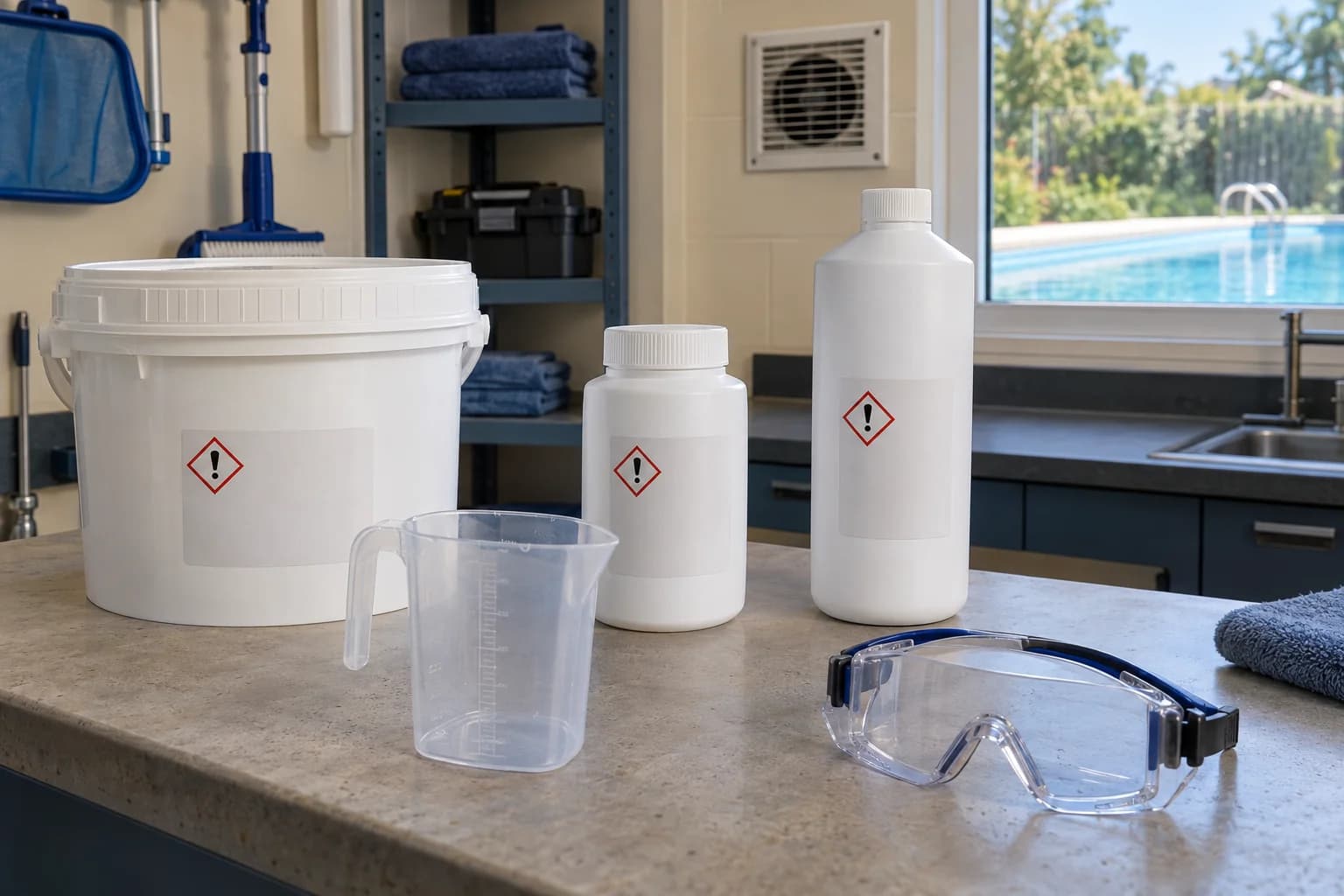
Chlorine tablets and granules: dissolution, use and selection
Chlorine products differ in active ingredient, concentration and intended use. Shape alone does not determine strength or dosing method.
Chlorine products differ in active ingredient, concentration and intended use. Shape alone does not determine strength or dosing method.
Tablet and granule describe form, not the complete chemical composition. On the market, tablets are often based on trichloroisocyanuric acid, while granules are often sodium dichloroisocyanurate or calcium hypochlorite; this is a common pattern, not a rule. Granular products can dissolve at different rates and serve different purposes. Do not assume every granule is a shock treatment or every tablet follows the same dosing method.
The selection must match test results, treatment purpose and the dosing equipment. Read the active ingredient and available chlorine concentration before comparing pack sizes.
Some chlorine products also add stabiliser, making cyanuric acid monitoring relevant to the treatment plan. Read the actual formulation instead of transferring instructions from a different container.
A tablet must only be used through an approved application route. Do not leave it on the pool finish or place it in an incompatible feeder. Granules should only be prepared or applied as their own label permits.
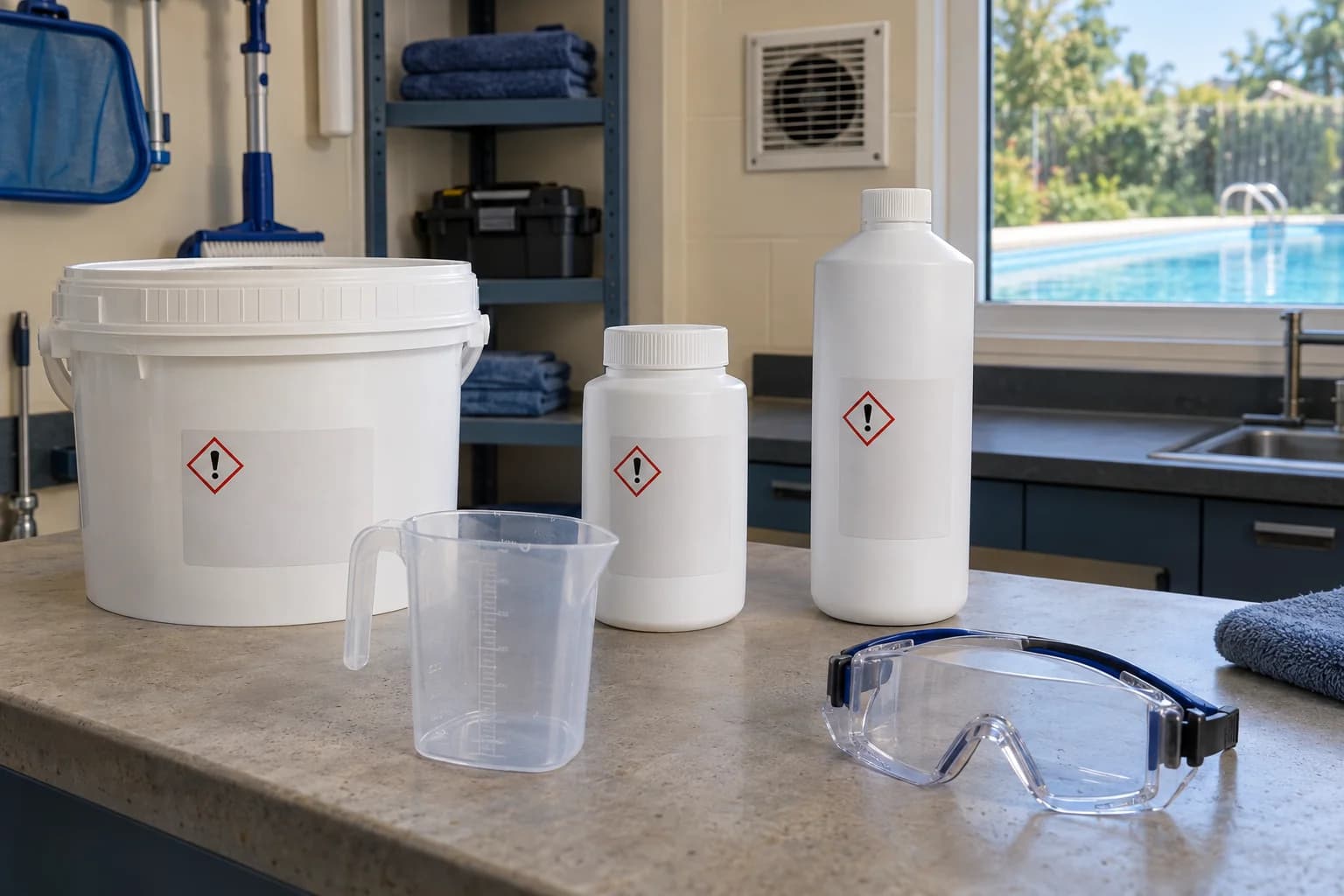
Never mix different chlorine products, acid or residues in one container or unsuitable dosing chamber. Contact between chlorine products and acid can release toxic chlorine gas, and contact between isocyanurate-based products and calcium hypochlorite can cause a fire. Use the original labelled packaging and follow storage and protective-equipment instructions.
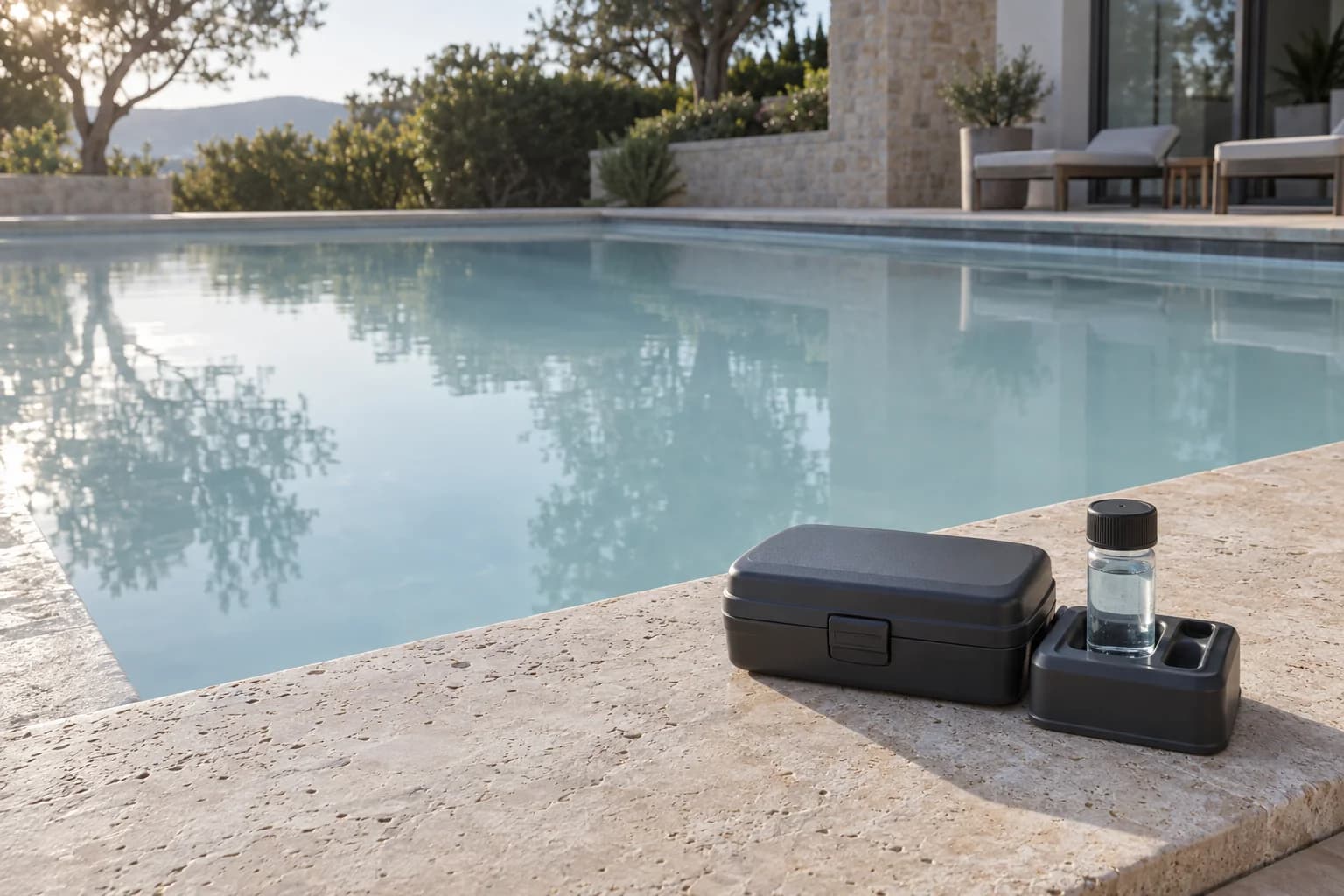
Slow dissolution does not remove the need to measure the water. Compare the complete treatment cost and compatibility, not just the price per kilogram. Keep a record of changes when switching products.
| Property | Information to check |
|---|---|
| Active ingredient | The actual chemical composition of the product |
| Available chlorine content | How much chlorine the same product weight provides |
| Dissolution and intended use | Routine maintenance or a specific application the label permits |
| Stabiliser content | Whether the product adds cyanuric acid to the water |
| Dosing route | Compatible dosing equipment and warnings on contact with the pool finish |
A useful assessment starts from the pool dimensions, location and existing equipment. Where the question depends on them, recent water test results, the product label or the exact device model are also needed.
With these details, the Çilek Havuz team assesses the appropriate product, maintenance or technical work. A specific recommendation is only reliable when it matches the installation and its documented operating conditions.
Solutions for your project
Explore services and product categories related to this topic.
Services
Products
Company & Contact
To talk about your project, we are one call away.
Legal Name
Çilek Havuz
Founded
1998 · Istanbul
Head Office
Çilek Plaza, Eyüp Sultan Mah. Yakacık Cd. Feshane Cd. No: 2 D:4 D:1, 34885 Sancaktepe / İstanbul
Service Area
All of Türkiye · exports to 14 countries
Related articles
Keep reading.

References
- 1.Pool chemical safety — CDC
Frequently Asked Questions
Our readers' most asked; with expert answers.
Çilek Havuz Content & Technical Team
Guides & Technical Content
- Response Time
- Same day
- Channels
- Phone · E-mail · WhatsApp
If the answer you are looking for is not here, send your question directly to us and our team will reply as soon as possible.
Book a free site surveyNo. Compare the active ingredient and concentration.
Çilek Havuz Content & Technical Team
No universal preparation method applies; follow the specific label.
Çilek Havuz Content & Technical Team