


Saltwater Pool: Salt Chlorine Generator Operation and Maintenance
Learn how salt chlorination works, what maintenance remains necessary and which installation details matter when converting an existing pool.
Project Manager · Mechatronics Engineer · Çilek Havuz
- Published
- Updated
- Reading
- 9 min read
- Category
- Maintenance
Learn how salt chlorination works, what maintenance remains necessary and which installation details matter when converting an existing pool.
A common misconception is that saltwater pools are chlorine-free.
In fact, these systems continuously produce chlorine from the salt added to the water instead of having it added from containers. In other words, the substance that disinfects the water is still chlorine; the difference lies in how the chlorine is obtained. A 'saltwater pool' should therefore be understood as 'a pool that produces chlorine from salt'.
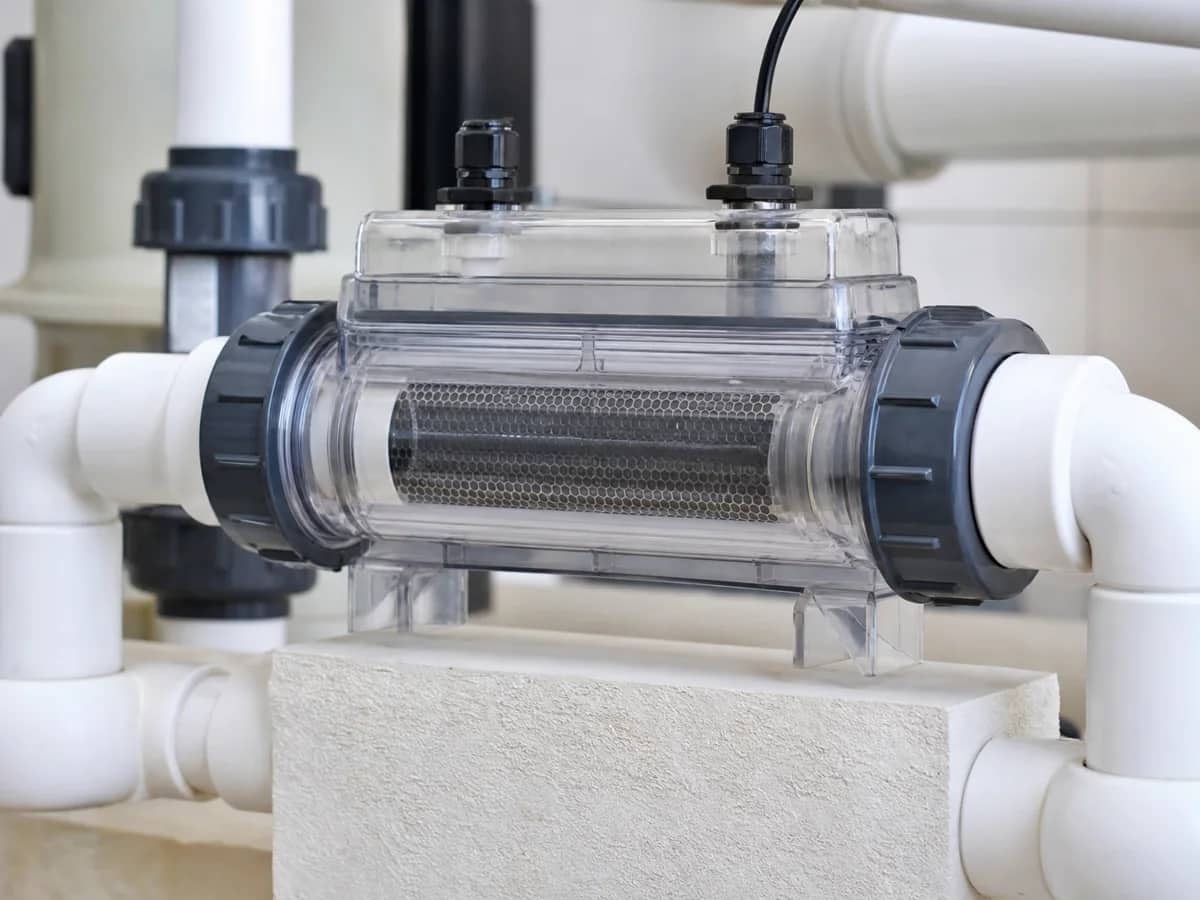
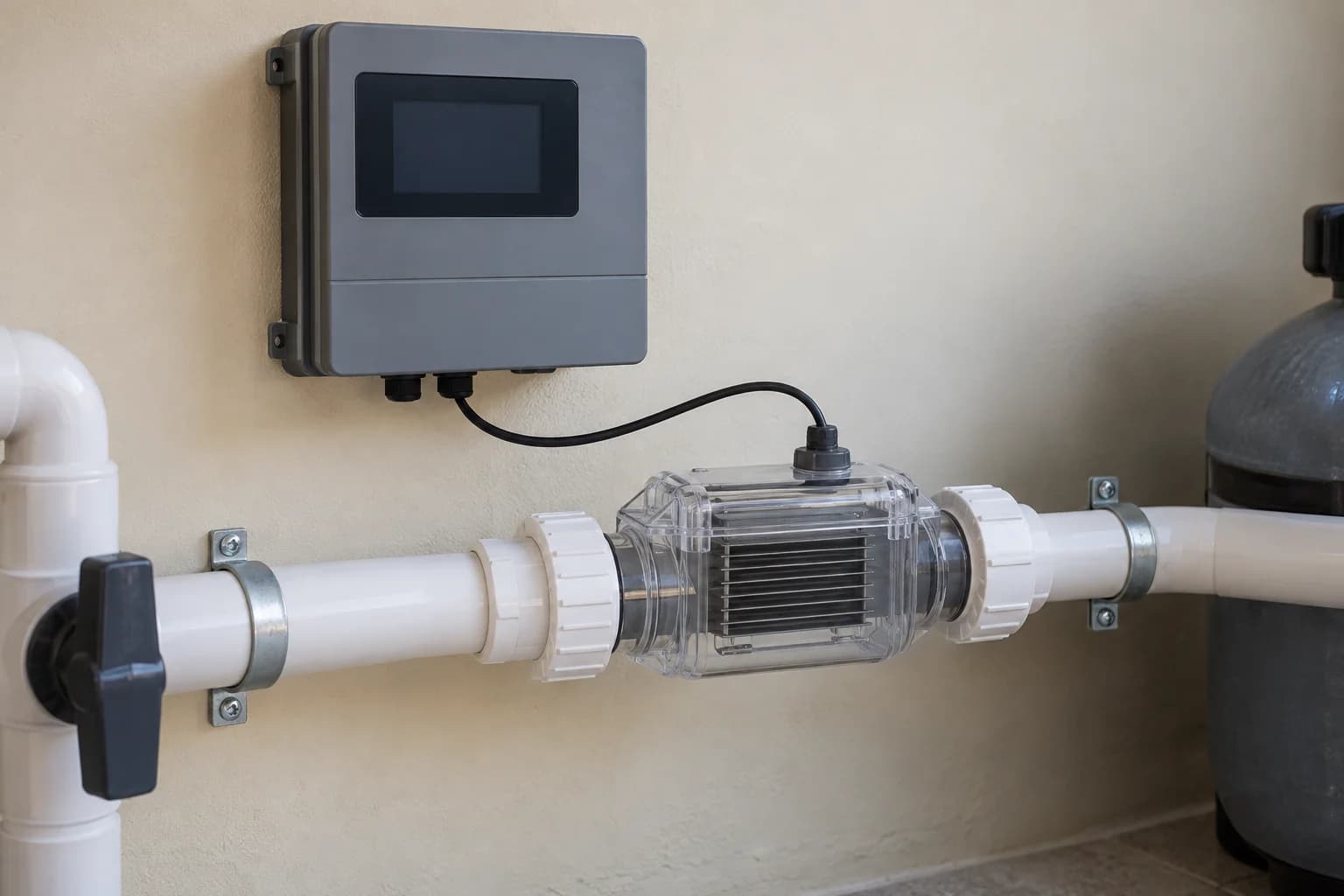
At the center of the system is the salt chlorine generator (cell). As the salt dissolved in the water passes through this cell installed in the pipework, it undergoes electrolysis and free chlorine is released. This chlorine disinfects the water just like manually added chlorine; once its work is done, it largely reverts to salt and the cycle continues. This self-renewing cycle is the main appeal of saltwater systems.
The electrolytic cell, filtration and water balance work together. If output does not meet the pool's demand or pH control is neglected, a switched-on device alone does not provide suitable water quality. Testing and water care therefore continue after the system is installed.
The heart of the salt chlorine generator is the set of coated titanium plates inside the cell.
When low-voltage direct current is applied to these plates, the salt water flowing between them undergoes electrolysis. Sodium chloride (salt) is split in the process, and free chlorine (a disinfectant in the form of hypochlorous acid) forms in the cell. Chemically, this is the same active disinfectant as manually added chlorine.
The chlorine produced mixes with the pool water, neutralizes organic contaminants and microorganisms, and then largely reverts to salt ions. Salt is therefore not continuously consumed but essentially stays in circulation; losses occur only through water leaving the system by splash-out, backwashing, overflow and water replacement. On most devices the chlorine production rate is adjustable; output is raised or lowered according to bathing load and temperature to maintain a balanced free chlorine level.
Actual output depends on the production setting, pump run time, cell condition and operating conditions such as water temperature. A low free chlorine reading does not always indicate a faulty device; heavy use or strong sunlight can consume chlorine faster than it is produced. We therefore adjust settings based on test results.
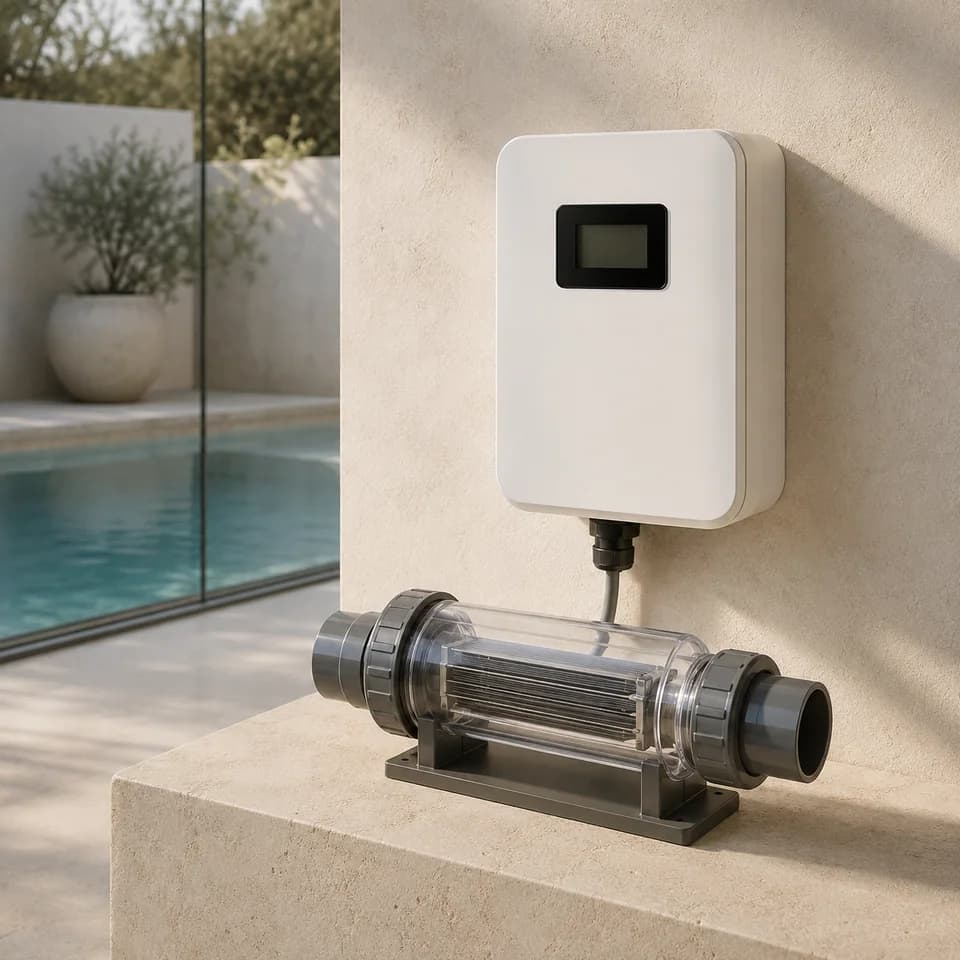
The control unit manages production, and electrolysis takes place in the cell installed in the pipework.
Sensors and control options vary by model. Flow detection, a salinity display, pH control or remote access are not included to the same extent in every package. We therefore clarify the following items one by one at the quotation stage.
| Component | Question to ask |
|---|---|
| Cell and control unit | What are the production capacity and operating conditions? |
| Flow protection | Which sensor is included in the package? |
| pH control | Is measuring and dosing equipment included? |
| Cover input | Is connection to the existing pool cover supported? |
| Maintenance and spare parts | What do cell inspection and the service scope cover? |
Salt chlorine generators need a certain salt concentration in the water to operate efficiently.
For many standard systems, manufacturers specify roughly 2.7 to 3.5 grams per liter (approximately 2,700-3,500 ppm); low-salt models work with lower values, and the exact range is always set by the device manufacturer's manual. This concentration is far below that of seawater, which averages around 35 grams per liter, so saltwater pool water does not feel salty like the sea.
If the salt level is too low, the generator cannot produce enough chlorine and disinfection weakens; if it is too high, a salty taste appears and the risk of corrosion on metal fittings and the cell increases. The salt level should therefore be measured periodically and adjusted when necessary. Salt does not decrease through evaporation; the main losses come from water replacement, backwashing and overflow. For this reason, check the salt level at the start of each season and after large water losses, and top it up if the measurement calls for it.
Standard-salt and low-salt systems can have different operating ranges; a value from another model is not a target for your device. Do not add salt before measuring the current salinity and reading the instructions for the exact model. Where the label lists minimum, recommended and maximum values separately, they must not be treated as interchangeable. Replacing evaporated water alone does not create a need for more salt; the decision follows a fresh measurement.
The most obvious advantage is the balance of comfort and continuity.
Because chlorine is produced continuously and in metered amounts, the free chlorine level is more stable than with manual dosing, which often causes sudden rises and falls. Some users describe this stability as water that feels softer; fewer chlorine spikes can also reduce eye and skin irritation compared with unbalanced chlorination. This experience varies from person to person and should not be read as a health benefit promised for every pool.
The second advantage is ease of operation. The need to carry, store and manually dose heavy chlorine containers is largely removed; the system supplies chlorine itself at the set production rate. This is convenient especially for owners with limited time for regular maintenance. Because salt is relatively inexpensive over the long term, operating costs are in many cases more predictable than continually buying chlorine containers.
An operating cost comparison should not be limited to the price of salt versus chlorine. Electricity, cell replacement, test supplies, pH correction and service also belong in the calculation. We therefore do not promise lower running costs for every pool; we assess the advantages together with your current maintenance routine.
The first disadvantage is the initial investment; purchasing and installing the generator and cell costs more than conventional manual chlorination.
The second issue is cell life: electrolysis plates are consumable components that wear over time and usually need replacing every few years, depending on how intensively the pool is used; this is a periodic cost that has to be planned. The third issue is the effect of salt on materials; the risk of corrosion on metal fittings, natural stone finishes and equipment not made of suitable materials must be taken into account.
Salt chlorine generators also tend to raise the pH of the water; electrolysis pushes the water towards the alkaline side, so pH has to be monitored regularly and lowered when necessary. The system is not 'set and forget'; salt level, pH, cell cleanliness and calcium scale should be checked periodically. Most of these risks can be managed through the right choice of materials, correct installation and regular maintenance; this is why we assess material compatibility in detail when designing saltwater systems.
The first pillar of maintenance is keeping the cell clean.
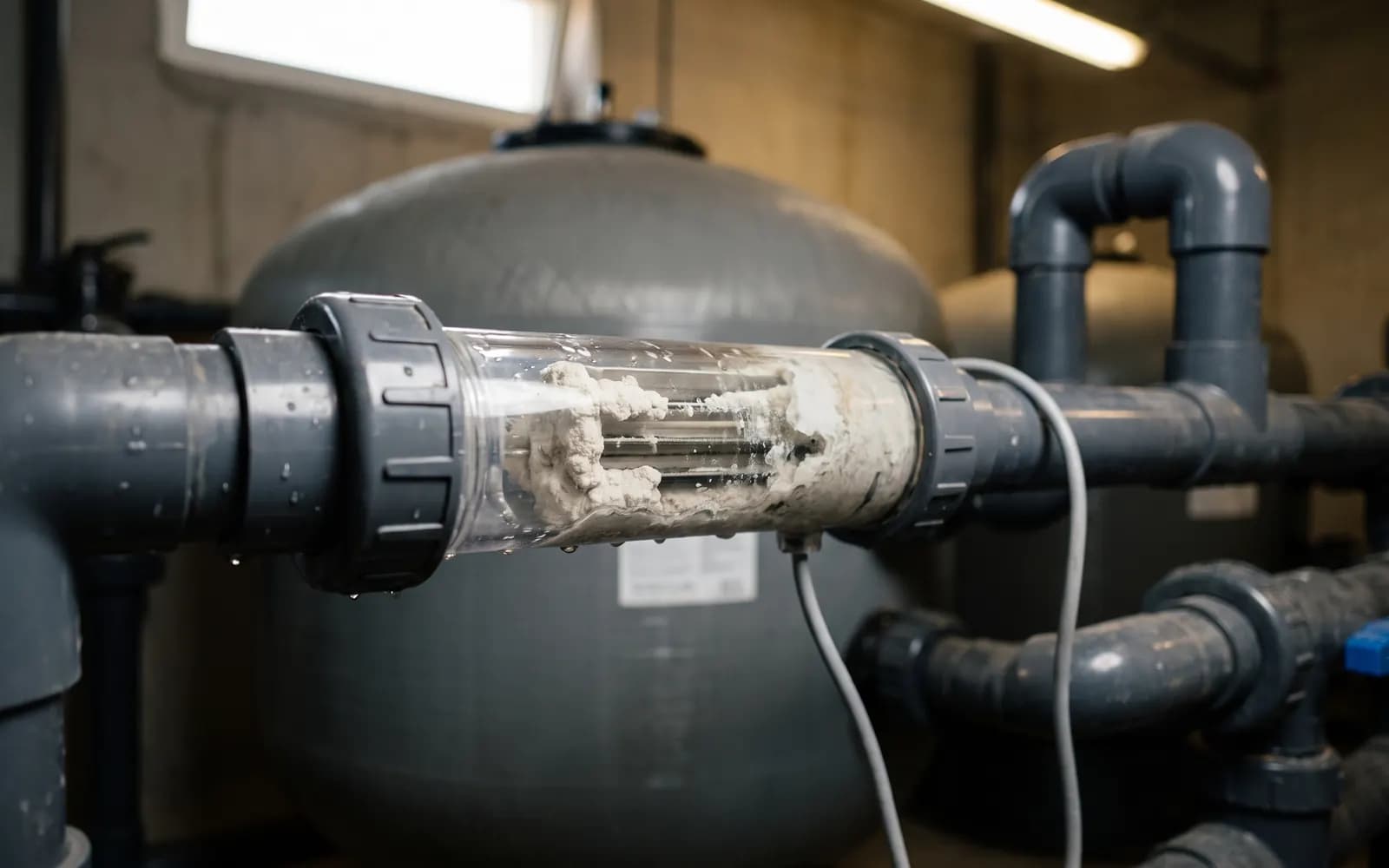
Over time, calcium scale builds up on the electrode plates; this buildup reduces chlorine output and shortens cell life if left untreated. The cell should therefore be inspected periodically and descaled using the method recommended by the manufacturer. Many modern generators reverse polarity automatically to reduce buildup, but visual inspection should not be neglected.
A self-cleaning function does not remove every maintenance task; the cell surface and any sensors are checked according to the product manual. Clean the cell only with the method described in its manual; switch the system off before opening any electrical or pressurized equipment, and call for service if you are unsure.
The second pillar is monitoring water chemistry. Salt level, pH and calcium hardness should be measured regularly, and the tendency of pH to rise must be kept under control. Since disinfection in this system depends entirely on the generator, you need to confirm that it is running and that free chlorine stays within the appropriate range. Switching to a saltwater system does not remove the need to manage chemical balance; the way chlorine is obtained changes, but the principles of pH and hardness management remain the same as with manual chlorination. In pools where pH rises noticeably, an automatic pH measuring and dosing unit makes this monitoring easier.
The decision to convert does not depend on pool volume alone.
The compatibility of the finish, metal fittings, heater, pipework and other equipment with salt water is checked. Parts such as ladders, light rims or heat exchangers require salt-resistant materials; options such as AISI 316 stainless steel fittings or titanium heat exchangers are evaluated together with the manufacturer's recommendations. Suitable pipework for the cell, service access and the electrical supply are also reviewed.
Filtration time, summer water temperature and bathing load affect the choice of capacity. The recommended pool volume in a catalogue may rest on specific operating assumptions. We do not recommend a specific model for an existing pool before these values have been reviewed.
For a preliminary assessment, prepare the pool volume, daily filtration time, recent water test results and a list of existing equipment. A photo of the plant room helps with the installation review; the package scope and excluded work are stated separately in the written quote. In a pool consultancy meeting with Çilek Havuz, we assess the suitability of conversion based on this information; our aim is a maintenance routine that fits the existing pool and is easy to follow.
Next step
Let us discuss your project in the way that suits you best.
You can fill in the form for a written quote, schedule a video project presentation or ask us to survey your project site.
Get a Quote
Send us your dimensions and expectations in writing.
Online presentation
Video project presentation
On-site survey
Inspection at your project site
Image gallery
Photos: 04
 01
01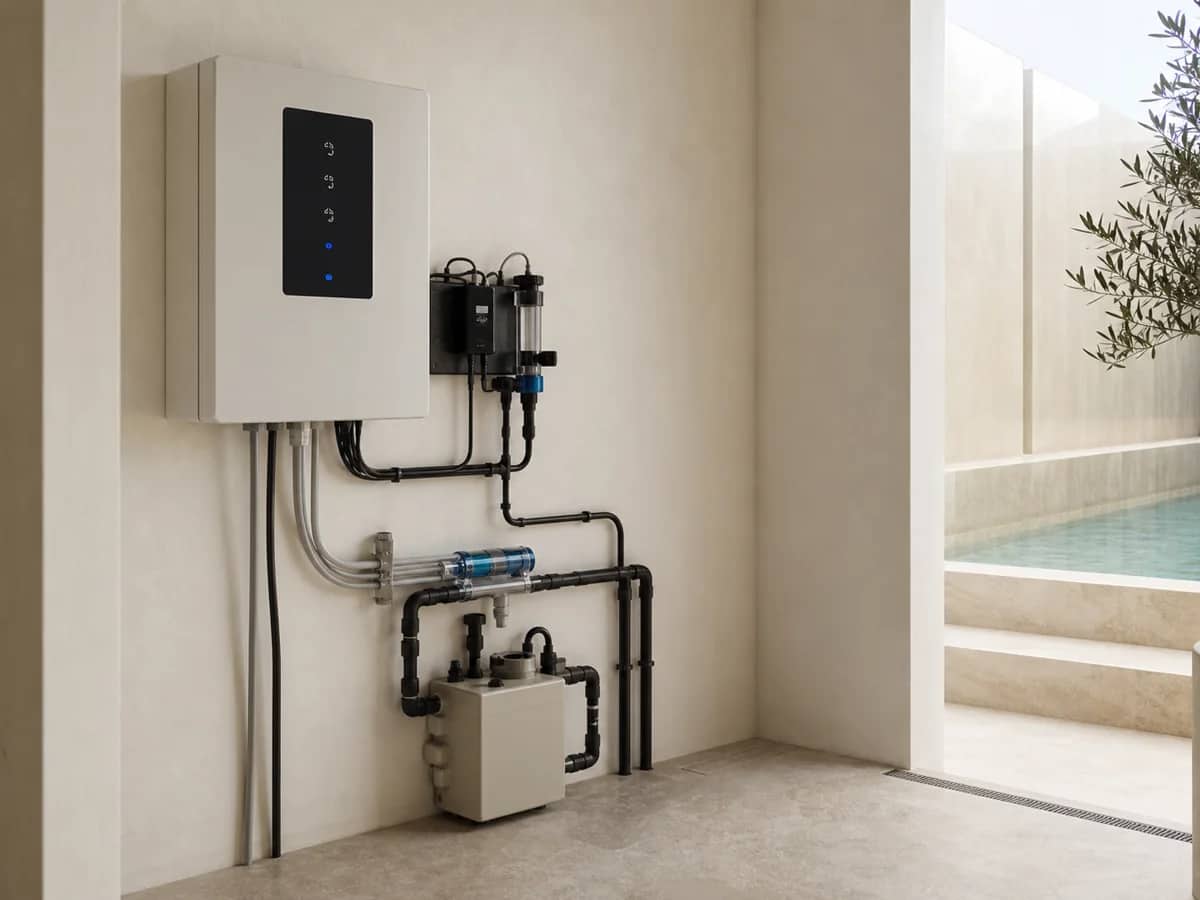 02
02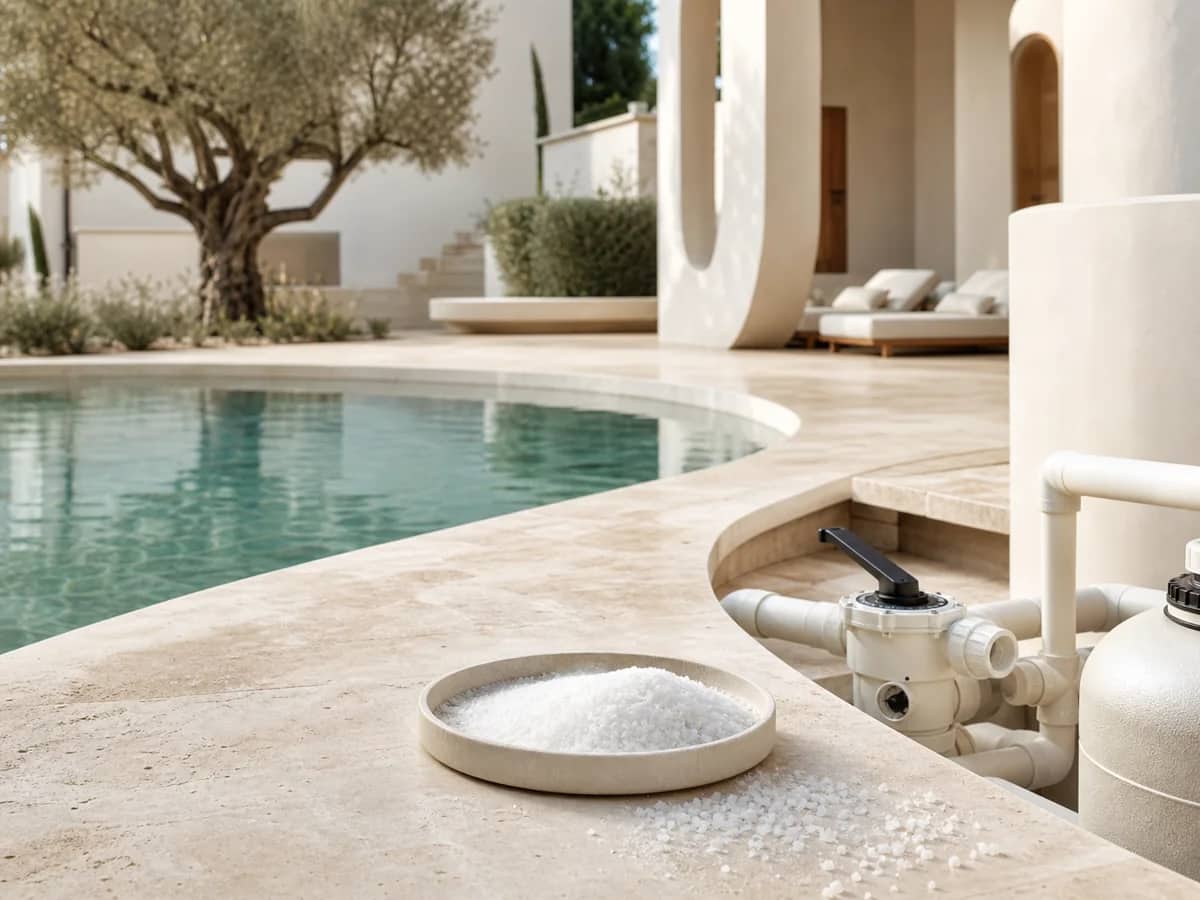 03
03 04
04// 01 · Product groups
Compare the products on this topic on their category pages.
Each card leads to a product category; models, technical sheets and list prices are there.
 Product category
Pool Disinfection Systems
Fully automatic pool water disinfection that reduces chemical use with salt electrolysis, UV disinfection and smart dosing systems.
View- 52 products
- Product category
Salt Chlorinator Models
Residential and commercial salt chlorinators that produce chlorine from the salt in pool water, plus hybrid systems combining UV with electrolysis. The model is chosen by pool volume, hourly chlorine output and the salt level the water will be kept at. Each model's technical table is on its product page.
View- 19 products
Product category
Pool Disinfection Systems
Fully automatic pool water disinfection that reduces chemical use with salt electrolysis, UV disinfection and smart dosing systems.
52 productsProduct category
Salt Chlorinator Models
Residential and commercial salt chlorinators that produce chlorine from the salt in pool water, plus hybrid systems combining UV with electrolysis. The model is chosen by pool volume, hourly chlorine output and the salt level the water will be kept at. Each model's technical table is on its product page.
19 products
// 02 · Related service
The work in this article, we deliver from design to handover.
Çilek Havuz service
Pool Maintenance
Water chemistry, equipment and periodic maintenance.
How we work
- 01Initial meeting and site surveyWe inspect the site and listen to the brief.
- 02Design and quotationWe give the cost item by item, in writing.
- 03ExecutionThe same team builds to a written schedule.
- 04Handover and commissioningWe start the systems and explain their use.
- 05Maintenance and technical supportWe provide periodic maintenance and support.
// 03 · Guides
On Maintenance, more articles to read.
First the articles directly related to this one, then the newest articles on the topic.
 Technology
Salt Chlorinator Sizing: Volume, g/h Output and Run Time
Salt chlorinator capacity depends on pool volume, g/h output, water temperature and daily run time. What to compare in a quotation.
View- 13 September 2026
- 3 min read
 Technology
Salt Chlorinator Not Producing Chlorine: Causes and Checks
Possible causes of low chlorine with a running salt chlorinator: measurement, flow, salinity, temperature and cell condition. When service is needed.
View- 13 September 2026
- 3 min read
 Maintenance
Pool maintenance for beginners: testing order and a weekly routine
Pool maintenance for beginners: testing and correcting pH, alkalinity, chlorine, hardness and cyanuric acid in the right order, plus a weekly filter and water level routine.
View- 9 September 2026
- 9 min read
 Maintenance
Pool clarifier and flocculant: differences, uses and selection
Clarification, flocculation and filter compatibility compared for cloudy pool water. The right choice follows the product instructions, not the name.
View- 13 September 2026
- 3 min read
 Maintenance
Chlorine tablets and granules: dissolution, use and selection
Chlorine products differ in active ingredient, concentration and intended use. Shape alone does not determine strength or dosing method.
View- 13 September 2026
- 3 min read
 Maintenance
Winter pool chemicals: purpose, limits and product selection
Winter treatment depends on the actual pool system and product formulation. Water care, equipment freeze protection and ongoing checks are separate tasks.
View- 13 September 2026
- 3 min read
- Technology · 13 September 2026Salt Chlorinator Sizing: Volume, g/h Output and Run TimeSalt chlorinator capacity depends on pool volume, g/h output, water temperature and daily run time. What to compare in a quotation.3 min read
- Technology · 13 September 2026Salt Chlorinator Not Producing Chlorine: Causes and ChecksPossible causes of low chlorine with a running salt chlorinator: measurement, flow, salinity, temperature and cell condition. When service is needed.3 min read
- Maintenance · 9 September 2026Pool maintenance for beginners: testing order and a weekly routinePool maintenance for beginners: testing and correcting pH, alkalinity, chlorine, hardness and cyanuric acid in the right order, plus a weekly filter and water level routine.9 min read
- Maintenance · 13 September 2026Pool clarifier and flocculant: differences, uses and selectionClarification, flocculation and filter compatibility compared for cloudy pool water. The right choice follows the product instructions, not the name.3 min read
- Maintenance · 13 September 2026Chlorine tablets and granules: dissolution, use and selectionChlorine products differ in active ingredient, concentration and intended use. Shape alone does not determine strength or dosing method.3 min read
- Maintenance · 13 September 2026Winter pool chemicals: purpose, limits and product selectionWinter treatment depends on the actual pool system and product formulation. Water care, equipment freeze protection and ongoing checks are separate tasks.3 min read
// 04 · Company & Contact
To talk about your project, call or write to us.
Legal Name
Çilek Havuz
Founded
1998 · Istanbul
Head Office
Çilek Plaza, Eyüp Sultan Mah. Yakacık Cd. Feshane Cd. No: 2 D:4 D:1, 34885 Sancaktepe / İstanbul
Service Area
All of Türkiye · exports to 14 countries
Branches
Kyrgyzstan · Egypt · Algeria · Iraq
Showroom
Plan a showroom visit
At our showroom in Çilek Plaza, Sancaktepe, you can discuss your project with our team. We recommend booking an appointment by phone before your visit.
Working Hours
- Monday – Friday · 08:00 – 17:30
- Saturday · 08:00 – 12:30
- Closed on Sunday
Frequently Asked Questions
About Saltwater Pool, frequently asked questions.
Çilek Havuz Corporate
Pool and Wellness Engineering
- Response Time
- Same day
- Channels
- Phone · Email · WhatsApp
If the answer you are looking for is not here, send your question directly to us and our team will reply as soon as possible.
+90 216 475 39 37Yes, a salt chlorine generator can be retrofitted to many existing pools. The generator cell is installed in the pipework, usually after the filter and heater. Before conversion, however, the suitability of the pool's metal fittings and finish for salt water should be assessed. Reviewing your system with us is a sound starting point for checking materials and sizing the cell correctly.
Çilek Havuz Corporate
The chlorine production capacity of the cell must match the pool's water volume. A generator that is undersized for the volume runs constantly at full load to produce enough chlorine, wears faster and has a shorter life. A common approach is to choose a generator rated for a volume slightly larger than your pool. This provides a more comfortable operating margin and longer cell life.
Çilek Havuz Corporate
Most generators cannot produce chlorine efficiently once the water temperature drops below a certain threshold. Many devices therefore stop production automatically at low temperatures. When preparing for winter, removing the cell from the pipework, cleaning it and storing it in a dry place protects it against frost and scale damage. Winterization procedures vary by model, so we recommend following the manufacturer's instructions.
Çilek Havuz Corporate
These systems require high-purity, additive-free salt produced specifically for pools. Table salt containing iodine, anti-caking agents or moisture absorbers, as well as rock or road salt, may contain impurities that can damage the cell and affect the water. Using the wrong salt can cloud the water and shorten cell life.
Çilek Havuz Corporate
In outdoor saltwater pools exposed to the sun, the chlorine produced is also broken down by sunlight. An appropriate level of stabilizer is therefore generally recommended to protect it. Excess stabilizer, however, can suppress chlorine's effectiveness, so the level must be kept in balance. The appropriate stabilizer level should be set according to your device manufacturer's recommendation.
Çilek Havuz Corporate
Some users describe the water as softer and gentler on the skin because chlorine is produced steadily and in metered amounts. With fewer sudden chlorine spikes, irritation tends to decrease. However, the water still contains active chlorine, so a saltwater pool is not free of chlorine's effects, even though its salinity is far lower than the sea's. If you have sensitive skin, keeping the water balance consistent matters for your comfort.
Çilek Havuz Corporate
Yes. Salt electrolysis does not remove the need to test pH and other water parameters. Because electrolysis tends to raise pH, it should be measured regularly and lowered when necessary; an automatic pH measuring and dosing unit can make this easier.
Çilek Havuz Corporate
Evaporation does not remove salt the way it removes water; replacing evaporated water alone does not create a need for more salt. After losses from backwashing, overflow or water replacement, salinity is measured, and the decision to add salt follows the test result and the device instructions.
Çilek Havuz Corporate