

Commercial Pool Construction for Hotels, Resorts and Public Facilities
Commercial pool construction follows different rules from a private build: turnover rates are shorter, the overflow system is standard, equipment is duplicated for redundancy, and hygiene records are inspected. Here is what changes at each stage.
Project Manager · Mechatronics Engineer · Çilek Havuz
- Published
- Updated
- Reading
- 8 min read
- Category
- Pool Construction
Commercial pool construction follows different rules from a private build: turnover rates are shorter, the overflow system is standard, equipment is duplicated for redundancy, and hygiene records are inspected. Here is what changes at each stage.
A home pool is used by a few people at certain times of the day.
A hotel or facility pool, by contrast, is used throughout the day by hundreds of different people. This single difference changes everything: the rate at which the water becomes contaminated, the filtration demand, chemical consumption and safety requirements all multiply.
So a commercial pool is not simply a large home pool; it is an entirely different engineering problem. The system must be sized for the moment of peak use, and it must be able to run for a whole season without interruption, passing inspections and without causing the operator losses.
A commercial pool should be thought of as a business investment. The installation cost is only one part of the decision; the real difference emerges in how smoothly and how economically the pool is operated over the years. A system set up correctly from the start pays for itself during operation. The same calculation becomes even more demanding in waterpark construction projects with slides and play structures; there, flow rate, impact load and supervision arrangements are each an engineering subject in their own right.
The heart of a commercial pool is its filtration system.
The key concept here is turnover time: the time needed for all the water in the pool to pass through the filter and be renewed. In home pools this period can be kept relatively long, whereas in heavily used commercial pools it must be much shorter, because a new pollution load enters the water continuously.
Filtration is sized not on the pool's volume alone but on its volume, bather density and type of use taken together. A system installed with insufficient capacity cannot keep the water clear and hygienic on busy days, which means both inspection risk and guest dissatisfaction. An oversized system, on the other hand, consumes energy unnecessarily.
Correct sizing requires the pump flow rate, filter surface area and pipe diameter to be selected in harmony with one another. We carry out this calculation for the peak-use scenario, because the system must keep the water at the required quality even on its busiest day.
The basic calculation that determines filtration capacity is quite simple: the required pump flow rate is found by dividing the pool's total water volume by the target turnover time.
The shorter the turnover time, the higher the flow rate needed to pass the same volume of water through the filter more times in the same period. In home pools the turnover time can be kept relatively long, while in hotel and facility pools with heavy bather traffic it is shortened considerably; common filtration rules in Europe rest on the same logic.
The pool's volume in m³ is not the only variable that determines turnover time; the number of bathers the pool will host at its busiest moment is also added to the calculation as an input. If one of two pools of the same volume hosts a few people a day and the other hundreds, the second must have a much shorter turnover time, because the pollution load entering the water rises with the number of bathers. That is why, on a commercial project, we calculate the filtration flow rate not from the pool's dimensions alone but together with its usage profile; flow rate, filter surface area and pipe diameter are then selected to match one another on the basis of this shared calculation.
Unlike home pools, commercial pools are subject to health legislation.
In Türkiye, swimming pools are inspected within the framework of specific health principles and conditions; water quality is monitored regularly and recorded. For a business, this is a mandatory framework, not an optional one.
This framework includes obligations such as taking water samples regularly, keeping chemical values within set ranges and retaining records. That is why we set the system up from the start to make these obligations easier: the right dosing equipment, measuring points and automation stop inspection day from being a source of stress.
Our approach is to build the pool not merely as an attractive structure but as an operating system that will pass inspection without problems. Taking hygiene and record-keeping requirements into account from the start of the design protects the operator from many problems later on.
Knowing that the water surface is the dirtiest layer in a pool is the key to understanding the right system.
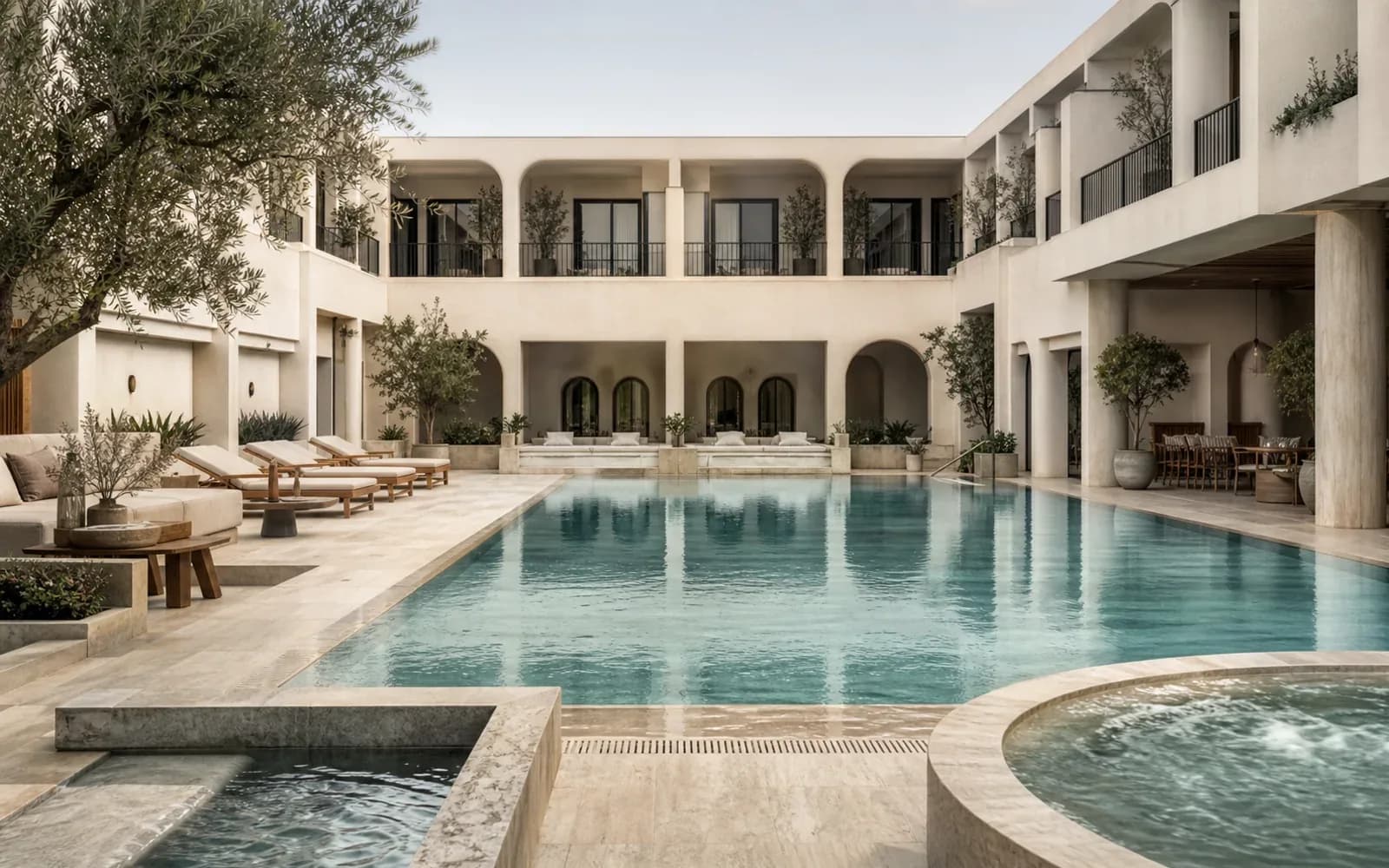
The most effective way to remove the oil, sunscreen and organic pollution that collects on the surface is to let the water spill over the pool edges and collect it. An overflow system does exactly this: the water spills continuously into the surrounding channel, gathers in the balance tank, passes through the filter and returns.
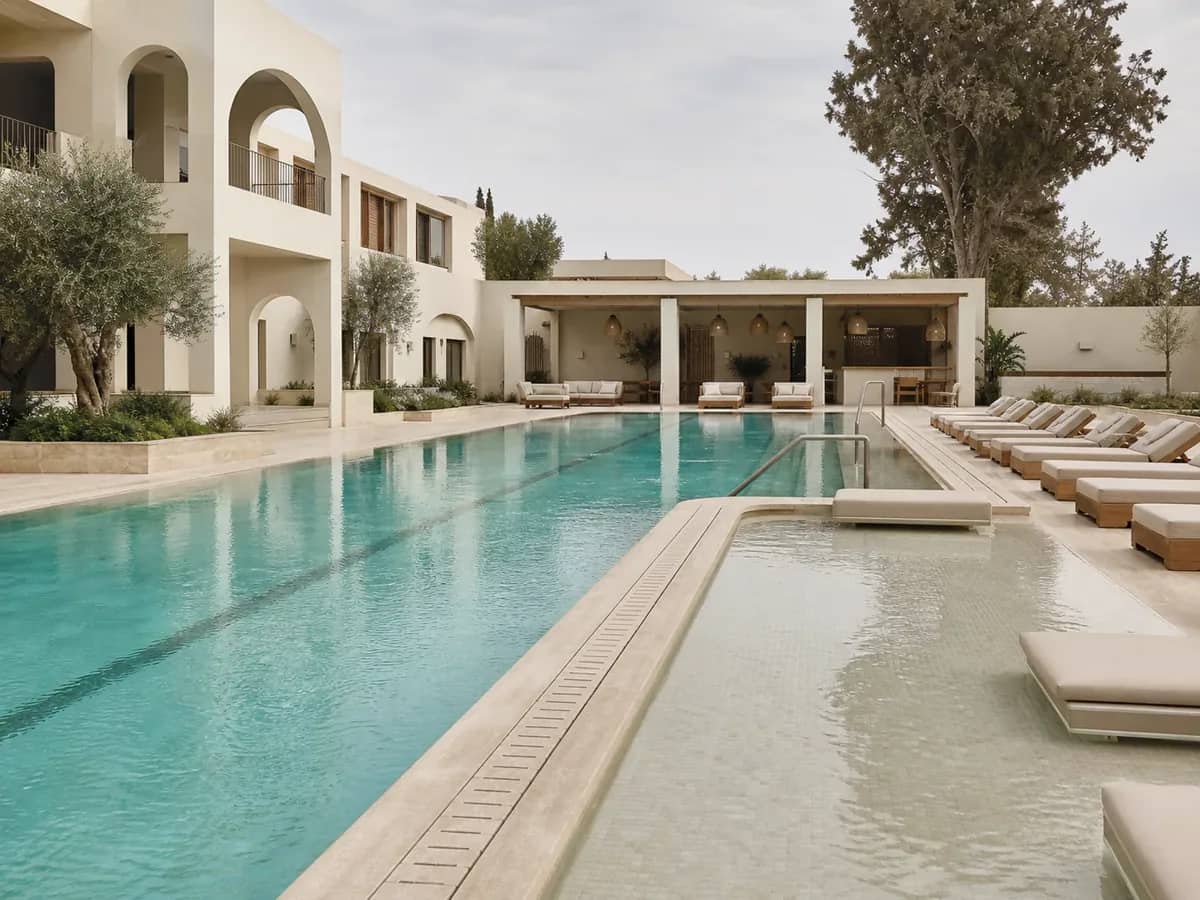
This system is more hygienic and also continuously renews the water surface under heavy use. Visually, the calm image of water level with the edge, with its sense of infinity, is achieved with an overflow system; that is why it is often preferred in high-quality hotel and facility pools.
Compared with a skimmer system, an overflow system requires a larger balance tank, correctly sized pipework and precise hydraulic calculation. If it is installed incorrectly, the water level fluctuates and the system runs inefficiently. That is why the overflow pool is one of the areas where working with an experienced team makes the greatest difference.
The real cost of a commercial pool emerges not at installation but over years of operation.
Energy consumption, chemical use, water loss and maintenance labour are items that recur every year in a facility's budget. That is why, when assessing a pool, you need to look at the total cost of ownership.
Energy is the largest item in this picture. Correctly sized pumps, efficient heating solutions and a system that has not been enlarged unnecessarily reduce the annual bill considerably. Similarly, a well-designed filtration and dosing arrangement balances chemical consumption, treating the water neither too little nor too much.
This is why the cheapest installation quote often means the most expensive operation. A system that saves energy and chemicals closes the difference in installation cost within a few seasons. When we design a facility pool, we discuss this calculation with the operator, and we recommend basing the decision not on the initial price alone but on long-term operating cost.
Thermal pools are a more demanding engineering field than an ordinary facility pool.
Hot water, often with a high mineral content, wears out materials, pipework and equipment much faster than in a normal pool. That is why material selection and plumbing details in a thermal pool call for a different level of care.
The corrosion and scaling caused by hot water can render a wrongly chosen system unusable in a short time. Materials resistant to the water's chemical properties, correct insulation and heat management must be planned from the outset. In thermal facilities, moreover, the water is often part of the heating energy as well; using that energy efficiently has a direct effect on the operating budget.
Thermal and spa projects are works where standard solutions do not suffice and each facility requires a design based on its own water source and conditions. At Çilek Havuz, we approach such projects by analysing the properties of the water and designing the system accordingly.
A commercial pool is an asset from which a business will generate income for years and for which it will also be inspected.
So when choosing the company to build it, you should set a much higher bar than for a home pool: has the company really carried out commercial projects of a similar scale, have its systems passed inspection, and does it provide support once operation begins?
Since 1993, the Çilek Havuz team has completed projects that include hotel and facility pools, and our work has extended to 14 countries. Demanding projects such as Türkiye's deepest training pool (10 m, 3,600 m³) are each independent evidence of our capacity to carry out high-requirement work.
If you are planning an investment in a facility pool, our advice is not to rush the decision. Tell us about your project's capacity, usage profile and expectations, and let us design the system together to suit both the legislation and your operating economics. A properly built commercial pool keeps your guests satisfied for years without straining your business.
Next step
Let us discuss your project in the way that suits you best.
You can fill in the form for a written quote, schedule a video project presentation or ask us to survey your project site.
Get a Quote
Send us your dimensions and expectations in writing.
Online presentation
Video project presentation
On-site survey
Inspection at your project site
Image gallery
Photos: 04
 01
01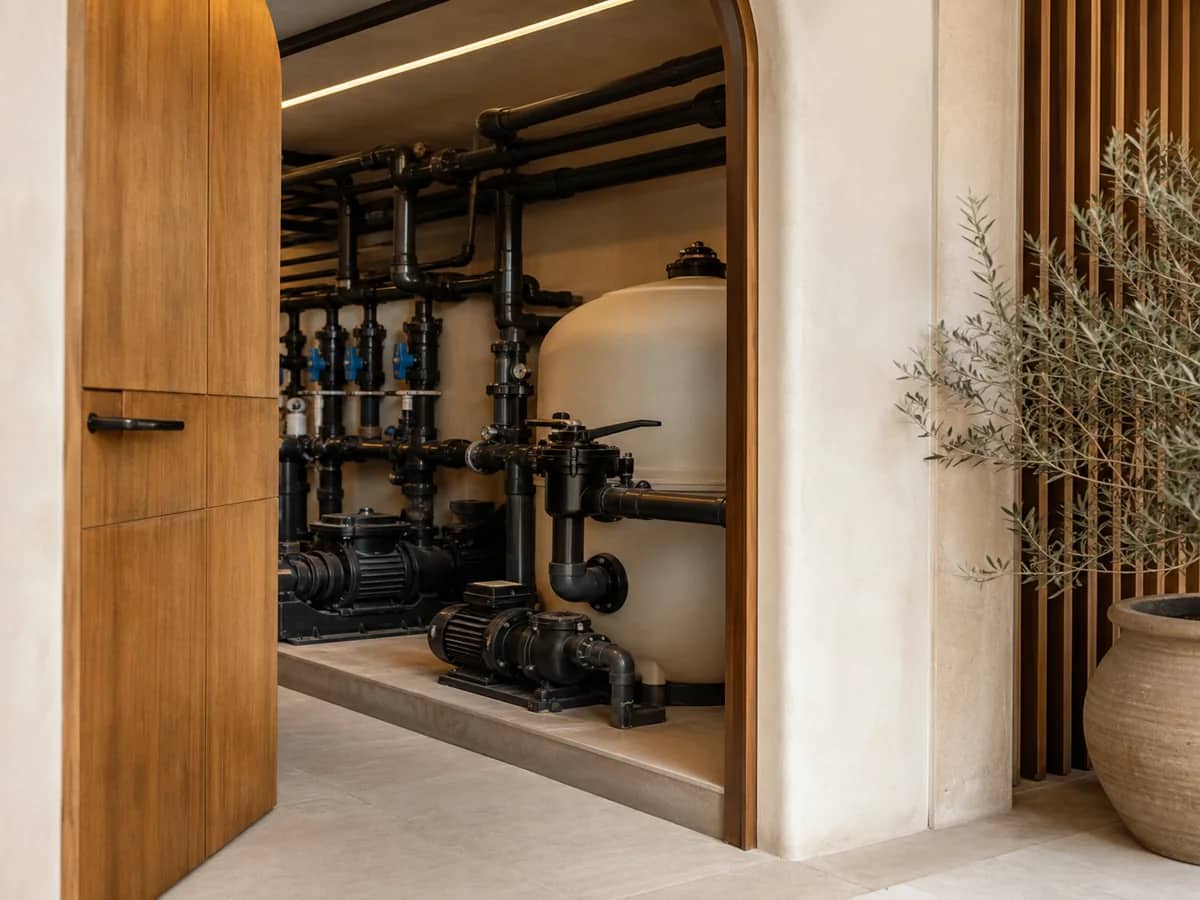 02
02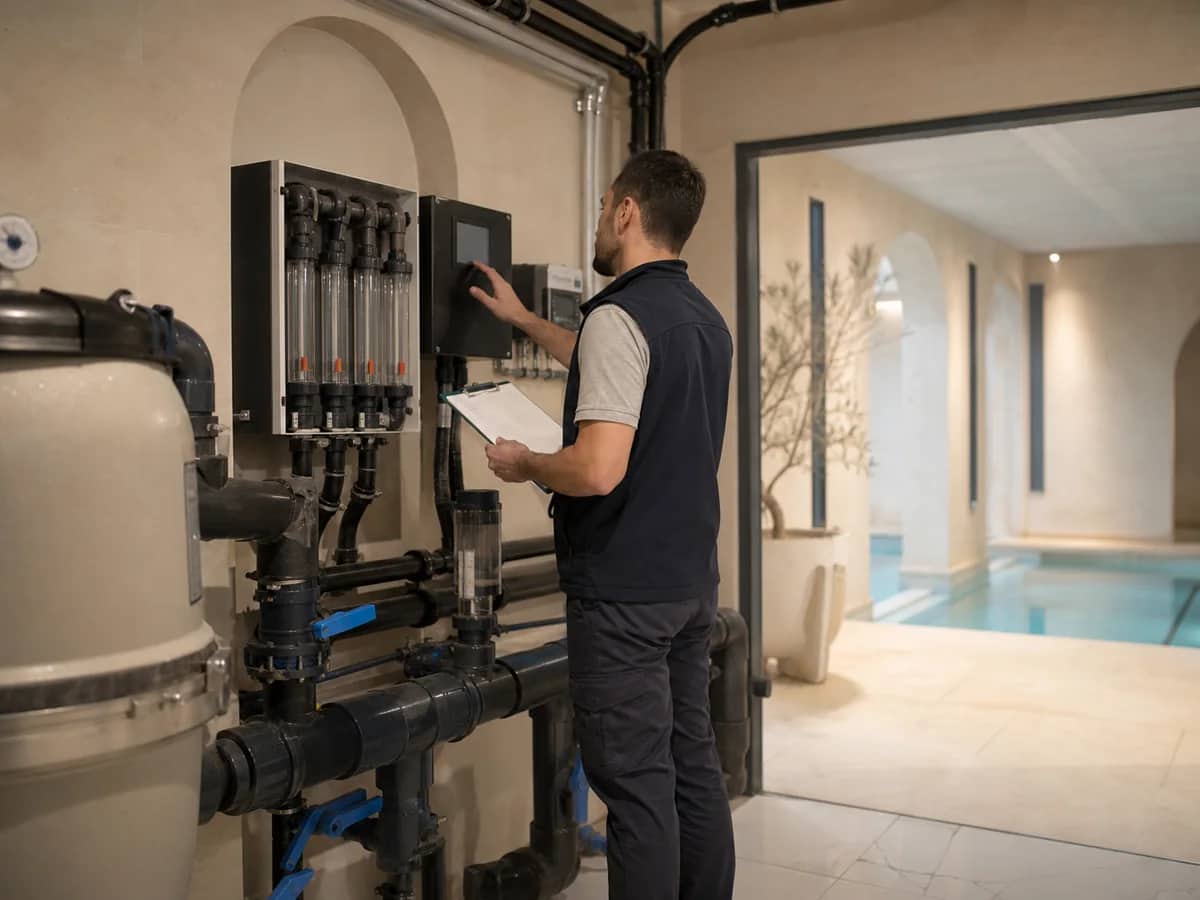 03
03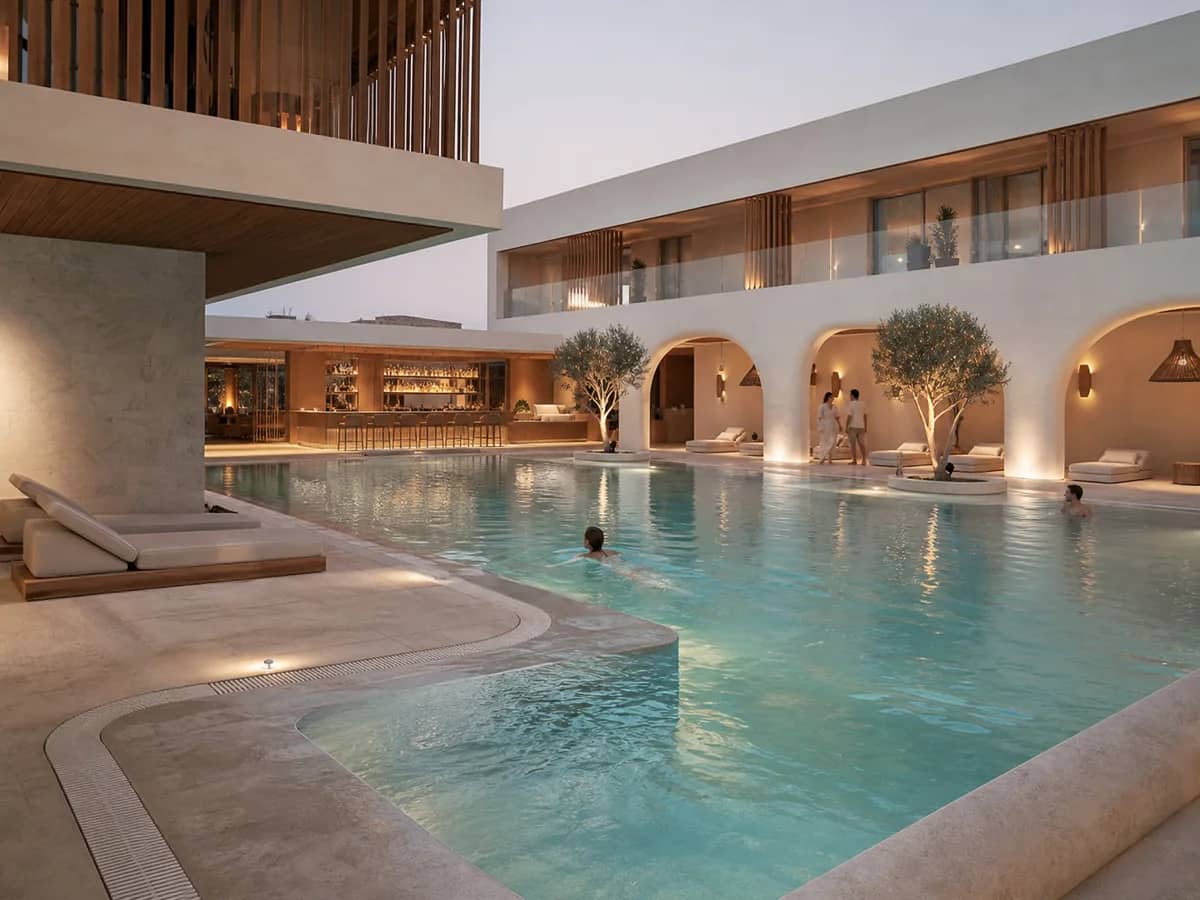 04
04// 01 · Product groups
Compare the products on this topic on their category pages.
Each card leads to a product category; models, technical sheets and list prices are there.
 Product category
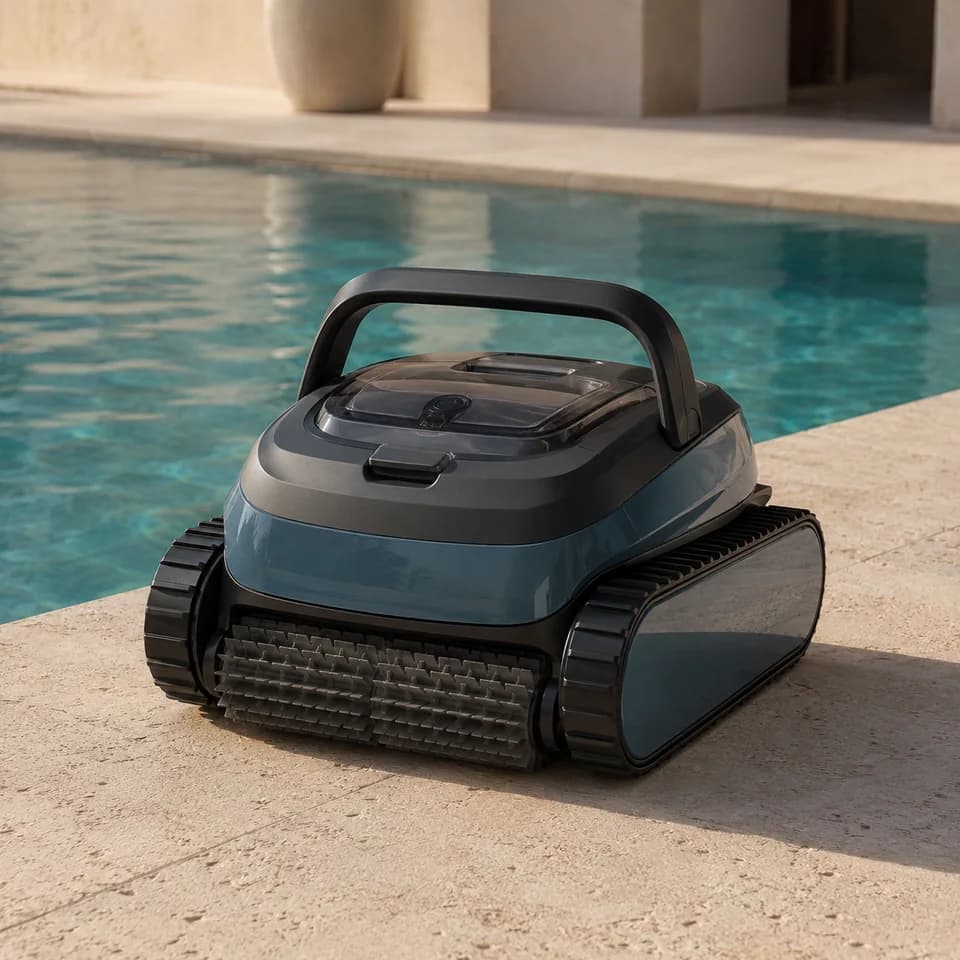
Commercial Pool Robot Models
Corded commercial pool cleaning robots for hotel, municipal and Olympic pools. Models are matched to pool lengths from 20 m to 50 m and cable lengths from 25 m to 40 m. Debris is held in the robot's own filter.
View- 4 products
 Product category
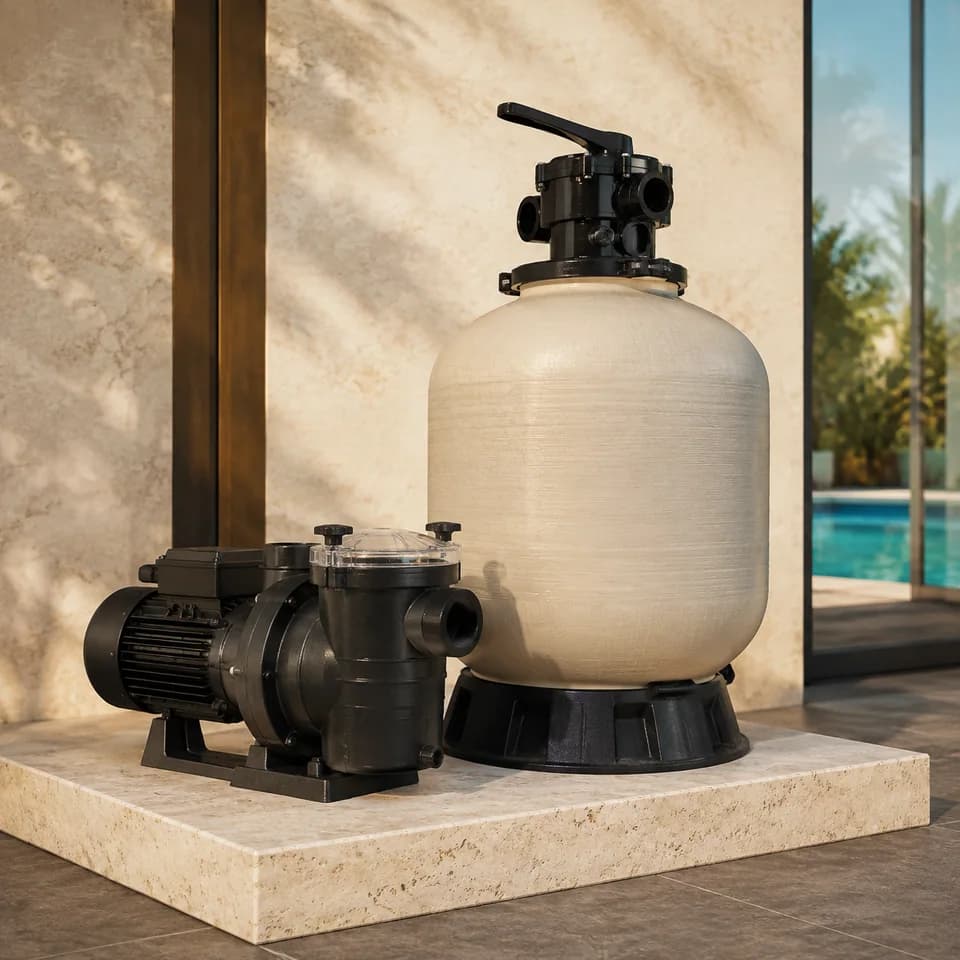
Pool Mechanical Equipment
Circulation pumps, filters, valves and automation: the mechanical infrastructure that forms the heart of the pool.
View- 65 products
 Product category
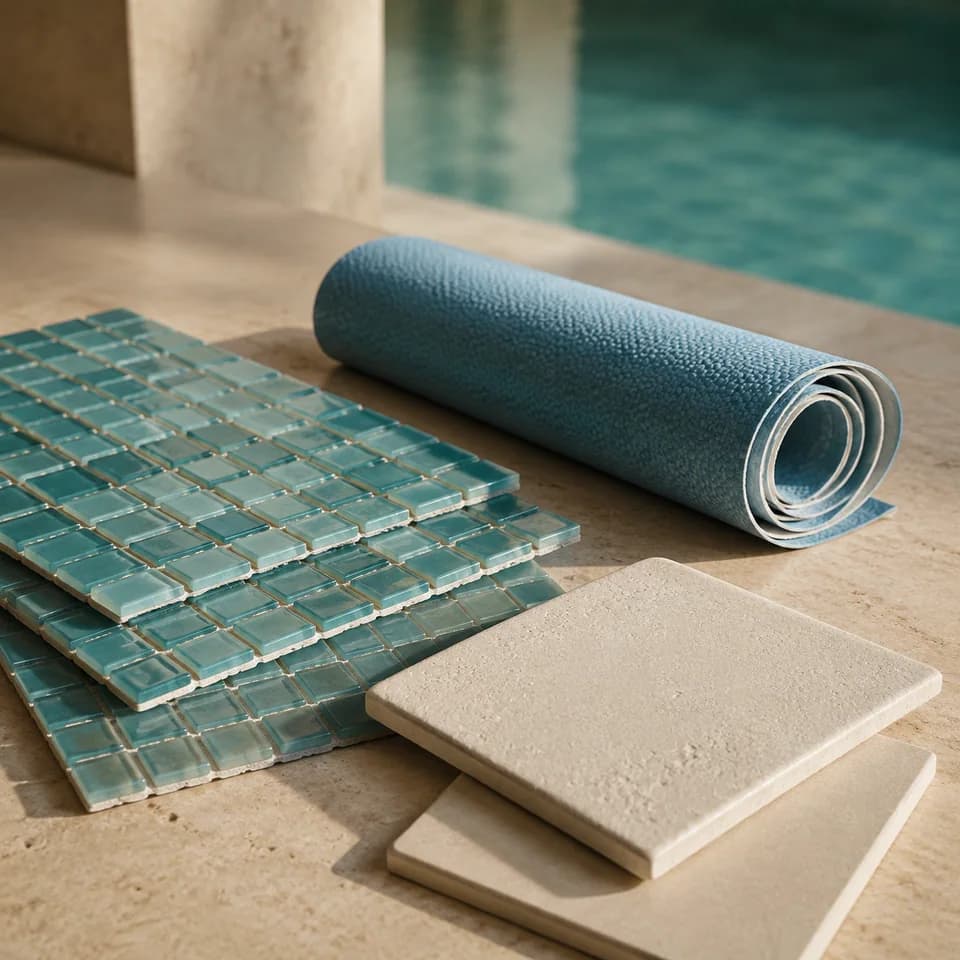
Pool Lining Systems
PVC liner, membrane, ceramic tile and glass mosaic: lining materials that make the pool watertight and form its finished surface.
View- 20 products
Product category
Commercial Pool Robot Models
Corded commercial pool cleaning robots for hotel, municipal and Olympic pools. Models are matched to pool lengths from 20 m to 50 m and cable lengths from 25 m to 40 m. Debris is held in the robot's own filter.
4 productsProduct category
Pool Mechanical Equipment
Circulation pumps, filters, valves and automation: the mechanical infrastructure that forms the heart of the pool.
65 productsProduct category
Pool Lining Systems
PVC liner, membrane, ceramic tile and glass mosaic: lining materials that make the pool watertight and form its finished surface.
20 products
// 02 · Related service
The work in this article, we deliver from design to handover.
Çilek Havuz service
Swimming Pool Construction
Reinforced-concrete, prefabricated and infinity swimming pools, built turnkey for villa, residential and commercial projects.
Swimming pool construction is a turnkey build in which the site survey, structural and mechanical design, excavation, reinforced-concrete shell, waterproofing, finish, filtration plumbing and commissioning run under a single contract. The written project schedule follows the site survey.
How we work
- 01Initial meeting and site surveyWe inspect the site and listen to the brief.
- 02Design and quotationWe give the cost item by item, in writing.
- 03ExecutionThe same team builds to a written schedule.
- 04Handover and commissioningWe start the systems and explain their use.
- 05Maintenance and technical supportWe provide periodic maintenance and support.
// 03 · Guides
On Pool Construction, more articles to read.
First the articles directly related to this one, then the newest articles on the topic.
 Turkish Bath
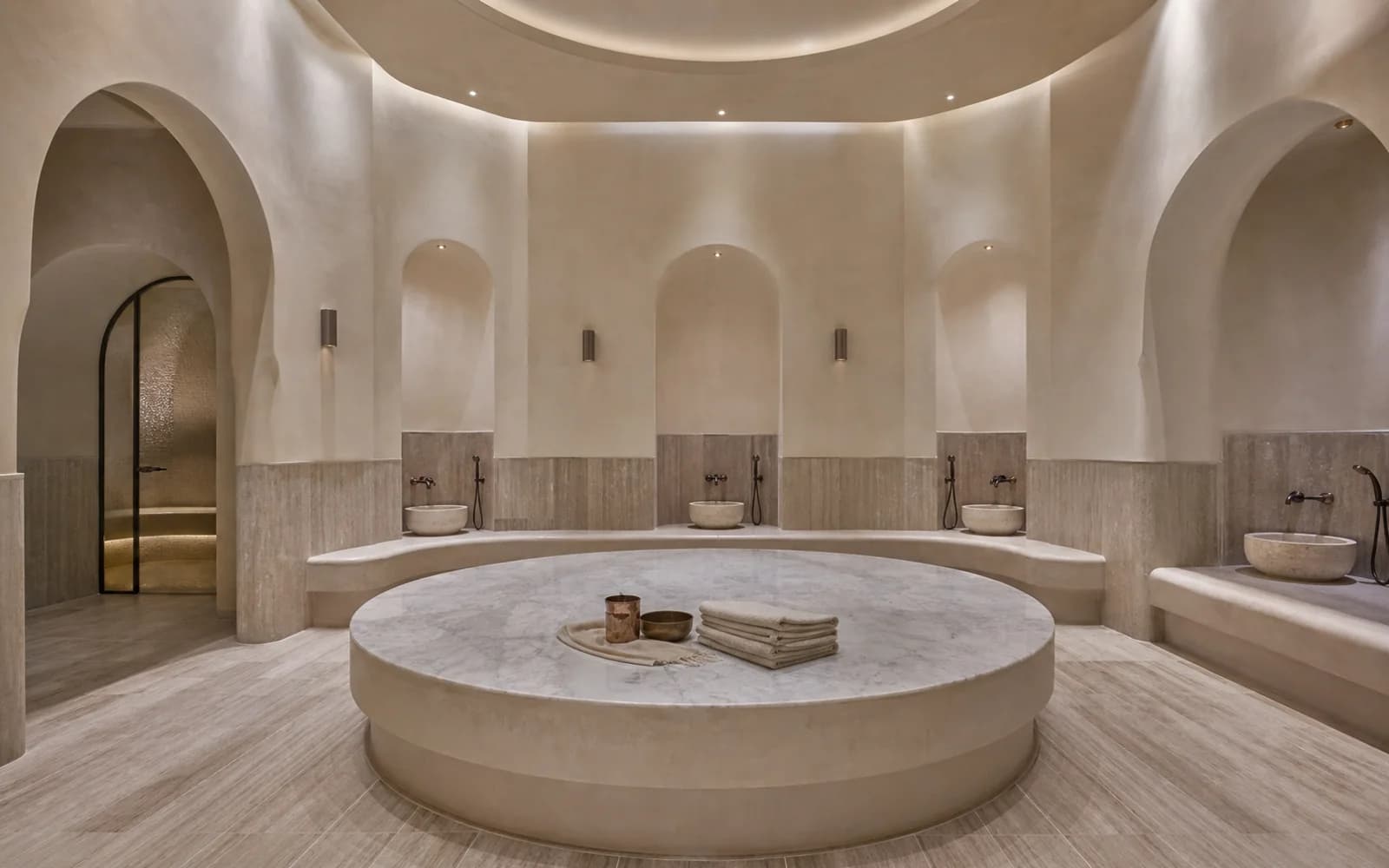
Hotel and Commercial Turkish Bath: Solutions for Heavy Use
Commercial hammam design for hotels, spas and thermal facilities: capacity planning, hygiene rules, durable materials and control of operating costs.
View- 21 March 2026
- 5 min read
 Pool Construction
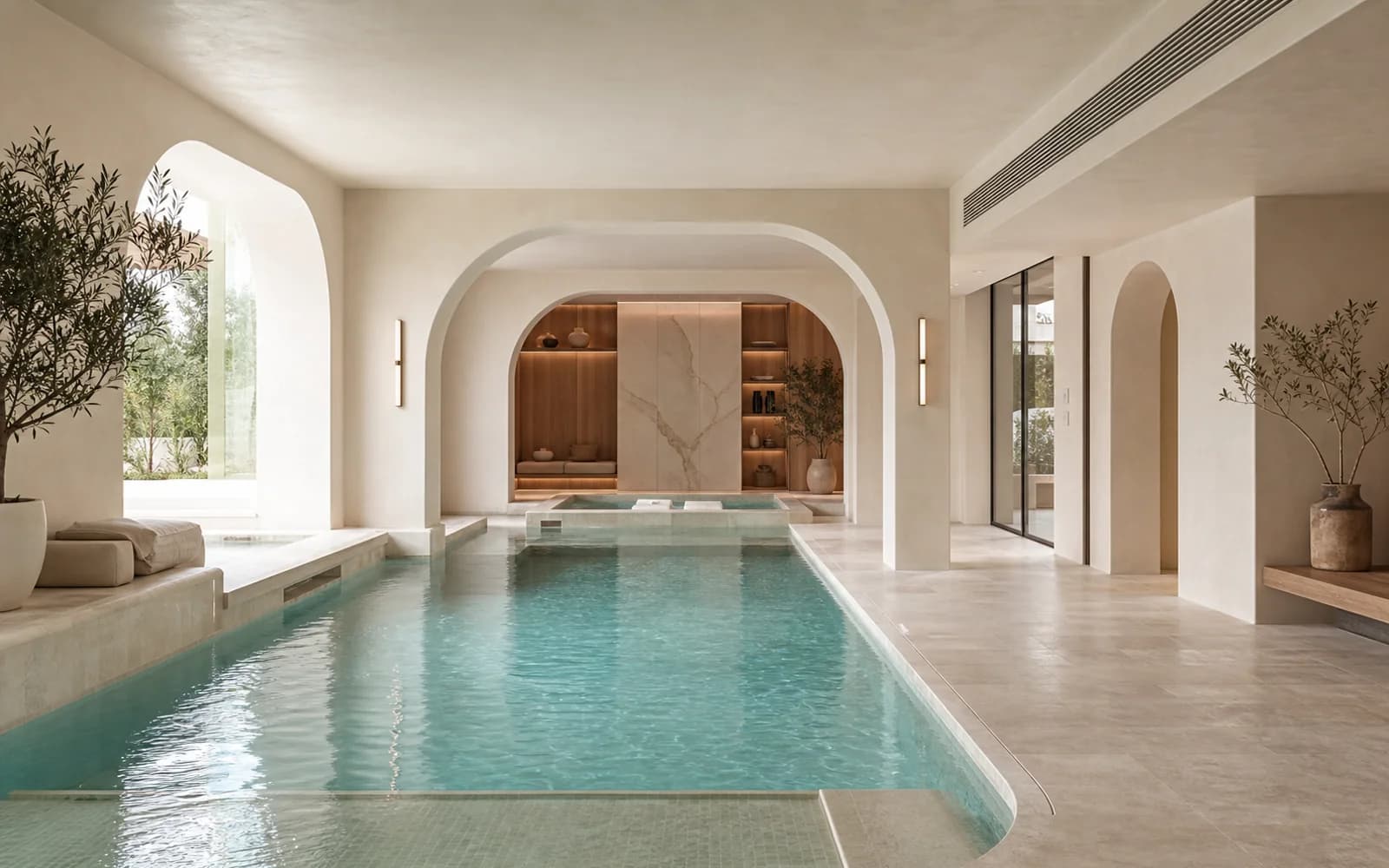
Indoor Pool Construction: The Engineering of Four-Season Use
What makes a covered pool comfortable year-round is not the water itself but the volume that surrounds it.
View- 29 April 2026
- 7 min read
 Pool Construction
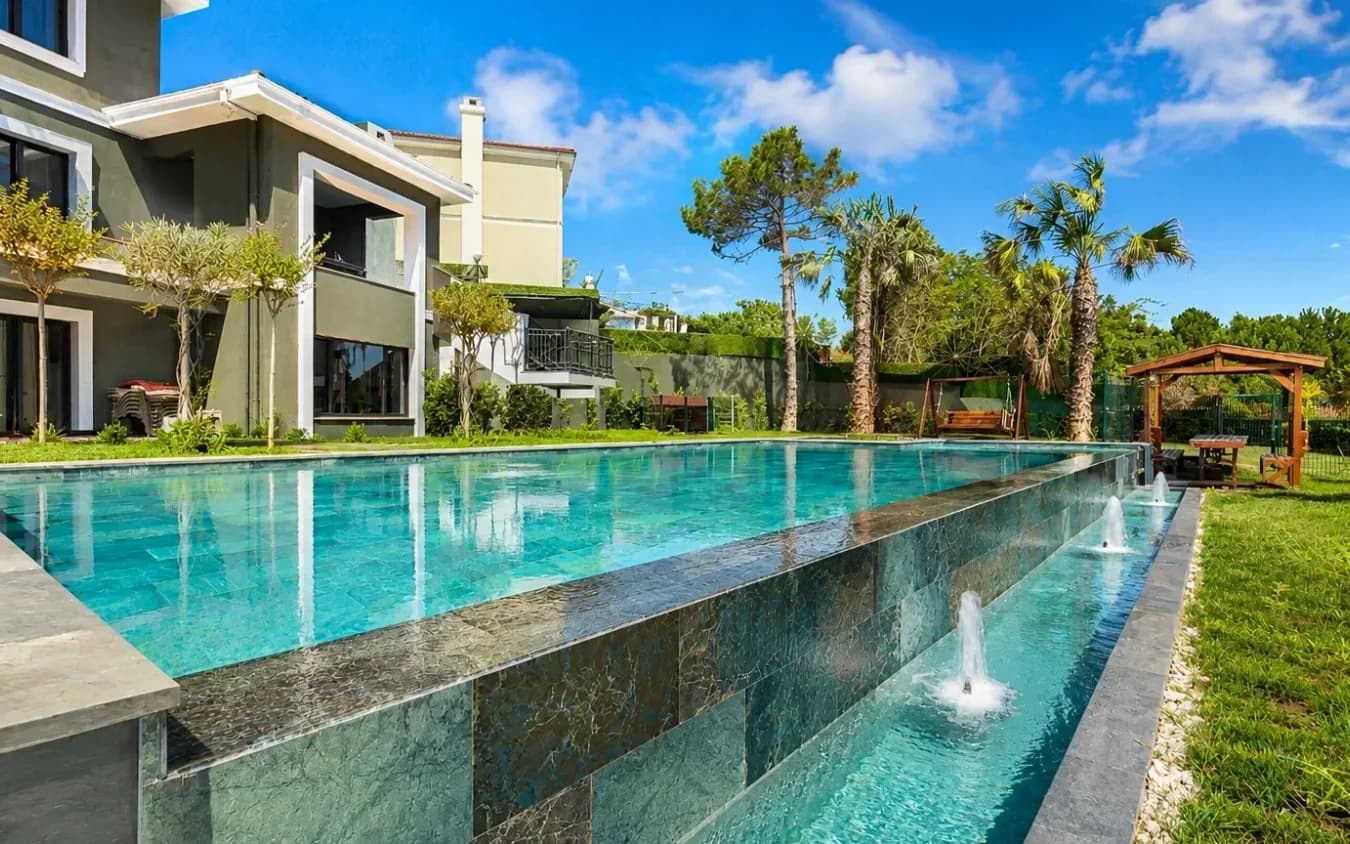
Choosing Pool Showers and Waterfalls: Shower Types, Water Curtains and Plumbing Needs
Choosing a pool shower, waterfall or water curtain depends on the material, where the water comes from and where it is mounted. We compare solar and stainless steel shower types and their pump and plumbing needs.
View- 2 October 2026
- 8 min read
 Pool Construction
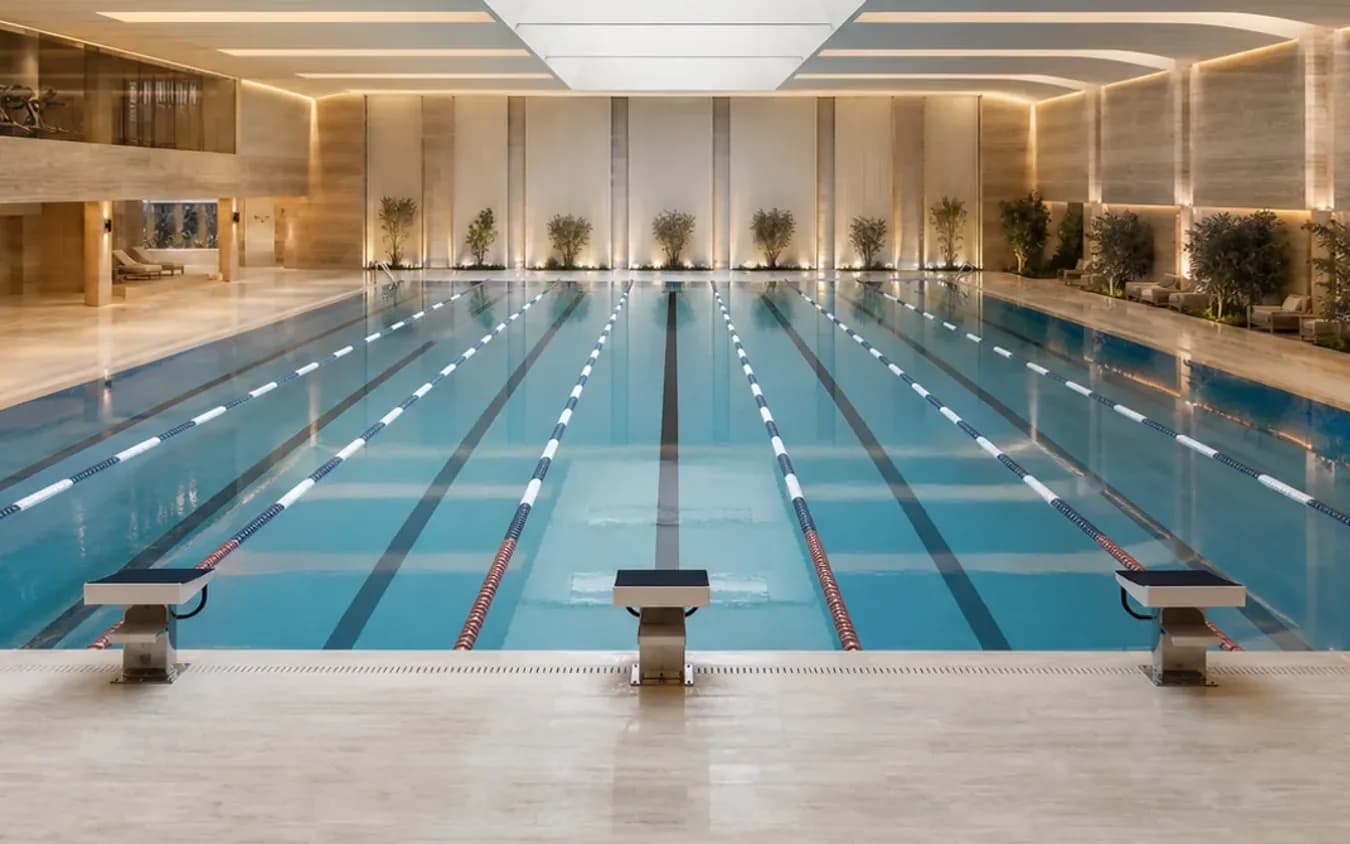
Competition Pool Equipment: Which Pool Needs Which Equipment?
Starting blocks, lane ropes, warning and turn systems, underwater speakers and water polo goals are chosen according to how the pool is used. We explain which dimensions we check for each item.
View- 2 October 2026
- 7 min read
 Pool Construction
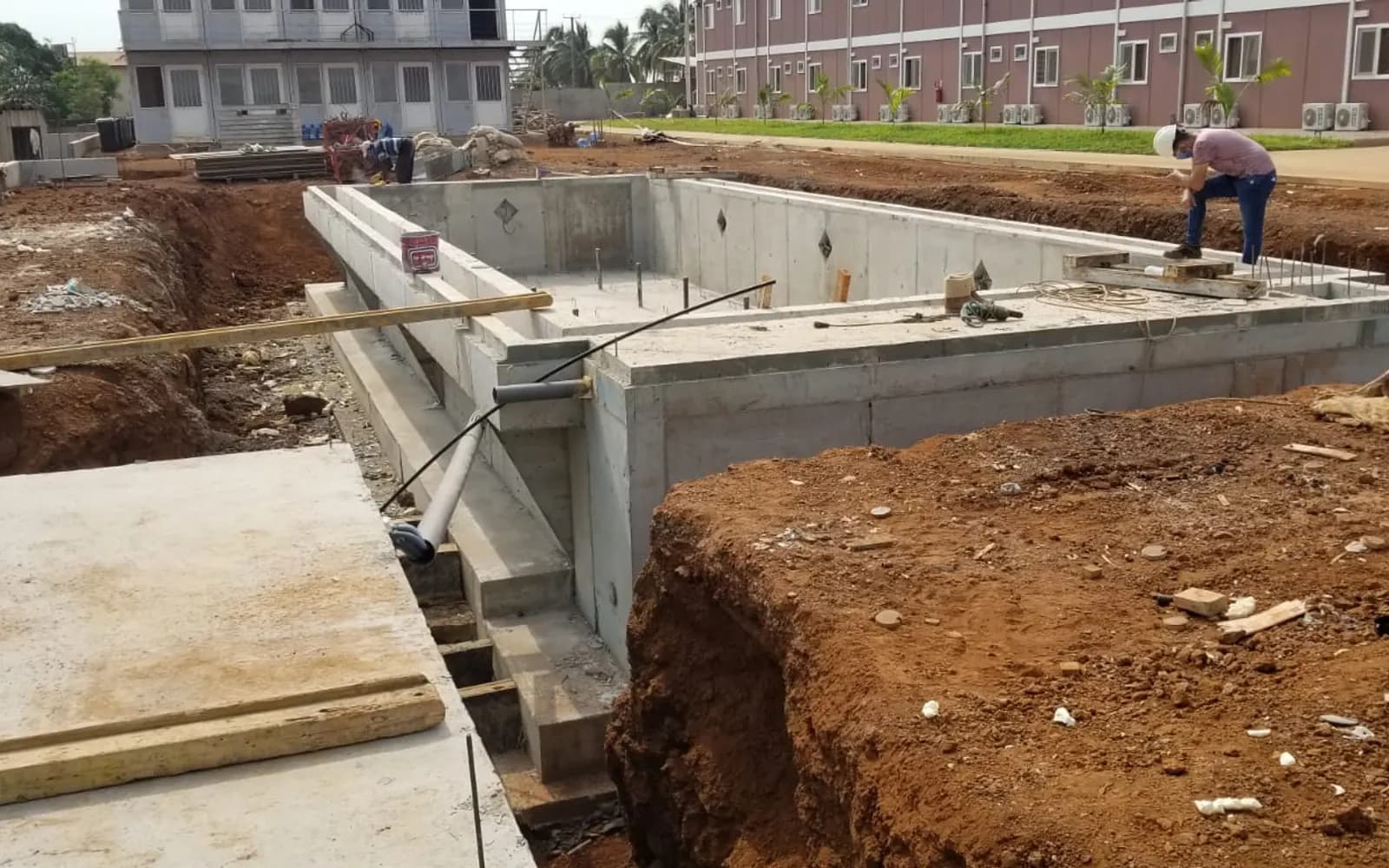
Building a pool or spa abroad: what drives the cost of an international project?
A pool, hammam or spa project delivered abroad from Turkey has no single price per square metre. We cover design, equipment, shipping, customs and schedule.
View- 29 September 2026
- 8 min read
 Pool Construction
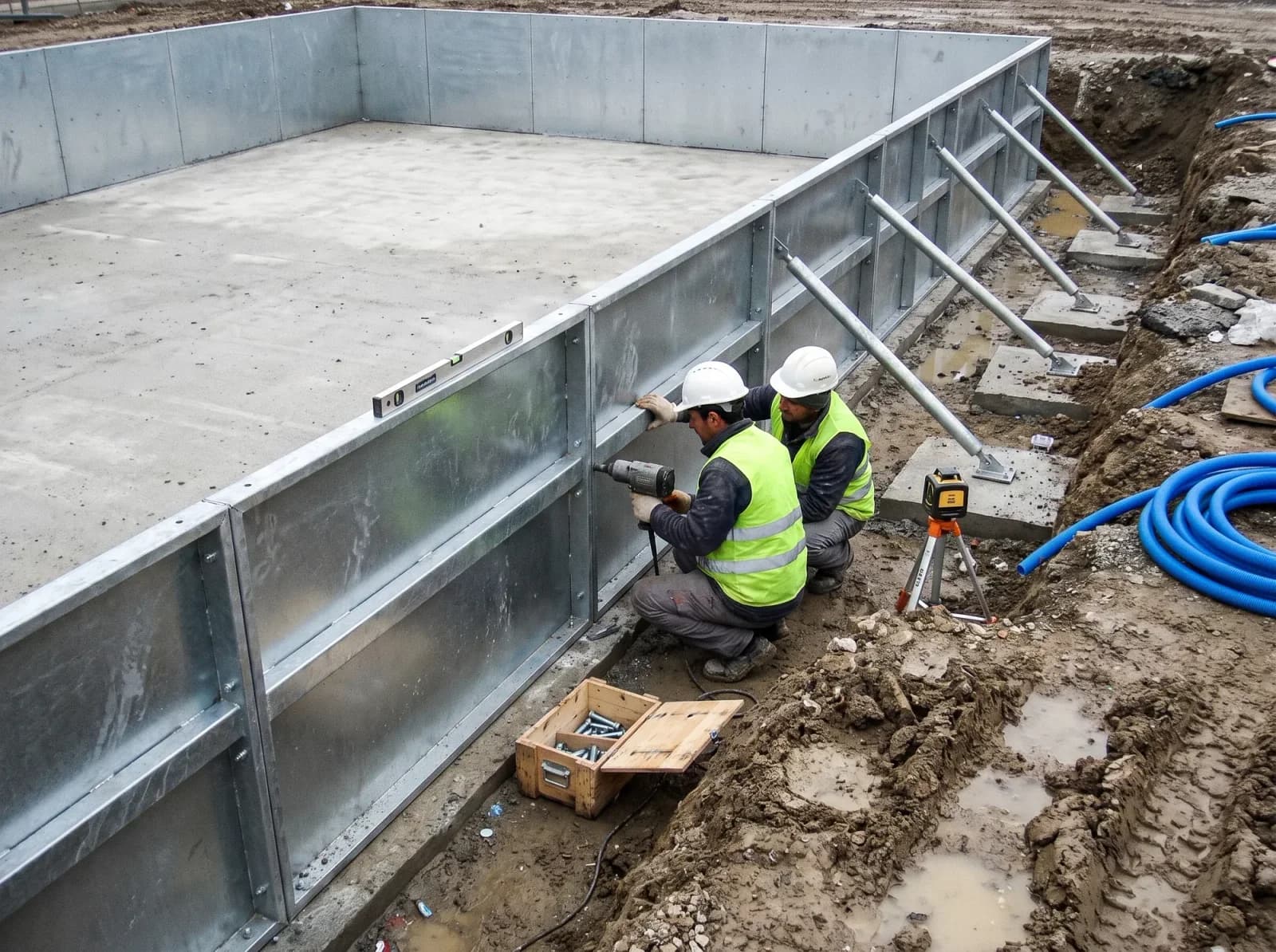
Can the Depth of a Prefabricated Pool Be Changed?
How much can depth change in one-piece fiberglass, polyester and panel prefab pools? Options before and after installation, water volume and safety.
View- 17 September 2026
- 8 min read
- Turkish Bath · 21 March 2026Hotel and Commercial Turkish Bath: Solutions for Heavy UseCommercial hammam design for hotels, spas and thermal facilities: capacity planning, hygiene rules, durable materials and control of operating costs.5 min read
- Pool Construction · 29 April 2026Indoor Pool Construction: The Engineering of Four-Season UseWhat makes a covered pool comfortable year-round is not the water itself but the volume that surrounds it.7 min read
- Pool Construction · 2 October 2026Choosing Pool Showers and Waterfalls: Shower Types, Water Curtains and Plumbing NeedsChoosing a pool shower, waterfall or water curtain depends on the material, where the water comes from and where it is mounted. We compare solar and stainless steel shower types and their pump and plumbing needs.8 min read
- Pool Construction · 2 October 2026Competition Pool Equipment: Which Pool Needs Which Equipment?Starting blocks, lane ropes, warning and turn systems, underwater speakers and water polo goals are chosen according to how the pool is used. We explain which dimensions we check for each item.7 min read
- Pool Construction · 29 September 2026Building a pool or spa abroad: what drives the cost of an international project?A pool, hammam or spa project delivered abroad from Turkey has no single price per square metre. We cover design, equipment, shipping, customs and schedule.8 min read
- Pool Construction · 17 September 2026Can the Depth of a Prefabricated Pool Be Changed?How much can depth change in one-piece fiberglass, polyester and panel prefab pools? Options before and after installation, water volume and safety.8 min read
// 04 · Company & Contact
To talk about your project, call or write to us.
Legal Name
Çilek Havuz
Founded
1998 · Istanbul
Head Office
Çilek Plaza, Eyüp Sultan Mah. Yakacık Cd. Feshane Cd. No: 2 D:4 D:1, 34885 Sancaktepe / İstanbul
Service Area
All of Türkiye · exports to 14 countries
Branches
Kyrgyzstan · Egypt · Algeria · Iraq
Showroom
Plan a showroom visit
At our showroom in Çilek Plaza, Sancaktepe, you can discuss your project with our team. We recommend booking an appointment by phone before your visit.
Working Hours
- Monday – Friday · 08:00 – 17:30
- Saturday · 08:00 – 12:30
- Closed on Sunday
Frequently Asked Questions
About Commercial Pool Construction for Hotels, Resorts and Public Facilities, frequently asked questions.
Çilek Havuz Corporate
Pool and Wellness Engineering
- Response Time
- Same day
- Channels
- Phone · Email · WhatsApp
If the answer you are looking for is not here, send your question directly to us and our team will reply as soon as possible.
+90 216 475 39 37Total cost of ownership covers the installation cost plus items that recur every year. These include energy consumption, chemical use, water loss and maintenance labour. The cheapest installation often means the most expensive operation. That is why we recommend basing the decision not on the construction price alone but on an operating picture spread over several seasons.
Çilek Havuz Corporate
The duration varies with the size of the pool and technical choices such as an overflow system. The installation of regulation-compliant dosing and automation, and site conditions, also affect it. Items such as filtration and waterproofing are stages that should not be rushed. Once we have assessed your project's capacity and usage profile, we share a realistic schedule from the outset.
Çilek Havuz Corporate
Heating is one of the largest items of commercial pool expenditure. An efficient heating solution and a correctly sized system that has not been chosen unnecessarily large reduce the annual bill noticeably. Insulation and solutions that reduce heat loss from the water surface also improve this picture. We recommend assessing the heating decision together with the operating economics.
Çilek Havuz Corporate
The right dosing equipment, measuring points and automation make daily water monitoring and record-keeping simple for staff. They also stop inspection day from being a source of stress. It is important to set the system up from the start to make these obligations easier. At handover, we make a point of sharing the operating routine and maintenance steps with your team.
Çilek Havuz Corporate
An overflow system is more hygienic because it continuously renews the water surface, and it offers a high-quality appearance. However, it requires a larger balance tank and precise hydraulic calculation. A skimmer system is simpler. The decision is made according to the facility's intensity of use, expected quality and budget. We assess this choice together with your business goals.
Çilek Havuz Corporate
Hot, highly mineralised water wears out materials, pipework and equipment much faster than in a normal pool. A wrongly chosen system can become unusable in a short time through corrosion and scaling. That is why materials resistant to the water's chemistry and correct heat management are planned from the outset. Every thermal facility requires a design specific to its own water source.
Çilek Havuz Corporate
Turnover time is the time it takes for all the water in the pool to pass once through the filtration system and be renewed. The required pump flow rate is calculated by dividing the pool volume by this target time; the shorter the turnover time, the higher the flow rate must be.
Çilek Havuz Corporate
As a pool of the same volume hosts more bathers, the pollution load entering the water increases. This requires a shorter turnover time and therefore a higher flow rate. That is why, in a commercial pool, filtration capacity is determined not from the volume in m³ alone but also by taking into account the expected peak number of bathers.
Çilek Havuz Corporate