

Prefabricated Pool Guide: Panel, Fiber and Polyester
Prefabricated pools fall into three groups: panel, fiberglass and polyester. This guide covers installation, advantages and limits of each system.
Project Manager · Mechatronics Engineer · Çilek Havuz
- Published
- Updated
- Reading
- 7 min read
- Category
- Pool Construction
Prefabricated pools fall into three groups: panel, fiberglass and polyester. This guide covers installation, advantages and limits of each system.
A prefabricated pool is the general name for a pool system whose shell is largely produced in a factory or assembled quickly on site from standard modules.
The aim is to shorten construction time on site and to secure production quality in a controlled environment.
In practice, three main systems stand out: panel pools, in which steel or composite panels are assembled on site; fibreglass pools produced from a one-piece mould; and systems with a glass-fibre reinforced polyester shell. In the projects we have carried out since 1993, we have applied all three systems wherever the ground, the intended use and the budget call for them.
| System | Where the shell is produced | Freedom of form | Installation time | Size limit |
|---|---|---|---|---|
| One-piece fibreglass / polyester | in the factory, as a single shell from a mould | limited to the mould dimensions | shortest | set by road transport limits |
| Panel system | panels in the factory, assembly on site | depends on the panel module; flexible in plan | short | practically unlimited |
| Prefabricated concrete module | modules in the factory, joined on site | depends on module size | medium | module and crane capacity |
| In-situ reinforced concrete (gunite / formwork) | entirely on site | complete freedom | longest | none |
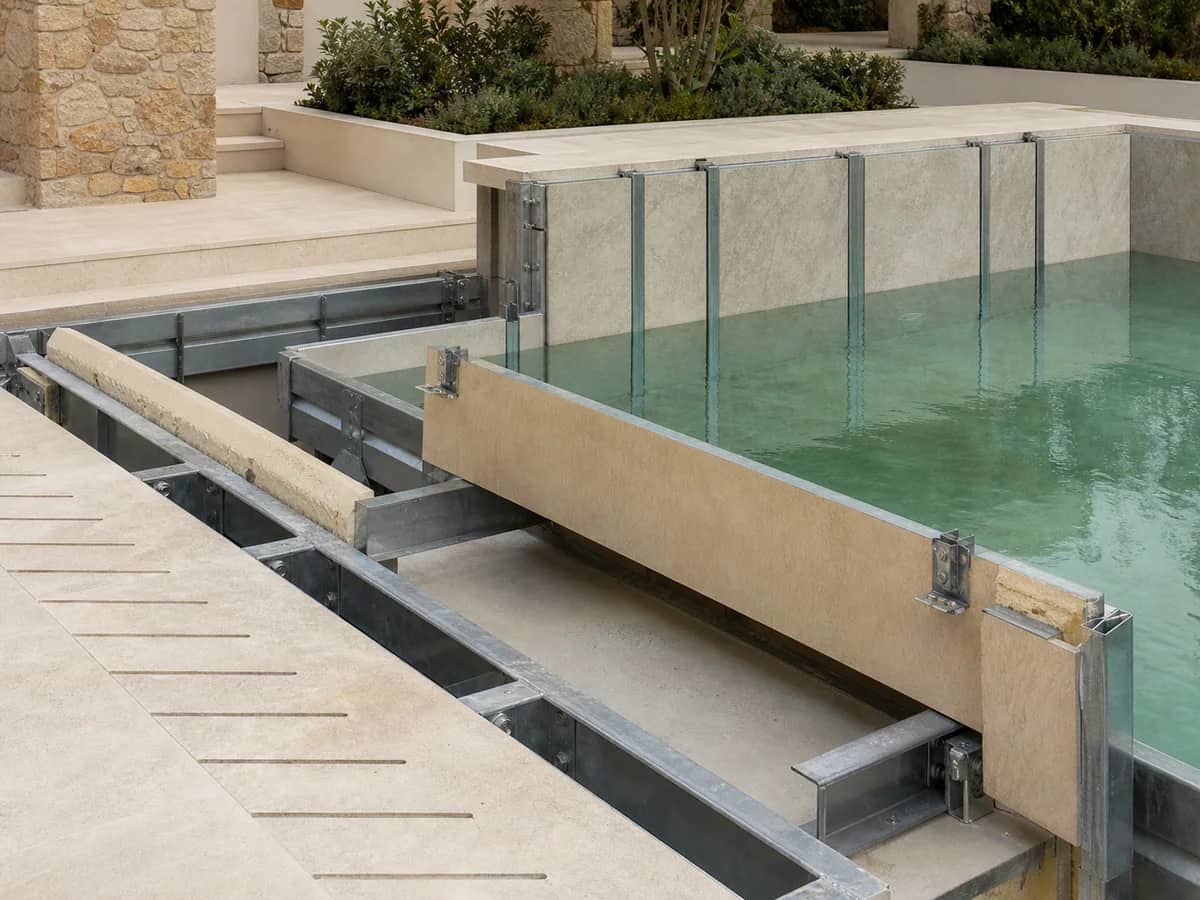
In panel pools, galvanised steel or composite panels are joined to one another with bolted connections on the prepared base to form the pool's load-bearing shell.
The inner face of the panels is usually made watertight with a membrane liner.
This system is preferred because it provides flexibility in projects with variable geometry and in medium-to-large pools. Installation is considerably shorter than a conventional reinforced concrete pour; however, ground preparation and structural terracing still require professional engineering.
Fibreglass pools are ready-made shells produced in one piece from a mould in the factory; they are lowered onto site by crane and placed in the prepared excavation.
Because their surfaces are finished with gelcoat in the factory, a separate finishing layer is often unnecessary.
Glass-fibre reinforced polyester systems come from a similar family of materials but offer modular solutions or ones that can be completed by lamination on site. Both approaches share the advantages of light weight, corrosion resistance and a smooth inner surface; the choice is made according to the size of the pool and the transport conditions.
| Item | What to ask |
|---|---|
| Surface layer | What warranty is given for gelcoat thickness and the UV resistance of the colour |
| Shell layer | How many laminate layers, and where the reinforcement is concentrated |
| Steps and seating | Integrated into the shell, or added afterwards |
| Transport | With which vehicle and under which permit the shell width will be transported |
| Crane access | Can a crane reach the lowering point, and is its boom long enough |
| Bedding | What will be laid beneath the shell, and how the backfill will be compacted |
| Repair | If the surface is scratched or cracked, who carries out the repair and within what time |
Why do the model sizes of one-piece fibreglass and polyester pools stop at a certain width? The answer lies not in the pool but on the road.
Because the shell is produced in one piece in the factory, the width of the pool is limited by the width the vehicle carrying it can transport. Above a certain width, a special transport permit, an escort vehicle and a route plan are required, which changes both cost and schedule.
The second limit is the garden itself. The shell is unloaded from the lorry and set into the pool excavation by crane. Where the crane can stand, how far its boom can reach and obstacles along the way such as power lines, trees and garden walls determine whether installation is possible at all. At a villa whose back garden can be reached only through a narrow side passage, a one-piece pool is usually ruled out.
Five things to measure before obtaining quotes
- 01Width and height of the access from the street to the garden (gate, arch, eaves).
- 02The nearest firm ground where the crane can stand, and the distance from there to the centre of the pool.
- 03Low power and telephone lines along the route.
- 04Trees, fences and lighting poles that will need to be removed.
- 05Space for the lorry to manoeuvre; in a cul-de-sac, the distance needed to reverse out.
Measuring these five items before installation is cheaper than measuring them on installation day. The cost of a crane arriving for nothing even once is higher than adding a one-hour site survey to the project at the outset.
The most obvious advantage is speed: thanks to the factory-produced shell, time on site is shortened and the project schedule becomes predictable.
The controlled production environment provides a repeatable standard in surface quality and watertightness.
In addition, smooth inner surfaces reduce bacterial adhesion and make cleaning easier. The light shell reduces the load on the ground and so creates a structural advantage on certain plots.
| Situation | Recommendation |
|---|---|
| A standard size is sufficient and the pool must be ready for the season | one-piece fibreglass / polyester |
| Cranes and lorries cannot get into the garden | panel system or in-situ reinforced concrete |
| A free form, an island or a beach entry is wanted | in-situ reinforced concrete |
| An overflow system and balance tank are wanted | panel or in-situ reinforced concrete |
| Commercial facility, heavy and continuous use | in-situ reinforced concrete |
| An infinity edge is wanted | in-situ reinforced concrete |
| Tight budget, small size, good garden access | one-piece fibreglass / polyester |
For factory-produced one-piece shells, the greatest constraints are size and transport; the road transport gauge determines the maximum size the pool can reach.
In very large projects or those with special geometry, panel or in-situ systems come into play.
Nor does being prefabricated make a soil survey and correct drainage unnecessary. Badly prepared ground leads to settlement and stress problems even in the highest-quality shell. For a detailed comparison with reinforced concrete, you can consult our related pillar guide. Pool construction carried out with in-situ casting remains the only realistic solution when site-specific forms and large dimensions are involved.
Whatever the shell type, a pool's performance is determined by its filtration, circulation and automation equipment.
In our projects, we size the filter, pump and dosing systems according to the pool's volume and intensity of use.
The choice between a skimmer and an overflow system, as well as lighting, heating and dosing, should be planned at the design stage. When you combine the speed of a prefabricated shell with a correctly sized plant room, you obtain a long-lasting, low-maintenance pool. Low maintenance does not mean no maintenance; the pool care routine, including water balance, continues in the same way on a smooth shell.
Next step
Let us discuss your project in the way that suits you best.
You can fill in the form for a written quote, schedule a video project presentation or ask us to survey your project site.
Get a Quote
Send us your dimensions and expectations in writing.
Online presentation
Video project presentation
On-site survey
Inspection at your project site
Image gallery
Photos: 04
 01
01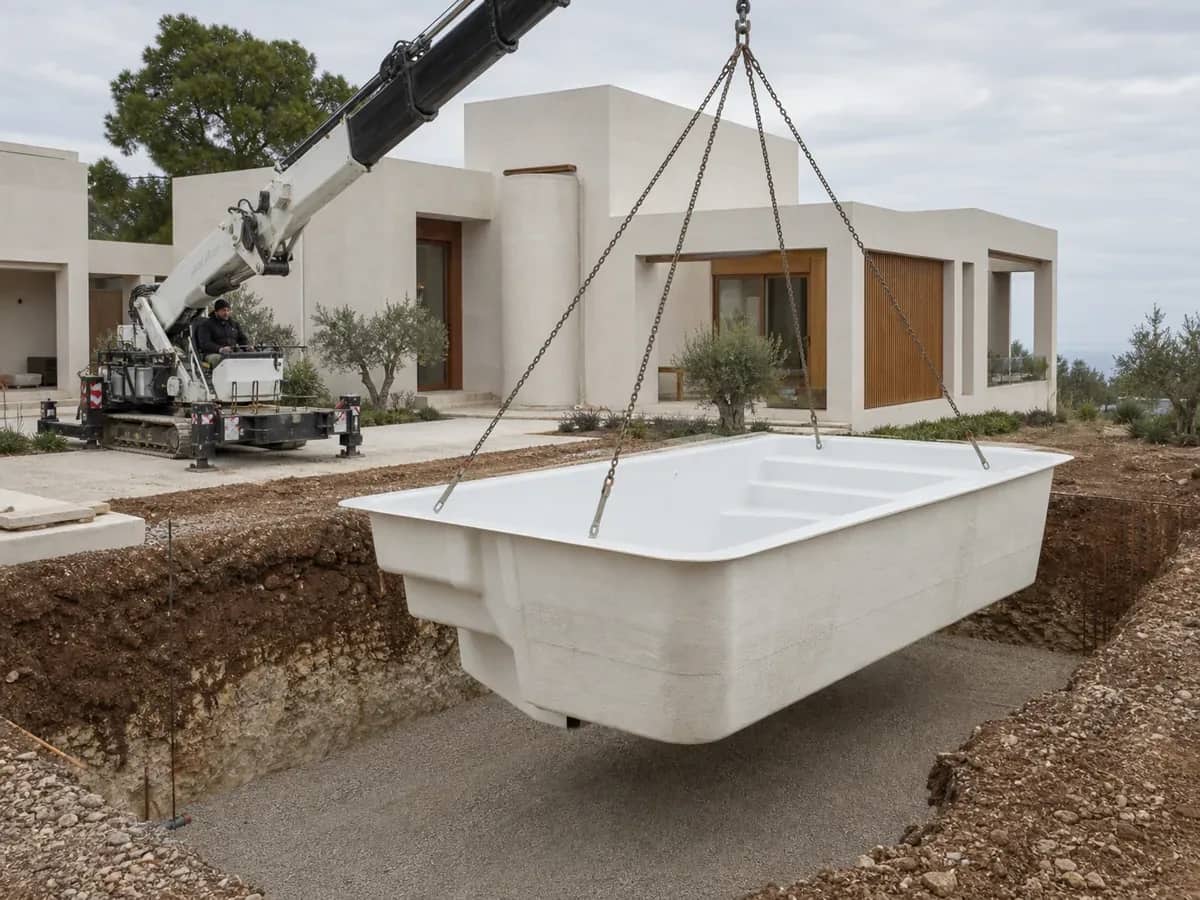 02
02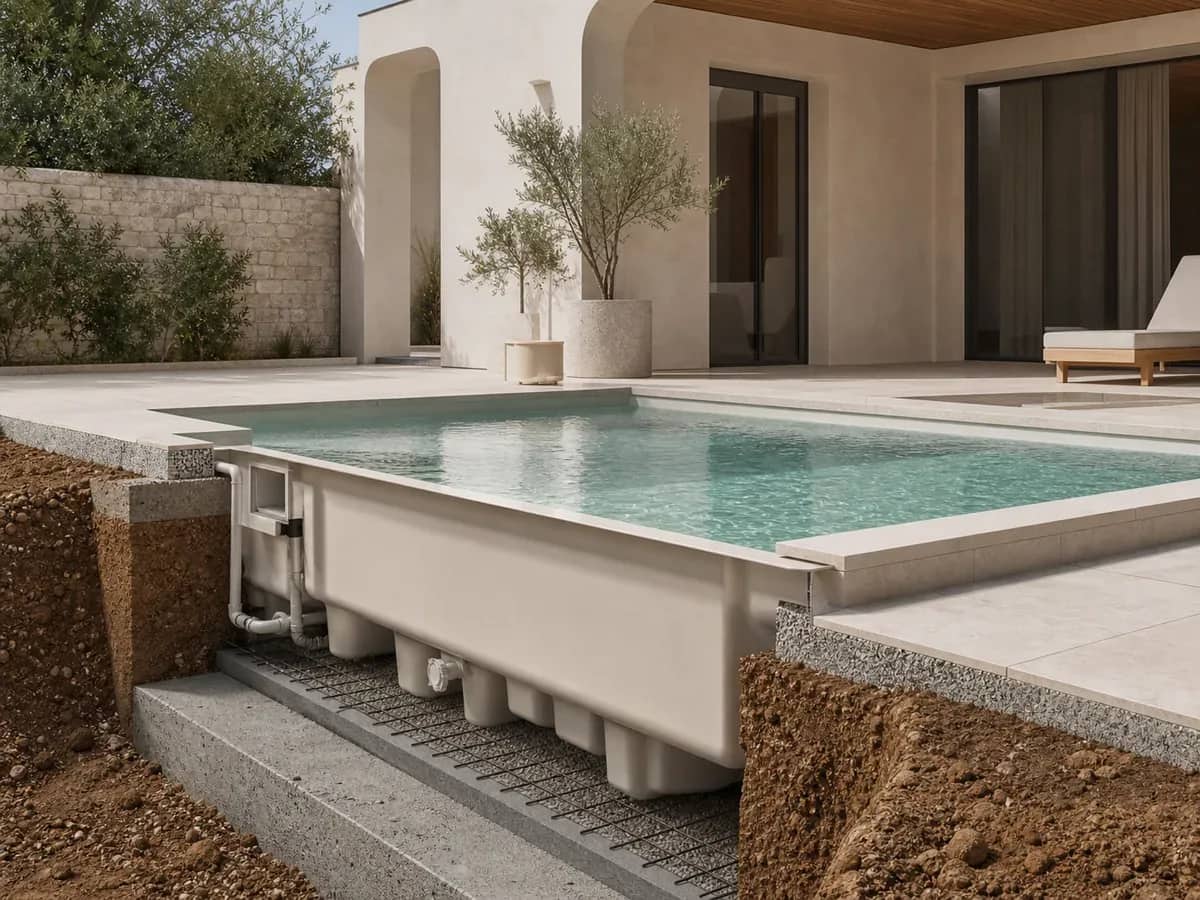 03
03 04
04// 01 · Product groups
Compare the products on this topic on their category pages.
Each card leads to a product category; models, technical sheets and list prices are there.
 Product category
Prefabricated Pool Systems
Prefabricated pool systems built from modular panels, stainless steel and fiberglass sets, installed far faster than traditional concrete construction.
View- 2 products
 Product category
Pool Mechanical Equipment
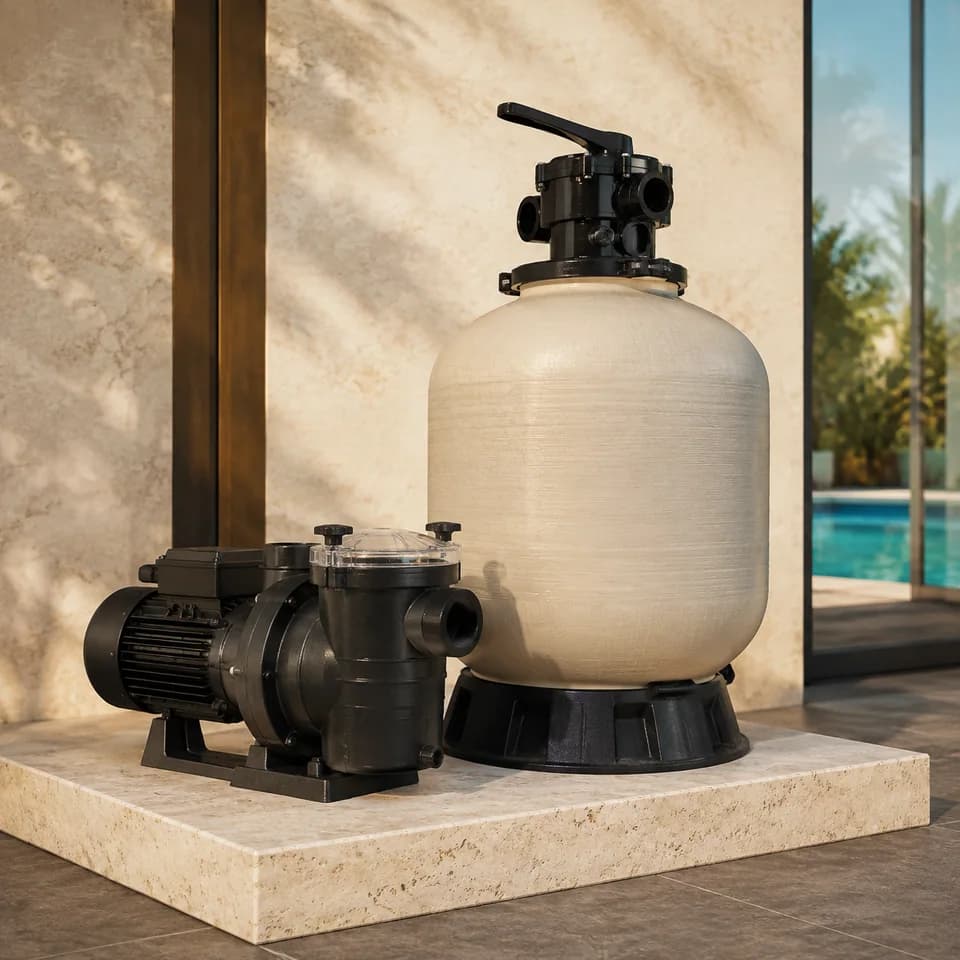
Circulation pumps, filters, valves and automation: the mechanical infrastructure that forms the heart of the pool.
View- 65 products
Product category
Prefabricated Pool Systems
Prefabricated pool systems built from modular panels, stainless steel and fiberglass sets, installed far faster than traditional concrete construction.
2 productsProduct category
Pool Mechanical Equipment
Circulation pumps, filters, valves and automation: the mechanical infrastructure that forms the heart of the pool.
65 products
// 02 · Related service
The work in this article, we deliver from design to handover.
Çilek Havuz service
Prefabricated Pools
Fast-install modular prefabricated pool systems.
A prefabricated pool is a fast solution: a factory-made panel system or one-piece polyester shell is installed on a prepared base and completed with filtration, plumbing and finish. Installation is faster than a concrete pool.
How we work
- 01Initial meeting and site surveyWe inspect the site and listen to the brief.
- 02Design and quotationWe give the cost item by item, in writing.
- 03ExecutionThe same team builds to a written schedule.
- 04Handover and commissioningWe start the systems and explain their use.
- 05Maintenance and technical supportWe provide periodic maintenance and support.
// 03 · Guides
On Pool Construction, more articles to read.
First the articles directly related to this one, then the newest articles on the topic.
 Pool Construction
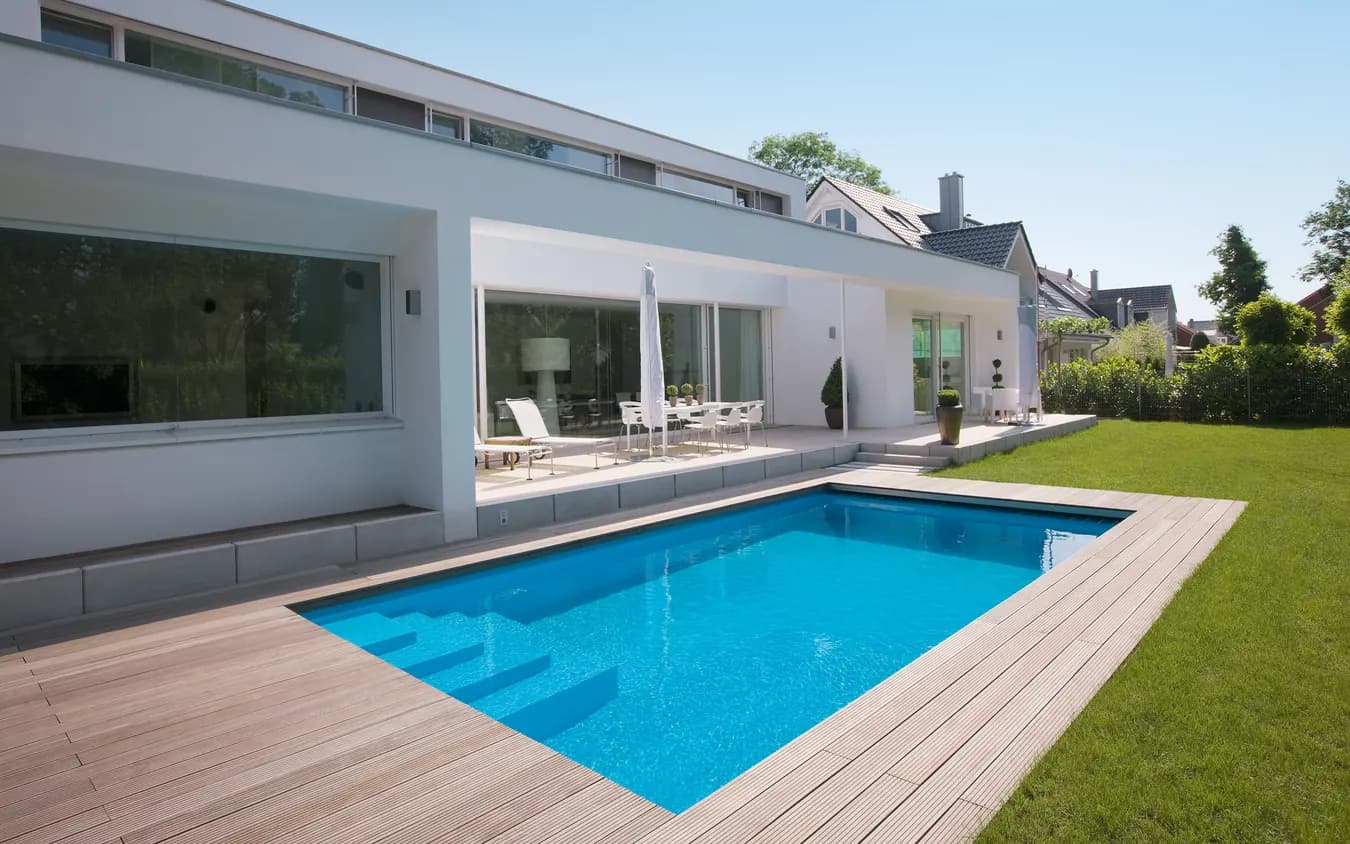
Prefab, fibreglass or polyester pool: which one is right for you?
Fibreglass and polyester pools come from a one-piece mould and are installed on site within days. A concrete pool gives you freedom of size and shape. We compare honestly where each one has the advantage.
View- 4 September 2026
- 8 min read
 Pool Construction
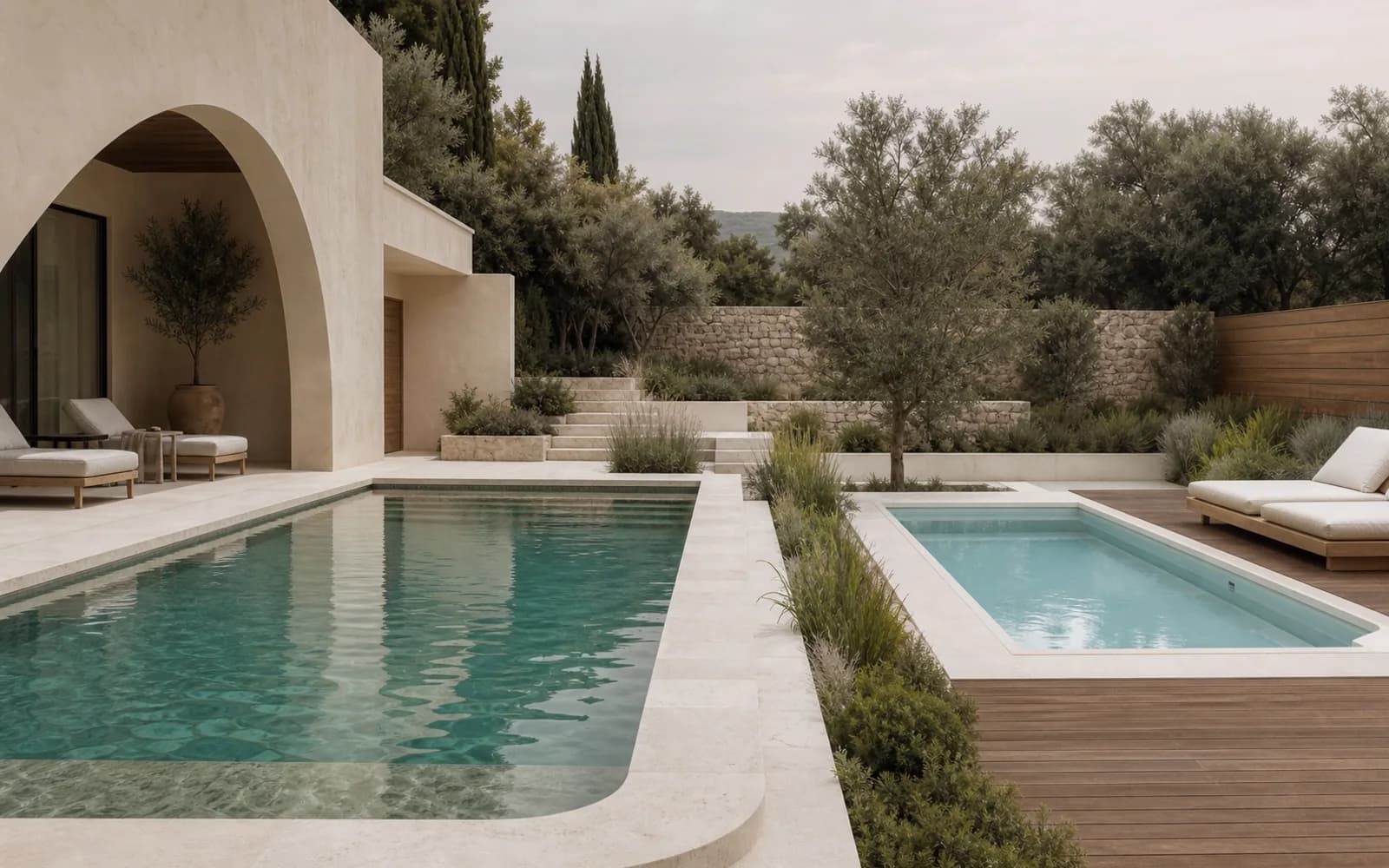
Concrete vs Prefab Pool? 2026 Comparison & Decision Guide
Reinforced-concrete or prefabricated pool? We compare the two systems fairly on service life, cost, design flexibility and installation time.
View- 19 July 2026
- 9 min read
 Pool Construction
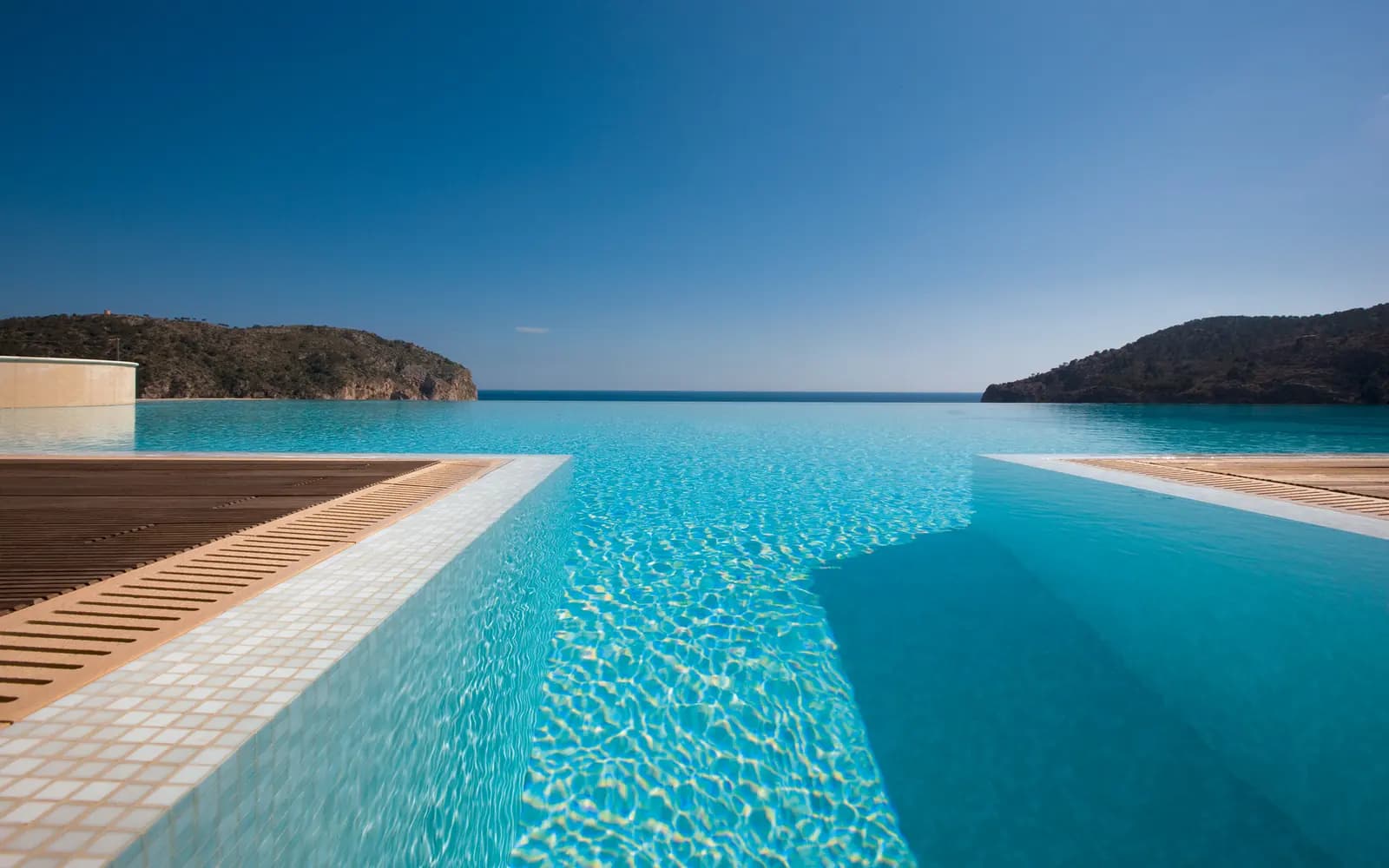
Infinity pool cost: what rises versus a standard pool?
Infinity pool cost is the sum of extras over a same-size skimmer pool: the balance tank, overflow-edge workmanship and a second pump line.
View- 9 September 2026
- 11 min read
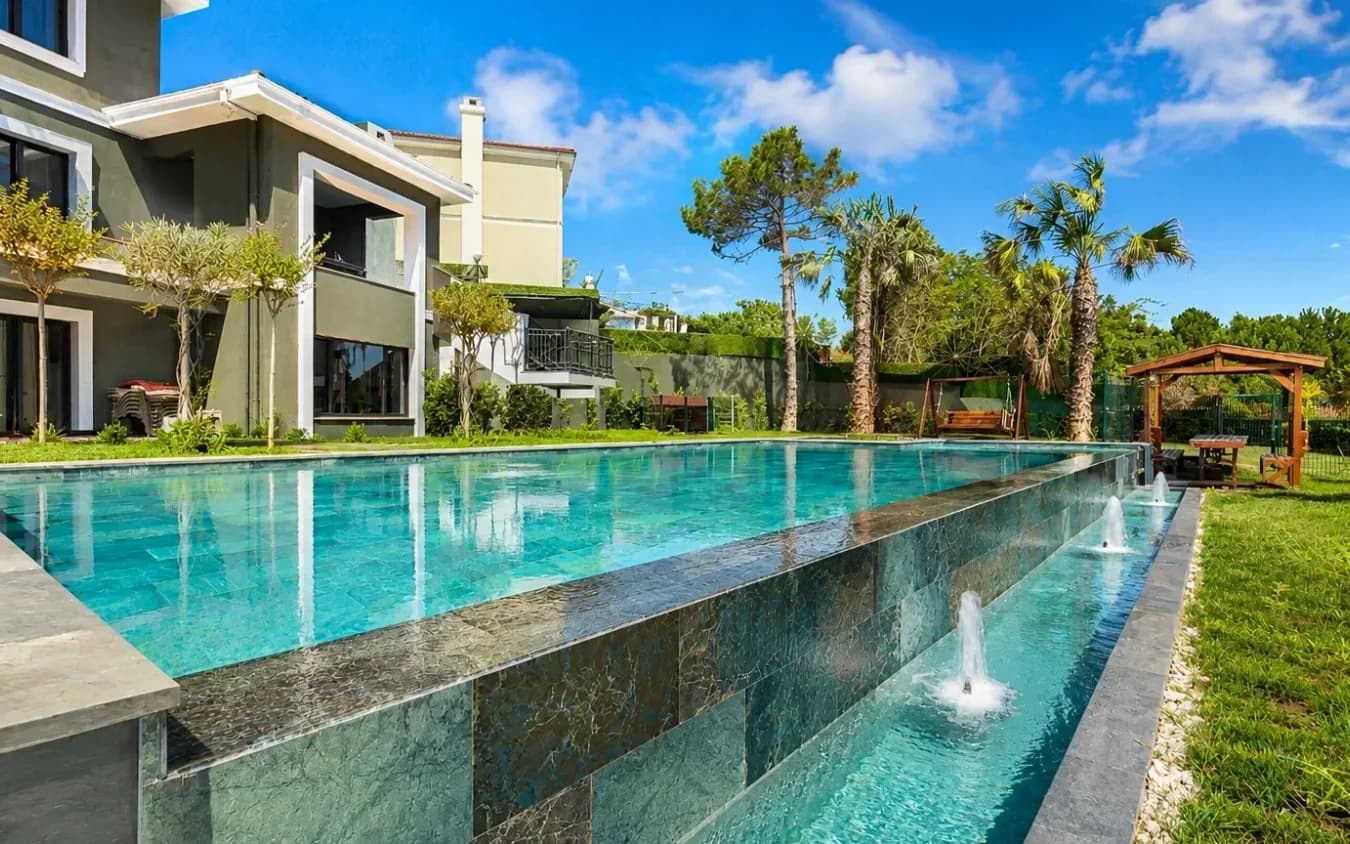 Pool Construction
Choosing Pool Showers and Waterfalls: Shower Types, Water Curtains and Plumbing Needs
Choosing a pool shower, waterfall or water curtain depends on the material, where the water comes from and where it is mounted. We compare solar and stainless steel shower types and their pump and plumbing needs.
View- 2 October 2026
- 8 min read
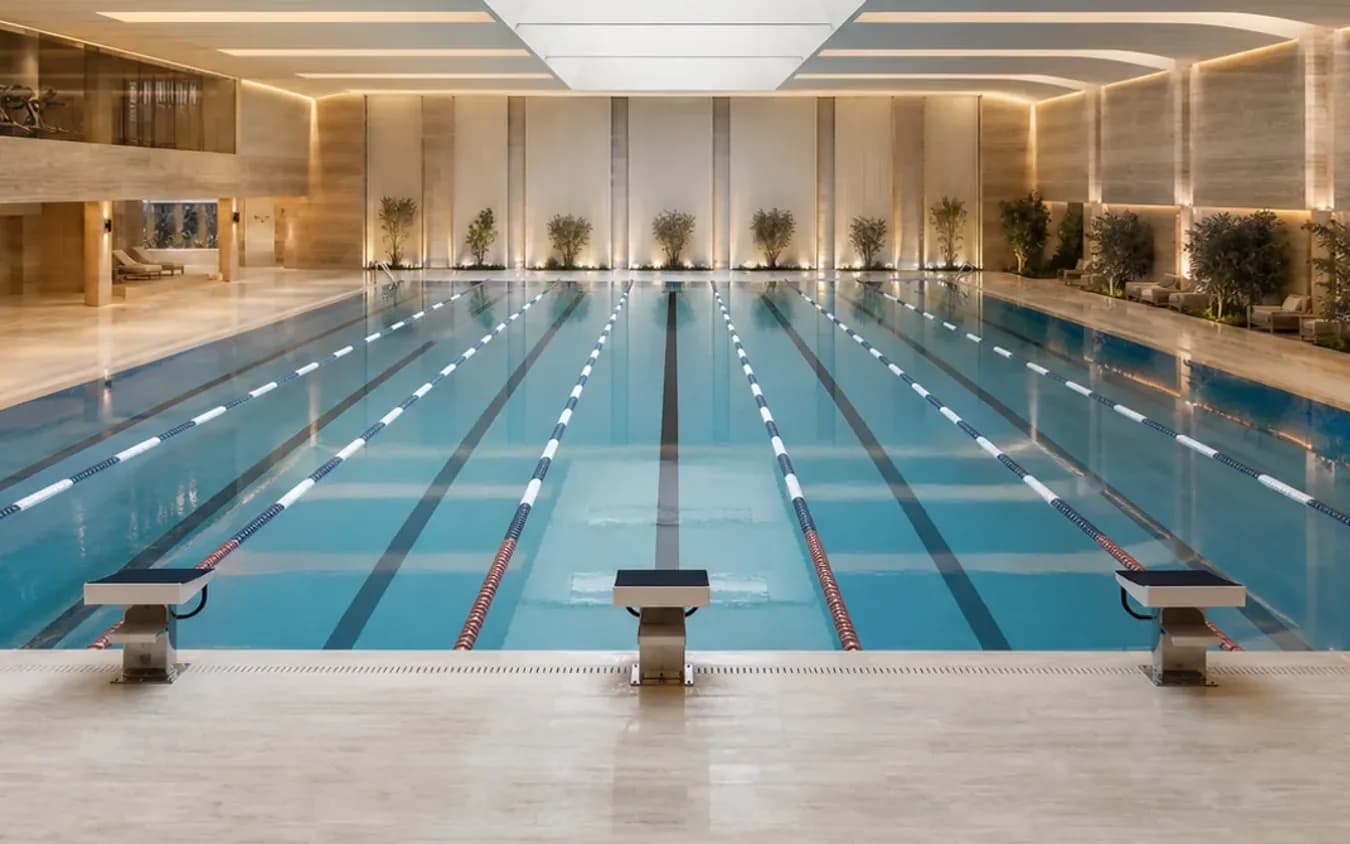 Pool Construction
Competition Pool Equipment: Which Pool Needs Which Equipment?
Starting blocks, lane ropes, warning and turn systems, underwater speakers and water polo goals are chosen according to how the pool is used. We explain which dimensions we check for each item.
View- 2 October 2026
- 7 min read
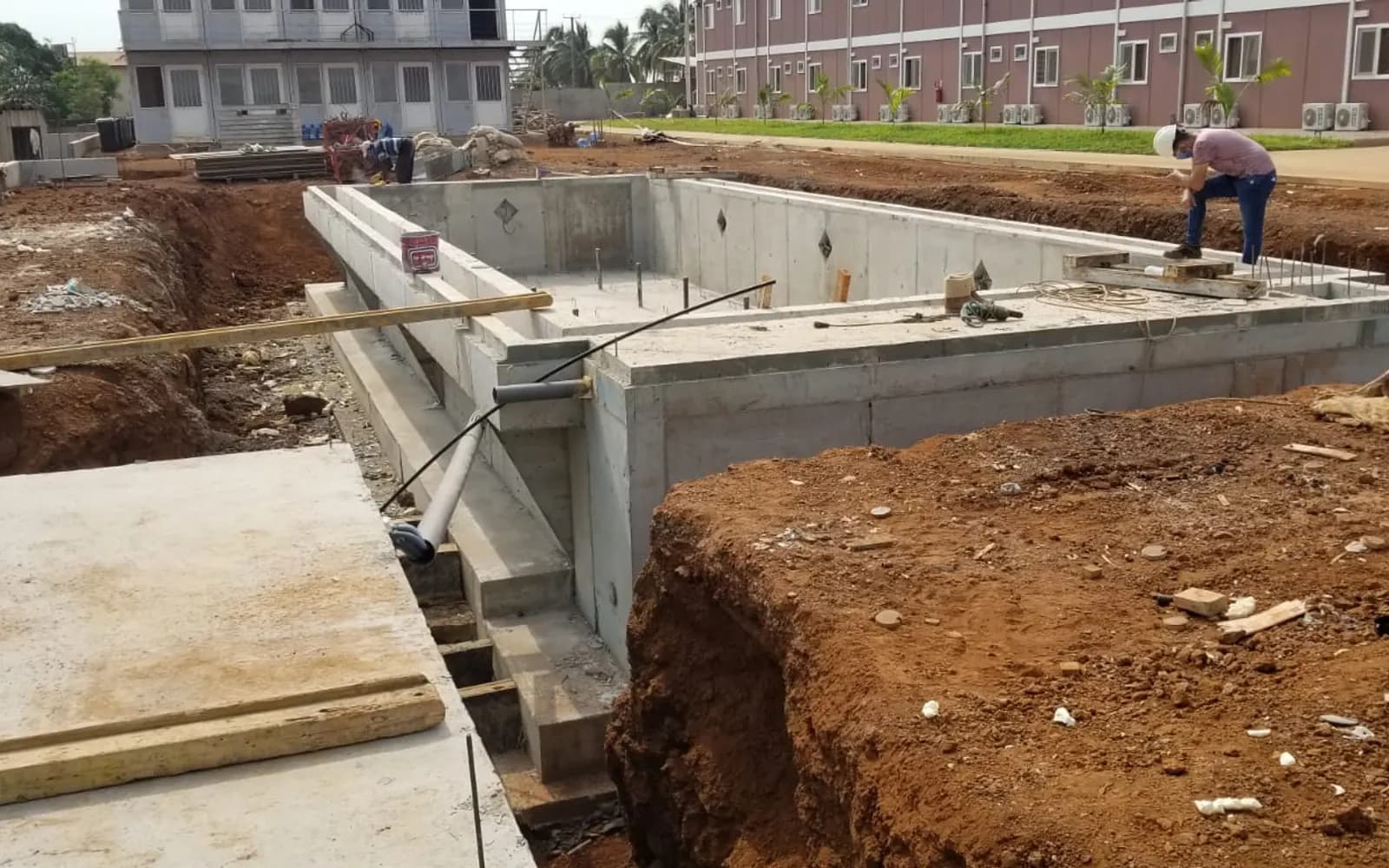 Pool Construction
Building a pool or spa abroad: what drives the cost of an international project?
A pool, hammam or spa project delivered abroad from Turkey has no single price per square metre. We cover design, equipment, shipping, customs and schedule.
View- 29 September 2026
- 8 min read
- Pool Construction · 4 September 2026Prefab, fibreglass or polyester pool: which one is right for you?Fibreglass and polyester pools come from a one-piece mould and are installed on site within days. A concrete pool gives you freedom of size and shape. We compare honestly where each one has the advantage.8 min read
- Pool Construction · 19 July 2026Concrete vs Prefab Pool? 2026 Comparison & Decision GuideReinforced-concrete or prefabricated pool? We compare the two systems fairly on service life, cost, design flexibility and installation time.9 min read
- Pool Construction · 9 September 2026Infinity pool cost: what rises versus a standard pool?Infinity pool cost is the sum of extras over a same-size skimmer pool: the balance tank, overflow-edge workmanship and a second pump line.11 min read
- Pool Construction · 2 October 2026Choosing Pool Showers and Waterfalls: Shower Types, Water Curtains and Plumbing NeedsChoosing a pool shower, waterfall or water curtain depends on the material, where the water comes from and where it is mounted. We compare solar and stainless steel shower types and their pump and plumbing needs.8 min read
- Pool Construction · 2 October 2026Competition Pool Equipment: Which Pool Needs Which Equipment?Starting blocks, lane ropes, warning and turn systems, underwater speakers and water polo goals are chosen according to how the pool is used. We explain which dimensions we check for each item.7 min read
- Pool Construction · 29 September 2026Building a pool or spa abroad: what drives the cost of an international project?A pool, hammam or spa project delivered abroad from Turkey has no single price per square metre. We cover design, equipment, shipping, customs and schedule.8 min read
// 04 · Company & Contact
To talk about your project, call or write to us.
Legal Name
Çilek Havuz
Founded
1998 · Istanbul
Head Office
Çilek Plaza, Eyüp Sultan Mah. Yakacık Cd. Feshane Cd. No: 2 D:4 D:1, 34885 Sancaktepe / İstanbul
Service Area
All of Türkiye · exports to 14 countries
Branches
Kyrgyzstan · Egypt · Algeria · Iraq
Showroom
Plan a showroom visit
At our showroom in Çilek Plaza, Sancaktepe, you can discuss your project with our team. We recommend booking an appointment by phone before your visit.
Working Hours
- Monday – Friday · 08:00 – 17:30
- Saturday · 08:00 – 12:30
- Closed on Sunday
Frequently Asked Questions
About Prefabricated Pool Guide, frequently asked questions.
Çilek Havuz Corporate
Pool and Wellness Engineering
- Response Time
- Same day
- Channels
- Phone · Email · WhatsApp
If the answer you are looking for is not here, send your question directly to us and our team will reply as soon as possible.
+90 216 475 39 37Warranty coverage for prefabricated shells varies with the manufacturer's shell construction and finishing layer. We therefore recommend clarifying the warranty terms at the contract stage. Spare parts and service access for mechanical equipment such as filters, pumps and dosing units are at least as important as the shell. This is also why we prefer manufacturers whose spare parts remain available for many years.
Çilek Havuz Corporate
In prefabricated pools with a light shell, a high water table can create uplift strong enough to move the shell. For this reason, drainage and, where necessary, a dewatering well are planned in the project from the outset. In regions where frost is severe, ground preparation and the choice of backfill material become especially important. A soil survey is essential for assessing these conditions correctly.
Çilek Havuz Corporate
A membrane liner has a certain service life depending on intensity of use, the balance of the water chemistry and mechanical stress. Unbalanced pH and high chlorine are the main factors that shorten a liner's life. When replacement is needed, it is relatively straightforward because it can be done while the panel shell is retained; to give an exact period, we need to assess your usage profile together.
Çilek Havuz Corporate
Yes, prefabricated shells are compatible with heating solutions such as heat pumps or heat exchangers. What matters is that heating is provided for in the plant room design from the outset. If heating is added later, additional work on the plumbing and electrical infrastructure may be required. We therefore recommend sharing your intention to heat the pool at the design stage.
Çilek Havuz Corporate
A gelcoat finish provides a smooth, hygienic inner surface. Over the years, however, changes in colour and gloss may appear as a result of water chemistry and UV exposure. Balanced water chemistry and regular maintenance preserve the gelcoat's appearance for a noticeably long time. Where necessary, gelcoat surfaces can be repaired and renewed.
Çilek Havuz Corporate
One-piece fibreglass shells can technically be removed and transported. This is, however, an extensive operation involving plumbing, groundwork and a crane, and it is often not economical. Panel systems, by contrast, are relatively better suited to dismantling and reinstallation. If relocation is a possibility for you, it is worth discussing this from the outset when choosing the system.
Çilek Havuz Corporate