

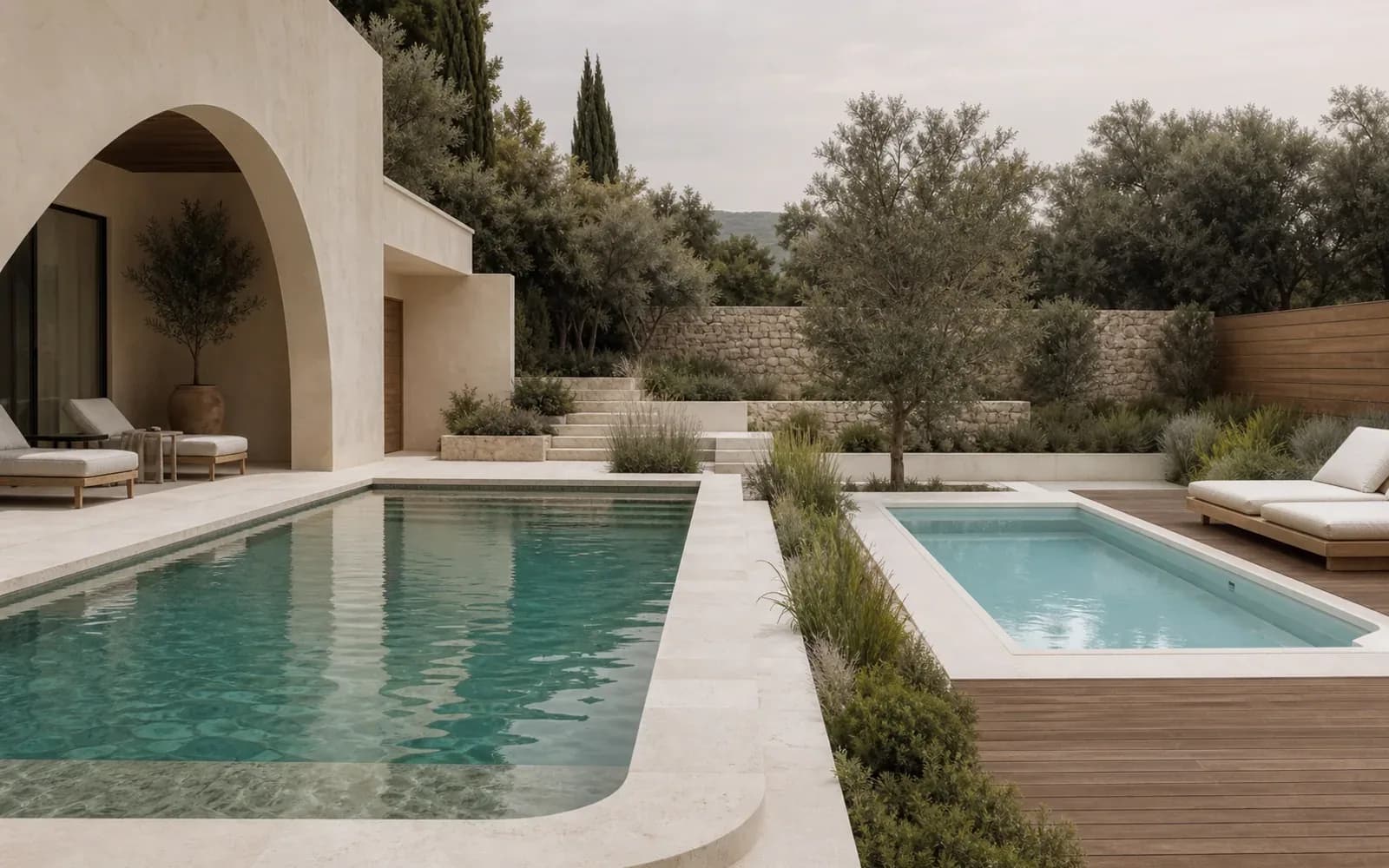
Concrete vs Prefab Pool? 2026 Comparison & Decision Guide
Reinforced-concrete or prefabricated pool? We compare the two systems fairly on service life, cost, design flexibility and installation time.
Project Manager · Mechatronics Engineer · Çilek Havuz
- Published
- Updated
- Reading
- 6 min read
- Category
- Pool Construction
Reinforced-concrete or prefabricated pool? We compare the two systems fairly on service life, cost, design flexibility and installation time.
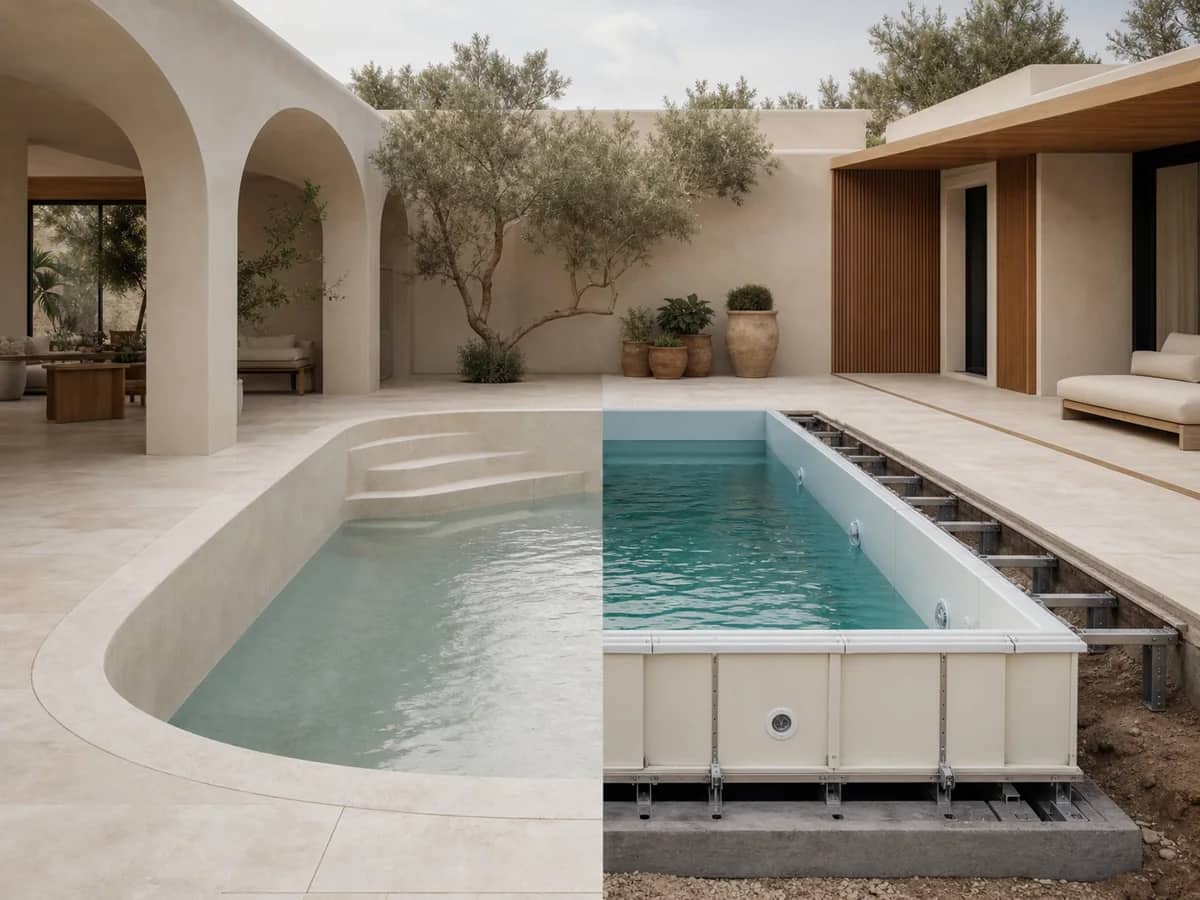
A reinforced concrete pool is built on site as a monolithic structure, with steel reinforcement placed and concrete poured in situ; its form and dimensions are entirely specific to you.
A prefabricated pool is installed by placing a ready-made shell produced in a factory (polyester, fibreglass or panels) on the plot.
This basic difference determines all the advantages and drawbacks of the two systems. One stands out for bespoke design and permanence, the other for speed and predictability. The right choice depends on your priority.
The reinforced concrete system is clearly ahead in design freedom.
It allows any form, depth, overflow detail, Roman-end entry or integrated spa and step solutions you want. Infinity and overflow pools are mostly built in reinforced concrete.
With prefabricated pools, size and form are limited to the manufacturer's mould options. If a standard rectangle or oval is enough, this is not a drawback; but if you want a pool shaped to the plot and integrated with the architecture, reinforced concrete is the better fit.
The strongest point of a prefabricated pool is speed; because the shell arrives ready-made, placement takes little time once excavation and groundwork are complete.
In projects under time pressure, this is a clear advantage.
A reinforced concrete pool needs a longer schedule because of concrete curing, waterproofing and finishing stages. On difficult sites, however, such as sloping land, narrow access or non-standard dimensions, reinforced concrete is the more flexible solution thanks to its ability to adapt to the site.
A well-designed and correctly waterproofed reinforced concrete pool is a structure that lasts for decades; when the finish is renewed, it practically returns to its original condition.
Local repairs and later revisions are easier with reinforced concrete.
Prefabricated shells are also durable; but if cracking or colour loss appears on the surface, repair depends on the manufacturer's material. In both systems, the outcome is determined by the quality of the equipment and the waterproofing. A correctly sized, good-quality filtration and pump set gives long-lasting operation whichever shell is chosen.
In initial investment, a prefabricated system often starts out more economical at standard sizes.
Reinforced concrete, for bespoke designs and large dimensions, balances its cost through a long service life and a low need for renovation.
We recommend comparing on lifetime cost, not on initial price alone. We do not quote an invented figure; the right figure becomes clear through a survey of your plot and your design expectations.
If you want a pool that is installed quickly, has standard dimensions and is budget-focused, prefabricated is a sensible choice for you.
If you want a form shaped to the plot, an overflow system, large dimensions or full integration with the architecture, reinforced concrete comes to the fore.
Our approach is to recommend not a system but the right system for you. Because we have built both technologies since 1993, we make the decision according to your needs, not according to what we want to sell.
The decision is made on the ground, not at the desk.
On a plot with a high water table, a prefabricated shell left empty can be shifted by the water pressure beneath it; this is why plots with groundwater require either an operating plan that keeps the pool permanently full or a reinforced concrete structure with drainage. A reinforced concrete shell sits under its own weight and its reinforcement is calculated against uplift.
On sloping land, on fill ground or on plots where the seismic code demands strict retaining conditions, reinforced concrete is the clearer engineering route because it can be tied into the structural design. On flat, firm and dry ground, both systems are easy to apply; at that point the discussion turns to time and budget.
In a reinforced concrete pool, holding water is the job of the waterproofing system applied to the shell: surface preparation, a two-coat brush-applied membrane, mesh reinforcement at the corners and a 72-hour water test before the finish is laid.
If any link in this chain is skipped, the leak appears under the finish years later; this is why the brand of the waterproofing system and the test protocol should be written into the contract.
In a panel system, the water-retaining element is usually the liner membrane; the shell carries the load, the liner provides watertightness. Leak risk is concentrated at the wall fitting seals and the liner joints; on the other hand, leak detection and repair are faster than with reinforced concrete, and the liner can be replaced entirely. In both systems, the joints in the plant room pipework are the third most common place for leaks.
Look from the tenth year, not from day one.
In a liner pool, the membrane is renewed every 8-12 years; this is a predictable, single-item expense. In a reinforced concrete pool finished in glass mosaic, the finish lasts more than 20 years, but grout maintenance and the occasional repair of individual tiles come up from time to time.
On the equipment side, the two systems are the same: pump, filter, dosing and heating age on the same schedule. The real difference lies in the shell and the finish; over a ten-year total, the two systems come close to each other in most scenarios. This is why it is sounder to choose according to site conditions, time expectations and design wishes.
These are the questions that speed up the decision: By when, at the latest, do you want to swim in the pool? Is there groundwater or a slope on the plot? Is a standard rectangle enough, or do you want a bespoke form? Will the depth exceed 1.5 metres? Is an overflow channel look a priority for you? Can a concrete mixer get onto the plot? Will you leave the pool full or empty in winter?
If your answer to the first question is 'a few weeks' and your form and depth expectations are within the standard range, the prefabricated panel comes out ahead. If groundwater, a bespoke form, a depth over 2 metres or an overflow channel are among your answers, the reinforced concrete side carries more weight. During the site survey we answer these seven questions together; the name of the system emerges from the sum of the answers.
Next step
Let us discuss your project in the way that suits you best.
You can fill in the form for a written quote, schedule a video project presentation or ask us to survey your project site.
Get a Quote
Send us your dimensions and expectations in writing.
Online presentation
Video project presentation
On-site survey
Inspection at your project site
Image gallery
Photos: 04
 01
01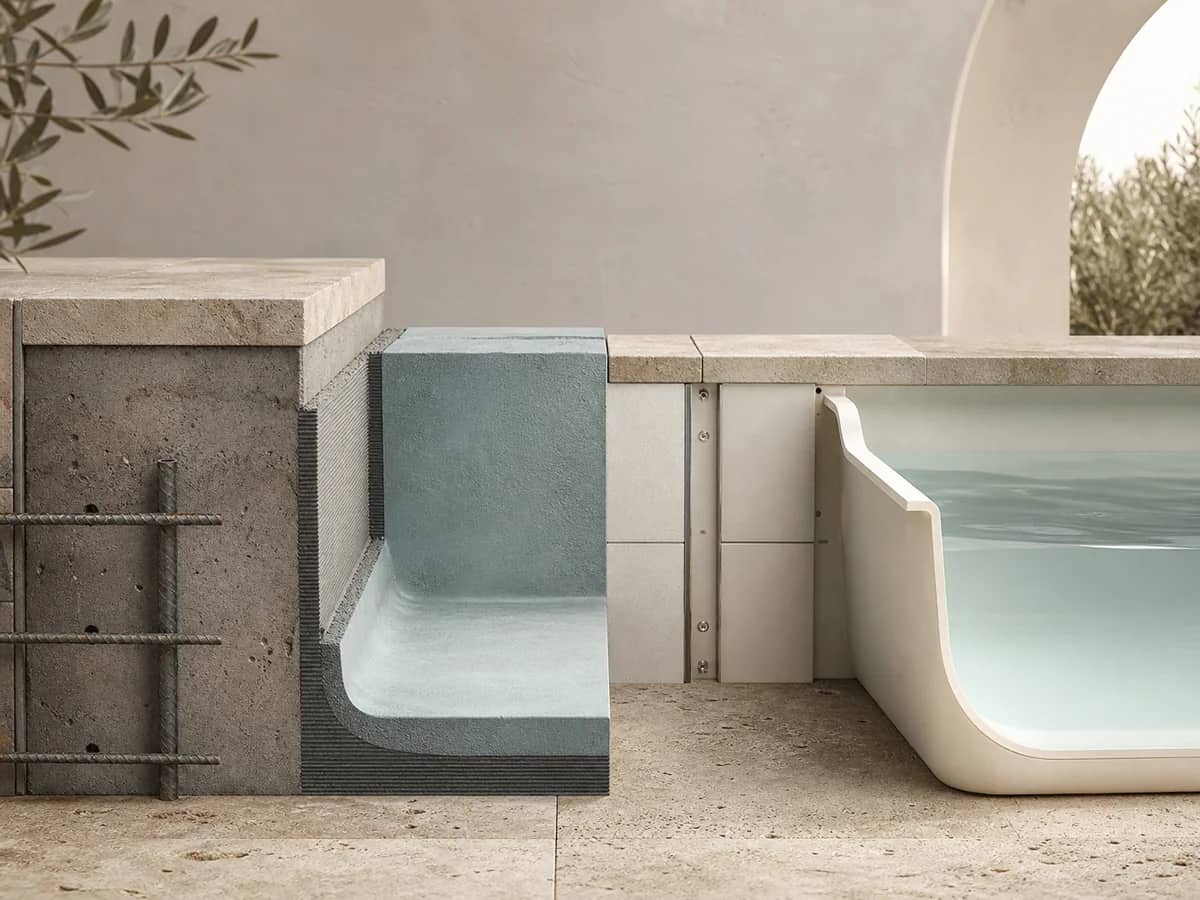 02
02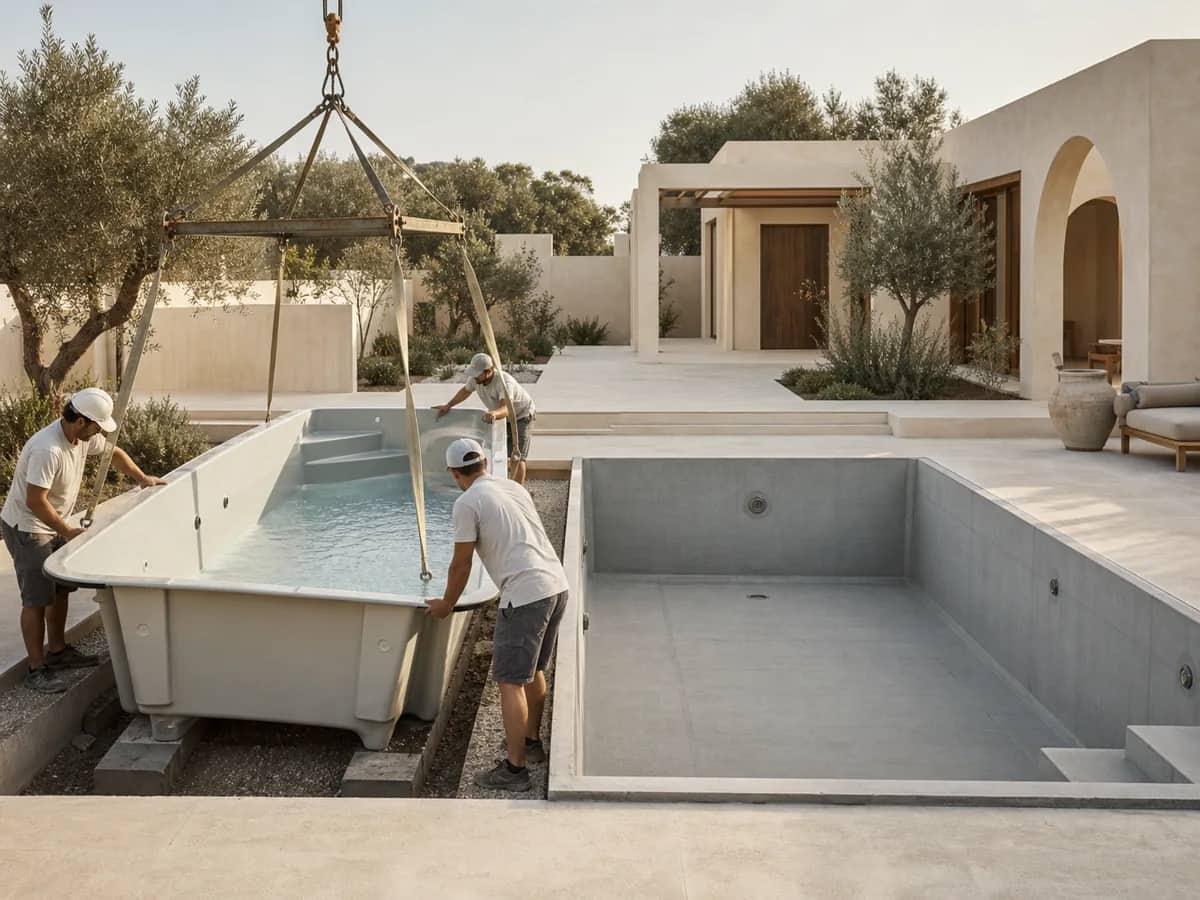 03
03 04
04// 01 · Products in this article
For the work described in this article, prefabricated pool systems.
Each card leads to the product page with its data sheet, model list and quotation.
- 7 models
- 7 models

// 02 · Product groups
Compare the products on this topic on their category pages.
Each card leads to a product category; models, technical sheets and list prices are there.
 Product category
Prefabricated Pool Systems
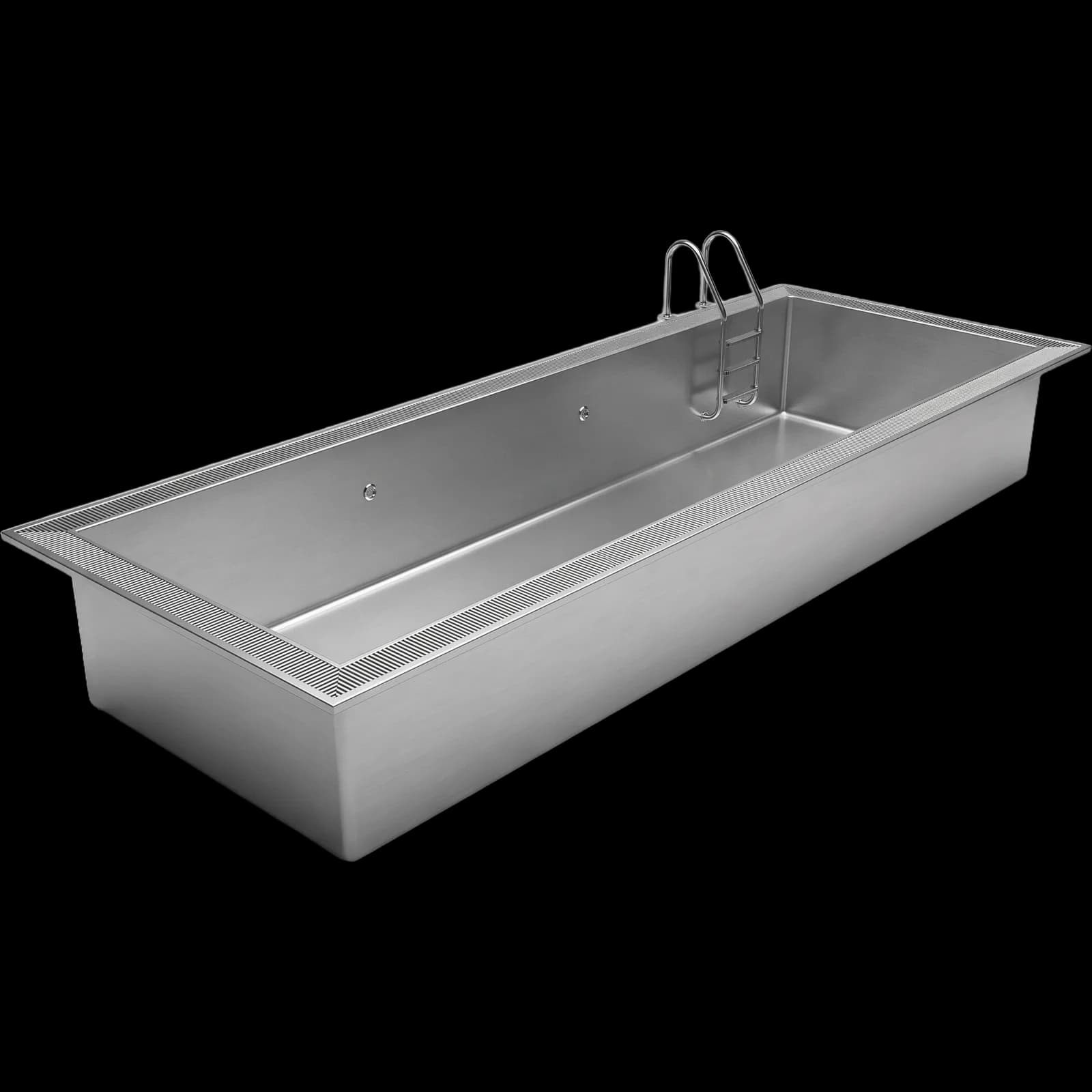
Prefabricated pool systems built from modular panels, stainless steel and fiberglass sets, installed far faster than traditional concrete construction.
View- 2 products
 Product category
Pool Lining Systems
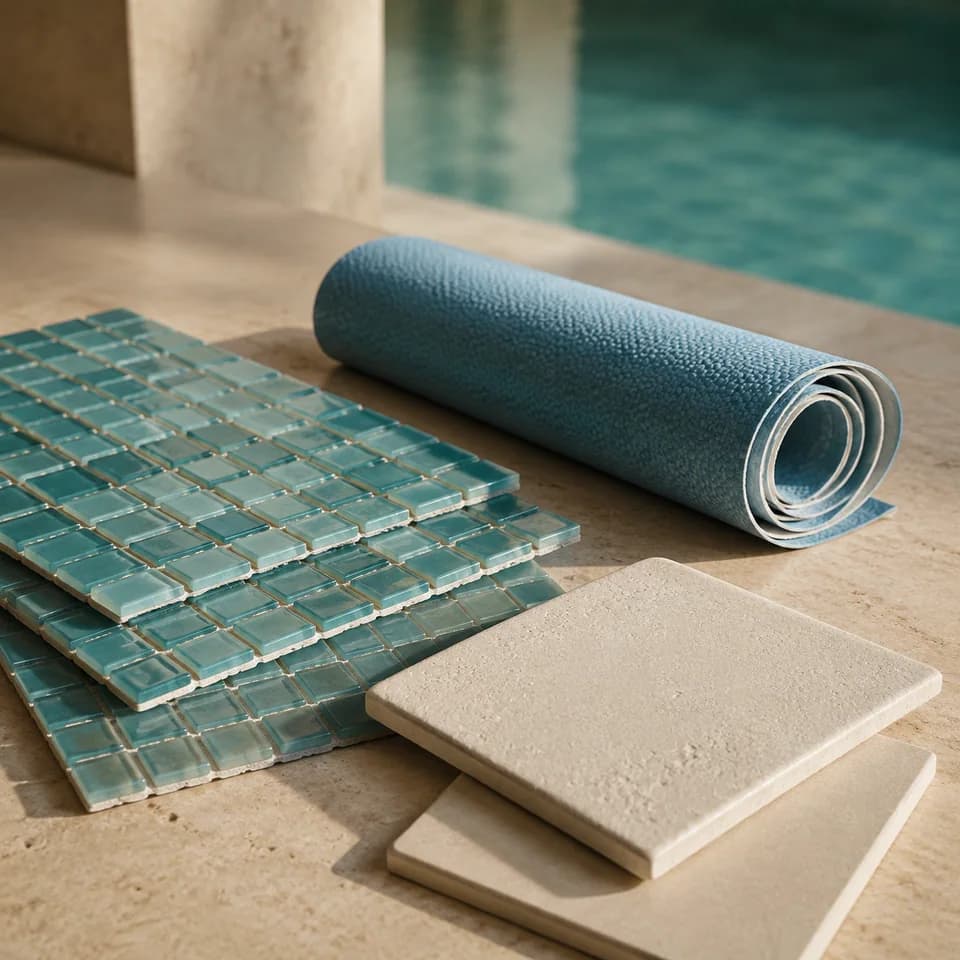
PVC liner, membrane, ceramic tile and glass mosaic: lining materials that make the pool watertight and form its finished surface.
View- 20 products
Product category
Prefabricated Pool Systems
Prefabricated pool systems built from modular panels, stainless steel and fiberglass sets, installed far faster than traditional concrete construction.
2 productsProduct category
Pool Lining Systems
PVC liner, membrane, ceramic tile and glass mosaic: lining materials that make the pool watertight and form its finished surface.
20 products
// 03 · Related service
The work in this article, we deliver from design to handover.
Çilek Havuz service
Prefabricated Pools
Fast-install modular prefabricated pool systems.
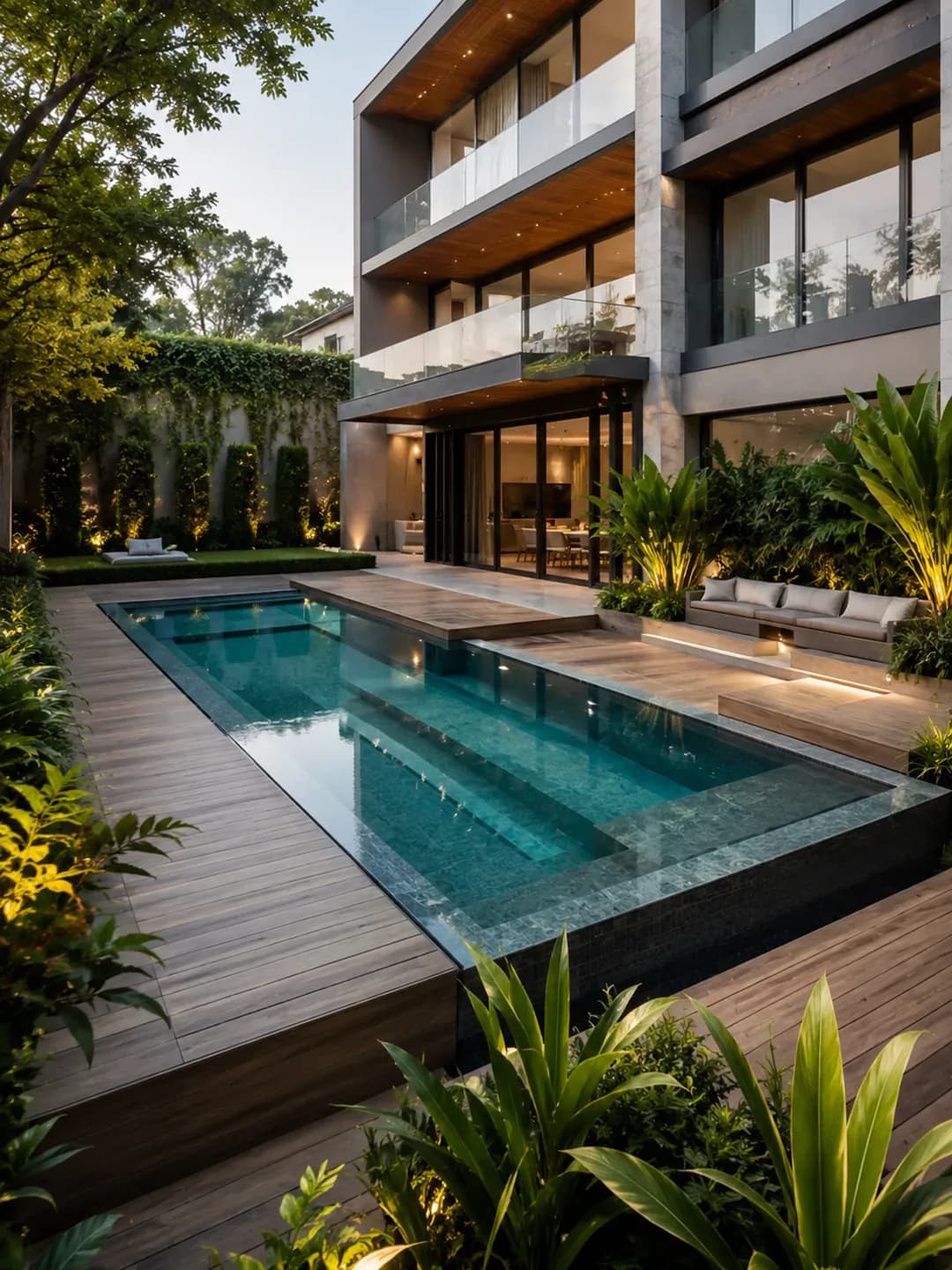
A prefabricated pool is a fast solution: a factory-made panel system or one-piece polyester shell is installed on a prepared base and completed with filtration, plumbing and finish. Installation is faster than a concrete pool.
How we work
- 01Initial meeting and site surveyWe inspect the site and listen to the brief.
- 02Design and quotationWe give the cost item by item, in writing.
- 03ExecutionThe same team builds to a written schedule.
- 04Handover and commissioningWe start the systems and explain their use.
- 05Maintenance and technical supportWe provide periodic maintenance and support.
// 04 · Guides
On Pool Construction, more articles to read.
First the articles directly related to this one, then the newest articles on the topic.
 Pool Construction
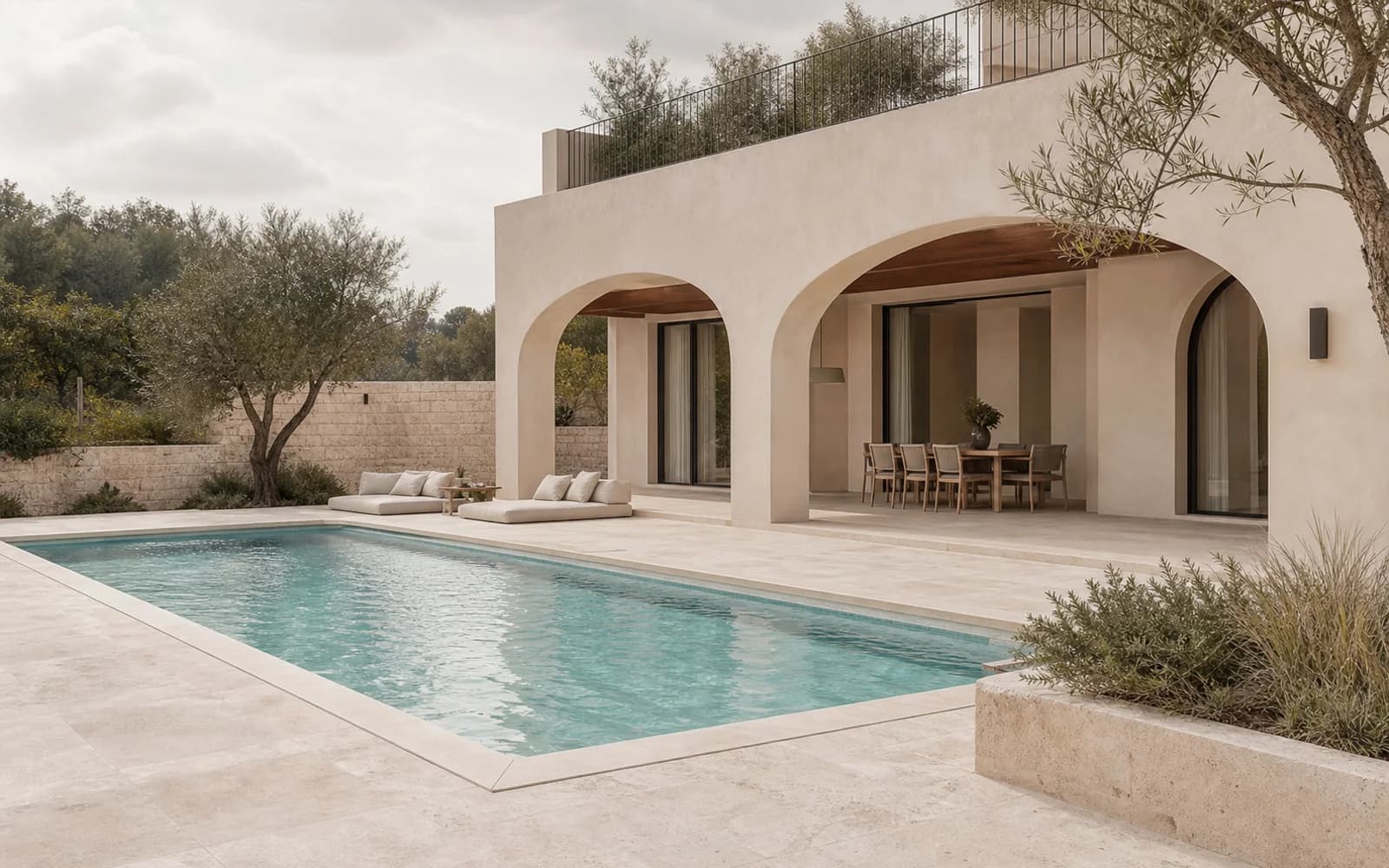
Prefabricated Pool Guide: Panel, Fiber and Polyester
Prefabricated pools fall into three groups: panel, fiberglass and polyester. This guide covers installation, advantages and limits of each system.
View- 11 May 2026
- 5 min read
 Pool Construction
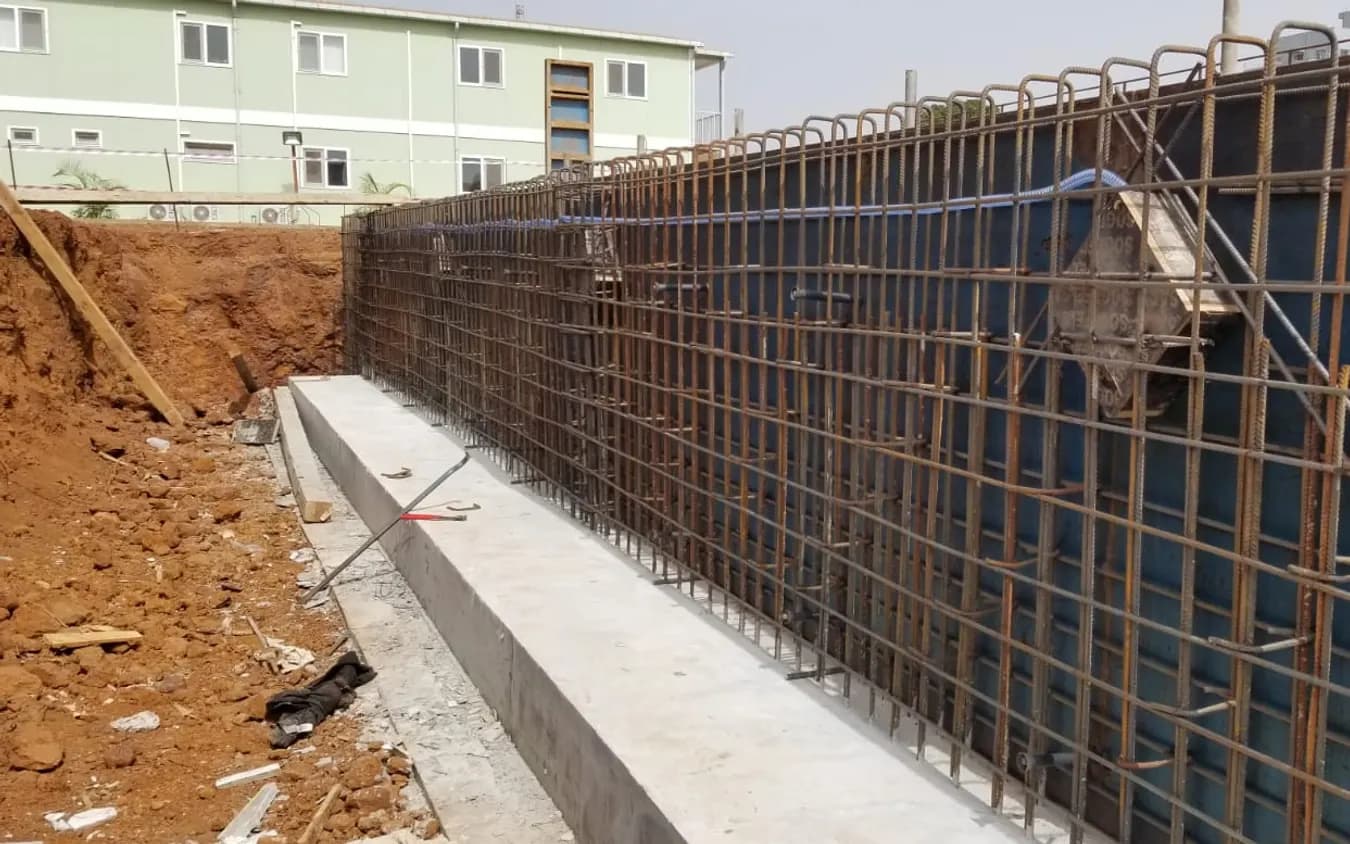
Concrete swimming pool construction: shotcrete or formwork?
Shotcrete or double-sided formwork for the shell, C30/37 concrete, a water/cement ratio below 0.45 and the waterproofing details of a concrete pool.
View- 9 September 2026
- 10 min read
 Pool Construction
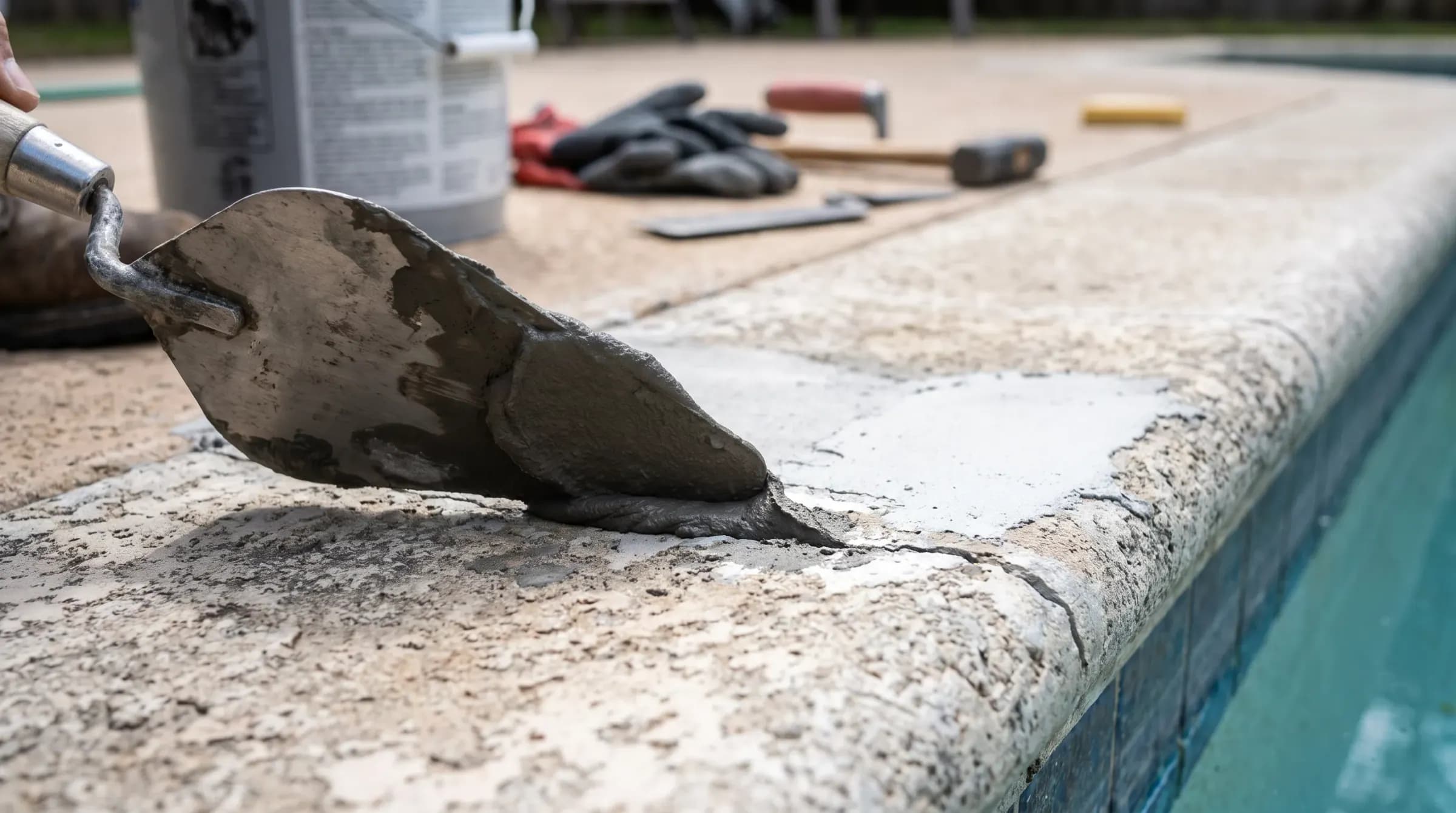
Pool Crack Repair: Causes and Repair Methods
Not every pool crack is equally serious. We cover structural versus surface cracks, the limits of DIY repair and how proper waterproofing prevents leaks.
View- 29 August 2026
- 6 min read
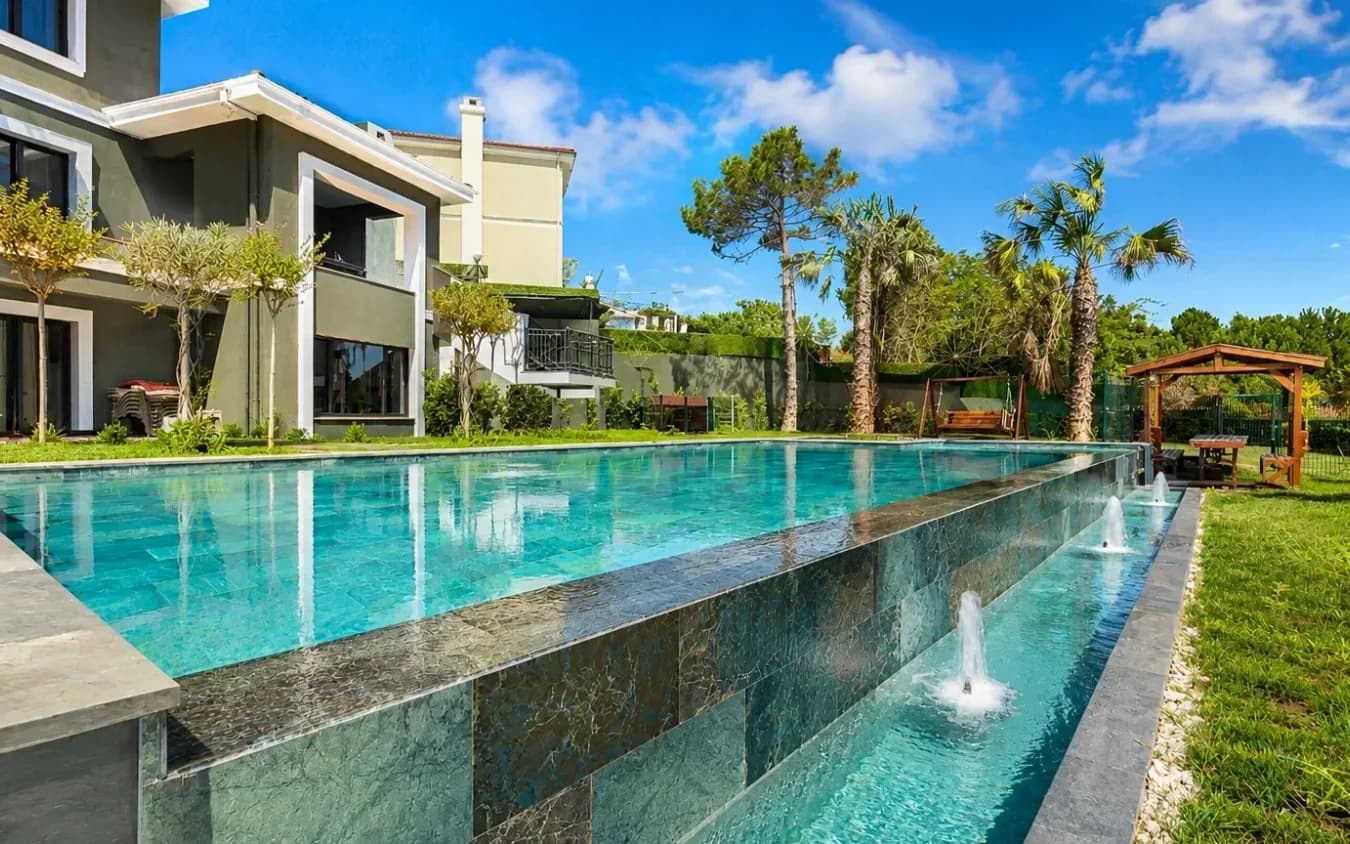 Pool Construction
Choosing Pool Showers and Waterfalls: Shower Types, Water Curtains and Plumbing Needs
Choosing a pool shower, waterfall or water curtain depends on the material, where the water comes from and where it is mounted. We compare solar and stainless steel shower types and their pump and plumbing needs.
View- 2 October 2026
- 8 min read
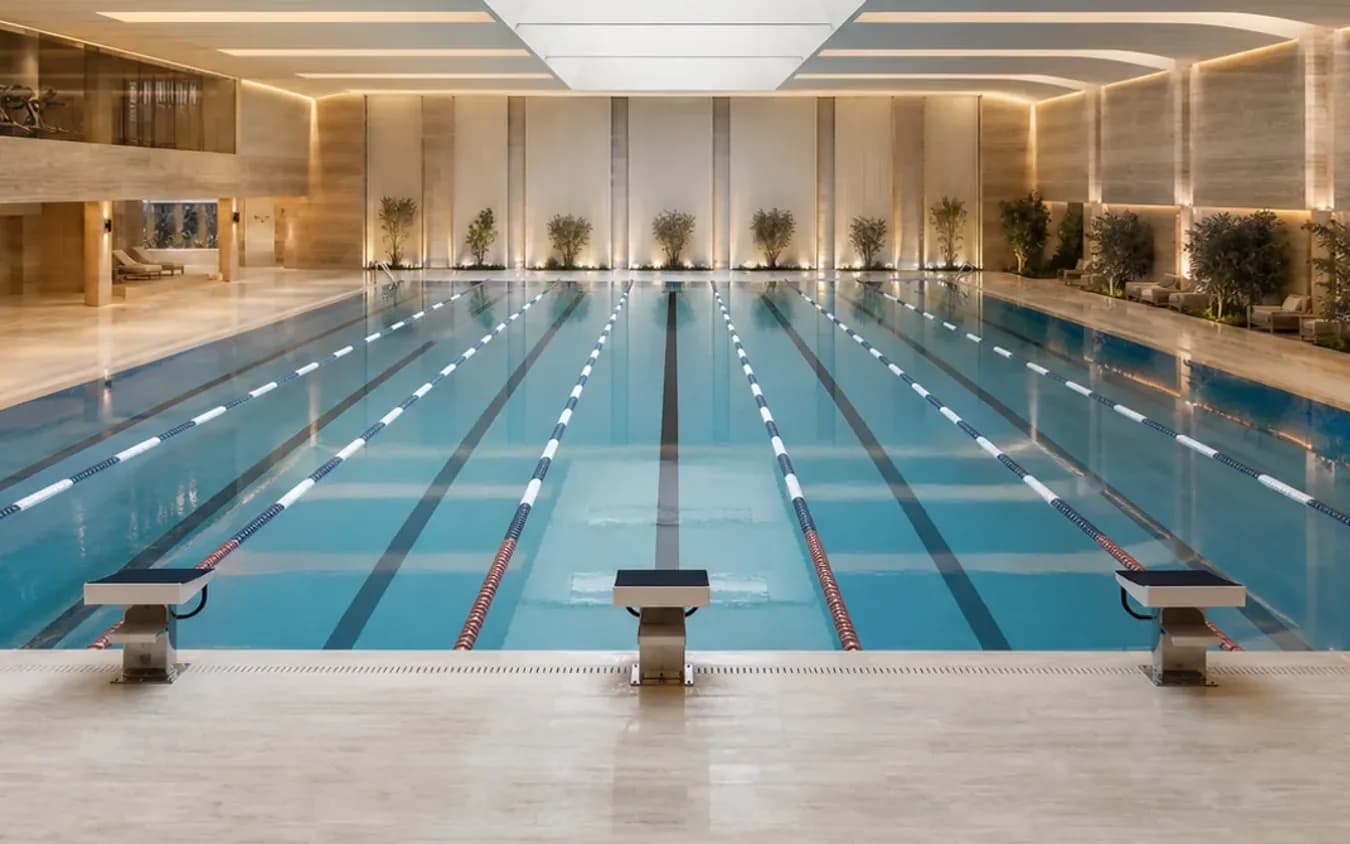 Pool Construction
Competition Pool Equipment: Which Pool Needs Which Equipment?
Starting blocks, lane ropes, warning and turn systems, underwater speakers and water polo goals are chosen according to how the pool is used. We explain which dimensions we check for each item.
View- 2 October 2026
- 7 min read
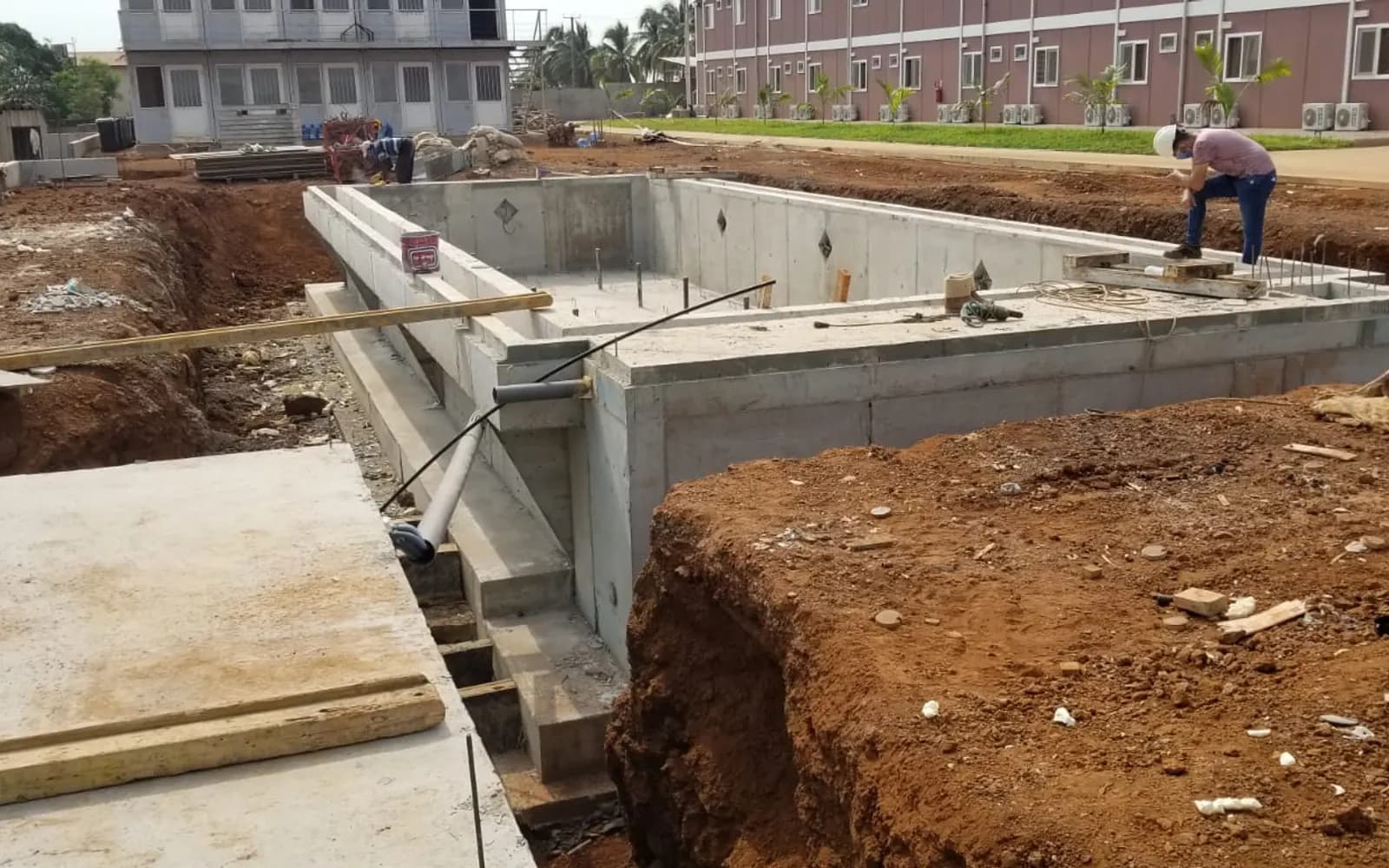 Pool Construction
Building a pool or spa abroad: what drives the cost of an international project?
A pool, hammam or spa project delivered abroad from Turkey has no single price per square metre. We cover design, equipment, shipping, customs and schedule.
View- 29 September 2026
- 8 min read
- Pool Construction · 11 May 2026Prefabricated Pool Guide: Panel, Fiber and PolyesterPrefabricated pools fall into three groups: panel, fiberglass and polyester. This guide covers installation, advantages and limits of each system.5 min read
- Pool Construction · 9 September 2026Concrete swimming pool construction: shotcrete or formwork?Shotcrete or double-sided formwork for the shell, C30/37 concrete, a water/cement ratio below 0.45 and the waterproofing details of a concrete pool.10 min read
- Pool Construction · 29 August 2026Pool Crack Repair: Causes and Repair MethodsNot every pool crack is equally serious. We cover structural versus surface cracks, the limits of DIY repair and how proper waterproofing prevents leaks.6 min read
- Pool Construction · 2 October 2026Choosing Pool Showers and Waterfalls: Shower Types, Water Curtains and Plumbing NeedsChoosing a pool shower, waterfall or water curtain depends on the material, where the water comes from and where it is mounted. We compare solar and stainless steel shower types and their pump and plumbing needs.8 min read
- Pool Construction · 2 October 2026Competition Pool Equipment: Which Pool Needs Which Equipment?Starting blocks, lane ropes, warning and turn systems, underwater speakers and water polo goals are chosen according to how the pool is used. We explain which dimensions we check for each item.7 min read
- Pool Construction · 29 September 2026Building a pool or spa abroad: what drives the cost of an international project?A pool, hammam or spa project delivered abroad from Turkey has no single price per square metre. We cover design, equipment, shipping, customs and schedule.8 min read
// 05 · Company & Contact
To talk about your project, call or write to us.
Legal Name
Çilek Havuz
Founded
1998 · Istanbul
Head Office
Çilek Plaza, Eyüp Sultan Mah. Yakacık Cd. Feshane Cd. No: 2 D:4 D:1, 34885 Sancaktepe / İstanbul
Service Area
All of Türkiye · exports to 14 countries
Branches
Kyrgyzstan · Egypt · Algeria · Iraq
Showroom
Plan a showroom visit
At our showroom in Çilek Plaza, Sancaktepe, you can discuss your project with our team. We recommend booking an appointment by phone before your visit.
Working Hours
- Monday – Friday · 08:00 – 17:30
- Saturday · 08:00 – 12:30
- Closed on Sunday
Frequently Asked Questions
About Concrete vs Prefab Pool? 2026 Comparison & Decision Guide, frequently asked questions.
Çilek Havuz Corporate
Pool and Wellness Engineering
- Response Time
- Same day
- Channels
- Phone · Email · WhatsApp
If the answer you are looking for is not here, send your question directly to us and our team will reply as soon as possible.
+90 216 475 39 37Soundly manufactured prefabricated shells are resistant to these factors. Their performance, however, depends largely on correct ground preparation and installation. A poorly bedded shell can be affected by ground movement. Reinforced concrete, because it is poured on site, adapts better to difficult ground and climate conditions. Your ground and climate conditions directly affect the decision between the two systems.
Çilek Havuz Corporate
On the equipment side (pump, filter, automation, heat pump), you can use the same class of solutions in both systems. The finish is different: reinforced concrete is open to a wide range such as ceramic tiles, glass mosaic or membrane, while a prefabricated shell largely comes with a factory colour and texture. If aesthetic flexibility is your priority, reinforced concrete offers more options.
Çilek Havuz Corporate
Because a prefabricated shell is large and in one piece, moving it onto the plot usually requires a crane and wide access. On a narrow street, a low passage or an obstructed garden this can be a serious constraint. Reinforced concrete is more flexible on sites with difficult access, since its materials are carried in piece by piece. Your access conditions are a more decisive criterion than you might think.
Çilek Havuz Corporate
A prefabricated pool, because the shell arrives ready-made, is soon ready to hold water once excavation and groundwork are complete. In projects under time pressure, its advantage is clear. Reinforced concrete needs a longer schedule because of the concrete curing and finishing stages. If you want to use the pool straight away this summer, the difference in time can be an important factor in your decision.
Çilek Havuz Corporate
A reinforced concrete pool is far more open to later revision and local intervention. Adding steps, changing details or carrying out repairs is relatively easy. The form and dimensions of a prefabricated shell are fixed in the factory, and enlarging it later is not possible in practice. If you see a likelihood of change in the long term, reinforced concrete provides a more flexible base.
Çilek Havuz Corporate
A second-hand prefabricated shell carries a risk of hidden damage from dismantling, transport and reinstallation. Waterproofing and plumbing may also be worn. It may look economical at first sight but can cause problems later. Warranty and the continuity of spare parts also become uncertain. If you are aiming for a long-lasting investment, a correctly sized new installation is usually the safer option.
Çilek Havuz Corporate
This is not recommended. The panel shell and liner work against the balancing pressure of the water mass; in an empty pool, ground moisture and groundwater load the shell from outside and the liner slackens. Winter closing is carried out with the water level lowered somewhat, with the pool full of water and its chemical balance set.
Çilek Havuz Corporate
First the type of crack is read. A hairline shrinkage crack that does not pass through the waterproofing layer beneath the finish is a cosmetic matter. A structural crack that causes water loss is repaired with injection resin and the source of the leak is examined structurally. The finish is not removed until a water test and a pressure test have established whether the leak is in the shell or in the pipework.
Çilek Havuz Corporate
For semi-sunken and above-ground installation, the panel system is flexible. The shell stands on its own load-bearing structure and its outer face can be clad in timber or composite. Reinforced concrete can also be built semi-sunken, but because the walls are calculated as retaining walls, the cost grows compared with the sunken scenario.
Çilek Havuz Corporate