

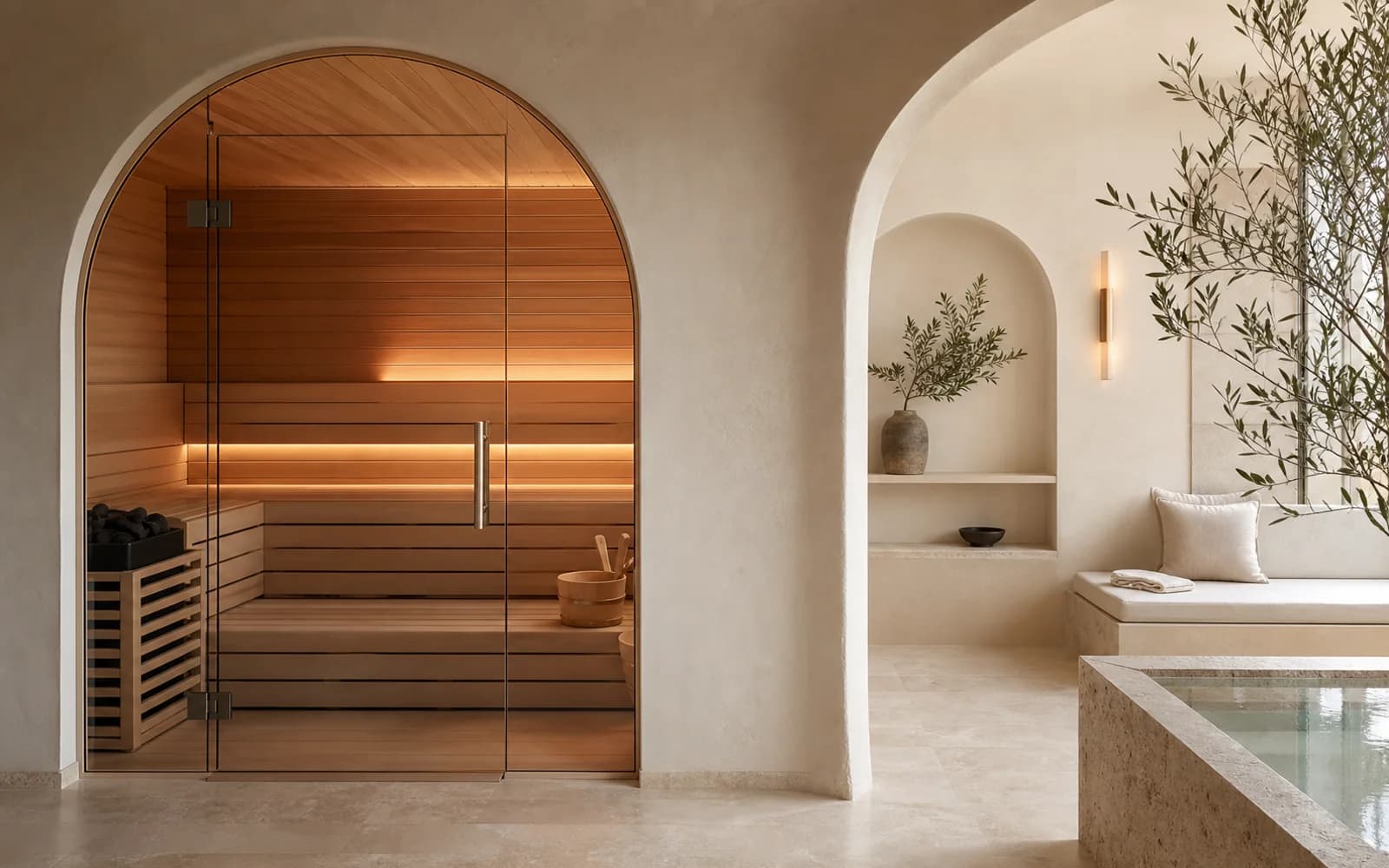
Sauna Installation Guide: Sizing, Materials and Cost Factors (2026)
Everything to know before building a sauna: correct sizing, a comparison of sauna woods, transparent per-cubic-meter pricing logic, and why fixed-price offers deserve caution.
Project Manager · Mechatronics Engineer · Çilek Havuz
- Published
- Updated
- Reading
- 6 min read
- Category
- Sauna
Everything to know before building a sauna: correct sizing, a comparison of sauna woods, transparent per-cubic-meter pricing logic, and why fixed-price offers deserve caution.
A sauna's quality is decided at the sizing and location stage, before a single board is cut.
In the saunas we have built since 1993, the most common mistake we see is thinking about the room first and the use afterwards. The right order is the reverse: first settle how many people will use it, how often and in what way, and then set the dimensions accordingly.
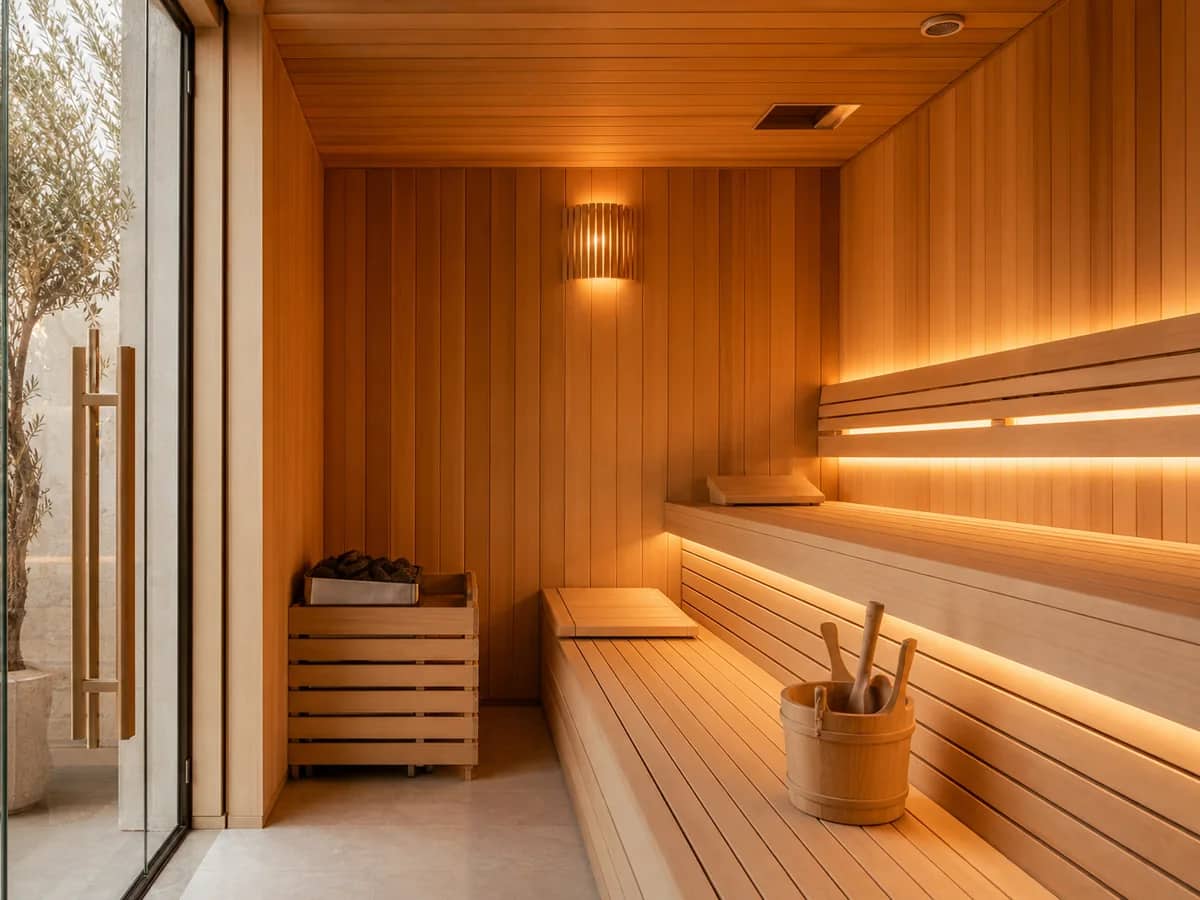
We plan roughly 60 cm of bench width per seated person and a bench length of at least 190 cm for lying down. A two-person family sauna usually fits on a 2 m² footprint, while comfortable use by four or five people needs 4-6 m². We keep the ceiling height in the 200-210 cm range for heat economy; a higher ceiling increases the volume of air you have to heat and raises both the initial investment and the running cost.
For the location we look at two things: access to water and electricity, and the possibility of ventilation. A sauna is not the dry volume it is often taken to be; if the air does not circulate, the timber wears out quickly. At the site survey we check this infrastructure first. We apply the same survey discipline to Turkish hammam construction projects; there the deciding factors are humidity and waterproofing.
Sauna timber is not an aesthetic preference but an engineering decision.
For the interior lining we look for three things: low thermal conductivity (it does not burn when touched), no resin bleeding, and no cracking through wet-dry cycles. Measured against these three criteria, timbers differ clearly from one another.
Nordic spruce and thermally modified spruce are the most common and balanced choice for a classic Finnish sauna; with their light colour, low resin risk and reasonable cost, they are the material we use in most residential projects. Alder gives a softer touch and a warm colour, and is comfortable on benches. Western red cedar, with its aromatic scent, natural moisture resistance and low thermal conductivity, is the upper segment; its cost is clearly above that of spruce.
Aspen, being resin-free and almost colourless, suits sensitive skin, particularly on benches and backrests. Resinous timbers such as pine bleed resin at high temperatures and can burn the skin, which is why we do not use pine for sauna interior linings. Which timber we recommend depends on the intensity of use, the budget and the desired appearance.
When someone asks the price of a sauna, the honest answer is not a single figure but a method of calculation.
The real variable that determines cost is not the floor area but the volume to be heated, that is, the cubic metres. Of two saunas with the same floor area, the one with the higher ceiling needs a more powerful heater and uses more cladding timber. That is why we build the price per m³ and show, item by item, what makes up the figure.
The main items of a sauna quote are: the load-bearing frame and insulation (thermal insulation and vapour barrier), interior and exterior timber cladding, bench and backrest joinery, the sauna heater (electric or wood-burning) and control panel, the glass door, lighting and ventilation grilles, and finally the installation labour. None of these items is a luxury; each is necessary for either the safety or the lifespan of the sauna.
Heater output is also directly linked to volume: roughly 1 kW of installed power is planned for each cubic metre, and this value is raised if there are glazed surfaces and external walls. So a 6 m³ sauna needs a heater of 6-8 kW. Choosing the wrong heater for the volume means a sauna that either does not heat up or consumes excessive energy.
A pattern often seen on the market is a fixed price given without seeing the space, and low enough to catch the eye.
Quotes of this kind usually leave something out: the insulation gets thinner, the vapour barrier is skipped, the timber thickness drops or the ventilation is forgotten. These shortcomings go unnoticed in the first year and show up in the second or third year as darkened timber, condensation and mould.
A proper sauna quote states the volume, the timber species and thickness, the insulation detail and the heater output clearly. When you look at a quote, read the list of items beneath the price: if the vapour barrier, ventilation and warranty are missing, that price is the price of an incomplete sauna.
We do not give a fixed price without a site survey; every space is different and the right figure only emerges from measurements taken on site.
The heater determines the character of the sauna.
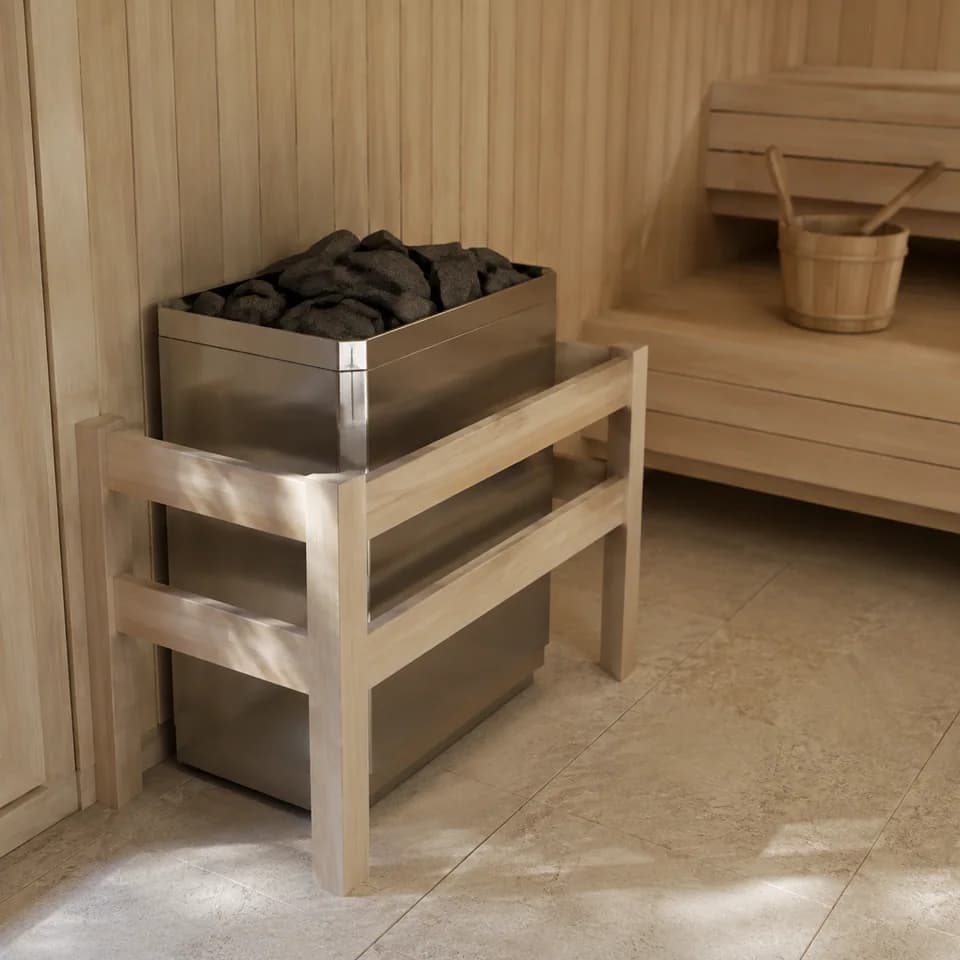
In the great majority of residential use an electric heater is chosen: you set the temperature and time from the control panel, no chimney is needed, and it can be installed inside a flat. Modern control units carry overheating and time cut-off protection; we regard these protections as standard.
A wood-burning heater gives a higher peak temperature and a traditional sauna atmosphere; it makes sense in a standalone garden sauna. However, it needs a chimney, a non-combustible floor and fuel storage, and in an apartment flat it often cannot be installed.
Whichever heater you choose, matching the output to the volume and the safety of the controls are not up for negotiation. From the heaters and controls in our sauna systems product range, we match the capacity suited to your volume.
A turnkey residential sauna is usually completed within a few weeks from the site survey to first use; the timeline is determined by the dimensions, any special requests for the timber and whether the electrical infrastructure is ready.
The work proceeds in three stages.
The first stage is the site survey and design: we measure the space, listen to how you plan to use it and present our timber and heater recommendation with an itemised list. The second stage is the infrastructure and frame: the insulation, vapour barrier, electrical and ventilation lines are laid; this hidden layer is the part that determines the sauna's lifespan. The third stage is the timber cladding, bench joinery, heater installation and commissioning.
At handover we provide, together with the key, information on use and care: the first firing, protecting the timber and why the ventilation must be left open. A well-built and correctly used sauna gives decades of service. When salt room construction is added alongside it, the relaxation sequence extends to three steps: dry heat, salt air and cooling down.
Next step
Let us discuss your project in the way that suits you best.
You can fill in the form for a written quote, schedule a video project presentation or ask us to survey your project site.
Get a Quote
Send us your dimensions and expectations in writing.
Online presentation
Video project presentation
On-site survey
Inspection at your project site
Image gallery
Photos: 04
 01
01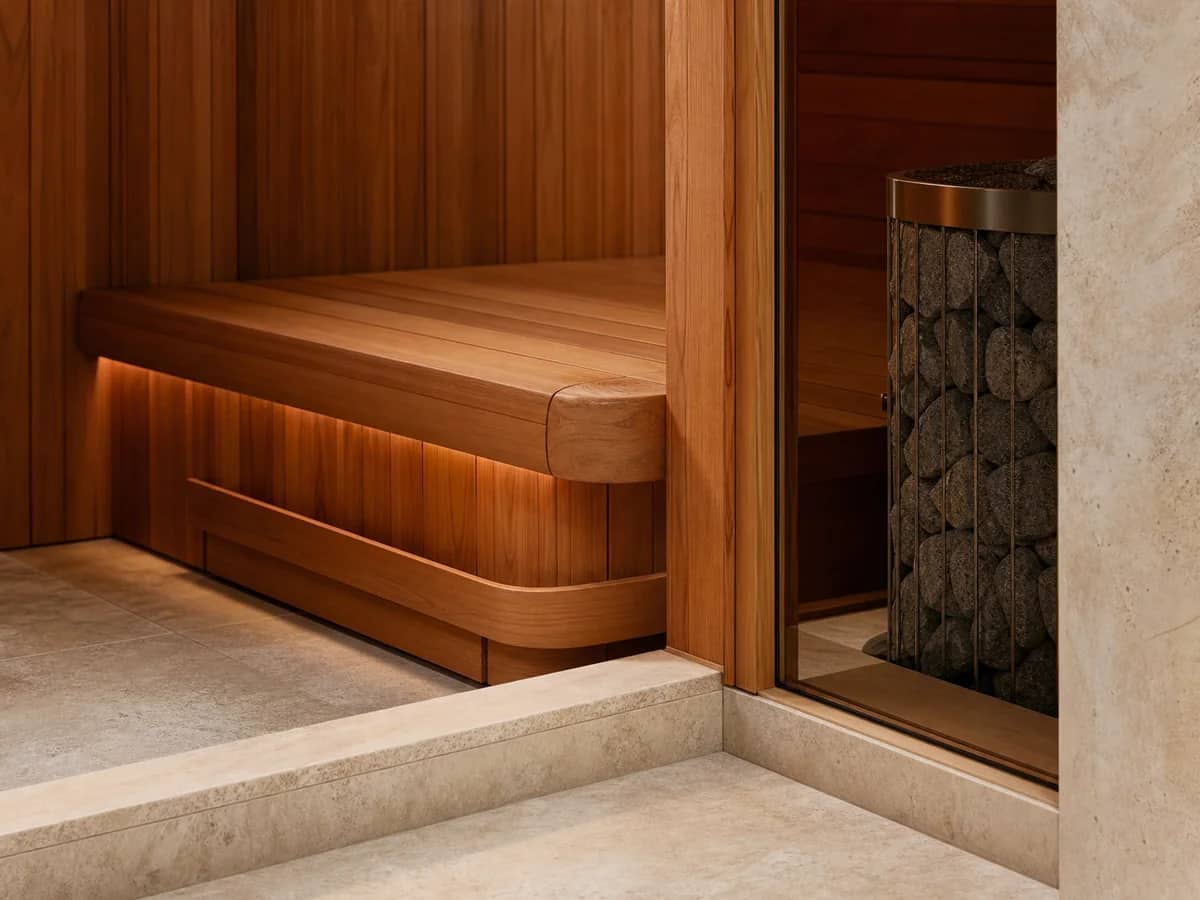 02
02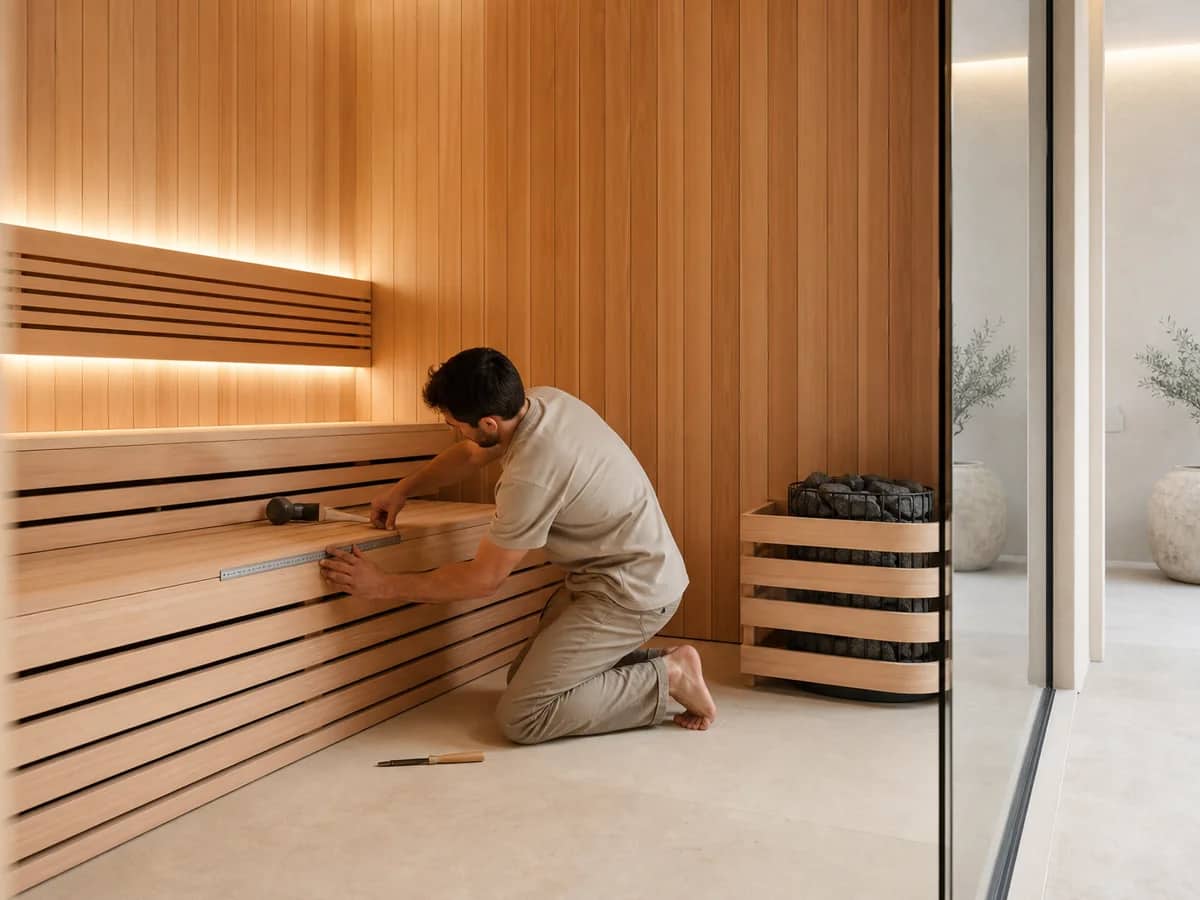 03
03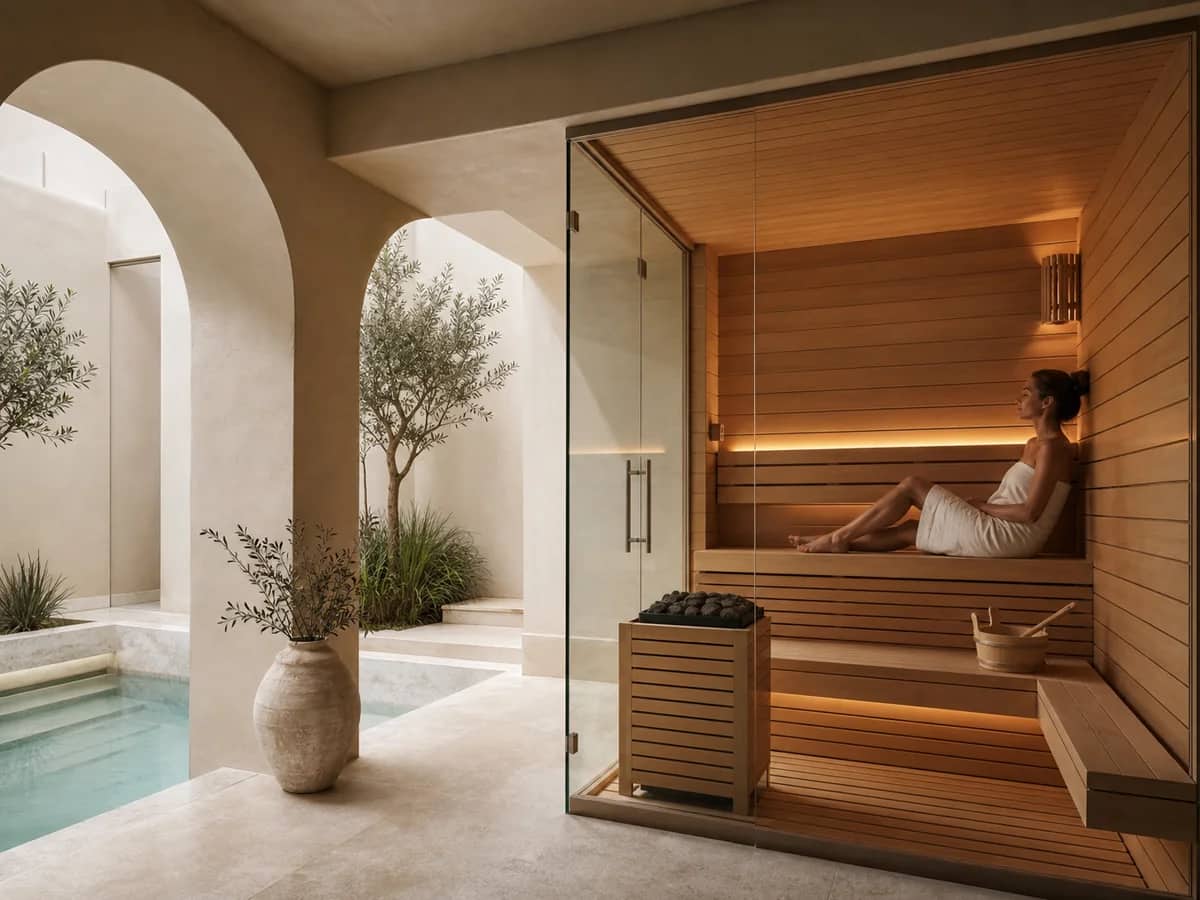 04
04// 01 · Product groups
Compare the products on this topic on their category pages.
Each card leads to a product category; models, technical sheets and list prices are there.
 Product category
Sauna Cabin Models
Ready-made, glass-front and custom-size indoor sauna cabins, together with barrel and cabin-type outdoor saunas for the garden. A cabin is chosen by the number of users, the size of the space and the heater option. Sauna heaters are on the sauna heaters page.
View- 6 products
- Product category
Sauna Heaters and Equipment
Finnish-type heaters, digital control panels, sauna stones and cabin fittings: complete systems for indoor and outdoor saunas.
View- 19 products
Product category
Sauna Cabin Models
Ready-made, glass-front and custom-size indoor sauna cabins, together with barrel and cabin-type outdoor saunas for the garden. A cabin is chosen by the number of users, the size of the space and the heater option. Sauna heaters are on the sauna heaters page.
6 productsProduct category
Sauna Heaters and Equipment
Finnish-type heaters, digital control panels, sauna stones and cabin fittings: complete systems for indoor and outdoor saunas.
19 products
// 02 · Related service
The work in this article, we deliver from design to handover.
Çilek Havuz service
Sauna Construction
Finnish, bio and infrared saunas; timber cabins built to measure.
Sauna construction means building a timber cabin to the room's size, sizing the heater to the cabin volume and installing insulation, ventilation and wiring turnkey. We build Finnish, bio and infrared saunas for villas, apartments, hotels and spas.
How we work
- 01Initial meeting and site surveyWe inspect the site and listen to the brief.
- 02Design and quotationWe give the cost item by item, in writing.
- 03ExecutionThe same team builds to a written schedule.
- 04Handover and commissioningWe start the systems and explain their use.
- 05Maintenance and technical supportWe provide periodic maintenance and support.
// 03 · Guides
On Sauna, more articles to read.
First the articles directly related to this one, then the newest articles on the topic.
 Sauna
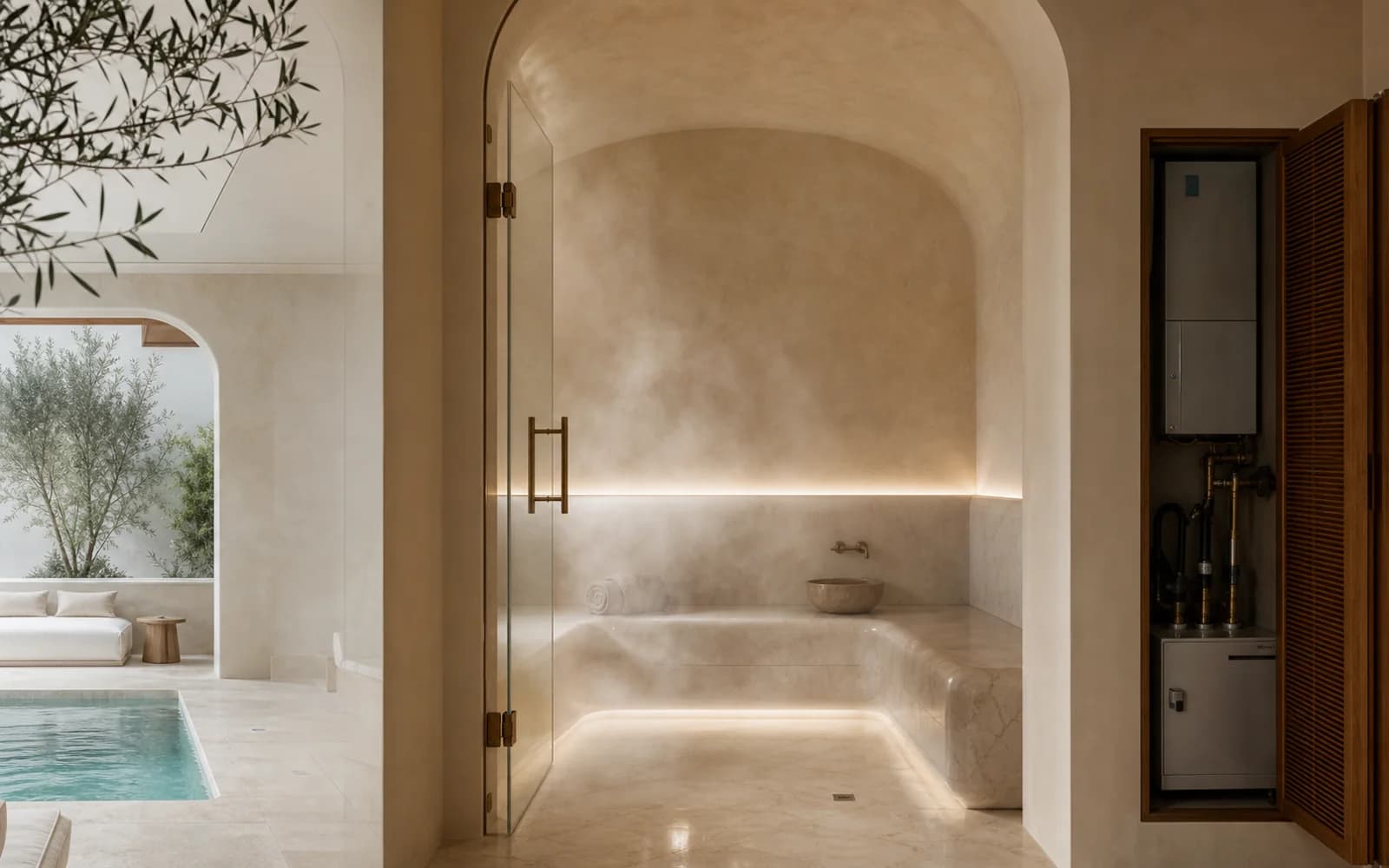
SaunaSteam Room Guide: Generator System, Temperature and Cost Factors
How does a steam room work, and how is the generator sized? The correct temperature-humidity balance, why sealing is non-negotiable, and the cost items that make up a steam room's price.
View- 16 June 2026
- 6 min read
 Sauna
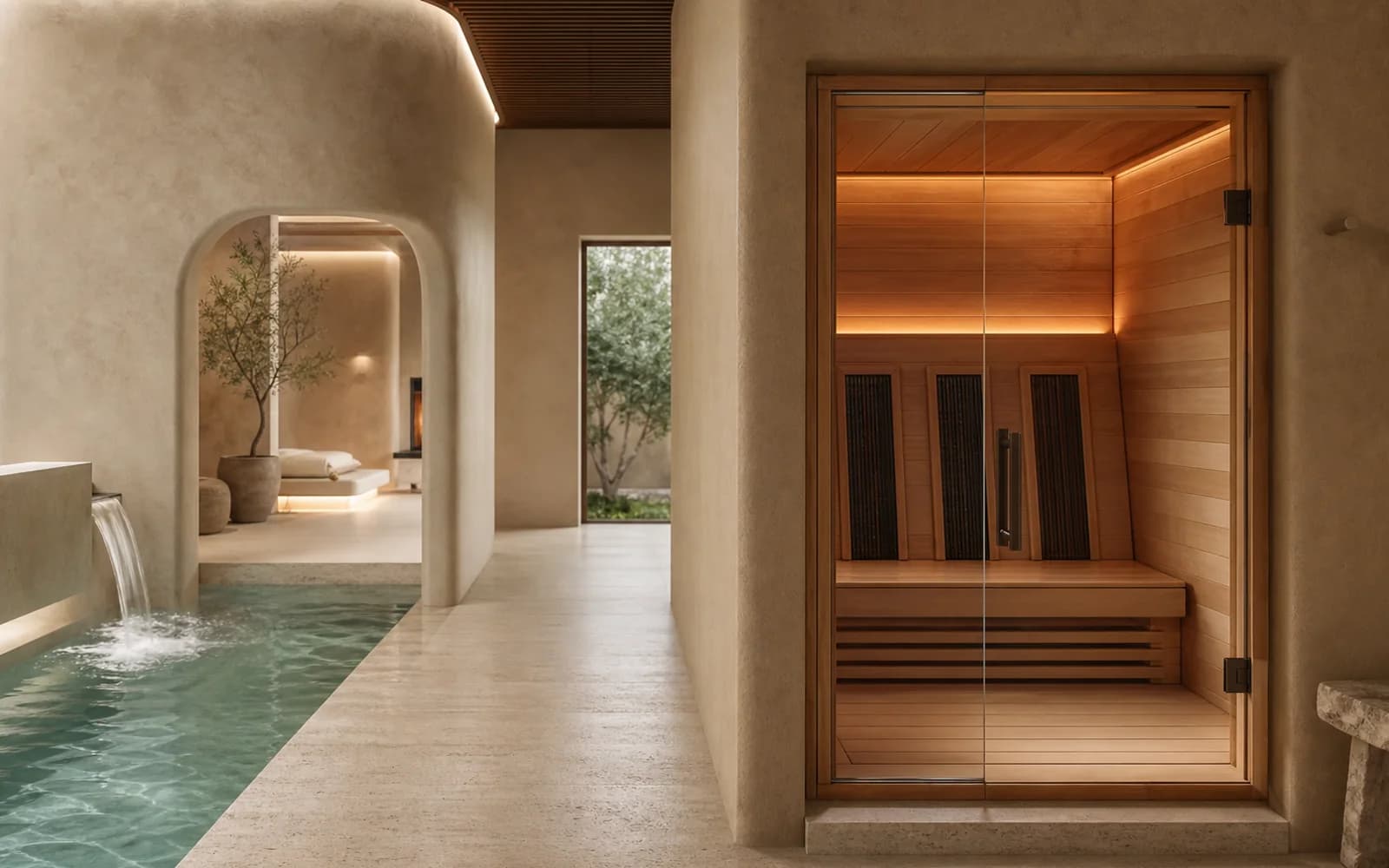
SaunaInfrared Sauna: The Technology and How It Differs from a Traditional Sauna
An infrared sauna heats your body directly rather than the air. We explain wavelength, panel types and how the low-temperature principle works.
View- 24 March 2026
- 6 min read
 Sauna
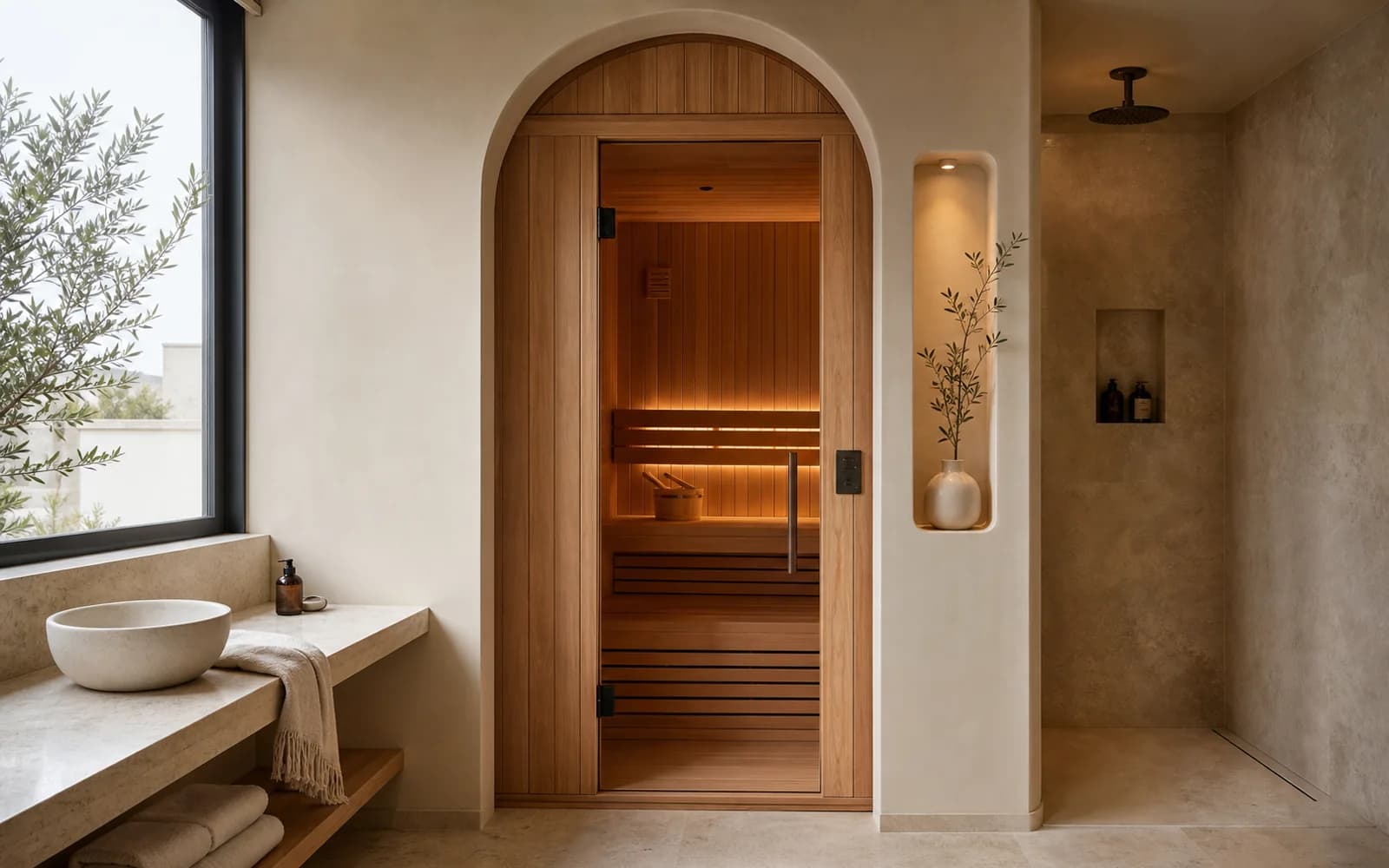
SaunaHome Sauna: Who It's For, Which Type and How to Install
What to know when deciding on a home sauna: the difference between infrared and Finnish saunas, apartment feasibility, choosing a type, and how to tell whether a sauna really suits you.
View- 7 June 2026
- 6 min read
 Sauna
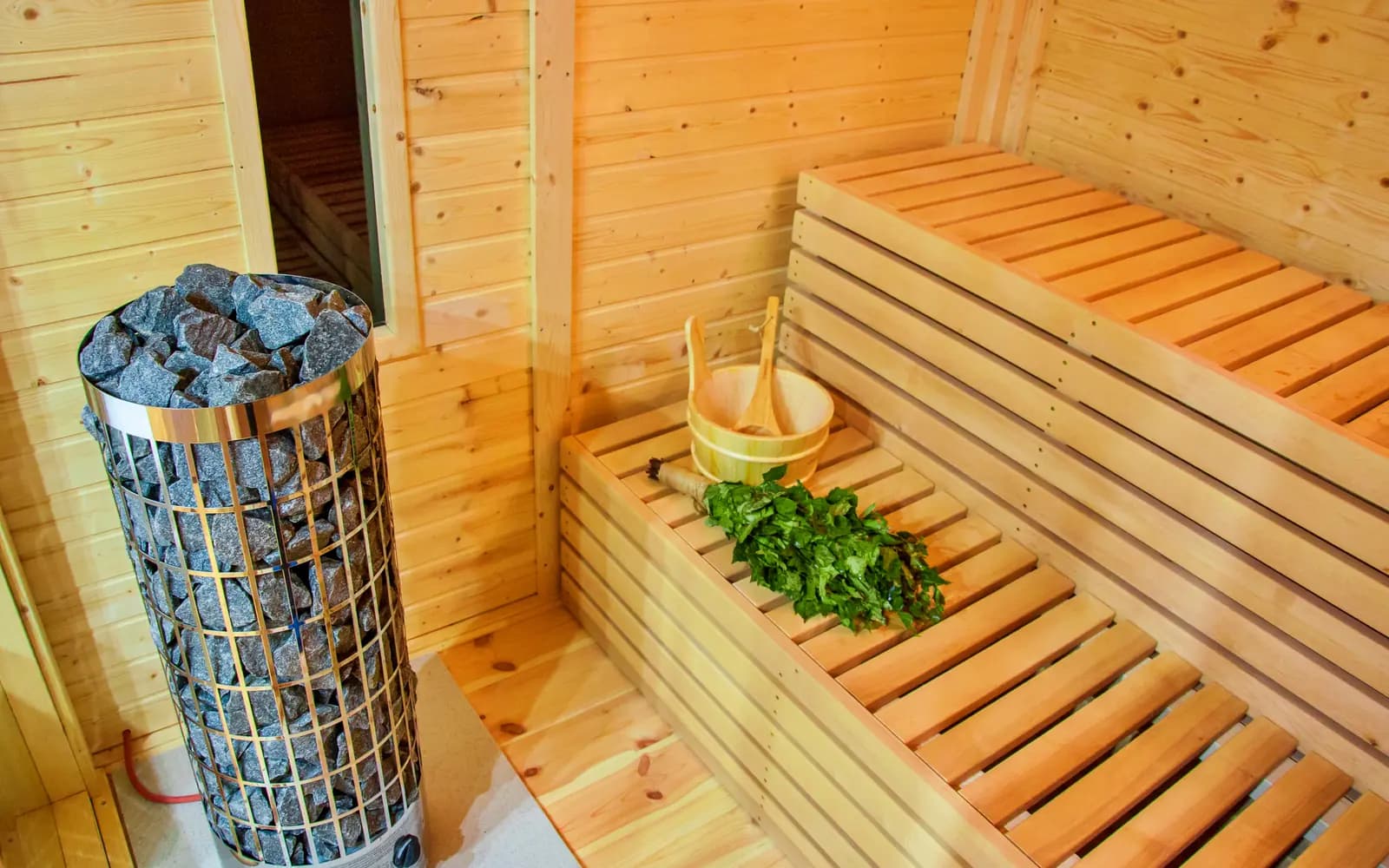
SaunaHow many kW should a sauna heater be? Sizing by cabin volume
Sauna heater size follows cabin volume: 1 kW per 1 m³ in an insulated cabin, with a correction added for glass and uninsulated surfaces.
View- 9 September 2026
- 10 min read
 Sauna
SaunaWhat Temperature Should a Sauna Be? Heat, Humidity, and Duration Guide
What's the ideal Finnish sauna temperature, and how long should a first-timer stay in? Heat-humidity balance, safe session lengths, and common mistakes.
View- 7 September 2026
- 8 min read
 Sauna
SaunaWhat is a sauna and how do you use it? Temperature, time and the right order
A classic Finnish sauna runs at 80 to 100 degrees and 10 to 20 percent humidity. How hot, how long, and in what order do you use sauna, hammam and steam room?
View- 4 September 2026
- 9 min read
- Sauna · 16 June 2026Steam Room Guide: Generator System, Temperature and Cost FactorsHow does a steam room work, and how is the generator sized? The correct temperature-humidity balance, why sealing is non-negotiable, and the cost items that make up a steam room's price.6 min read
- Sauna · 24 March 2026Infrared Sauna: The Technology and How It Differs from a Traditional SaunaAn infrared sauna heats your body directly rather than the air. We explain wavelength, panel types and how the low-temperature principle works.6 min read
- Sauna · 7 June 2026Home Sauna: Who It's For, Which Type and How to InstallWhat to know when deciding on a home sauna: the difference between infrared and Finnish saunas, apartment feasibility, choosing a type, and how to tell whether a sauna really suits you.6 min read
- Sauna · 9 September 2026How many kW should a sauna heater be? Sizing by cabin volumeSauna heater size follows cabin volume: 1 kW per 1 m³ in an insulated cabin, with a correction added for glass and uninsulated surfaces.10 min read
- Sauna · 7 September 2026What Temperature Should a Sauna Be? Heat, Humidity, and Duration GuideWhat's the ideal Finnish sauna temperature, and how long should a first-timer stay in? Heat-humidity balance, safe session lengths, and common mistakes.8 min read
- Sauna · 4 September 2026What is a sauna and how do you use it? Temperature, time and the right orderA classic Finnish sauna runs at 80 to 100 degrees and 10 to 20 percent humidity. How hot, how long, and in what order do you use sauna, hammam and steam room?9 min read
// 04 · Company & Contact
To talk about your project, call or write to us.
Legal Name
Çilek Havuz
Founded
1998 · Istanbul
Head Office
Çilek Plaza, Eyüp Sultan Mah. Yakacık Cd. Feshane Cd. No: 2 D:4 D:1, 34885 Sancaktepe / İstanbul
Service Area
All of Türkiye · exports to 14 countries
Branches
Kyrgyzstan · Egypt · Algeria · Iraq
Showroom
Plan a showroom visit
At our showroom in Çilek Plaza, Sancaktepe, you can discuss your project with our team. We recommend booking an appointment by phone before your visit.
Working Hours
- Monday – Friday · 08:00 – 17:30
- Saturday · 08:00 – 12:30
- Closed on Sunday
Frequently Asked Questions
About Sauna Installation Guide, frequently asked questions.
Çilek Havuz Corporate
Pool and Wellness Engineering
- Response Time
- Same day
- Channels
- Phone · Email · WhatsApp
If the answer you are looking for is not here, send your question directly to us and our team will reply as soon as possible.
+90 216 475 39 37Thermal modification reduces the timber's tendency to absorb moisture and increases its dimensional stability and colour fastness. This process adds cost. Because it reacts less to wet-dry cycles, it lowers the risk of cracking and deformation over the long term. Whether this difference is worth it for you is assessed together, according to your intensity of use and your budget.
Çilek Havuz Corporate
Heater output is directly proportional to volume, so heaters of a few kilowatts can often be connected to a suitable circuit. Larger saunas may require a three-phase supply. During the site survey visit we also assess your existing electrical infrastructure. If the infrastructure is insufficient, planning for this from the start avoids costly modifications later.
Çilek Havuz Corporate
The most common mistakes are neglecting ventilation and skipping the vapour barrier. Reducing the timber thickness and choosing the wrong heater for the volume are also frequent. These go unnoticed in the first year and appear in the second or third year as darkened timber and condensation. Having these items written clearly in the quote prevents the same mistakes from the outset.
Çilek Havuz Corporate
Indoor saunas, with an electric heater and no chimney, can be fitted into small spaces. Garden saunas are better suited to a wood-burning heater and an authentic experience, but bring additional requirements such as a non-combustible floor and a chimney. The decision depends on how you plan to use it, the space you have and your infrastructure. We settle the right choice through a site survey.
Çilek Havuz Corporate
Timber's best friend is correct ventilation. Leaving the ventilation open after each use so that the sauna can release its internal moisture protects the timber. The surface is not painted; maintenance is carried out with timber protectors suitable for saunas. Sauna timber that is used correctly lasts for decades without bringing a heavy maintenance burden.
Çilek Havuz Corporate
A sound quote should clearly include the volume, the timber species and thickness, and the insulation and vapour barrier detail. The heater output, the ventilation, the glass door and the installation labour should also be listed. A fixed and strikingly low price in which these items do not appear usually means that something has been left out. We recommend looking at the list beneath the price.
Çilek Havuz Corporate