

What is a sauna and how do you use it? Temperature, time and the right order
A classic Finnish sauna runs at 80 to 100 degrees and 10 to 20 percent humidity. How hot, how long, and in what order do you use sauna, hammam and steam room?
Project Manager · Mechatronics Engineer · Çilek Havuz
- Published
- Updated
- Reading
- 12 min read
- Category
- Sauna
A classic Finnish sauna runs at 80 to 100 degrees and 10 to 20 percent humidity. How hot, how long, and in what order do you use sauna, hammam and steam room?
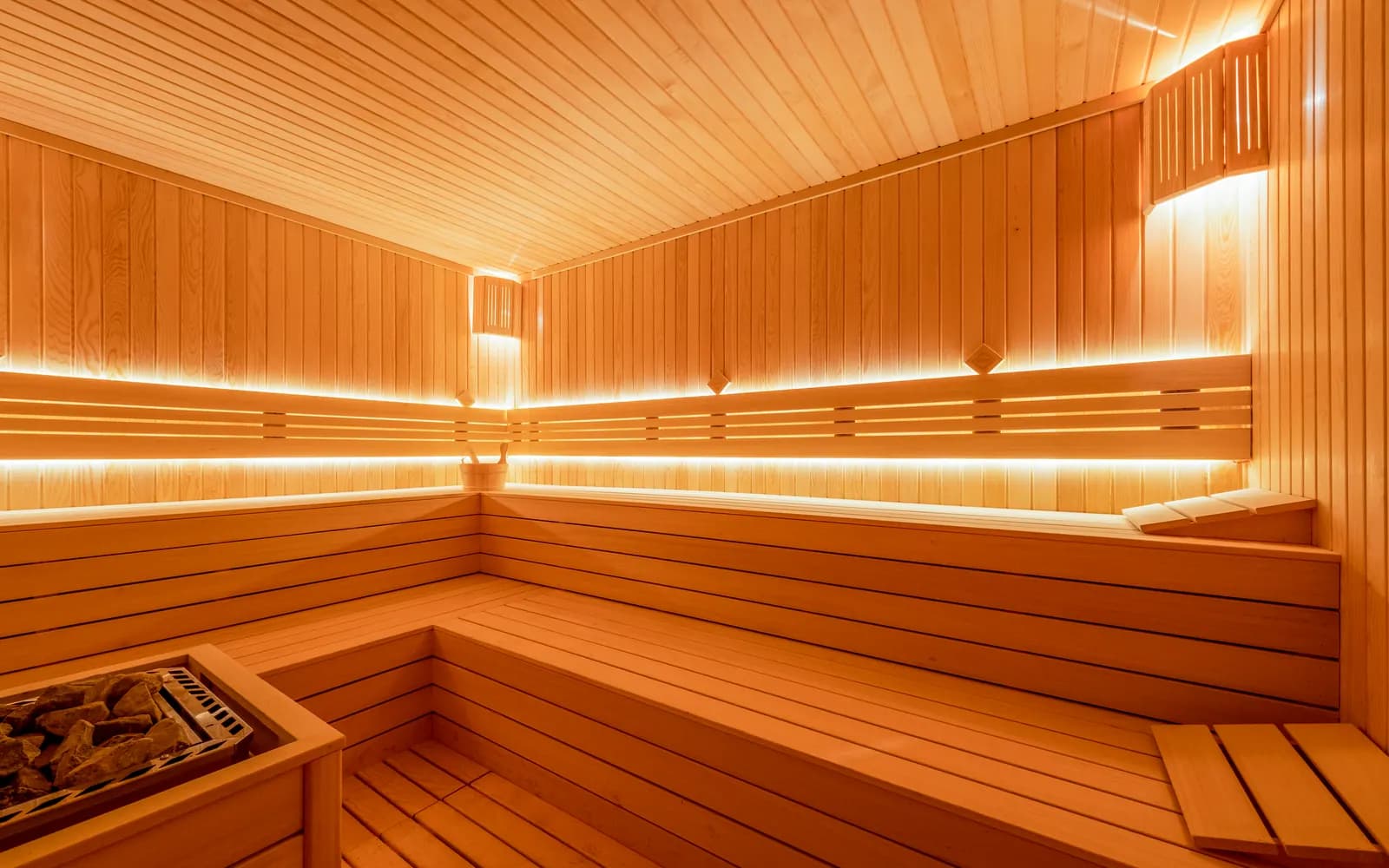
A sauna is a heat room lined with wood, in which the air is brought to a high temperature and kept at low humidity.
It comes from Finland, which is why the classic type is called a Finnish sauna (in Turkish also "fin hamamı", literally "Finnish bath"). The heat is produced by a sauna stove; the stones on top of the stove store that heat and release it into the room.
What separates a sauna from a hammam is not temperature but humidity. A sauna is a dry environment: at 80 to 100 degrees, relative humidity stays between 10 and 20 percent. A Turkish hammam, by contrast, runs at 40 to 50 degrees with humidity close to saturation. That is why the time you can tolerate in a 90-degree sauna leaves you tired in a different way from what you feel in a 45-degree hammam.
The wooden lining is not a matter of taste but a necessity. Wood conducts heat slowly, so you can sit on a bench at 90 degrees; you could not touch a metal or stone surface at the same temperature. Low-density timbers that do not bleed resin, such as spruce, poplar, alder and thermowood, are used for this job.
| Type | Air temperature | Relative humidity |
|---|---|---|
| Traditional Finnish sauna | 75-100 °C, above 110 °C in some facilities | low; rises briefly as water is thrown on the stones |
| Smoke sauna (savusauna) | about 60 °C | low |
| Heat-storage sauna | 80-110 °C | low |
| Baltic-style sauna | 55-70 °C | 60-90% |
| Steam room / hammam | about 50 °C | close to 100% |
| Infrared cabin | noticeably lower than a traditional sauna | no separate humidity control |
| Cold chamber (cryotherapy) | −110 °C; sessions of 3 minutes at most | low (dry cold air) |
Sauna glossary
- Löyly
- The Finnish word for the steam and heat of the sauna together. Its root is related to words meaning "spirit" and "soul" in the Finnic languages. In Estonian it is leili, in Latvian gars; all three carry the same double meaning.
- Vihta / vasta
- A bundle tied from birch branches. In Estonian viht, in Lithuanian vanta. Bundles made from oak, linden, juniper and nettle are also used.
- Savusauna
- A smoke sauna without a chimney. The fire is lit directly beneath the stones; once heating is done it is put out and the smoke is let out. A properly heated savusauna holds usable heat for up to 12 hours.
- Heat-storage stove
- A stove with a lidded stone compartment and a flue. The stones reach a red or white glow and burn off their dust. Peridotite is often used for its durability; the upper body is insulated with stone wool and firebrick.
- Continuously fired stove
- The fire is fed throughout use. It takes about an hour to heat up and is common in summer houses and mountain cabins.
In a classic Finnish sauna the target range is 80 to 100 degrees.
The thermometer is read at a point near the bench and close to the ceiling; inside the room the temperature rises clearly from floor to ceiling, so sitting on the upper bench and sitting on the lower bench are very different experiences.
For a first-timer, 70 to 80 degrees and the lower bench are a sensible start. Experienced users prefer the 90 to 100 degree range. Going above 110 degrees brings no extra benefit; it only shortens how long you can stay.
An infrared sauna sits outside this picture. Because it heats the surface of the body directly rather than the air, the room temperature stays in the 45 to 60 degree range. It is a different system that produces a similar effect at a lower temperature; it is placed alongside a classic sauna, not instead of one.
8 to 15 minutes per session is common practice.
Measure the time with your body, not the clock: get out when breathing starts to feel harder, when you feel dizzy or when your heart rate speeds up clearly. If it is your first time, start with 5 minutes.
A sauna is used in rounds, not in one long session. The classic cycle is: 8 to 12 minutes in the sauna, then a cold shower or cold plunge pool, then a rest lasting at least as long as the sauna. Repeat this round two or three times. Skipping the cool-down and rest means skipping half of the sauna round.
Do not neglect drinking water; a sauna makes you lose a significant amount of fluid through sweating. Alcohol and sauna do not go together. People with heart, blood pressure or circulation problems, pregnant women and anyone on regular medication should not use a sauna without consulting their doctor.
Shower before the sauna and dry off.
Entering with wet skin delays sweating; dry skin responds more quickly. Take off jewellery, watches and glasses: metal heats up and burns.
Inside, sit on a towel, not directly on the wood. This is both for hygiene and for the life of the timber; once sweat soaks into the wood it is hard to clean. If you can lie down on the bench, do so, so that heat is spread more evenly along your body.
Pouring water on the stove stones (löyly) raises the humidity of the room for a short time and makes the heat feel more intense. Pour small amounts at intervals. Stones that get water on them can crack, which is why volcanic stones sold as sauna stones are used; stones picked up from the garden are not.
No.
The drop you see on the scales after a sauna is water lost through sweat, and it comes back when you drink. It does not burn fat.
This question deserves an honest answer, because a sauna purchase is sometimes made with this expectation and ends in disappointment. The real return of a sauna is relaxation and rest; people choose it to loosen their muscles after exercise.
Take fluid loss seriously. Carrying on after long sessions without drinking water leads to dizziness and fatigue. Drink water or a mineral drink after the sauna.
The usual practice is to move from dry to humid, from low humidity to high humidity.
First the sauna (dry, 80-100 degrees), then a cool-down, then the steam room or hammam (humid, 40-50 degrees). Put a cold shower and a rest between each change.
Some facilities do the opposite, and that is not wrong. Moving from a humid room to a dry one dries the skin faster; some users prefer that. The rule is this: do not go straight from one heat room to another; always cool down in between.
When designing a wellness area, this order shapes the architecture. The sauna, relaxation area, cold shower and steam room should be close to each other and in the right sequence; users should not have to walk down a long corridor on wet feet. In villa projects, the mistake we correct most often is a sauna and shower placed far apart.
For a two-person home sauna, a floor area of about 1.5 to 2 square metres is enough; for four people allow 3 to 4 square metres.
Clear internal height is kept between 2.00 and 2.10 metres; a higher ceiling increases the volume to be heated and pushes the stove up to the next power rating.
Stove power is chosen according to volume. For electric sauna stoves, about 1 kW per cubic metre is a practical starting assumption; if there are glass surfaces, uninsulated walls or stone walls, this figure is raised. Stoves of 6 kW and above need a separate three-phase line from the distribution board, so plan for it when the electrical installation is being designed.
Ventilation is skipped in most home installations and is the source of the most common problem. You need a fresh air inlet near the bottom of the stove and an exhaust outlet near the top of the opposite wall. A sauna without ventilation struggles to heat up, smells, and its wood wears out early.
Choosing the wood is half the job.
For benches and backrests, species that do not bleed resin and do not burn to the touch are used; alder and poplar are preferred for this. Spruce is common for wall cladding. Resinous species such as pine are not used on bench surfaces, as they bleed resin when heated.
The wall build-up, from inside to outside, is: interior timber cladding, air gap, foil-faced vapour barrier, stone wool insulation, load-bearing frame. The foil side of the vapour barrier faces inwards. If this order is broken, moisture condenses inside the structure and mould starts within a few seasons.
Screws and metal fittings should be stainless and hidden wherever possible; a bare screw head burns at 90 degrees. The door opens outwards and does not lock; it must open when pushed from inside. These look like small details, but they decide whether a sauna is usable or not.
Items that decide the outcome when building a cabin
- Wood species: types that do not bleed resin and do not burn the hand when hot are preferred; this is a must for benches and backrests, more flexible for walls.
- Ventilation: the fresh air inlet goes near the bottom of the stove, the exhaust high on the opposite wall. A poor layout makes the cabin smoky and heavy.
- Bench height: the upper bench is positioned to leave enough clearance from the ceiling; the seated person's head should be in the hottest layer but should not touch the ceiling.
- Stove power: chosen according to cabin volume. Glass surfaces and uninsulated walls behave as if they increase the volume and must be taken into account.
- Metal details: screw heads, handles and the thermometer frame inside the cabin heat up. They are recessed into the wood or covered with wood.
A sauna suits people who like dry heat and want intense heat in a short time.
It is the easiest of the three to install; a wooden room and a stove are enough, with no wet-room detailing required.
People who prefer humid heat, or who are bothered by a dry throat and nose, find a steam room more comfortable. A steam room needs full waterproofing, a sloped ceiling (so condensed water does not drip on your head) and a steam generator; that makes the construction side more demanding than a sauna.
A Turkish hammam is a separate structure again, needing a heated göbek taşı (the raised central marble platform), marble or natural stone cladding and underfloor heating. It is the most extensive of the three to install. If you plan to build all three, work out the floor plan together from the start; a steam room added later is almost always badly placed.
| Item | Sauna | Steam room | Hammam |
|---|---|---|---|
| Type of heat | dry heat, brief humidity from water on the stones | saturated steam | heated marble and warm humidity |
| Typical temperature | 75-100 °C | about 50 °C | 40-50 °C surface |
| Relative humidity | low, fluctuating | close to 100% | high |
| Main surface | wooden bench | tiles or acrylic cabin | göbek taşı and kurna basins |
| Session length | 8-15 minutes | 10-20 minutes | longer, with breaks |
| Key item in construction | choice of wood and ventilation | steam generator and waterproofing | heated marble and water drainage |
After each use, leave the door open for a while so the room dries out.
A damp sauna left closed starts to smell. Wipe the benches regularly with a damp cloth and do not use detergent; the wood absorbs it and gives off a smell when heated.
Once a year, lightly sand the benches with fine sandpaper. Varnish or lacquer is never applied to sauna timber; it gives off fumes when heated and makes the surface scorching. If needed, a dedicated sauna oil is used.
Take the stove stones out once a year and check them. Cracked and crumbling stones block the air flow, the stove's heating elements overheat and their life is shortened. Replacing the stones is a low-cost job; if it is neglected, it turns into replacing the stove.
Next step
Let us discuss your project in the way that suits you best.
You can fill in the form for a written quote, schedule a video project presentation or ask us to survey your project site.
Get a Quote
Send us your dimensions and expectations in writing.
Online presentation
Video project presentation
On-site survey
Inspection at your project site
// 01 · Products in this article
For the work described in this article, sauna systems.
Each card leads to the product page with its data sheet, model list and quotation.
- 16 models
- 4 models
- 20 models

- 16 models

// 02 · Product groups
Compare the products on this topic on their category pages.
Each card leads to a product category; models, technical sheets and list prices are there.
 Product category
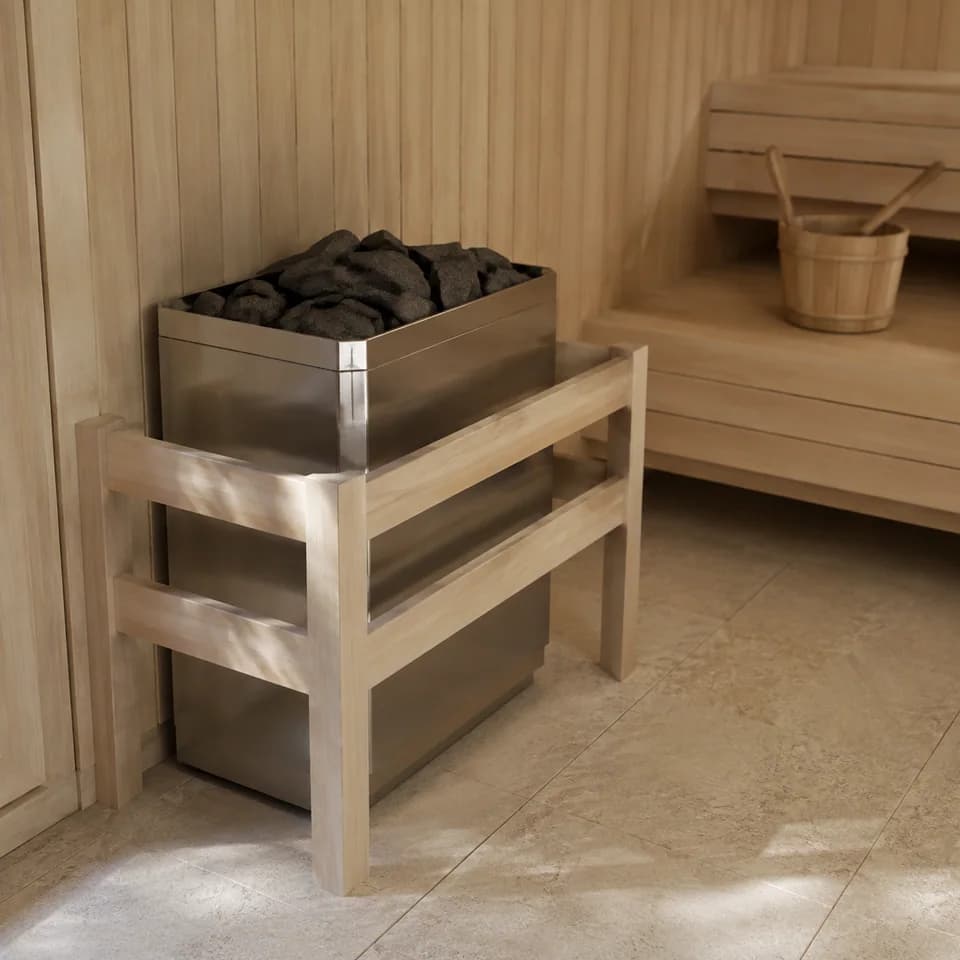
Sauna Heater Models
Stainless steel electric sauna heaters, control units and sauna stones. Heater output is chosen by cabin volume, the control unit by the heater rating in kW, and the stone quantity by the heater's stone capacity.
View- 5 products
- Product category
Sauna Heaters and Equipment
Finnish-type heaters, digital control panels, sauna stones and cabin fittings: complete systems for indoor and outdoor saunas.
View- 19 products
Product category
Sauna Heater Models
Stainless steel electric sauna heaters, control units and sauna stones. Heater output is chosen by cabin volume, the control unit by the heater rating in kW, and the stone quantity by the heater's stone capacity.
5 productsProduct category
Sauna Heaters and Equipment
Finnish-type heaters, digital control panels, sauna stones and cabin fittings: complete systems for indoor and outdoor saunas.
19 products
// 03 · Related service
The work in this article, we deliver from design to handover.
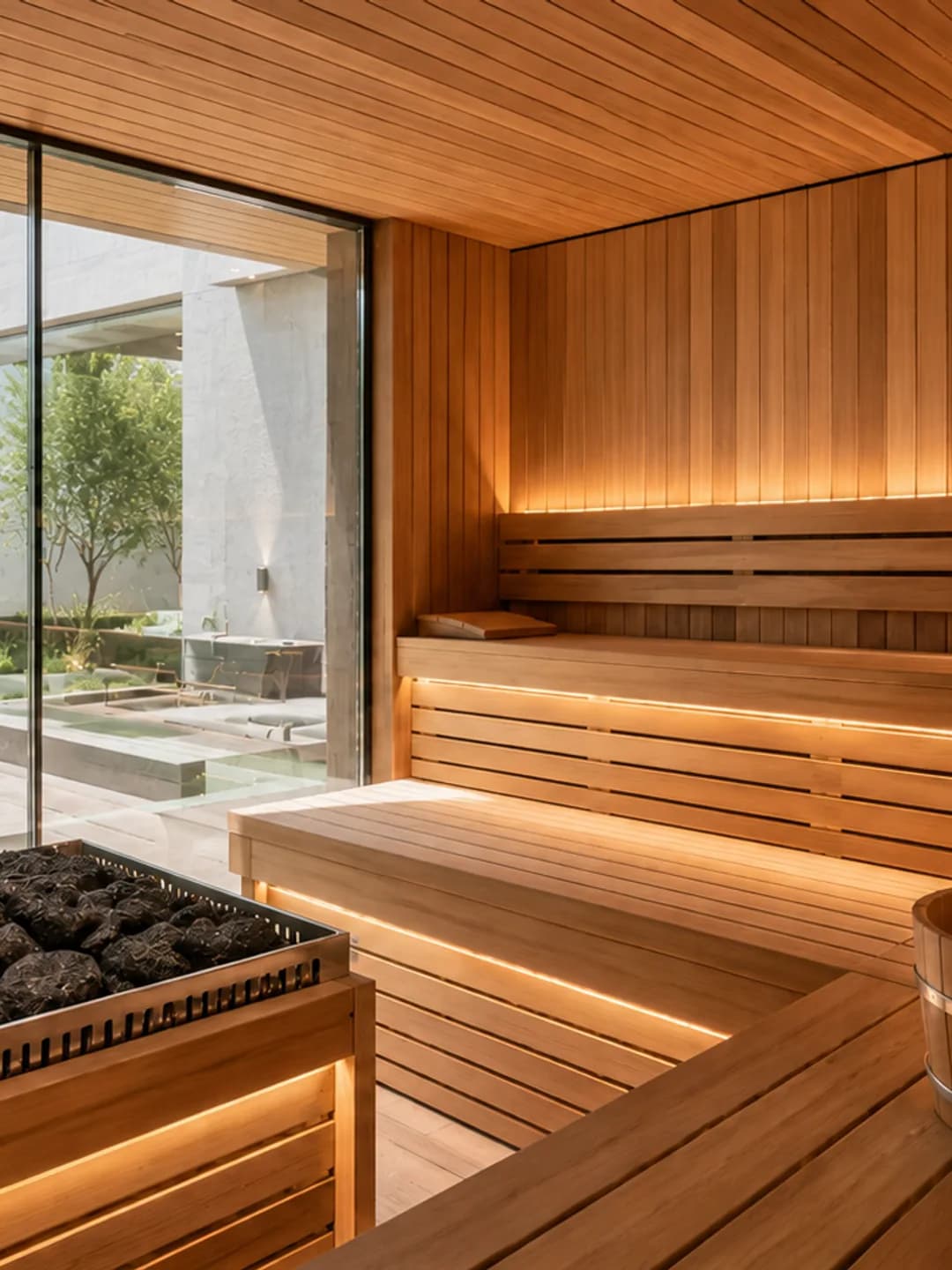
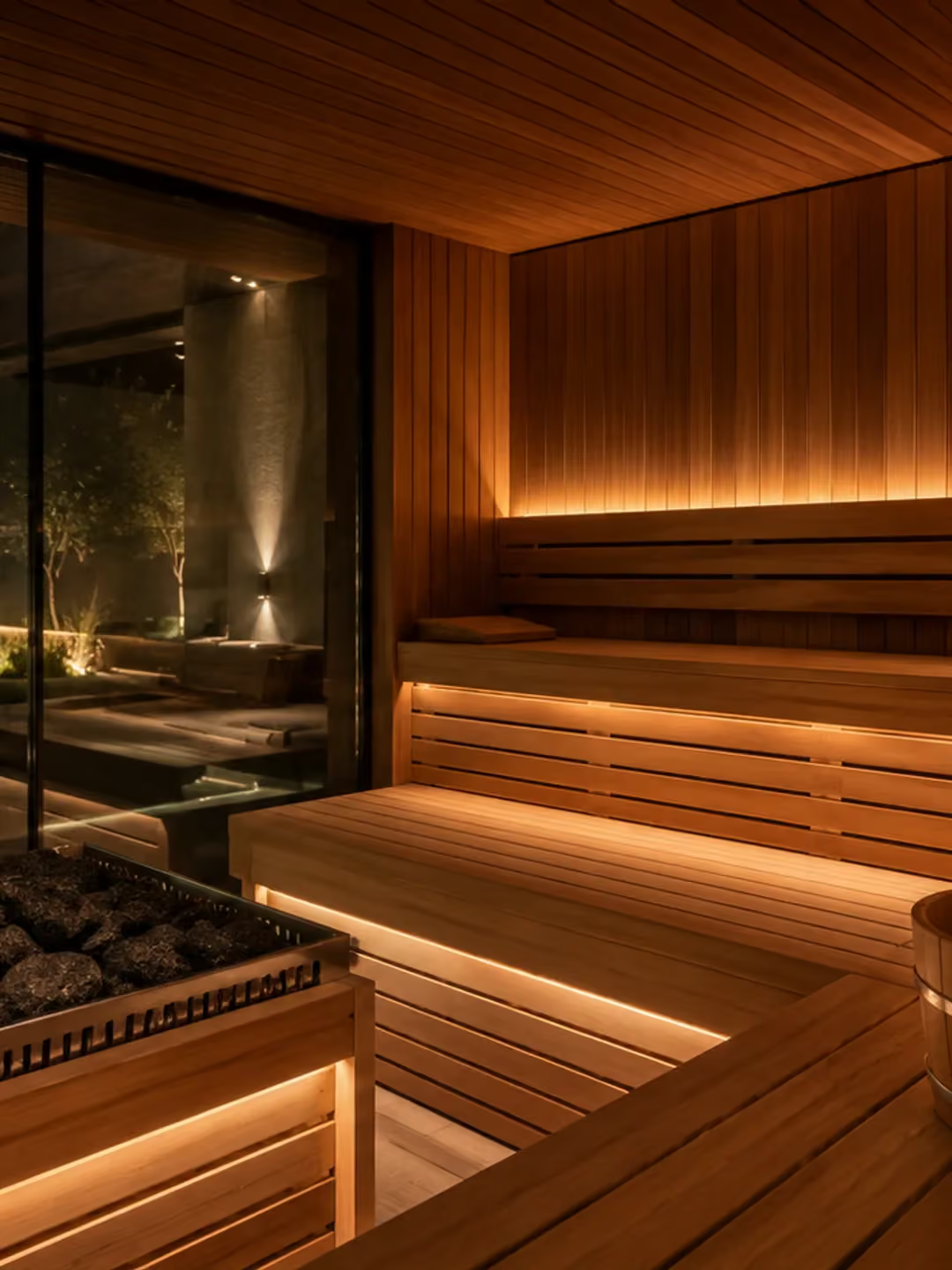
Çilek Havuz service
Sauna Construction
Finnish, bio and infrared saunas; timber cabins built to measure.
Sauna construction means building a timber cabin to the room's size, sizing the heater to the cabin volume and installing insulation, ventilation and wiring turnkey. We build Finnish, bio and infrared saunas for villas, apartments, hotels and spas.
How we work
- 01Initial meeting and site surveyWe inspect the site and listen to the brief.
- 02Design and quotationWe give the cost item by item, in writing.
- 03ExecutionThe same team builds to a written schedule.
- 04Handover and commissioningWe start the systems and explain their use.
- 05Maintenance and technical supportWe provide periodic maintenance and support.
// 04 · Guides
On Sauna, more articles to read.
First the articles directly related to this one, then the newest articles on the topic.
 Sauna
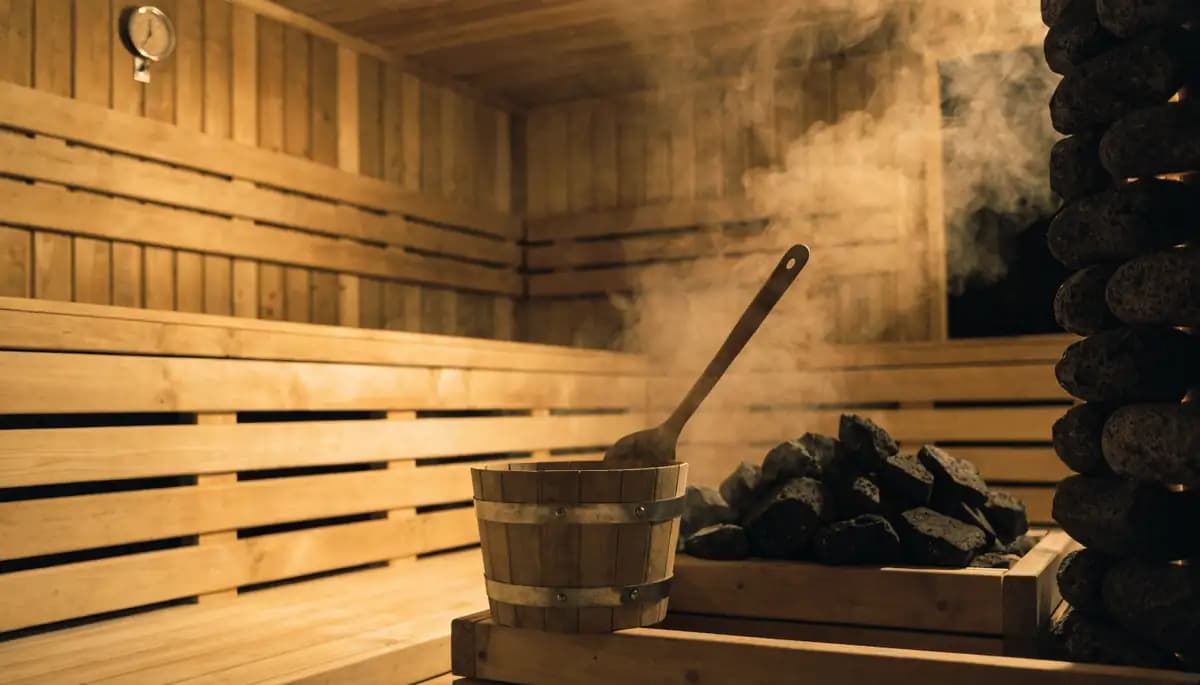
What Temperature Should a Sauna Be? Heat, Humidity, and Duration Guide
What's the ideal Finnish sauna temperature, and how long should a first-timer stay in? Heat-humidity balance, safe session lengths, and common mistakes.
View- 7 September 2026
- 8 min read
 Sauna
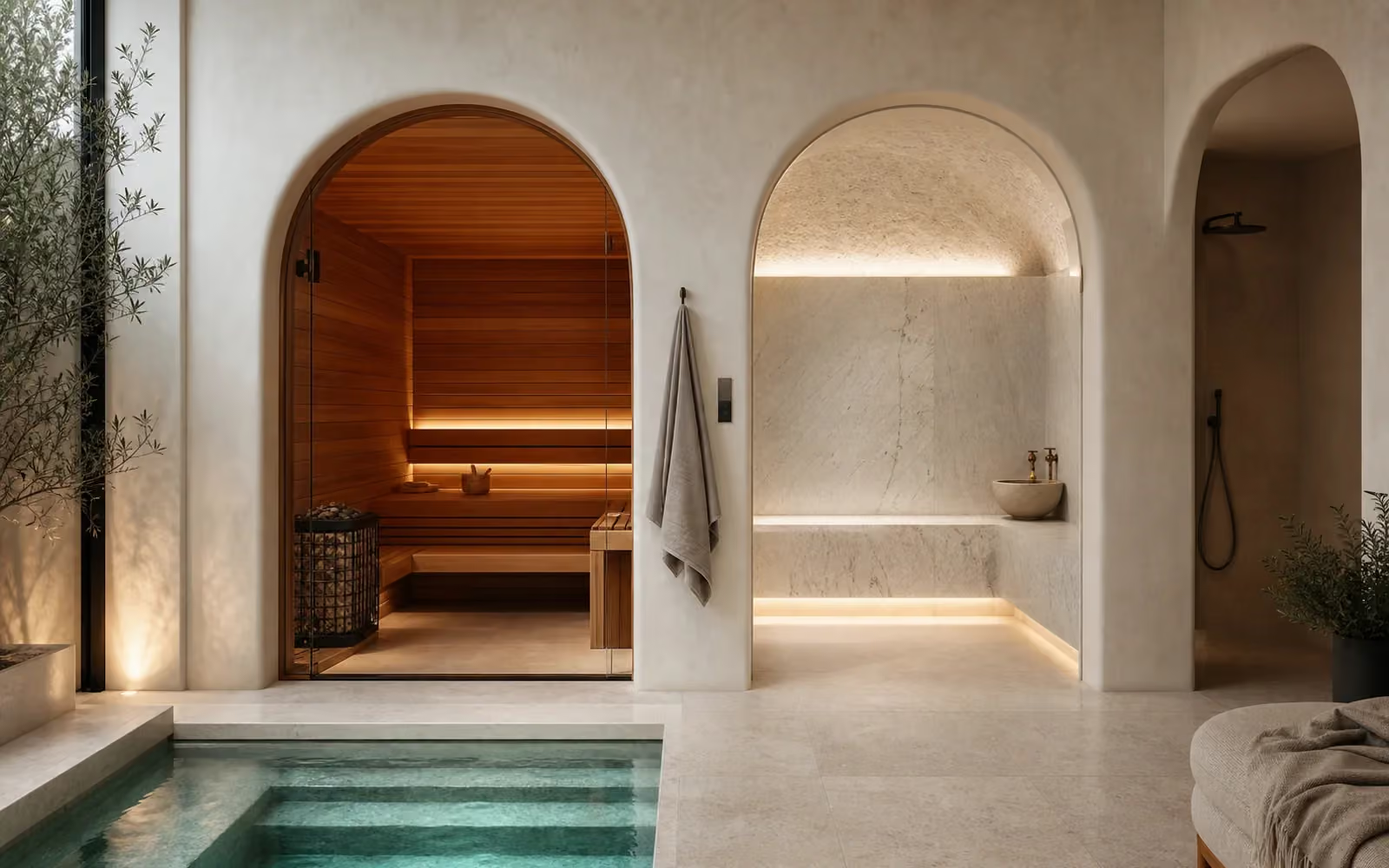
Sauna or Steam Room? Differences, Benefits and the Right Choice
Clear differences between a dry-hot sauna and a saturated-humidity steam room: temperature-humidity, materials, experience and installation compared, plus honest guidance on which suits you.
View- 13 June 2026
- 6 min read
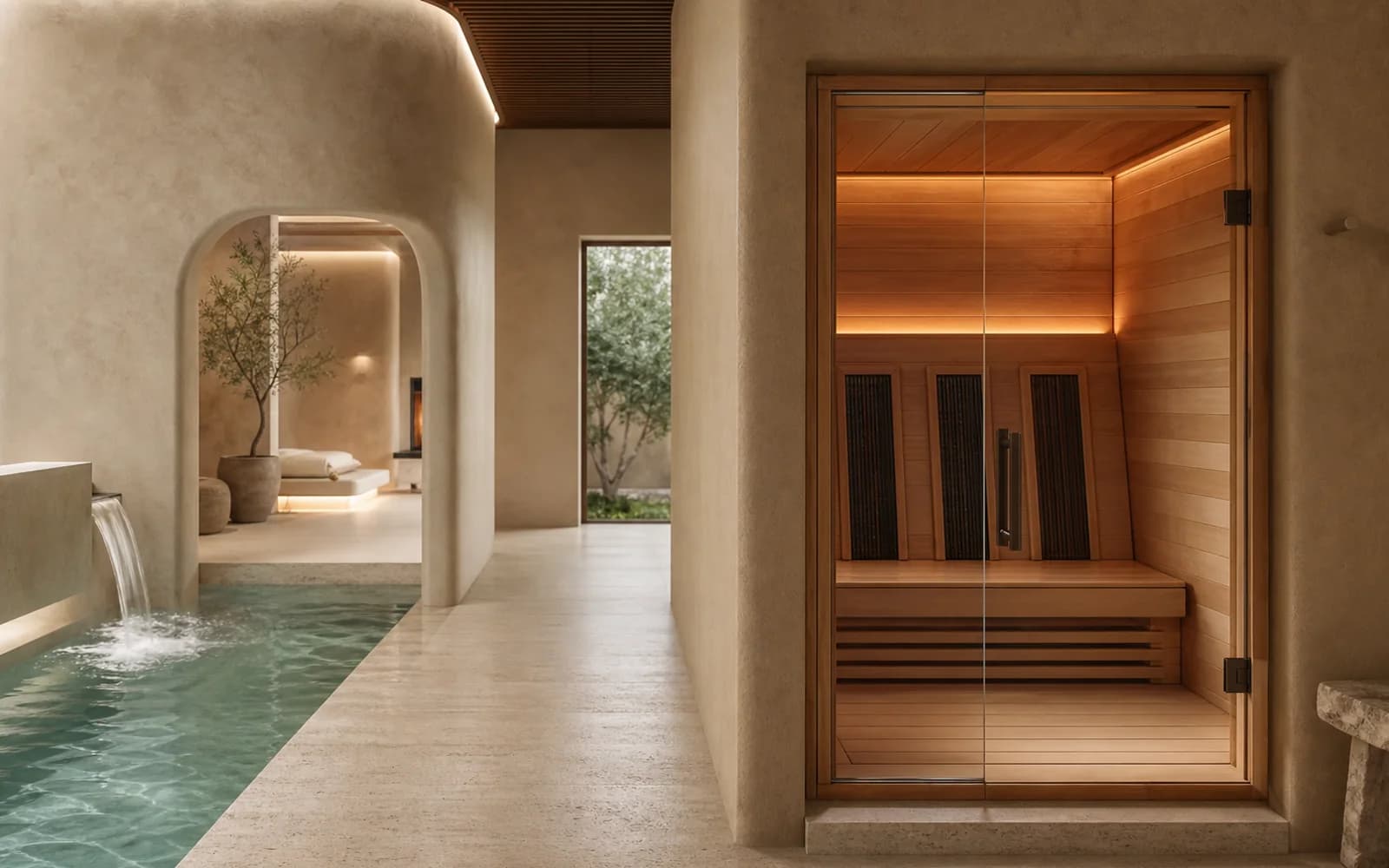 Sauna
Infrared Sauna: The Technology and How It Differs from a Traditional Sauna
An infrared sauna heats your body directly rather than the air. We explain wavelength, panel types and how the low-temperature principle works.
View- 24 March 2026
- 6 min read
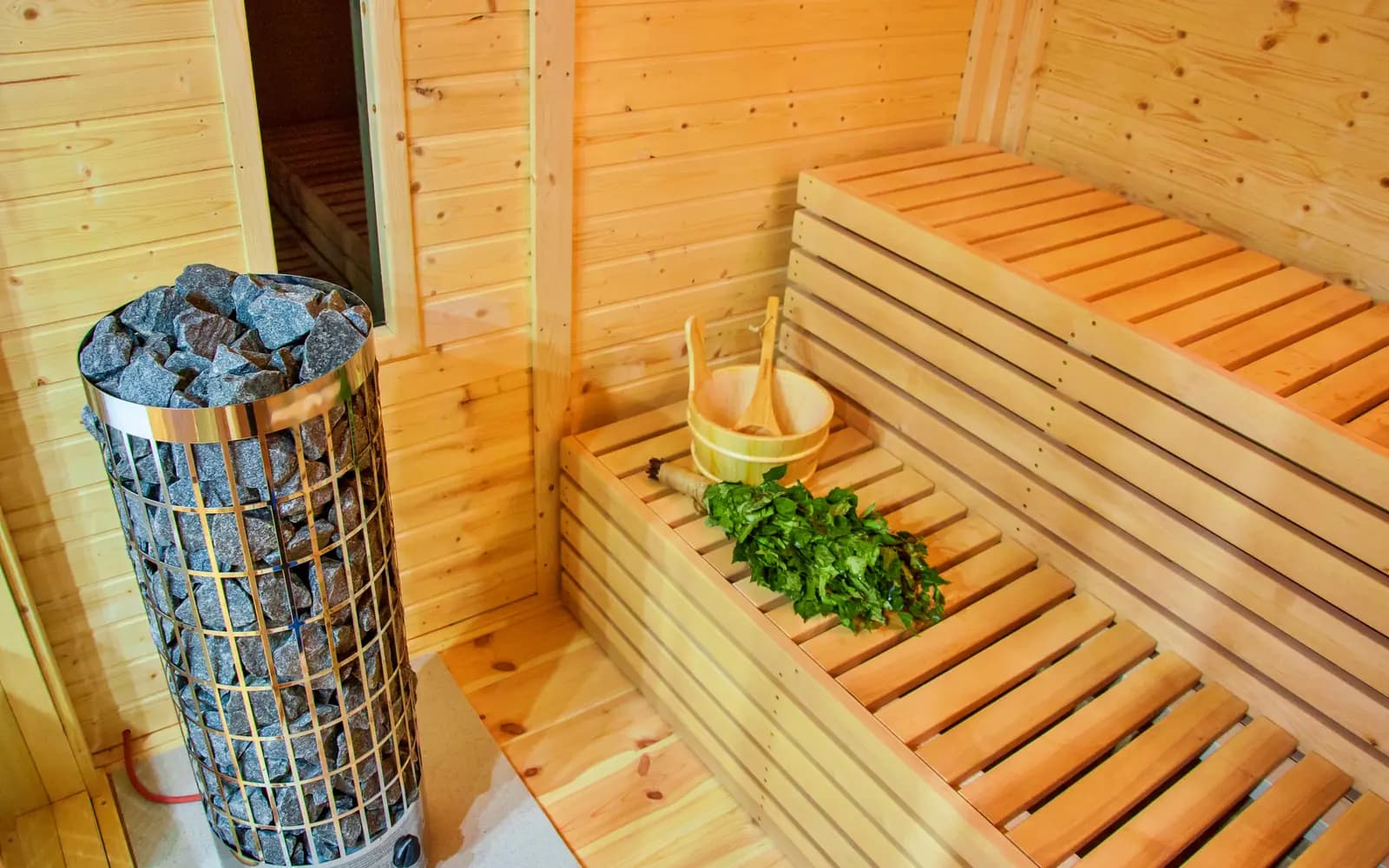 Sauna
How many kW should a sauna heater be? Sizing by cabin volume
Sauna heater size follows cabin volume: 1 kW per 1 m³ in an insulated cabin, with a correction added for glass and uninsulated surfaces.
View- 9 September 2026
- 10 min read
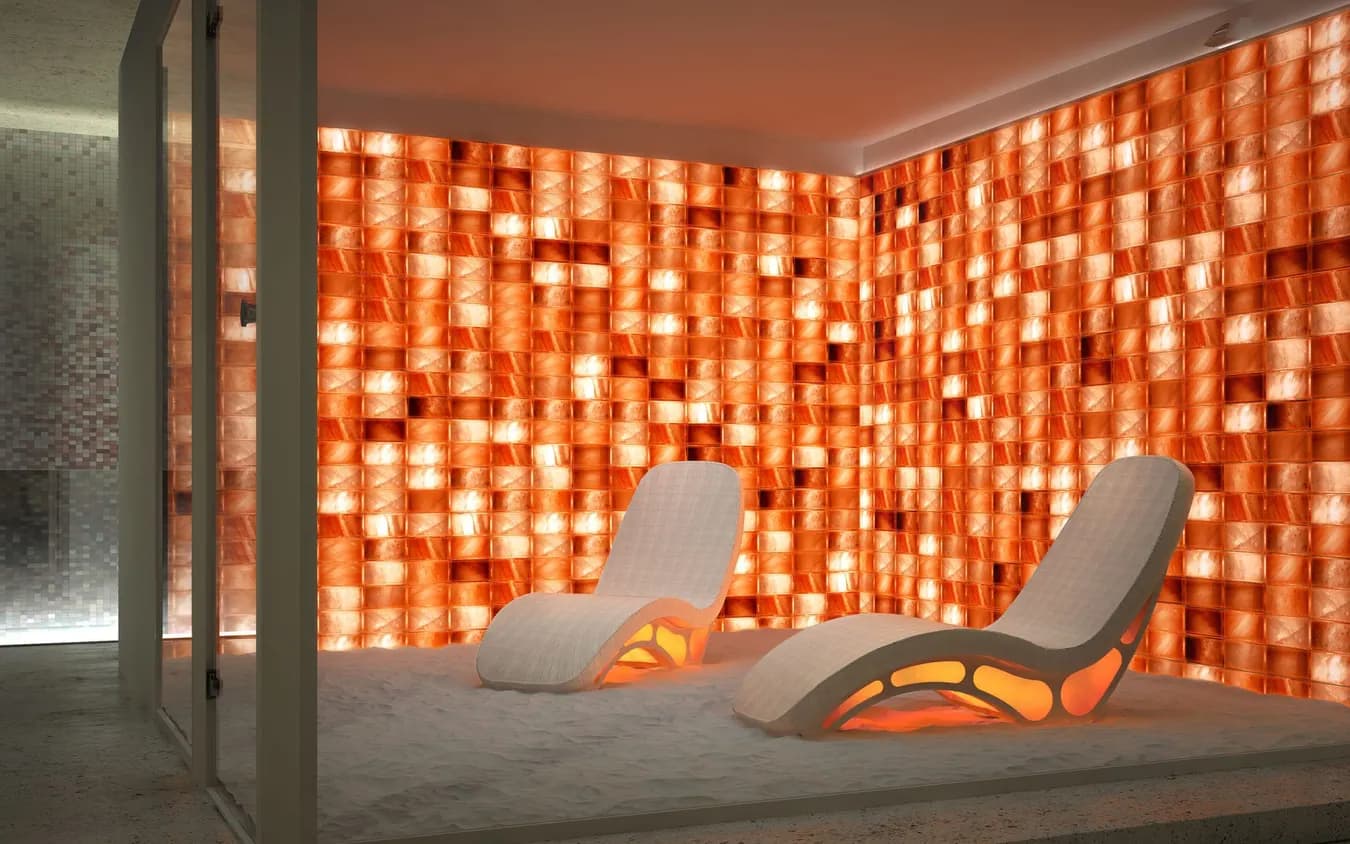 Sauna
Building a Salt Room at Home: The Process and What Drives the Cost
A home salt room is built in steps, from a humidity survey to the halogenerator. We explain how the process works and which items determine the cost.
View- 30 August 2026
- 7 min read
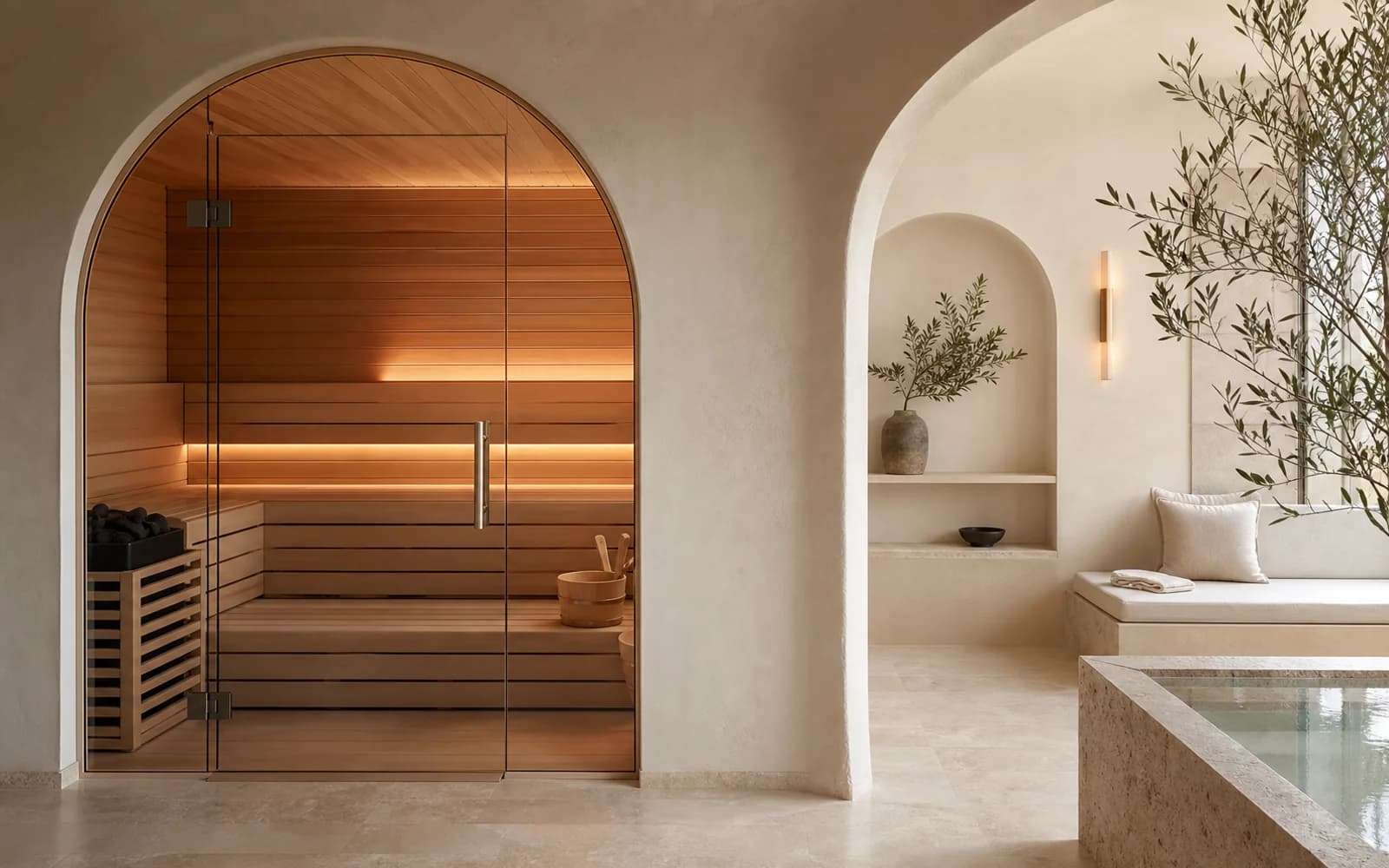 Sauna
Sauna Installation Guide: Sizing, Materials and Cost Factors (2026)
Everything to know before building a sauna: correct sizing, a comparison of sauna woods, transparent per-cubic-meter pricing logic, and why fixed-price offers deserve caution.
View- 19 June 2026
- 7 min read
- Sauna · 7 September 2026What Temperature Should a Sauna Be? Heat, Humidity, and Duration GuideWhat's the ideal Finnish sauna temperature, and how long should a first-timer stay in? Heat-humidity balance, safe session lengths, and common mistakes.8 min read
- Sauna · 13 June 2026Sauna or Steam Room? Differences, Benefits and the Right ChoiceClear differences between a dry-hot sauna and a saturated-humidity steam room: temperature-humidity, materials, experience and installation compared, plus honest guidance on which suits you.6 min read
- Sauna · 24 March 2026Infrared Sauna: The Technology and How It Differs from a Traditional SaunaAn infrared sauna heats your body directly rather than the air. We explain wavelength, panel types and how the low-temperature principle works.6 min read
- Sauna · 9 September 2026How many kW should a sauna heater be? Sizing by cabin volumeSauna heater size follows cabin volume: 1 kW per 1 m³ in an insulated cabin, with a correction added for glass and uninsulated surfaces.10 min read
- Sauna · 30 August 2026Building a Salt Room at Home: The Process and What Drives the CostA home salt room is built in steps, from a humidity survey to the halogenerator. We explain how the process works and which items determine the cost.7 min read
- Sauna · 19 June 2026Sauna Installation Guide: Sizing, Materials and Cost Factors (2026)Everything to know before building a sauna: correct sizing, a comparison of sauna woods, transparent per-cubic-meter pricing logic, and why fixed-price offers deserve caution.7 min read
// 05 · Company & Contact
To talk about your project, call or write to us.
Legal Name
Çilek Havuz
Founded
1998 · Istanbul
Head Office
Çilek Plaza, Eyüp Sultan Mah. Yakacık Cd. Feshane Cd. No: 2 D:4 D:1, 34885 Sancaktepe / İstanbul
Service Area
All of Türkiye · exports to 14 countries
Branches
Kyrgyzstan · Egypt · Algeria · Iraq
Showroom
Plan a showroom visit
At our showroom in Çilek Plaza, Sancaktepe, you can discuss your project with our team. We recommend booking an appointment by phone before your visit.
Working Hours
- Monday – Friday · 08:00 – 17:30
- Saturday · 08:00 – 12:30
- Closed on Sunday
Frequently Asked Questions
About What is a sauna and how do you use it? Temperature, time and the right order, frequently asked questions.
Çilek Havuz Corporate
Pool and Wellness Engineering
- Response Time
- Same day
- Channels
- Phone · Email · WhatsApp
If the answer you are looking for is not here, send your question directly to us and our team will reply as soon as possible.
+90 216 475 39 37A classic Finnish sauna aims for 80 to 100 degrees. For beginners, 70-80 degrees and the lower bench are suitable. In infrared saunas the room temperature stays in the 45-60 degree range, because they heat the body directly rather than the air.
Çilek Havuz Corporate
8 to 15 minutes per session is common; first-timers should start with 5 minutes. A sauna is used in rounds: sauna, cold shower, and a rest at least as long as the sauna. This cycle is repeated two or three times.
Çilek Havuz Corporate
"Fin hamamı" (Finnish bath) is the other name used in Turkish for the classic dry sauna. It describes a wood-lined heat room at 80-100 degrees with relative humidity in the 10-20 percent range. What sets it apart from a Turkish hammam is the humidity level.
Çilek Havuz Corporate
The usual practice runs from dry to humid: first the sauna, a cold shower and a rest, then the steam room or hammam. Do not go straight from one heat room to another; always cool down in between.
Çilek Havuz Corporate
No. The drop on the scales is water lost through sweat, and it comes back when you drink. It does not burn fat. What a sauna gives you is relaxation and muscle loosening after exercise.
Çilek Havuz Corporate
For a two-person sauna, 1.5-2 square metres of floor area is enough; for four people, 3-4 square metres. Internal height is kept at 2.00-2.10 metres. Stoves of 6 kW and above need a separate three-phase line from the distribution board.
Çilek Havuz Corporate
For electric stoves, about 1 kW per cubic metre is a practical starting assumption. If there are glass surfaces, uninsulated walls or stone walls, this figure is raised. Base the calculation on room volume, not floor area.
Çilek Havuz Corporate