

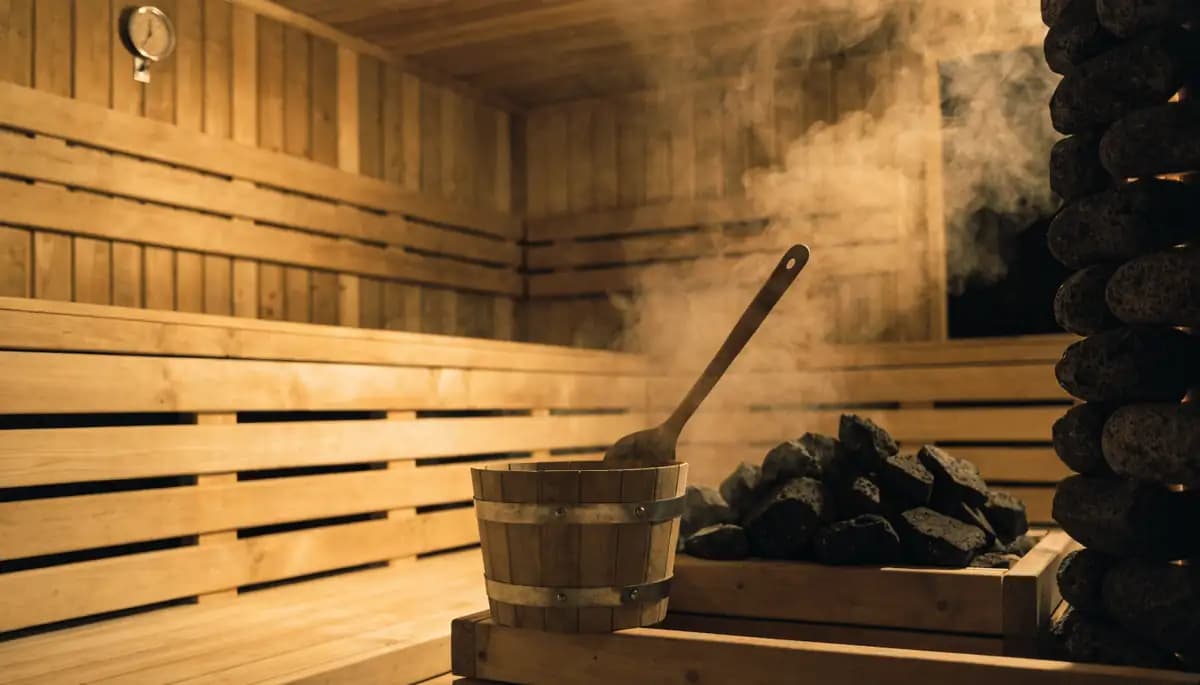
What Temperature Should a Sauna Be? Heat, Humidity, and Duration Guide
What's the ideal Finnish sauna temperature, and how long should a first-timer stay in? Heat-humidity balance, safe session lengths, and common mistakes.
Project Manager · Mechatronics Engineer · Çilek Havuz
- Published
- Updated
- Reading
- 9 min read
- Category
- Sauna
What's the ideal Finnish sauna temperature, and how long should a first-timer stay in? Heat-humidity balance, safe session lengths, and common mistakes.
In a classic Finnish sauna, the comfort range is 70-90°C; experienced users may prefer 90-100°C.
For beginners, 70-80°C and sitting on the lower bench is the right call: because hot air rises, there's a noticeable difference in temperature between the upper and lower benches.
Temperature alone doesn't tell the full story; it needs to be read together with humidity. Relative humidity in a Finnish sauna sits around 10-20%; pouring water on the stones (löyly) sends a sudden wave of steam that noticeably raises the perceived heat. The same 80°C can feel comfortable in dry air but demanding in humid air.
The golden rule is gradual use: an 8-15 minute session, followed by a cold shower or plunge pool, a few minutes of rest, and, if you like, 2-3 rounds in total.
First-timers should start with 5-8 minutes and step out immediately if they feel dizzy or notice palpitations.
Extending the session doesn't add benefit; the body's response to the hot-cold cycle is the real payoff. Don't skip drinking water between sessions: good hydration is the invisible rule of enjoying a sauna.
These three spaces are three different climates: a Finnish sauna runs 70-100°C dry heat, a steam room runs 40-50°C but at 100% humidity, and a Turkish hamam sits at 40-50°C warm, humid heat on marble.
As humidity rises, sweat has a harder time evaporating, so even a lower temperature can feel more intense: a 45°C steam room can feel as 'hot' as an 85°C sauna.
Which one suits you depends on your goal: sauna for muscle release and heavy sweating, steam for easier breathing, and hamam for a longer, more social ritual. For clients who want more than one of these at home, we design combined spa projects.
The cabin's volume, wood type, insulation, and heater power (kW): all four together determine heat-up time and temperature stability.
An underpowered heater takes too long to reach the target temperature and leaves the stones too cool for löyly; an oversized one cycles the thermostat on and off too frequently.
As a rough rule of thumb: in a well-insulated cabin, budget roughly 1 kW of heater power per 1 m³. The more glazed surface there is, the higher that requirement climbs. In design, we calculate this against your cabin's dimensions and choose the heater together with the stone capacity.
Anyone with cardiovascular disease, anyone on blood-pressure medication, pregnant women, and young children should always check with their doctor before using a sauna.
Using a sauna after drinking alcohol isn't just risky: it also runs against sauna culture itself; even in Finland, this is one of the most basic rules.
Two simple rules apply to healthy users too: don't go in hungry or overly full, and give your body time to cool down and rehydrate on the way out.
The sauna thermometer should be mounted above eye level, away from the door; a sand timer or sauna clock should also sit somewhere visible.
The gap under the door and the ceiling vent maintain both oxygen balance and heat distribution: closing them off is a common and dangerous mistake.
If your cabin's temperature never seems to settle, the problem is usually in an insulation or ventilation detail: upsizing the heater isn't the fix. If your existing sauna has this kind of imbalance, we can find the root cause together with an on-site check.
Infrared sauna cabins keep air temperature in the 45-60°C band: roughly half of a classic Finnish sauna.
The difference comes from the method: infrared panels heat the body's surface directly rather than the air, so sweating starts quickly even at a lower temperature. For users who struggle with high heat, prefer a long, calm session, or want to get their cabin up and running fast, infrared stands out as a far more accessible option than a classic sauna.
Session length in an infrared cabin runs longer than a classic sauna; because the heat load is lower, 20-30 minutes is common. On the flip side, there's no löyly, no stones, no steam, none of that sharp wave of heat, and humidity stays the same as the room air. The most common expectation mismatch we see on-site is people expecting a Finnish sauna experience from an infrared cabin. The two products don't serve the same need; we clarify which one suits you by talking through your usage habits during the site survey.
In flats with limited space, an infrared cabin needs less technical infrastructure: a reinforced power outlet is usually enough, and it doesn't require intensive ventilation planning. Even so, if panel placement isn't planned around the sitting position, the back warms up while the legs stay cold, and the user tries to push the temperature up unnecessarily. We recommend calculating panel layout and cabin size together with the user's height and sitting angle.
Plunge pool water is generally kept in the 10-16°C range; 12-15°C is considered comfortable in classic practice.
The goal is to complete the hot-cold cycle, using the vessels' sudden reaction to quickly bring the body back to its normal temperature. Water below 10°C is for experienced users; for first-timers, a cold shower or a milder 16-18°C pool is a much safer place to start.
Time in the plunge pool is measured in seconds: 10-30 seconds is enough for most users, and staying longer adds no benefit. Splashing water on the neck and shoulders before getting in is a simple but effective habit that softens the sudden shock. We recommend that anyone with cardiovascular issues cool down with a lukewarm shower instead of the plunge pool; the jump from hot to cold can be more demanding than the sauna's heat itself.
Keeping plunge-pool water cold is a plumbing matter: because the volume is small, it heats up fast and gets dirty fast. Without a chiller, adequate filtration turnover, and disinfection control, these pools turn lukewarm and cloudy within a few weeks. In our spa projects, we treat the plunge pool as a separate water circuit, sizing its capacity to the number of sauna users.
Sauna wood doesn't determine how hot the cabin gets: it determines how that heat feels.
Correctly chosen wood conducts heat slowly, so you can touch the bench by hand even in a 90°C cabin; the wrong choice means unsittable surfaces and resin seeping out. That's why sauna interiors are built from species with low heat conductivity, no resin, and no knots.
The industry's common choices are Nordic spruce, aspen, and cedar. Aspen and its relatives stand out for seating surfaces thanks to low heat conductivity and a light colour; cedar is chosen for its distinctive scent and moisture resistance; spruce is the economical option that gives the classic sauna look. Resinous species like pine, on the other hand, are something we see on-site leaching resin at high temperature and sticking to skin.
A second detail as critical as the wood is the metalwork: screw heads, handles, and bench fittings should sit hidden beneath the wood or be wood-clad. In a cabin reaching 90°C, exposed metal is a real risk to skin. In cabin design, we choose wood species, thickness, and fitting details together, matched to the target temperature range.
In shared-use saunas, the target temperature is set around 80-85°C; because the user profile is so broad, we don't recommend going above 90°C.
The difference from a home sauna is this: at home, the user knows their own body, while in a shared space, a first-time visitor and an experienced regular share the same cabin. Setting the temperature to the average is a safety decision as much as a comfort one.
In facility saunas, the thermostat needs to be off-limits to users; the control panel should sit in a technical area or a locked box. An information sign on the door stating temperature, duration, and usage rules, along with a visible sand timer and an emergency call button, are basic fittings that inspections look for too. Positioning these at the design stage gives far more orderly results than adding them later.
Under heavy use, the real challenge is holding the temperature steady: the door opening frequently drops the cabin temperature each time, forcing the heater to run flat out constantly. That's why, in shared-use saunas, we recommend strengthening insulation and door sealing rather than simply enlarging the cabin to match the number of users. As we have seen on our own projects, stable temperature comes from a well-sealed shell, not a stronger heater.
Sauna energy use is directly proportional to heater power and run time: in a well-insulated cabin, the heater only runs at full power for a portion of the total time after reaching the target temperature, cycling on and off via the thermostat the rest of the time.
In a poorly insulated cabin, the heater barely rests, and the energy spent on the same session climbs noticeably.
The most effective saving comes from shortening warm-up time. With a timer or remote-controlled panel, the cabin is switched on roughly half an hour before use, avoiding the waste of keeping an empty cabin hot for hours. In home saunas, turning off the heater after use and leaving the door slightly ajar is the right habit both for energy and for wood longevity.
In facility settings, scheduling based on usage intensity is more efficient than keeping the cabin on continuously; during low-demand hours, it's kept at a standby temperature instead. Ceiling insulation, the proportion of glazed surface, and door sealing are the three most decisive line items in this calculation. If your existing sauna is using more energy than expected, we recommend checking the shell before upsizing the heater: the root cause is usually there.
Next step
Let us discuss your project in the way that suits you best.
You can fill in the form for a written quote, schedule a video project presentation or ask us to survey your project site.
Get a Quote
Send us your dimensions and expectations in writing.
Online presentation
Video project presentation
On-site survey
Inspection at your project site
// 01 · Product groups
Compare the products on this topic on their category pages.
Each card leads to a product category; models, technical sheets and list prices are there.
 Product category
Sauna Heaters and Equipment
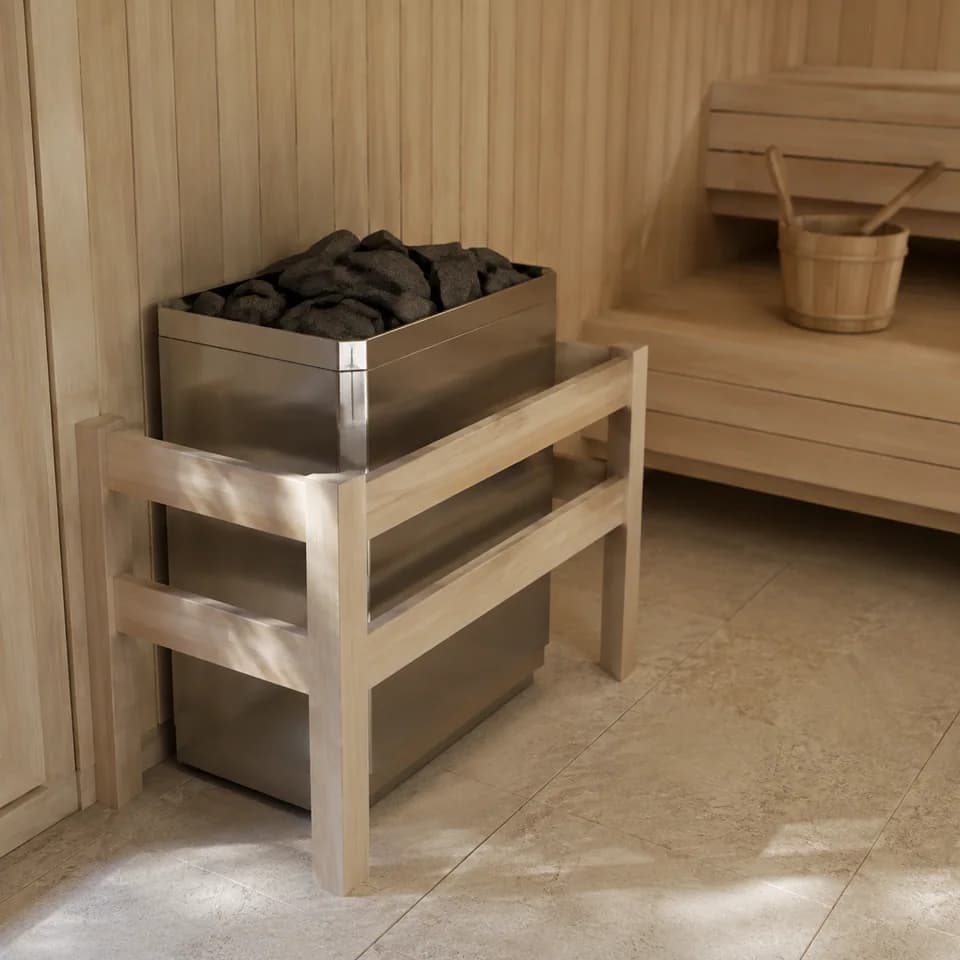
Finnish-type heaters, digital control panels, sauna stones and cabin fittings: complete systems for indoor and outdoor saunas.
View- 19 products
- Product category
Sauna Heater Models
Stainless steel electric sauna heaters, control units and sauna stones. Heater output is chosen by cabin volume, the control unit by the heater rating in kW, and the stone quantity by the heater's stone capacity.
View- 5 products
Product category
Sauna Heaters and Equipment
Finnish-type heaters, digital control panels, sauna stones and cabin fittings: complete systems for indoor and outdoor saunas.
19 productsProduct category
Sauna Heater Models
Stainless steel electric sauna heaters, control units and sauna stones. Heater output is chosen by cabin volume, the control unit by the heater rating in kW, and the stone quantity by the heater's stone capacity.
5 products
// 02 · Guides
On Sauna, more articles to read.
First the articles directly related to this one, then the newest articles on the topic.
 Sauna
SaunaHow many kW should a sauna heater be? Sizing by cabin volume
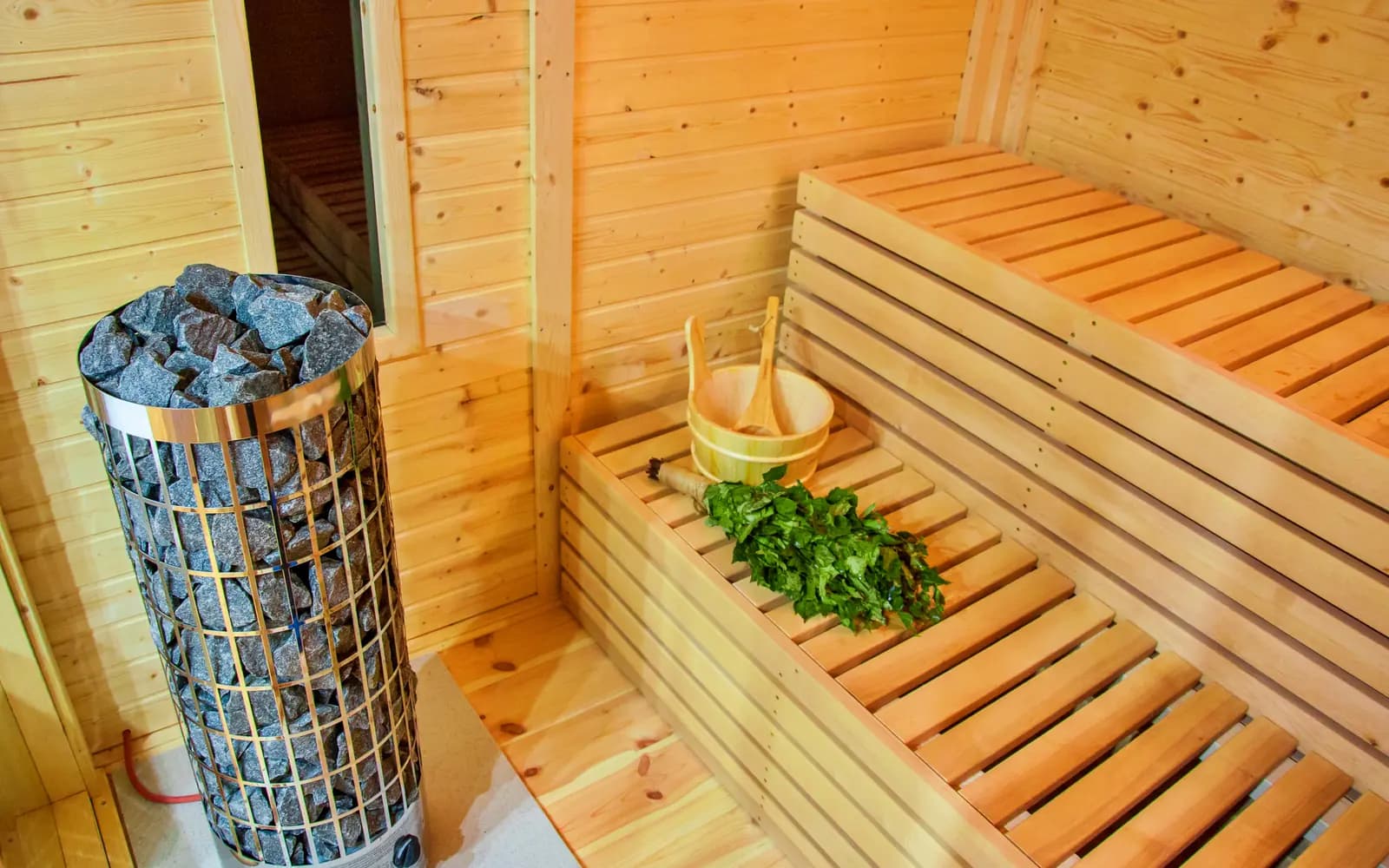
Sauna heater size follows cabin volume: 1 kW per 1 m³ in an insulated cabin, with a correction added for glass and uninsulated surfaces.
View- 9 September 2026
- 10 min read
 Sauna
SaunaWhat is a sauna and how do you use it? Temperature, time and the right order
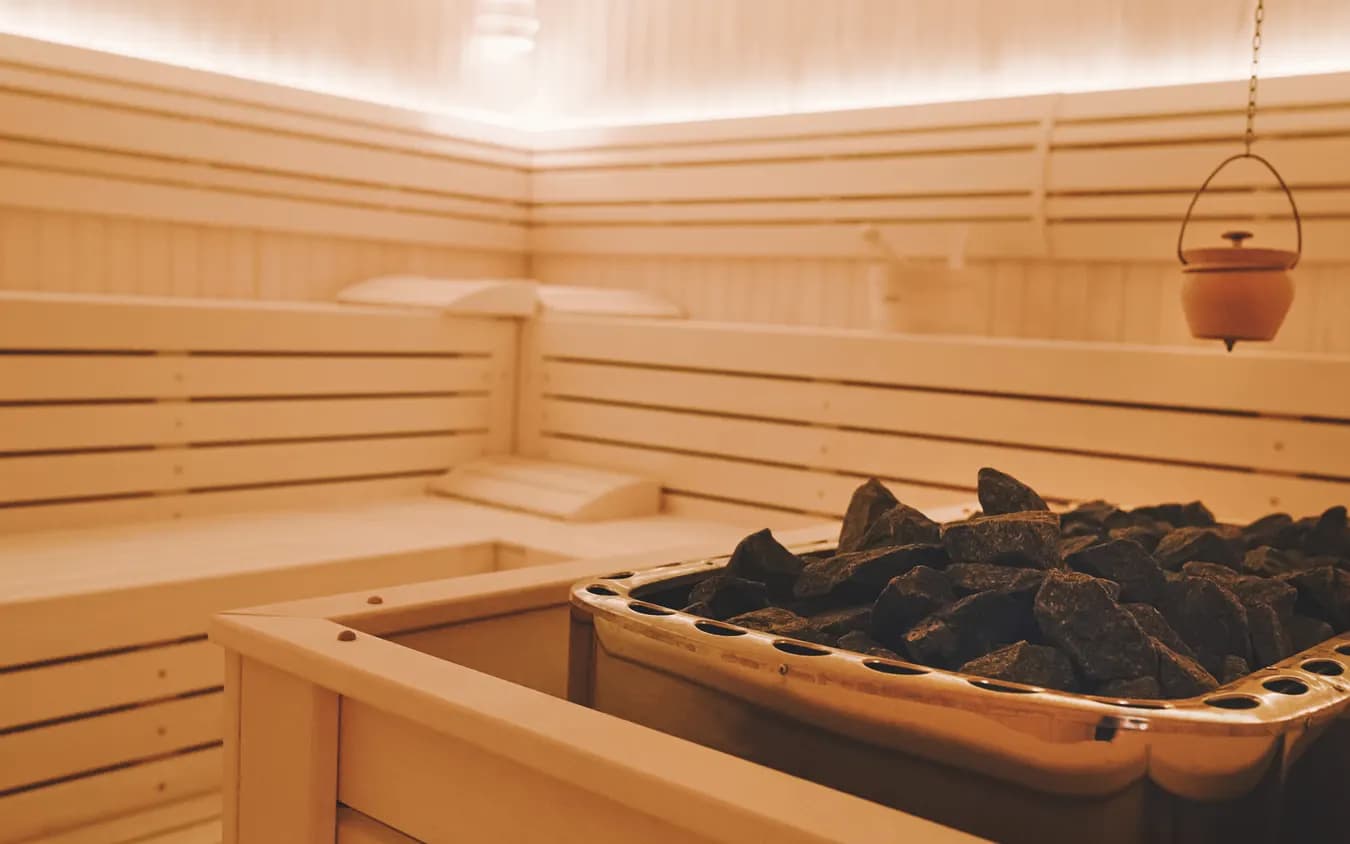
A classic Finnish sauna runs at 80 to 100 degrees and 10 to 20 percent humidity. How hot, how long, and in what order do you use sauna, hammam and steam room?
View- 4 September 2026
- 9 min read
 Sauna
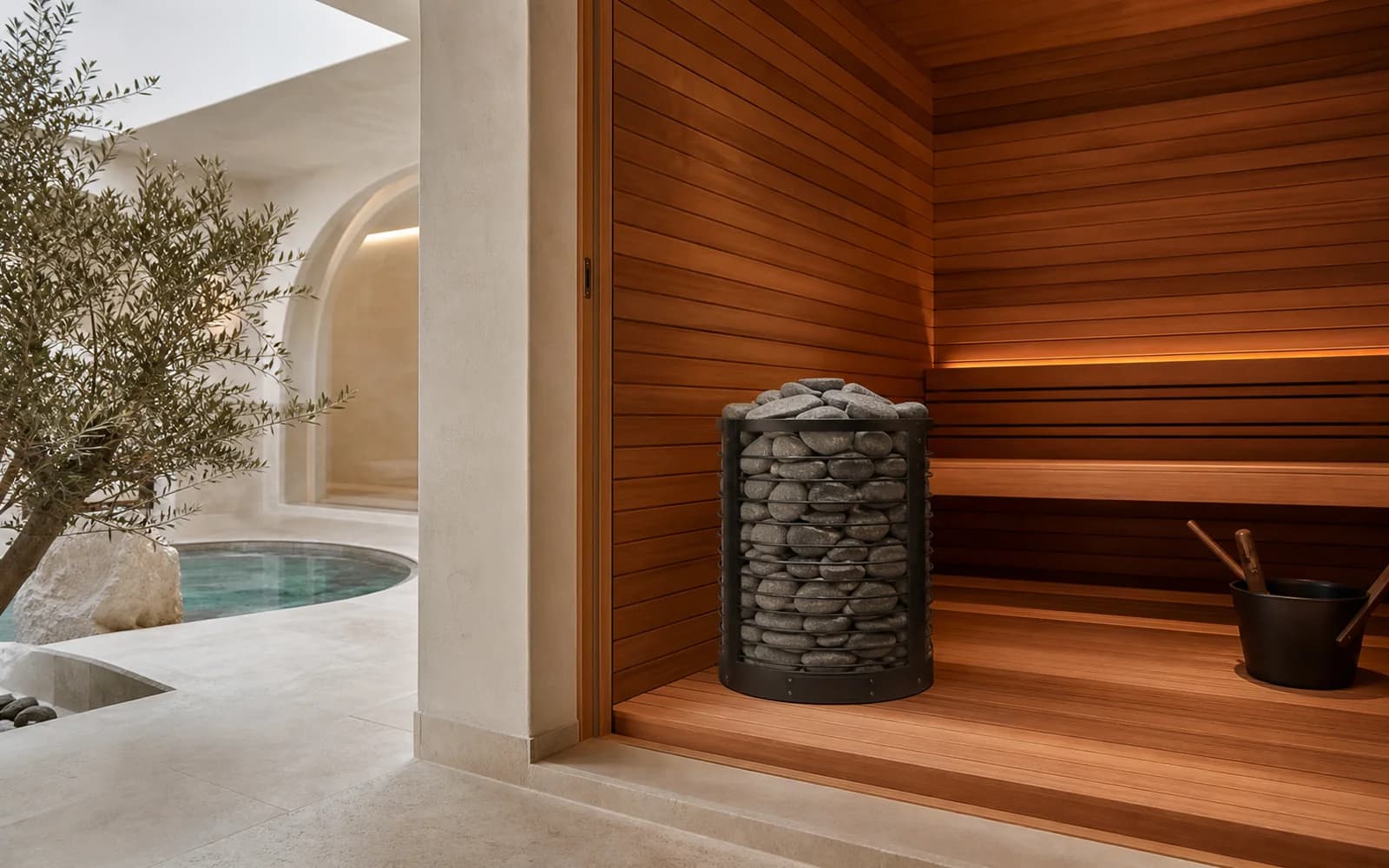
SaunaChoosing a Sauna Heater: Electric or Wood-Burning, How Many kW?
The heater is the heart of your sauna. We compare electric and wood-burning heaters and explain how to size power for the cabin volume and choose the controls.
View- 30 March 2026
- 5 min read
 Sauna
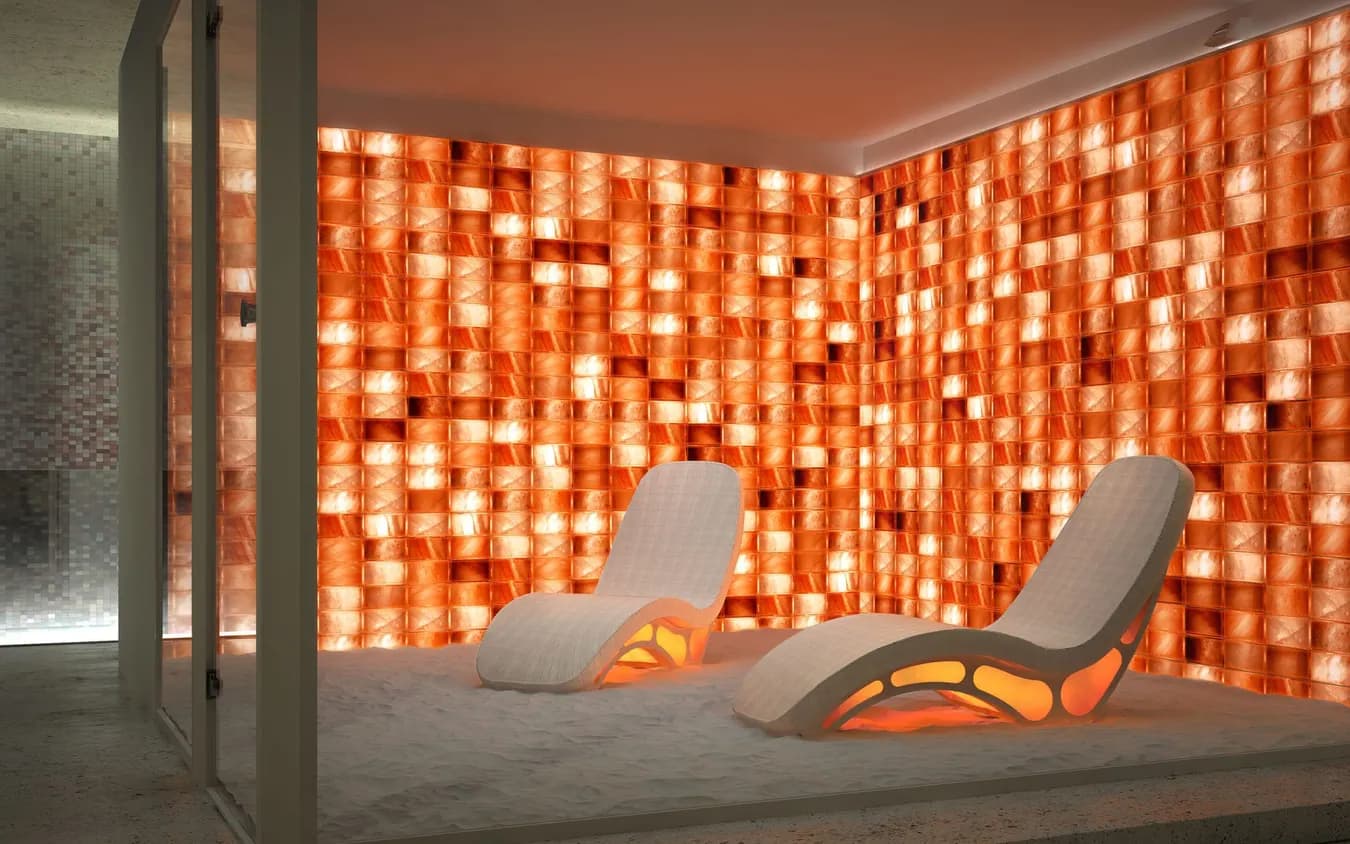
SaunaBuilding a Salt Room at Home: The Process and What Drives the Cost
A home salt room is built in steps, from a humidity survey to the halogenerator. We explain how the process works and which items determine the cost.
View- 30 August 2026
- 7 min read
 Sauna
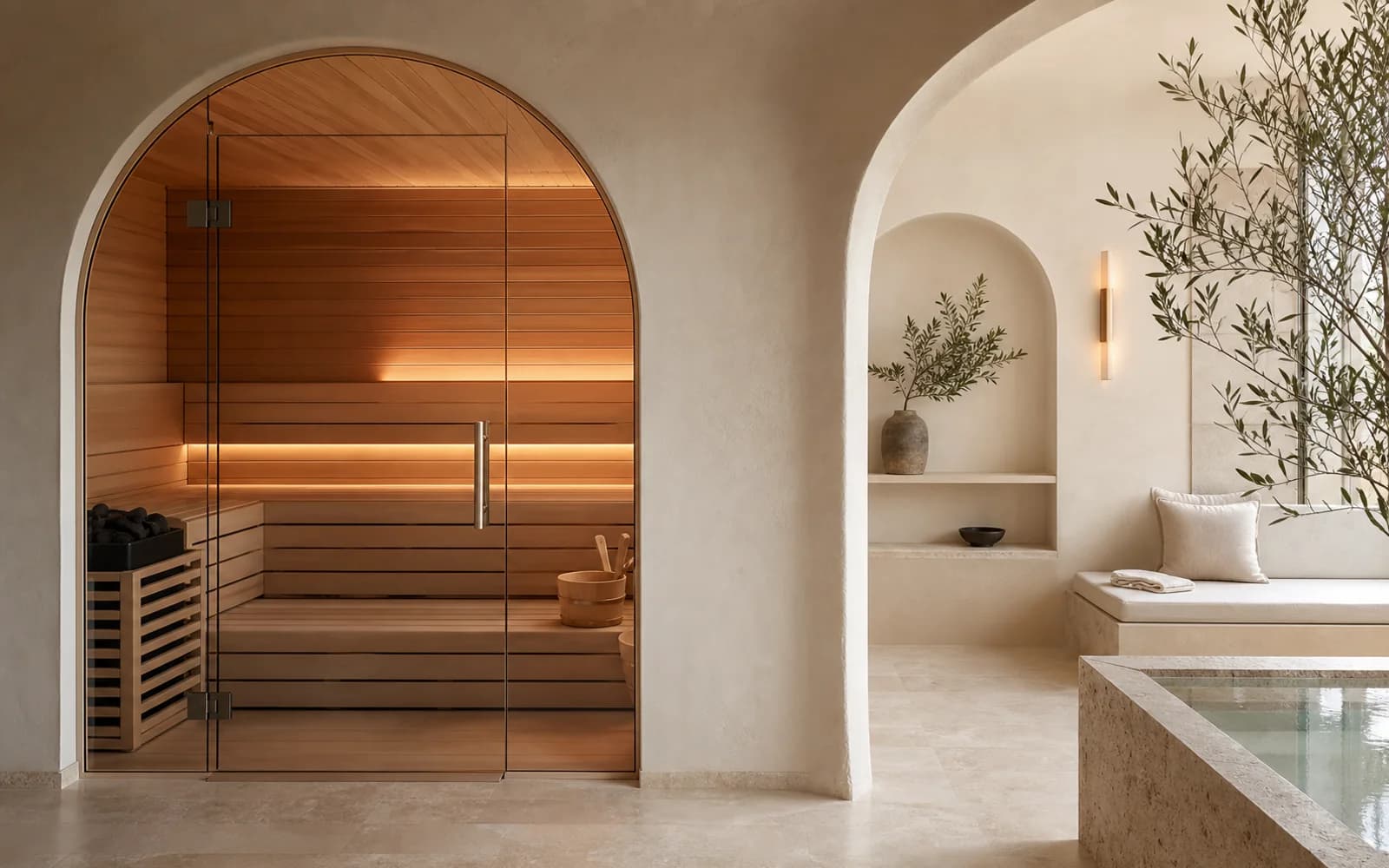
SaunaSauna Installation Guide: Sizing, Materials and Cost Factors (2026)
Everything to know before building a sauna: correct sizing, a comparison of sauna woods, transparent per-cubic-meter pricing logic, and why fixed-price offers deserve caution.
View- 19 June 2026
- 7 min read
 Sauna
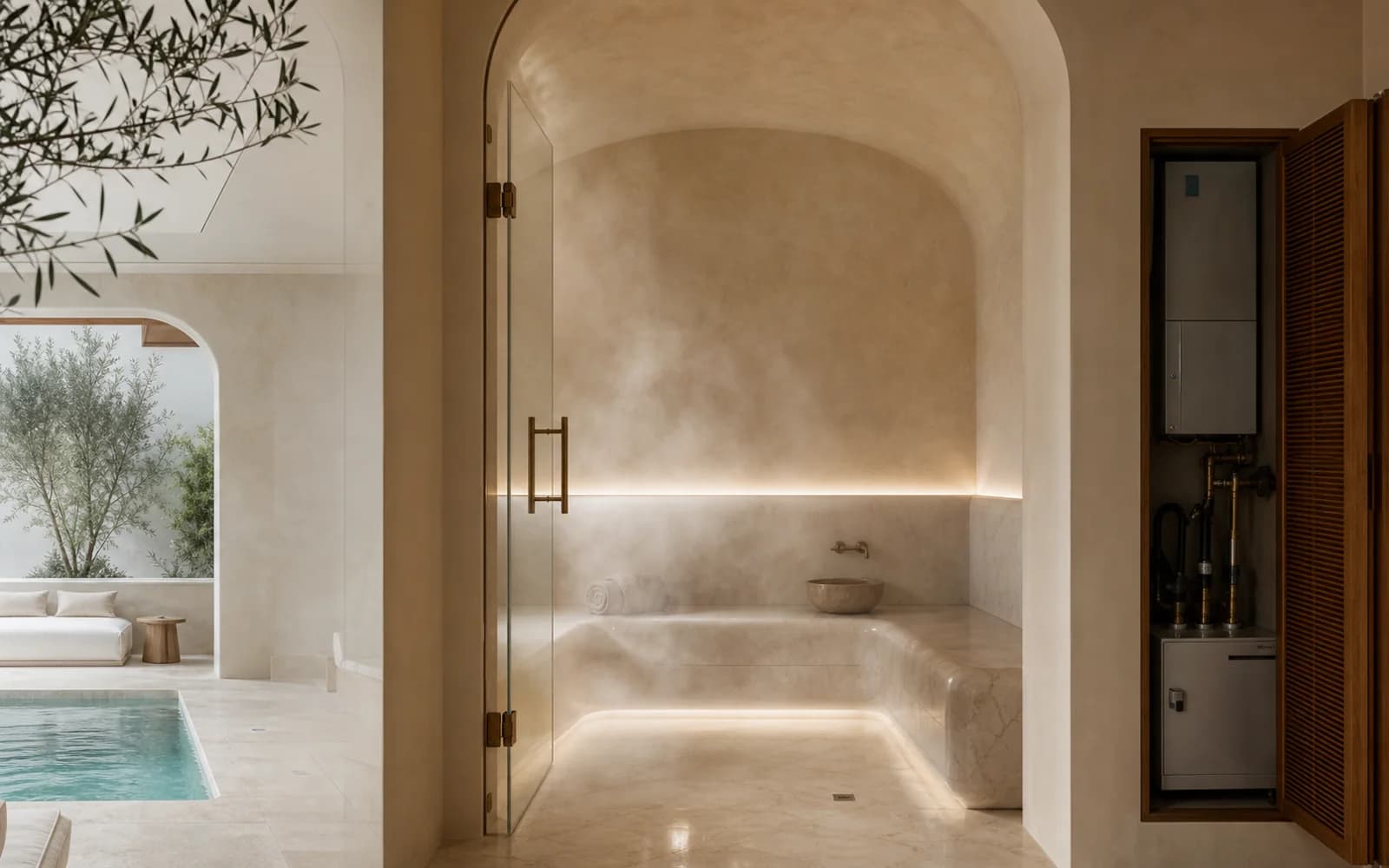
SaunaSteam Room Guide: Generator System, Temperature and Cost Factors
How does a steam room work, and how is the generator sized? The correct temperature-humidity balance, why sealing is non-negotiable, and the cost items that make up a steam room's price.
View- 16 June 2026
- 6 min read
- Sauna · 9 September 2026How many kW should a sauna heater be? Sizing by cabin volumeSauna heater size follows cabin volume: 1 kW per 1 m³ in an insulated cabin, with a correction added for glass and uninsulated surfaces.10 min read
- Sauna · 4 September 2026What is a sauna and how do you use it? Temperature, time and the right orderA classic Finnish sauna runs at 80 to 100 degrees and 10 to 20 percent humidity. How hot, how long, and in what order do you use sauna, hammam and steam room?9 min read
- Sauna · 30 March 2026Choosing a Sauna Heater: Electric or Wood-Burning, How Many kW?The heater is the heart of your sauna. We compare electric and wood-burning heaters and explain how to size power for the cabin volume and choose the controls.5 min read
- Sauna · 30 August 2026Building a Salt Room at Home: The Process and What Drives the CostA home salt room is built in steps, from a humidity survey to the halogenerator. We explain how the process works and which items determine the cost.7 min read
- Sauna · 19 June 2026Sauna Installation Guide: Sizing, Materials and Cost Factors (2026)Everything to know before building a sauna: correct sizing, a comparison of sauna woods, transparent per-cubic-meter pricing logic, and why fixed-price offers deserve caution.7 min read
- Sauna · 16 June 2026Steam Room Guide: Generator System, Temperature and Cost FactorsHow does a steam room work, and how is the generator sized? The correct temperature-humidity balance, why sealing is non-negotiable, and the cost items that make up a steam room's price.6 min read
// 03 · Company & Contact
To talk about your project, call or write to us.
Legal Name
Çilek Havuz
Founded
1998 · Istanbul
Head Office
Çilek Plaza, Eyüp Sultan Mah. Yakacık Cd. Feshane Cd. No: 2 D:4 D:1, 34885 Sancaktepe / İstanbul
Service Area
All of Türkiye · exports to 14 countries
Branches
Kyrgyzstan · Egypt · Algeria · Iraq
Showroom
Plan a showroom visit
At our showroom in Çilek Plaza, Sancaktepe, you can discuss your project with our team. We recommend booking an appointment by phone before your visit.
Working Hours
- Monday – Friday · 08:00 – 17:30
- Saturday · 08:00 – 12:30
- Closed on Sunday
Frequently Asked Questions
About What Temperature Should a Sauna Be? Heat, Humidity, and Duration Guide, frequently asked questions.
Çilek Havuz Corporate
Pool and Wellness Engineering
- Response Time
- Same day
- Channels
- Phone · Email · WhatsApp
If the answer you are looking for is not here, send your question directly to us and our team will reply as soon as possible.
+90 216 475 39 37For a healthy adult, short daily sessions generally aren't a problem: this is common practice in Finland. What matters is discipline around duration and hydration. Anyone with a chronic condition should check frequency with their doctor.
Çilek Havuz Corporate
No: this practice, called löyly, is part of the sauna ritual and is safe in heaters built with the right stone capacity. Pour a little at a time and away from the bench; use clean water, not chlorinated pool water.
Çilek Havuz Corporate
The weight lost through sweating is water, and it comes right back once you drink; sauna isn't a weight-loss method. Its real benefits lie in circulation, muscle relaxation, and sleep quality.
Çilek Havuz Corporate
A correctly sized heater in a well-insulated cabin reaches usage temperature in 30-45 minutes. Heat-up times over an hour usually point to an insulation gap or an underpowered heater.
Çilek Havuz Corporate
It's not required, but it's the most enjoyable and beneficial part of the cycle; that very contrast is what creates the vascular-exercise effect. You can also start with a lukewarm shower, depending on your tolerance for cold.
Çilek Havuz Corporate
There's no need for that in home use; anything above 90°C is experienced-user territory. Even if the cabin and heater can go above 100°C, the 70-90°C band is recommended for comfort and safety.
Çilek Havuz Corporate
Because hot air rises, there's typically a 15-20°C difference between the upper and lower benches. Since the thermometer sits at the upper level, when you see 90°C on the panel, you're actually experiencing around 70°C on the lower bench. Having first-timers start on the lower bench is a more sensible approach than lowering the overall temperature.
Çilek Havuz Corporate
We recommend waiting at least 1-2 hours after a heavy meal; sauna on a full stomach puts a double strain on circulation. Going in on an empty stomach can also cause blood pressure to drop. For most users, late afternoon or before bed is the most rewarding time: the relaxation after a sauna session supports better sleep.
Çilek Havuz Corporate
An infrared cabin produces sweating at a lower temperature but doesn't deliver the löyly, steam, and intense-heat experience. It's a good alternative if space, budget, or heat tolerance is limited; if you're after the classic sauna ritual, it isn't the same thing. In spa projects that plan for both, we size each cabin separately.
Çilek Havuz Corporate