

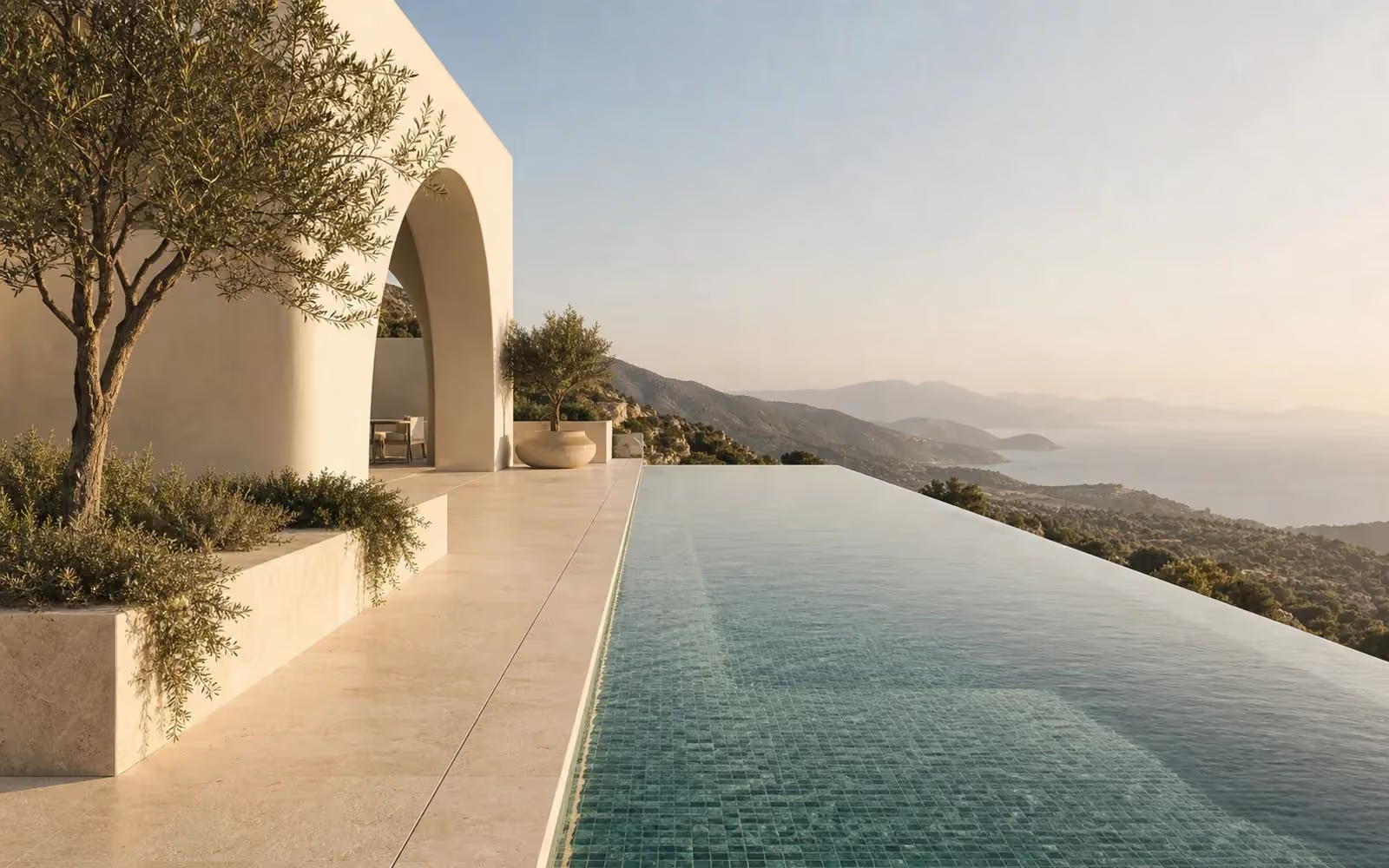
The Craft of Infinity Pool Design
From overflow-channel details to balance-tank sizing, the design principles behind a still mirror of water that merges with the view.
Project Manager · Mechatronics Engineer · Çilek Havuz
- Published
- Updated
- Reading
- 10 min read
- Category
- Design
From overflow-channel details to balance-tank sizing, the design principles behind a still mirror of water that merges with the view.
An infinity pool is a type of pool in which at least one edge ends flush with the water level and the water spills invisibly over that edge.
The edge facing the view is brought down to zero; the water appears to merge with the horizon. This effect is an illusion, and it depends entirely on a correctly designed water cycle.
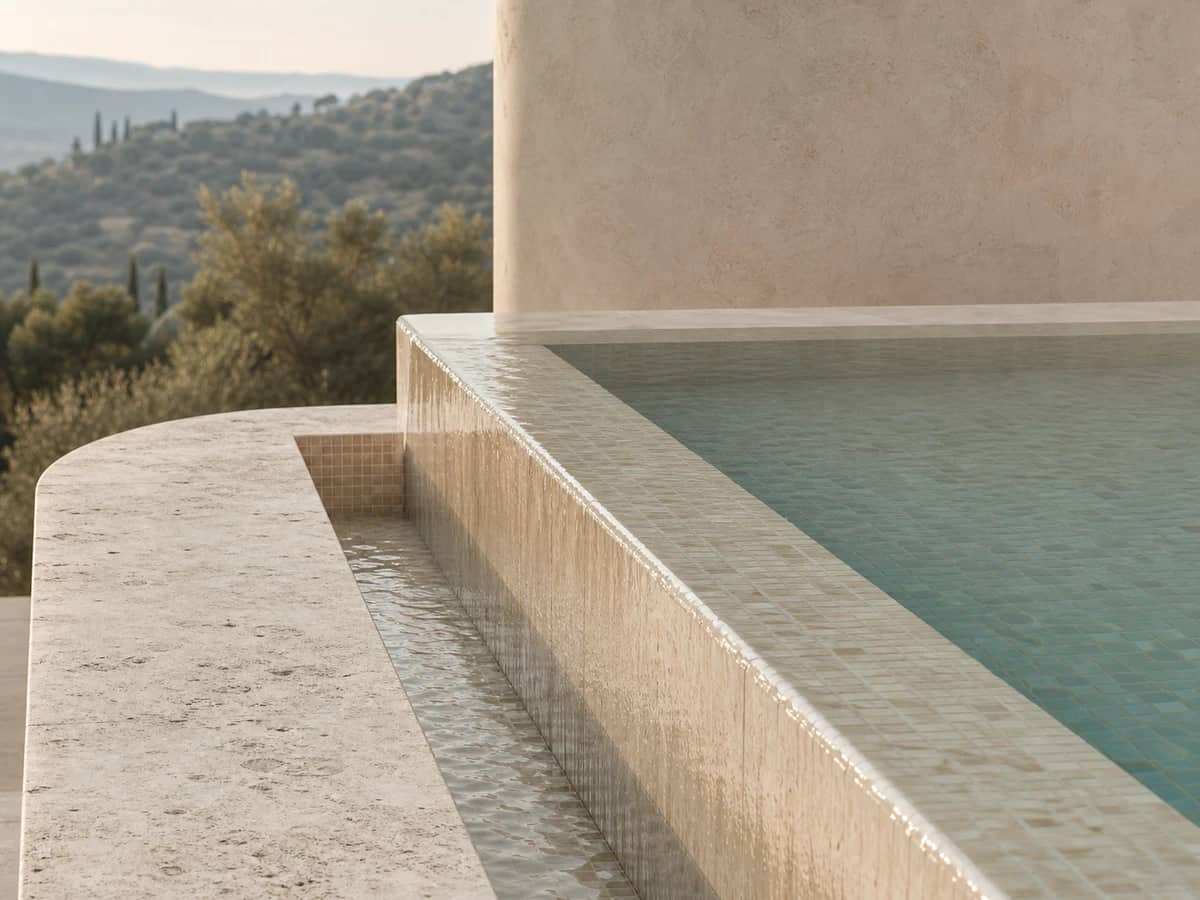
The overflowing water is not wasted: it falls into a collection channel (trough) below, flows from there into a balance tank and is pumped back into the pool. An infinity pool is therefore a closed system in constant circulation; behind the visual magic there is a hydraulic balance working without interruption.
Five names for the same thing
- Infinity pool (sonsuzluk havuzu)
- The name established in Turkish. On one or more edges, the point where the water ends cannot be seen; the water appears to merge with the view.
- Vanishing edge (disappearing edge)
- The name of the structural element that produces the effect. On that edge of the pool there is a deliberately lowered weir.
- Negative edge
- The most common term in American literature. It refers to the edge sitting below the water level.
- Zero edge
- Another name for the same arrangement; no visible difference in height is left between the water and the edge.
- Weir
- The low wall over which the water flows, and which must be exactly level. The whole effect depends on the precision of this single element.
- Catch basin
- The basin below or beside the pool in which the water spilling over the weir collects. From here the water is pumped back into the pool.
For the water to flow over the vanishing edge as an even film, the top level must be flat to the millimetre; the smallest deviation makes the water flow heavily at one point and not at all at another.
This is why edge levelling and concrete workmanship are the most sensitive stage of an infinity pool.
The collection channel below the edge is sized wide enough to receive the entire overflow; the balance tank is sized to hold the extra volume that spills over when swimmers enter the water. The pump flow must be chosen with enough capacity to feed this cycle without interruption. These three elements depend on one another; if one is wrong, the effect breaks down.
The closed loop the water follows
- 01The circulation pump delivers water to the pool; the level rises above the weir.
- 02The water spills over the weir as a thin film and falls.
- 03The falling water collects in the catch basin below the weir.
- 04A second pump returns the water from the basin to the pool.
- 05The basin level is monitored by automatic level control; water lost to evaporation and wind is made up by automatic filling.
An infinity pool makes most sense on sites with a difference in level that face a view: a hillside, a hilltop, a sea or valley view merges with the vanishing edge.
On a flat site with no view, the effect is largely lost. What lies beyond the point where the edge ends is the work of landscape architecture: the terrace level, the planting texture and the lighting either complete the effect or spoil it.
The slope of the site also determines where the collection channel and the balance tank will be placed. The decision should therefore be made at the site survey, with an analysis of the land and the view; a request for "an infinity pool" is first tested against whether the site is suitable for one.
| Site condition | Result | Why |
|---|---|---|
| The ground falls away beyond the pool (slope, terrace, roof) | works | The viewer cannot see the line where the water ends; the effect is complete |
| Sea or lake beyond the pool | strongest result | The water is seen continuously across two surfaces |
| Flat site, eye level the same as the pool | weak | The edge of the catch basin comes into view and the effect breaks |
| Rising ground or a wall beyond the pool | does not work | There is no view, so the vanishing edge has no aesthetic purpose either |
| Slope fully exposed to the wind | caution | The film scatters in the wind; water loss and wetting of the surroundings increase |
The most critical points are structure and waterproofing: the vanishing edge usually faces a void or a slope, so additional loads and overturning moments must be calculated correctly.
A waterproofing defect at the edge detail leads both to water loss and to staining on the visible surface.
The second critical point is the sizing of the balance tank and the automation. As the number of swimmers increases, the overflow volume changes; if the system is not built to compensate, the water level and the overflow effect break down. With this type of pool, experience directly determines the result.
The answer to how a vanishing-edge (infinity) pool is built differs from a standard pool at three points: the level of the overflow edge, the balance tank, and the return line.
The sequence is as follows:
Vanishing-edge pool construction steps
- 01Site survey and determining the position of the overflow edge relative to the view direction; on sloped terrain, a decision on retaining walls and bored piles.
- 02Designing the pool shell and the balance tank in the same reinforced-concrete formwork; tank volume approximately 8-10 percent of the pool surface area.
- 03Setting the overflow edge level with a laser to a tolerance of ±2 mm; placing the edge coping with a rotating level, not a spirit level.
- 04Installing a separate suction line running from the balance tank and a level float switch; pump flow rate is selected according to the length of the overflow edge (3-5 m³/hour per meter).
- 05Two coats of waterproofing and a 24-hour water-retention test; during the test, an even film of water should flow along the entire length of the overflow edge.
- 06A second level check after cladding; a 1 mm level difference at the overflow edge creates a dry patch.
- 07Commissioning: pump speed is adjusted so the overflow film thickness is 3-5 mm, and noise and splashing are checked.
Each of these steps corresponds to the construction process on our service page; skipping any one of them turns into a level error that cannot be corrected afterward.
In addition to all the components of a standard pool, an infinity pool requires a collection channel, a balance tank, a higher-capacity pump and far more precise workmanship.
Millimetre-level edge levelling and additional reinforced concrete and waterproofing work increase both material and labour costs.
This extra cost is not a luxury whim; it is the price of making the effect work sustainably. The exact figure depends on the size of the pool, the difference in level, the choice of finish and the site conditions. The right approach is to put these items into the budget transparently from the start.
| Item | Standard pool | Infinity pool |
|---|---|---|
| Foundation and structure | a shell resting on the ground | a calculated foundation system anchored to the slope |
| Catch basin | none (in a skimmer layout) | mandatory; a separate water structure |
| Pump | a single circulation pump | circulation pump + edge pump |
| Level precision | standard tolerance along the edge | millimetre range along the weir |
| Automation | level control optional | level control and automatic filling mandatory in practice |
| Maintenance | a single surface | monitoring limescale and algae on the weir surface is extra work |
An infinity pool is safe when its design is right; on the vanishing edge side, design measures against the risk of falling (level arrangement, barrier, lighting) are taken.
Pool maintenance is largely similar to that of a standard pool, but the balance tank and the overflow channel also need regular checks.
Permits vary from municipality to municipality depending on the size and location of the pool; it is subject to the same zoning rules as standard pools. At the site survey we clarify both the suitability of the land and the permit situation, and we engineer your infinity pool from start to finish.
The vanishing edge looks like a modern pool fashion, but the idea is more than three hundred years old.
In garden architecture, hiding the point where the water ends was one of the known ways of bringing the view into the garden.
| Period | Event |
|---|---|
| Late 1600s | The Fountain of the Stags at the Palace of Versailles: one of the earliest known vanishing-edge arrangements |
| 1960s | Vanishing-edge pool designs in the residential projects of architect John Lautner |
| 1971 | A vanishing-edge pool designed by Lautner appears in the film Diamonds Are Forever, and the idea spreads |
| 1960s-70s | Architect Douglas Snelling takes the arrangement to Australia |
| 2010s | It becomes widespread on skyscraper roofs and in suspended pools; the Marina Bay Sands rooftop pool in Singapore and the suspended pool in London mark this period |
This history has a practical consequence: the vanishing edge is not a piece of equipment but an architectural decision. If it is treated as an option added after the pool project has been drawn, decisions on both the structural and the hydraulic side are missed that cannot be corrected later. Where the edge will face, where the foundation will sit and where the basin will fit are discussed at the same table.
Next step
Let us discuss your project in the way that suits you best.
You can fill in the form for a written quote, schedule a video project presentation or ask us to survey your project site.
Get a Quote
Send us your dimensions and expectations in writing.
Online presentation
Video project presentation
On-site survey
Inspection at your project site
Image gallery
Photos: 04
 01
01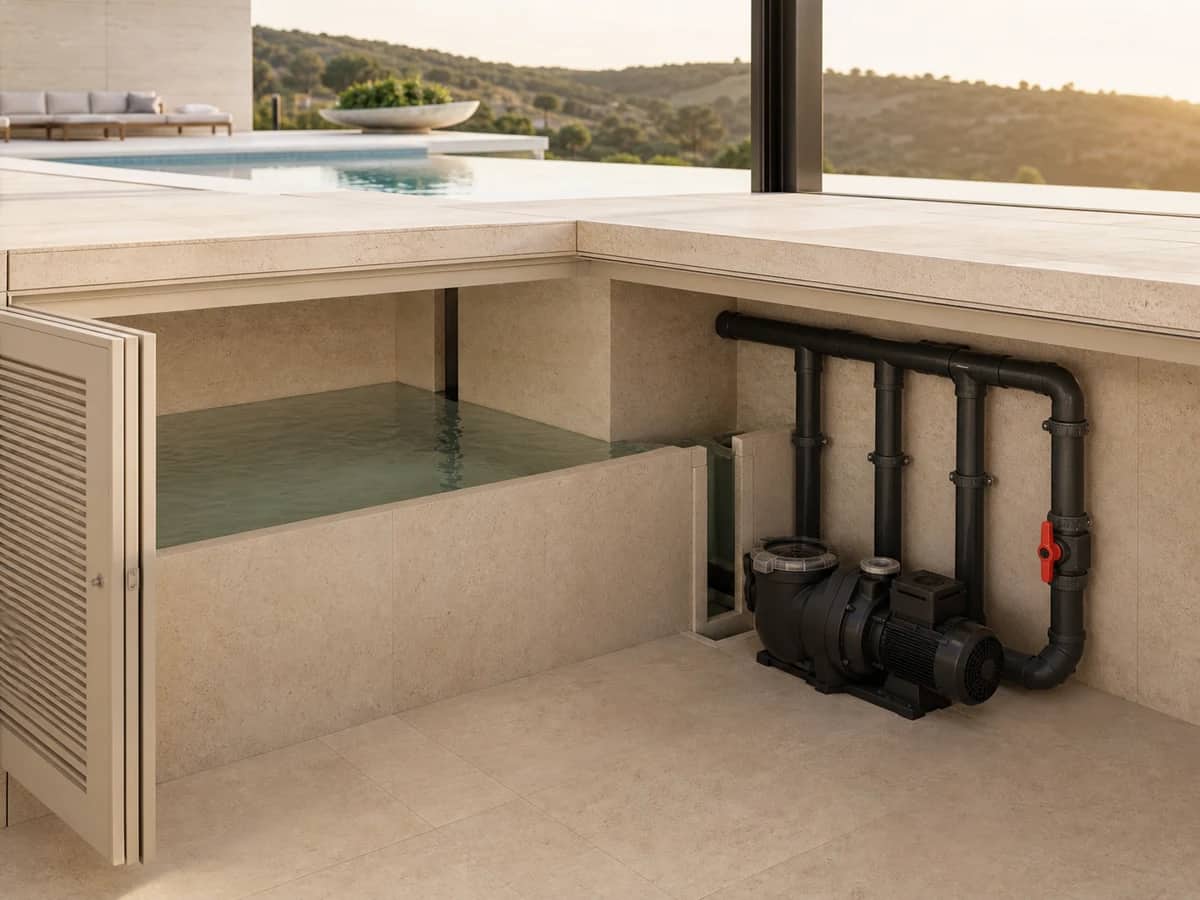 02
02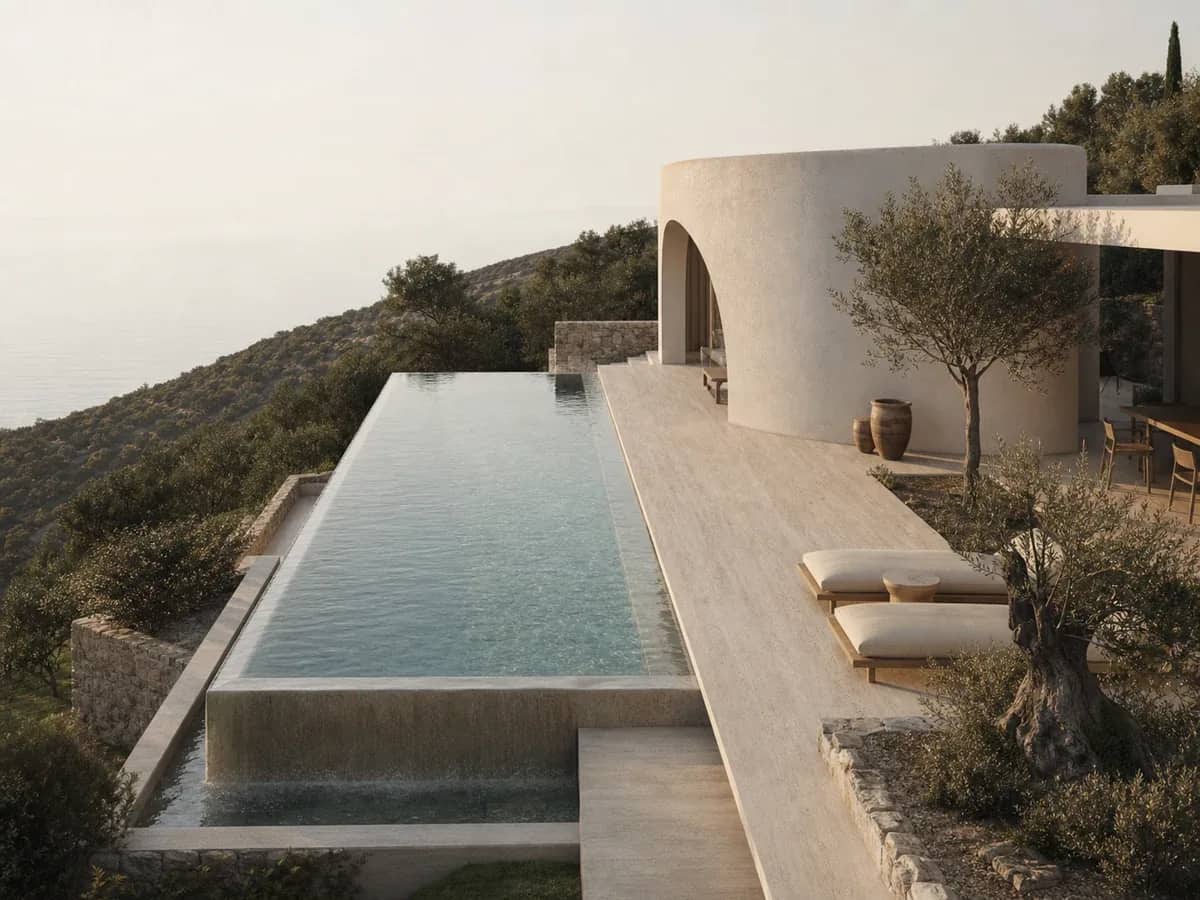 03
03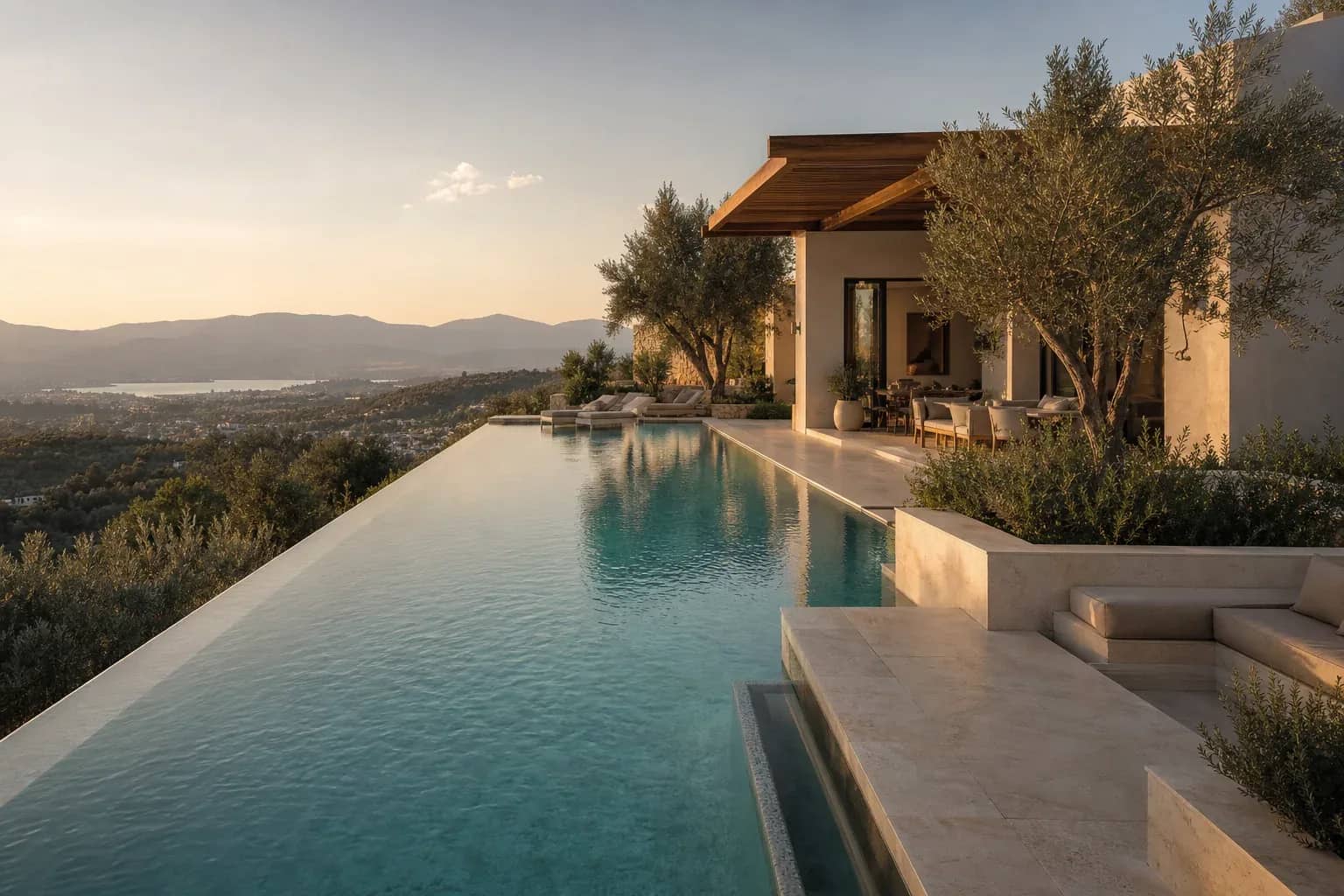 04
04// 01 · Product groups
Compare the products on this topic on their category pages.
Each card leads to a product category; models, technical sheets and list prices are there.
 Product category
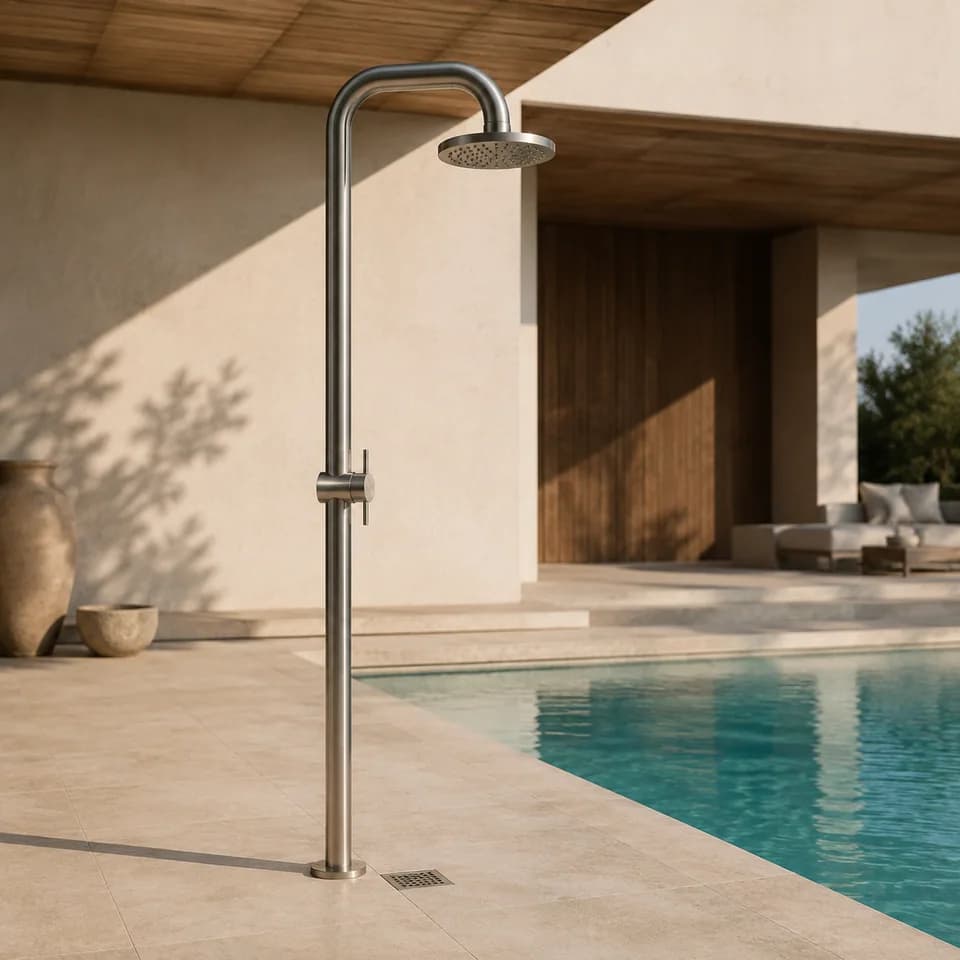
Pool Waterfall Models
Stainless steel waterfalls for the pool edge and wall, Powerfall, a water curtain and a water jet. Values such as material, width, weight and connection are in the technical table on each model's product page. The feed pump is chosen together with the flow the waterfall needs.
View- 5 products
 Product category
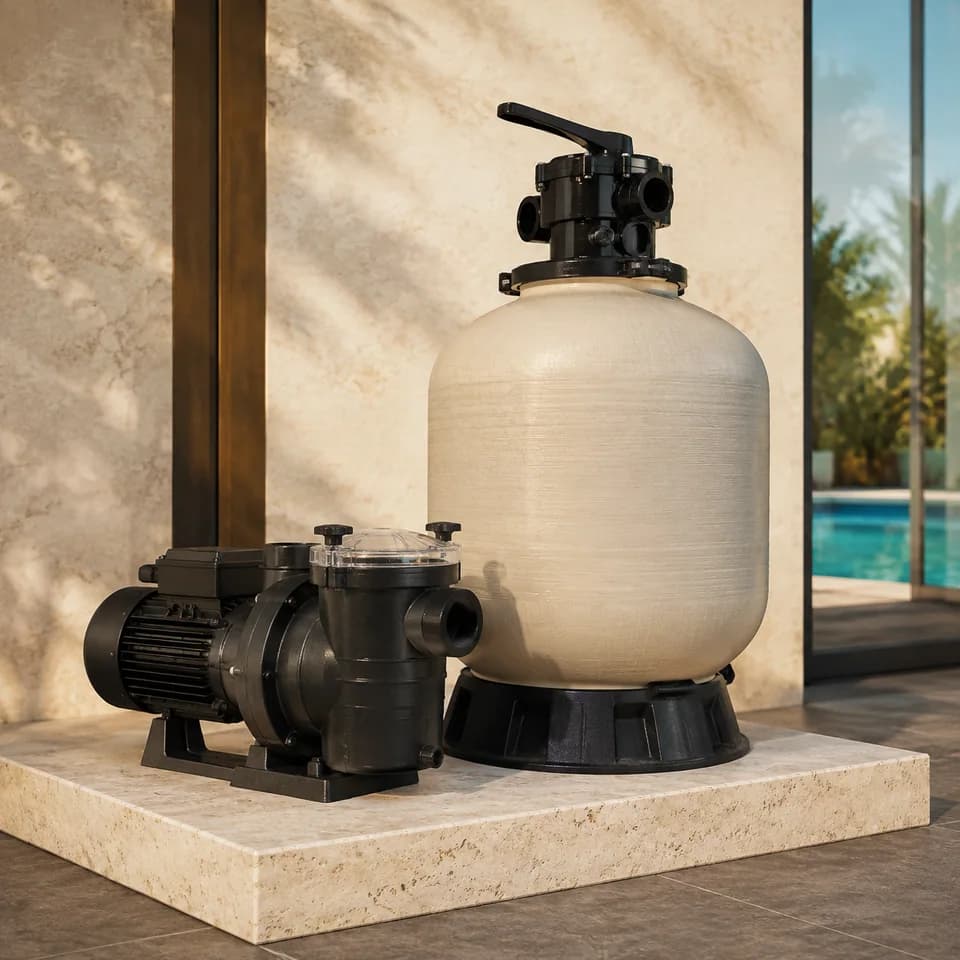
Pool Mechanical Equipment
Circulation pumps, filters, valves and automation: the mechanical infrastructure that forms the heart of the pool.
View- 65 products
 Product category
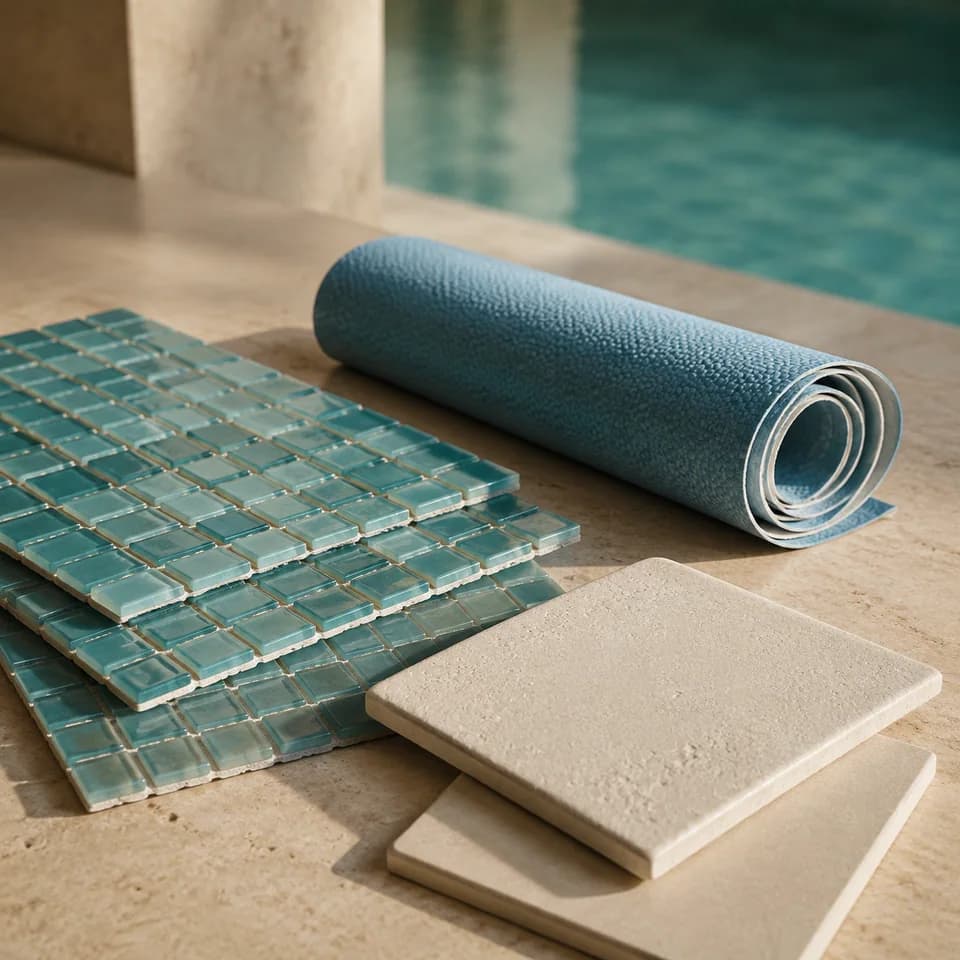
Pool Lining Systems
PVC liner, membrane, ceramic tile and glass mosaic: lining materials that make the pool watertight and form its finished surface.
View- 20 products
Product category
Pool Waterfall Models
Stainless steel waterfalls for the pool edge and wall, Powerfall, a water curtain and a water jet. Values such as material, width, weight and connection are in the technical table on each model's product page. The feed pump is chosen together with the flow the waterfall needs.
5 productsProduct category
Pool Mechanical Equipment
Circulation pumps, filters, valves and automation: the mechanical infrastructure that forms the heart of the pool.
65 productsProduct category
Pool Lining Systems
PVC liner, membrane, ceramic tile and glass mosaic: lining materials that make the pool watertight and form its finished surface.
20 products
// 02 · Related service
The work in this article, we deliver from design to handover.
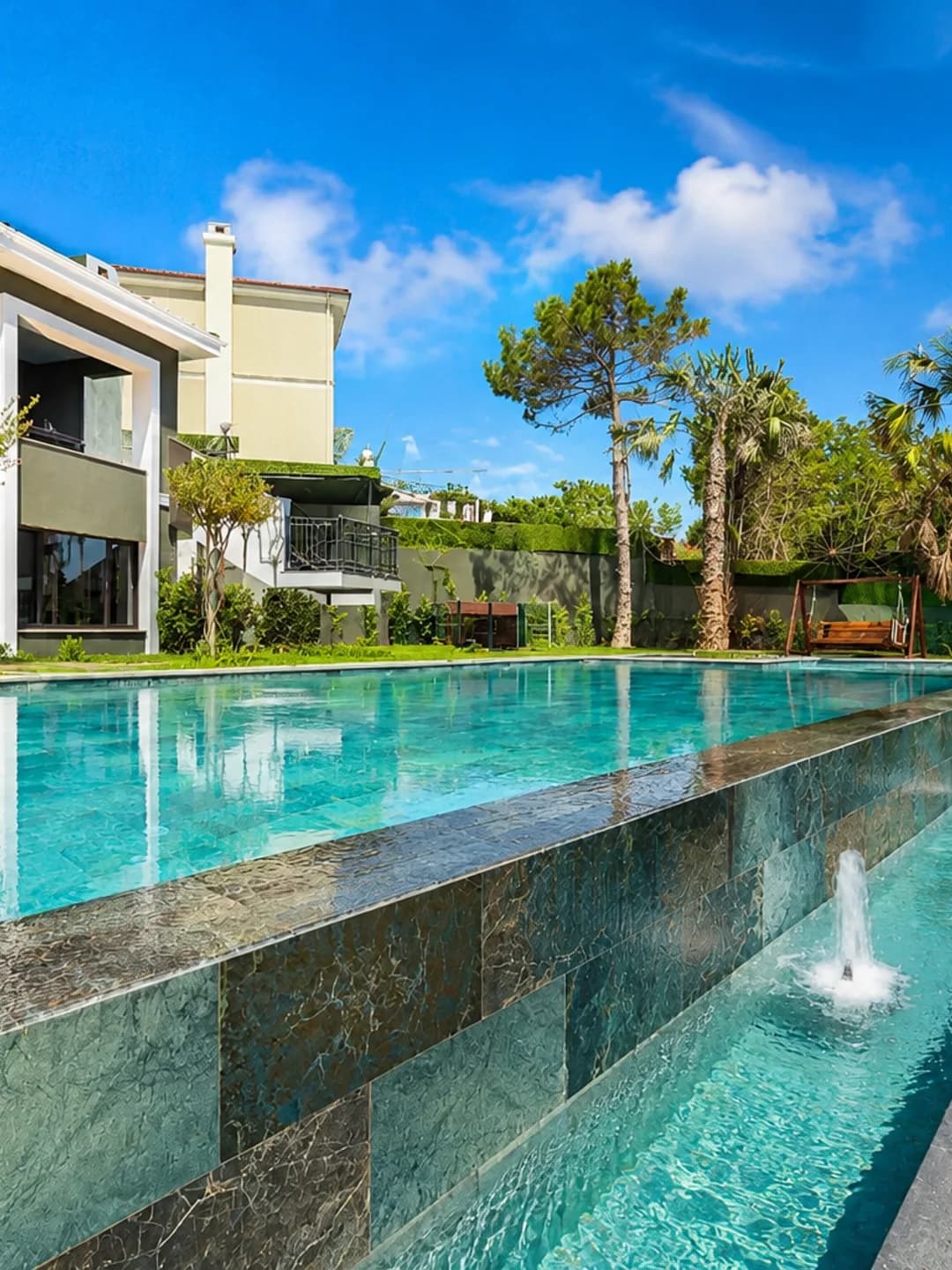
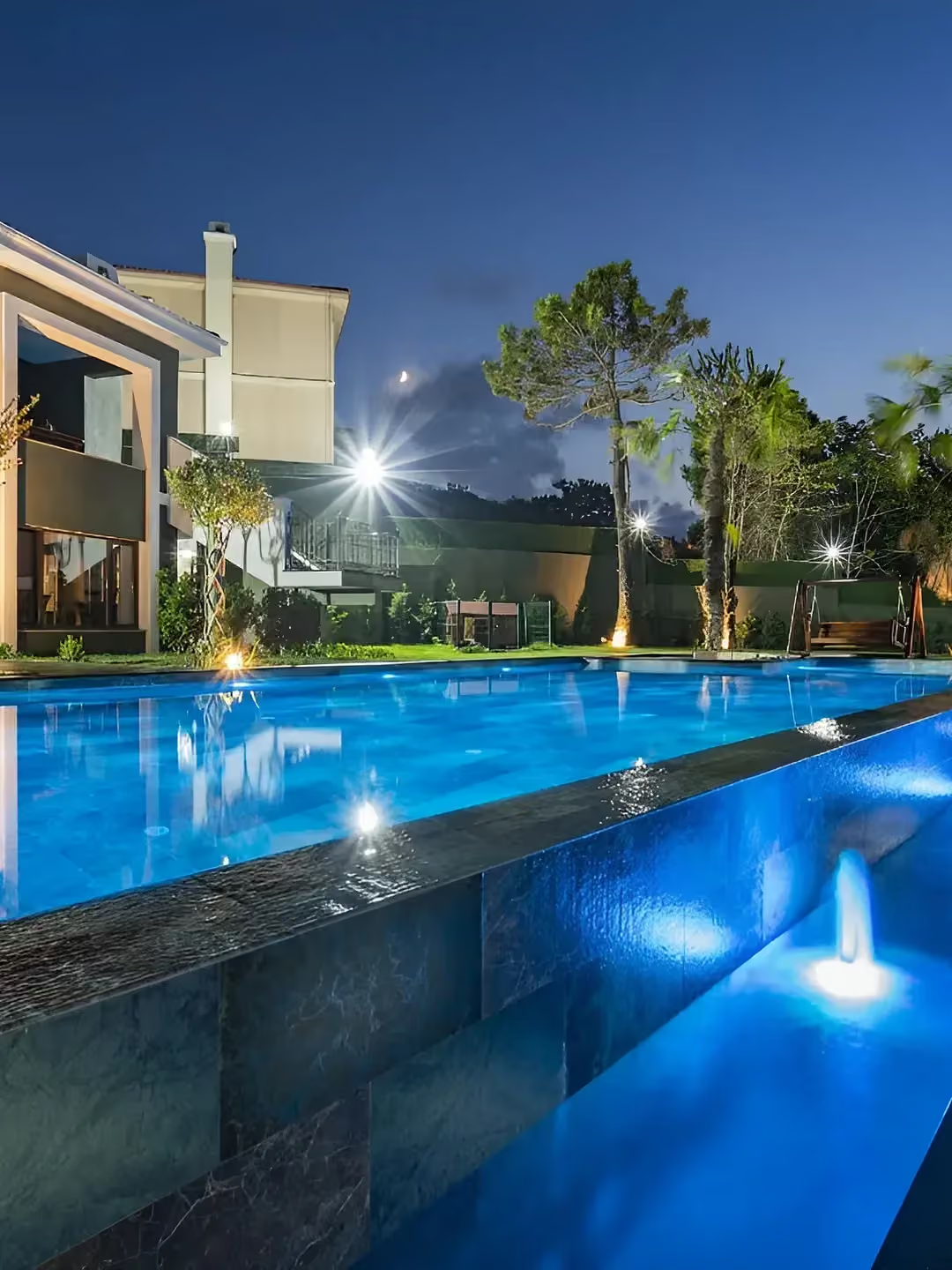
Çilek Havuz service
Infinity Pools
Pools that open onto the view, with water spilling over the edge into a balance tank.
Infinity pool construction means building a reinforced-concrete overflow pool, levelled to the millimetre, where water spills over one or more edges into a balance tank. The balance tank, overflow channel and hydraulic calculation are the core of the design.
How we work
- 01Initial meeting and site surveyWe inspect the site and listen to the brief.
- 02Design and quotationWe give the cost item by item, in writing.
- 03ExecutionThe same team builds to a written schedule.
- 04Handover and commissioningWe start the systems and explain their use.
- 05Maintenance and technical supportWe provide periodic maintenance and support.
// 03 · Guides
On Design, more articles to read.
First the articles directly related to this one, then the newest articles on the topic.
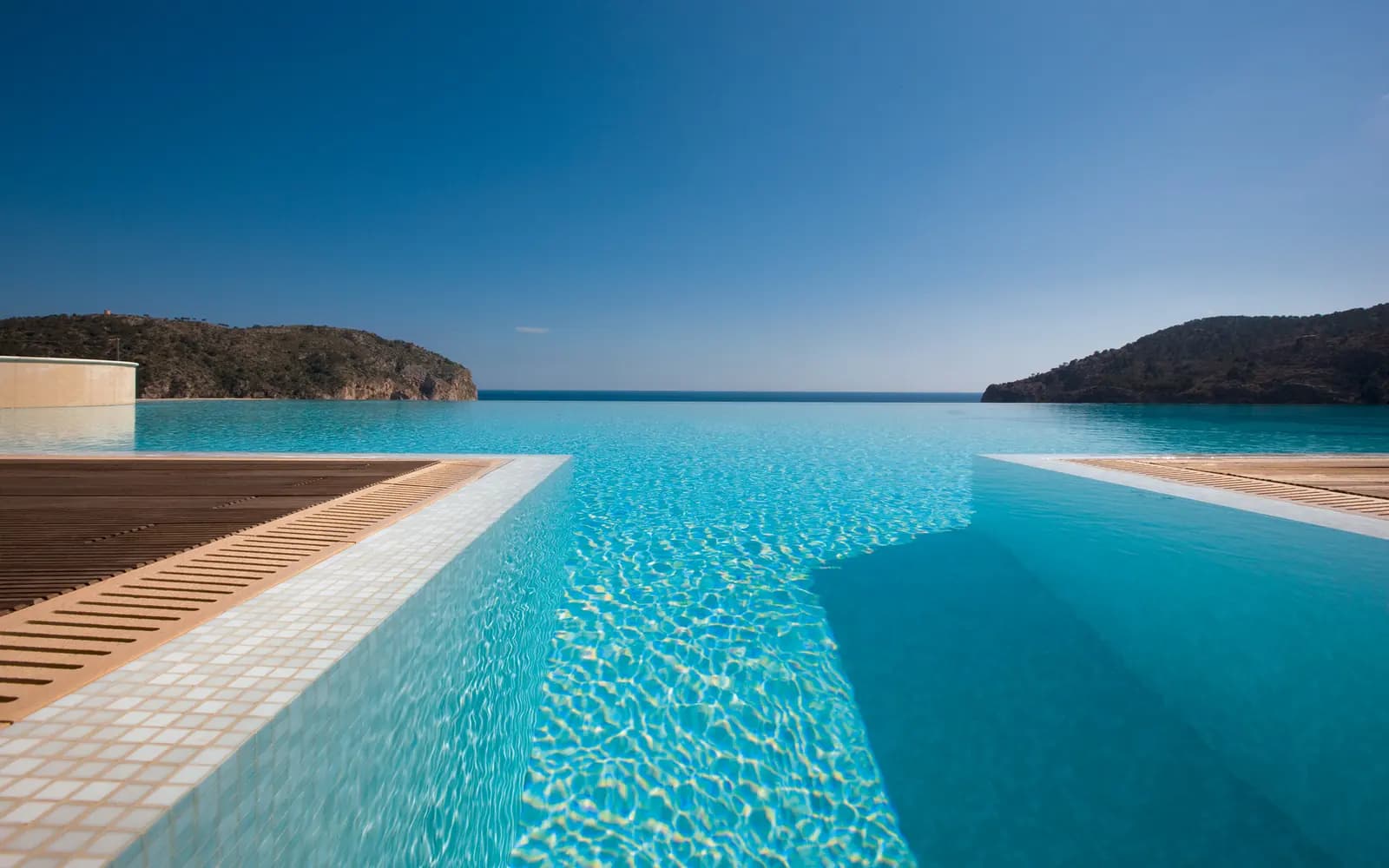 Pool Construction
Infinity pool cost: what rises versus a standard pool?
Infinity pool cost is the sum of extras over a same-size skimmer pool: the balance tank, overflow-edge workmanship and a second pump line.
View- 9 September 2026
- 11 min read
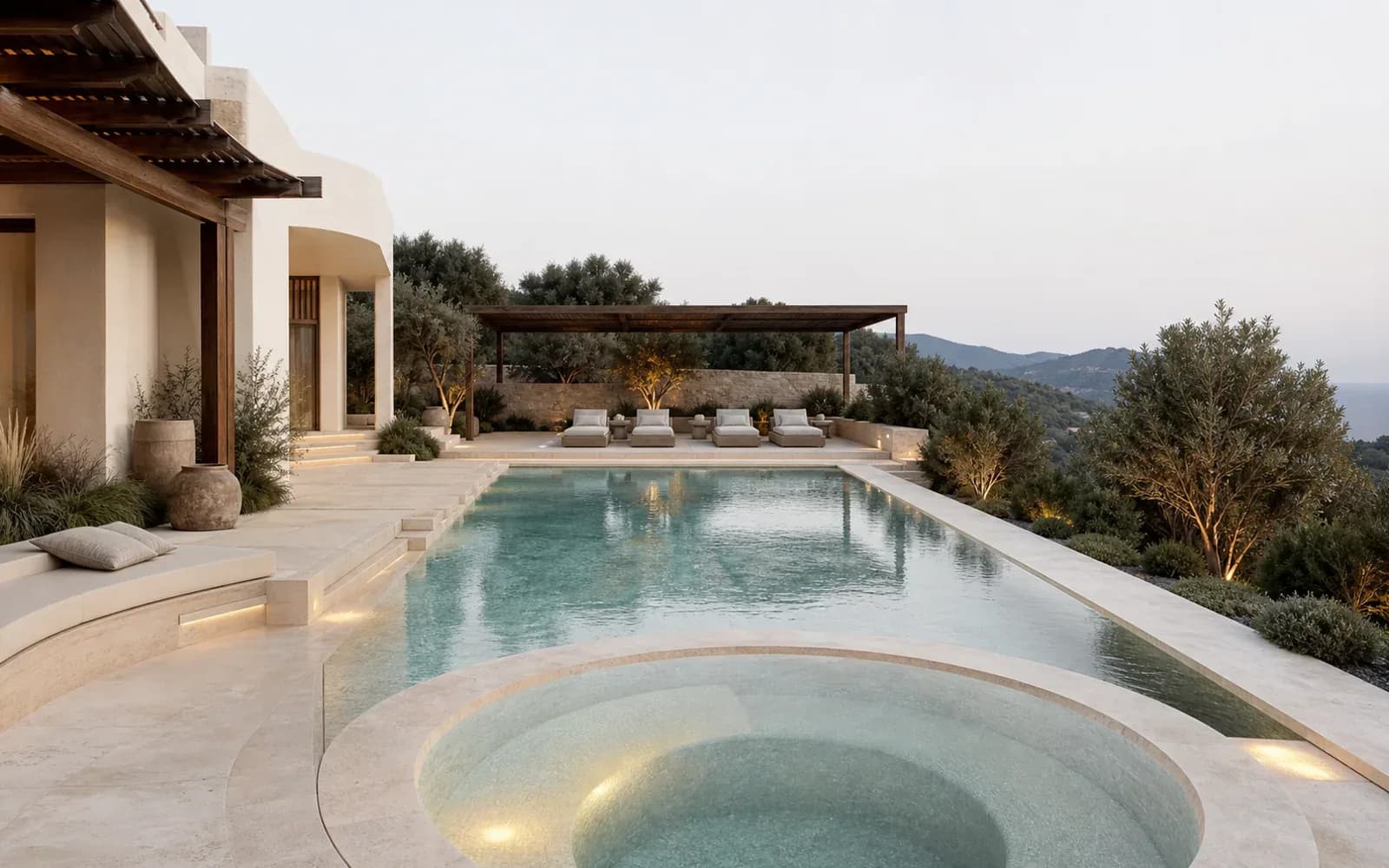 Design
Villa Pool Design Ideas and Trends for 2026
A villa pool is a design decision that anchors the whole garden. We cover the leading forms, infinity edges, lighting, landscape integration, and material directions for 2026.
View- 22 February 2026
- 5 min read
 Sauna
SaunaSauna Benefits: Scientific Evidence and Precautions to Take
How real are sauna benefits beyond the exaggerated claims? Effects supported by research, misconceptions about weight and the heart, and who should exercise caution.
View- 26 April 2026
- 6 min read
 Design
Pool Investment for Hotels and Investors: 7 Questions to Ask Before You Decide
Seven technical questions hotels and investors should settle before a pool decision: space, power supply, floor load, fire safety and operating cost.
View- 30 August 2026
- 7 min read
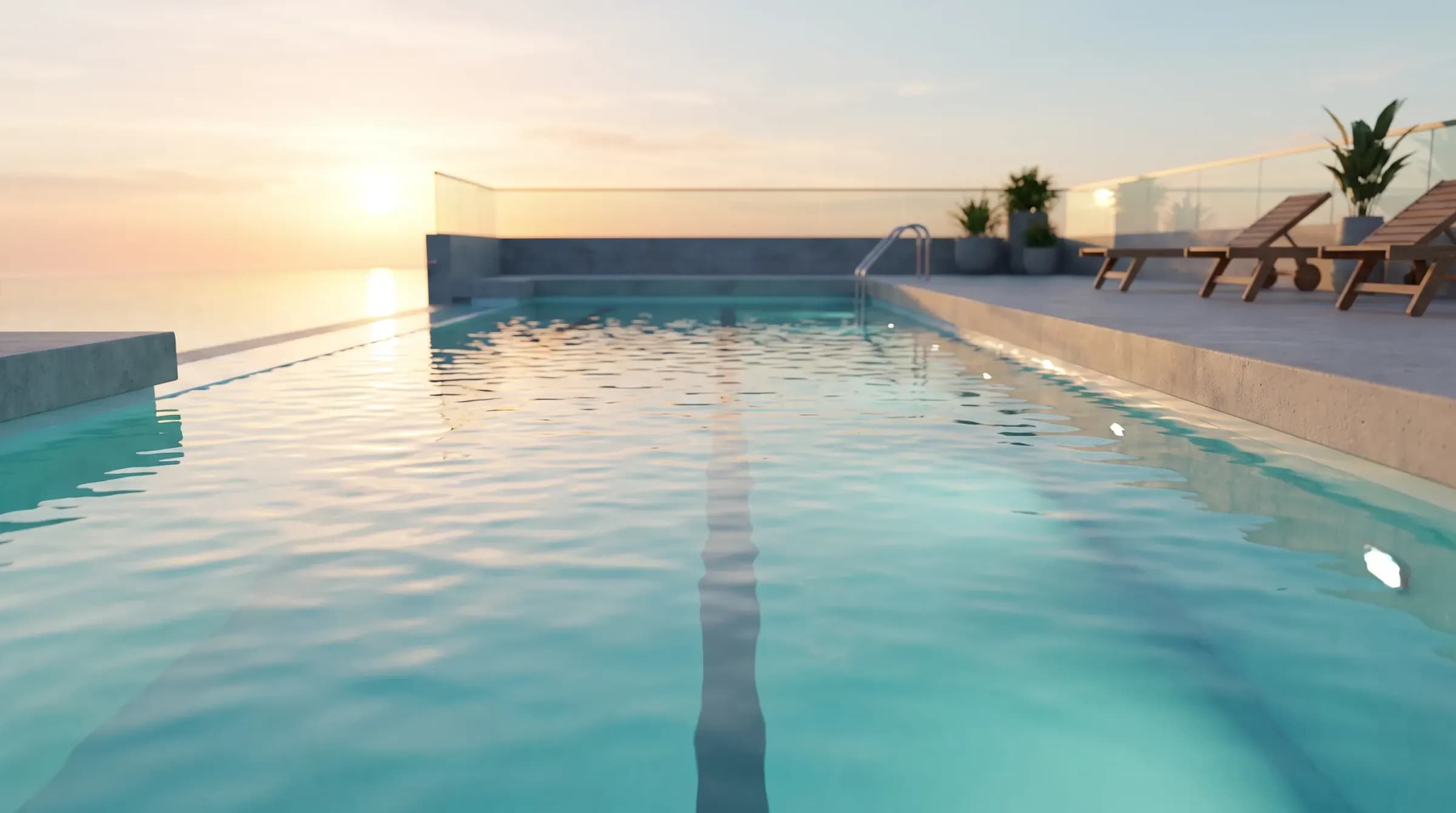 Design
What Are the Health Benefits of Regular Swimming?
Swimming is a full-body exercise that puts little load on the joints. We look at its benefits for the heart and general fitness without giving medical advice.
View- 30 August 2026
- 5 min read
 Design
Jacuzzi Selection Guide: How to Determine Size, Type and the Right Placement
The right jacuzzi isn't a product picked from a catalog; it's an engineering decision that fits your space.
View- 29 May 2026
- 6 min read
- Pool Construction · 9 September 2026Infinity pool cost: what rises versus a standard pool?Infinity pool cost is the sum of extras over a same-size skimmer pool: the balance tank, overflow-edge workmanship and a second pump line.11 min read
- Design · 22 February 2026Villa Pool Design Ideas and Trends for 2026A villa pool is a design decision that anchors the whole garden. We cover the leading forms, infinity edges, lighting, landscape integration, and material directions for 2026.5 min read
- Sauna · 26 April 2026Sauna Benefits: Scientific Evidence and Precautions to TakeHow real are sauna benefits beyond the exaggerated claims? Effects supported by research, misconceptions about weight and the heart, and who should exercise caution.6 min read
- Design · 30 August 2026Pool Investment for Hotels and Investors: 7 Questions to Ask Before You DecideSeven technical questions hotels and investors should settle before a pool decision: space, power supply, floor load, fire safety and operating cost.7 min read
- Design · 30 August 2026What Are the Health Benefits of Regular Swimming?Swimming is a full-body exercise that puts little load on the joints. We look at its benefits for the heart and general fitness without giving medical advice.5 min read
- Design · 29 May 2026Jacuzzi Selection Guide: How to Determine Size, Type and the Right PlacementThe right jacuzzi isn't a product picked from a catalog; it's an engineering decision that fits your space.6 min read
// 04 · Company & Contact
To talk about your project, call or write to us.
Legal Name
Çilek Havuz
Founded
1998 · Istanbul
Head Office
Çilek Plaza, Eyüp Sultan Mah. Yakacık Cd. Feshane Cd. No: 2 D:4 D:1, 34885 Sancaktepe / İstanbul
Service Area
All of Türkiye · exports to 14 countries
Branches
Kyrgyzstan · Egypt · Algeria · Iraq
Showroom
Plan a showroom visit
At our showroom in Çilek Plaza, Sancaktepe, you can discuss your project with our team. We recommend booking an appointment by phone before your visit.
Working Hours
- Monday – Friday · 08:00 – 17:30
- Saturday · 08:00 – 12:30
- Closed on Sunday
Frequently Asked Questions
About The Craft of Infinity Pool Design, frequently asked questions.
Çilek Havuz Corporate
Pool and Wellness Engineering
- Response Time
- Same day
- Channels
- Phone · Email · WhatsApp
If the answer you are looking for is not here, send your question directly to us and our team will reply as soon as possible.
+90 216 475 39 37The light sound the overflowing water makes as it falls into the collection channel is perceived by most users as a restful background. The sound level can be adjusted through the channel depth, the overflow rate and the channel design. If you prioritise quiet, the channel detail is designed accordingly, and this is a decision made at the design stage.
Çilek Havuz Corporate
A single vanishing edge is the most common and economical solution for sites focused on a particular view. Overflow on more than one edge gives the pool a visual effect from every side, but it requires a larger balance tank, higher pump capacity and more workmanship. The decision should be made according to the direction of your view, your budget and the position of the site.
Çilek Havuz Corporate
The balance tank usually sits on the vanishing edge side of the pool, at a lower level and in a position where it can be concealed. Its size is calculated from the pool volume and the expected number of users. If its volume is insufficient, the overflow effect breaks down. Because we plan its placement at the site survey according to the slope of the land, we design a solution that is both functional and out of sight.
Çilek Havuz Corporate
When the power goes off, the pump stops and the overflow effect pauses temporarily. The water settles at a safe level between the balance tank and the pool, and no flooding occurs. When the power returns, the system resumes the cycle where it left off. In critical projects, a generator or an uninterruptible supply can be considered to secure the continuity of the overflow effect.
Çilek Havuz Corporate
The vanishing edge side usually faces a drop in level or a void. Design measures such as adjusting the edge height, a glass barrier, a railing and lighting are therefore taken for this area. Where children will use the pool, these measures should be included in the project from the start. Resolving safety details without spoiling the aesthetics is the work of experienced design.
Çilek Havuz Corporate
Although this conversion is possible in theory, in practice it is often difficult. Elements such as the vanishing edge, the collection channel and the balance tank must be built into the pool's structure and the site levels from the very beginning. Adding them to an existing shell requires extensive structural intervention. At the site survey we assess whether your pool and site are suitable and give you a realistic opinion.
Çilek Havuz Corporate