

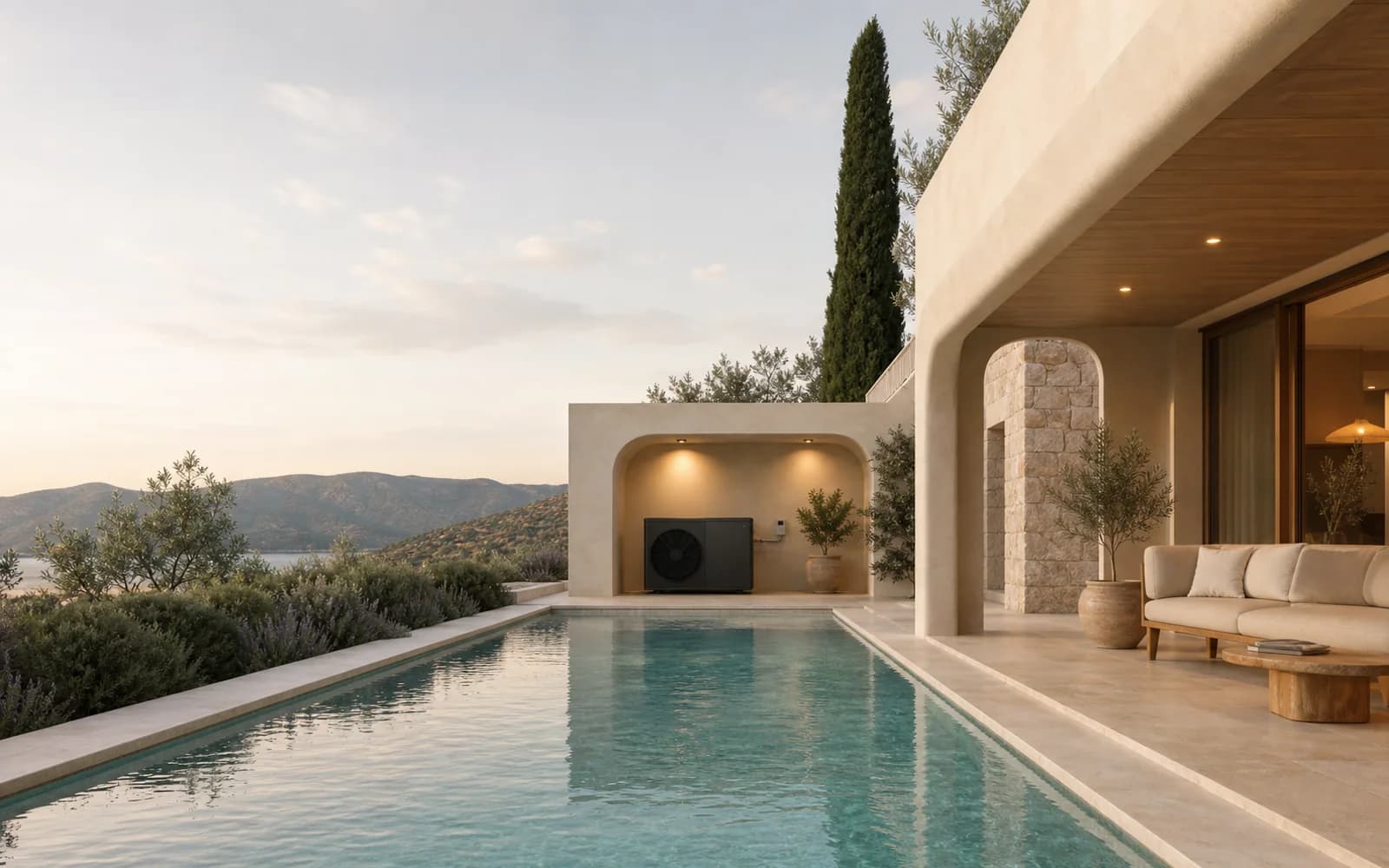
Pool Heat Pumps: How They Work, COP and Correct Capacity Sizing
Compare pool heat pumps using the same test conditions. Consider climate, cover use and season before choosing capacity or requesting a quote.
Project Manager · Mechatronics Engineer · Çilek Havuz
- Published
- Updated
- Reading
- 8 min read
- Category
- Technology
Compare pool heat pumps using the same test conditions. Consider climate, cover use and season before choosing capacity or requesting a quote.
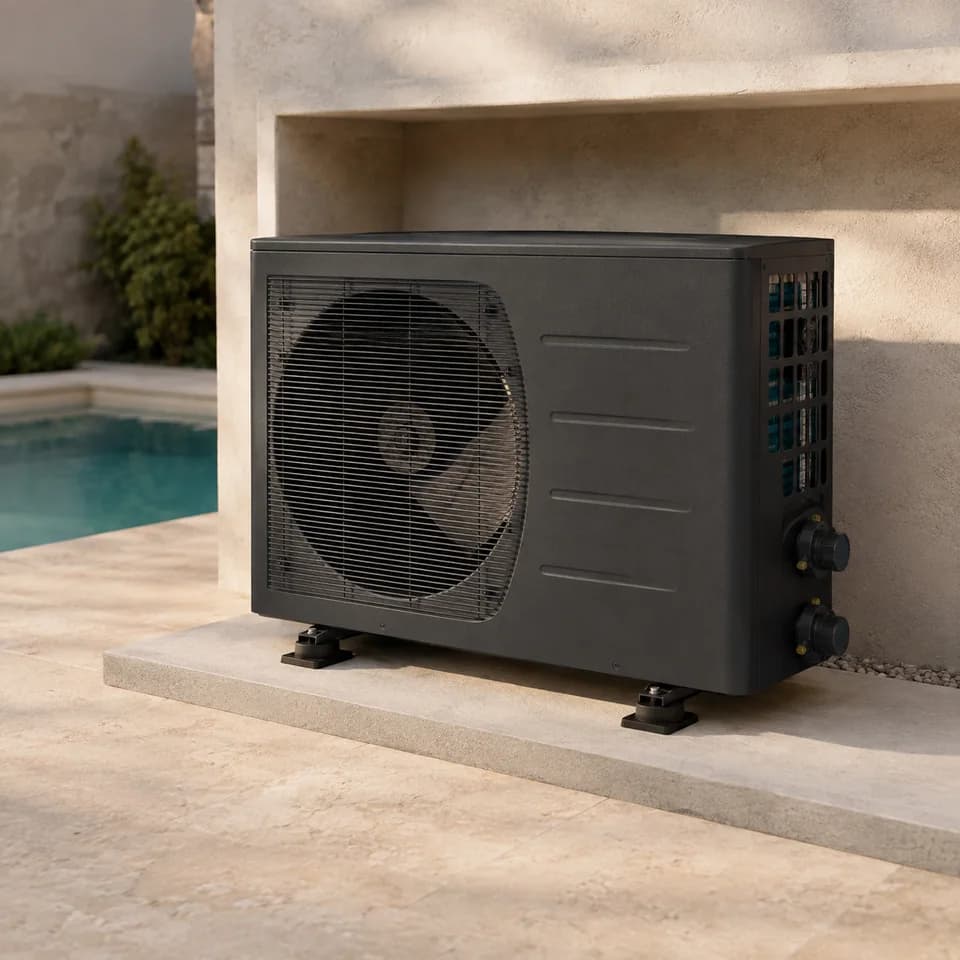
A swimming pool heat pump does not generate heat directly; it captures ambient heat from the outdoor air and transfers it to the pool water.
Operating like a reverse air conditioner, it absorbs heat from outside air via a thermodynamic refrigerant cycle and transfers it to the pool through a heat exchanger. It therefore consumes significantly less electrical power than traditional electric element heaters.
This thermodynamic principle makes the heat pump one of the most energy-efficient pool heating solutions available. The unit heats water gradually and continuously; once the setpoint temperature is reached, it switches into maintenance mode. Efficiency directly correlates with ambient air temperature: the milder the outside air, the higher the operational efficiency.
COP (Coefficient of Performance) measures the ratio of heating energy delivered to the pool relative to electrical power consumed.
For pool heat pumps, COP typically ranges between 4.0 and 6.0; this means for every 1 kW of electricity consumed, roughly 4 to 6 kW of heat is transferred to the pool water. The surplus energy is taken freely from the surrounding air.
This multiplier explains why heat pumps are far more economical to operate than electric resistance heaters. However, COP is dynamic; as ambient air temperature drops, COP decreases. Sizing capacity accurately for your target swimming months is therefore essential for real-world efficiency.
The heating output shown in a performance table is not the electrical power the unit draws from the supply. For example, if a unit is rated at 10 kW of heat and COP 5 at the same operating point, its electrical input is about 2 kW; one hour of operation under that condition means roughly 2 kWh of consumption. This is a calculation example, not a daily or monthly bill forecast. Mixing up these two columns distorts both the capacity and the consumption calculation.
In technical tables, COP is often given as a range rather than a single number.
For example, a full inverter heat pump may be rated at a COP between 6.3 and 12 at 26°C air / 26°C water. The lower end (6.3) is measured at maximum output, where the unit draws the most electricity and delivers the most heat; the upper end (12) is reached at part load, when the unit slows its compressor down. The same pump, at the same air temperature, can operate at roughly twice the efficiency depending only on its speed at that moment.
This follows from how full inverter technology works: the compressor slows as the water approaches the target temperature; at low speed it delivers less heat to the water, but it obtains more heat for every kW of electricity it uses. A wide COP range such as '6.3-12' instead of a narrow '4-6' is therefore a good sign; it shows that the unit is an inverter model able to run efficiently at part load. On an on/off pump the range is much narrower, because the unit only runs at one speed, either full power or off.
These values change with air and water temperature, humidity and compressor load. The highest part-load COP of one model is therefore not compared with the full-load value of another; the test conditions are checked first. A high COP at low speed does not mean the unit delivers the same heat at every speed, so heating output and efficiency are read together.
Solar thermal heating offers near-zero operational running costs but is entirely weather-dependent, requires extensive roof collector area, and struggles to maintain steady temperatures during cloudy periods.
Gas or boiler heat exchangers heat water rapidly if an existing gas or hydronic boiler infrastructure exists, but incur high fuel bills.
The pool heat pump occupies a balanced middle ground: straightforward installation, modest operating power consumption, and consistent, automated water temperature. For most private villa and residential pools today, an inverter heat pump is the most rational choice; large commercial facilities often use hybrid configurations.
The most common mistake is sizing capacity arbitrarily or adopting a generic 'bigger is always better' approach.
Proper capacity sizing is calculated using pool water volume (m³), target temperature, geographical climate zone, wind exposure, and whether a thermal pool cover is utilized. Undersized units fail to reach target temperatures, while oversized units represent wasted capital expenditure.
The months in which you want to use the pool are also part of the calculation from the start. Two pools with the same volume can have different heating needs because of surface area, wind exposure and usage pattern. A unit chosen to extend the season is not automatically suitable for winter use; the operating temperature limits of the model are checked in the technical table. When preparing a quote, we assess the following information together.
| Input | Why it matters |
|---|---|
| Water volume and surface area | Mass of water to be heated and surface losses |
| Location and outdoor conditions | Operating point of the unit and heat loss |
| Target water temperature and months of use | Extending the season is different from winter use. |
| Cover and hours covered | Affects evaporation and heat loss. |
| Filtration and existing plumbing | Running time and hydraulic compatibility |
| Electrical supply and installation location | Power supply, airflow and service access |
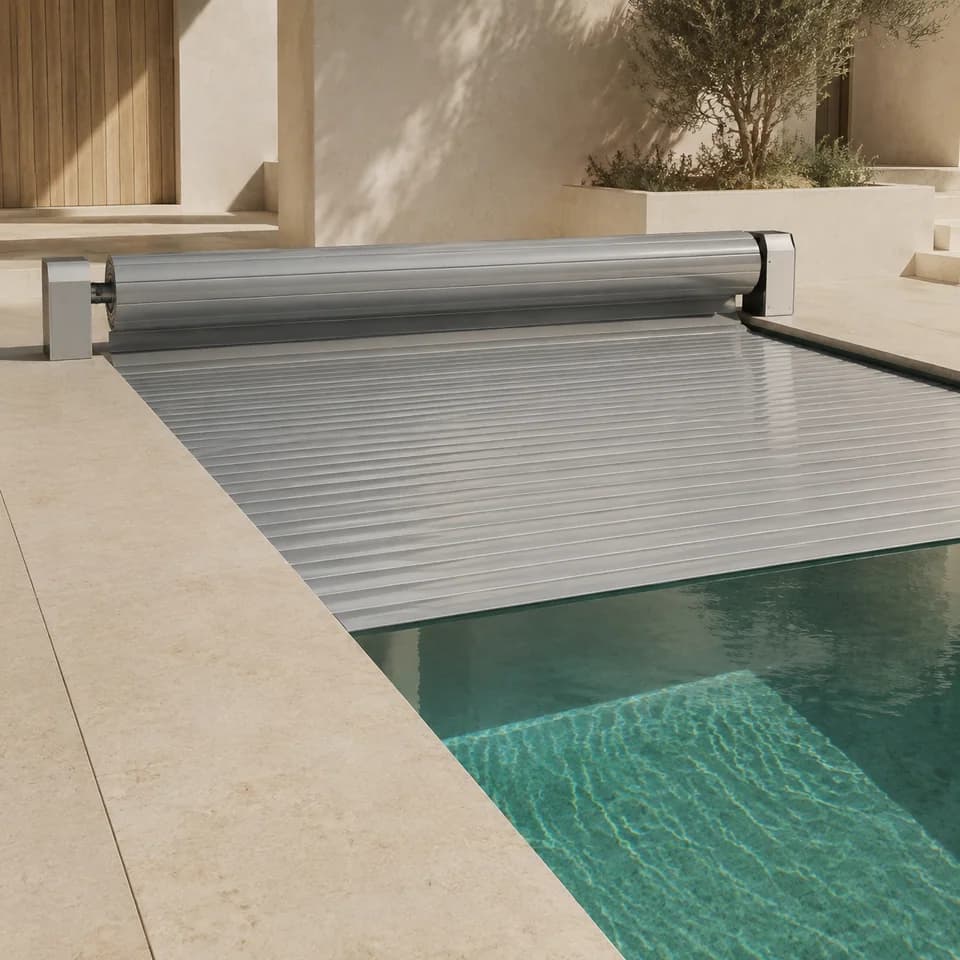
A thermal pool cover is the unsung hero of this equation: most pool heat loss occurs through surface evaporation. A cover considerably reduces this loss, cutting heat pump runtime and operating electricity bills.
Even so, no single saving percentage applies to every pool. Regular use of the cover, wind, the temperature difference between water and air, and the time the pool stays uncovered all affect the result directly.
Traditional ON/OFF heat pumps operate at a single fixed speed: running at 100% capacity or shutting down entirely.
Full Inverter heat pumps modulate compressor and fan speeds continuously in response to real-time thermal demand, slowing to quieter low speeds as the pool approaches setpoint. This means quieter operation, higher seasonal efficiency and fewer compressor start-stop cycles.
Inverter units require a slightly higher initial investment; in pools heated regularly throughout an extended season, they are likely to recover the difference through lower power consumption. For short and occasional use, an ON/OFF unit may be sufficient. Sizing should reflect your intended usage profile.
The inverter function alone does not guarantee a lower bill or a specific payback period under every condition. A real comparison is based on the swimming season, the load range and the performance values documented by the manufacturer. Whether silent mode reduces the heating capacity is also checked in the technical table.
Real-world operating expenditure is determined collectively by COP, pool water volume, target water temperature, cover usage, and regional climate.
The same heat pump operates very economically on a covered pool in a mild climate, yet consumes substantially more power on an uncovered pool in a windy, cooler region. General promises of 'fixed monthly running costs' are therefore misleading.
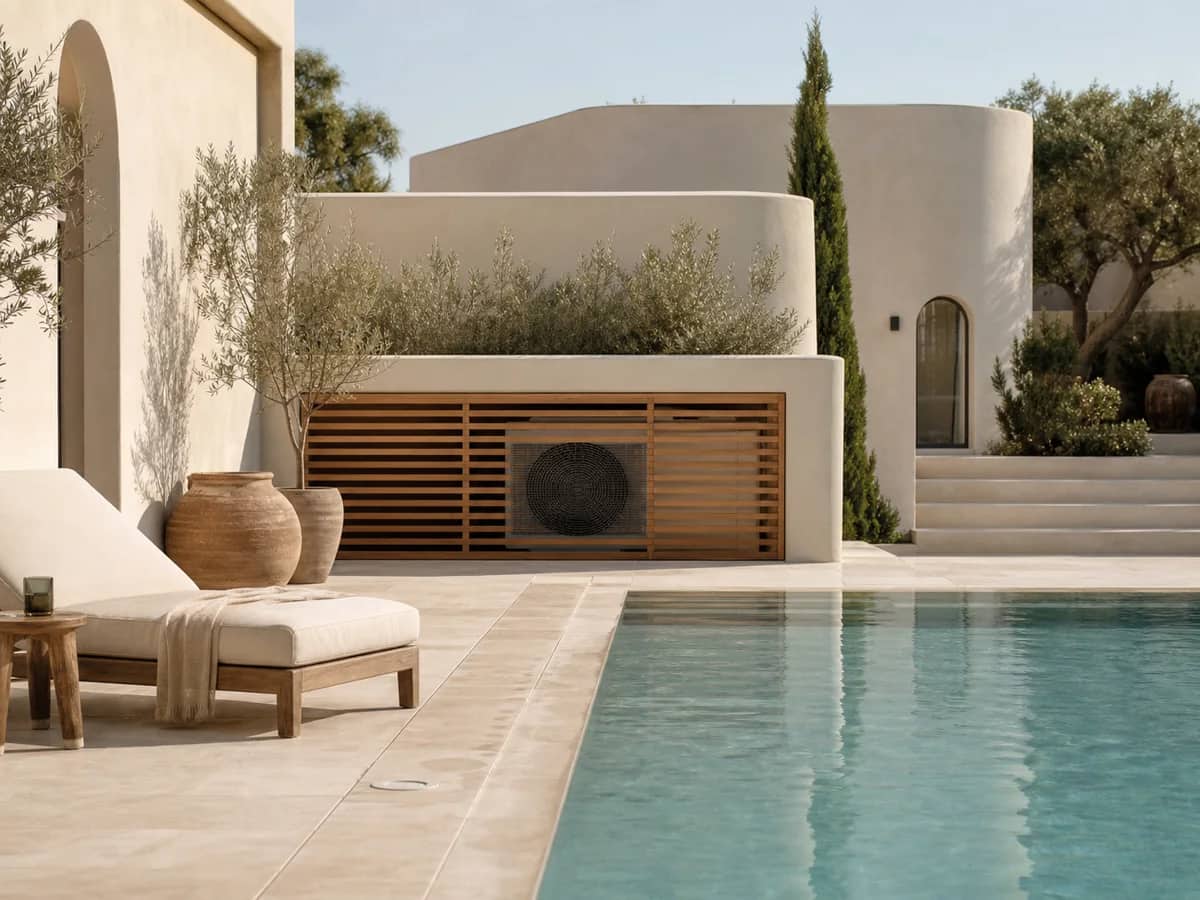
Proper installation requires placing the heat pump outdoors in an open, well-ventilated location with unobstructed airflow, correctly connected via a bypass manifold. In our projects, we size and install full inverter heat pumps according to the pool's calculated heating demand; this extends the swimming season while keeping the electricity bill under control.
At the installation site, walls, the neighbouring boundary, windows and service access are assessed together, and the air path of the unit is never blocked. When comparing noise, sound power and sound pressure measured at a stated distance are not the same quantity, so the values of two units are read in the same unit. Our technical team handles clearances and electrical and hydraulic connections according to the model's installation manual.
When comparing heat pump quotes, the equipment price alone is not a sufficient criterion.
Heating capacity under the same test conditions, electrical input, operating temperature limits, required plumbing work, control system and maintenance scope are reviewed together. The initial heat-up time and the period of maintaining temperature are also assessed separately.
When you share your pool dimensions, location, target temperature and months of use with us, we review your existing infrastructure and requirements as part of our pool consultancy service and prepare a quote for the system suited to your pool.
Next step
Let us discuss your project in the way that suits you best.
You can fill in the form for a written quote, schedule a video project presentation or ask us to survey your project site.
Get a Quote
Send us your dimensions and expectations in writing.
Online presentation
Video project presentation
On-site survey
Inspection at your project site
Image gallery
Photos: 04
 01
01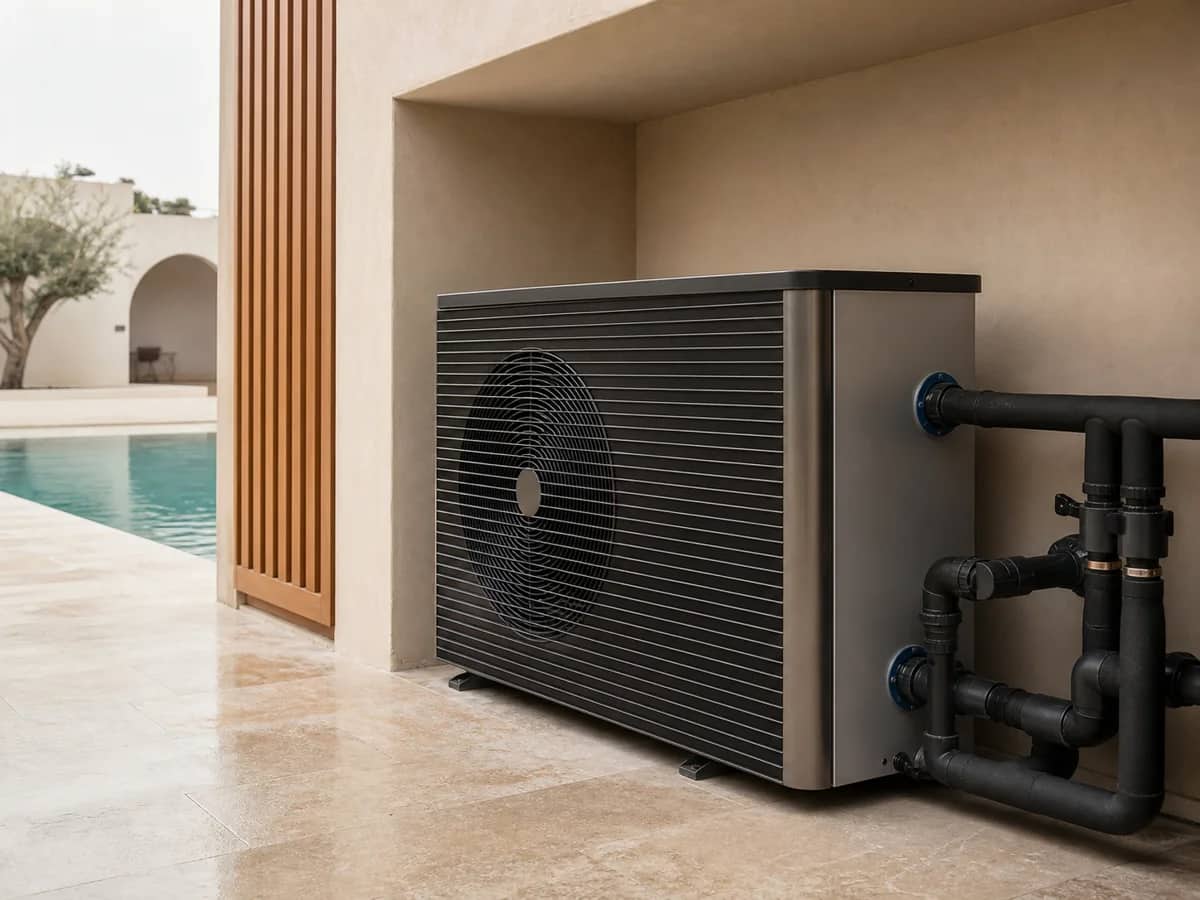 02
02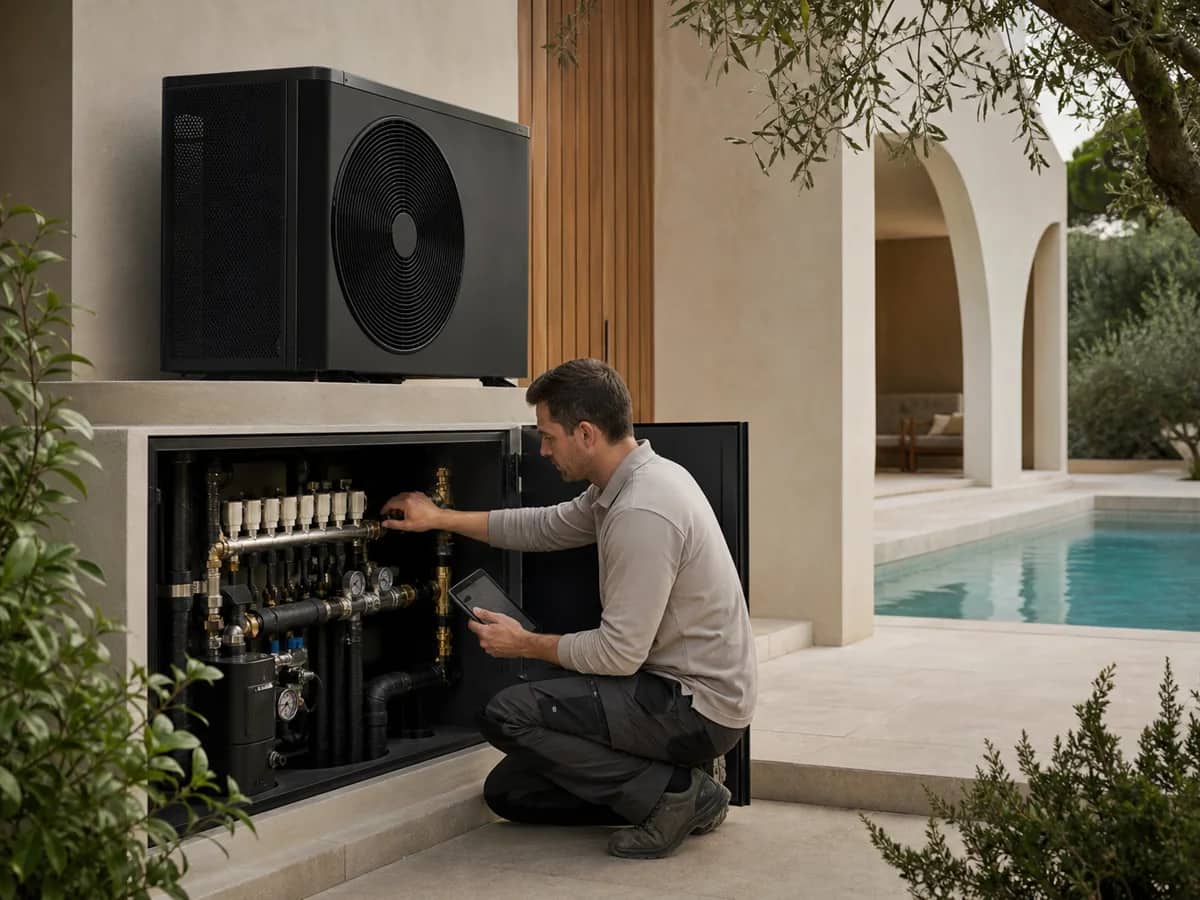 03
03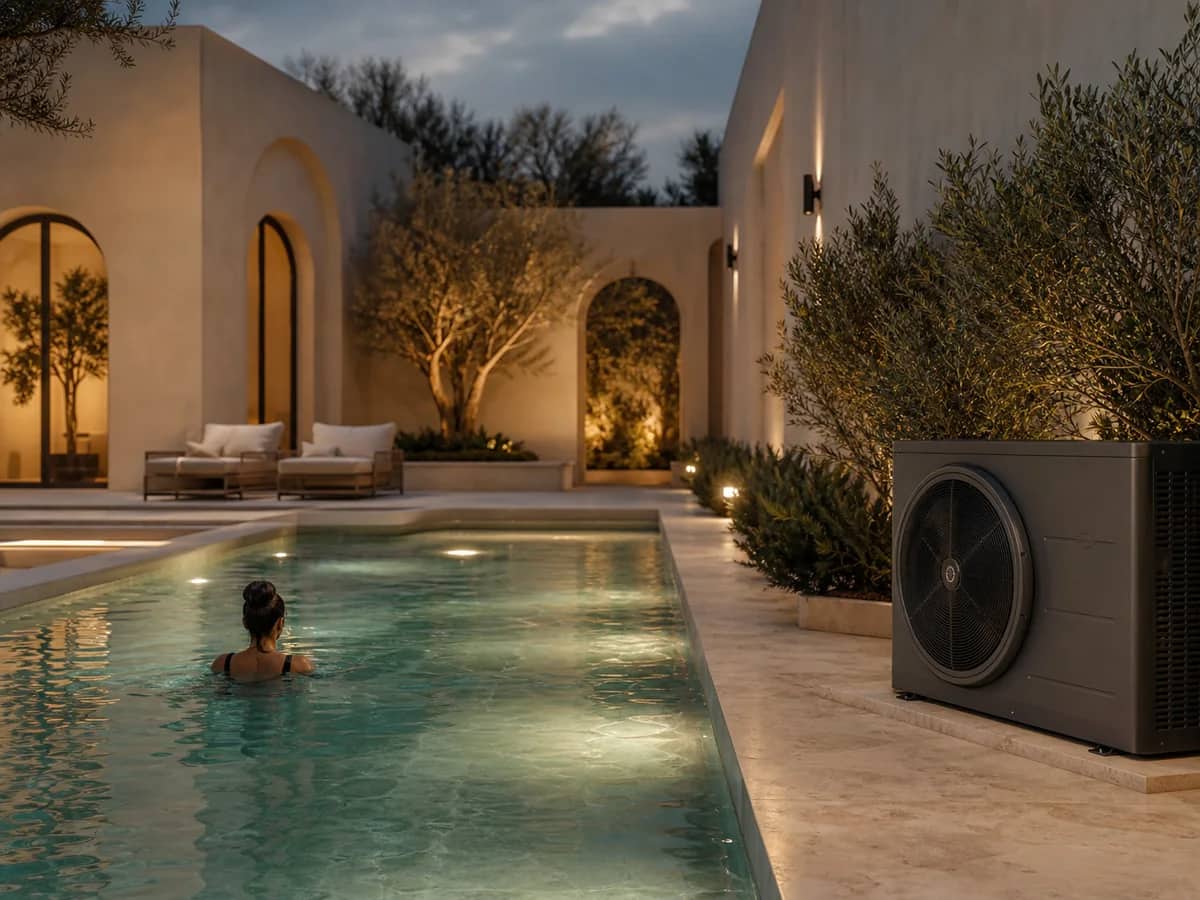 04
04// 01 · Product groups
Compare the products on this topic on their category pages.
Each card leads to a product category; models, technical sheets and list prices are there.
 Product category
Pool Heating Systems
Inverter heat pumps, solar and electric systems: pool heating solutions that extend your swim season and lower operating costs.
View- 27 products
 Product category
Pool Cover Systems
Automatic covers, safety lids and shaft systems, cover solutions that cut heat loss while protecting your pool against accidents.
View- 10 products
- Product category
Pool Heat Pump Models
ON-OFF and full inverter pool heat pumps for residential pools, and commercial and industrial models for hotels and public pools. The choice depends on heating output, COP, minimum operating air temperature and the electrical supply on site.
View- 11 products
Product category
Pool Heating Systems
Inverter heat pumps, solar and electric systems: pool heating solutions that extend your swim season and lower operating costs.
27 productsProduct category
Pool Cover Systems
Automatic covers, safety lids and shaft systems, cover solutions that cut heat loss while protecting your pool against accidents.
10 productsProduct category
Pool Heat Pump Models
ON-OFF and full inverter pool heat pumps for residential pools, and commercial and industrial models for hotels and public pools. The choice depends on heating output, COP, minimum operating air temperature and the electrical supply on site.
11 products
// 02 · Related service
The work in this article, we deliver from design to handover.
Çilek Havuz service
Pool Consulting
Expert consulting on project, materials and budget.
How we work
- 01Initial meeting and site surveyWe inspect the site and listen to the brief.
- 02Design and quotationWe give the cost item by item, in writing.
- 03ExecutionThe same team builds to a written schedule.
- 04Handover and commissioningWe start the systems and explain their use.
- 05Maintenance and technical supportWe provide periodic maintenance and support.
// 03 · Guides
On Technology, more articles to read.
First the articles directly related to this one, then the newest articles on the topic.
 Technology
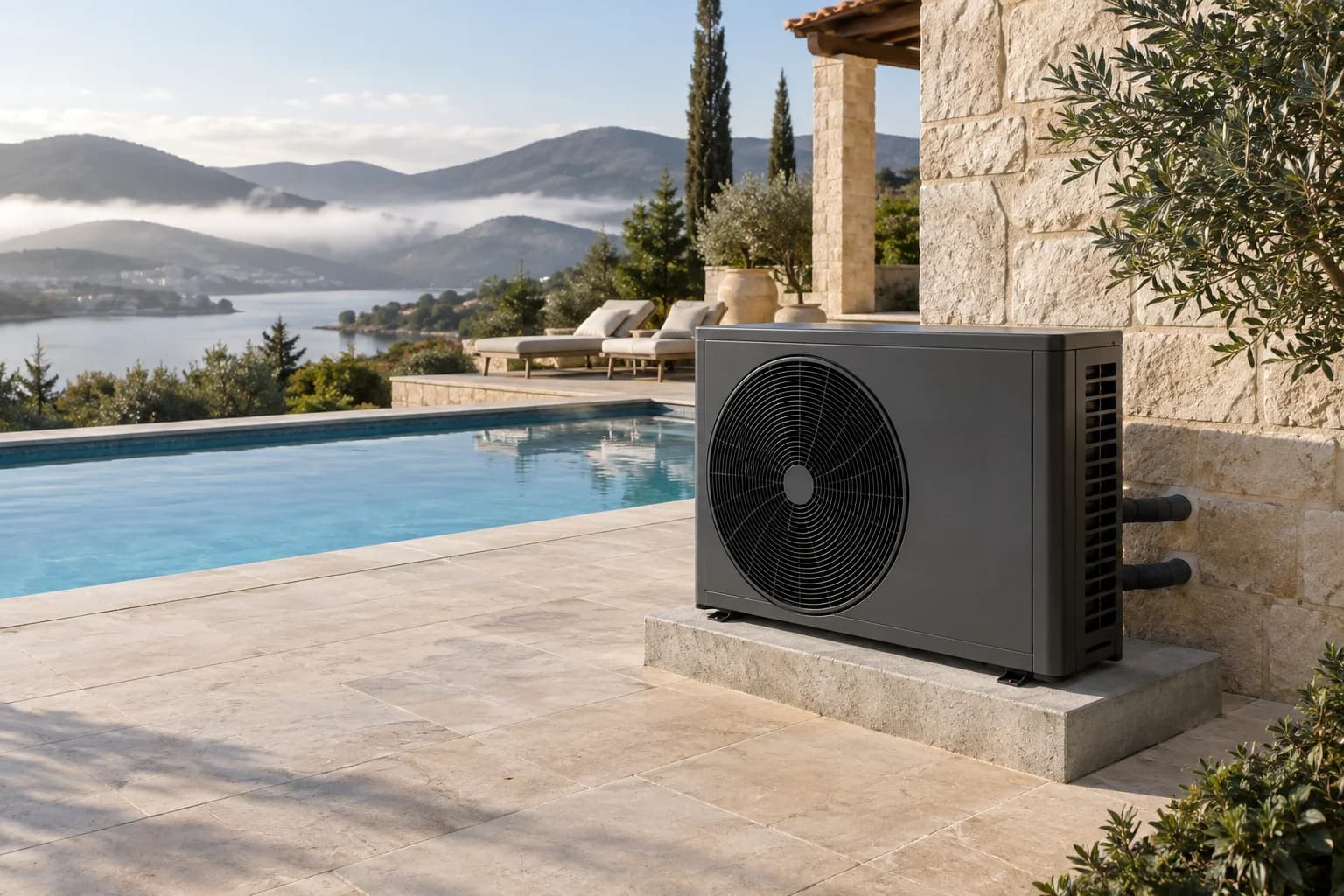
Pool heat pump electricity use: calculation with COP
Heating output, electrical input and kWh are different quantities. A realistic estimate uses operating conditions, cover use and the applicable tariff.
View- 13 September 2026
- 3 min read
 Technology
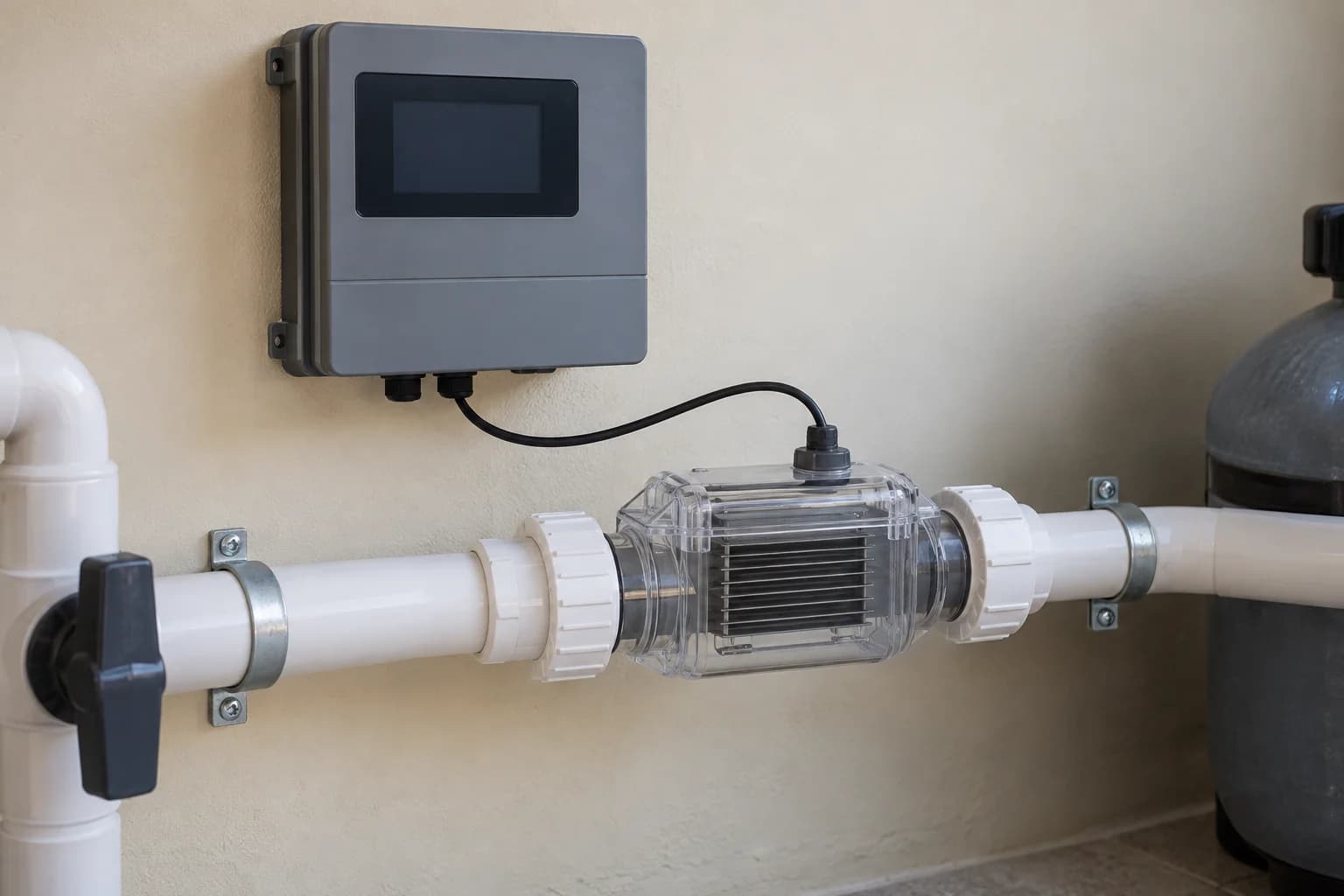
Salt Chlorinator Sizing: Volume, g/h Output and Run Time
Salt chlorinator capacity depends on pool volume, g/h output, water temperature and daily run time. What to compare in a quotation.
View- 13 September 2026
- 3 min read
 Maintenance
Choosing a Pool Pump: Advantages of Variable Speed Pumps
The pump is the heart of circulation and the biggest part of your energy bill. We compare single-speed and variable-speed pumps and their sizing.
View- 14 April 2026
- 5 min read
 Technology
Salt Chlorinator Not Producing Chlorine: Causes and Checks
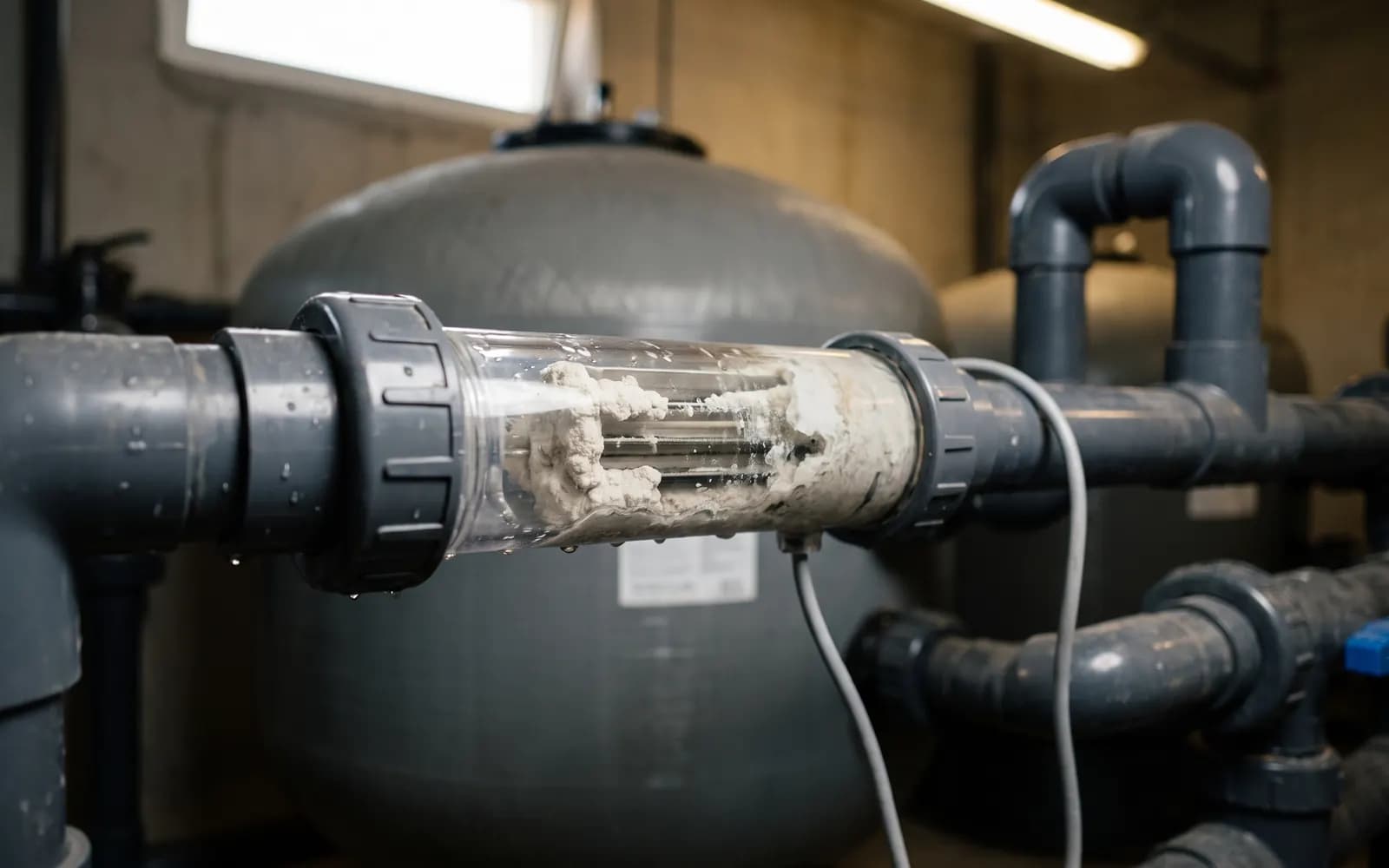
Possible causes of low chlorine with a running salt chlorinator: measurement, flow, salinity, temperature and cell condition. When service is needed.
View- 13 September 2026
- 3 min read
 Technology
Automatic Pool Covers for a Private Home Pool: Systems and How to Choose
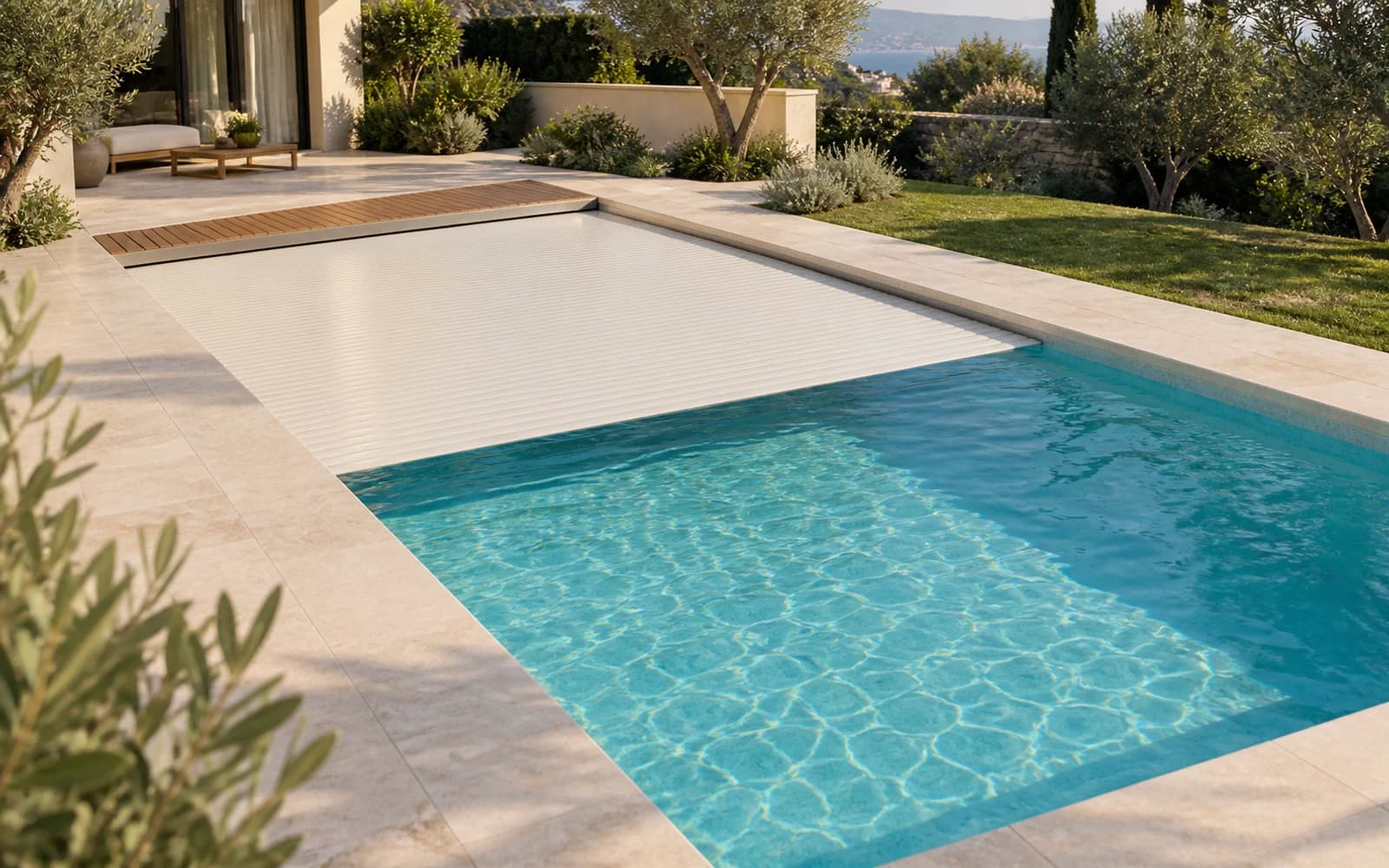
Choosing an automatic cover for a private home pool: slatted and track systems, underwater and above-ground types, safety, water savings, cost and installation.
View- 13 September 2026
- 9 min read
 Technology
Pool Lighting: LED Selection, Safety and Placement
How to choose pool LED lighting? We explain underwater fixture safety, IP rating, low-voltage transformers and correct placement from an engineer's perspective.
View- 7 July 2026
- 6 min read
- Technology · 13 September 2026Pool heat pump electricity use: calculation with COPHeating output, electrical input and kWh are different quantities. A realistic estimate uses operating conditions, cover use and the applicable tariff.3 min read
- Technology · 13 September 2026Salt Chlorinator Sizing: Volume, g/h Output and Run TimeSalt chlorinator capacity depends on pool volume, g/h output, water temperature and daily run time. What to compare in a quotation.3 min read
- Maintenance · 14 April 2026Choosing a Pool Pump: Advantages of Variable Speed PumpsThe pump is the heart of circulation and the biggest part of your energy bill. We compare single-speed and variable-speed pumps and their sizing.5 min read
- Technology · 13 September 2026Salt Chlorinator Not Producing Chlorine: Causes and ChecksPossible causes of low chlorine with a running salt chlorinator: measurement, flow, salinity, temperature and cell condition. When service is needed.3 min read
- Technology · 13 September 2026Automatic Pool Covers for a Private Home Pool: Systems and How to ChooseChoosing an automatic cover for a private home pool: slatted and track systems, underwater and above-ground types, safety, water savings, cost and installation.9 min read
- Technology · 7 July 2026Pool Lighting: LED Selection, Safety and PlacementHow to choose pool LED lighting? We explain underwater fixture safety, IP rating, low-voltage transformers and correct placement from an engineer's perspective.6 min read
// 04 · Company & Contact
To talk about your project, call or write to us.
Legal Name
Çilek Havuz
Founded
1998 · Istanbul
Head Office
Çilek Plaza, Eyüp Sultan Mah. Yakacık Cd. Feshane Cd. No: 2 D:4 D:1, 34885 Sancaktepe / İstanbul
Service Area
All of Türkiye · exports to 14 countries
Branches
Kyrgyzstan · Egypt · Algeria · Iraq
Showroom
Plan a showroom visit
At our showroom in Çilek Plaza, Sancaktepe, you can discuss your project with our team. We recommend booking an appointment by phone before your visit.
Working Hours
- Monday – Friday · 08:00 – 17:30
- Saturday · 08:00 – 12:30
- Closed on Sunday
Frequently Asked Questions
About Pool Heat Pumps, frequently asked questions.
Çilek Havuz Corporate
Pool and Wellness Engineering
- Response Time
- Same day
- Channels
- Phone · Email · WhatsApp
If the answer you are looking for is not here, send your question directly to us and our team will reply as soon as possible.
+90 216 475 39 37Modern Full Inverter heat pumps run at low speed during maintenance mode, which makes them quiet; however, fan and compressor noise still exist. Positioning the unit away from bedroom windows and property boundaries, on anti-vibration rubber mounts if needed, largely eliminates noise concerns.
Çilek Havuz Corporate
Bringing a cold pool to target temperature typically takes one to several days on a correctly sized system. Heat pumps warm water gradually and continuously. Duration depends on water volume, the difference between starting and target temperature, ambient conditions and whether a thermal cover is used. Using a pool cover noticeably shortens the initial heat-up.
Çilek Havuz Corporate
Heat pumps require minimal routine maintenance. Keeping the evaporator coil fins free of leaves and debris, ensuring unobstructed airflow, and seasonal checks are generally sufficient. A quality unit installed correctly runs reliably for many years, and keeping pool water chemistry in balance protects the heat exchanger and extends its life.
Çilek Havuz Corporate
Yes, a heat pump can be retrofitted to almost any existing pool system. Key requirements include plumbing space for a bypass manifold on the filtration return line, an outdoor location with adequate airflow, and sufficient electrical capacity in your main panel. We verify feasibility during a site survey.
Çilek Havuz Corporate
While not physically mandatory, a thermal cover is strongly recommended. Most heat loss occurs through surface evaporation; without a cover, the heat pump has to run much longer to hold the same temperature, driving up electricity costs. A cover noticeably improves the efficiency of your heat pump investment.
Çilek Havuz Corporate
No; heat pumps regulate water temperature via digital thermostats with safety cut-offs, maintaining your chosen setpoint (typically 28-30°C). Normal swimming temperatures do not damage PVC liners, mosaic tiles or fiberglass shells.
Çilek Havuz Corporate
Because COP is not a fixed number; it changes with the speed at which the unit is running. At the same air and water temperature, a full inverter pump shows a COP at the lower end of the range (for example 6.3) at maximum output, and at the upper end (for example 12) when it slows down at part load. A wide COP range indicates an inverter model that can adjust its speed.
Çilek Havuz Corporate
The right kW size depends on your pool's water volume, whether you will use a cover and the climate zone you are in. Manufacturers provide selection tables combining these three variables. The right size keeps the pool at target temperature even on the coldest day of use without being larger than necessary. To determine the exact size, simply share your pool volume and usage habits with us.
Çilek Havuz Corporate