

Salt Room (Halotherapy): Benefits, System and Installation
The heart of a salt room is the halogenerator, not a salt lamp. An honest guide to how it works, installation criteria and why health claims need caution.
Project Manager · Mechatronics Engineer · Çilek Havuz
- Published
- Updated
- Reading
- 6 min read
- Category
- Sauna
The heart of a salt room is the halogenerator, not a salt lamp. An honest guide to how it works, installation criteria and why health claims need caution.
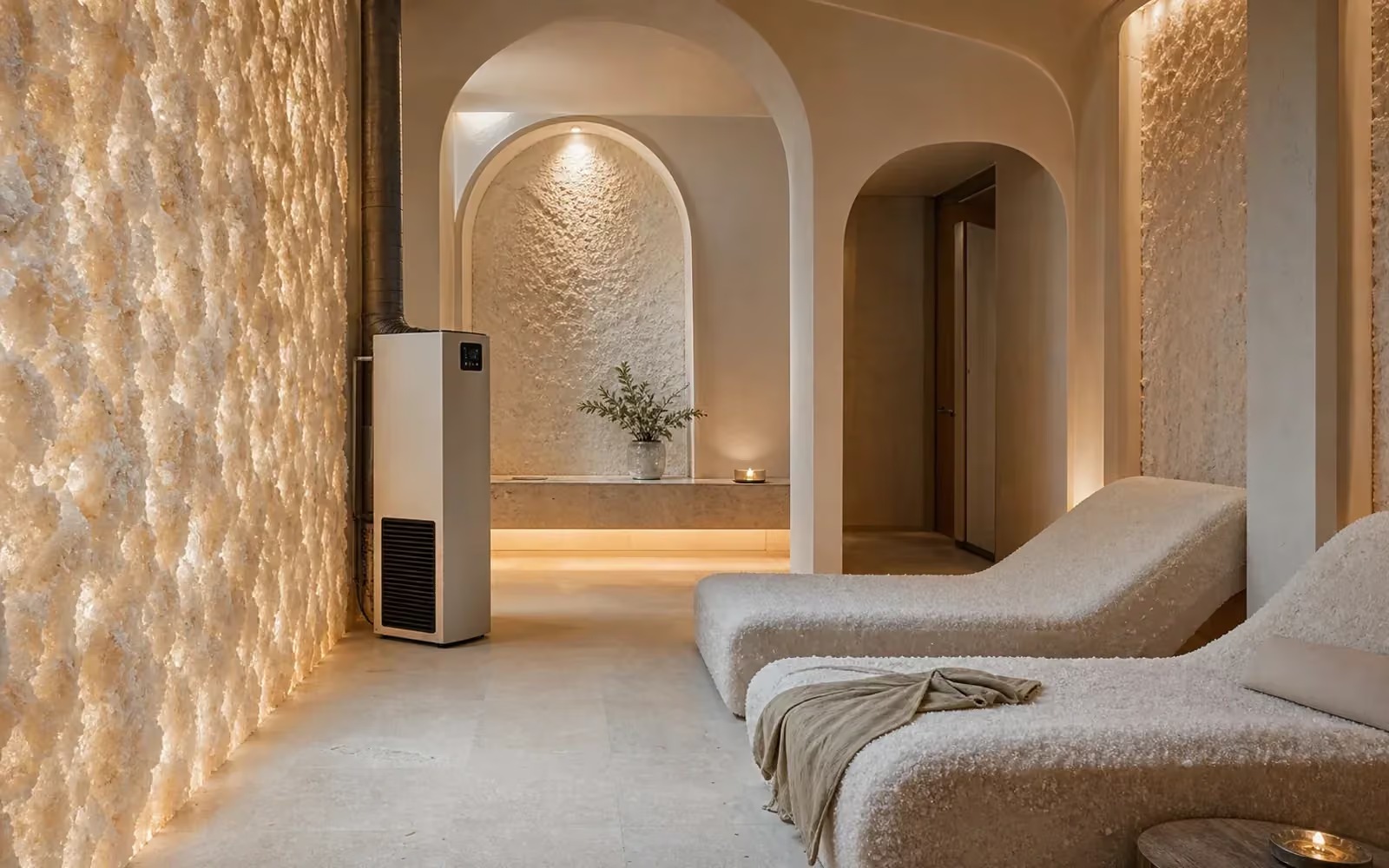
A salt room is a room with a controlled microclimate, built for the relaxation practice known as halotherapy.
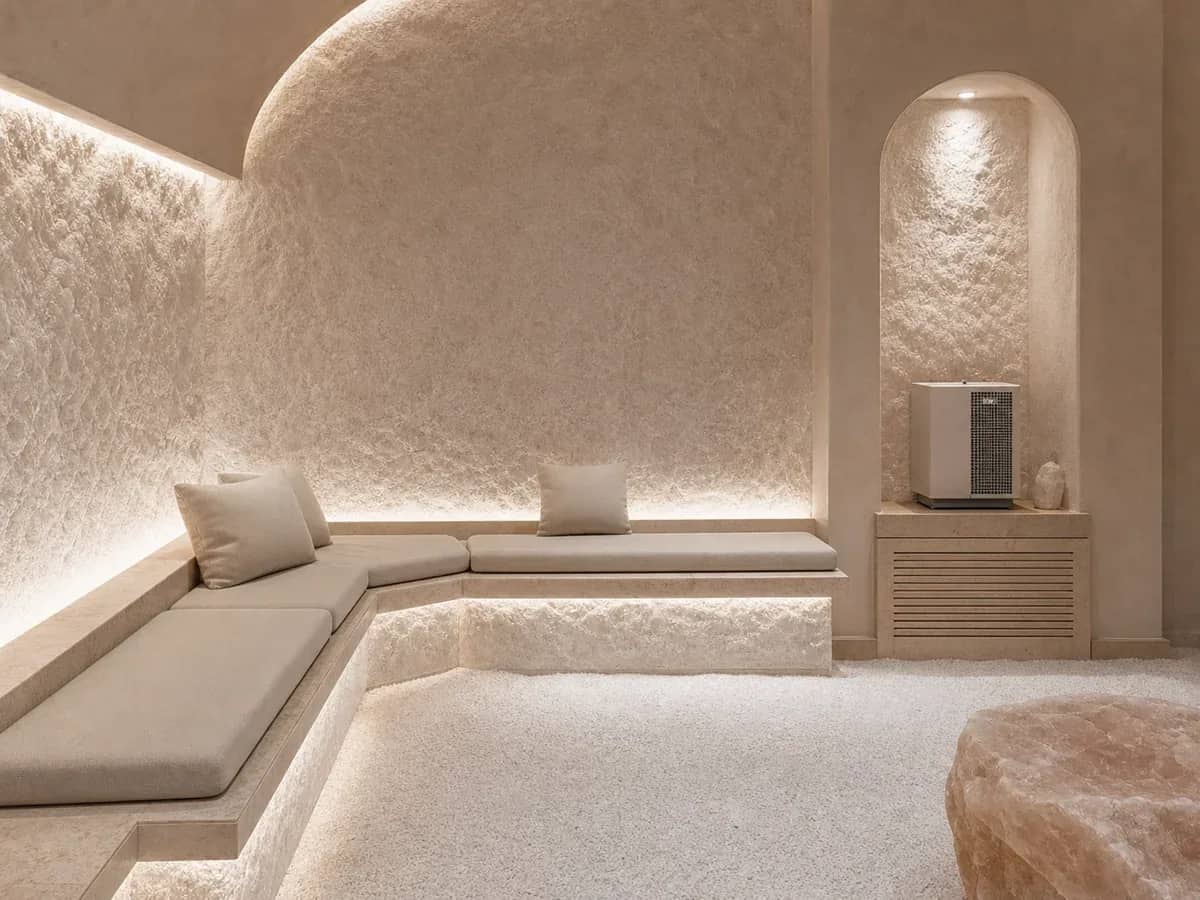
The aim is to release very fine dry salt particles (an aerosol) into the air and create a dry, saline atmosphere in the room. Inside there are usually comfortable loungers and soft lighting; the user sits and rests.
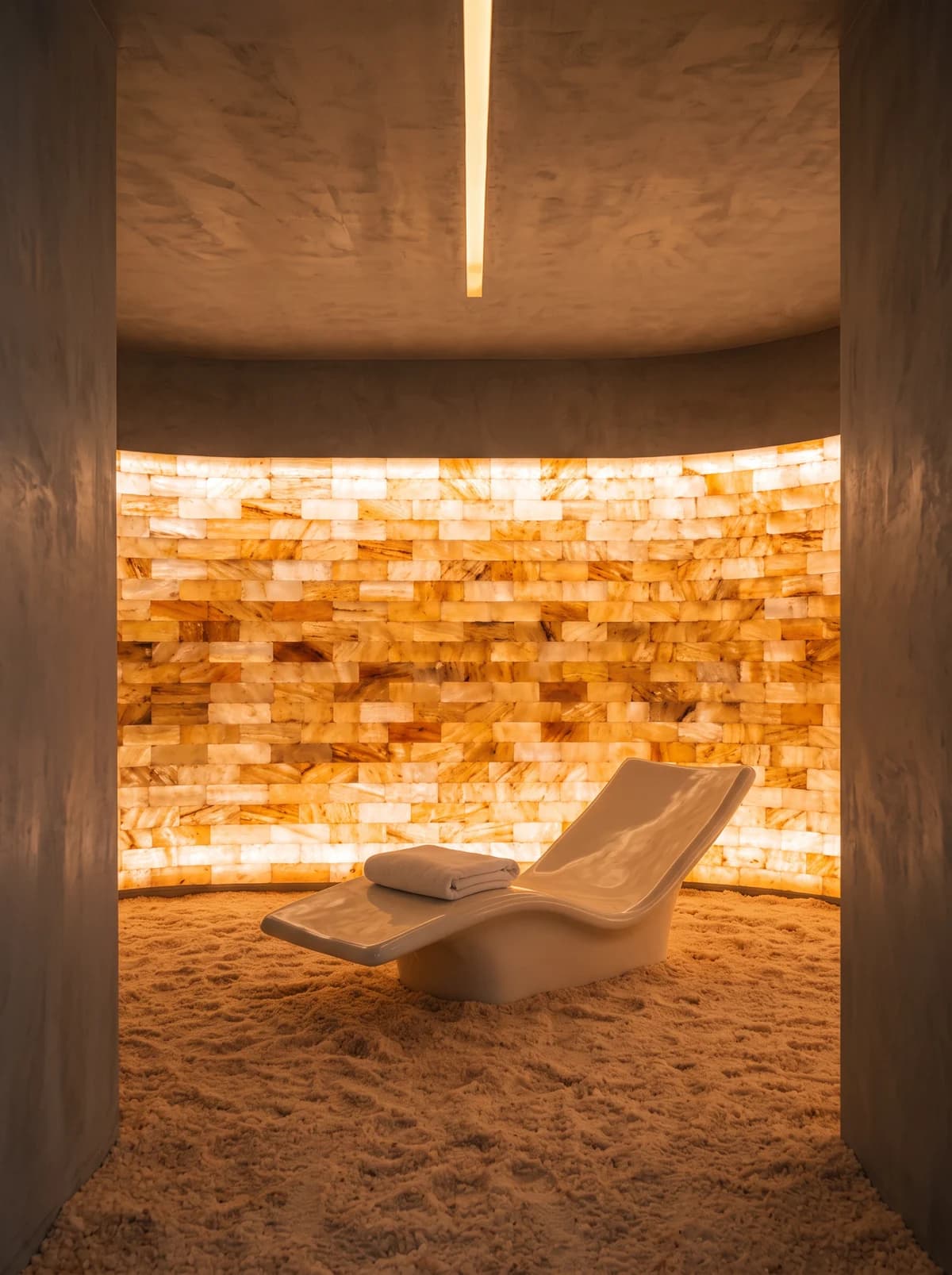
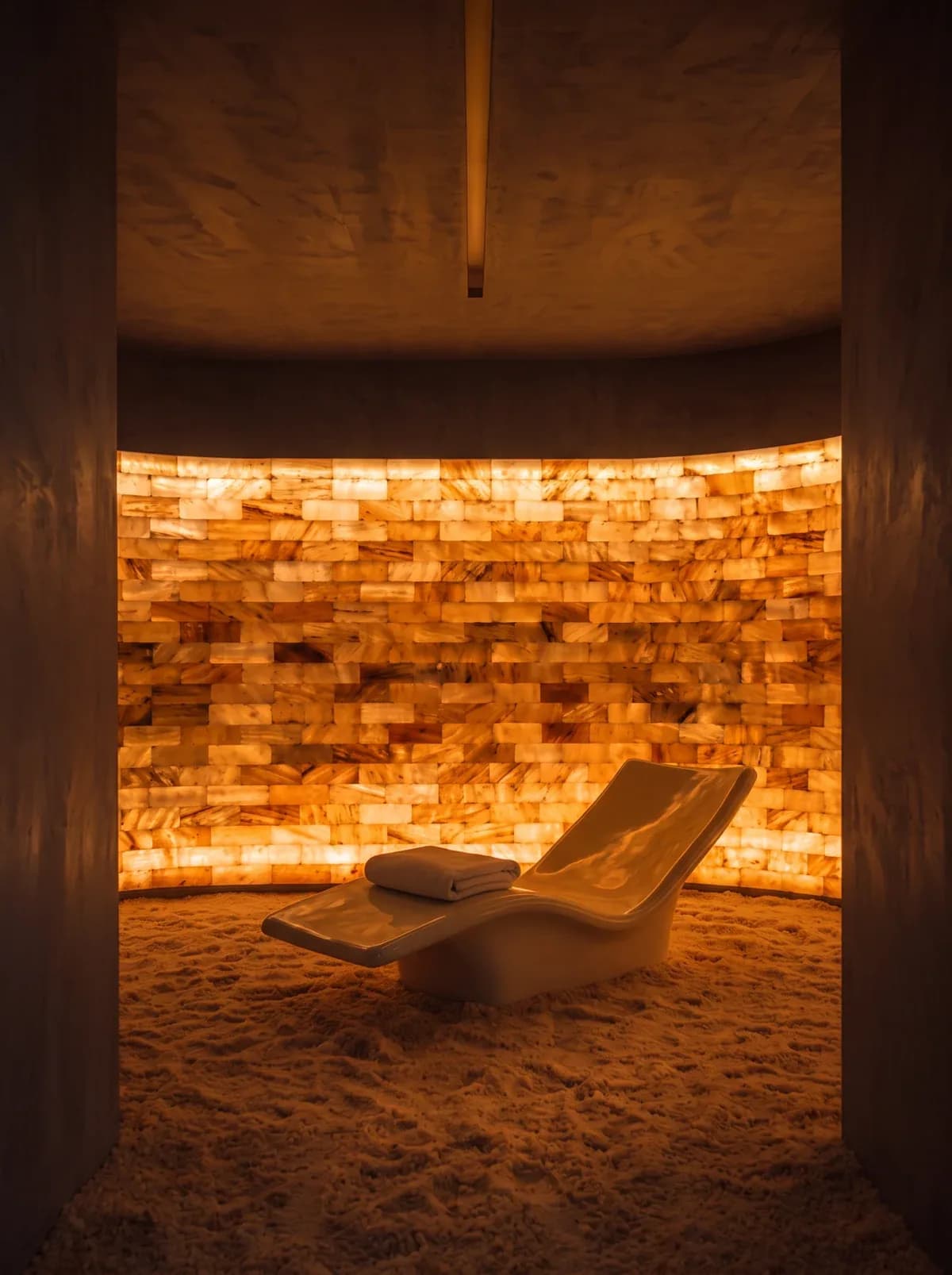
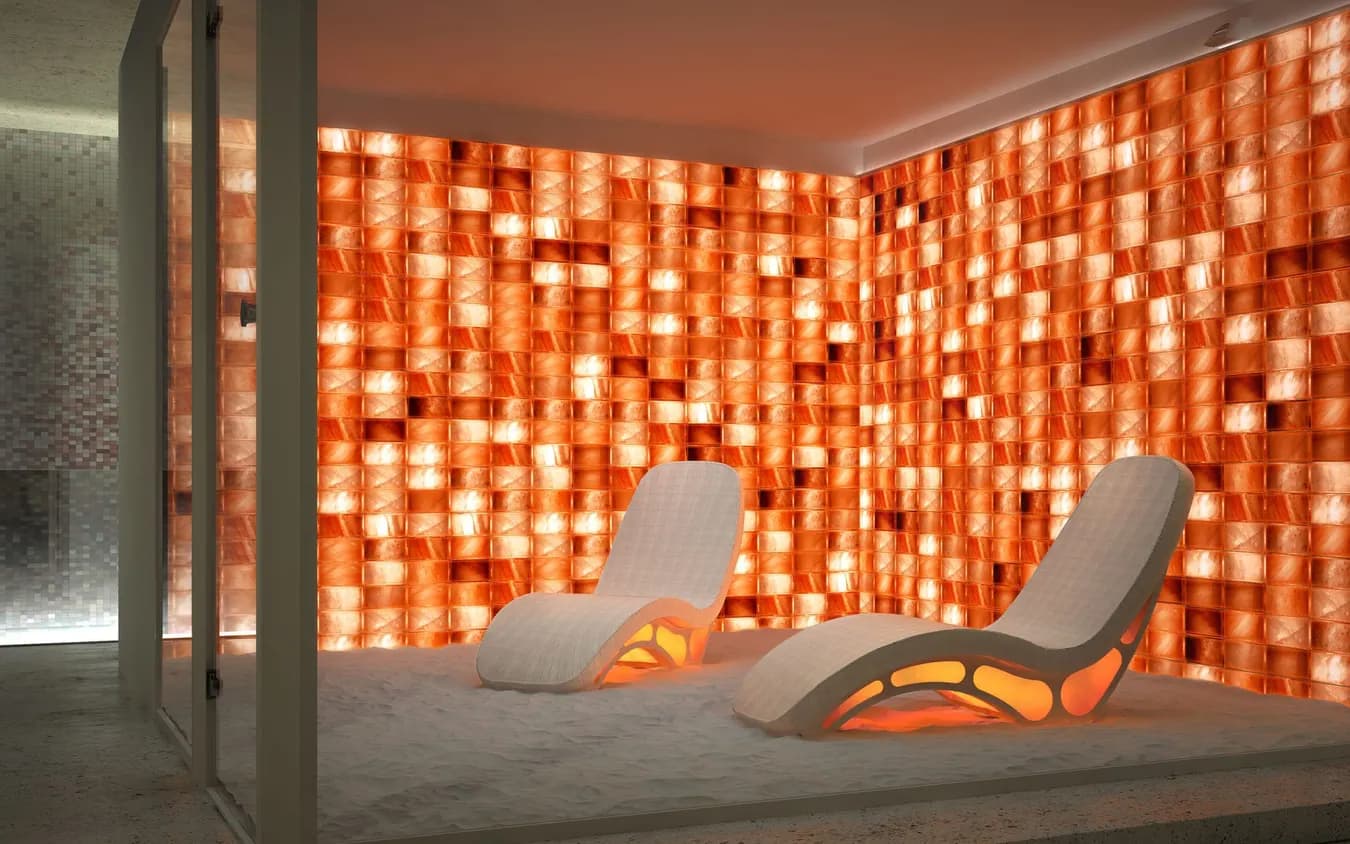
Walls and floors are mostly finished with rock salt blocks, salt bricks or salt plaster. These surfaces give the room its look and help to balance humidity. Even so, let us correct a common misconception from the outset: it is not the salt blocks on the walls that make a room a salt room.
What makes a space a genuine salt room is the device that releases a controlled dry salt aerosol into the air. A room with salt-clad walls but without this device is nothing more than décor that looks like a salt room. A proper installation starts with this distinction.
The heart of a salt room is a device called a halogenerator.
It grinds medical-grade dry salt to micron size and disperses it into the air in a controlled way. This is the essence of halotherapy: not the salt on the walls, but the fine dry salt suspended in the air and breathed in.
Without a halogenerator, the salt particles in the room air never reach an effective concentration. That is why, in a salt room project, we put this device at the centre of the budget and the engineering calculations. A device that can adjust the particle size and the amount of salt released into the room determines how the room will work.
Placing the device correctly in the room matters as much as choosing it: the halogenerator is positioned according to the room's airflow, and the aerosol must be distributed evenly throughout the whole volume. The device also needs regular maintenance and a correct salt supply.
The misconception we encounter most often is this: a salt room is not a large salt lamp.
A salt lamp is a decorative block of rock salt with a bulb inside; it gives a pleasant light but does not release a breathable salt aerosol into the air. Lining a room with salt lamps or salt bricks does not make it a halotherapy room.
The difference lies in the device. A genuine salt room has an active halogenerator that grinds salt to micron size and releases it into the air. A salt lamp is passive décor; a halogenerator is a working system. What matters is not how the walls look but what the air you breathe contains.
We dwell on this distinction because some installations sold as 'salt rooms' are simply decorative rooms clad in salt. The first question to ask about any proposal is: does this room have a halogenerator, which model is it and how is it connected to the room?
People who use salt rooms generally say they feel relaxed and at ease; the soft light and quiet do many people good.
This state of rest is the contribution that can be stated with confidence for a salt room.
The effect of halotherapy on breathing comfort is often mentioned; some people say they feel refreshed after a session. However, the scientific evidence on this is limited and disputed. That is why we present the salt room not as a method of treatment but as a relaxation and wellness practice.
To put it plainly: a salt room is not a treatment for any illness and does not replace medication. If you have a respiratory condition such as asthma or COPD, heart or blood pressure problems, or any other health condition, consult your doctor before trying halotherapy, and do not stop your current treatment. A salt room is not part of medical care; it is a break for rest.
The first criterion in a salt room installation is humidity control.
Halotherapy relies on a dry salt aerosol; if humidity rises, the salt particles cannot stay suspended in the air, and the salt on the surfaces absorbs moisture. That is why we plan from the start the ventilation that will keep the room at a low, controlled humidity and, if necessary, a dehumidification system.
The second criterion is salt-resistant materials and installations. Salt corrodes metal quickly; if the metal fittings, lighting and ventilation components inside the room are not chosen to resist salt, they rust within a short time. The electrical installation must also have a suitable protection class for safety.
The third criterion is the position of the halogenerator and the distribution of air. The device is placed so that it spreads the aerosol evenly throughout the volume, and the seating layout is planned around this distribution. The salt cladding on walls and floor contributes to the humidity balance but cannot do the job on its own. If these three points are set up correctly from the start, the room both works well and lasts a long time.
A salt room can be built in a residence or in a commercial project, but its logic changes with scale.
In a villa or home, a salt room usually makes sense as part of a wellness area together with a sauna and steam room. Because use is personal, the room can be kept small.
In hotels, spas and wellness businesses, the salt room is a service offered to guests; here capacity, durability and uninterrupted operation come to the fore. In commercial use, the halogenerator and ventilation are sized for intensive use.
Whatever the scale, we recommend building the salt room not as a decorative room but as a genuine halotherapy room with a halogenerator. Otherwise the money goes into a room that looks good but lacks function. During the site survey we listen to your usage scenario and propose a set-up suited to the scale.
Salt rooms and saunas are often confused because, unlike a steam room, both are dry environments; but they work in entirely different ways.
A salt room operates at a low temperature (20-24°C) with the dry salt aerosol produced by the halogenerator, and no sweating is expected. A sauna, by contrast, makes you sweat with dry heat reaching 80-100°C and speeds up circulation. For someone who does not enjoy high temperatures or has a medical reason to avoid them, a salt room is the more comfortable option; for those who want intense heat and sweating, the sauna comes to the fore.
That is why, in hotel and villa projects, the two are usually planned not as alternatives to each other but as complements. Because the sauna works in the dry-hot range and the salt room in the dry-cool range, when properly designed they can stand side by side without disrupting each other's infrastructure. For example, after sweating in the sauna, one can rest in the cool environment of the salt room. If space allows, it makes sense to plan both in the same project.
Next step
Let us discuss your project in the way that suits you best.
You can fill in the form for a written quote, schedule a video project presentation or ask us to survey your project site.
Get a Quote
Send us your dimensions and expectations in writing.
Online presentation
Video project presentation
On-site survey
Inspection at your project site
Image gallery
Photos: 04
 01
01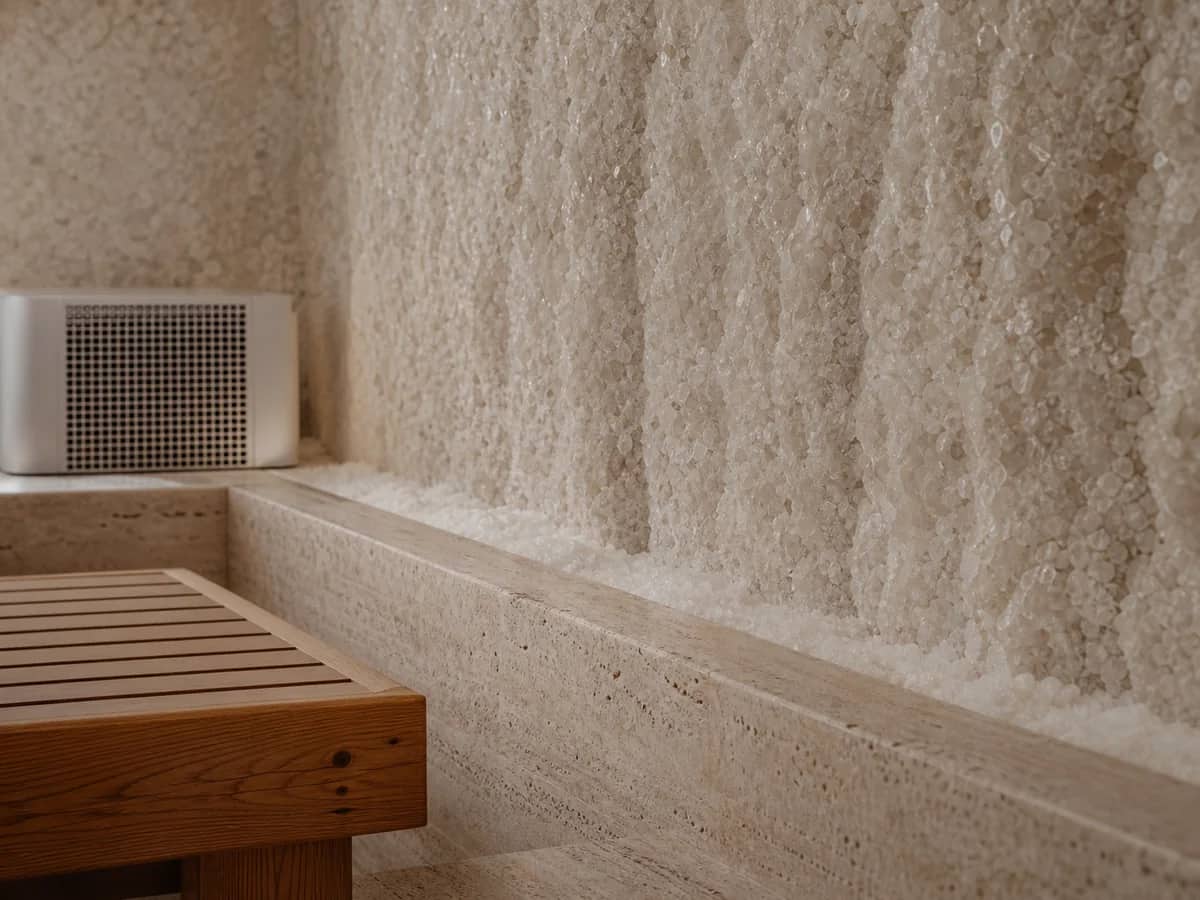 02
02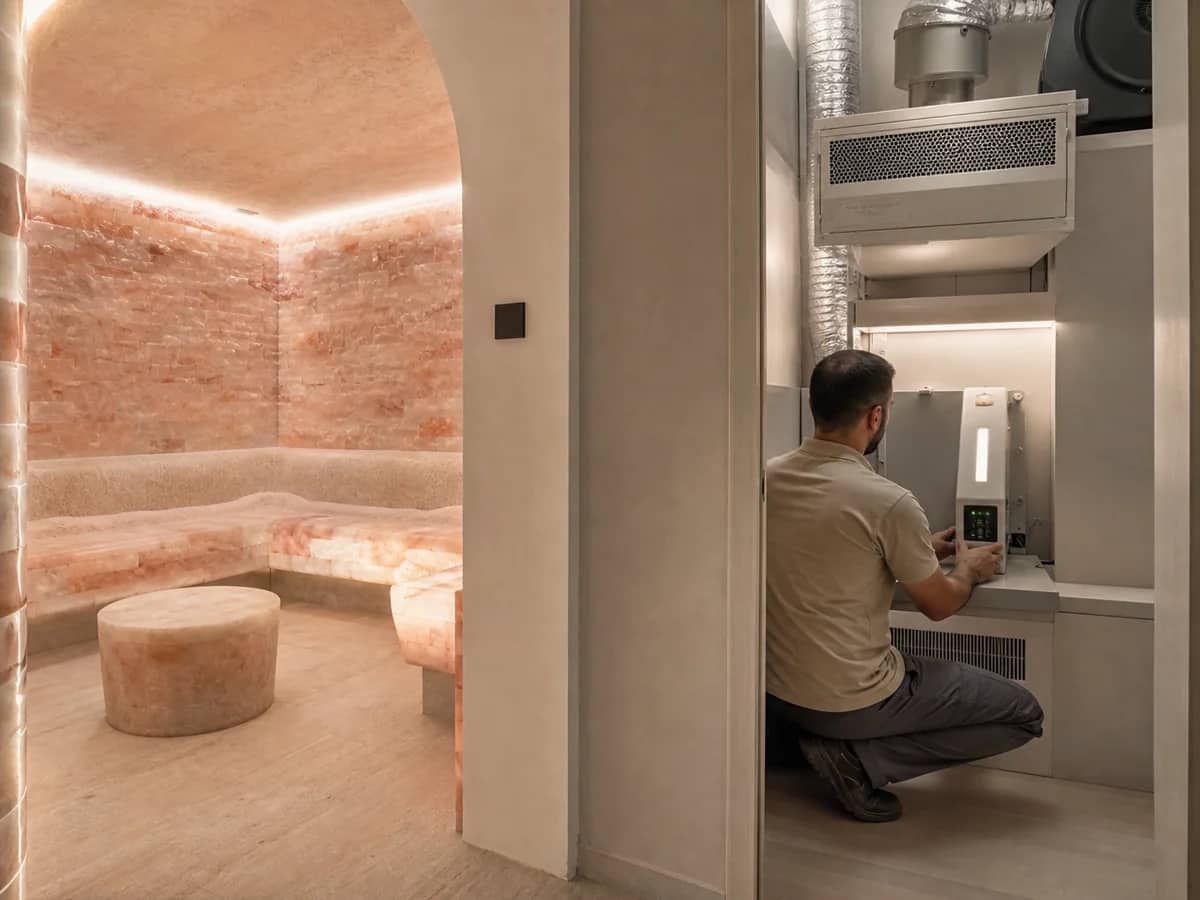 03
03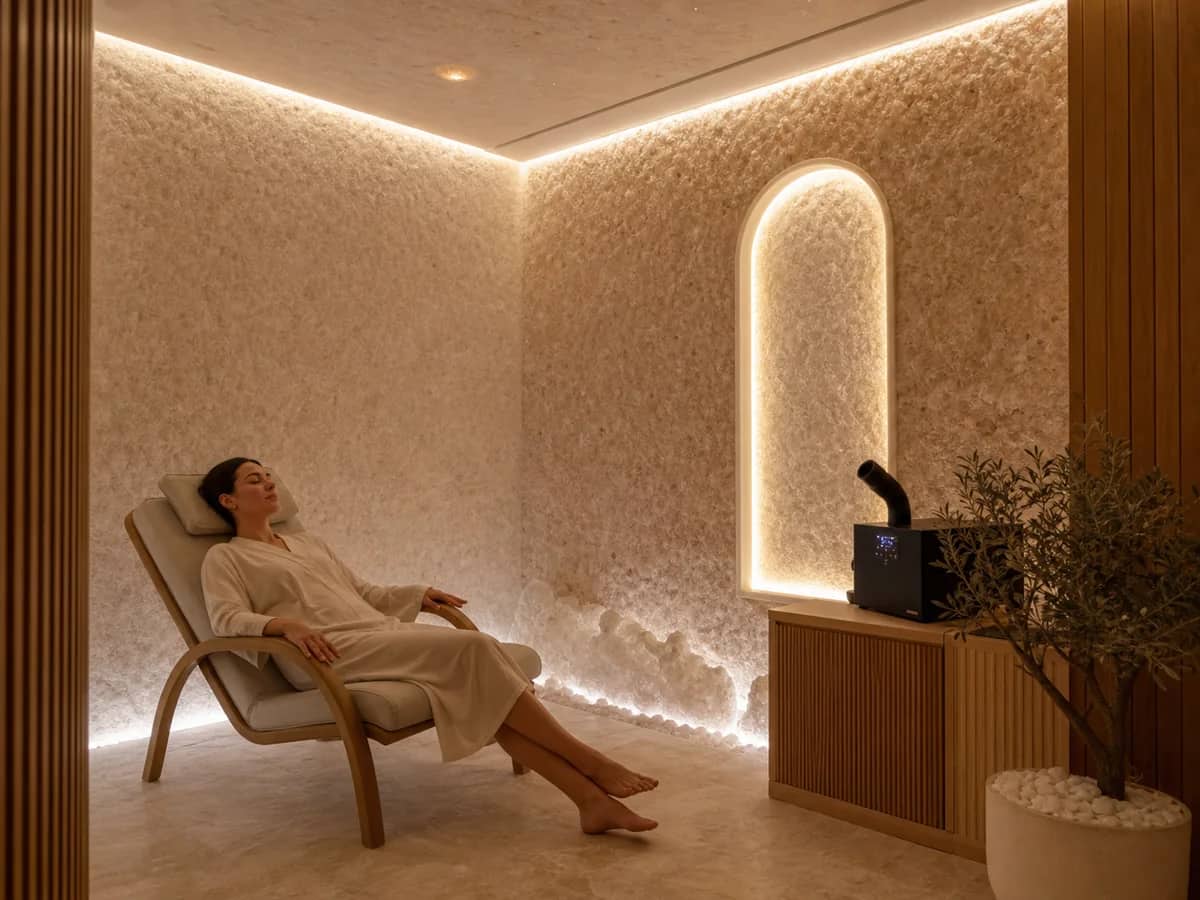 04
04// 01 · Related service
The work in this article, we deliver from design to handover.
Çilek Havuz service
Salt Rooms
Salt rooms with salt walls, a halogenerator and humidity control.
How we work
- 01Initial meeting and site surveyWe inspect the site and listen to the brief.
- 02Design and quotationWe give the cost item by item, in writing.
- 03ExecutionThe same team builds to a written schedule.
- 04Handover and commissioningWe start the systems and explain their use.
- 05Maintenance and technical supportWe provide periodic maintenance and support.
// 02 · Guides
On Sauna, more articles to read.
First the articles directly related to this one, then the newest articles on the topic.
 Sauna
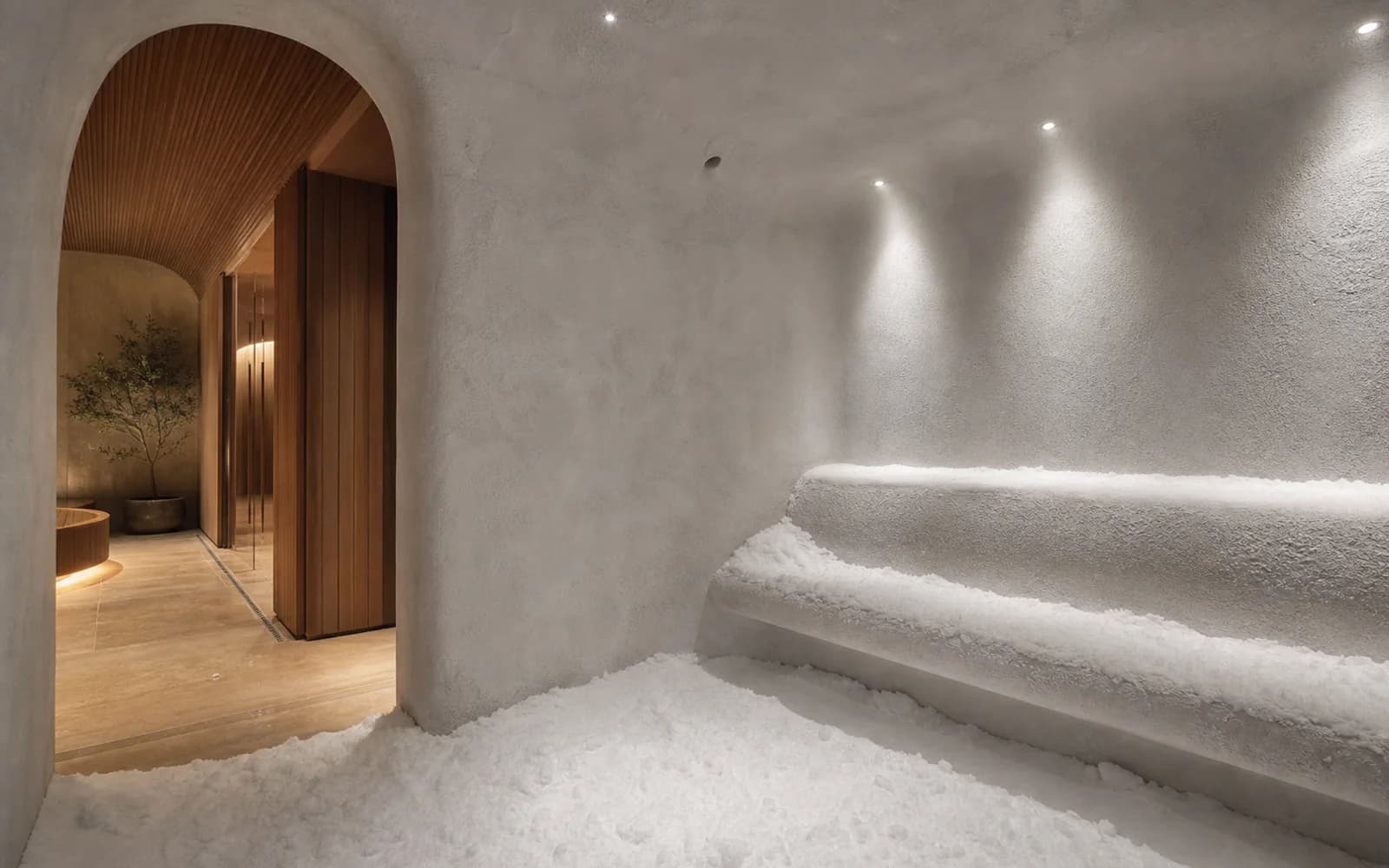
SaunaSnow Room: System, Benefits, Installation
A snow room turns the cooling phase after the sauna into a distinct experience. We explain how the system makes real snow and what installation requires.
View- 27 March 2026
- 5 min read
 Sauna
SaunaBuilding a Salt Room at Home: The Process and What Drives the Cost
A home salt room is built in steps, from a humidity survey to the halogenerator. We explain how the process works and which items determine the cost.
View- 30 August 2026
- 7 min read
 Sauna
SaunaSteam Room Guide: Generator System, Temperature and Cost Factors
How does a steam room work, and how is the generator sized? The correct temperature-humidity balance, why sealing is non-negotiable, and the cost items that make up a steam room's price.
View- 16 June 2026
- 6 min read
 Sauna
SaunaHow many kW should a sauna heater be? Sizing by cabin volume
Sauna heater size follows cabin volume: 1 kW per 1 m³ in an insulated cabin, with a correction added for glass and uninsulated surfaces.
View- 9 September 2026
- 10 min read
 Sauna
SaunaWhat Temperature Should a Sauna Be? Heat, Humidity, and Duration Guide
What's the ideal Finnish sauna temperature, and how long should a first-timer stay in? Heat-humidity balance, safe session lengths, and common mistakes.
View- 7 September 2026
- 8 min read
 Sauna
SaunaWhat is a sauna and how do you use it? Temperature, time and the right order
A classic Finnish sauna runs at 80 to 100 degrees and 10 to 20 percent humidity. How hot, how long, and in what order do you use sauna, hammam and steam room?
View- 4 September 2026
- 9 min read
- Sauna · 27 March 2026Snow Room: System, Benefits, InstallationA snow room turns the cooling phase after the sauna into a distinct experience. We explain how the system makes real snow and what installation requires.5 min read
- Sauna · 30 August 2026Building a Salt Room at Home: The Process and What Drives the CostA home salt room is built in steps, from a humidity survey to the halogenerator. We explain how the process works and which items determine the cost.7 min read
- Sauna · 16 June 2026Steam Room Guide: Generator System, Temperature and Cost FactorsHow does a steam room work, and how is the generator sized? The correct temperature-humidity balance, why sealing is non-negotiable, and the cost items that make up a steam room's price.6 min read
- Sauna · 9 September 2026How many kW should a sauna heater be? Sizing by cabin volumeSauna heater size follows cabin volume: 1 kW per 1 m³ in an insulated cabin, with a correction added for glass and uninsulated surfaces.10 min read
- Sauna · 7 September 2026What Temperature Should a Sauna Be? Heat, Humidity, and Duration GuideWhat's the ideal Finnish sauna temperature, and how long should a first-timer stay in? Heat-humidity balance, safe session lengths, and common mistakes.8 min read
- Sauna · 4 September 2026What is a sauna and how do you use it? Temperature, time and the right orderA classic Finnish sauna runs at 80 to 100 degrees and 10 to 20 percent humidity. How hot, how long, and in what order do you use sauna, hammam and steam room?9 min read
// 03 · Company & Contact
To talk about your project, call or write to us.
Legal Name
Çilek Havuz
Founded
1998 · Istanbul
Head Office
Çilek Plaza, Eyüp Sultan Mah. Yakacık Cd. Feshane Cd. No: 2 D:4 D:1, 34885 Sancaktepe / İstanbul
Service Area
All of Türkiye · exports to 14 countries
Branches
Kyrgyzstan · Egypt · Algeria · Iraq
Showroom
Plan a showroom visit
At our showroom in Çilek Plaza, Sancaktepe, you can discuss your project with our team. We recommend booking an appointment by phone before your visit.
Working Hours
- Monday – Friday · 08:00 – 17:30
- Saturday · 08:00 – 12:30
- Closed on Sunday
Frequently Asked Questions
About Salt Room (Halotherapy), frequently asked questions.
Çilek Havuz Corporate
Pool and Wellness Engineering
- Response Time
- Same day
- Channels
- Phone · Email · WhatsApp
If the answer you are looking for is not here, send your question directly to us and our team will reply as soon as possible.
+90 216 475 39 37Session length and frequency vary with personal preference and how the room is set up; most users prefer to sit and rest at certain intervals. Think of it as a relaxation habit, not a treatment programme. If you have any health-related expectation, ask your doctor about duration and frequency.
Çilek Havuz Corporate
The ability to adjust particle size and the amount of salt released, a capacity suited to the room volume, and serviceability come first. The availability of spare parts and technical service is as important as the brand itself for the device to run for many years. During the site survey, we determine the model together according to the room volume and intensity of use.
Çilek Havuz Corporate
The main items are the halogenerator's salt supply and regular maintenance of the device. The running of the ventilation and dehumidification system and periodic checks of the salt-resistant components are also part of it. In commercial use these items increase with intensive operation. If the system is installed to be serviceable from the start, the annual maintenance cost becomes predictable.
Çilek Havuz Corporate
The most reliable test is whether the proposal includes an active halogenerator. Which model it is and how it will be connected to the room's airflow should be stated clearly. A proposal that lists only salt cladding for walls and floor and makes no mention of a device may be describing a decorative room. If you ask for an itemised proposal, the difference becomes visible immediately.
Çilek Havuz Corporate
A salt room is a calm place to rest, but suitability for children, older people and those with chronic conditions varies from person to person. We recommend that these groups consult a doctor before using it. Building the room to be safe and comfortable is our job; who can use it is a medical decision.
Çilek Havuz Corporate
Yes, a salt room is often planned in the same wellness area as a sauna and steam room. However, a salt room needs dry, low-humidity air, while a steam room works at high humidity; the transitions and ventilation are designed accordingly so that the two climates do not mix. That is why the whole area needs to be designed together from the start.
Çilek Havuz Corporate
A salt room is an option where one can stay for a long time at a low temperature (20-24°C). It suits someone who needs to avoid high temperatures or has a medical reason to do so. Because a sauna works with heat reaching 80-100°C, a user with such a restriction should consult a doctor first. The two are not rivals but two separate systems that meet different needs.
Çilek Havuz Corporate