

Four-Season Pool Care: The Secrets to Crystal-Clear Water
Practical ways to keep your pool crystal clear all year with the right chemical balance, regular filtration and seasonal routines.
Project Manager · Mechatronics Engineer · Çilek Havuz
- Published
- Updated
- Reading
- 6 min read
- Category
- Maintenance
Practical ways to keep your pool crystal clear all year with the right chemical balance, regular filtration and seasonal routines.
When the winter cover comes off, the first job is to collect the coarse debris on the surface and bring the water level up to the skimmer line.
Before running the pump, check the filter tank and the pump pre-filter basket; a clogged basket lowers the efficiency of the whole season.
Start balancing the water with pH: the ideal range is 7.2-7.6. Then adjust total alkalinity (80-120 ppm) and free chlorine (1-3 ppm). Balanced water directly affects both swimming comfort and the service life of the pump, filter and finish. The finish and hydraulic layout chosen at the pool construction stage determine from the outset how easily you will maintain this balance.
Hot weather and heavy use increase chlorine consumption and the risk of algae.
Run the filtration for at least 8-10 hours a day, apply shock chlorination once a week and check the water level regularly against evaporation.
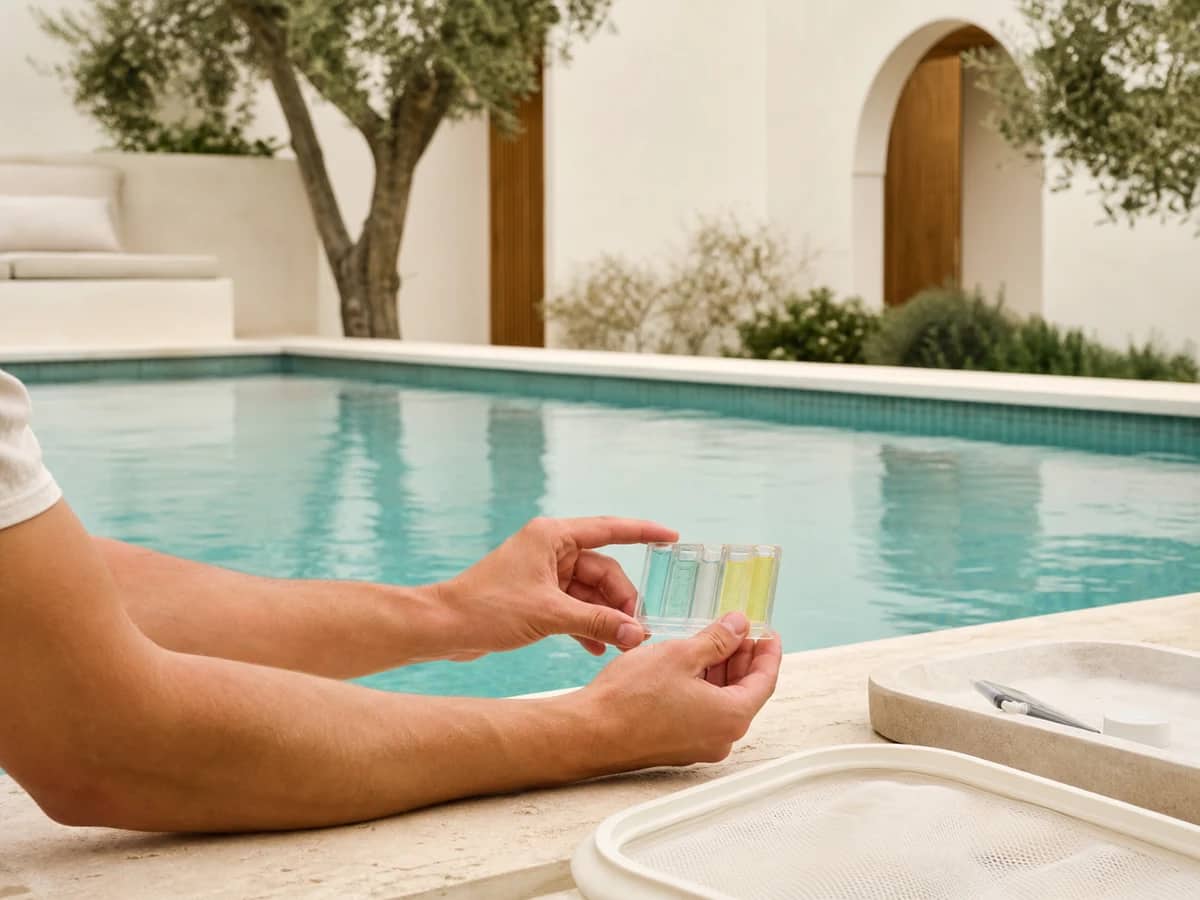
A weekly water test is the easiest way to catch small deviations before they turn into large problems. Cleaning the skimmer and the floor vacuum regularly keeps the water clear throughout the day.
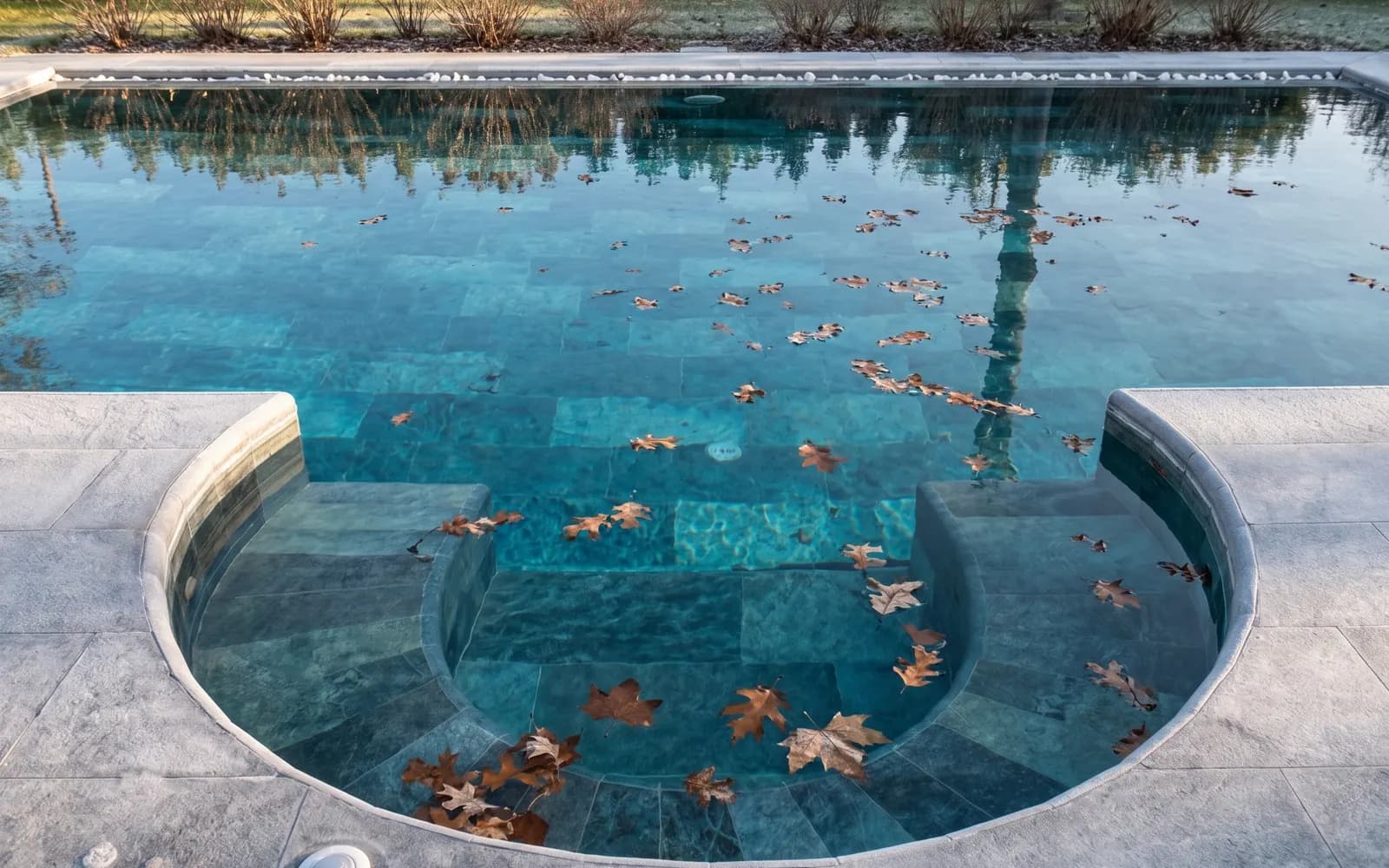
At the end of the season, balance the water one last time and shock-chlorinate, then add the winterising chemicals.
Lower the water level below the skimmer mouth and drain the lines to prevent frost damage.
A tightly woven winter cover keeps leaves and dirt out of the water and makes the spring opening much easier. If the closing has been done properly, opening in spring is quick. If you would rather not plan this calendar yourself, a seasonal maintenance plan can be drawn up as part of pool consultancy.
Maintenance runs on short, regular checks, not on major interventions.
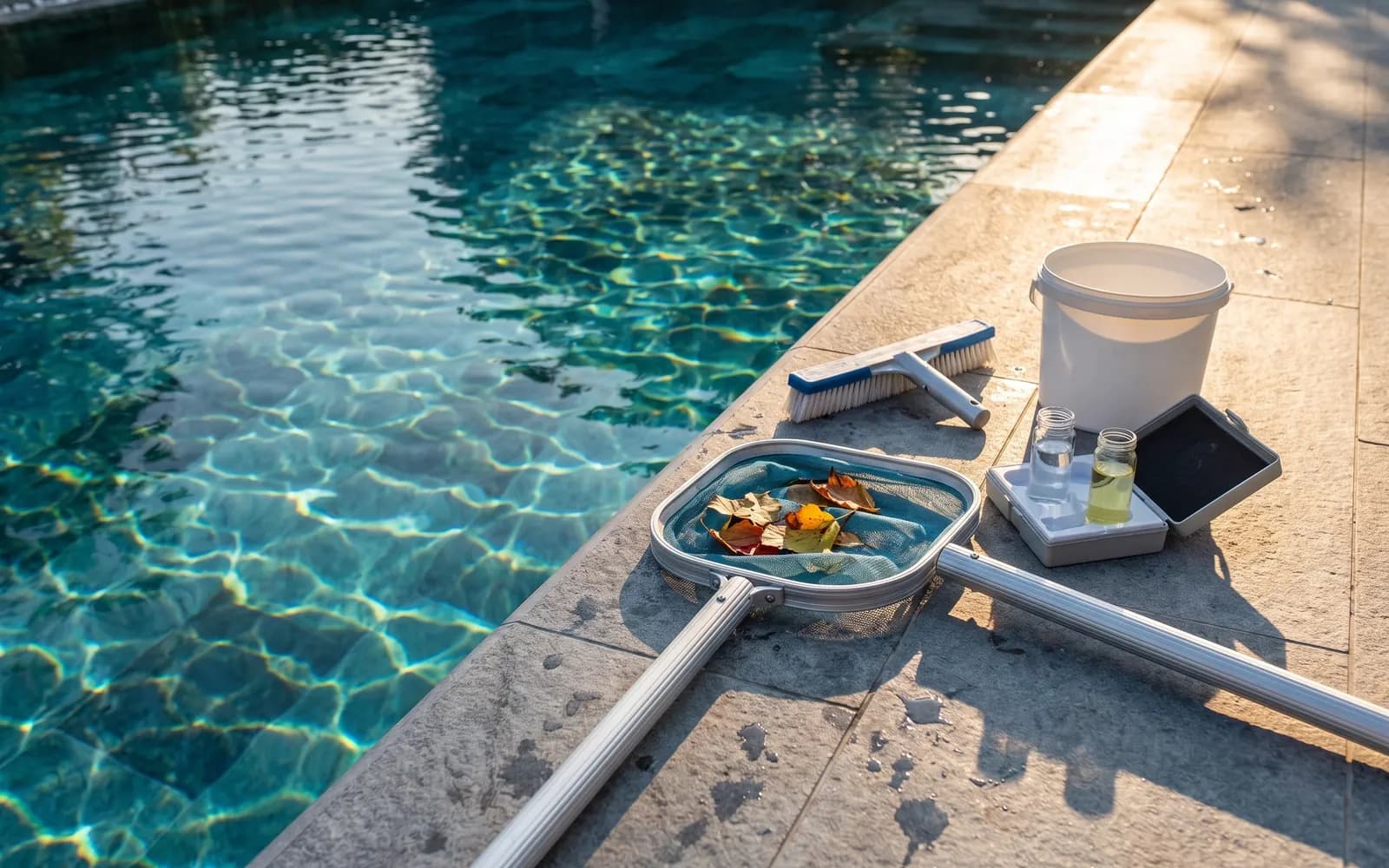
Once a week, on the same day and at the same time, follow this order: measure pH and free chlorine with test strips or a drop test, empty the skimmer basket and the pump pre-filter, check that the water level is at the middle of the skimmer mouth, and run the floor vacuum or the robot.
Note the readings on your phone. Two or three weeks of records show the character of the pool: in which weather chlorine consumption speeds up, in which direction pH drifts. If you spot a deviation early, the correction takes a few hundred grams of chemicals; if you spot it late, you end up dealing with shock chlorination and cloudy water.
When pH moves outside the 7.2-7.6 range, chlorine becomes less effective: at pH 8.0, the disinfecting power of free chlorine drops to roughly a third of its value at 7.2.
So if the water smells of chlorine and you are still fighting algae, the problem is usually not chlorine but pH.
Total alkalinity (80-120 ppm) is the buffer for pH; if it is low, pH swings within a day, and if it is high, bringing pH down becomes difficult. When calcium hardness (200-400 ppm) stays low, the water draws the mineral it needs out of the grout and render; when it stays high, it leaves scale on the heater element and on the finish. Read the four values together; correcting one value and upsetting the others is the most common mistake.
In Turkey, the legal framework for pool water quality is set by the national regulation on health requirements for swimming pools.
The regulation binds primarily pools open to the public, such as those at hotels, residential complexes and sports facilities; it is not mandatory for a private villa pool, but the same values remain the safest target for home use as well. According to its annex table, pH is kept between 6.5 and 7.8; free chlorine ranges from 1 to 3 mg/L in outdoor pools and 1 to 1.5 mg/L in indoor pools; combined chlorine must not exceed 0.2 mg/L.
For pools open to the public, these values must be measured and recorded at least twice a day, and microbiological analyses must be carried out at regular intervals by an authorized laboratory. Responsibility for measurement and record-keeping rests with the pool water operator; certification and training requirements are the subject of a separate article. When a four-season pool maintenance plan targets the regulation's values, a weekly checklist takes shape on its own: pH and chlorine every day, alkalinity once a week, calcium hardness and cyanuric acid once a month.
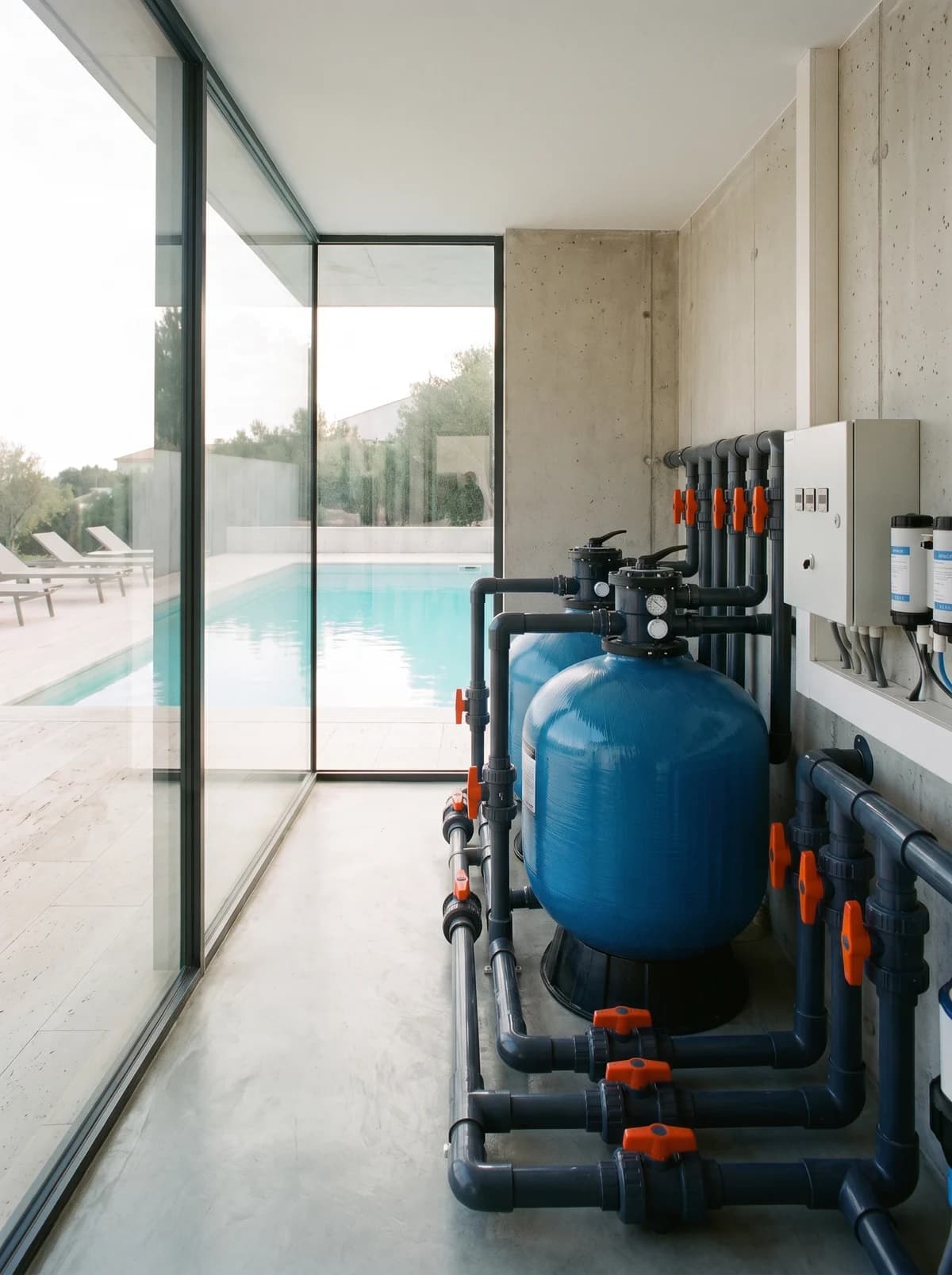
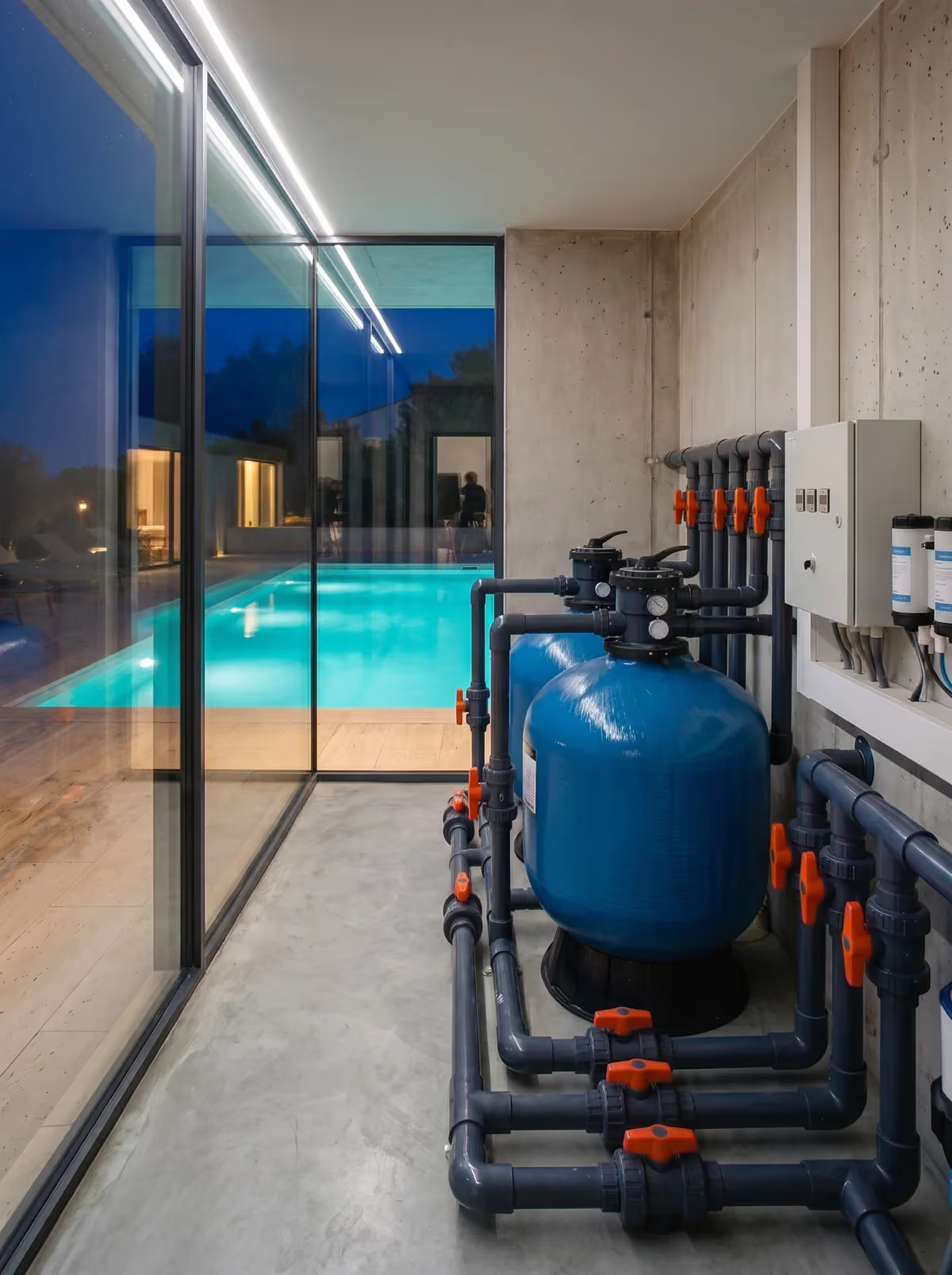
The pressure gauge is the language of a sand filter.
Note the operating pressure with a clean filter; when the gauge rises 0.3-0.5 bar above it, it is time to backwash. Continue backwashing until the water runs clear (usually 2-3 minutes), then rinse for 30-40 seconds and return the valve to filtration.
Filter sand is renewed every 5-7 years; when the grains become rounded and lose their holding capacity, backwashing becomes more frequent and the water never quite sparkles. When replacing, glass media can also be considered: it holds finer particles, uses less backwash water and lasts about twice as long as sand.
A pool with a heat pump and a cover can be kept swimmable at 26-28 °C in winter as well; in that case, instead of the steps in the closing section, the summer routine continues in a shortened form.
Because the water stays warm, chlorine consumption continues; filtration time is not reduced below 6 hours a day.
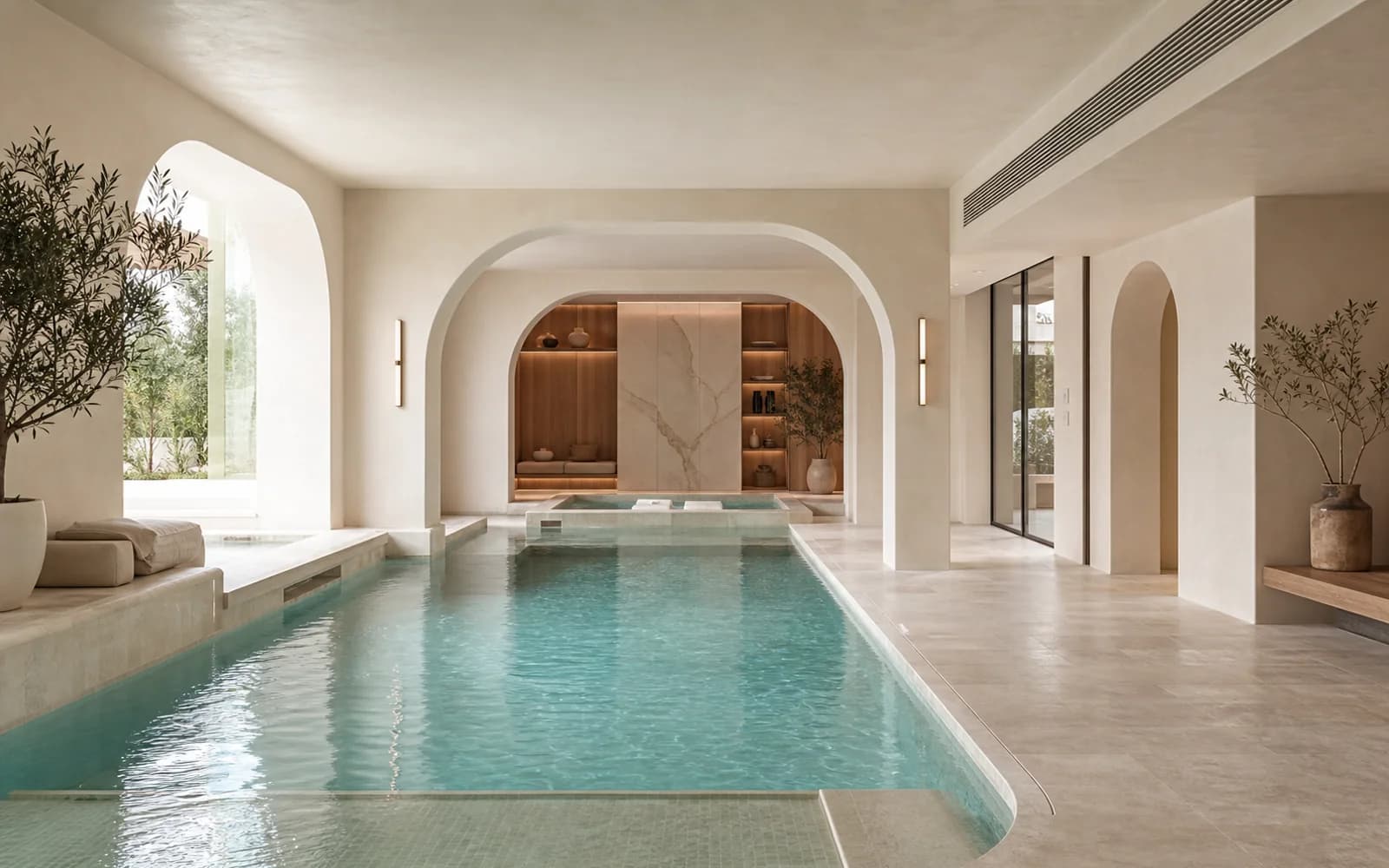
In indoor pools, the second half of the work is in the air: when humidity rises above 60 percent, condensation starts corrosion on the glazing, the ceiling and the metal fittings. Check the filters of the dehumidification unit once a month. In an outdoor pool, an automatic cover cuts evaporation loss and heat loss in winter; an outdoor pool heated without a cover pays for its energy to the sky.
The first is draining the pool completely and refilling it: in most pools this is unnecessary, and it is an expensive habit both in terms of the water bill and the risk carried by a shell left empty.
The second is starting the season without backwashing the filter; sand that has rested over winter returns what it has held to the water at the first start-up. The third is adding chemicals all at once and without running the pump; without circulation, chemicals settle on the floor and stain the finish.
The fourth is pouring algaecide straight into green water: shock chlorination and brushing come first, as algaecide can only do its protective job in clean water. The fifth is dosing without measuring; every chemical added by eye produces a new deviation to be corrected the following week. An hour of measurement and step-by-step work at opening is the insurance against rescue operations that would last for days in July.
Next step
Let us discuss your project in the way that suits you best.
You can fill in the form for a written quote, schedule a video project presentation or ask us to survey your project site.
Get a Quote
Send us your dimensions and expectations in writing.
Online presentation
Video project presentation
On-site survey
Inspection at your project site
Image gallery
Photos: 04
 01
01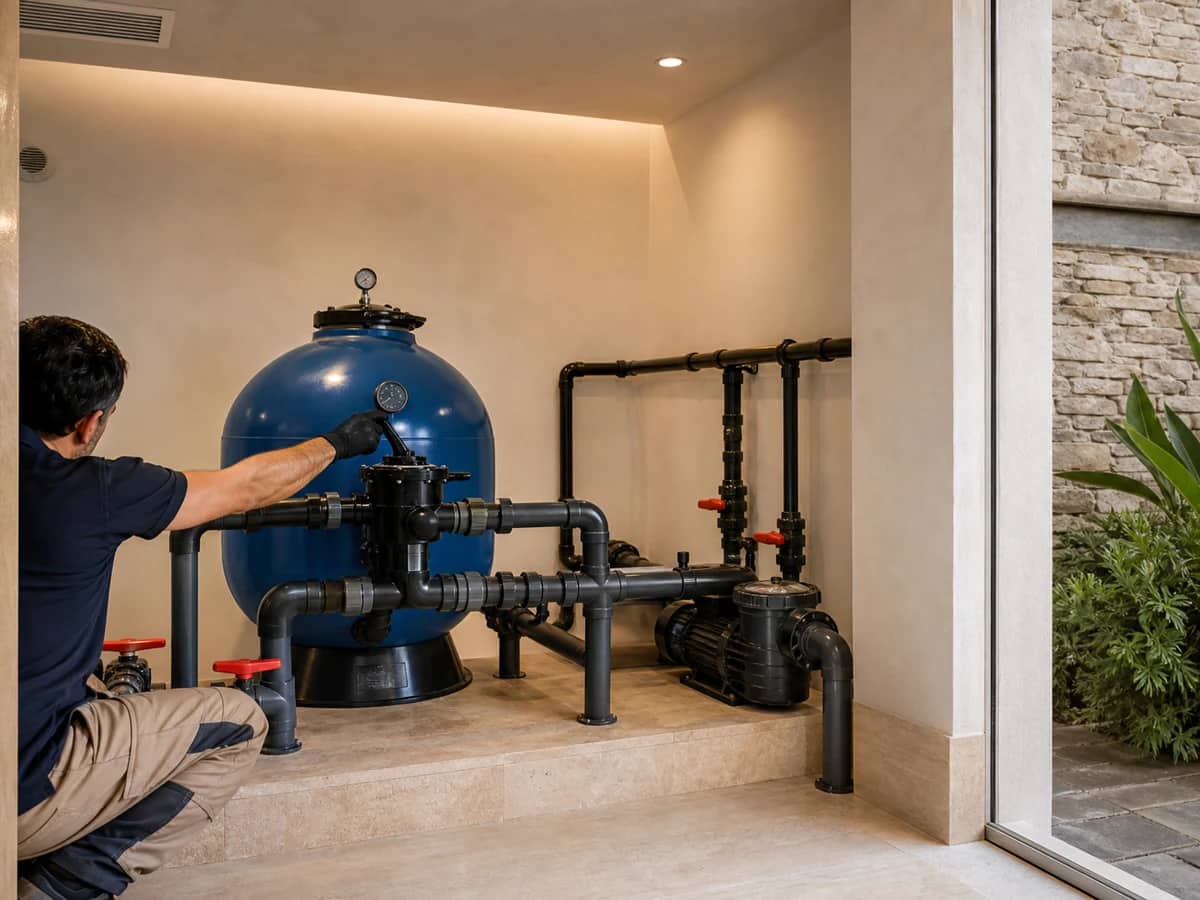 02
02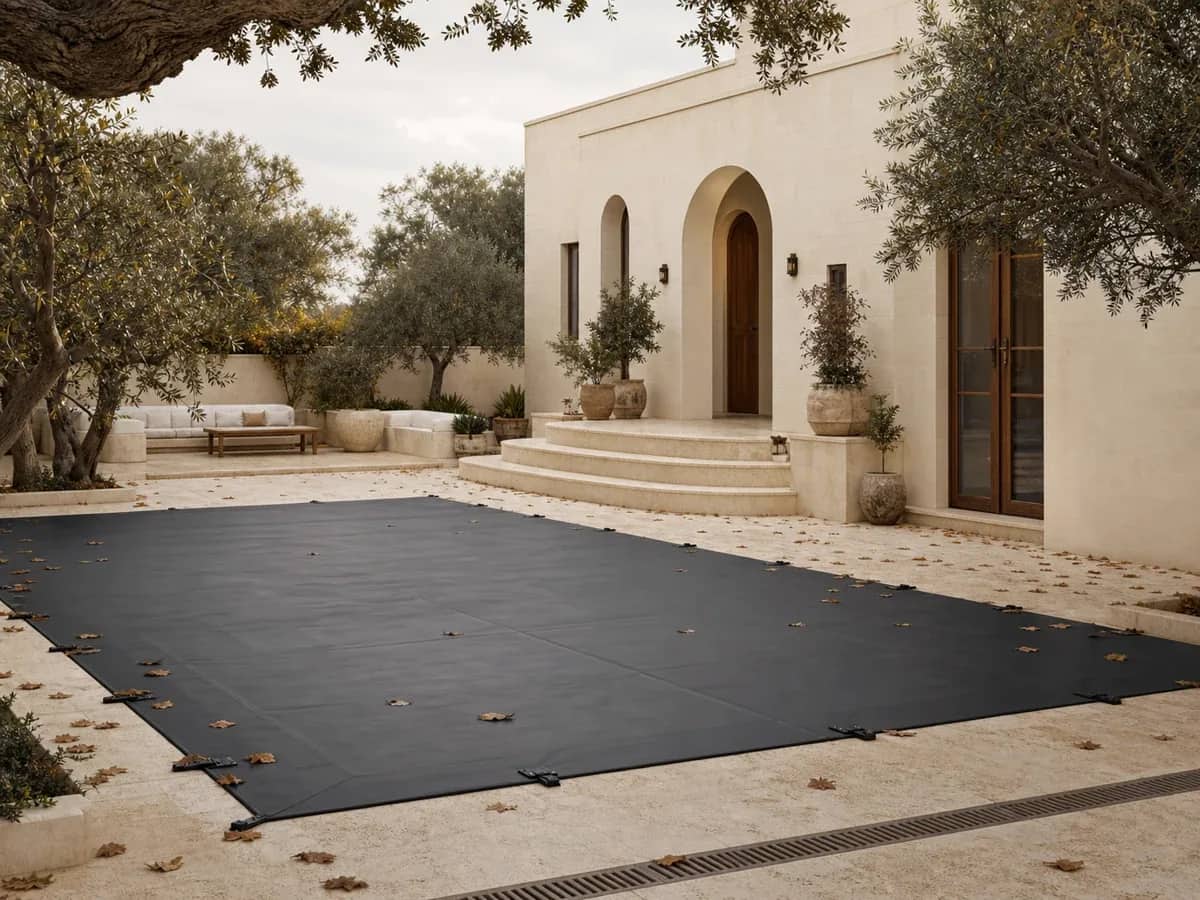 03
03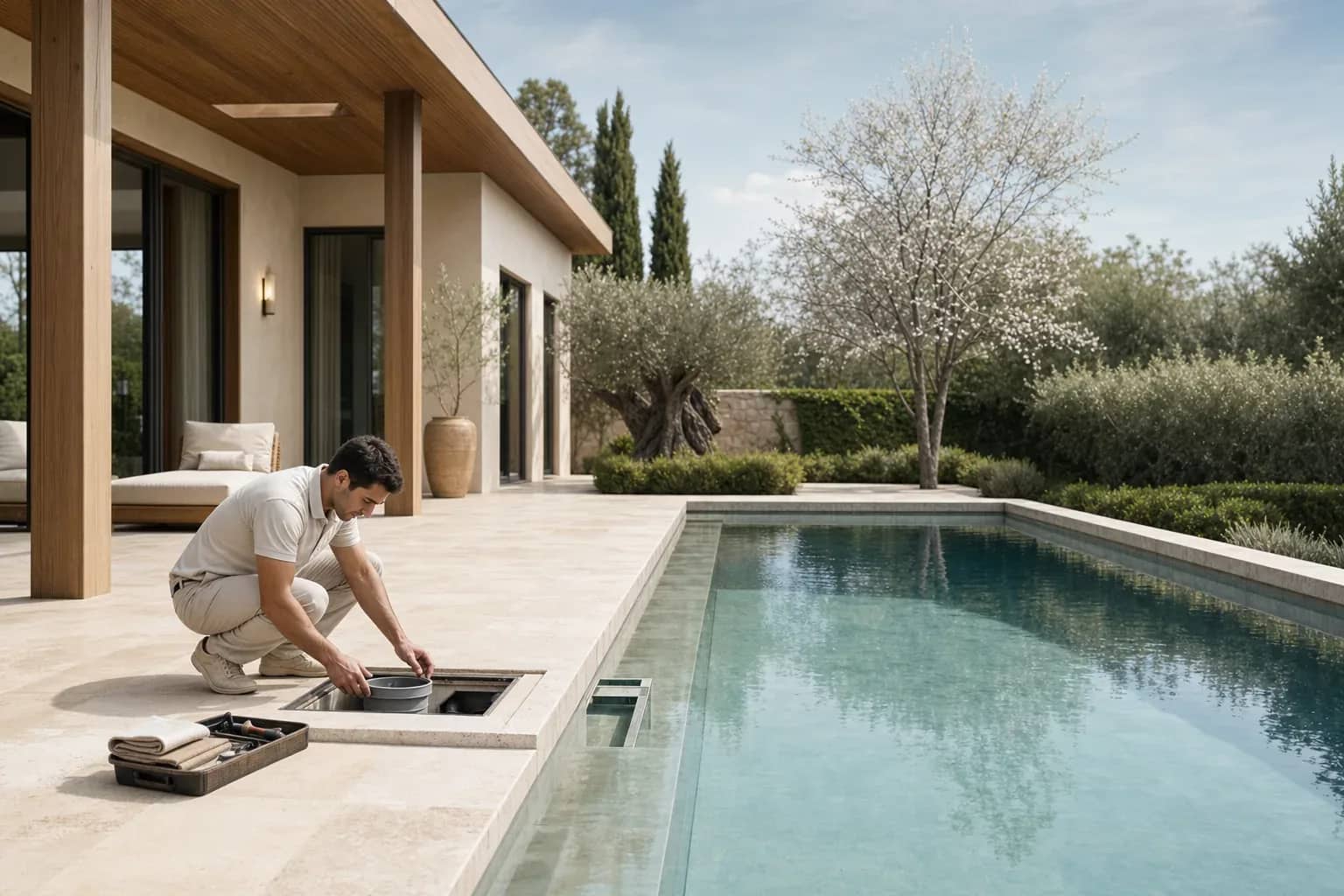 04
04// 01 · Product groups
Compare the products on this topic on their category pages.
Each card leads to a product category; models, technical sheets and list prices are there.
 Product category
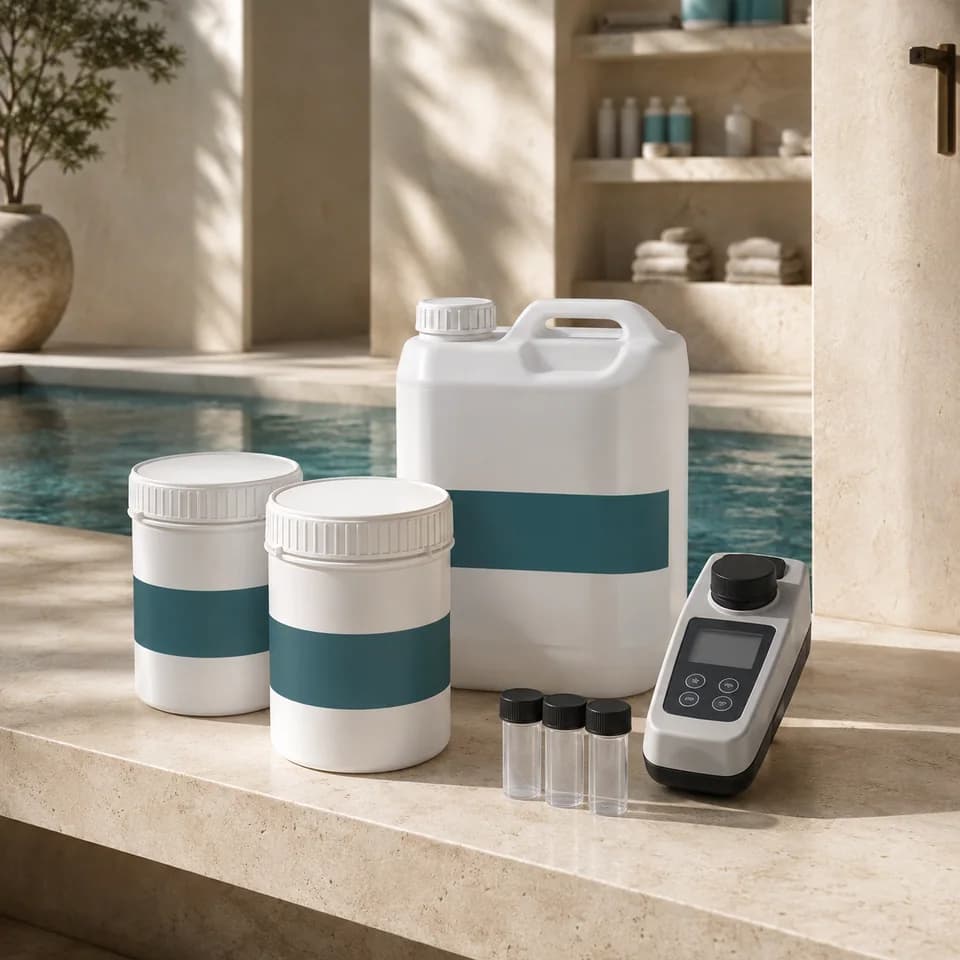
Pool Chemicals
From chlorine, pH regulators, algaecides and clarifiers to digital testers: full-range water chemistry products that keep your pool crystal clear.
View- 19 products
 Product category
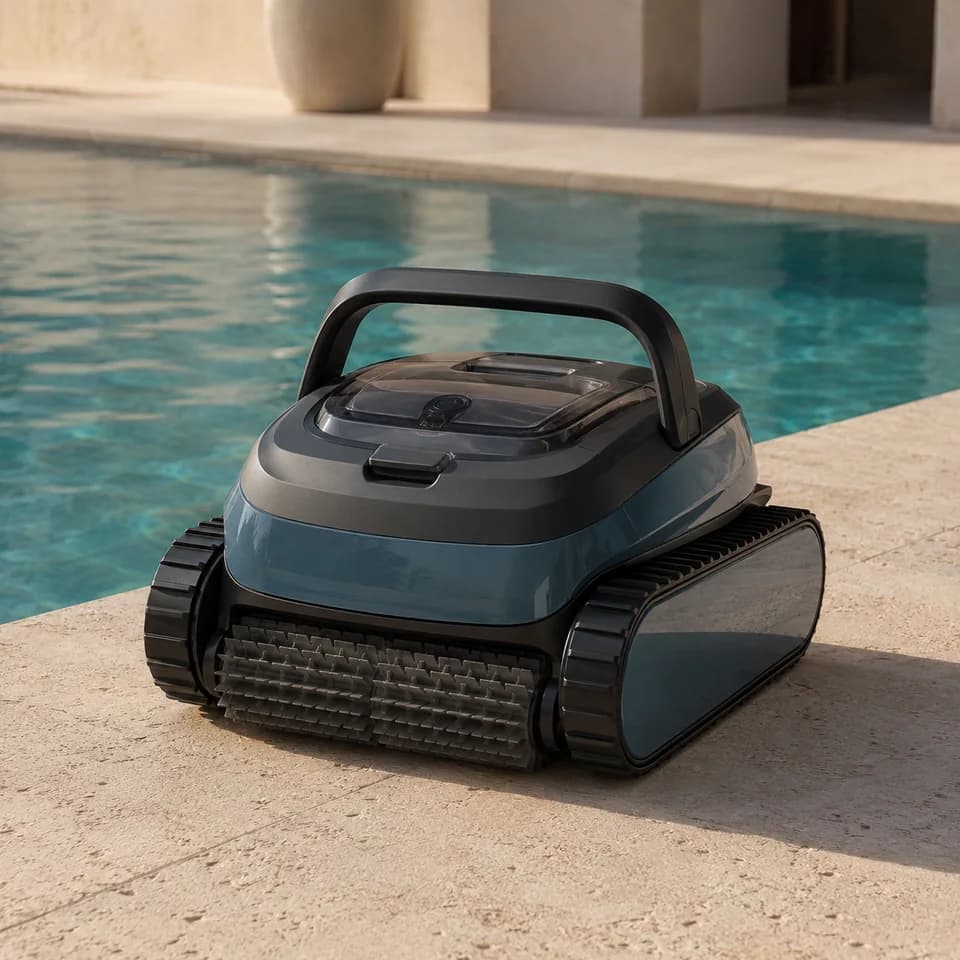
Pool Cleaning Robots
Automate floor, wall and waterline maintenance without manual cleaning, using cordless, intelligent pool cleaning robots.
View- 24 products
 Product category
Manual Pool Cleaning Equipment
Pool floor/wall vacuum heads, cleaning brushes, leaf nets, telescopic poles and floating hoses in the Blue Line, Shark, Classic and Serenit ranges, the hand tools of everyday maintenance.
View- 16 products
Product category
Pool Chemicals
From chlorine, pH regulators, algaecides and clarifiers to digital testers: full-range water chemistry products that keep your pool crystal clear.
19 productsProduct category
Pool Cleaning Robots
Automate floor, wall and waterline maintenance without manual cleaning, using cordless, intelligent pool cleaning robots.
24 productsProduct category
Manual Pool Cleaning Equipment
Pool floor/wall vacuum heads, cleaning brushes, leaf nets, telescopic poles and floating hoses in the Blue Line, Shark, Classic and Serenit ranges, the hand tools of everyday maintenance.
16 products
// 02 · Related service
The work in this article, we deliver from design to handover.
Çilek Havuz service
Pool Maintenance
Water chemistry, equipment and periodic maintenance.
How we work
- 01Initial meeting and site surveyWe inspect the site and listen to the brief.
- 02Design and quotationWe give the cost item by item, in writing.
- 03ExecutionThe same team builds to a written schedule.
- 04Handover and commissioningWe start the systems and explain their use.
- 05Maintenance and technical supportWe provide periodic maintenance and support.
// 03 · Guides
On Maintenance, more articles to read.
First the articles directly related to this one, then the newest articles on the topic.
 Maintenance
Pool maintenance for beginners: testing order and a weekly routine
Pool maintenance for beginners: testing and correcting pH, alkalinity, chlorine, hardness and cyanuric acid in the right order, plus a weekly filter and water level routine.
View- 9 September 2026
- 9 min read
 Pool Construction
Indoor Pool Construction: The Engineering of Four-Season Use
What makes a covered pool comfortable year-round is not the water itself but the volume that surrounds it.
View- 29 April 2026
- 7 min read
 Design
Jacuzzi Maintenance: Water Chemistry, Filter and Winter Protection
A jacuzzi's small volume and hot water make upkeep special. We explain water chemistry, filter care, regular cleaning and winter protection step by step.
View- 12 March 2026
- 6 min read
 Maintenance
Pool clarifier and flocculant: differences, uses and selection
Clarification, flocculation and filter compatibility compared for cloudy pool water. The right choice follows the product instructions, not the name.
View- 13 September 2026
- 3 min read
 Maintenance
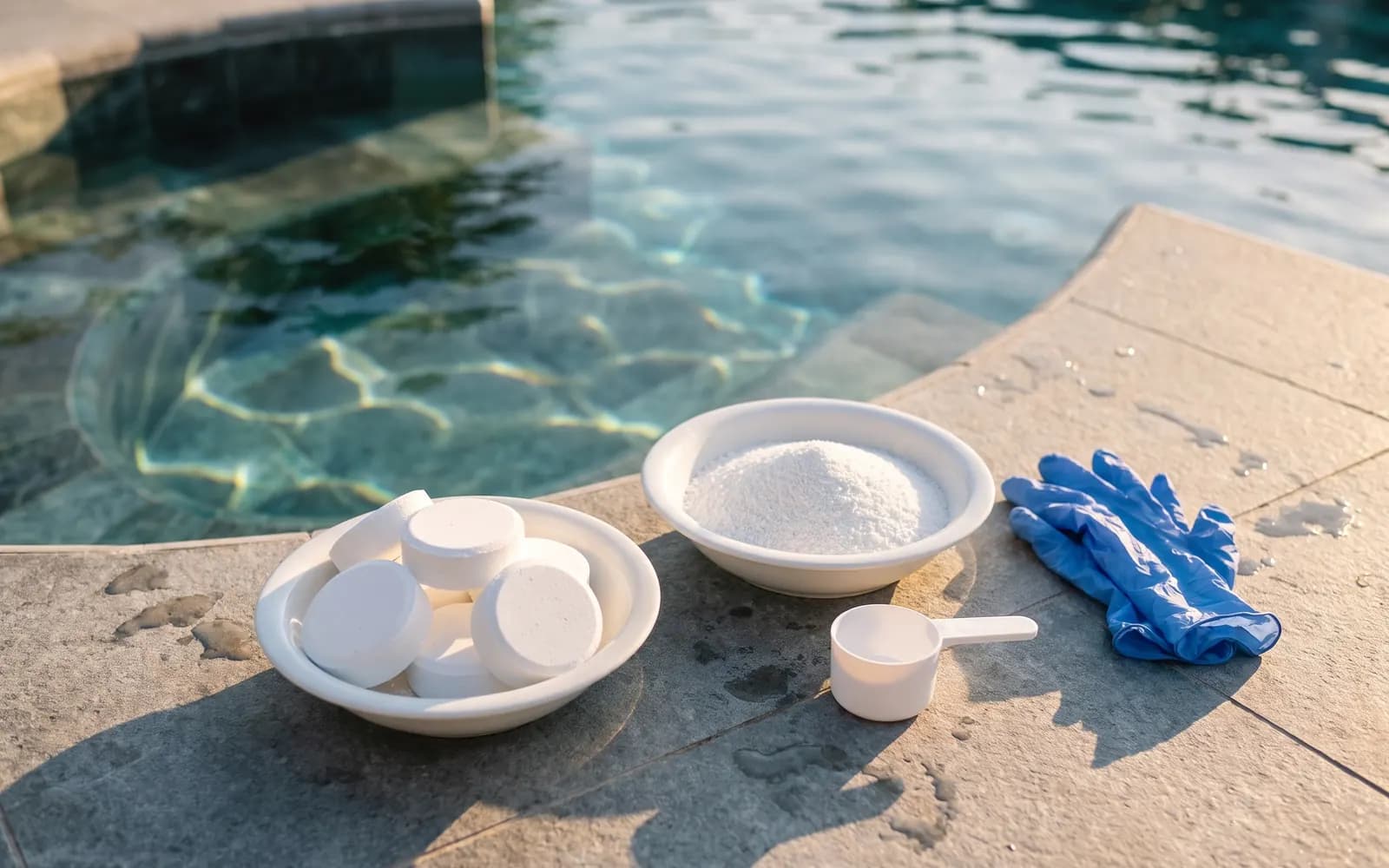
Chlorine tablets and granules: dissolution, use and selection
Chlorine products differ in active ingredient, concentration and intended use. Shape alone does not determine strength or dosing method.
View- 13 September 2026
- 3 min read
 Maintenance
Winter pool chemicals: purpose, limits and product selection
Winter treatment depends on the actual pool system and product formulation. Water care, equipment freeze protection and ongoing checks are separate tasks.
View- 13 September 2026
- 3 min read
- Maintenance · 9 September 2026Pool maintenance for beginners: testing order and a weekly routinePool maintenance for beginners: testing and correcting pH, alkalinity, chlorine, hardness and cyanuric acid in the right order, plus a weekly filter and water level routine.9 min read
- Pool Construction · 29 April 2026Indoor Pool Construction: The Engineering of Four-Season UseWhat makes a covered pool comfortable year-round is not the water itself but the volume that surrounds it.7 min read
- Design · 12 March 2026Jacuzzi Maintenance: Water Chemistry, Filter and Winter ProtectionA jacuzzi's small volume and hot water make upkeep special. We explain water chemistry, filter care, regular cleaning and winter protection step by step.6 min read
- Maintenance · 13 September 2026Pool clarifier and flocculant: differences, uses and selectionClarification, flocculation and filter compatibility compared for cloudy pool water. The right choice follows the product instructions, not the name.3 min read
- Maintenance · 13 September 2026Chlorine tablets and granules: dissolution, use and selectionChlorine products differ in active ingredient, concentration and intended use. Shape alone does not determine strength or dosing method.3 min read
- Maintenance · 13 September 2026Winter pool chemicals: purpose, limits and product selectionWinter treatment depends on the actual pool system and product formulation. Water care, equipment freeze protection and ongoing checks are separate tasks.3 min read
// 04 · Company & Contact
To talk about your project, call or write to us.
Legal Name
Çilek Havuz
Founded
1998 · Istanbul
Head Office
Çilek Plaza, Eyüp Sultan Mah. Yakacık Cd. Feshane Cd. No: 2 D:4 D:1, 34885 Sancaktepe / İstanbul
Service Area
All of Türkiye · exports to 14 countries
Branches
Kyrgyzstan · Egypt · Algeria · Iraq
Showroom
Plan a showroom visit
At our showroom in Çilek Plaza, Sancaktepe, you can discuss your project with our team. We recommend booking an appointment by phone before your visit.
Working Hours
- Monday – Friday · 08:00 – 17:30
- Saturday · 08:00 – 12:30
- Closed on Sunday
Frequently Asked Questions
About Four-Season Pool Care, frequently asked questions.
Çilek Havuz Corporate
Pool and Wellness Engineering
- Response Time
- Same day
- Channels
- Phone · Email · WhatsApp
If the answer you are looking for is not here, send your question directly to us and our team will reply as soon as possible.
+90 216 475 39 37First test the water and balance the pH, then apply shock chlorination and run the filtration without interruption. With algae-related green water, brushing is also needed. Clearing may take a few days, and during this time you should backwash the filter regularly. If the problem recurs, the filtration time or capacity may be insufficient; in that case the system needs to be reviewed.
Çilek Havuz Corporate
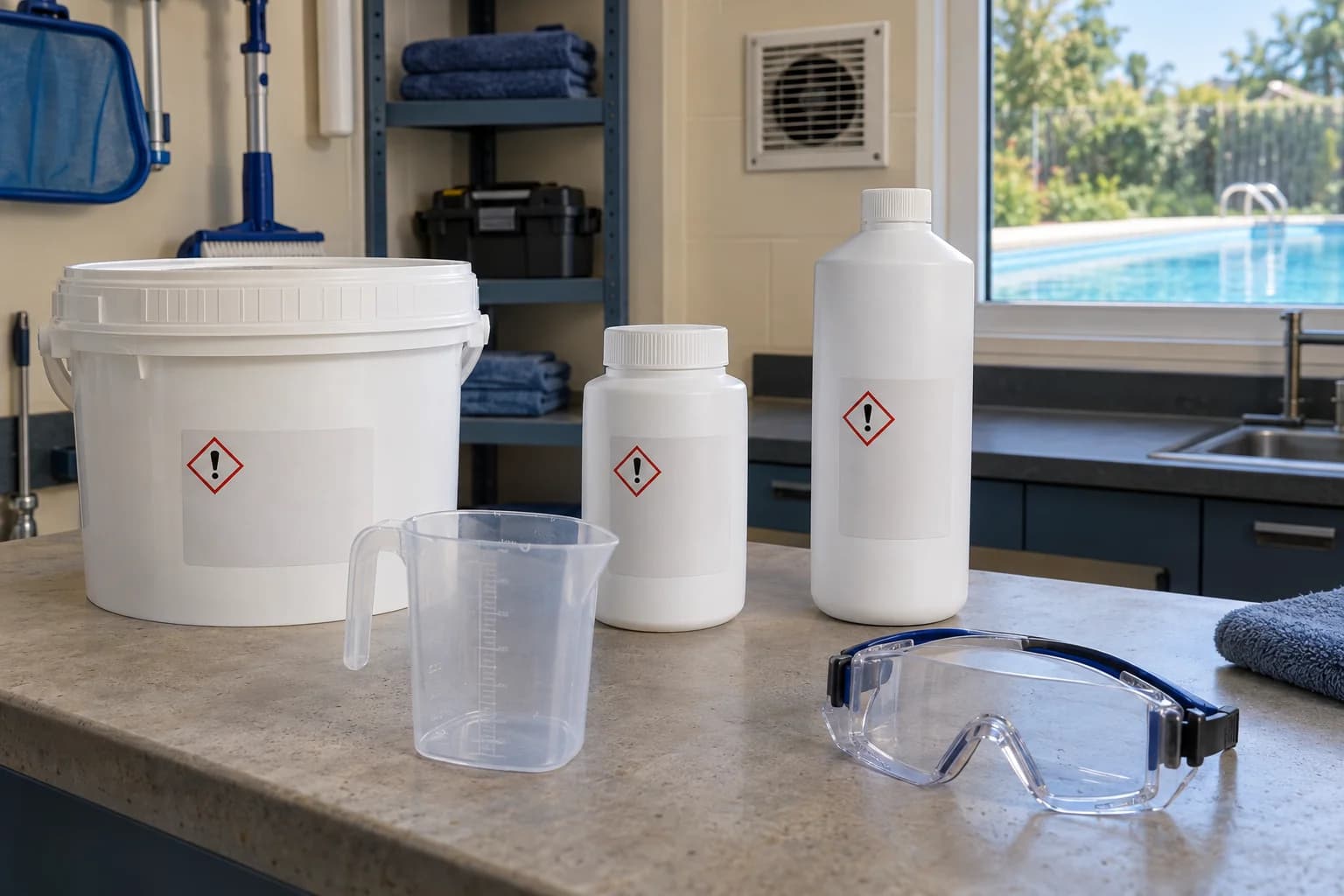
Never mix chemicals with each other, always add the chemical to the water (not the water to the chemical) and wear gloves and goggles. Store products in a separate place that is cool, dry and out of the reach of children. For dosage and application, follow the instructions on the product label.
Çilek Havuz Corporate
In pools that are used heavily and have trees around them, a robotic cleaner saves time and makes floor cleaning consistent. In small pools that get little dirt, a manual vacuum and the skimmer are usually enough. It makes sense to decide according to the size of your pool, its surroundings and the time you can spend on maintenance.
Çilek Havuz Corporate
In a pool whose water is kept balanced and filtered regularly, a full drain is not needed every season. Topping up and regular maintenance are usually enough. However, in water whose chemical balance has been off for a long time, or where the concentration of dissolved solids has risen excessively, a full change comes onto the agenda. Water tests are the most reliable measure of whether a change is needed.
Çilek Havuz Corporate
A salt chlorinator system produces chlorine automatically from the salt in the water. This reduces the burden of adding chemicals by hand, and for many users the water feels softer. Conventional chlorine has a lower initial investment but requires regular manual dosing. If comfort and continuity are your priority, the salt system comes to the fore; if a simple and economical installation is your priority, the conventional method does.
Çilek Havuz Corporate
Before leaving, balance the water and apply a light shock chlorination. Set the filtration on a timer to run a few hours a day and close the pool with a cover. If you have an automatic dosing system, fill its tank. During a long absence, an interim check by an acquaintance or a service team prevents the surprise of green water on your return.
Çilek Havuz Corporate
Rainwater lowers pH and alkalinity, and wind brings in an organic load. After a storm, collect the coarse debris, run the filtration without interruption for a few hours, then measure and correct pH and chlorine. If the water is noticeably cloudy, apply shock chlorination in the evening and leave the pump running until morning.
Çilek Havuz Corporate
The white deposit is mostly scale; when high calcium hardness and high pH combine, the water leaves the excess on warm surfaces and at the waterline. Keeping calcium in the 200-400 ppm band and pH below 7.6 stops the build-up. Existing deposits are removed with an acidic waterline cleaner suitable for the finish; a wire brush and general-purpose acid damage the finish.
Çilek Havuz Corporate
Two extra checks are enough. Wash the heat pump's evaporator coil with low-pressure water once or twice a season (leaves and pollen reduce efficiency), and do not neglect calcium hardness, as scale builds up first in the heat exchanger. Warm water also speeds up chemical consumption; in water above 28 °C, measure more often.
Çilek Havuz Corporate