


Pool maintenance for beginners: testing order and a weekly routine
Pool maintenance for beginners: testing and correcting pH, alkalinity, chlorine, hardness and cyanuric acid in the right order, plus a weekly filter and water level routine.
Project Manager · Mechatronics Engineer · Çilek Havuz
- Published
- Updated
- Reading
- 9 min read
- Category
- Maintenance
Pool maintenance for beginners: testing and correcting pH, alkalinity, chlorine, hardness and cyanuric acid in the right order, plus a weekly filter and water level routine.
Pool maintenance for beginners covers the five jobs a person running their first pool needs to do on a weekly routine: testing the water, dosing chemicals according to the test, running and cleaning the filter, cleaning the surface and floor, and keeping the water level right.
The order and frequency of these jobs depend not on the size of the pool but on the chemistry of the water; a 30 m³ villa pool and a 300 m³ residential complex pool follow the same testing order.
This article is not a dosing calculation or a chemical product guide. What it covers is building the habit of order and testing in the first season; once the routine is in place, pool maintenance takes less than an hour a week.
Pool water is defined by five values.
Pool pH is kept between 7.2 and 7.8, with 7.4, the pH of human tears, regarded as the ideal set point; total alkalinity is targeted at 80-120 mg/L and calcium hardness at 200-400 mg/L. Free chlorine does the disinfecting, while cyanuric acid protects chlorine from sunlight and extends the half-life of the active chlorine residual by 4 to 6 times.
| Value | Target range | Testing frequency | If low | If high |
|---|---|---|---|---|
| pH | 7.2-7.6 (target 7.4) | Daily or every other day | pH increaser (sodium carbonate) | pH reducer (sodium bisulphate or acid) |
| Total alkalinity | 80-120 mg/L | Once a week | Sodium bicarbonate | Acid, in split doses while circulation runs |
| Free chlorine | Specification value; shock target 10 mg/L | Daily | Chlorine product or salt chlorinator setting | Stop dosing, sunlight consumes it; shock if combined chlorine is high |
| Calcium hardness | 200-400 mg/L | Once a month | Calcium chloride | Partial water replacement |
| Cyanuric acid | No fixed numerical range; an upper limit is set and monitored | Once a month | Add stabiliser (outdoor pool) | Partial water replacement; no chemical lowers it |
The most important information in the table is the correction order: alkalinity first, then pH, then calcium hardness. Alkalinity is the buffer for pH; pH corrected without a buffer drifts back within a day and the chemical is wasted. Cyanuric acid and hardness only ever rise; the only way to lower them is to drain part of the water and refill with fresh water.
The situation that surprises beginners most is this: the test kit shows enough chlorine, yet the water still turns green.
The reason is pH. In water, chlorine forms hypochlorous acid (HOCl), and HOCl partly dissociates into the hypochlorite ion (OCl-); the pKa of this dissociation is 7.53. At pH 7.2 most of the chlorine is in the active HOCl form; at pH 8 most of it has shifted to the weaker OCl- form. The test kit shows the same figure in both cases; disinfecting power is decided by pH.
The second confusion is the chlorine smell. The smell does not come from free chlorine but from chloramines (combined chlorine), which chlorine forms with nitrogen-containing waste such as sweat and urine. Smell and stinging eyes are a sign of too little chlorine, not too much; the answer is to add chlorine, not cut it. Chloramines are broken down by superchlorination (shocking); a typical summer practice is shocking every two weeks to a target of 10 mg/L.
The order starts with the jobs that give the most result for the least intervention in the water.
Filtration and circulation come before everything else: no chemical spreads evenly unless the pump runs at least one full turnover a day. Physical cleaning comes next; leaves on the surface and sediment on the floor add organic load to the water and consume chlorine. Testing and dosing follow cleaning; samples are taken while circulation is running and at least one turnover after a chemical dose.
Weekly routine (summer season)
- 01Every day: check the pump run time; empty the skimmer basket and the pump strainer; make sure the water level is at the middle of the skimmer mouth.
- 02Daily or every other day: test pH and free chlorine; log them; correct pH if it is outside 7.2-7.6.
- 03Once a week: skim the surface, vacuum the floor or run the robot; brush the walls; test alkalinity and correct it first.
- 04Once a week: check the filter pressure gauge; backwash if it is clearly above the starting pressure; top up the water level after backwashing.
- 05Every two weeks (weekly in heavy use): an evening shock dose, then a combined chlorine check the next morning.
- 06Once a month: test calcium hardness and cyanuric acid; if cyanuric acid is approaching the upper limit, plan a partial water replacement.
- 07Every month: count the chemical stock; close open packs; keep acid and chlorine on separate shelves.
The logbook is the backbone of the routine. Date, pH, free chlorine, combined chlorine, alkalinity, chemical added and quantity go on one line. Two weeks of records show how much chlorine the pool consumes per day and which way pH drifts; dosing is read from that log, not guessed.
The sand filter is the pool's only mechanical cleaner.
As water passes through the filter sand it leaves the suspended particles behind; when the sand is loaded, inlet pressure rises and the filter is cleaned by backwashing. The one gauge a beginner needs to learn is the pressure gauge: note the pressure with a clean filter and backwash when it rises clearly. Backwashing sends water out of the pool; top the level back up to the middle of the skimmer mouth, otherwise the skimmer draws air and the pump runs dry.
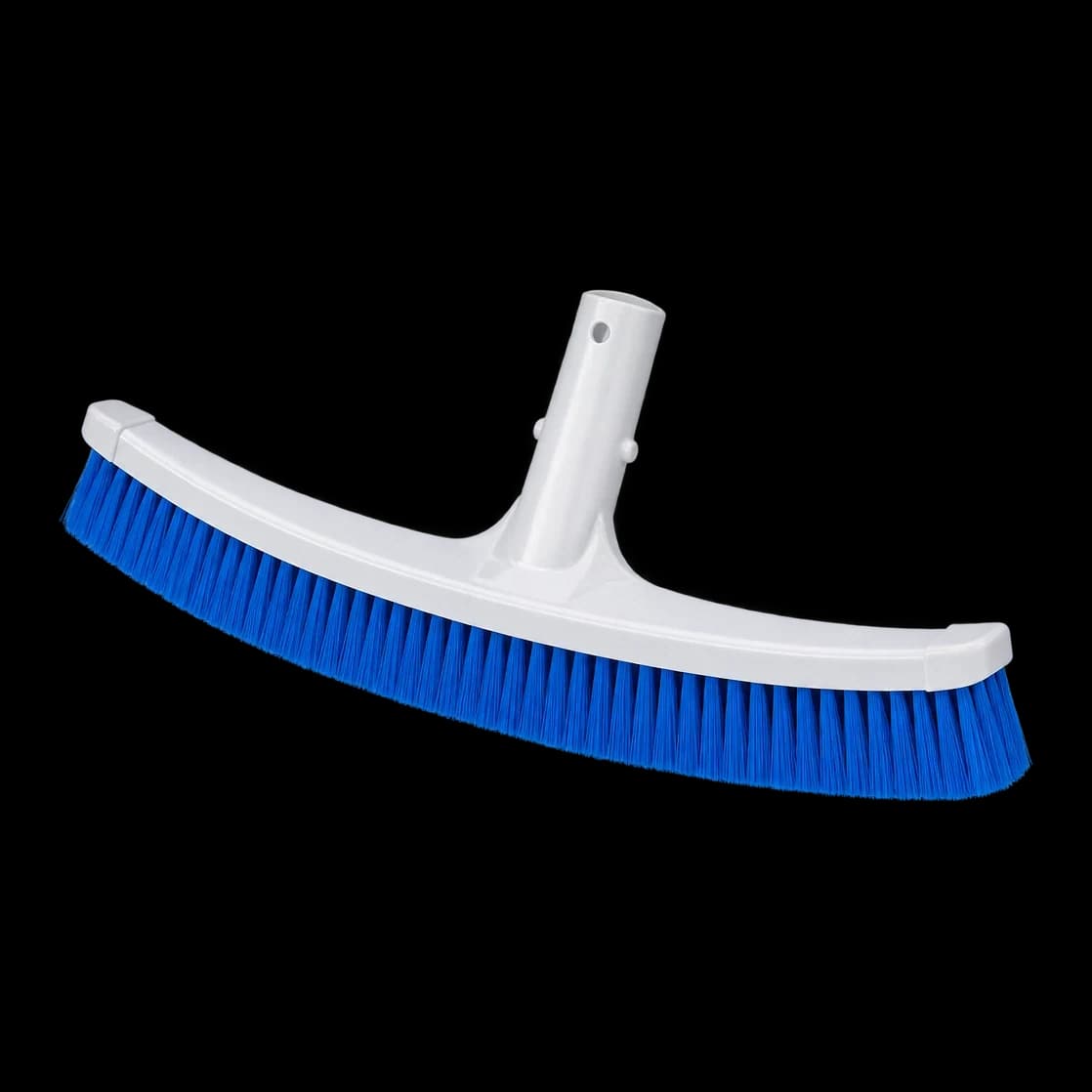
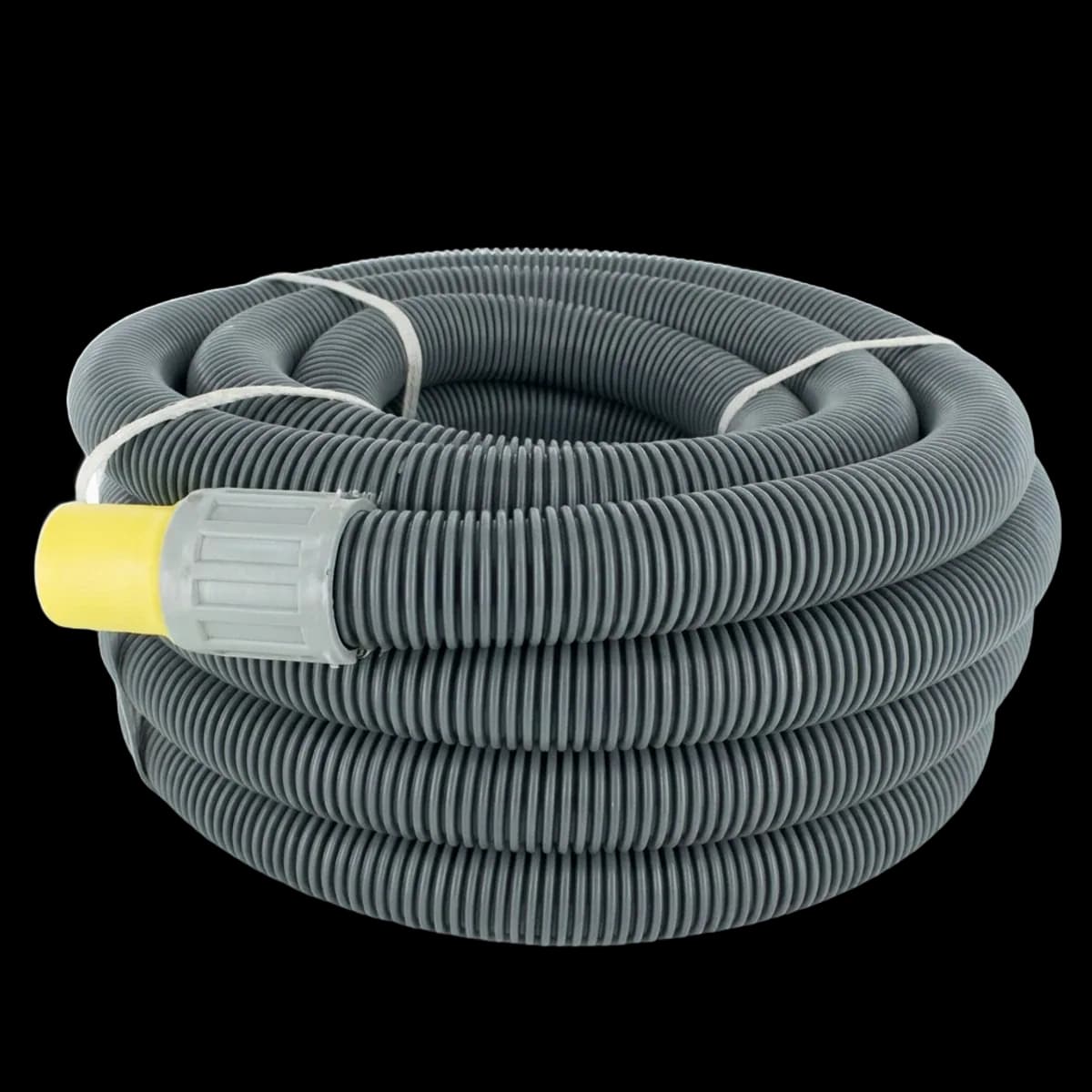
The cleaning equipment list is short: a telescopic pole, a leaf skimmer, a pool vacuum or automatic robot, a wall brush, and a DPD tablet test kit or test strips. The DPD method measures free and total chlorine separately, and the difference between them is combined chlorine; test strips give a rough idea, while the DPD kit is used for the log. Choosing a pump and filter is the subject of separate articles; in the first season it is enough to use the existing equipment correctly.
Glossary
- Free chlorine
- Hypochlorous acid and hypochlorite ion able to disinfect the water; measured with a DPD 1 tablet.
- Combined chlorine (chloramine)
- Compounds formed by chlorine with nitrogen-containing waste; the cause of smell and stinging eyes. It is the difference between total and free chlorine.
- Shocking (superchlorination)
- Raising free chlorine to a high level for a short time to break down chloramines; 10 mg/L is the usual target.
- Total alkalinity
- The water's capacity to hold pH steady against added acid; 80-120 mg/L. It comes first in the correction order.
- Cyanuric acid
- A stabiliser that protects free chlorine from sunlight; it extends half-life 4-6 times, builds up with trichlor tablets and only falls with water replacement.
- Turnover
- The time needed for the full pool volume to pass through the filter once; wait at least one turnover between dosing and testing.
- Backwash
- Cleaning the filter sand by running water through it in reverse; done when gauge pressure rises, followed by topping up the water level.
The two critical days of the first season are opening and closing.
At opening, the winter cover comes off, the surface and floor are cleaned, the level is topped up, and the filter and pump are checked and started; then the five values are tested, and alkalinity, then pH, then hardness are corrected and a shock dose is given. The pump runs continuously until the water clears. At closing the order is reversed: final test and balance, final shock, winterising liquid, lowering the level below the skimmer mouth, draining the pipework, and the cover.
Once the maintenance routine is in place, the operating side of the pool project is settled: testing order, weekly list and logbook. Automatic dosing and remote monitoring make this routine easier but do not replace it; automation tests the same five values and corrects them in the same order.
Next step
Let us discuss your project in the way that suits you best.
You can fill in the form for a written quote, schedule a video project presentation or ask us to survey your project site.
Get a Quote
Send us your dimensions and expectations in writing.
Online presentation
Video project presentation
On-site survey
Inspection at your project site
// 01 · Products in this article
For the work described in this article, manual cleaning equipment.
Each card leads to the product page with its data sheet, model list and quotation.
- 4 models

- 1 model

- 3 models
- 1 model

- 4 models
List prices as of 9 October 2026, excl. VAT.
// 02 · Product groups
Compare the products on this topic on their category pages.
Each card leads to a product category; models, technical sheets and list prices are there.
 Product category
Manual Pool Cleaning Equipment
Pool floor/wall vacuum heads, cleaning brushes, leaf nets, telescopic poles and floating hoses in the Blue Line, Shark, Classic and Serenit ranges, the hand tools of everyday maintenance.
View- 16 products
 Product category
Pool Chemicals
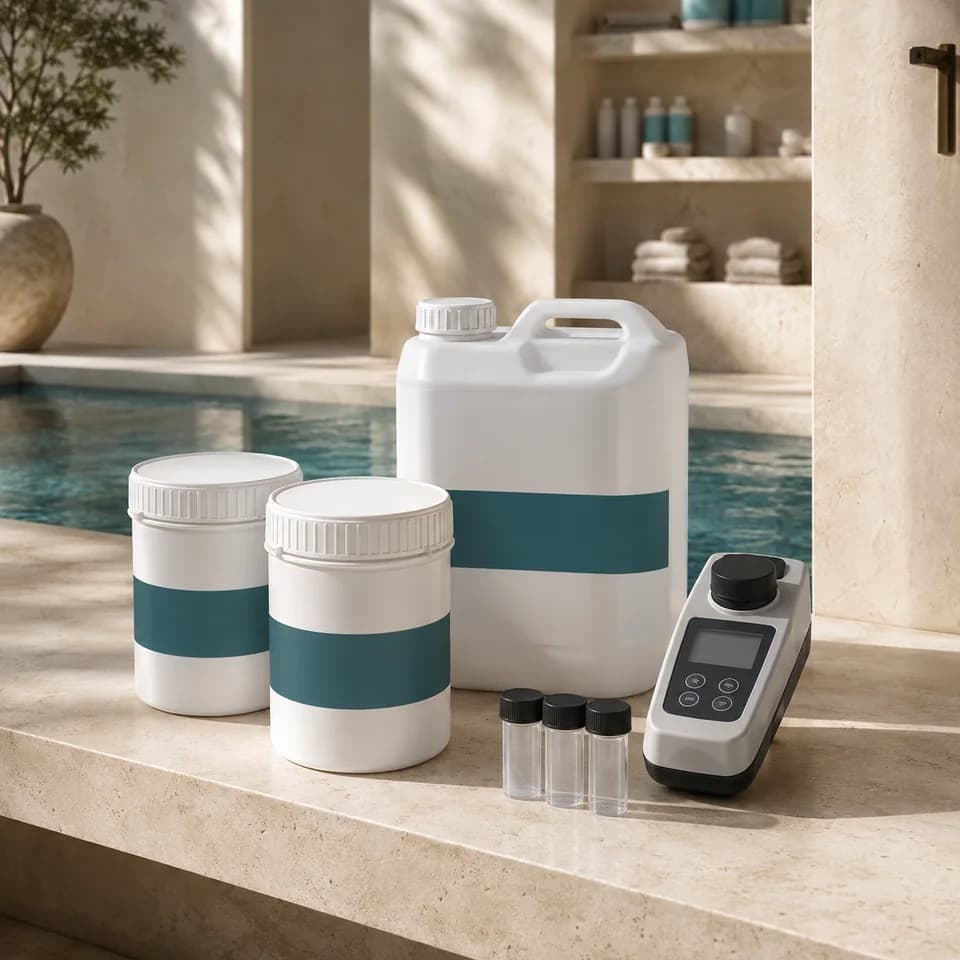
From chlorine, pH regulators, algaecides and clarifiers to digital testers: full-range water chemistry products that keep your pool crystal clear.
View- 19 products
 Product category
Pool Cleaning Robots
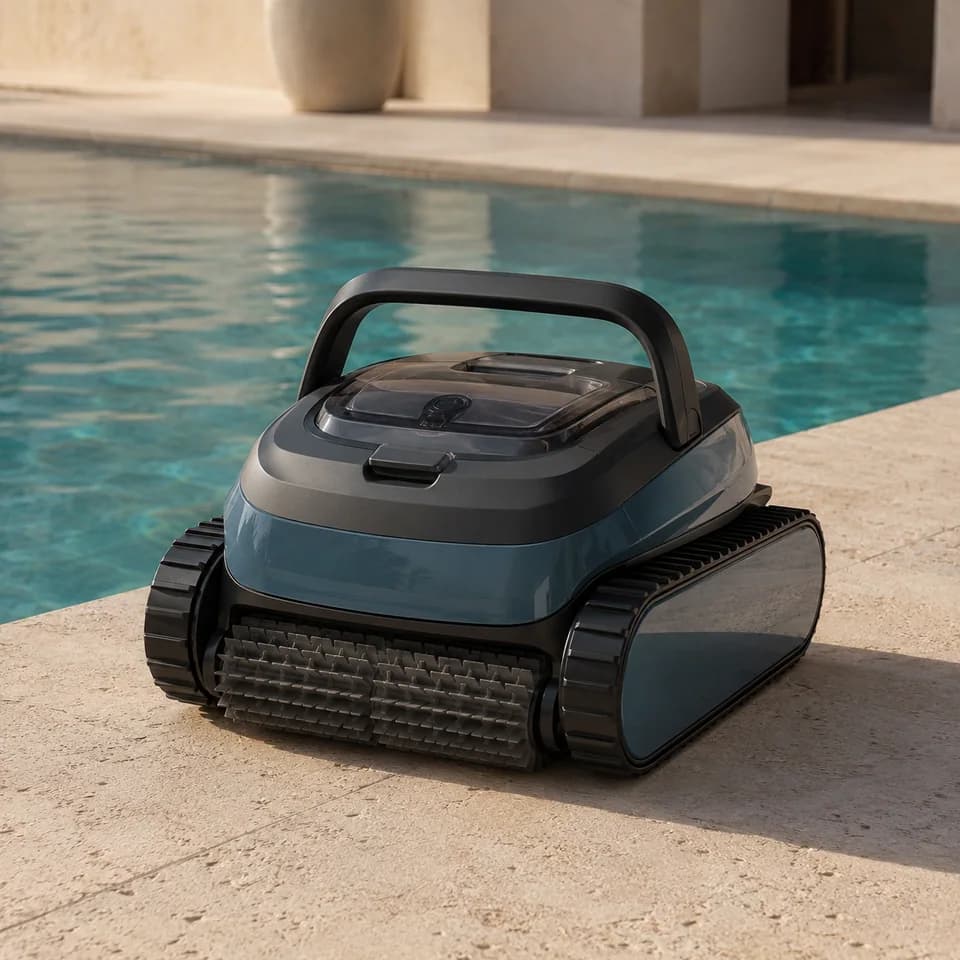
Automate floor, wall and waterline maintenance without manual cleaning, using cordless, intelligent pool cleaning robots.
View- 24 products
Product category
Manual Pool Cleaning Equipment
Pool floor/wall vacuum heads, cleaning brushes, leaf nets, telescopic poles and floating hoses in the Blue Line, Shark, Classic and Serenit ranges, the hand tools of everyday maintenance.
16 productsProduct category
Pool Chemicals
From chlorine, pH regulators, algaecides and clarifiers to digital testers: full-range water chemistry products that keep your pool crystal clear.
19 productsProduct category
Pool Cleaning Robots
Automate floor, wall and waterline maintenance without manual cleaning, using cordless, intelligent pool cleaning robots.
24 products
// 03 · Related service
The work in this article, we deliver from design to handover.
Çilek Havuz service
Pool Maintenance
Water chemistry, equipment and periodic maintenance.
How we work
- 01Initial meeting and site surveyWe inspect the site and listen to the brief.
- 02Design and quotationWe give the cost item by item, in writing.
- 03ExecutionThe same team builds to a written schedule.
- 04Handover and commissioningWe start the systems and explain their use.
- 05Maintenance and technical supportWe provide periodic maintenance and support.
// 04 · Guides
On Maintenance, more articles to read.
First the articles directly related to this one, then the newest articles on the topic.
 Maintenance
Four-Season Pool Care: The Secrets to Crystal-Clear Water
Practical ways to keep your pool crystal clear all year with the right chemical balance, regular filtration and seasonal routines.
View- 12 May 2026
- 9 min read
 Design
Jacuzzi Maintenance: Water Chemistry, Filter and Winter Protection
A jacuzzi's small volume and hot water make upkeep special. We explain water chemistry, filter care, regular cleaning and winter protection step by step.
View- 12 March 2026
- 6 min read
 Design
What Are the Health Benefits of Regular Swimming?
Swimming is a full-body exercise that puts little load on the joints. We look at its benefits for the heart and general fitness without giving medical advice.
View- 30 August 2026
- 5 min read
 Maintenance
Pool clarifier and flocculant: differences, uses and selection
Clarification, flocculation and filter compatibility compared for cloudy pool water. The right choice follows the product instructions, not the name.
View- 13 September 2026
- 3 min read
 Maintenance
Chlorine tablets and granules: dissolution, use and selection
Chlorine products differ in active ingredient, concentration and intended use. Shape alone does not determine strength or dosing method.
View- 13 September 2026
- 3 min read
 Maintenance
Winter pool chemicals: purpose, limits and product selection
Winter treatment depends on the actual pool system and product formulation. Water care, equipment freeze protection and ongoing checks are separate tasks.
View- 13 September 2026
- 3 min read
- Maintenance · 12 May 2026Four-Season Pool Care: The Secrets to Crystal-Clear WaterPractical ways to keep your pool crystal clear all year with the right chemical balance, regular filtration and seasonal routines.9 min read
- Design · 12 March 2026Jacuzzi Maintenance: Water Chemistry, Filter and Winter ProtectionA jacuzzi's small volume and hot water make upkeep special. We explain water chemistry, filter care, regular cleaning and winter protection step by step.6 min read
- Design · 30 August 2026What Are the Health Benefits of Regular Swimming?Swimming is a full-body exercise that puts little load on the joints. We look at its benefits for the heart and general fitness without giving medical advice.5 min read
- Maintenance · 13 September 2026Pool clarifier and flocculant: differences, uses and selectionClarification, flocculation and filter compatibility compared for cloudy pool water. The right choice follows the product instructions, not the name.3 min read
- Maintenance · 13 September 2026Chlorine tablets and granules: dissolution, use and selectionChlorine products differ in active ingredient, concentration and intended use. Shape alone does not determine strength or dosing method.3 min read
- Maintenance · 13 September 2026Winter pool chemicals: purpose, limits and product selectionWinter treatment depends on the actual pool system and product formulation. Water care, equipment freeze protection and ongoing checks are separate tasks.3 min read
// Sources and regulations
Sources and regulations
The official documents behind the technical framework on this page; links open the institutions' own sites.
- Regulation on the Health Principles and Conditions for Swimming Pools (Official Gazette No. 27866, 6 March 2011)Official Gazette of Türkiye
- Regulation Amending the Swimming Pools Regulation (Official Gazette, 15 December 2011)Official Gazette of Türkiye
- Guidelines for safe recreational water environments, Volume 2: Swimming pools and similar environments
// 05 · Company & Contact
To talk about your project, call or write to us.
Legal Name
Çilek Havuz
Founded
1998 · Istanbul
Head Office
Çilek Plaza, Eyüp Sultan Mah. Yakacık Cd. Feshane Cd. No: 2 D:4 D:1, 34885 Sancaktepe / İstanbul
Service Area
All of Türkiye · exports to 14 countries
Branches
Kyrgyzstan · Egypt · Algeria · Iraq
Showroom
Plan a showroom visit
At our showroom in Çilek Plaza, Sancaktepe, you can discuss your project with our team. We recommend booking an appointment by phone before your visit.
Working Hours
- Monday – Friday · 08:00 – 17:30
- Saturday · 08:00 – 12:30
- Closed on Sunday
Frequently Asked Questions
About Pool maintenance for beginners, frequently asked questions.
Çilek Havuz Corporate
Pool and Wellness Engineering
- Response Time
- Same day
- Channels
- Phone · Email · WhatsApp
If the answer you are looking for is not here, send your question directly to us and our team will reply as soon as possible.
+90 216 475 39 37With a DPD test kit and a logbook. In the first week, test and record pH and free chlorine every day; test alkalinity at the end of the week. The correction order is always alkalinity, pH, hardness. The pump should run at least one full turnover a day.
Çilek Havuz Corporate
pH and free chlorine daily or every other day, alkalinity once a week, calcium hardness and cyanuric acid once a month. Heavy use and hot weather call for more frequent tests. Test while circulation is running and at least one turnover after the last dose.
Çilek Havuz Corporate
No. The smell and stinging eyes come from chloramines (combined chlorine), which chlorine forms with nitrogen-containing waste, and they are a sign of too little chlorine. The answer is not to cut the dose but to give an evening shock dose to break down the chloramines; combined chlorine is tested again in the morning.
Çilek Havuz Corporate
When the gauge rises clearly above the starting pressure recorded with a clean filter. Because backwashing sends water out of the pool, the level is then topped up to the middle of the skimmer mouth; otherwise the skimmer draws air and the pump runs dry.
Çilek Havuz Corporate
None. Cyanuric acid does not evaporate and does not break down under pool conditions; it builds up as trichlor tablets are used. The only way to lower it is to drain part of the water and refill with fresh water. That is why it is tested monthly against a set upper limit.
Çilek Havuz Corporate