

Pool Water Operator Certification 2026: Where to Get It, Who Needs It
Who needs a pool water operator certificate in Türkiye, where do you get one, and how does the course and exam work? An up-to-date guide for complexes, hotels, and facilities.
Project Manager · Mechatronics Engineer · Çilek Havuz
- Published
- Updated
- Reading
- 8 min read
- Category
- Maintenance
Who needs a pool water operator certificate in Türkiye, where do you get one, and how does the course and exam work? An up-to-date guide for complexes, hotels, and facilities.
A pool water operator certificate is the official document showing that the person responsible for a pool's water quality, chemical dosing and hygiene records is qualified to do the job.
Türkiye's regulation on the health standards for swimming pools requires every publicly accessible pool to have a trained operator on duty.
This isn't arbitrary red tape: incorrect chlorine dosing, unbalanced pH, or neglected filtration create serious health risks and administrative penalties for the operator. A certified operator is the facility's first line of assurance during inspections.
Residential complexes, hotels, sports facilities, aquaparks, and any publicly accessible swimming pool operation are required to keep at least one certified pool water operator on staff.
Standalone villa pools carry no legal requirement; even so, we regularly see that homeowners who handle their own maintenance get real value out of this training's content.
A common mistake in residential complexes is leaving the job to uncertified staff: if an inspection finds this, the fine falls on the building management. If you outsource maintenance, don't skip checking that the firm you contract with holds valid operator certificates.
The certificate is obtained at the end of approved training run by authorised bodies.
The programme usually covers pool water chemistry, disinfection, filtration systems, record-keeping and first aid; those who pass the final exam are certified.
You apply with ID, proof of education and a health report; places vary by province. Course fees also differ by province and provider, so ask the authorised body in your province about the current fee and procedure.
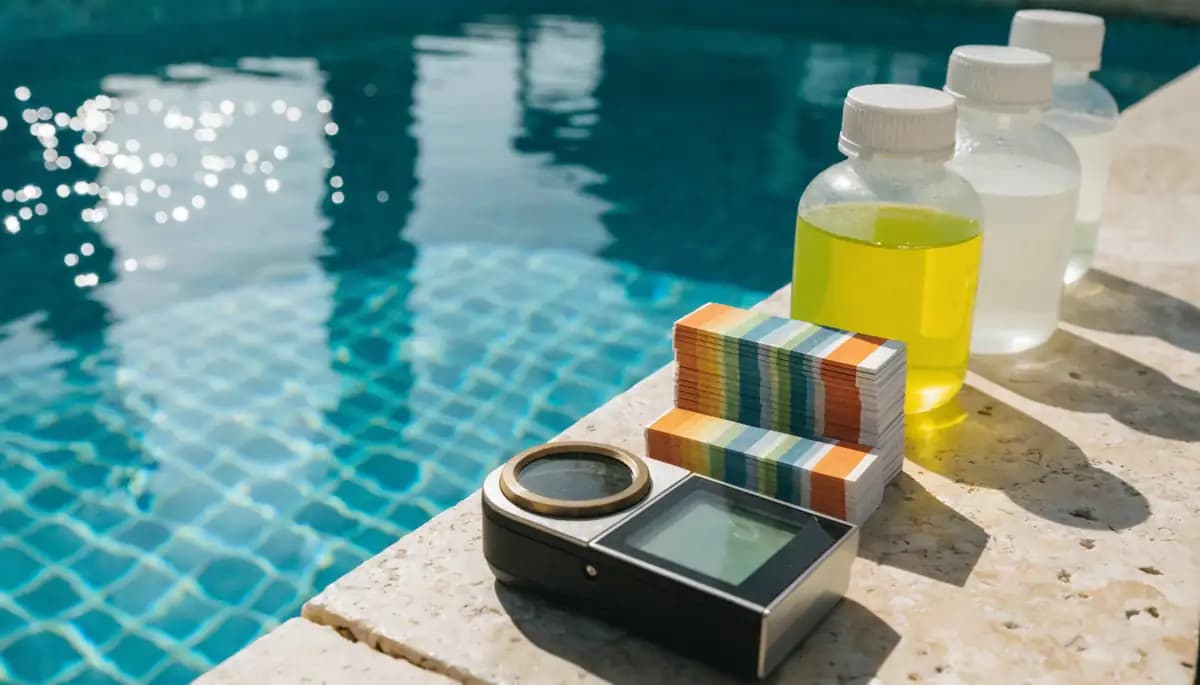
The backbone of a good operator training is water chemistry: what the target ranges mean, free chlorine at 1-3 ppm, pH at 7.2-7.6, total alkalinity at 80-120 ppm, which chemical to use in what order when readings drift, and how to keep accurate daily measurement logs, all taught hands-on.
On the filtration side, backwashing, sand replacement and pump maintenance are covered; on the hygiene side, floor cleaning, surface skimming and disinfection protocols. The exam is practical, and candidates who connect the lessons to problems they meet on site handle it without trouble.
At inspection, a publicly accessible pool without a certified operator faces an administrative fine, and repeat findings can lead to closure.
In the event of a health incident tied to water quality, an operation's legal liability compounds significantly if it lacked certification.
Worse than the fine is the damage to reputation: one photo of a cloudy pool on social media can overshadow a whole season for a residential complex or hotel. A certified operator keeps that risk small by measuring every day.
The operator runs day-to-day operations; but tasks like season opening and closing, sand replacement, plumbing repairs, and equipment renewal call for engineering support.
Since 1993, we've provided both turnkey maintenance and technical consulting to operators for residential complexes and hotel pools.
We can take over maintenance entirely, and if you already have an operator, we set up a hybrid model that works alongside them.
A certified operator's most fundamental task is measuring and logging free chlorine and pH at least twice a day.
One measurement is taken before the pool opens, the other during peak-use hours, because water quality shifts quickly under load. Temperature, turbidity, and water level are also observed and recorded on the same round.
The weekly routine is broader: total alkalinity, calcium hardness, cyanuric acid, and, in indoor pools, combined chlorine levels are all checked. These parameters explain why the daily readings keep drifting: for example, in a pool with low alkalinity, pH never stays steady, and the operator ends up dosing chemicals every day for the same recurring problem. Good operating means reading the cause, not just the symptom.
Businesses that treat record-keeping as a formality are the ones that struggle most during inspections. A measurement log isn't just an obligation: it's the only document that shows exactly when a problem started. As we've seen on-site, facilities that keep consistent records also use less chemical, because interventions are made based on data rather than guesswork.
The file requested at an inspection usually includes: the certified operator's certificate, daily water measurement logs, periodic water analysis reports from an accredited laboratory, staff health and hygiene certificates, and the approvals and safety data sheets for the chemicals in use.
The business licence and the pool's technical documentation go with them.
The most common slip-up is having the documents but no organised file for them. Not being able to locate a report during an inspection produces the same outcome as not having the report at all. We recommend that residential complex and hotel management keep these documents in a dedicated folder in the pool's technical room, with a digital backup: this is the document set most often lost during staff handovers.
The second critical point is currency: if the analysis report is out of date, or if days are missing from the measurement log, the records won't stand up for the business. Placing all responsibility with a single person, with no second certified staff member to step in when they take leave, is a common structural gap that inspections expose.
In publicly accessible pools, a water sample is sent to an accredited laboratory at regular intervals throughout the season: commonly at least once a month.
This analysis is different from the chlorine and pH measurements the operator takes on-site: microbiological parameters can only be seen in a lab, and this report is really what shows a pool's true hygiene status.
The sampling method directly affects the result. A sample not taken from a sterile container, the correct depth, and a representative point in the pool comes back misleading; a sample taken right after chlorination doesn't reflect the real picture either. When working with a lab, we recommend agreeing the sampling protocol with your operator upfront, and having lab staff take the sample themselves where possible.
The job isn't done once the report arrives; what matters most is what happens if a deviation shows up. In a microbiological non-compliance, the pool is closed to use, shock-treated, filtration turnover and backwashing are reviewed, and a new sample is taken. Keeping a record of these steps is the strongest evidence a business can show during an inspection that it's actively managing the issue.
In indoor pools, the operator's responsibility isn't limited to the water: the air itself is an operating parameter too.
Combined chlorine (chloramine) compounds, formed when chlorine reacts with sweat, cosmetic residue, and urine, create that unmistakable sharp 'pool smell.' That smell isn't a sign of cleanliness: it's actually a sign of inadequate water and air management.
The fix isn't dosing more chlorine, it's fresh air and correct water management: adequate ventilation flow, regular top-up with fresh water, shock treatment when needed, and enforcing a shower-before-swimming culture. This topic is usually the least understood one in operator training, yet it's the source of most indoor pool complaints we see on-site.
The second difference in indoor pools is duration: an outdoor pool runs seasonally, while an indoor pool operates twelve months a year. That accelerates wear on filtration equipment, pumps, and dehumidifiers. Tying the annual maintenance plan to the calendar rather than the season is one of the habits we most often recommend for indoor pool operations.
The decision depends on how many pools you have and how heavily they're used.
In complexes with a single, seasonally operated pool, a full-time in-house operator often doesn't make sense at that scale; contracting a maintenance firm that employs certified staff tends to be more sustainable. In complexes with multiple pools, hotels, and year-round facilities, an in-house operator brings both speed and ownership.
Whichever model you choose, three things need to be spelled out clearly in the contract: who supplies the chemicals, how often visits happen, and the emergency response time. The most common dispute we see on-site comes from contracts described as 'maintenance included' where chemical and repair line items are left undefined. We strongly urge management to get these three items in writing.
A third route is a hybrid model: on-site staff handle daily measurement and cleaning, while season opening and closing, sand replacement, equipment maintenance, and inspection paperwork go to a professional team. Since 1993, we've set up all three of these models for residential complexes and hotel pools; during the site survey, we work out which one fits your facility based on pool volume and user numbers.
Next step
Let us discuss your project in the way that suits you best.
You can fill in the form for a written quote, schedule a video project presentation or ask us to survey your project site.
Get a Quote
Send us your dimensions and expectations in writing.
Online presentation
Video project presentation
On-site survey
Inspection at your project site
// 01 · Guides
On Maintenance, more articles to read.
First the articles directly related to this one, then the newest articles on the topic.
 Pool Construction
Pool Permit & License 2026: Documents and Application
Which documents are needed for a pool permit and license? We explain the required paperwork, municipal approval steps and the application process for 2026.
View- 16 July 2026
- 9 min read
 Sauna
SaunaHome Sauna: Who It's For, Which Type and How to Install
What to know when deciding on a home sauna: the difference between infrared and Finnish saunas, apartment feasibility, choosing a type, and how to tell whether a sauna really suits you.
View- 7 June 2026
- 6 min read
 Maintenance
When to Change Pool Water: Water Saving Tips
Fully draining your pool is often needless waste. We explain TDS, partial versus full water changes, when to change water and how to save it.
View- 2 April 2026
- 5 min read
 Maintenance
Pool clarifier and flocculant: differences, uses and selection
Clarification, flocculation and filter compatibility compared for cloudy pool water. The right choice follows the product instructions, not the name.
View- 13 September 2026
- 3 min read
 Maintenance
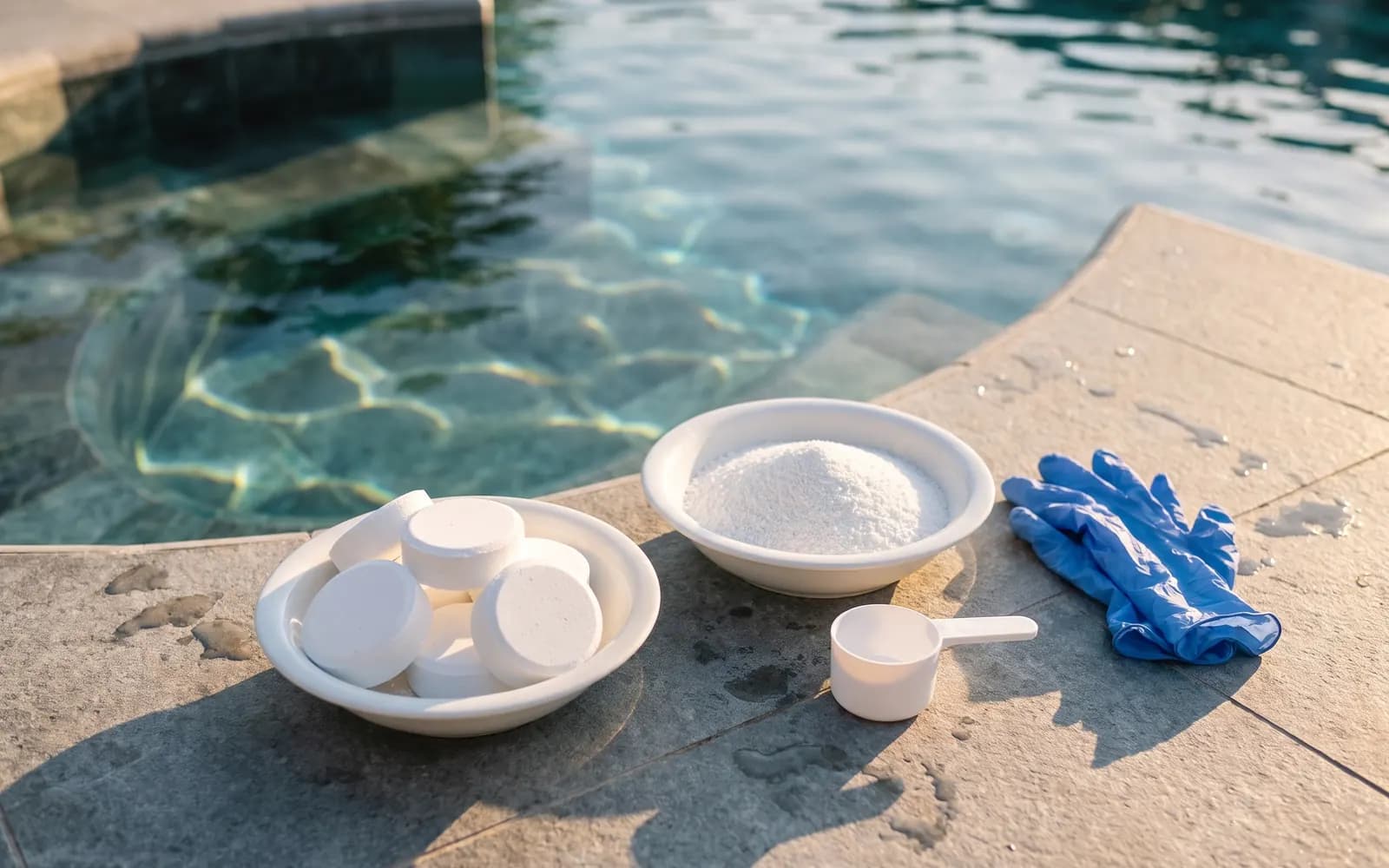
Chlorine tablets and granules: dissolution, use and selection
Chlorine products differ in active ingredient, concentration and intended use. Shape alone does not determine strength or dosing method.
View- 13 September 2026
- 3 min read
 Maintenance
Winter pool chemicals: purpose, limits and product selection
Winter treatment depends on the actual pool system and product formulation. Water care, equipment freeze protection and ongoing checks are separate tasks.
View- 13 September 2026
- 3 min read
- Pool Construction · 16 July 2026Pool Permit & License 2026: Documents and ApplicationWhich documents are needed for a pool permit and license? We explain the required paperwork, municipal approval steps and the application process for 2026.9 min read
- Sauna · 7 June 2026Home Sauna: Who It's For, Which Type and How to InstallWhat to know when deciding on a home sauna: the difference between infrared and Finnish saunas, apartment feasibility, choosing a type, and how to tell whether a sauna really suits you.6 min read
- Maintenance · 2 April 2026When to Change Pool Water: Water Saving TipsFully draining your pool is often needless waste. We explain TDS, partial versus full water changes, when to change water and how to save it.5 min read
- Maintenance · 13 September 2026Pool clarifier and flocculant: differences, uses and selectionClarification, flocculation and filter compatibility compared for cloudy pool water. The right choice follows the product instructions, not the name.3 min read
- Maintenance · 13 September 2026Chlorine tablets and granules: dissolution, use and selectionChlorine products differ in active ingredient, concentration and intended use. Shape alone does not determine strength or dosing method.3 min read
- Maintenance · 13 September 2026Winter pool chemicals: purpose, limits and product selectionWinter treatment depends on the actual pool system and product formulation. Water care, equipment freeze protection and ongoing checks are separate tasks.3 min read
// 02 · Company & Contact
To talk about your project, call or write to us.
Legal Name
Çilek Havuz
Founded
1998 · Istanbul
Head Office
Çilek Plaza, Eyüp Sultan Mah. Yakacık Cd. Feshane Cd. No: 2 D:4 D:1, 34885 Sancaktepe / İstanbul
Service Area
All of Türkiye · exports to 14 countries
Branches
Kyrgyzstan · Egypt · Algeria · Iraq
Showroom
Plan a showroom visit
At our showroom in Çilek Plaza, Sancaktepe, you can discuss your project with our team. We recommend booking an appointment by phone before your visit.
Working Hours
- Monday – Friday · 08:00 – 17:30
- Saturday · 08:00 – 12:30
- Closed on Sunday
Frequently Asked Questions
About Pool Water Operator Certification 2026, frequently asked questions.
Çilek Havuz Corporate
Pool and Wellness Engineering
- Response Time
- Same day
- Channels
- Phone · Email · WhatsApp
If the answer you are looking for is not here, send your question directly to us and our team will reply as soon as possible.
+90 216 475 39 37Training programmes generally run as a few days of intensive classes. Including the exam and certification, the whole process wraps up in a few weeks in most provinces. Because quotas and course schedules vary by province, it's most comfortable to apply outside the peak season rather than cramming it into summer.
Çilek Havuz Corporate
Practice varies between provinces: some treat the certificate as valid indefinitely, while some inspections ask for a record of recent training. The safest course is to ask the authorised body in your province how it handles this today.
Çilek Havuz Corporate
No: the requirement applies to publicly accessible pools. That said, if you handle maintenance yourself, the water-chemistry portion of the training brings real value; alternatively, you can hand off this responsibility entirely with a periodic maintenance agreement.
Çilek Havuz Corporate
Not if they lack certification, and the building management will face penalties in an inspection. The most practical fixes are sending your current staff to operator training or contracting with a maintenance firm that employs a certified operator.
Çilek Havuz Corporate
No: the certificate belongs to the operations/maintenance side. Pool construction is a separate engineering and contracting job; what you should look for there is the firm's references, structural design, and equipment standards.
Çilek Havuz Corporate
There's no legal rule on this. In practice, businesses tend to cover their staff's training cost, since the certificate fulfils the business's own legal obligation. Adding a minimum post-training service period to the contract protects both sides.
Çilek Havuz Corporate
A certificate issued by an authorised body is valid nationwide; you do not need to retrain if you move to another province. An inspector may still ask to see the original or a certified copy. Keep it in both the staff member's personnel file and the pool's technical file.
Çilek Havuz Corporate
We recommend keeping measurement logs and lab reports for at least one season, preferably a full year. Inspections often ask for past-period records too; and in the event of a complaint or health claim, this log is the only concrete evidence a business has in its defence. Keeping a digital backup removes the risk of losing it.
Çilek Havuz Corporate
Running a publicly accessible pool without a certified operator counts as a non-compliance at inspection. A certified replacement therefore has to be in place without a gap. During the transition, the most practical option is a maintenance firm that employs certified staff; we also cover this kind of mid-season gap.
Çilek Havuz Corporate