

Pool equipment: how to choose each item and what to base it on
Pump flow rate, filter diameter, chemicals, robot type and lighting should be chosen by calculation, not guesswork. Here is how to size each item.
Project Manager · Mechatronics Engineer · Çilek Havuz
- Published
- Updated
- Reading
- 6 min read
- Category
- Maintenance
Pump flow rate, filter diameter, chemicals, robot type and lighting should be chosen by calculation, not guesswork. Here is how to size each item.
Almost every equipment choice starts from a single number: the pool's water volume.
Volume gives you the hourly turnover flow rate, and the flow rate determines the pump, the filter, the pipe diameter and the dosing capacity. Shop without building this chain and you end up with equipment that is either oversized or not up to the job.
The calculation works like this: a pool measuring 5x10 metres with an average depth of 1.50 metres holds 75 cubic metres. The 6-hour turnover targeted for residential pools means 75 divided by 6, or a flow rate of 12 to 13 cubic metres per hour. Every item of equipment from here on is chosen according to this number.
The second deciding factor is surface area. Heat loss and evaporation happen at the surface, so heater capacity and cover size are worked out from it. Volume and surface area are the two basic numbers behind any pool equipment purchase.
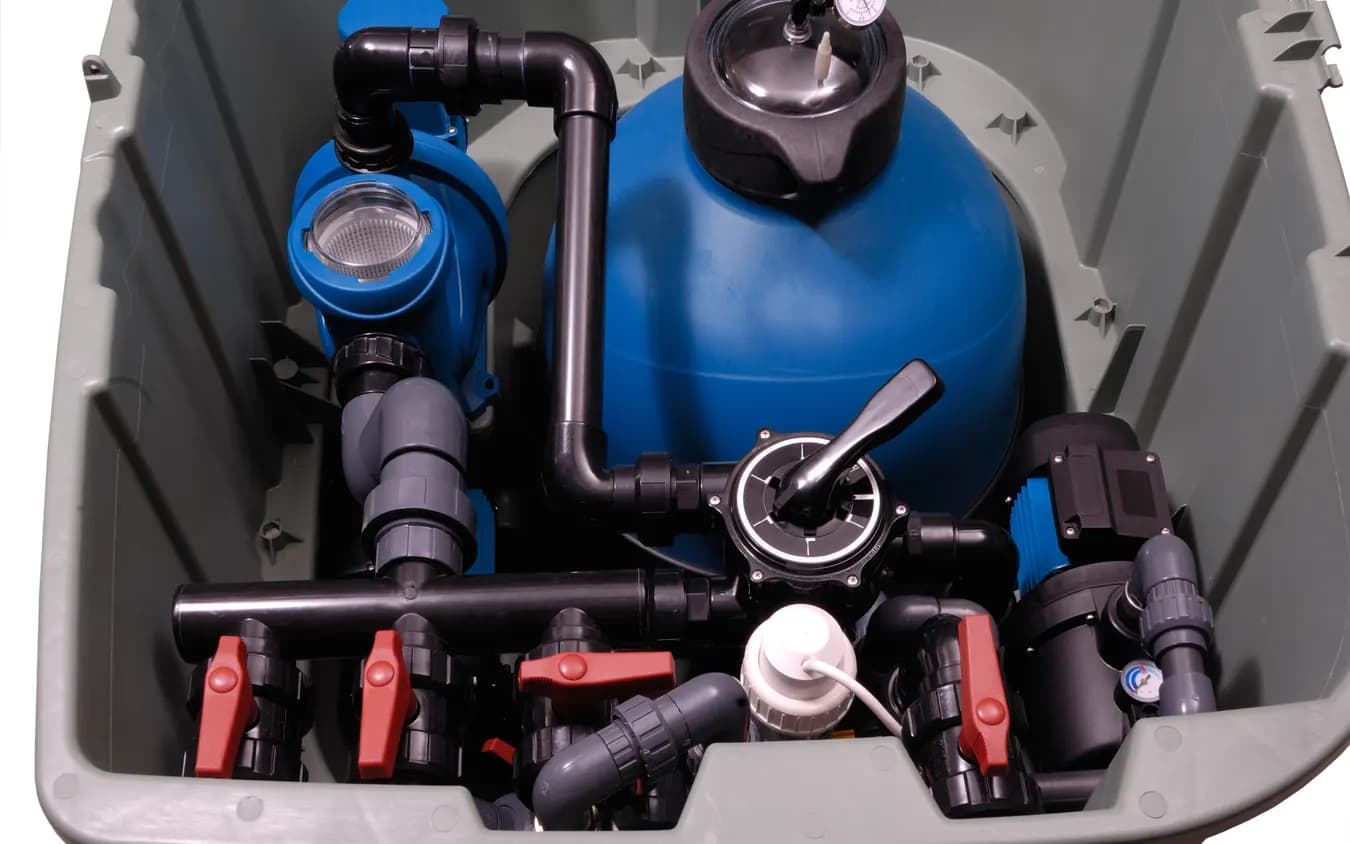
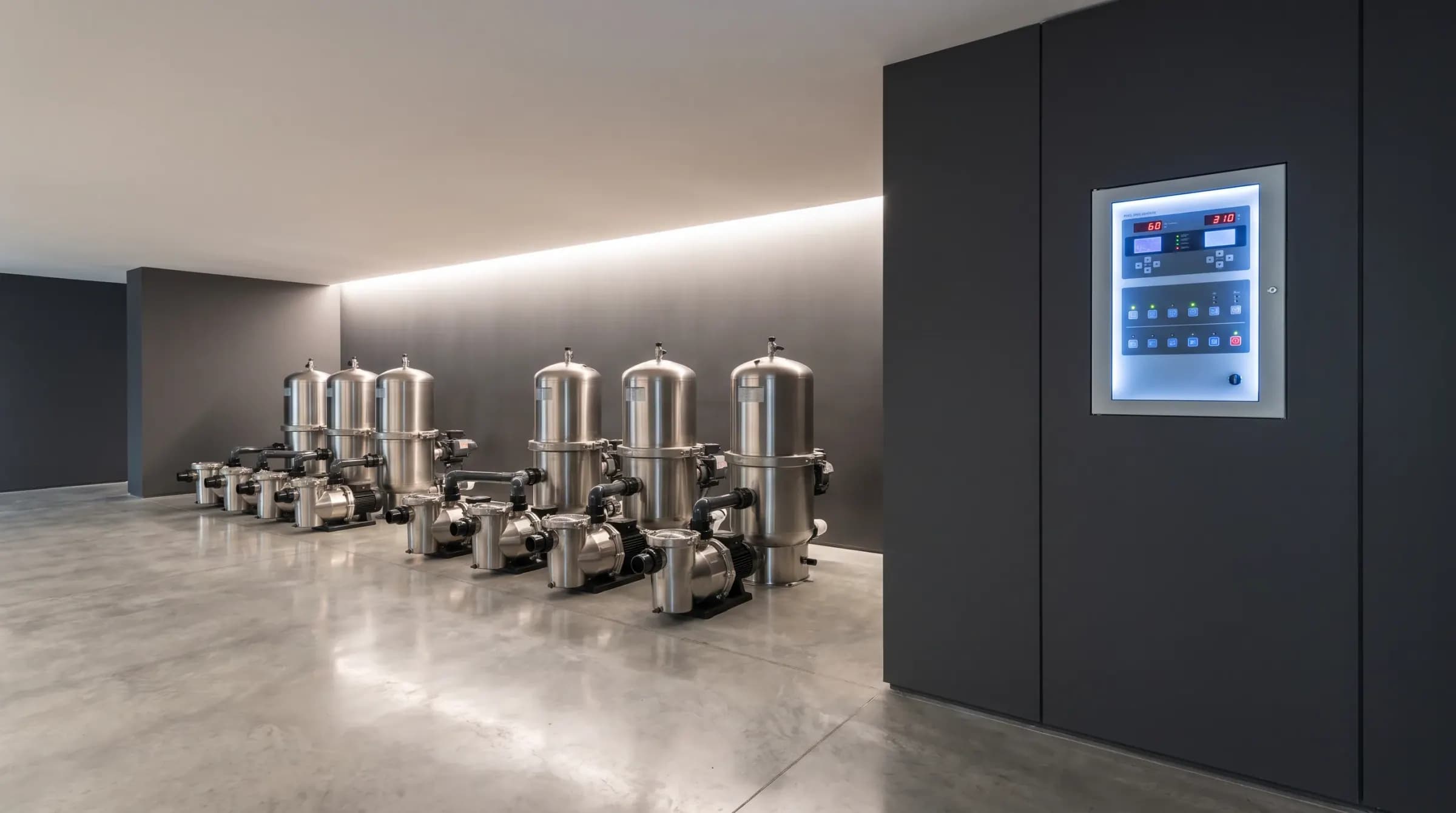
The pump must deliver the flow rate you calculated against the pressure loss of the pipework.
The flow figure on the pump's data plate applies at a specific head; if the pipe run is long and there are many elbows, the real flow drops. That is why, when choosing a pump, you look at the flow-pressure curve and not just the cubic metres per hour figure.
Variable-speed (inverter) pumps spend most of the day at low speed and cut consumption considerably. A fixed-speed pump is either at full power or off. The upfront cost is higher and the payback shows up on the electricity bill; if you run the pool every season, it makes sense.
Check the size of the pre-filter basket too. A pump with a small basket clogs often in gardens with a lot of leaves, and each time the pump has to be stopped and cleaned. For pools under trees, this detail decides how much daily upkeep you face.
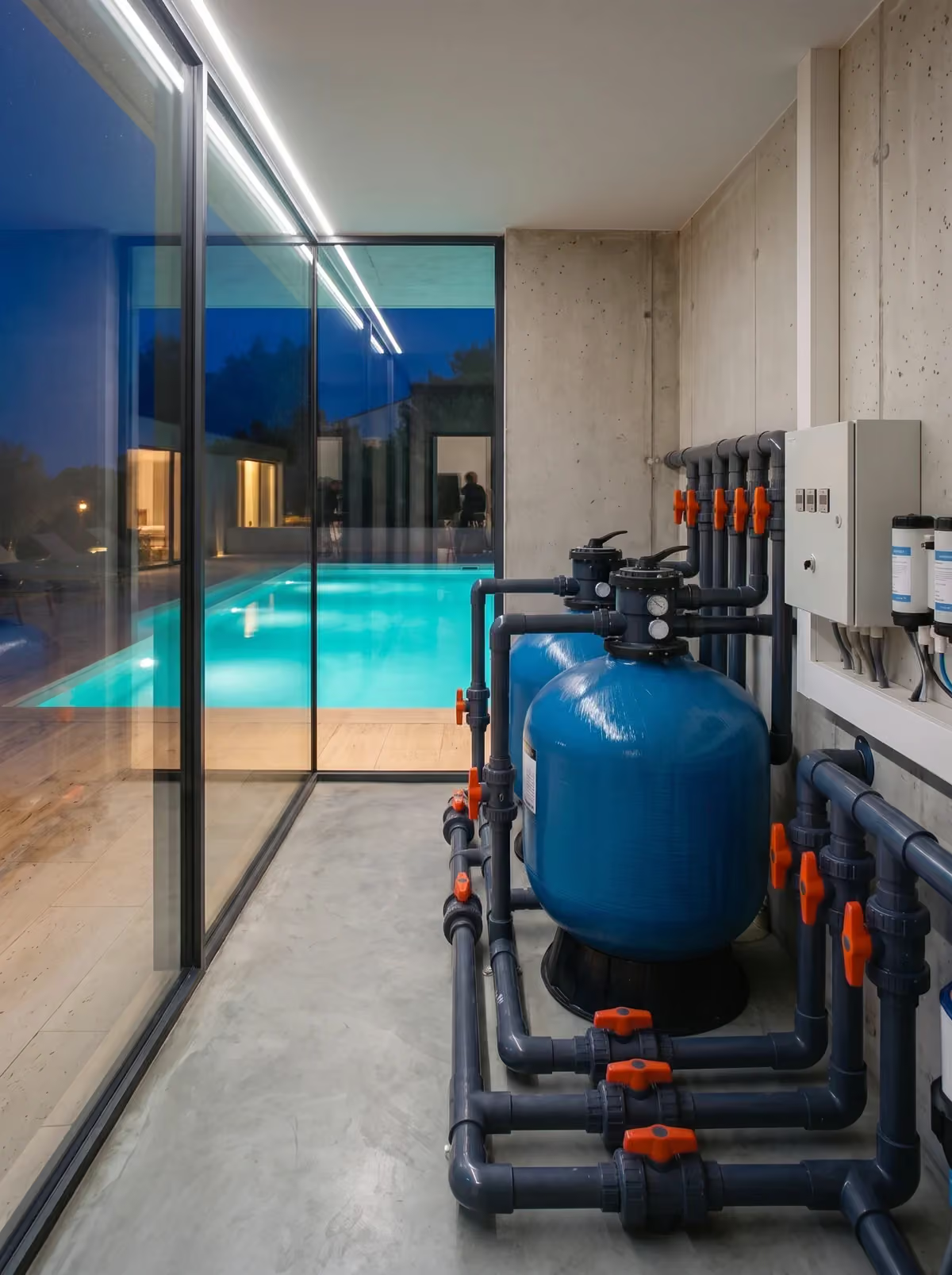
A sand filter is the most common solution; for a flow rate of 12 cubic metres per hour, a Ø600 mm tank is the typical choice.
An undersized filter leaves the water cloudy, while an oversized one wastes extra water during backwashing.
Using filter glass (crushed glass) instead of silica sand as the media gives finer filtration and reduces backwash water. Its upfront cost is slightly higher, and it lasts longer than sand. To switch a sand filter to glass, you do not need to replace the tank, only the media.
Cartridge filters are used in small pools and hot tubs; they use no backwash water, the cartridge is rinsed instead and replaced periodically. Diatomaceous earth (DE) filters give the finest filtration, but their maintenance is laborious and they are rarely chosen for residential pools.
There are four main groups.
Disinfectant (chlorine or bromine based) keeps the water microbiologically clean. pH adjusters (pH increaser and reducer) keep the water's acid balance in the 7.2 to 7.6 range. Algaecide prevents algae from forming. Clarifier (flocculant) binds small suspended particles together into a size the filter can catch.
The pH value comes before everything else. When pH moves out of range, chlorine loses its effectiveness; if you keep adding chlorine and see no result, the problem is usually not the chlorine but the pH. Do not add chemicals without measuring first.
Never mix chemicals together, and store them in their original packaging, closed and in a cool place. When chlorine and acid mix, toxic gas is released. Keep the chemical cabinet away from the electrical panel; chlorine fumes quickly corrode circuit boards and metal parts.
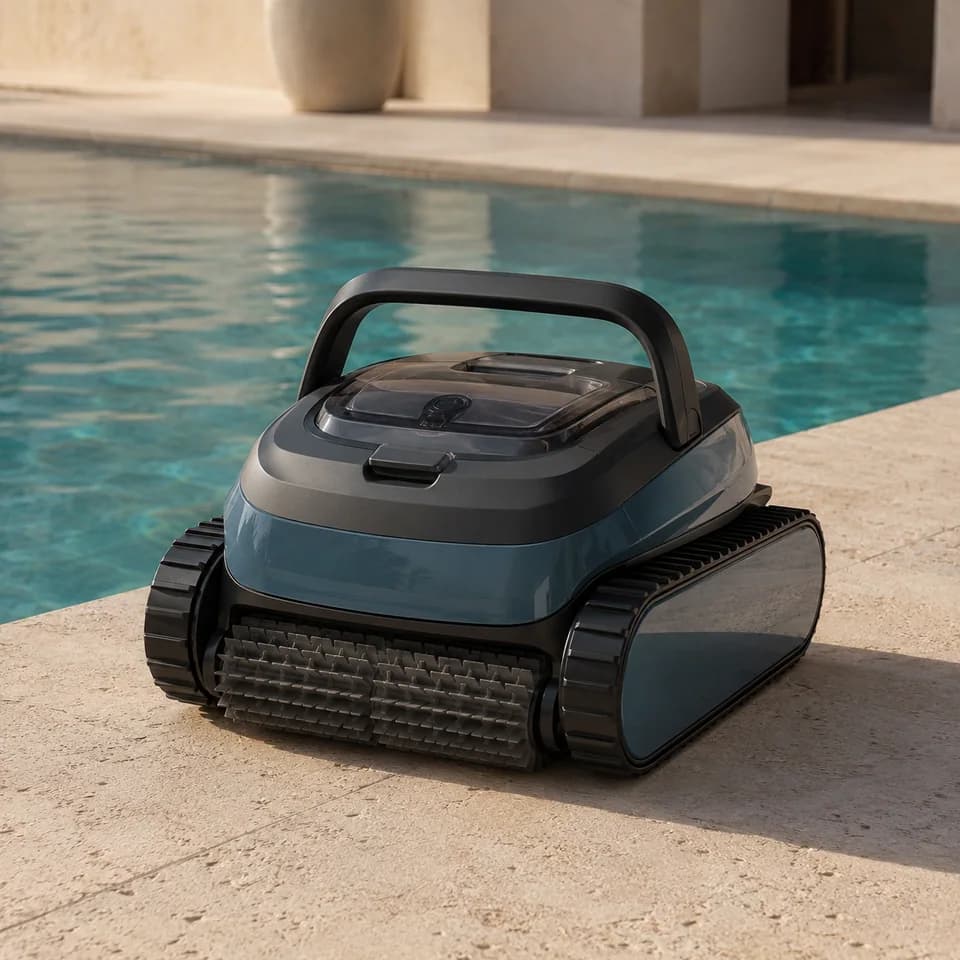
The first thing to look at when choosing a pool robot is the pool's geometry.
Models that clean only the floor are enough for flat-bottomed pools. Models that climb walls and clean the waterline are needed for pools with stepped floors and deep pools. The cable should be longer than the pool's diagonal.
The capacity of the filter basket and how easy it is to clean determine day-to-day use. Top-opening baskets let you empty the robot without taking it out of the water. Cordless models remove the problem of tangled cables, but charging time and battery life are a separate matter.
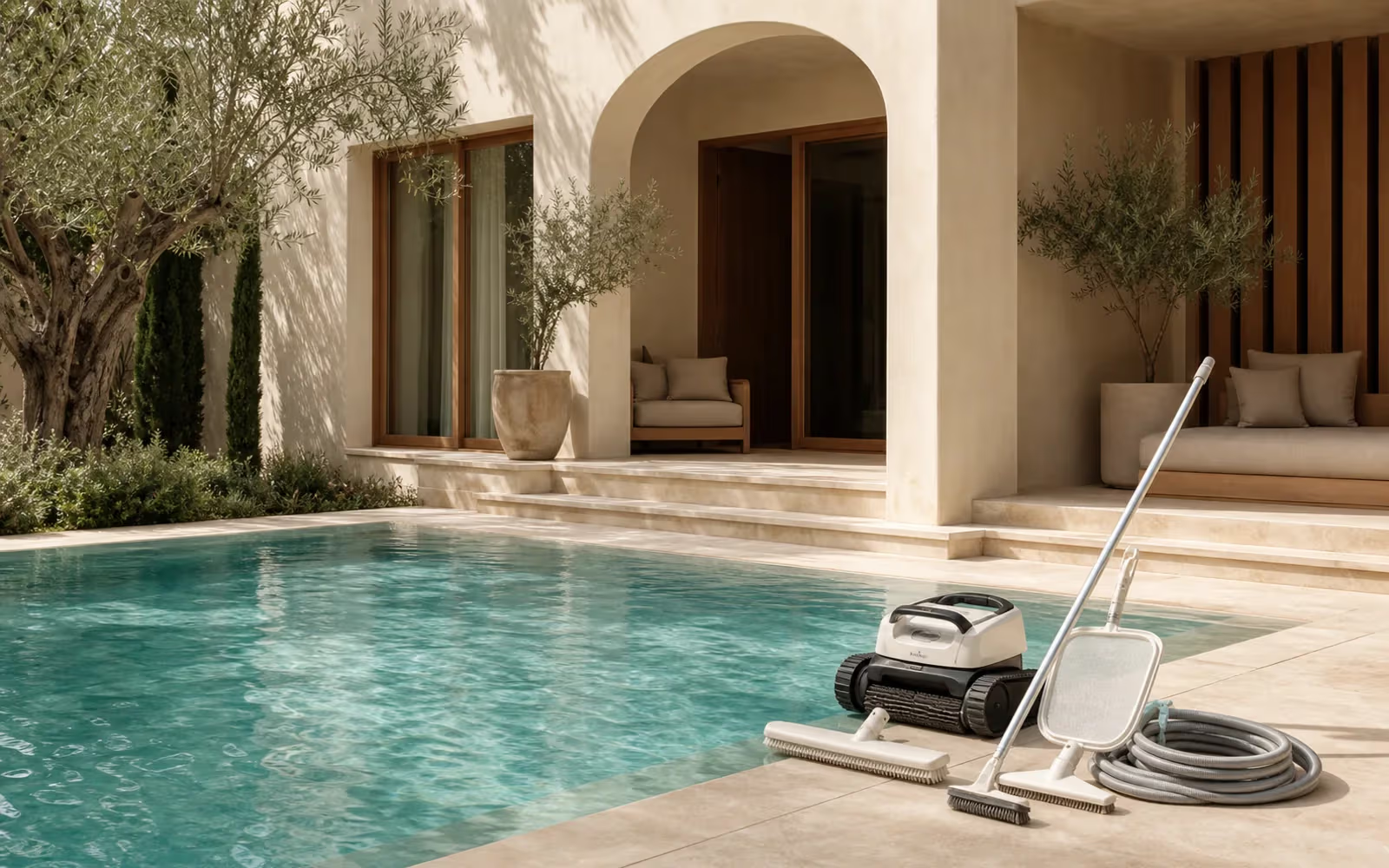
A robot does not fully replace manual cleaning. A surface skimmer net, a wall brush and a telescopic pole belong at every pool. The greasy line at the waterline comes off with a brush and a suitable cleaner, not with a robot.
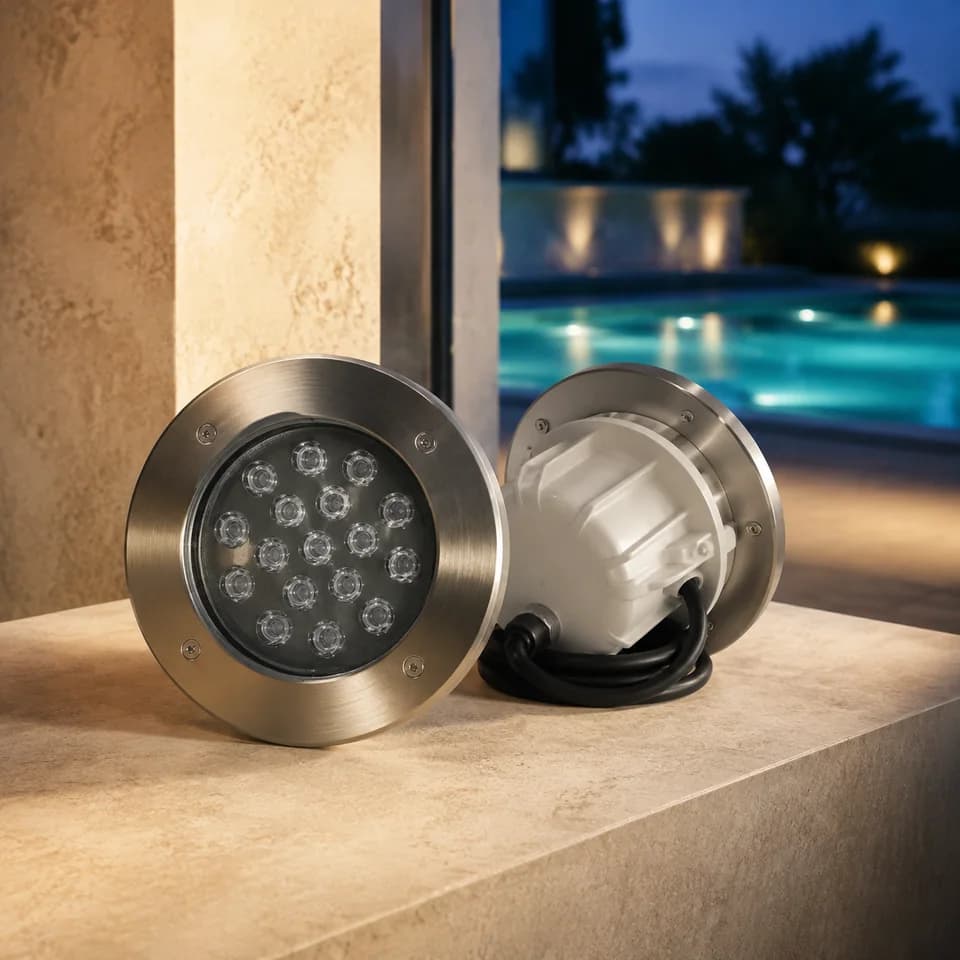
LED fittings are the standard in pool lighting.
When choosing, look at the IP protection rating, the housing material (stainless steel housings last a long time) and whether the lamp can be changed without draining the water. A fitting that cannot be changed without draining turns into a big job at the first failure.
Pool lighting runs on safety extra-low voltage and is fed through a transformer. This is not a preference but a requirement of electrical safety. The transformer is placed in the plant room, in a dry spot.
On the automation side, the pH and chlorine probes, dosing pumps and control unit are bought as a single package. The probes need periodic calibration; an uncalibrated probe measures wrongly and the system doses wrongly. Buy calibration solution together with the system.
Places where you can save: the robot model (a simple pool does not need a top-end robot), the number of light fittings, decorative equipment and advanced automation features.
None of these affect the health of the pool.
Places where you should not save: waterproofing, pipe diameter, pump quality and filter size. These four are items that cannot easily be changed once the pool is finished, or that require digging if they are. What you save by going down a pipe size, you pay back every month in electricity.
Then there is the question of brand. Choosing a well-known brand for the pump and filter means you can still find spare parts five years later. A pump with no available parts means a full replacement on the day it breaks down; that is where the difference from the first purchase evens out.
Circulation: pump (at the calculated flow rate), filter (of suitable diameter), filter media, six-way valve, the necessary valves and unions, and pipes and fittings of suitable diameter.
Water quality: disinfectant, pH increaser and reducer, algaecide, clarifier, and a test kit or electronic tester. If dosing will be automatic, add probes, a dosing pump and a control unit.
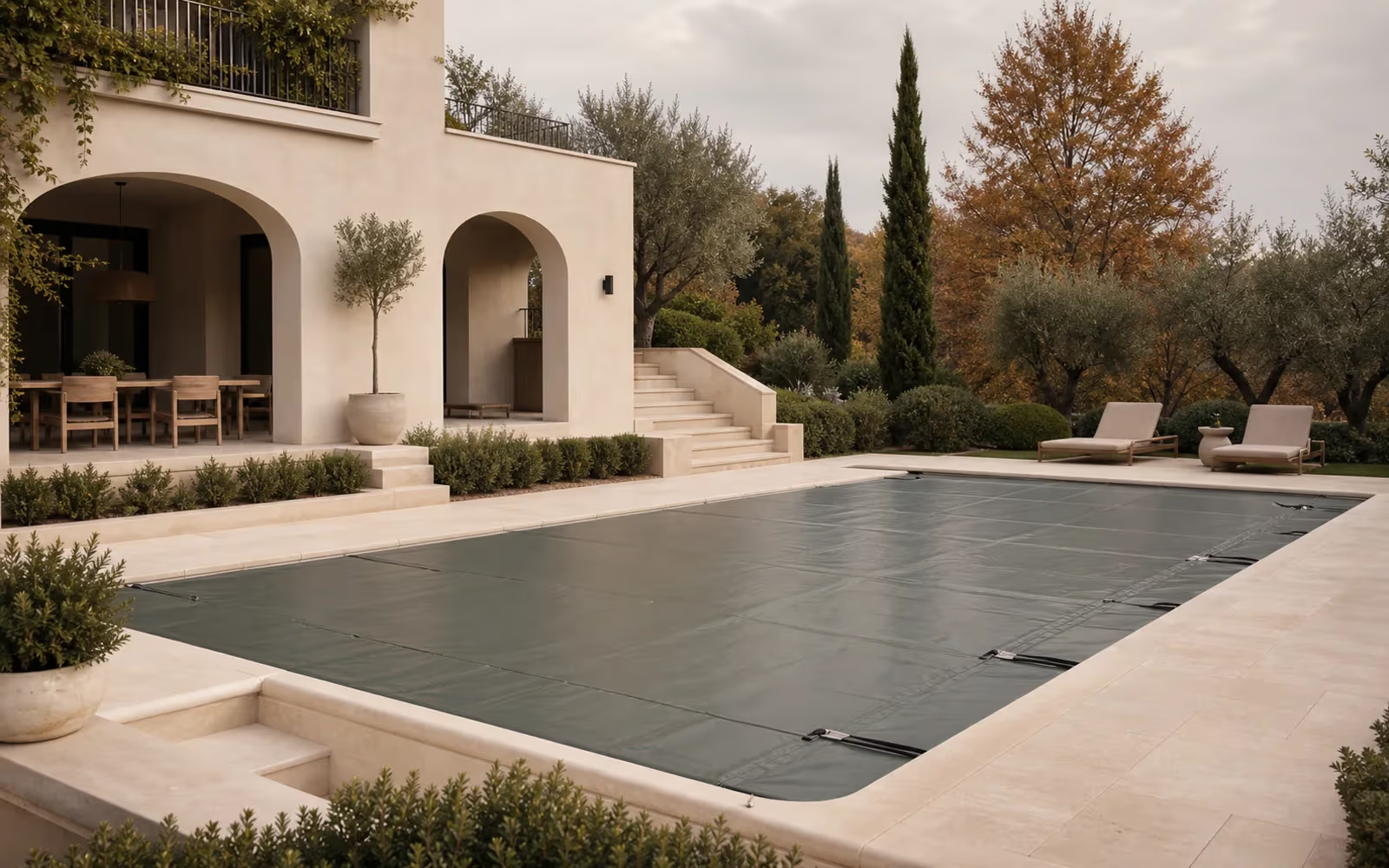
Cleaning and use: a pool robot or manual vacuum set, surface skimmer net, wall brush, telescopic pole, ladder and pool cover. Put the cover at the top of the list, not the bottom; of all the items, it pays back fastest on heating and water loss.
Next step
Let us discuss your project in the way that suits you best.
You can fill in the form for a written quote, schedule a video project presentation or ask us to survey your project site.
Get a Quote
Send us your dimensions and expectations in writing.
Online presentation
Video project presentation
On-site survey
Inspection at your project site
// 01 · Product groups
Compare the products on this topic on their category pages.
Each card leads to a product category; models, technical sheets and list prices are there.
 Product category
Pool Lighting Systems
Underwater LED projectors, RGB color systems and fiber-optic lighting that keep the pool interior and its edge visible after dark.
View- 27 products
 Product category
Pool Cleaning Robots
Automate floor, wall and waterline maintenance without manual cleaning, using cordless, intelligent pool cleaning robots.
View- 24 products
- Product category
PAR56 Pool Light Models
LED projectors that fit an existing niche, LED bulbs that go inside an existing projector, complete kits with niche for new pools, and halogen PAR56. All run on 12 V AC; the transformer is sized by the apparent power of the lamps.
View- 5 products
Product category
Pool Lighting Systems
Underwater LED projectors, RGB color systems and fiber-optic lighting that keep the pool interior and its edge visible after dark.
27 productsProduct category
Pool Cleaning Robots
Automate floor, wall and waterline maintenance without manual cleaning, using cordless, intelligent pool cleaning robots.
24 productsProduct category
PAR56 Pool Light Models
LED projectors that fit an existing niche, LED bulbs that go inside an existing projector, complete kits with niche for new pools, and halogen PAR56. All run on 12 V AC; the transformer is sized by the apparent power of the lamps.
5 products
// 02 · Related service
The work in this article, we deliver from design to handover.
Çilek Havuz service
Pool Maintenance
Water chemistry, equipment and periodic maintenance.
How we work
- 01Initial meeting and site surveyWe inspect the site and listen to the brief.
- 02Design and quotationWe give the cost item by item, in writing.
- 03ExecutionThe same team builds to a written schedule.
- 04Handover and commissioningWe start the systems and explain their use.
- 05Maintenance and technical supportWe provide periodic maintenance and support.
// 03 · Guides
On Maintenance, more articles to read.
First the articles directly related to this one, then the newest articles on the topic.
 Maintenance
Pool Cleaning: Choosing the Right Equipment and Building a Routine
Clear water is chemistry's job; a clean pool is mechanics'. We explain which vacuum, brush and skimmer net you need and how to build a lasting routine.
View- 22 June 2026
- 7 min read
 Maintenance
Pool Equipment Buying Guide: Pumps, Filtration, Disinfection, Robots and Automation
Start pool equipment shopping with the total cost of ownership, not the lowest price. We compare five categories, from pumps to automation, on one page.
View- 27 August 2026
- 9 min read
 Maintenance
Pool Winterizing: Shock Treatment, Closing and Equipment Care
Plan winter pool care around water balance, equipment and cover requirements. Check what needs professional attention before closing your pool.
View- 28 June 2026
- 10 min read
 Maintenance
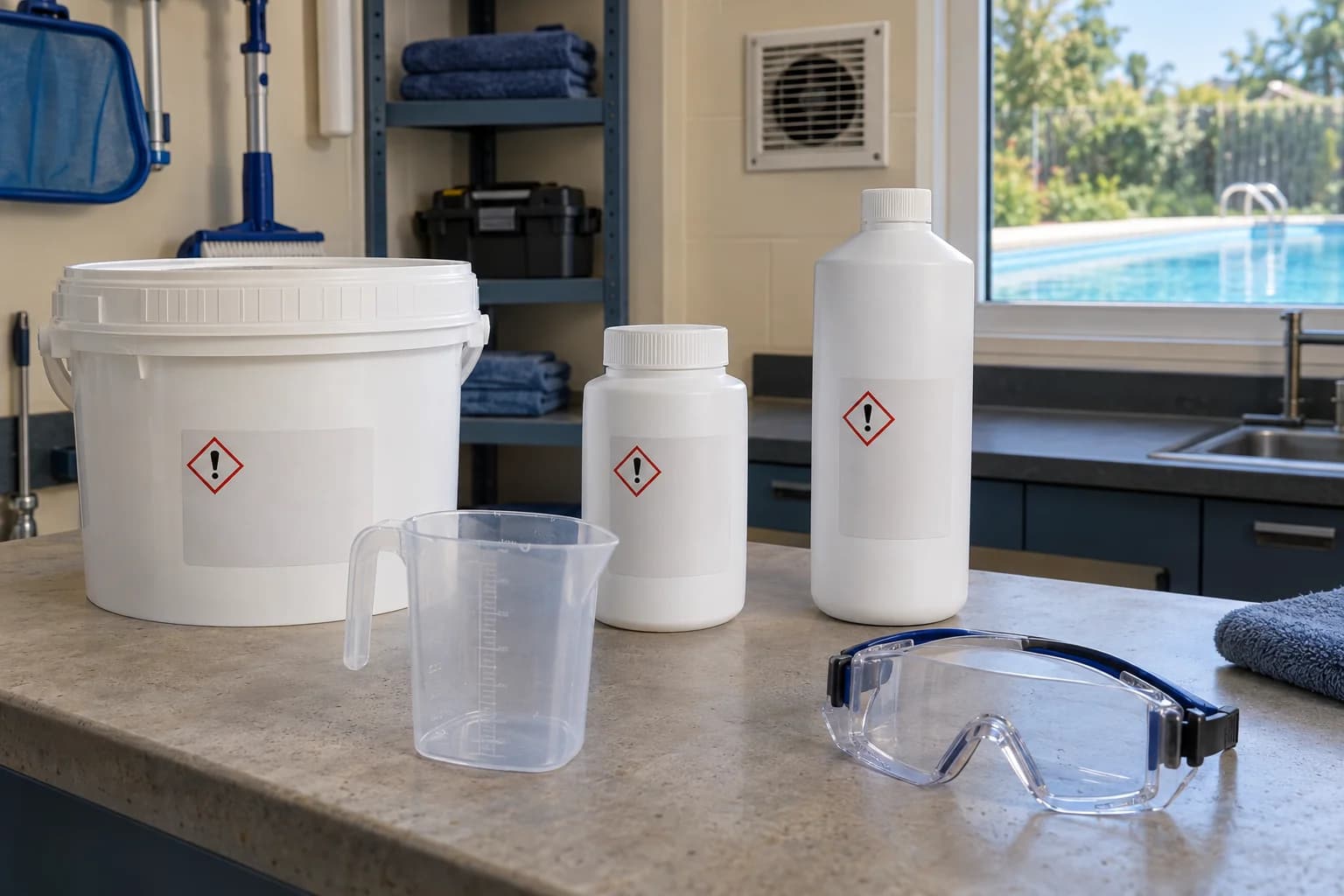
Pool clarifier and flocculant: differences, uses and selection
Clarification, flocculation and filter compatibility compared for cloudy pool water. The right choice follows the product instructions, not the name.
View- 13 September 2026
- 3 min read
 Maintenance
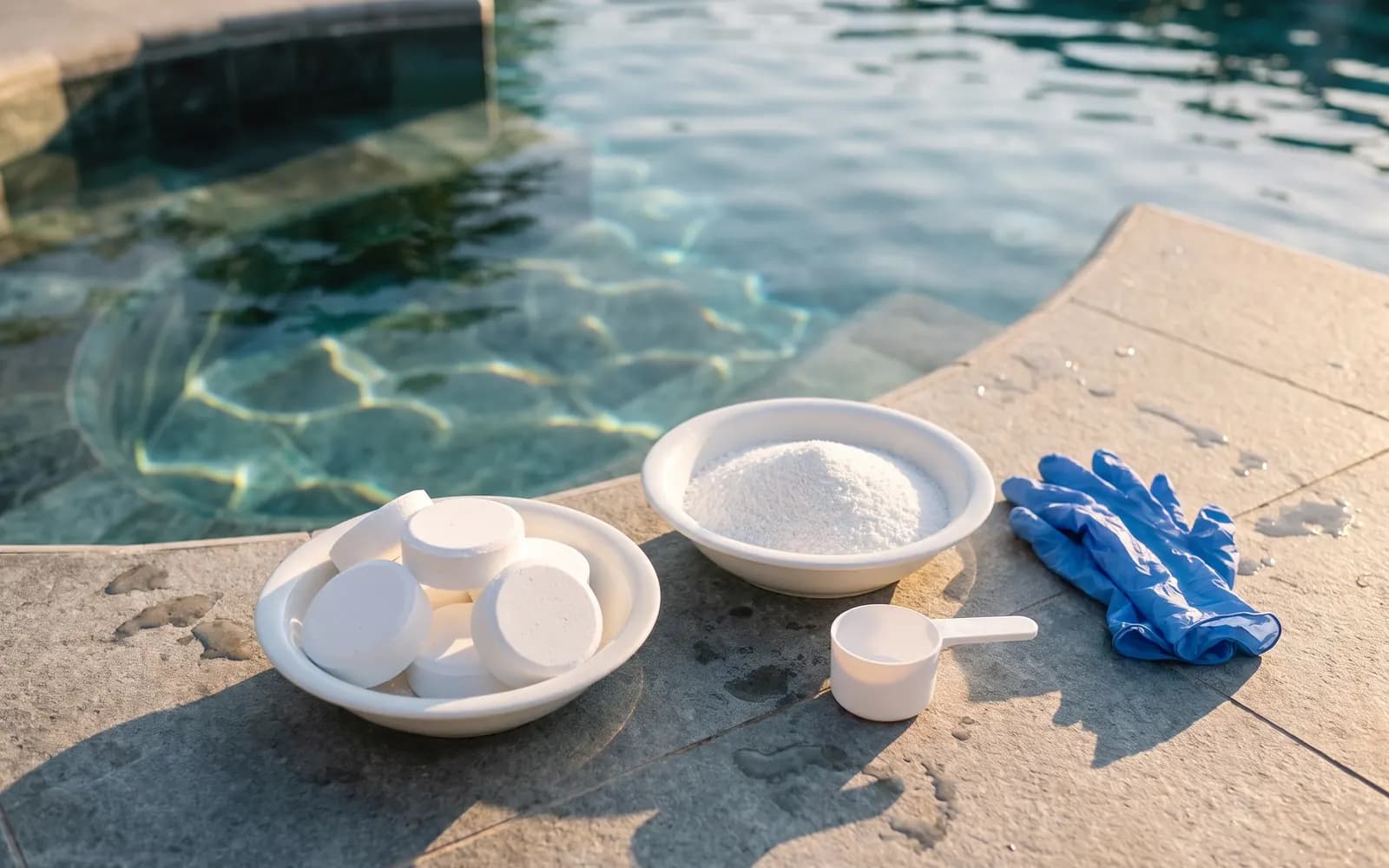
Chlorine tablets and granules: dissolution, use and selection
Chlorine products differ in active ingredient, concentration and intended use. Shape alone does not determine strength or dosing method.
View- 13 September 2026
- 3 min read
 Maintenance
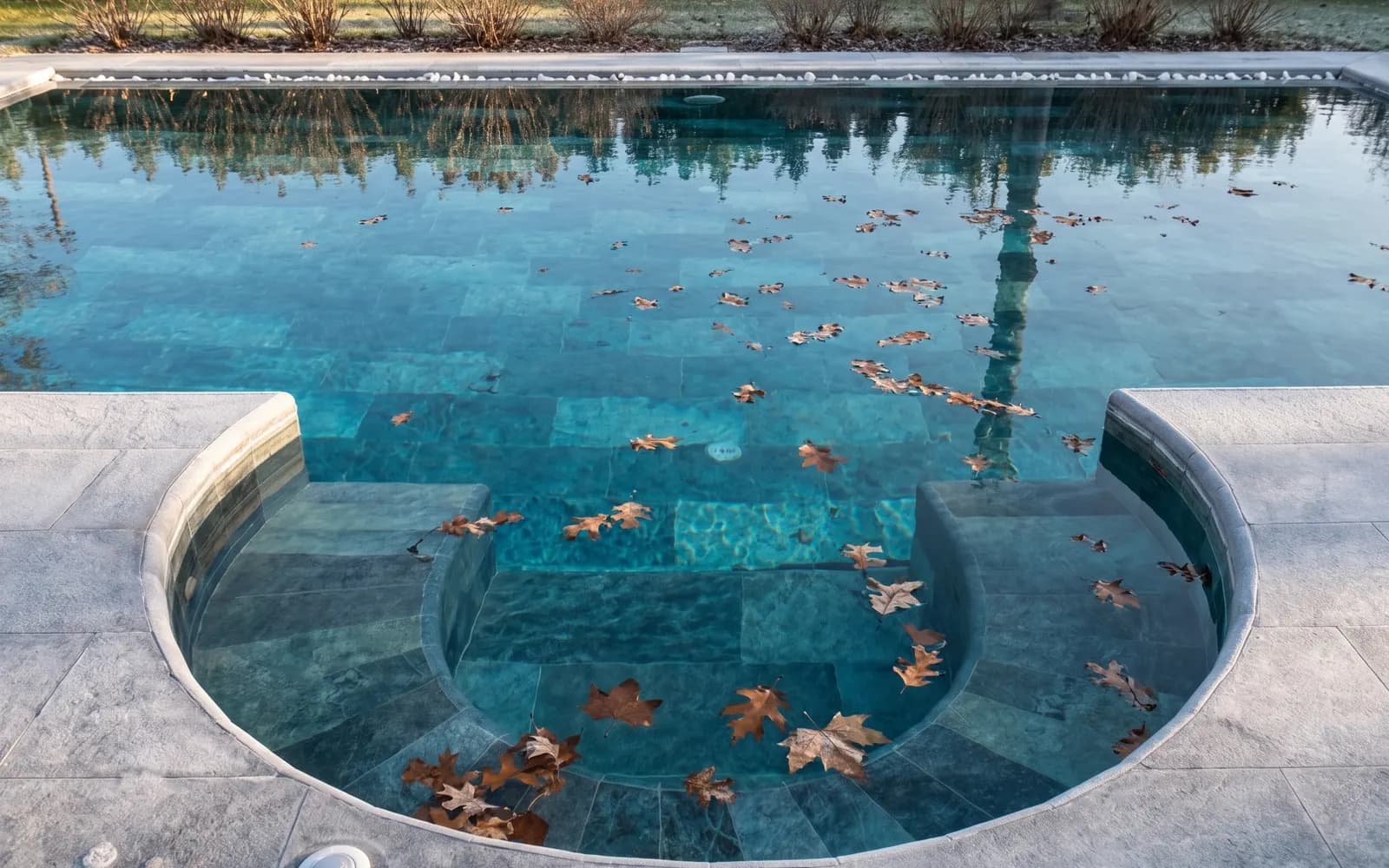
Winter pool chemicals: purpose, limits and product selection
Winter treatment depends on the actual pool system and product formulation. Water care, equipment freeze protection and ongoing checks are separate tasks.
View- 13 September 2026
- 3 min read
- Maintenance · 22 June 2026Pool Cleaning: Choosing the Right Equipment and Building a RoutineClear water is chemistry's job; a clean pool is mechanics'. We explain which vacuum, brush and skimmer net you need and how to build a lasting routine.7 min read
- Maintenance · 27 August 2026Pool Equipment Buying Guide: Pumps, Filtration, Disinfection, Robots and AutomationStart pool equipment shopping with the total cost of ownership, not the lowest price. We compare five categories, from pumps to automation, on one page.9 min read
- Maintenance · 28 June 2026Pool Winterizing: Shock Treatment, Closing and Equipment CarePlan winter pool care around water balance, equipment and cover requirements. Check what needs professional attention before closing your pool.10 min read
- Maintenance · 13 September 2026Pool clarifier and flocculant: differences, uses and selectionClarification, flocculation and filter compatibility compared for cloudy pool water. The right choice follows the product instructions, not the name.3 min read
- Maintenance · 13 September 2026Chlorine tablets and granules: dissolution, use and selectionChlorine products differ in active ingredient, concentration and intended use. Shape alone does not determine strength or dosing method.3 min read
- Maintenance · 13 September 2026Winter pool chemicals: purpose, limits and product selectionWinter treatment depends on the actual pool system and product formulation. Water care, equipment freeze protection and ongoing checks are separate tasks.3 min read
// 04 · Company & Contact
To talk about your project, call or write to us.
Legal Name
Çilek Havuz
Founded
1998 · Istanbul
Head Office
Çilek Plaza, Eyüp Sultan Mah. Yakacık Cd. Feshane Cd. No: 2 D:4 D:1, 34885 Sancaktepe / İstanbul
Service Area
All of Türkiye · exports to 14 countries
Branches
Kyrgyzstan · Egypt · Algeria · Iraq
Showroom
Plan a showroom visit
At our showroom in Çilek Plaza, Sancaktepe, you can discuss your project with our team. We recommend booking an appointment by phone before your visit.
Working Hours
- Monday – Friday · 08:00 – 17:30
- Saturday · 08:00 – 12:30
- Closed on Sunday
Frequently Asked Questions
About Pool equipment, frequently asked questions.
Çilek Havuz Corporate
Pool and Wellness Engineering
- Response Time
- Same day
- Channels
- Phone · Email · WhatsApp
If the answer you are looking for is not here, send your question directly to us and our team will reply as soon as possible.
+90 216 475 39 37Divide the pool volume by the 6-hour turnover target to find the hourly flow rate. For a 75 cubic metre pool, that is 12-13 cubic metres per hour. Choose the pump so that it delivers this flow rate against the pressure loss of the pipework, using the flow-pressure curve.
Çilek Havuz Corporate
Pool filter size depends on the flow rate. For 12-13 cubic metres per hour, a Ø600 mm tank is the typical choice for a sand filter. A filter that is too small leaves the water cloudy; one that is larger than needed wastes water during backwashing.
Çilek Havuz Corporate
There are four main groups: disinfectant (chlorine or bromine), pH adjusters, algaecide and clarifier. The pH value should be kept in the 7.2-7.6 range; outside it, chlorine loses its effectiveness.
Çilek Havuz Corporate
Waterproofing, pipe diameter, pump quality and filter size. These four cannot easily be changed once the pool is finished, or changing them requires digging. Saving on the robot model, the number of light fittings and decorative equipment does not affect the health of the pool.
Çilek Havuz Corporate
Filter glass gives finer filtration and reduces backwash water, and it lasts longer than silica sand. Its upfront cost is slightly higher. To switch, you do not need to replace the filter tank, only the media.
Çilek Havuz Corporate