

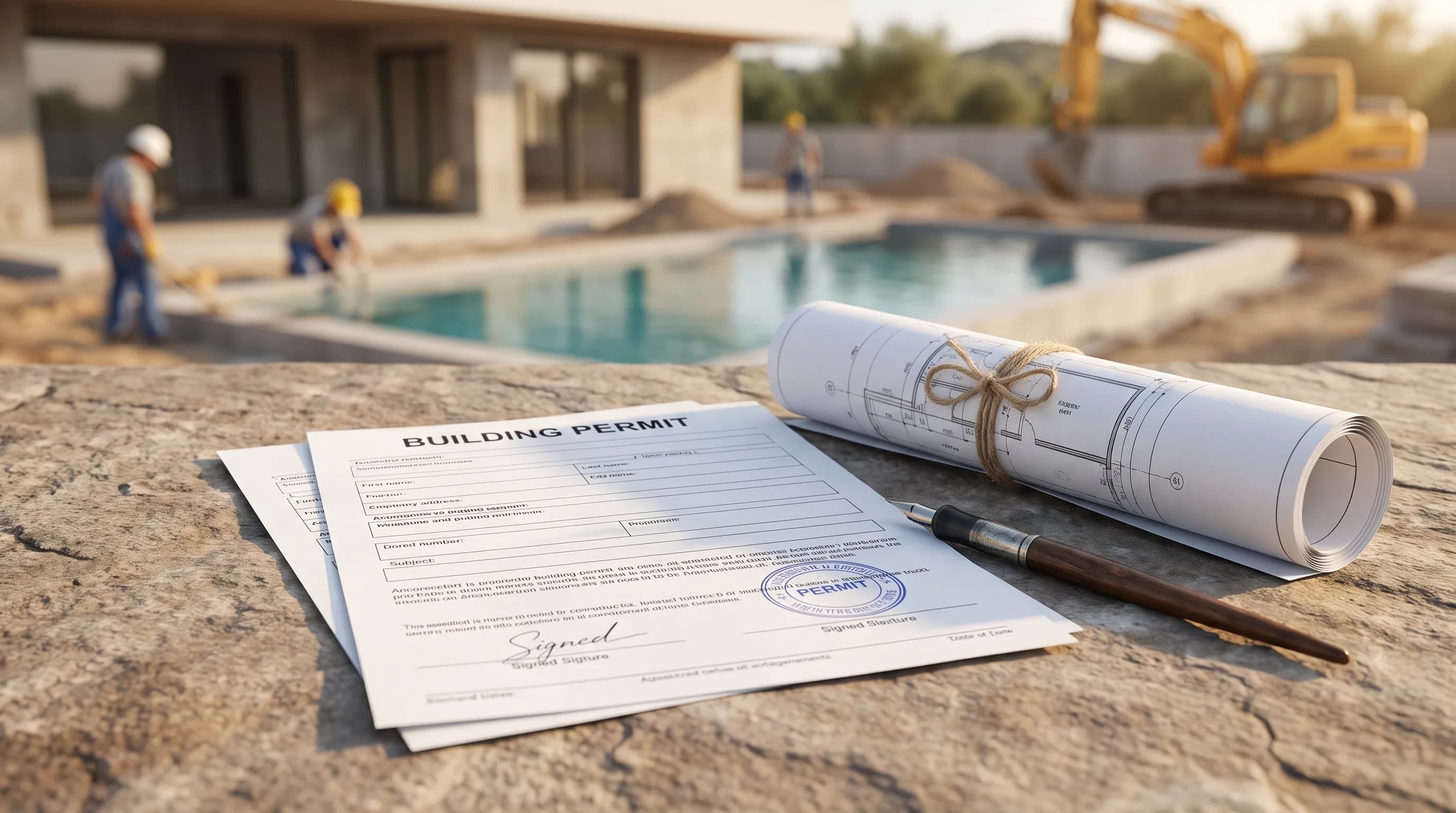
Building a Pool Without a Permit in Turkey: Risks and How the Legal Process Works
A villa pool in Turkey usually needs a building permit. We cover the risks of unpermitted construction, how the process works and why a permit is safer.
Project Manager · Mechatronics Engineer · Çilek Havuz
- Published
- Updated
- Reading
- 7 min read
- Category
- Pool Construction
A villa pool in Turkey usually needs a building permit. We cover the risks of unpermitted construction, how the process works and why a permit is safer.
In most municipalities, a permanent pool built in a garden counts as a structure under zoning legislation and, together with its design, is subject to the municipality's approval.
The belief that 'a building needs a permit, but a pool in the garden is free to build' is widespread, yet it does not reflect reality. A reinforced concrete or in-ground pool is a fixed, permanent structural element set into the ground.
Practice varies from one municipality to another. Some municipalities define the pool in a separate article of their zoning regulations and set the setback and the distance to the plot boundary; others treat it as part of the building permit. Only the municipality's zoning directorate (imar müdürlüğü) can tell you the definitive rule for your plot. This article gives the general framework and is not a substitute for legal advice.
When an unpermitted pool, or one that does not comply with its permit, is identified, the municipality can seal the structure and stop construction, impose an administrative fine and, if the non-compliance is not remedied, issue a demolition order.
These measures begin with the findings of the municipality's zoning inspection. Not every unpermitted structure automatically meets the same outcome; the result depends on the type of non-compliance and the zoning status of the plot.
| Stage | What happens | What the owner can do |
|---|---|---|
| Identification | The municipal team inspects the structure on site and draws up a report | Obtain a copy of the report and find out what the non-compliance is |
| Sealing | If construction is under way, it is stopped | Stop work and leave the seal intact |
| Period to obtain a permit | A period is given to remedy the non-compliance or obtain a permit | Have the design prepared and apply, or bring the structure into line with the legislation |
| Fine | An administrative fine is imposed | Assess the routes for objecting to the fine with a lawyer |
| Demolition | If the non-compliance is not remedied, a demolition order may be issued | Act against the order without missing the legal deadlines |
Fine amounts are updated every year and practice differs between municipalities, so we do not give amounts in this article. Current information is obtained from the municipality's zoning directorate or from a lawyer who works in zoning law.
The main risk of an unpermitted pool is often not the fine but the uncertainty that surfaces when the property is sold, valued or insured.
When the buyer's bank carries out a valuation, a structure that is not in the approved design raises additional questions and the sale takes longer.
The second risk is technical. The permit process ensures that the structural and mechanical designs pass under an engineer's eye. The problems we see most often in pools built without a permit are excavation too close to the neighbouring boundary, a slope that damages the building's foundations, a terrace pool whose load-bearing structure was never calculated, and electrical installations without residual current protection. None of these concerns paperwork; all of them concern the safety of life.
The third risk lies on the insurance side. Under a home insurance policy, damage arising from a structure that does not appear in the approved design may fall outside the cover. We recommend asking your insurer how your policy defines the pool.
The zoning status certificate (imar durumu belgesi) shows for what purpose and within what limits a plot can be used, and it is obtained from the municipality or, in most municipalities, from the e-zoning system.
In a pool project we look for three pieces of information in this certificate: the setback that must be left to the plot boundaries, how much of the area allocated to building on the plot has already been used, and whether the plot carries a special restriction such as a conservation area, forest land or the coastal edge line.
Documents worth preparing before the site survey
- Title deed and the block and parcel number of the plot
- Current zoning status certificate
- Approved architectural design or site plan of the building
- Management plan for a building under condominium ownership
- Any soil survey carried out previously
In a project started without this check, the location of the pool may have to change later or the application may be rejected. We explain the documents needed for the permit and the step-by-step sequence of the application separately in our article on pool permits and approvals.
For an existing unpermitted pool, the first step is to go to the municipality's zoning directorate and find out whether the structure can be brought under a permit according to current legislation.
If the pool complies with the setback and the zoning status, the design can often be prepared afterwards and an application made. If it does not, bringing the structure into line with the legislation, that is, reducing its size or relocating it, comes onto the agenda.
From time to time, temporary arrangements allowing existing structures to be registered have been applied in Turkey. No decision is made until it has been confirmed with the municipality whether such an arrangement is in force today and whether it covers the pool.
During this process we also recommend reviewing the technical condition of the structure. Inspecting a pool that has no structural design for cracks, leaks and electrical safety is work that needs to be done regardless of the paperwork. In our pool consultancy service we inspect the existing pool on site, prepare the technical drawings required for the permit application and, where necessary, set out the options for bringing it into line with the legislation together with their cost.
For a pool in the shared garden of a residential complex or apartment building, in addition to municipal approval, a decision of the unit owners taken by the majority set out in the management plan is also required.
A common area cannot be left for the use of a single owner; how the pool's maintenance costs will be shared should also be written into the same decision. Child safety becomes especially important in a shared pool; you can find details on barriers and safety covers in our article on pool safety.
Because a terrace or rooftop pool places load on the building's structural system, the permit process here is a matter of the safety of life, and work should not start without a structural report.
One cubic metre of water weighs about one tonne; placing a pool on a slab whose design does not account for this load concerns the whole building. We describe the structural approval process for terrace pools in detail in our article on building pools on terraces and rooftops.
The permit application is usually made by the property owner or their authorised representative; the pool company supports the process by preparing the design, the technical drawings and the calculations the municipality requests.
How a company approaches the permit question is a good indication of how seriously it works. We run the municipal process ourselves and draw all the structural, electrical and architectural designs required for the pool permit in-house. A quote that says 'no permit needed, we can start straight away' is a red flag on the list of questions to ask when choosing a pool builder. As we note in the article describing how we work on projects, we do not start drawing at the site survey without checking the zoning status of the plot.
Next step
Let us discuss your project in the way that suits you best.
You can fill in the form for a written quote, schedule a video project presentation or ask us to survey your project site.
Get a Quote
Send us your dimensions and expectations in writing.
Online presentation
Video project presentation
On-site survey
Inspection at your project site
// 01 · Product groups
Compare the products on this topic on their category pages.
Each card leads to a product category; models, technical sheets and list prices are there.
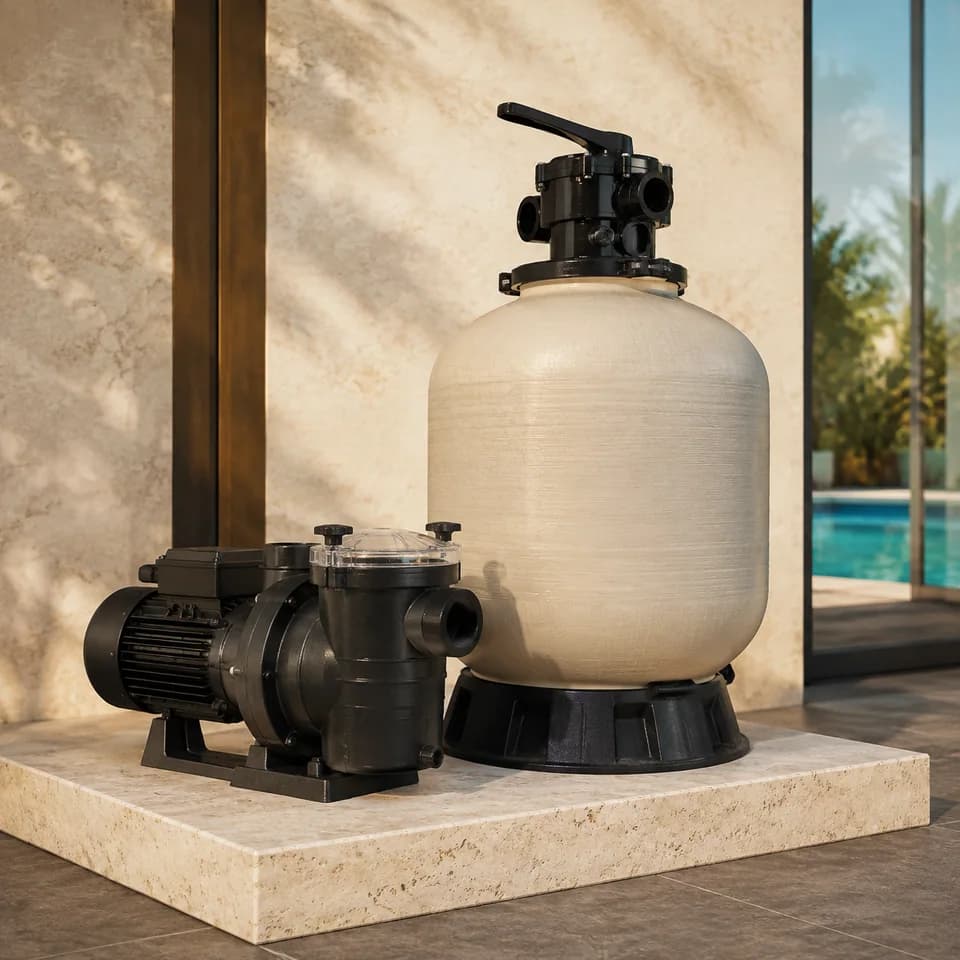 Product category
Pool Mechanical Equipment
Circulation pumps, filters, valves and automation: the mechanical infrastructure that forms the heart of the pool.
View- 65 products
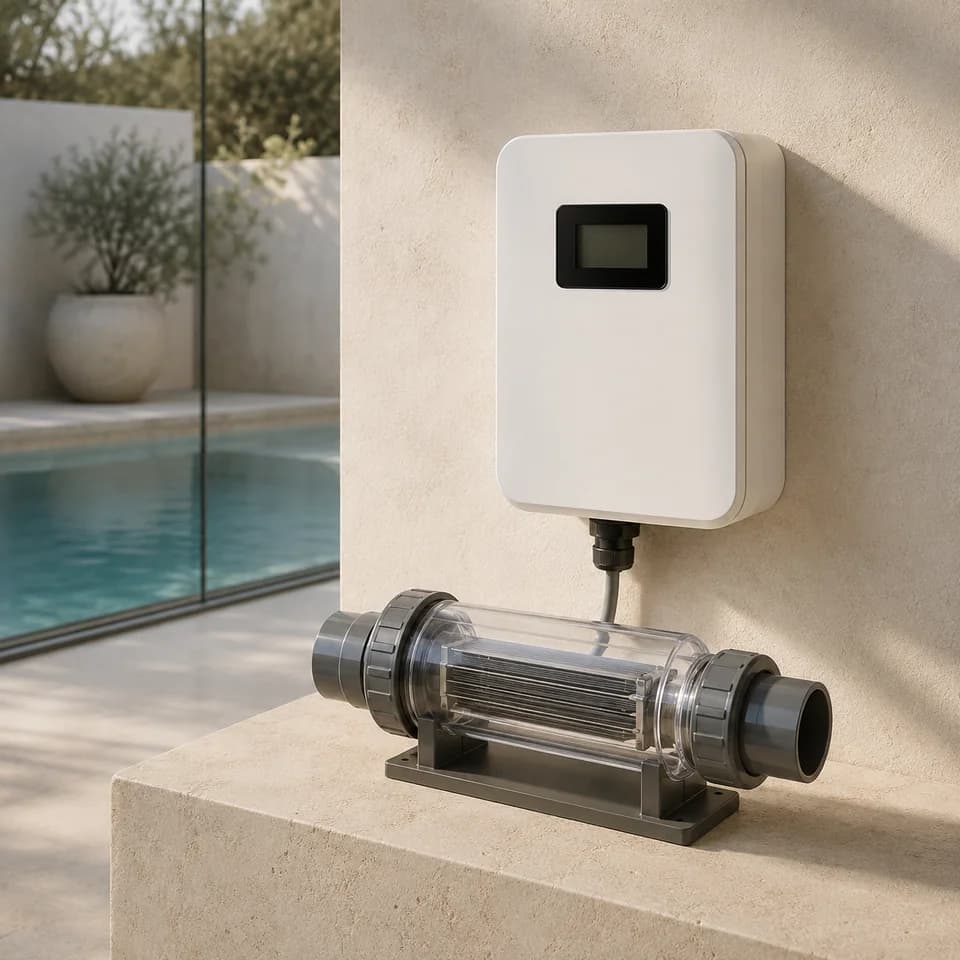 Product category
Pool Disinfection Systems
Fully automatic pool water disinfection that reduces chemical use with salt electrolysis, UV disinfection and smart dosing systems.
View- 52 products
Product category
Pool Mechanical Equipment
Circulation pumps, filters, valves and automation: the mechanical infrastructure that forms the heart of the pool.
65 productsProduct category
Pool Disinfection Systems
Fully automatic pool water disinfection that reduces chemical use with salt electrolysis, UV disinfection and smart dosing systems.
52 products
// 02 · Related service
The work in this article, we deliver from design to handover.
Çilek Havuz service
Pool Consulting
Engineering consulting on project, materials and budget.
How we work
- 01Initial meeting and site surveyWe inspect the site and listen to the brief.
- 02Design and quotationWe give the cost item by item, in writing.
- 03ExecutionThe same team builds to a written schedule.
- 04Handover and commissioningWe start the systems and explain their use.
- 05Maintenance and technical supportWe provide periodic maintenance and support.
// 03 · Guides
On Pool Construction, more articles to read.
First the articles directly related to this one, then the newest articles on the topic.
 Pool Construction
Pool Permit & License 2026: Documents and Application
Which documents are needed for a pool permit and license? We explain the required paperwork, municipal approval steps and the application process for 2026.
View- 16 July 2026
- 9 min read
 Pool Construction
Building a Pool From Scratch: A Step-by-Step Engineering Guide
How a pool gets built, in order: site visit and permits, design, excavation, the concrete shell, waterproofing, finishes, plant room and handover. How long each stage takes and what to check in a quote.
View- 28 May 2026
- 9 min read
 Pool Construction
Pool Renovation and Refurbishment: New Life for an Old Pool
A pool worn down over the years can regain its original performance with the right renovation. We cover diagnosis, surface and waterproofing renewal, equipment modernization, and energy efficiency.
View- 19 February 2026
- 5 min read
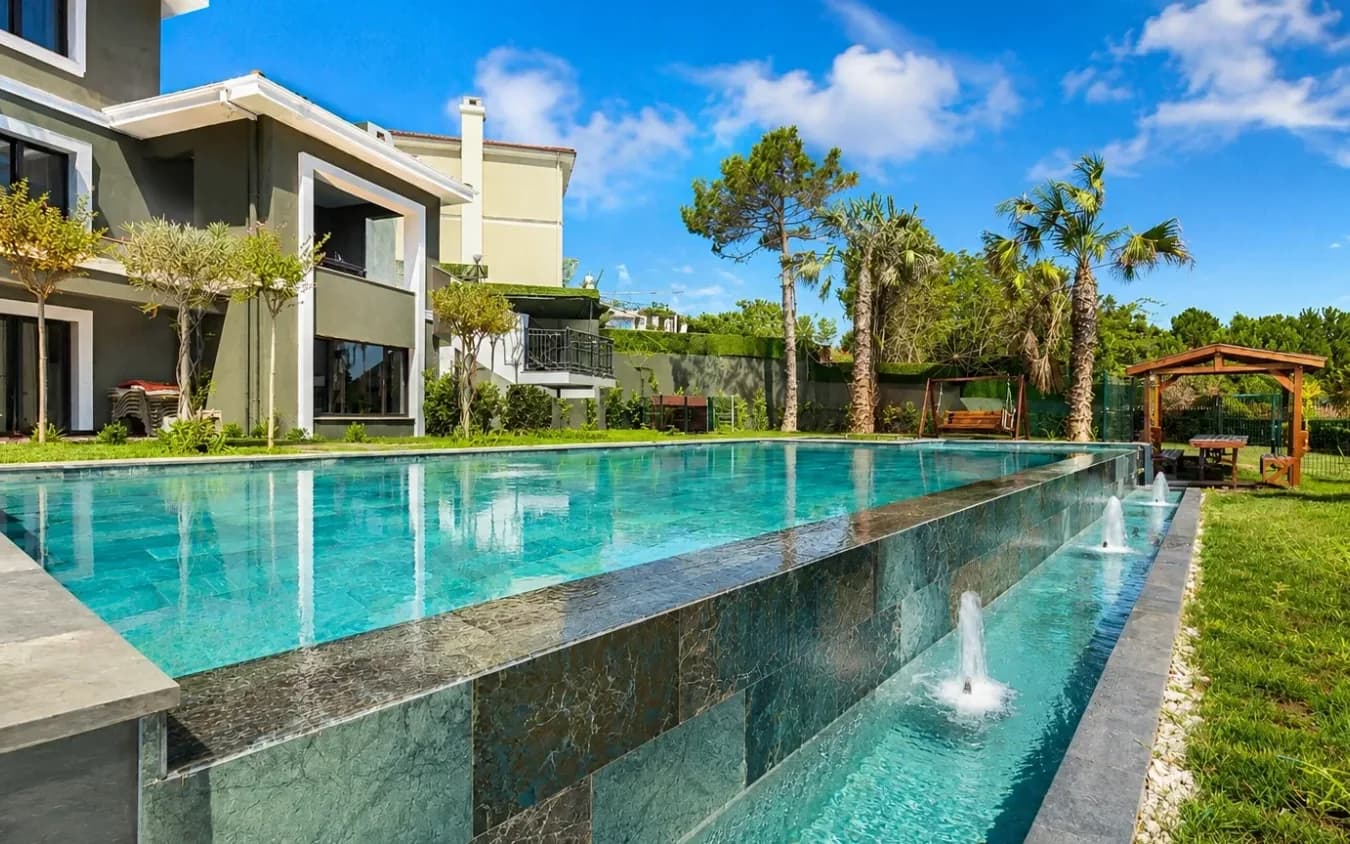 Pool Construction
Choosing Pool Showers and Waterfalls: Shower Types, Water Curtains and Plumbing Needs
Choosing a pool shower, waterfall or water curtain depends on the material, where the water comes from and where it is mounted. We compare solar and stainless steel shower types and their pump and plumbing needs.
View- 2 October 2026
- 8 min read
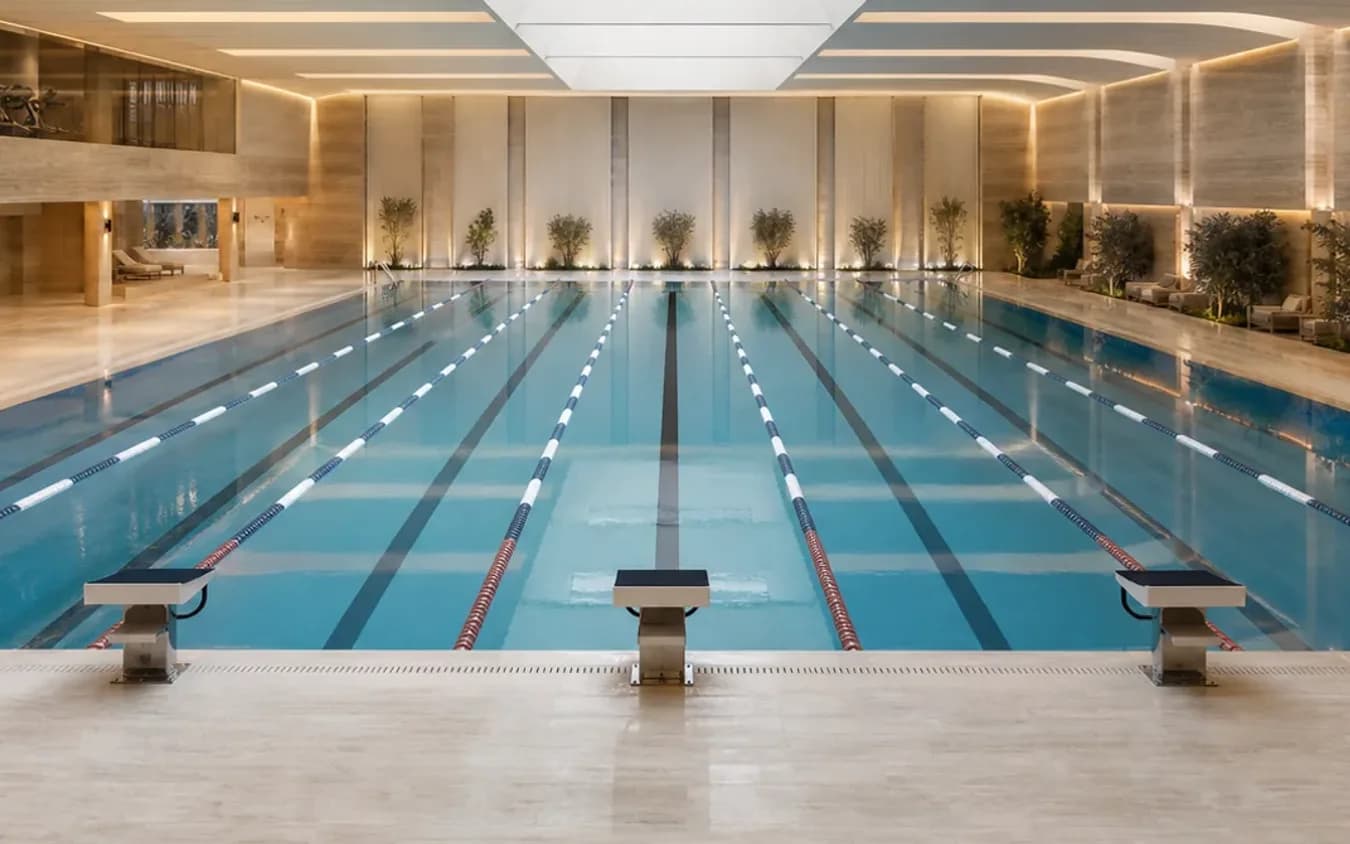 Pool Construction
Competition Pool Equipment: Which Pool Needs Which Equipment?
Starting blocks, lane ropes, warning and turn systems, underwater speakers and water polo goals are chosen according to how the pool is used. We explain which dimensions we check for each item.
View- 2 October 2026
- 7 min read
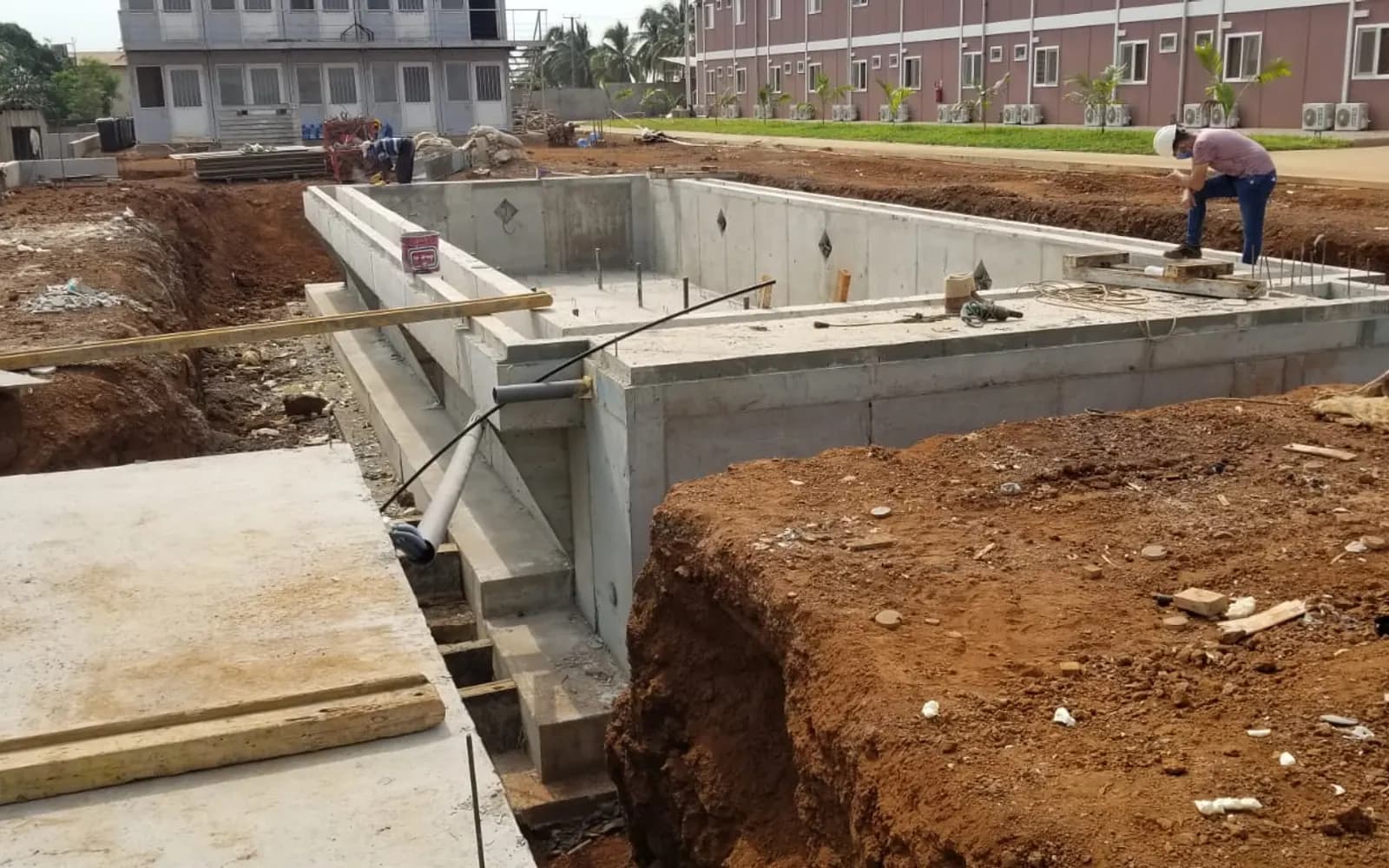 Pool Construction
Building a pool or spa abroad: what drives the cost of an international project?
A pool, hammam or spa project delivered abroad from Turkey has no single price per square metre. We cover design, equipment, shipping, customs and schedule.
View- 29 September 2026
- 8 min read
- Pool Construction · 16 July 2026Pool Permit & License 2026: Documents and ApplicationWhich documents are needed for a pool permit and license? We explain the required paperwork, municipal approval steps and the application process for 2026.9 min read
- Pool Construction · 28 May 2026Building a Pool From Scratch: A Step-by-Step Engineering GuideHow a pool gets built, in order: site visit and permits, design, excavation, the concrete shell, waterproofing, finishes, plant room and handover. How long each stage takes and what to check in a quote.9 min read
- Pool Construction · 19 February 2026Pool Renovation and Refurbishment: New Life for an Old PoolA pool worn down over the years can regain its original performance with the right renovation. We cover diagnosis, surface and waterproofing renewal, equipment modernization, and energy efficiency.5 min read
- Pool Construction · 2 October 2026Choosing Pool Showers and Waterfalls: Shower Types, Water Curtains and Plumbing NeedsChoosing a pool shower, waterfall or water curtain depends on the material, where the water comes from and where it is mounted. We compare solar and stainless steel shower types and their pump and plumbing needs.8 min read
- Pool Construction · 2 October 2026Competition Pool Equipment: Which Pool Needs Which Equipment?Starting blocks, lane ropes, warning and turn systems, underwater speakers and water polo goals are chosen according to how the pool is used. We explain which dimensions we check for each item.7 min read
- Pool Construction · 29 September 2026Building a pool or spa abroad: what drives the cost of an international project?A pool, hammam or spa project delivered abroad from Turkey has no single price per square metre. We cover design, equipment, shipping, customs and schedule.8 min read
// Sources and regulations
Sources and regulations
The official documents behind the technical framework on this page; links open the institutions' own sites.
- Regulation on the Health Principles and Conditions for Swimming Pools (Official Gazette No. 27866, 6 March 2011)Official Gazette of Türkiye
- Regulation Amending the Swimming Pools Regulation (Official Gazette, 15 December 2011)Official Gazette of Türkiye
- Guidelines for safe recreational water environments, Volume 2: Swimming pools and similar environments
// 04 · Company & Contact
To talk about your project, call or write to us.
Legal Name
Çilek Havuz
Founded
1998 · Istanbul
Head Office
Çilek Plaza, Eyüp Sultan Mah. Yakacık Cd. Feshane Cd. No: 2 D:4 D:1, 34885 Sancaktepe / İstanbul
Service Area
All of Türkiye · exports to 14 countries
Branches
Kyrgyzstan · Egypt · Algeria · Iraq
Showroom
Plan a showroom visit
At our showroom in Çilek Plaza, Sancaktepe, you can discuss your project with our team. We recommend booking an appointment by phone before your visit.
Working Hours
- Monday – Friday · 08:00 – 17:30
- Saturday · 08:00 – 12:30
- Closed on Sunday
Frequently Asked Questions
About Building a Pool Without a Permit in Turkey, frequently asked questions.
Çilek Havuz Corporate
Pool and Wellness Engineering
- Response Time
- Same day
- Channels
- Phone · Email · WhatsApp
If the answer you are looking for is not here, send your question directly to us and our team will reply as soon as possible.
+90 216 475 39 37In most municipalities, a permanent in-ground pool falls under zoning legislation regardless of its size. Whether there is an exemption threshold is something the municipality's zoning directorate will tell you.
Çilek Havuz Corporate
Portable pools that are not fixed to the ground and are dismantled at the end of the season are usually not considered structures. For systems whose base is concreted and made permanent, however, you need to ask the municipality.
Çilek Havuz Corporate
No, the process begins with the municipality's findings and the outcome depends on the type of non-compliance. Usually a period is first given to remedy the non-compliance or obtain a permit.
Çilek Havuz Corporate
If the pool complies with the zoning status and the setback, the design can often be prepared and an application made afterwards. If it does not, the structure has to be brought into line with the legislation.
Çilek Havuz Corporate
The application is usually made by the property owner or their authorised representative. The design and technical documents are prepared by the pool company or the design author.
Çilek Havuz Corporate
It can; a structure that does not appear in the approved design raises additional questions in the bank valuation and in the buyer's review. Clarifying the situation before the sale speeds up the process.
Çilek Havuz Corporate