

Pool Equipment Buying Guide: Pumps, Filtration, Disinfection, Robots and Automation
Start pool equipment shopping with the total cost of ownership, not the lowest price. We compare five categories, from pumps to automation, on one page.
Project Manager · Mechatronics Engineer · Çilek Havuz
- Published
- Updated
- Reading
- 9 min read
- Category
- Maintenance
Start pool equipment shopping with the total cost of ownership, not the lowest price. We compare five categories, from pumps to automation, on one page.
In a pool project, the combined cost of equipment such as the pump, filter, disinfection system, cleaning robot, heater and automation matters as much as the construction items; yet these items are usually chosen by looking only at the purchase price.
The right question is not 'which is cheapest?' but 'which keeps the total cost of ownership (initial investment plus energy plus maintenance plus consumables, set against expected service life) lowest?'. A low-priced piece of equipment can more than claw back the difference within a few seasons through high energy bills or frequent breakdowns.
Below, five main equipment categories (pumps, filtration, disinfection, cleaning robots and heating) and the automation layer that ties them together are compared on a single page. The aim is not to cover every topic down to the last detail, but to set out clearly which criteria to look at when choosing the right category and the right level of technology for your villa, residential complex or hotel pool. At the end of each section we also point you to the separate articles where we cover that topic in depth.
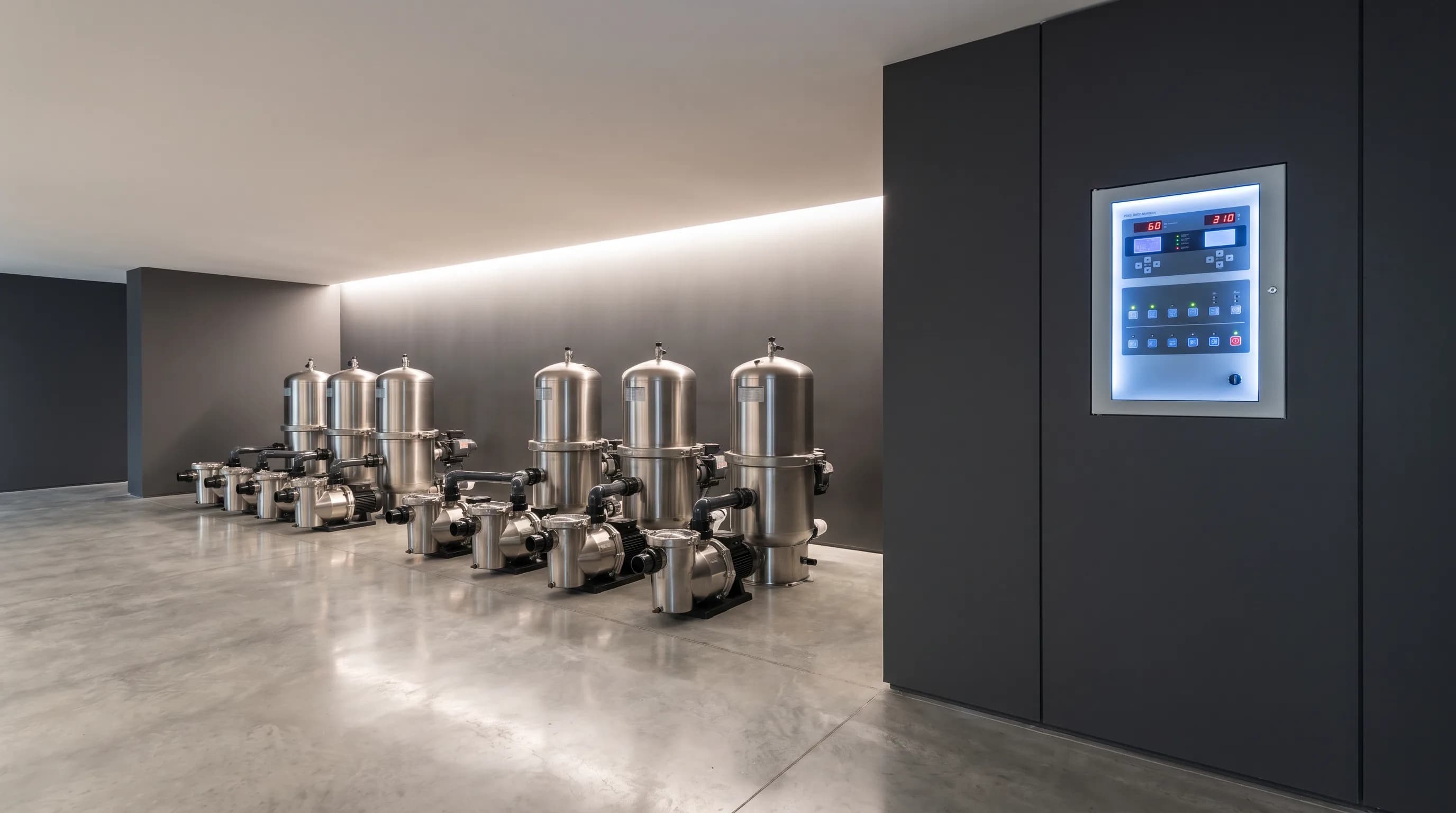
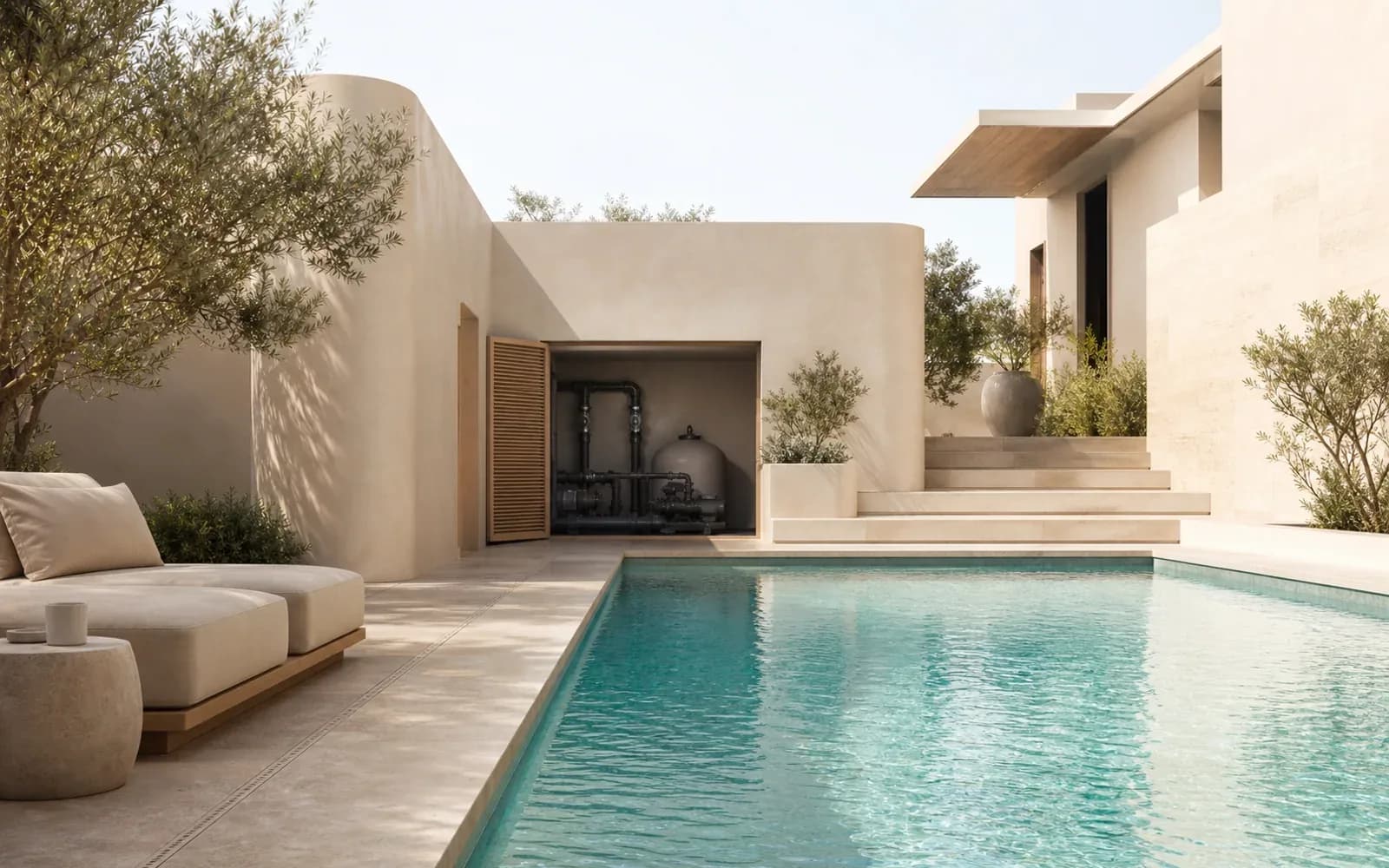
The pump is the component that makes up the largest share of a pool's energy bill, because it runs for hours every day throughout the season.
Traditional single-speed pumps run at the same fixed, high speed for every task, from routine filtration to vacuuming, which often means using more energy than is actually needed. Variable-speed (VS) pumps, by contrast, can adjust motor speed to the task, so they handle routine filtration at low speed over a longer period and move the same volume of water with far less electricity.
Variable-speed pumps run at low speed for long periods and therefore use clearly less energy than single-speed pumps; the real saving depends on pool volume and pipework resistance. Beyond energy, the second major difference is noise level (dBA): a pump running at low speed is noticeably quieter than one spinning at a constant high speed, and this directly affects day-to-day comfort, especially in villa projects where the plant room is close to living areas. We cover the technical details to watch when choosing a pump, such as flow rate, head and pipe diameter, in more depth in a separate article.
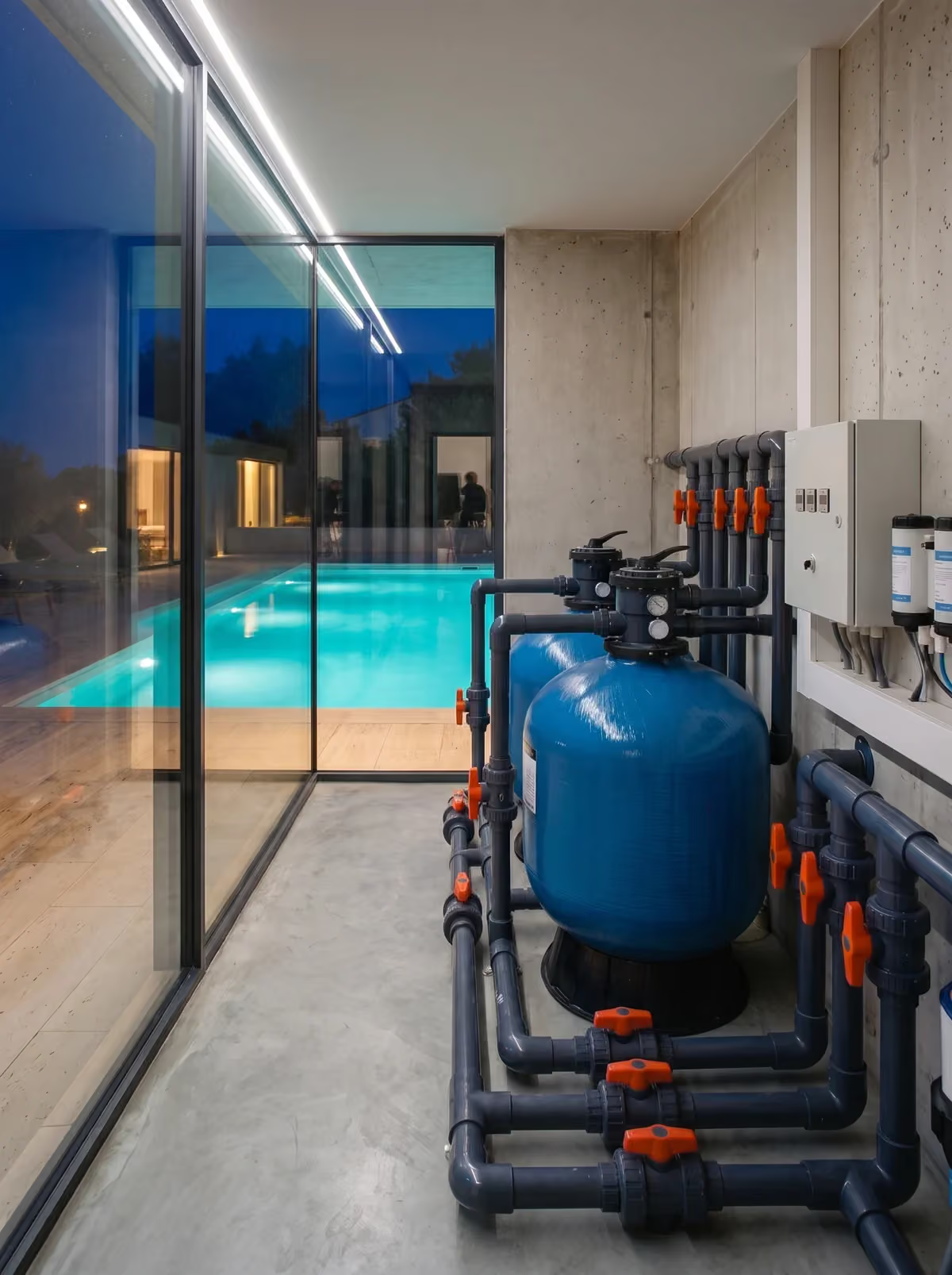
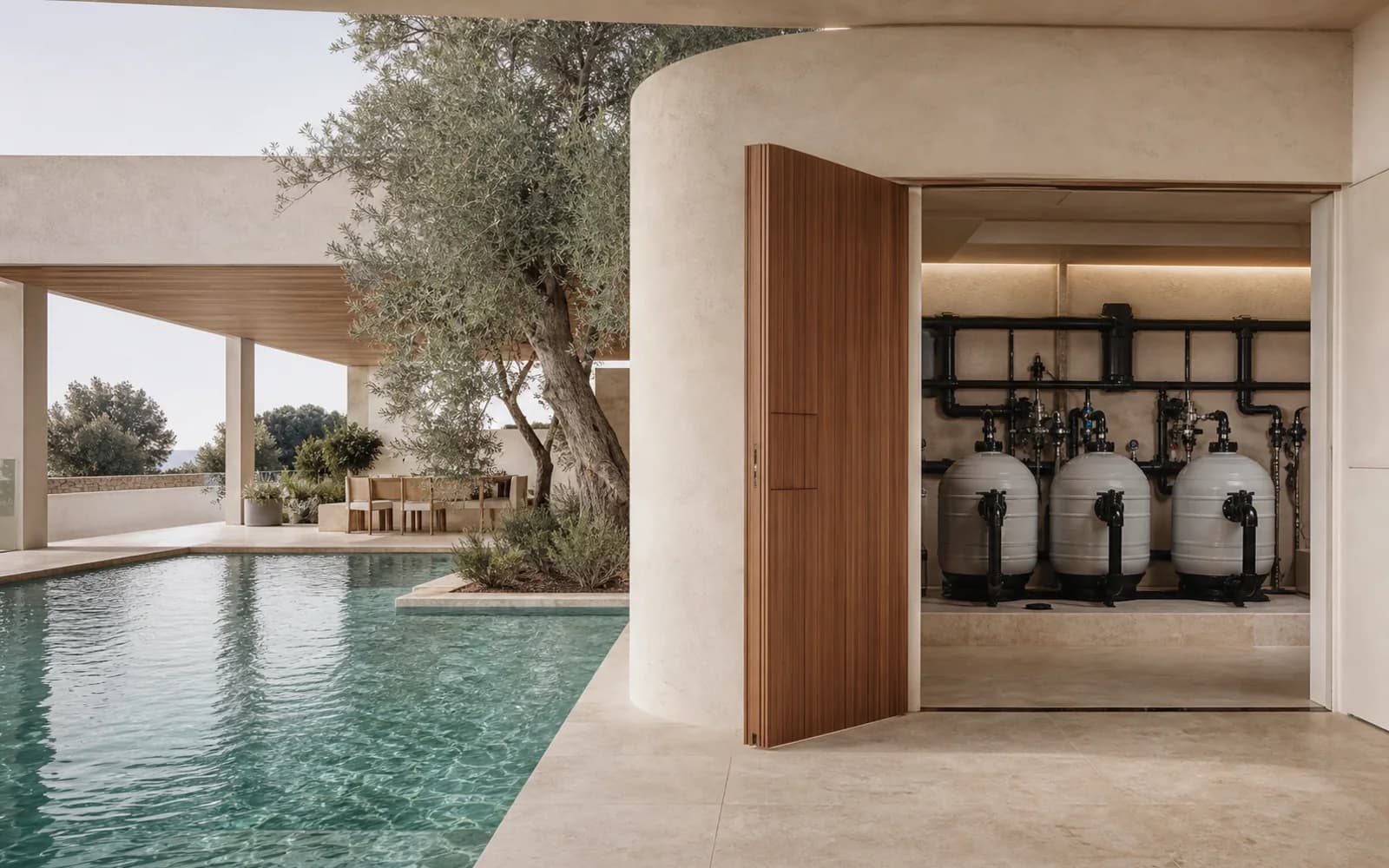
Sand filters are still the most common and proven solution for pool filtration, but not every sand filter is built to the same level of safety and performance.
The rule that applies to pool filters in Europe defines the pressure resistance of the filter vessel, material quality and safety requirements; compliance with it shows that the filter is not just 'a tank that holds sand' but an engineered product that works safely under pressure. Asking about this compliance when choosing a filter is decisive for long-term safety and durability.
The second key decision is the filtration rate, meaning the water flow per hour through each unit of filter surface area. Forcing a small filter to handle the flow of a large pool means the water does not pass through the sand bed slowly enough, and filtration quality drops; an oversized filter, on the other hand, is an unnecessary investment and a waste of space. The right approach is to choose the filter diameter that matches the flow rate calculated from the pool volume and the target turnover time. We compare the differences between filter types (sand, cartridge, diatomaceous earth) and which suits which type of pool in a separate article.
Traditional chlorination needs the lowest installation investment and is technically simple, but the chemical has to be bought, transported, stored and dosed by hand on a regular basis.
Because dosing errors can cause sudden swings in chlorine levels, this system calls for the most frequent and careful manual maintenance. Salt electrolysis systems produce chlorine themselves from the salt in the water, so they largely remove the need to carry chlorine by hand and deliver a more stable level of disinfection; on the other hand, the initial installation cost is higher than for chlorination, the cell is a consumable part that must be replaced over time, and because the process tends to push the water's pH up, it needs regular pH regulation.
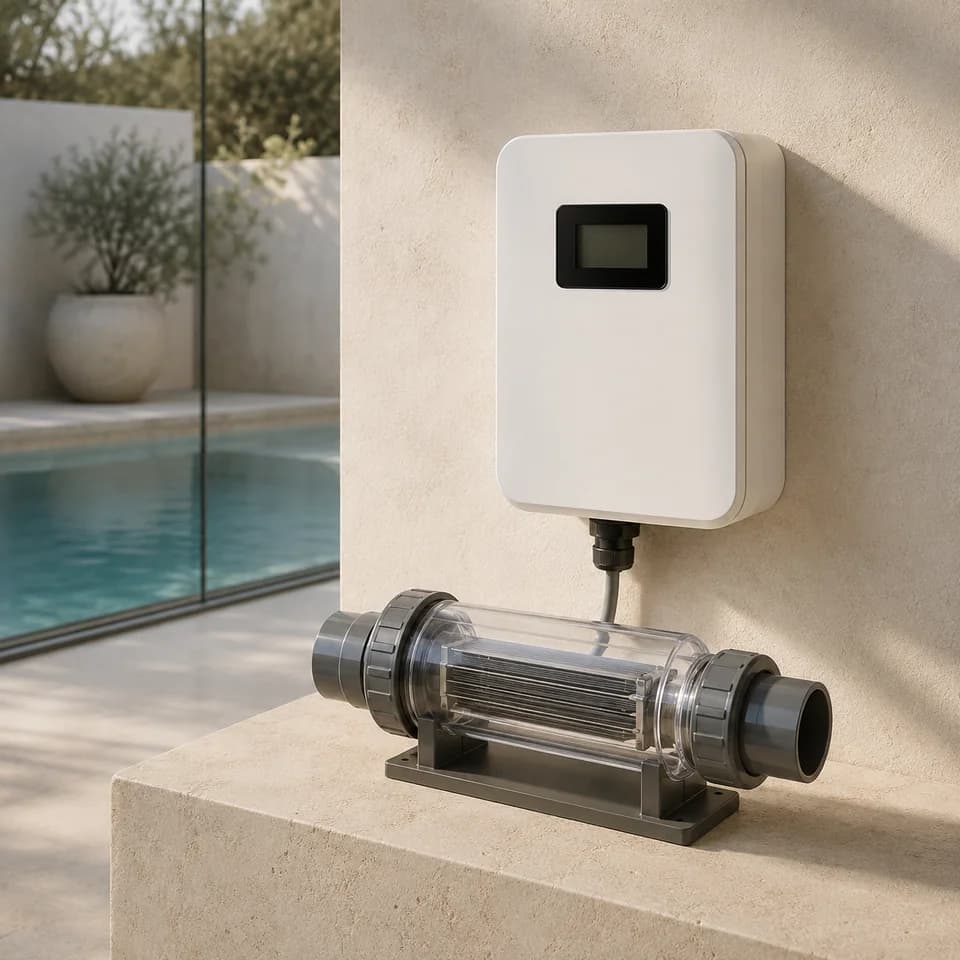
UV systems disinfect water directly with ultraviolet light, inactivating microorganisms, and can reduce chlorine demand; but because they leave no residual disinfectant in the water, they are not enough on their own and are usually used as a complementary layer alongside chlorine or salt electrolysis. Hybrid systems combine these approaches (for example salt electrolysis plus UV), reducing the burden of handling chemicals and removing reliance on a single method; the price for this is the highest installation investment. Which system to choose depends on the balance between installation investment and seasonal running costs, and on how much time the owner can spend on maintenance; we explain how the electrolysis principle of a saltwater system works in detail in a separate article.
When comparing these four approaches, energy efficiency should not be overlooked either. The energy classification used for pool equipment in Europe rates components (especially energy-consuming components such as disinfection units and heat pumps) for energy efficiency on a scale from A to F. Asking about this rating when buying lets you make an informed decision about how much energy the device uses over the season, as well as what it does.
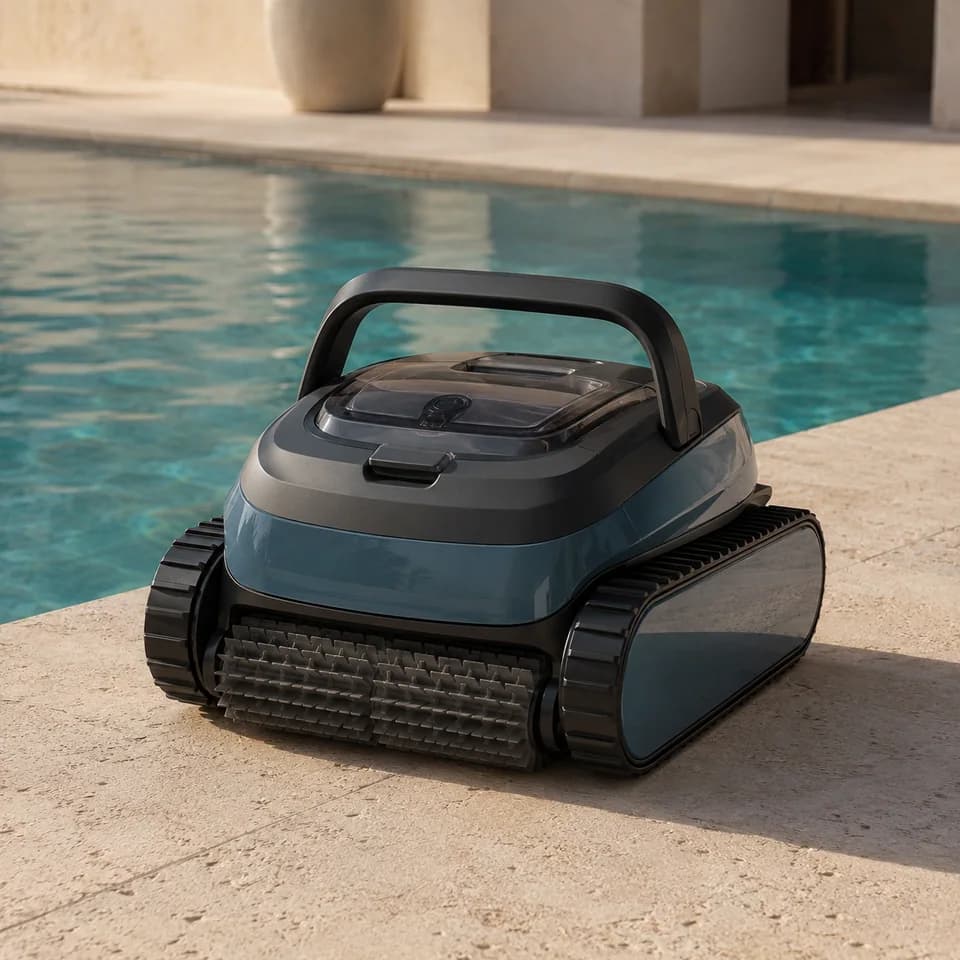
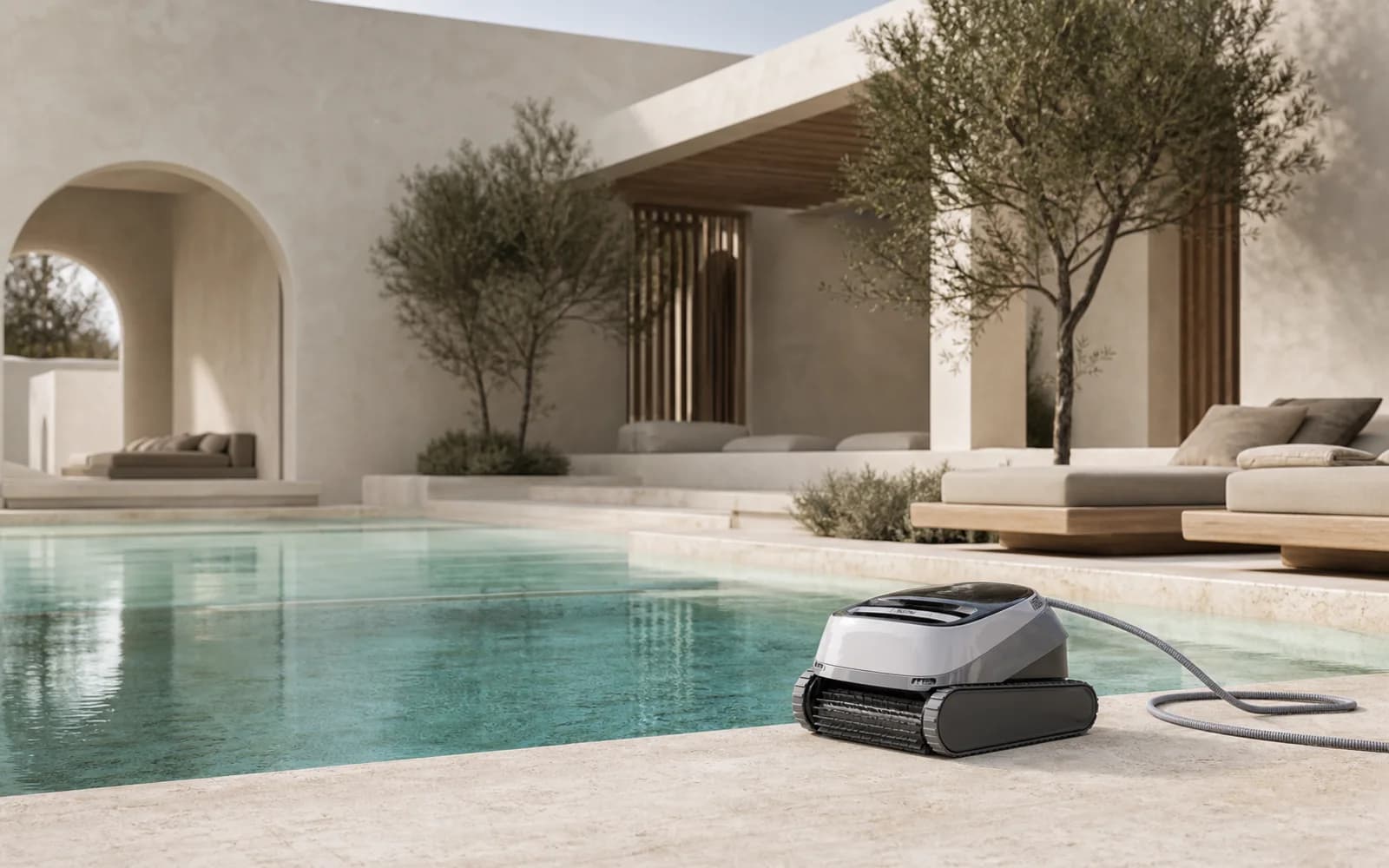
Cordless (lithium-ion battery) robots are not tied to a cable, so they do not cause tangling problems at the poolside, are easy to carry and store, and are ready to go almost instantly; on the other hand, their run time is limited by battery capacity, and in large pools covering the whole surface on a single charge is not always possible.
Corded robots run on a continuous power supply, so they have no time limit and are generally preferred for larger pools and heavily used commercial projects; however, the cable needs extra attention at the poolside so that it is managed properly and does not tangle.
In practice the choice depends on the size of the pool and how often it is used: in medium-sized villa pools the convenience of cordless robots is usually enough, while in large pools or residential complex and hotel pools used heavily every day, corded or high-capacity models give more consistent results. We compare technical details that vary by model, such as brush type, navigation system and filter mesh size, in a separate article.
Heat pumps take heat energy from the air through a refrigerant cycle and transfer it to the pool water, which is why the heat they deliver can be several times the electricity they consume.
The value that expresses this efficiency is called COP (coefficient of performance), and it shows the ratio of heat energy delivered to electrical energy consumed. Inverter heat pumps can adjust compressor speed to the pool's heating demand at any moment, so under most operating conditions they deliver higher and more stable efficiency than fixed-speed models.
COP is not a fixed number, however: as the outdoor air temperature falls, less heat energy can be drawn from the air, and efficiency drops along with it. This general principle explains why climate is decisive when choosing a heat pump: the same unit that runs at high efficiency in spring and autumn uses more electricity to deliver the same heating output on very cold days. Capacity should therefore be chosen by pool volume and, just as much, by the annual temperature profile of the region where the project is located.
Automation systems bring components such as the pump, heater, lighting and disinfection together in a single control layer and use sensors and software to turn tasks that were traditionally checked by hand into continuous ones.
With smart app control, the owner can monitor live water quality readings, change the pump speed, switch the lights on and off or schedule heating from home or while travelling, which greatly reduces the need for daily physical checks.
The real value of this convenience lies in spotting problems before they grow: getting an instant alert when water quality moves outside the expected range allows you to act much earlier than with weekly manual testing. The range of features automation systems offer (remote control, sensor integration, multi-device management) differs by product family; we look at these differences and which level suits which project in a separate article.
There is no single 'best' equipment combination; the right choice depends on the type of pool, how intensively it is used and your budget priorities.
In a villa pool used every day, energy savings and comfort usually come first; for this profile, investing in a variable-speed pump, salt electrolysis or hybrid disinfection and smart automation pays for itself quickly. In a hotel or residential complex pool with heavy, continuous use, durability, high flow capacity and low breakdown risk take priority; for this profile, a corded robot and higher-capacity filtration and disinfection combinations may be the better fit.
The common lesson from the pool projects we have carried out since 1993 is this: equipment decisions should not be made independently of each other but calculated together; pump flow must match filter capacity, the disinfection method must fit the automation integration, and heating capacity must suit the climate and usage profile. The soundest way to pin down the right equipment combination for your pool is an on-site survey of your project followed by the detailed quotation we prepare; during this process we work through the reasoning behind every equipment decision with you.
Next step
Let us discuss your project in the way that suits you best.
You can fill in the form for a written quote, schedule a video project presentation or ask us to survey your project site.
Get a Quote
Send us your dimensions and expectations in writing.
Online presentation
Video project presentation
On-site survey
Inspection at your project site
// 01 · Product groups
Compare the products on this topic on their category pages.
Each card leads to a product category; models, technical sheets and list prices are there.
 Product category
Pool Cleaning Robots
Automate floor, wall and waterline maintenance without manual cleaning, using cordless, intelligent pool cleaning robots.
View- 24 products
 Product category
Pool UV Disinfection Systems
Low-pressure and medium-pressure UV-C disinfection units for residential and commercial pools.
View- 6 products
- Product category
Cordless Pool Robot Models
Battery-powered pool cleaning robots that clean the floor and walls with no cable in the water.
View- 7 products
Product category
Pool Cleaning Robots
Automate floor, wall and waterline maintenance without manual cleaning, using cordless, intelligent pool cleaning robots.
24 productsProduct category
Pool UV Disinfection Systems
Low-pressure and medium-pressure UV-C disinfection units for residential and commercial pools.
6 productsProduct category
Cordless Pool Robot Models
Battery-powered pool cleaning robots that clean the floor and walls with no cable in the water.
7 products
// 02 · Related service
The work in this article, we deliver from design to handover.
Çilek Havuz service
Pool Maintenance
Water chemistry, equipment and periodic maintenance.
How we work
- 01Initial meeting and site surveyWe inspect the site and listen to the brief.
- 02Design and quotationWe give the cost item by item, in writing.
- 03ExecutionThe same team builds to a written schedule.
- 04Handover and commissioningWe start the systems and explain their use.
- 05Maintenance and technical supportWe provide periodic maintenance and support.
// 03 · Guides
On Maintenance, more articles to read.
First the articles directly related to this one, then the newest articles on the topic.
 Maintenance
Choosing a Pool Cleaner: Pressure, Suction and Robotic
Pool cleaners come in three technologies: pressure, suction and electric robotic. We explain how each works, its trade-offs and which one fits your pool.
View- 11 April 2026
- 5 min read
 Maintenance
Pool Filter Types: Comparing Sand, Glass and Zeolite Media
The filter media in the tank sets your pool's water clarity. We compare sand, glass and zeolite by filtration fineness, lifespan, backwash needs and cost.
View- 17 April 2026
- 5 min read
 Maintenance
Choosing a Pool Pump: Advantages of Variable Speed Pumps
The pump is the heart of circulation and the biggest part of your energy bill. We compare single-speed and variable-speed pumps and their sizing.
View- 14 April 2026
- 5 min read
 Maintenance
Pool clarifier and flocculant: differences, uses and selection
Clarification, flocculation and filter compatibility compared for cloudy pool water. The right choice follows the product instructions, not the name.
View- 13 September 2026
- 3 min read
 Maintenance
Chlorine tablets and granules: dissolution, use and selection
Chlorine products differ in active ingredient, concentration and intended use. Shape alone does not determine strength or dosing method.
View- 13 September 2026
- 3 min read
 Maintenance
Winter pool chemicals: purpose, limits and product selection
Winter treatment depends on the actual pool system and product formulation. Water care, equipment freeze protection and ongoing checks are separate tasks.
View- 13 September 2026
- 3 min read
- Maintenance · 11 April 2026Choosing a Pool Cleaner: Pressure, Suction and RoboticPool cleaners come in three technologies: pressure, suction and electric robotic. We explain how each works, its trade-offs and which one fits your pool.5 min read
- Maintenance · 17 April 2026Pool Filter Types: Comparing Sand, Glass and Zeolite MediaThe filter media in the tank sets your pool's water clarity. We compare sand, glass and zeolite by filtration fineness, lifespan, backwash needs and cost.5 min read
- Maintenance · 14 April 2026Choosing a Pool Pump: Advantages of Variable Speed PumpsThe pump is the heart of circulation and the biggest part of your energy bill. We compare single-speed and variable-speed pumps and their sizing.5 min read
- Maintenance · 13 September 2026Pool clarifier and flocculant: differences, uses and selectionClarification, flocculation and filter compatibility compared for cloudy pool water. The right choice follows the product instructions, not the name.3 min read
- Maintenance · 13 September 2026Chlorine tablets and granules: dissolution, use and selectionChlorine products differ in active ingredient, concentration and intended use. Shape alone does not determine strength or dosing method.3 min read
- Maintenance · 13 September 2026Winter pool chemicals: purpose, limits and product selectionWinter treatment depends on the actual pool system and product formulation. Water care, equipment freeze protection and ongoing checks are separate tasks.3 min read
// Sources and regulations
Sources and regulations
The official documents behind the technical framework on this page; links open the institutions' own sites.
- Regulation on the Health Principles and Conditions for Swimming Pools (Official Gazette No. 27866, 6 March 2011)Official Gazette of Türkiye
- Regulation Amending the Swimming Pools Regulation (Official Gazette, 15 December 2011)Official Gazette of Türkiye
- Guidelines for safe recreational water environments, Volume 2: Swimming pools and similar environments
// 04 · Company & Contact
To talk about your project, call or write to us.
Legal Name
Çilek Havuz
Founded
1998 · Istanbul
Head Office
Çilek Plaza, Eyüp Sultan Mah. Yakacık Cd. Feshane Cd. No: 2 D:4 D:1, 34885 Sancaktepe / İstanbul
Service Area
All of Türkiye · exports to 14 countries
Branches
Kyrgyzstan · Egypt · Algeria · Iraq
Showroom
Plan a showroom visit
At our showroom in Çilek Plaza, Sancaktepe, you can discuss your project with our team. We recommend booking an appointment by phone before your visit.
Working Hours
- Monday – Friday · 08:00 – 17:30
- Saturday · 08:00 – 12:30
- Closed on Sunday
Frequently Asked Questions
About Pool Equipment Buying Guide, frequently asked questions.
Çilek Havuz Corporate
Pool and Wellness Engineering
- Response Time
- Same day
- Channels
- Phone · Email · WhatsApp
If the answer you are looking for is not here, send your question directly to us and our team will reply as soon as possible.
+90 216 475 39 37The payback period depends on how many hours a day the pool runs, the unit price of electricity and the power of the existing pump. In pools that run often and for long periods, the energy savings of a pump that can filter at low speed pay back faster. Rather than give a fixed period, we suggest working out this calculation with you based on the consumption profile of your current system.
Çilek Havuz Corporate
A sand filter is the standard choice for most residential and commercial pools thanks to its low maintenance load and reasonable filtration quality. In some special projects that need to capture finer particles, want to reduce water consumption or have limited space, cartridge or diatomaceous earth filters can be considered. The right choice depends on how intensively the pool is used and your maintenance preferences.
Çilek Havuz Corporate
Salt electrolysis alone provides enough disinfection for many pools; adding UV is not mandatory. However, in pools that are heavily used, exposed to the sun for long periods or have high chlorine consumption, UV can be chosen as a hybrid layer to reduce chlorine demand and make disinfection more consistent. It is more an investment in comfort and efficiency than a requirement.
Çilek Havuz Corporate
The battery run time of cordless robots varies from model to model. In large-volume pools it is not always possible to cover the whole surface on a single charge. For such pools, either a higher-capacity cordless model or a corded robot that runs without interruption gives more consistent results. We can assess the right model for your pool size together.
Çilek Havuz Corporate
No; a heat pump's efficiency depends on the outdoor air temperature and falls as the air gets colder, because the system draws heat from the air. A unit that runs at high efficiency in mild spring and autumn weather uses more electricity on very cold days to deliver the same heating output. Capacity should therefore be chosen according to the temperature profile of your region.
Çilek Havuz Corporate
Most modern automation systems are designed to work with standard pumps, heaters and disinfection equipment. However, compatibility can vary with the brand and communication protocol of your existing equipment. Some older systems may need an additional control module or a partial upgrade. We can inspect your current setup and work out the most suitable integration route together.
Çilek Havuz Corporate