

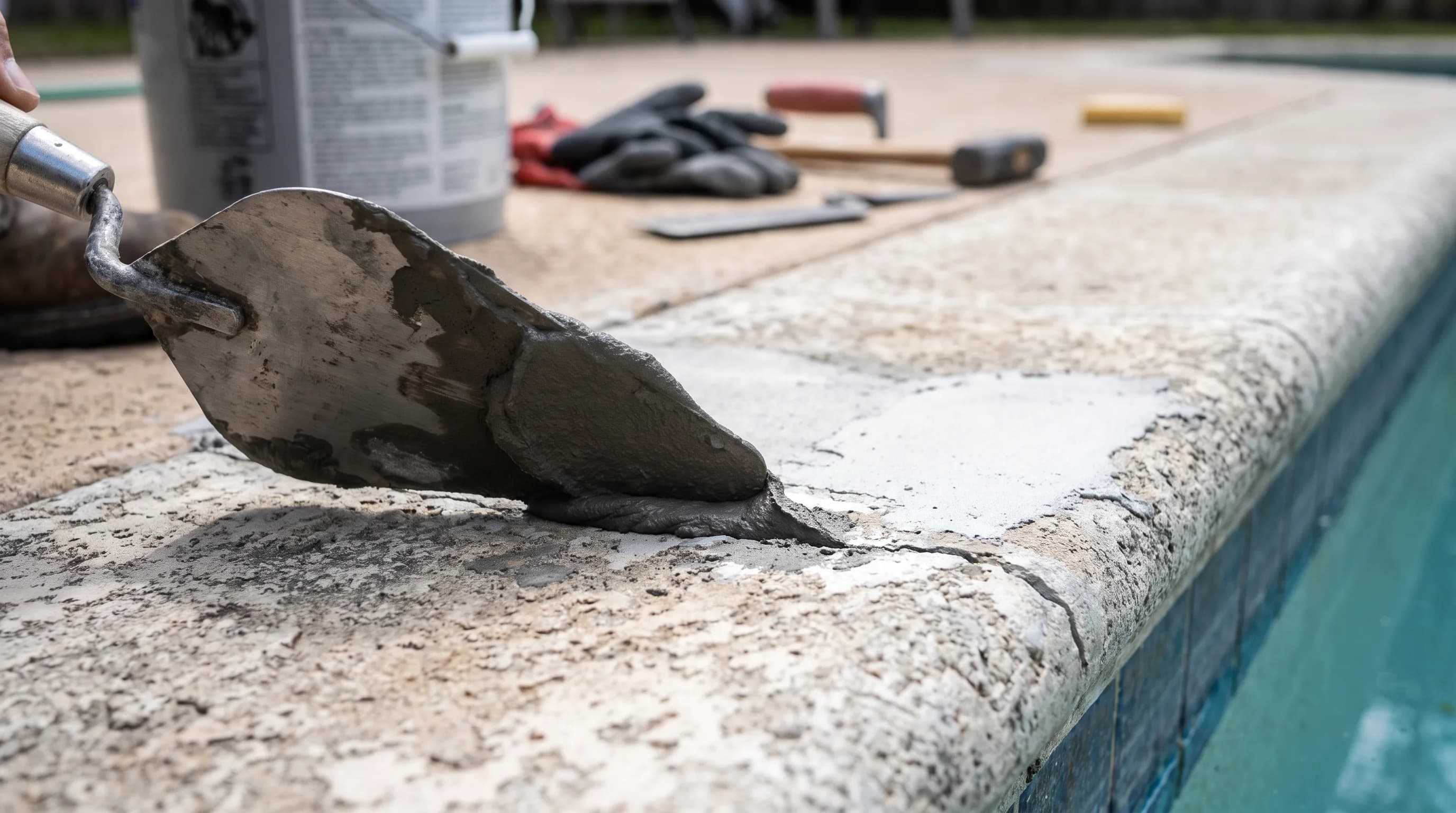
Pool Crack Repair: Causes and Repair Methods
Not every pool crack is equally serious. We cover structural versus surface cracks, the limits of DIY repair and how proper waterproofing prevents leaks.
Project Manager · Mechatronics Engineer · Çilek Havuz
- Published
- Updated
- Reading
- 9 min read
- Category
- Pool Construction
Not every pool crack is equally serious. We cover structural versus surface cracks, the limits of DIY repair and how proper waterproofing prevents leaks.
No.
Most cracks in a pool are hairline cracks confined to the render or finish; the dangerous ones are cracks that grow in the reinforced concrete shell and leak water.
We begin the diagnosis with three questions: which layer is the crack in, how wide is it, and is it growing over time? A crack seen in the grout of the finish or in the render, as fine as a hair and spreading like a scattered web, is usually superficial. A crack that runs in a straight line along the junction between wall and floor slab, at a corner or at the stair connection, on the other hand, points to the load-bearing shell.
| Width | Probable cause | What to do |
|---|---|---|
| Below 0.2 mm | Shrinkage of render or concrete | Monitor, seal when the finish is renewed |
| 0.2-1 mm | Shrinkage or limited movement | Mark the ends, monitor for 4-6 weeks |
| Above 1 mm | Shell movement, settlement, reinforcement | Engineer's inspection before draining |
| Stepped, with the two faces offset | Ground settlement or earthquake | Structural repair, ground investigation |
To measure the width, a crack gauge card sold at stationery shops or a sheet of thick paper will do. Marking both ends of the crack in pencil and writing the date next to them is the cheapest test to show whether it has grown a few weeks later.
Structural cracks are mostly caused by differential settlement of the ground, insufficient reinforcement at corners and junctions, or earthquake movement.
If the ground beneath the pool does not have the same bearing capacity at every point, one end of the pool shell settles more than the other. This risk grows for pools built on fill, on sloping plots where half the pool sits on excavated ground and half on fill, and on alluvial soils where the groundwater rises and falls with the seasons. In our article on ground and earthquake precautions in Izmir, we described the foundation and joint solutions for plots of this kind separately.
Concrete is a material that is strong in compression and weak in tension; the tension is carried by the reinforcement. Stress concentrates at the corner where wall and floor slab meet, and around the openings for stairs and skimmers. If no additional reinforcement has been placed at these points, or if concrete pouring was interrupted and a cold joint formed, the crack starts there. When no movement joint is left between the pool and the building or terrace slab, earthquake and thermal expansion loads are transferred directly to the pool.
Signs of a structural crack
- The crack follows a straight line and starts from a corner or junction
- Its width increases over weeks
- The two faces of the crack are not in the same plane; one has shifted or sunk
- Finish tiles lift or fall off along the same line
- The pool loses more water than evaporation accounts for
A hairline crack forms when render or concrete loses water and shrinks as it dries, and it does not affect the pool's load-bearing shell.
If concrete poured in hot, windy weather is not watered sufficiently, the surface dries faster than the concrete beneath it and a network of fine cracks forms. Repair mortar applied too thickly or with too much cement cracks in the same way. These cracks are generally below 0.2 mm, appear as short lines that change direction, and do not leak water.
Although superficial cracks are considered harmless, they should not be left alone. In winter, water that gets into the crack freezes and thaws and hollows out the area beneath the finish; over time the tiles work loose. That is why hairline cracks are sealed when the finish is renewed or during annual pool maintenance.
The bucket test shows this: a bucket filled with water is placed on a pool step, and if after 24 hours the drop in the pool is greater than in the bucket, there is a leak.
In summer, an open-air pool loses 3-7 mm of water a day through evaporation; on a windy, hot day this rises further. In the bucket test, we fill the bucket up to the pool's water level and draw a level line both inside the bucket and on the pool wall. The test is carried out once with the pump running and once with the pump off. If the loss increases while the pump is running, the leak is usually in the pressurised return line; if it continues with the pump off, the shell, a crack or the suction line is suspected.
With a leaking crack, a few drops of food colouring released into the water are drawn towards the crack. The pool is not drained before the location of the leak has been identified; in an empty pool the crack may appear closed, and it becomes impossible to tell which crack is leaking.
Most permanent repairs are carried out in an empty pool, but on ground with a high water table, draining the pool can push the shell upwards and open new cracks.
An empty pool is a light vessel compared with the water around it. In the rainy season, or on a plot close to a stream bed, groundwater pushes the pool floor upwards; on site, we have seen pools rise by a few centimetres and floors crack down the middle. Before draining, the hydrostatic relief valve in the floor is checked and, if necessary, water is drawn off from the surrounding area with a well. In our article on what to know before draining a pool, we set out these checks in order.
There are also repairs that can be carried out underwater. Epoxy pastes that cure in wet conditions are used for small cracks and for leaks around fittings; these are temporary or limited solutions and require diver workmanship.
The method is chosen according to the type of crack: a superficial crack is opened up and filled with flexible mortar, while a structural or leaking crack is sealed by injection.
| Crack type | Method | Point to watch |
|---|---|---|
| Hairline surface crack | Cutting a V-groove, flexible repair mortar | The substrate beneath the finish must be dry and dust-free |
| Dry, stable structural crack | Epoxy resin injection | If the crack is moving, the epoxy will crack again |
| Wet crack that leaks water | Polyurethane injection | The foam expands with water and plugs the crack |
| Moving joint crack | Flexible joint tape and filler | The joint is not sealed with rigid mortar |
| Numerous widespread cracks | Membrane or liner finish | Shell movement must be stopped first |
In injection, injection nozzles called packers are placed along the crack at intervals of 20-30 cm, and the resin is fed under pressure from the bottom upwards. When the resin emerges from the next packer, that section of the crack is full. Injecting rigid epoxy into a crack that is still moving achieves nothing more than shifting the crack a few centimetres to one side.
If there are many cracks and the shell is no longer moving, finishing the pool surface with a waterproof PVC membrane or a reinforced liner is more durable than repairing them one by one. This decision is usually taken as part of the pool renovation and refurbishment steps, together with the finish and the installations.
Filler is enough only for a superficial crack thinner than 1 mm that does not leak and is not growing; on a structural crack, it merely hides the symptom for a while.
Ready-made filler kits seal the mouth of the crack; they do not fill its interior. Before application, the crack is opened into a V shape with a grinding disc, the dust is removed and the surface is brought to the moisture condition specified by the manufacturer. Filler applied without this preparation comes away in the first winter. Before the pool is refilled with water, the material's own curing time is observed; depending on the product, this ranges from a few hours to a few days.
A crack that reopens at the junction of wall and floor, at a corner or next to a previous repair is not sealed with filler. The movement that caused the crack is still continuing there, and the cause must be found first.
Cracks are prevented most cheaply at the construction stage: compacted ground, additional reinforcement at the corners, continuous concrete pouring and movement joints in the right places.
Across the whole process of having a pool built, the decisions that determine cracking are made in the first two weeks. Foremost among them are the geotechnical survey, compaction of the excavation base, the blinding concrete, two layers of reinforcement, pouring the walls and floor in a single operation where possible, and curing the concrete by watering it for at least 7 days after pouring. A movement joint is left between the pool and the building, retaining wall or terrace slab.
The second layer is waterproofing. A flexible cement-based waterproofing or membrane delays water from reaching the concrete and reinforcement even if a hairline crack forms; the reinforcement does not corrode and the crack does not grow. We explained the order of the waterproofing layers and the water-tightness test in our article on pool waterproofing.
In an existing pool, an annual check carried out when the pool is empty or the water level is low catches cracks while they are still small. This check is included in our pool maintenance contracts, together with the inspection of the finish, joints and fittings.
Next step
Let us discuss your project in the way that suits you best.
You can fill in the form for a written quote, schedule a video project presentation or ask us to survey your project site.
Get a Quote
Send us your dimensions and expectations in writing.
Online presentation
Video project presentation
On-site survey
Inspection at your project site
// 01 · Products in this article
For the work described in this article, pool finishing systems.
Each card leads to the product page with its data sheet, model list and quotation.
- 8 models
- 6 models

List prices as of 9 October 2026, excl. VAT.
// 02 · Product groups
Compare the products on this topic on their category pages.
Each card leads to a product category; models, technical sheets and list prices are there.
 Product category
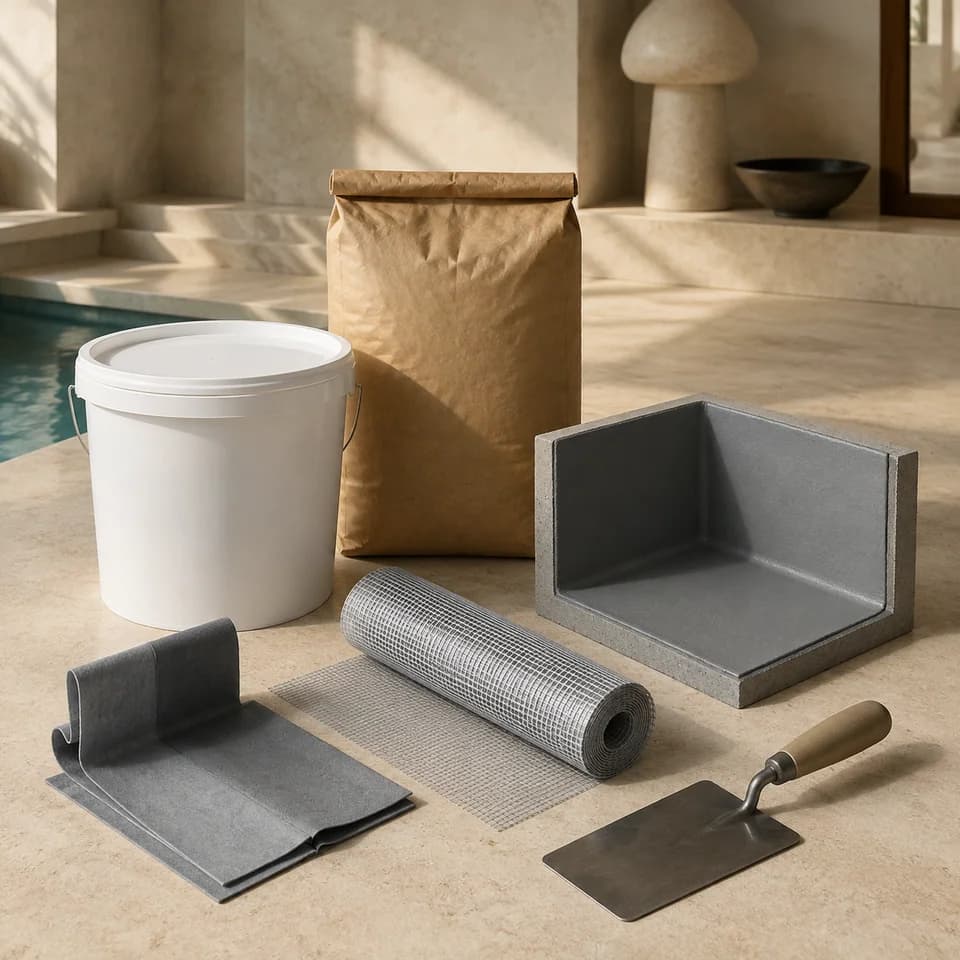
Waterproofing
Waterproofing systems built from membranes, adhesives and joint sealants that permanently seal the pool structure against water.
View- 2 products
 Product category
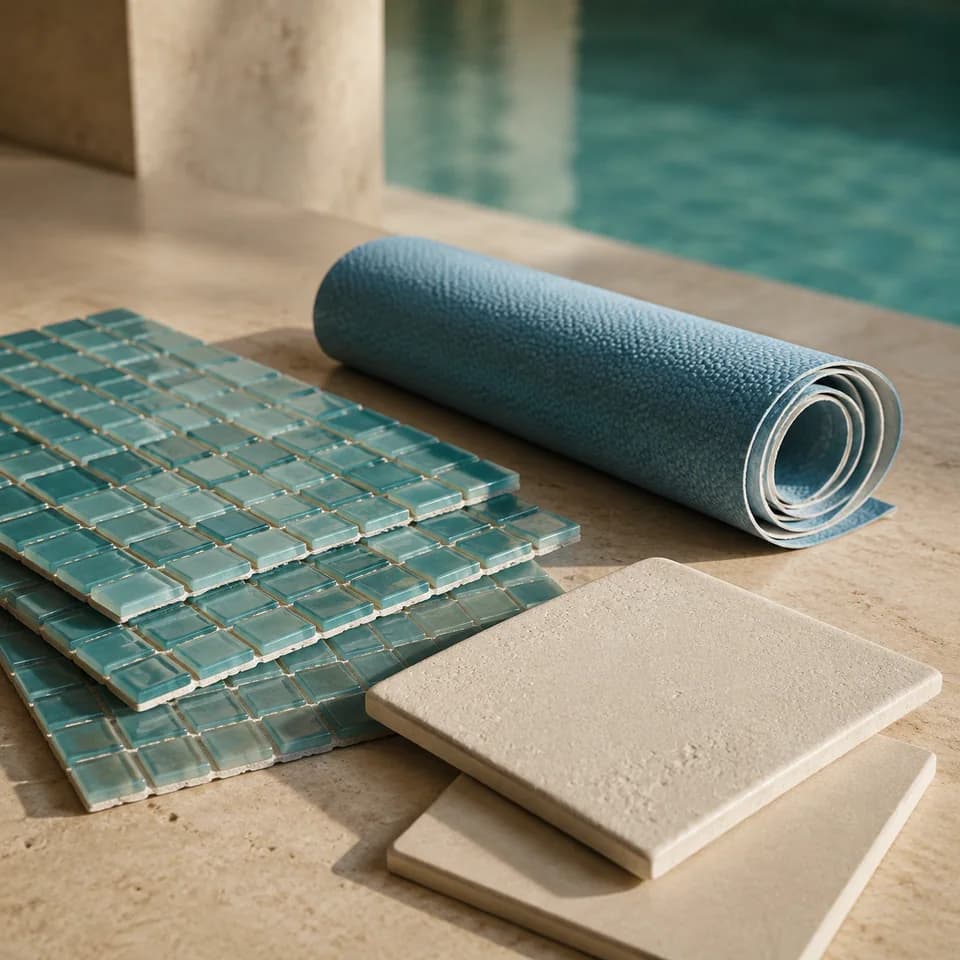
Pool Lining Systems
PVC liner, membrane, ceramic tile and glass mosaic: lining materials that make the pool watertight and form its finished surface.
View- 20 products
Product category
Waterproofing
Waterproofing systems built from membranes, adhesives and joint sealants that permanently seal the pool structure against water.
2 productsProduct category
Pool Lining Systems
PVC liner, membrane, ceramic tile and glass mosaic: lining materials that make the pool watertight and form its finished surface.
20 products
// 03 · Related service
The work in this article, we deliver from design to handover.
Çilek Havuz service
Pool Maintenance
Water chemistry, equipment and periodic maintenance.
How we work
- 01Initial meeting and site surveyWe inspect the site and listen to the brief.
- 02Design and quotationWe give the cost item by item, in writing.
- 03ExecutionThe same team builds to a written schedule.
- 04Handover and commissioningWe start the systems and explain their use.
- 05Maintenance and technical supportWe provide periodic maintenance and support.
// 04 · Guides
On Pool Construction, more articles to read.
First the articles directly related to this one, then the newest articles on the topic.
 Pool Construction
Pool Renovation and Refurbishment: New Life for an Old Pool
A pool worn down over the years can regain its original performance with the right renovation. We cover diagnosis, surface and waterproofing renewal, equipment modernization, and energy efficiency.
View- 19 February 2026
- 5 min read
 Maintenance
Water Hardness and Calcium Balance in Pools
Calcium hardness is the overlooked third pillar of pool water chemistry. We explain the ideal range, corrosion from low calcium and scaling from high calcium.
View- 5 April 2026
- 5 min read
 Maintenance
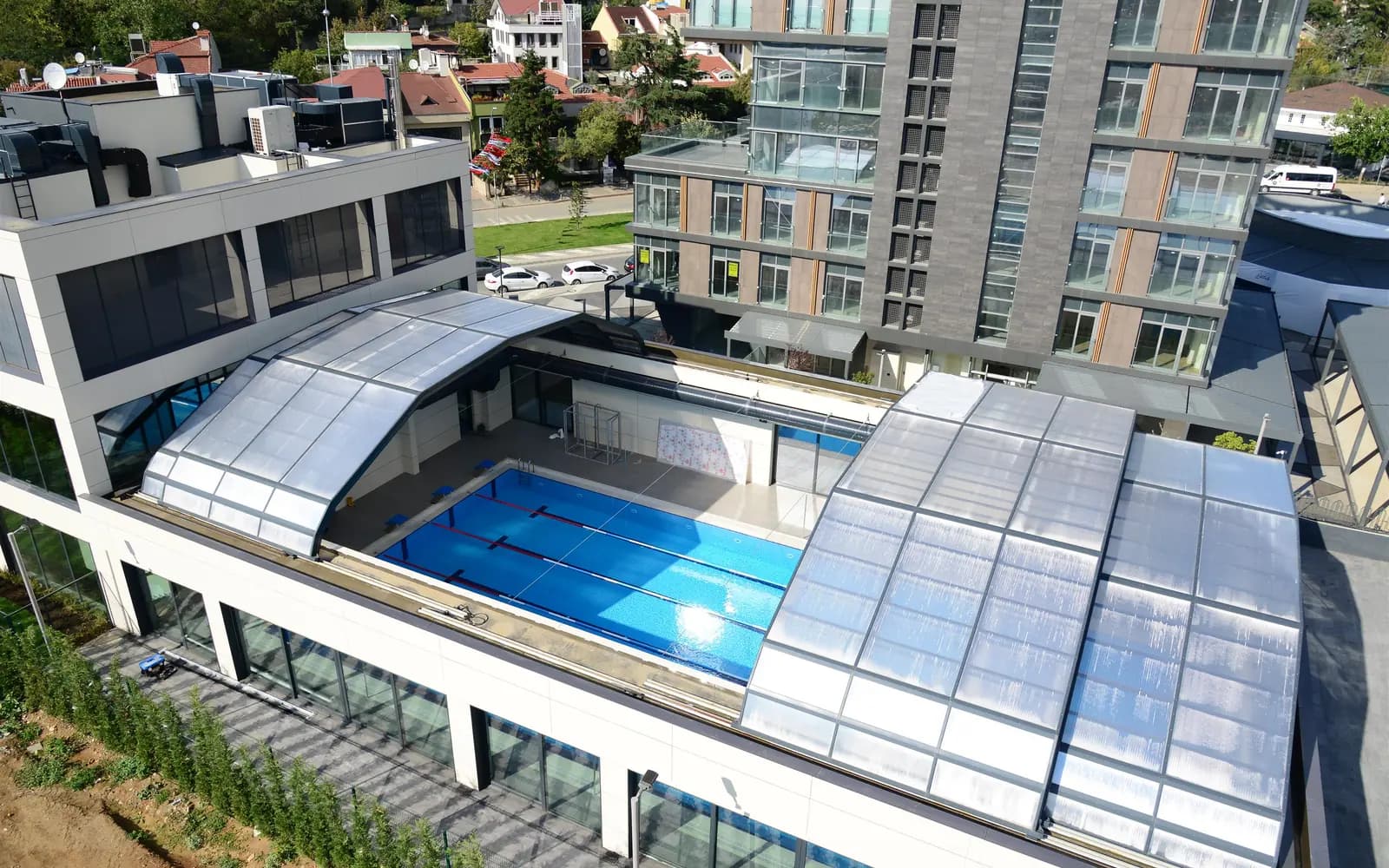
Pool covering systems: which cover suits which pool?
Pool covering systems separate the water surface or the whole pool volume from the outside environment. A technical comparison of five types.
View- 9 September 2026
- 11 min read
 Pool Construction
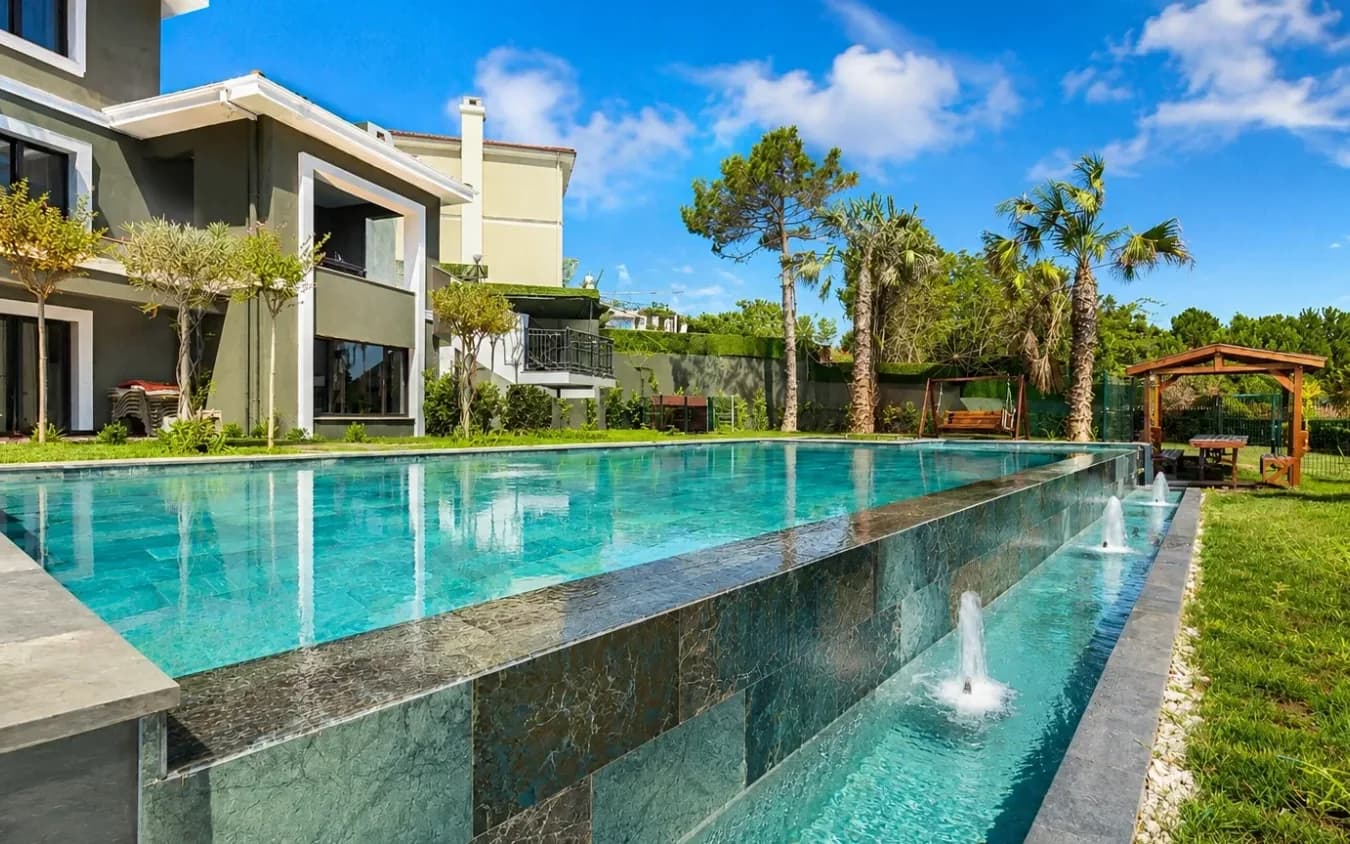
Choosing Pool Showers and Waterfalls: Shower Types, Water Curtains and Plumbing Needs
Choosing a pool shower, waterfall or water curtain depends on the material, where the water comes from and where it is mounted. We compare solar and stainless steel shower types and their pump and plumbing needs.
View- 2 October 2026
- 8 min read
 Pool Construction
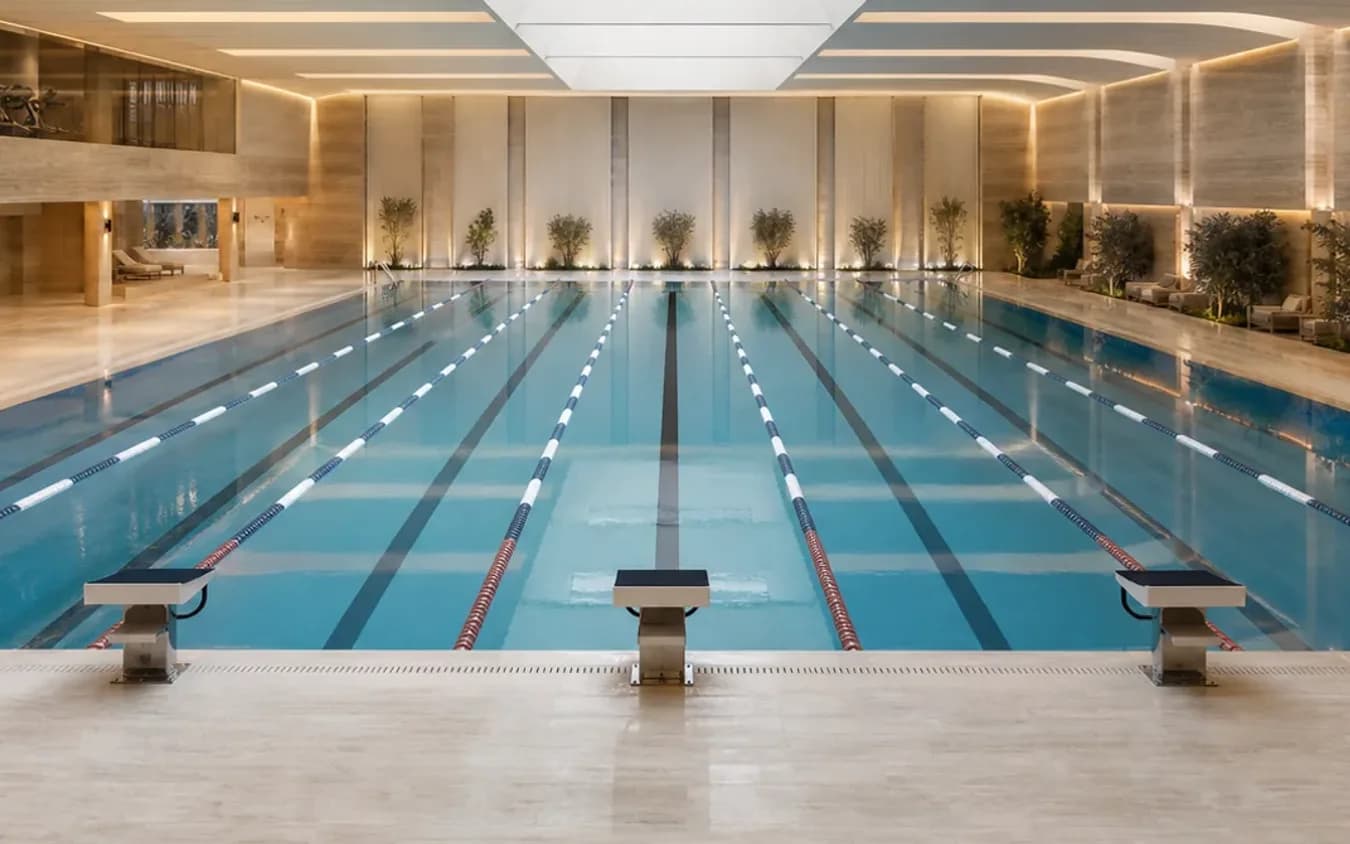
Competition Pool Equipment: Which Pool Needs Which Equipment?
Starting blocks, lane ropes, warning and turn systems, underwater speakers and water polo goals are chosen according to how the pool is used. We explain which dimensions we check for each item.
View- 2 October 2026
- 7 min read
 Pool Construction
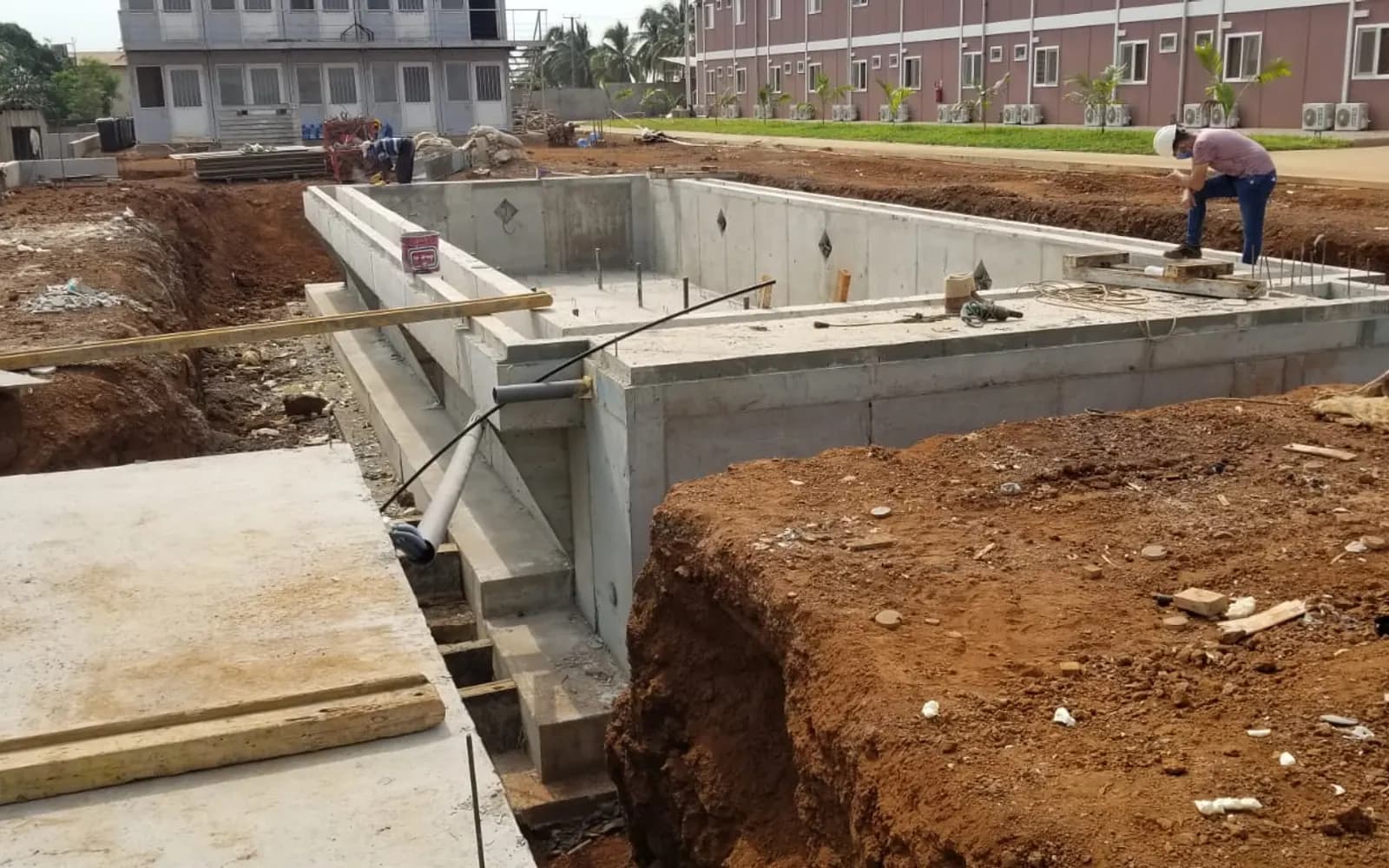
Building a pool or spa abroad: what drives the cost of an international project?
A pool, hammam or spa project delivered abroad from Turkey has no single price per square metre. We cover design, equipment, shipping, customs and schedule.
View- 29 September 2026
- 8 min read
- Pool Construction · 19 February 2026Pool Renovation and Refurbishment: New Life for an Old PoolA pool worn down over the years can regain its original performance with the right renovation. We cover diagnosis, surface and waterproofing renewal, equipment modernization, and energy efficiency.5 min read
- Maintenance · 5 April 2026Water Hardness and Calcium Balance in PoolsCalcium hardness is the overlooked third pillar of pool water chemistry. We explain the ideal range, corrosion from low calcium and scaling from high calcium.5 min read
- Maintenance · 9 September 2026Pool covering systems: which cover suits which pool?Pool covering systems separate the water surface or the whole pool volume from the outside environment. A technical comparison of five types.11 min read
- Pool Construction · 2 October 2026Choosing Pool Showers and Waterfalls: Shower Types, Water Curtains and Plumbing NeedsChoosing a pool shower, waterfall or water curtain depends on the material, where the water comes from and where it is mounted. We compare solar and stainless steel shower types and their pump and plumbing needs.8 min read
- Pool Construction · 2 October 2026Competition Pool Equipment: Which Pool Needs Which Equipment?Starting blocks, lane ropes, warning and turn systems, underwater speakers and water polo goals are chosen according to how the pool is used. We explain which dimensions we check for each item.7 min read
- Pool Construction · 29 September 2026Building a pool or spa abroad: what drives the cost of an international project?A pool, hammam or spa project delivered abroad from Turkey has no single price per square metre. We cover design, equipment, shipping, customs and schedule.8 min read
// Sources and regulations
Sources and regulations
The official documents behind the technical framework on this page; links open the institutions' own sites.
- Regulation on the Health Principles and Conditions for Swimming Pools (Official Gazette No. 27866, 6 March 2011)Official Gazette of Türkiye
- Regulation Amending the Swimming Pools Regulation (Official Gazette, 15 December 2011)Official Gazette of Türkiye
- Guidelines for safe recreational water environments, Volume 2: Swimming pools and similar environments
// 05 · Company & Contact
To talk about your project, call or write to us.
Legal Name
Çilek Havuz
Founded
1998 · Istanbul
Head Office
Çilek Plaza, Eyüp Sultan Mah. Yakacık Cd. Feshane Cd. No: 2 D:4 D:1, 34885 Sancaktepe / İstanbul
Service Area
All of Türkiye · exports to 14 countries
Branches
Kyrgyzstan · Egypt · Algeria · Iraq
Showroom
Plan a showroom visit
At our showroom in Çilek Plaza, Sancaktepe, you can discuss your project with our team. We recommend booking an appointment by phone before your visit.
Working Hours
- Monday – Friday · 08:00 – 17:30
- Saturday · 08:00 – 12:30
- Closed on Sunday
Frequently Asked Questions
About Pool Crack Repair, frequently asked questions.
Çilek Havuz Corporate
Pool and Wellness Engineering
- Response Time
- Same day
- Channels
- Phone · Email · WhatsApp
If the answer you are looking for is not here, send your question directly to us and our team will reply as soon as possible.
+90 216 475 39 37The bucket test shows it: if over 24 hours the drop in the pool level is noticeably greater than in the bucket, there is a leak. Food colouring released near the crack being drawn into it shows the location of the leak.
Çilek Havuz Corporate
Only a fine superficial crack that does not leak and is not growing is sealed with filler. At a corner, at a junction or on a growing crack, filler hides the symptom; as long as the movement that causes the crack continues, it opens again.
Çilek Havuz Corporate
Most permanent repairs are carried out in an empty pool. On ground with a high water table, an empty pool can be pushed upwards; before draining, the groundwater and the hydrostatic relief valve are checked.
Çilek Havuz Corporate
Even if it looks small, no cosmetic repair is carried out before a structural inspection. Earthquake movement may have left damage in the shell over a wider area than is visible; first comes the bucket test, then the engineer's assessment.
Çilek Havuz Corporate
Grout joints opening along the same line, tiles working loose or sounding hollow when tapped indicate a crack or movement in the shell beneath. Before the finish is replaced, the underlying cause is investigated.
Çilek Havuz Corporate
Hairline cracks below 0.2 mm can appear as concrete dries and are generally not structural. A wide, growing or leaking crack, however, points to the quality of construction and should be investigated together with the company that built the pool.
Çilek Havuz Corporate
Repair materials generally cure properly between 10 and 30 degrees; that is why spring and autumn are suitable. No application is carried out in freezing weather or in the midday heat of summer.
Çilek Havuz Corporate