

Building a Pool From Scratch: A Step-by-Step Engineering Guide
How a pool gets built, in order: site visit and permits, design, excavation, the concrete shell, waterproofing, finishes, plant room and handover. How long each stage takes and what to check in a quote.
Project Manager · Mechatronics Engineer · Çilek Havuz
- Published
- Updated
- Reading
- 8 min read
- Category
- Pool Construction
How a pool gets built, in order: site visit and permits, design, excavation, the concrete shell, waterproofing, finishes, plant room and handover. How long each stage takes and what to check in a quote.
The right pool starts at the drawing board long before anyone digs.
Swimming pool construction begins with a site visit and a needs analysis: who will use the pool and how often; is it for a villa, a residential complex or a hotel; is the priority swimming or relaxing? The answers set the pool's size, depth, skimmer or overflow system and equipment capacity.
During discovery, site topography, soil conditions, distance to water and electrical infrastructure, and space for the technical plant room are inspected on-site. Projects that bypass this stage often exceed both budget and schedule due to unforeseen surprises. We treat discovery as complimentary engineering consultation, providing you with a realistic project framework from day one.
In the eyes of regulation a pool counts as a structure in most cases, so the plot's zoning status is clarified in parallel with the site survey.
Setback distances, plot boundaries and, where present, the site management plan limit from the start where the pool can go. On plots under condominium ownership, the consent of the unit owners also comes into play. We cover the municipal process in detail in our pool permit guide; you can see there which documents will be requested.
On the ground side the question is simple: can this soil carry a water-filled concrete mass for years? On fill ground, sloped plots and areas with high groundwater, a soil study lets the structural design rest on real data. Its cost is negligible next to repairing a pool that settled on the wrong ground.
A swimming pool is an engineering structure permanently holding tons of water: each cubic meter of water represents approximately one ton of structural load.
Structural calculations and certified drawings are essential to transfer this load safely to the ground and design reinforcement and waterproofing correctly. In pools started without proper engineering, cracks and water leakage within a few seasons are the most common outcome.
Alongside structural calculations, hydraulic engineering is equally vital: pump flow rates, filtration capacity, suction and return line pipe sizing, and complete circulation patterns within the pool are established by these calculations. When properly sized, water remains crystal clear and operating costs stay low. Upon delivery, we provide complete structural and hydraulic engineering documentation.
Construction begins with site layout and setting out the pool geometry on the land.
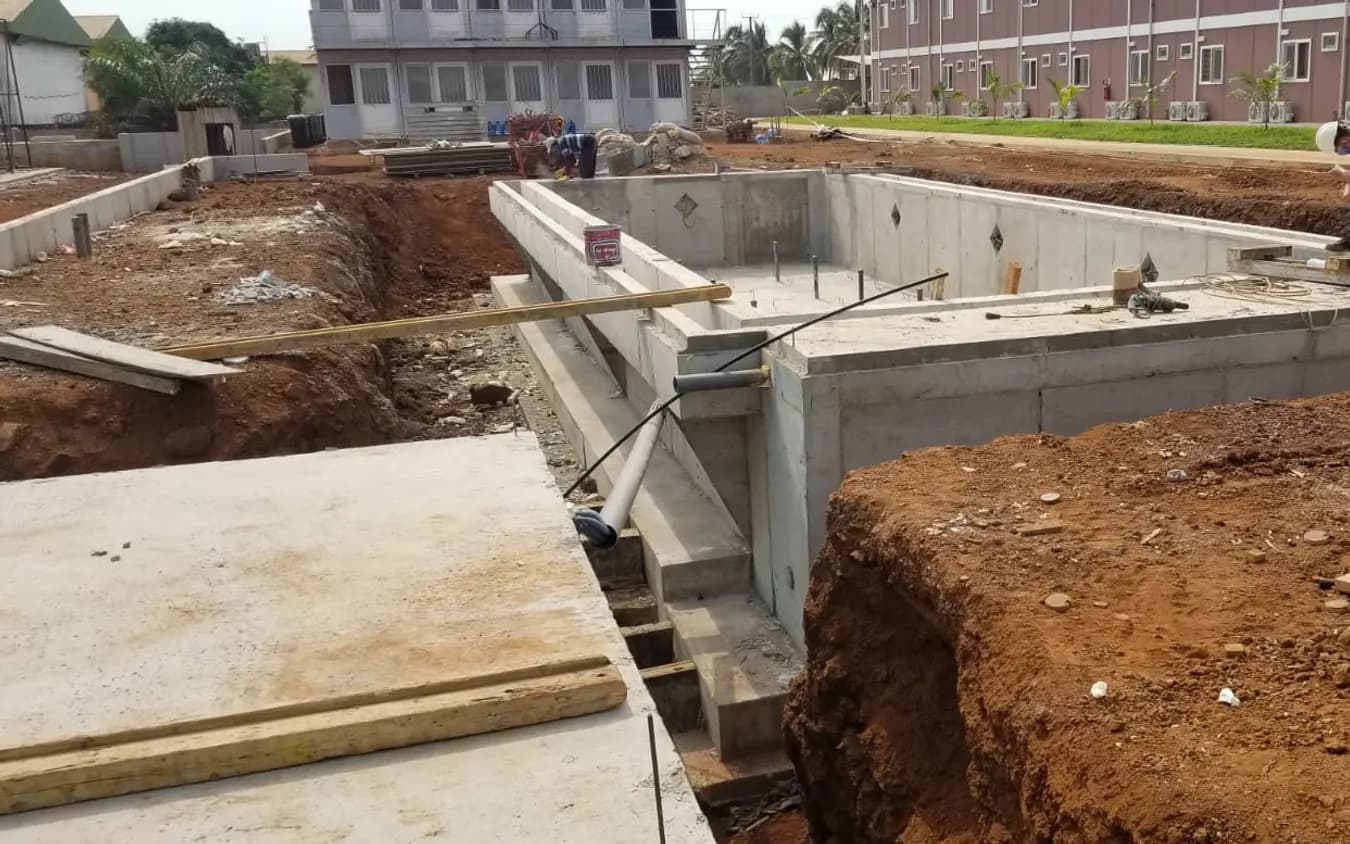
Excavation is carried out according to project elevations; shoring or slope stabilization is applied when soil conditions demand. On weaker soils, blinding concrete and foundation soil improvement/piling are deployed to ensure load-bearing capacity.
Reinforcement is never laid before drainage layers and blinding concrete are installed across the excavation base. This intermediate layer ensures both subsoil drainage and level seating for the reinforced concrete foundation. Nobody sees this layer later, but it decides how many years the pool stays free of defects.
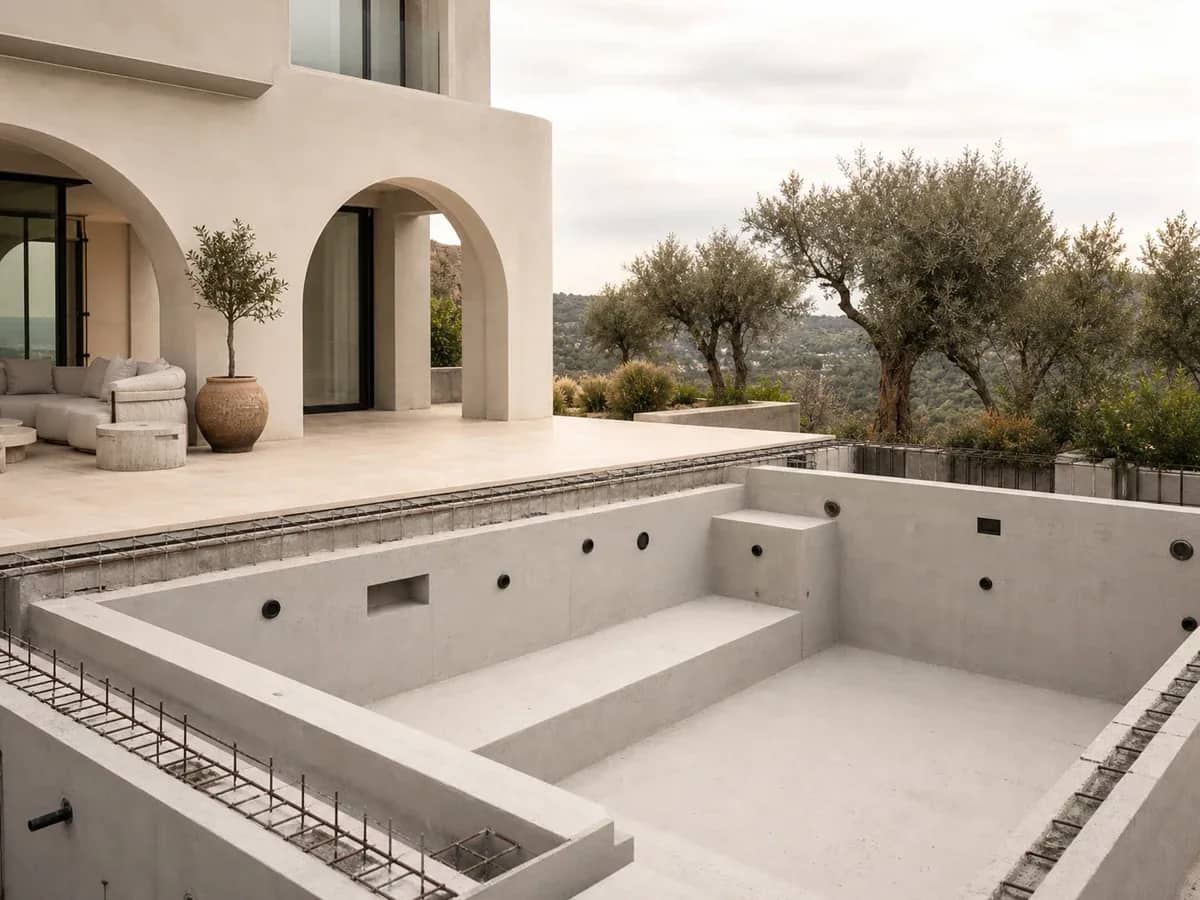
A reinforced concrete pool takes shape on-site through formwork, steel reinforcement, and monolithic concrete pouring.
It adapts to any custom geometry or dimension, representing the most versatile system for overflow channels and infinity pools; built properly, it lasts for decades. Prefabricated panel pools, by contrast, are assembled from factory-manufactured modular panels on a concrete slab, installing much faster and more economically.
Which system is best depends on your budget, timeline and architectural expectations. Reinforced concrete leads in villa and hotel projects demanding permanent luxury and bespoke geometries, while modular panels excel in projects seeking rapid, practical solutions. Because we build both systems, we guide you with an objective technical comparison.
Both systems collect water from the surface; the difference is in how they collect it and in the look.
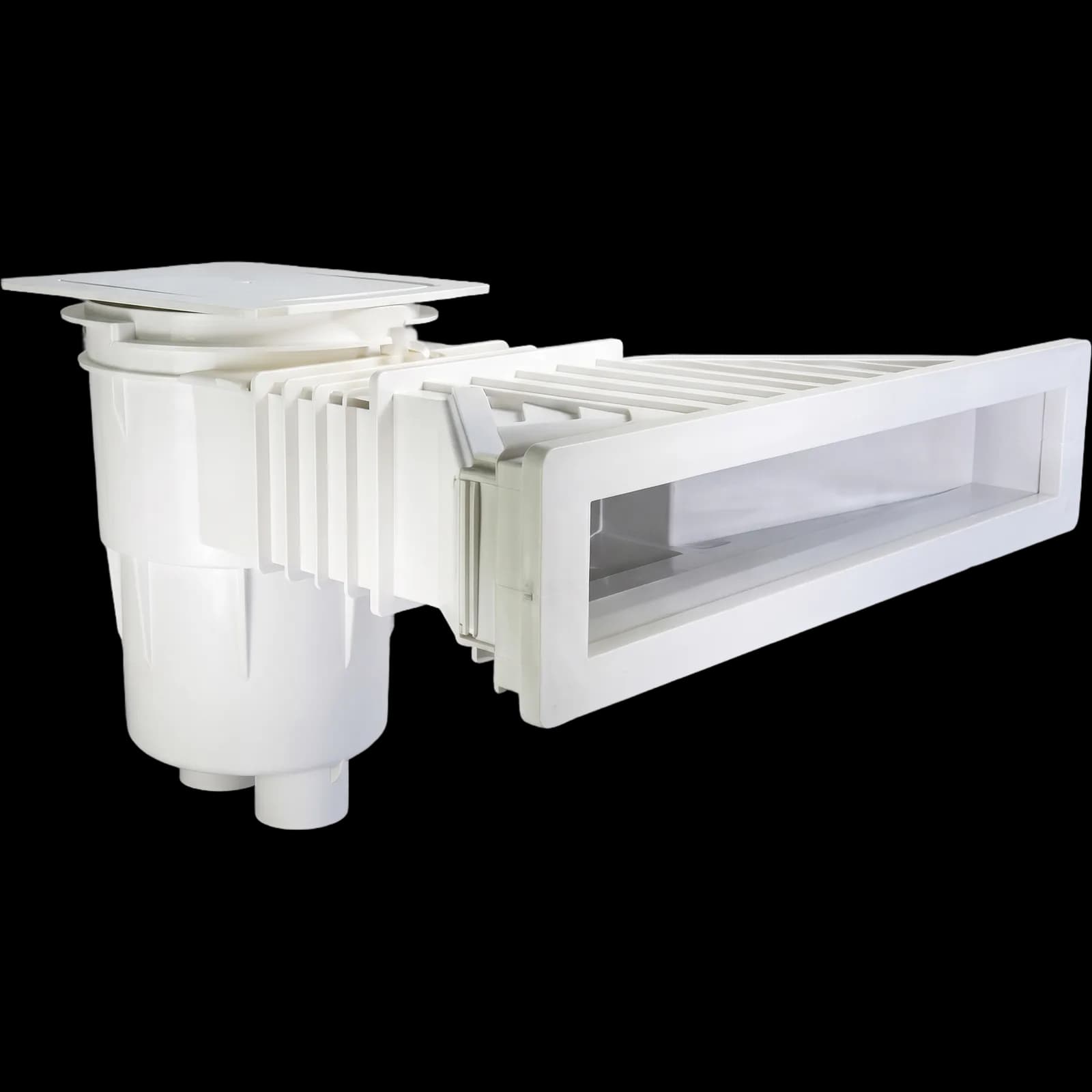
In a skimmer pool the water level sits a few centimetres below the coping and water is drawn through mouths built into the wall. It is simpler to install and easier on the budget; most villa pools are built this way.
In an overflow pool the water sits level with the finish; it spills into the channel at the edge and flows to a balance tank. Surface dirt is carried away at once, so water quality is steadier and the surface reads like a mirror; infinity pools work on the same principle. In return you need a balance tank, extra hydraulic calculations and a larger budget. Hotel and public pool standards call for this system anyway. See our infinity pool article for a detailed comparison.
Once the structural shell is complete, the focus shifts to retaining the water: multi-layer waterproofing is the critical phase ensuring zero leakage.
Ceramic tiles, glass mosaic or PVC liner membranes are installed over the waterproofing; the lining choice shapes both aesthetic appeal and ease of maintenance. A hydrostatic water retention test is always performed before applying final finishes.
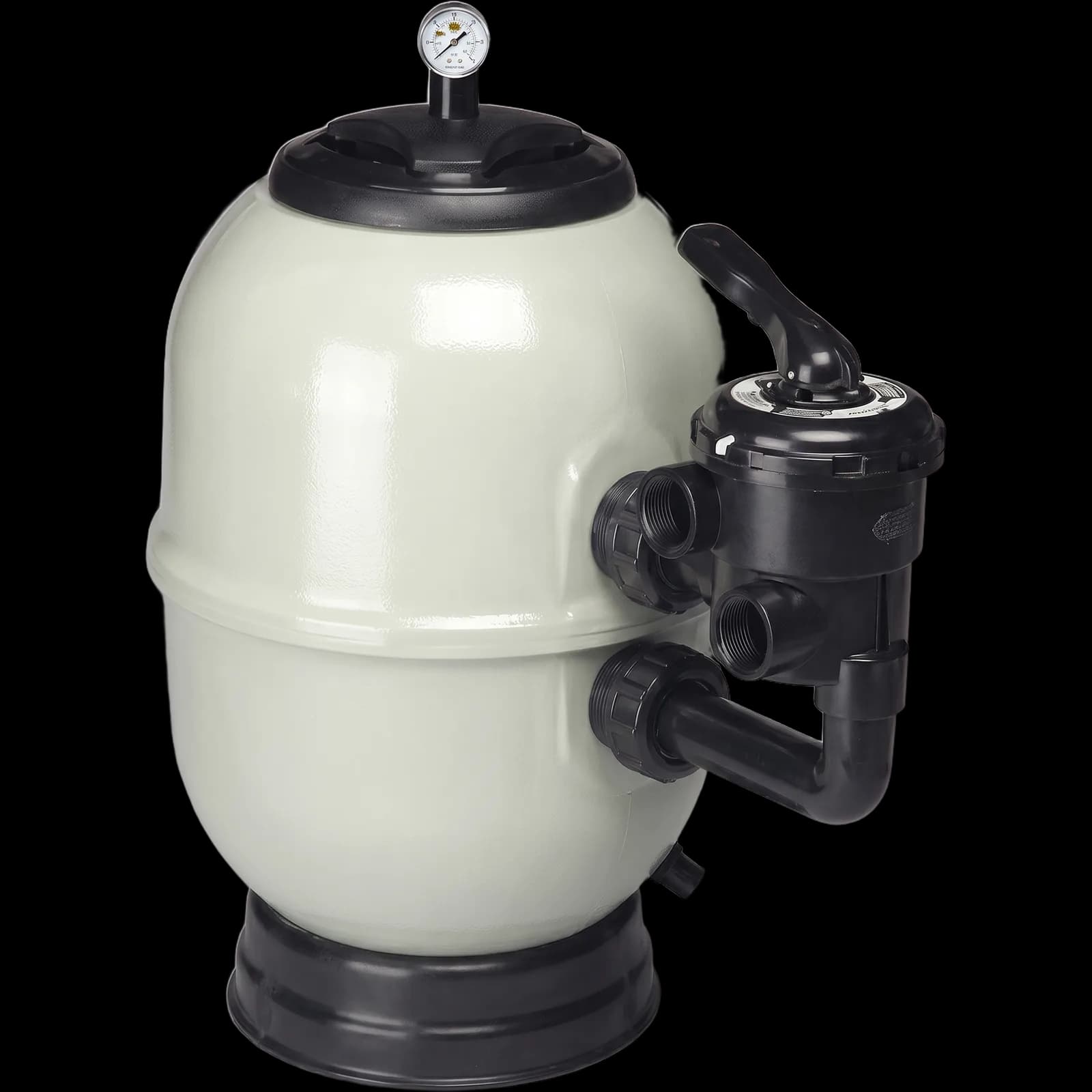
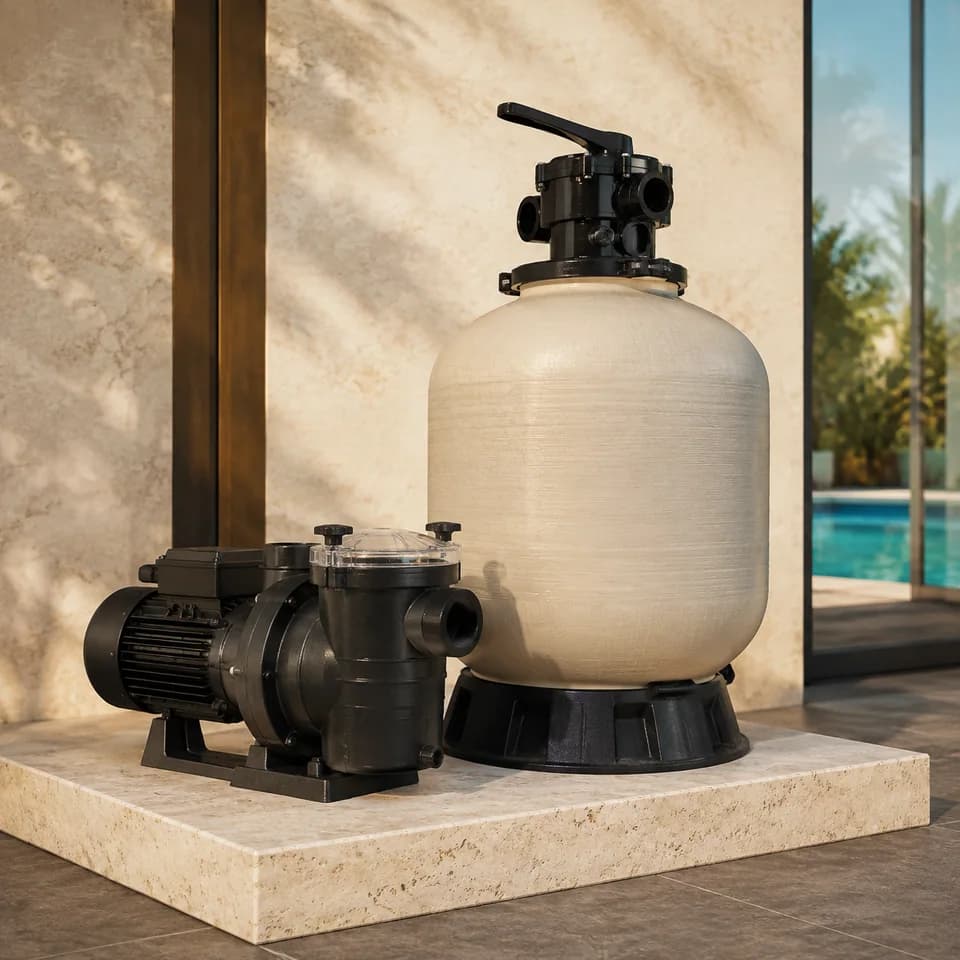
Mechanical installation brings the pump, sand filter, controls and, where specified, the heat pump into service. A variable-speed pump turns the same water over at a lower speed for longer, which cuts both power use and noise, so it is our default choice. After installation the whole circuit is tested and balanced.
A realistic construction schedule is the foundation of trust.
For a standard private villa pool, the process typically progresses as follows: site discovery and design 1-2 weeks, excavation and concrete shell 2-4 weeks, concrete curing and waterproofing 1-2 weeks, lining and mechanical plant room installation 1-2 weeks, water filling and commissioning several days. The duration for your project is given in the written project schedule after the site survey.
This timeline varies according to pool size, weather conditions, soil structure and selected finishes. Certain phases, such as concrete curing, cannot be rushed; we advise caution regarding promises of 'turnkey pools in 10 days.' We provide a clear milestone-based schedule from the outset, keeping you informed at every stage.
Every pool's price comes out of its own design, which is why we publish no price list and give a written, itemised quote after the survey.
Still, knowing what grows the budget sets expectations right before the survey. The main items: excavation and haulage; the shell with its formwork, rebar and concrete; waterproofing; the finish; mechanical equipment with pump, filter and disinfection; piping runs and the plant room.
The three decisions that move the budget most are the pool's size, the intake system and the finish grade. A heat pump, automation and a pool cover raise the initial spend but cut running costs for years. We examine city-by-city cost dynamics in our articles from Istanbul to Antalya; once your dimensions and location are set, the survey gives the truest figure.
The price gap between two quotes is usually a scope gap.
When comparing, look for written answers to these questions: Are equipment brands and models listed one by one? Are the waterproofing material and number of coats stated? Are the watertightness test and commissioning included? Who pays for hauling the spoil? Are the plant room and the electrical panel in the quote?
The contract should state the work schedule, the progress-payment plan, delay terms and separate warranty periods for the structure, the waterproofing and the equipment. Plan the acceptance not as a one-signature formality but as a checklist you walk through together. That clarity protects both sides; we prepare these documents as standard on every project.
Handover does not end with filling the water.
During commissioning, complete checks verify multi-point circulation, filter operating pressure, automation and lighting functionality, and initial water balance (pH 7.2-7.6, free chlorine 1-3 ppm). Leak tests and overall watertightness receive final confirmation.
You receive your structural and hydraulic project files, equipment warranty certificates, an operation and maintenance guide, and relevant permitting documentation. These records serve as your warranty protection and the technical roadmap for future servicing. After handover we also provide scheduled maintenance and repair service.
Some decisions get cheaper when taken with the pool rather than after it.
Heating leads the list: if a heat pump will be used, the power line and the plant room are sized for it. The lighting cable routes and the transformer location are planned before the concrete pour; every channel cut afterwards costs both budget and looks.
Landscaping follows the same logic: if the deck level, the shower and shade positions and the route of the child-safety barrier are drawn from the start, the site is set up once and the garden is disturbed once. Our articles on pool heating, pool lighting, pool surrounds and child safety take up each of these decisions in depth. How we run all of this under a single contract, which pool types we build and how a quote is prepared is set out on our pool construction page.
Next step
Let us discuss your project in the way that suits you best.
You can fill in the form for a written quote, schedule a video project presentation or ask us to survey your project site.
Get a Quote
Send us your dimensions and expectations in writing.
Online presentation
Video project presentation
On-site survey
Inspection at your project site
Image gallery
Photos: 04
 01
01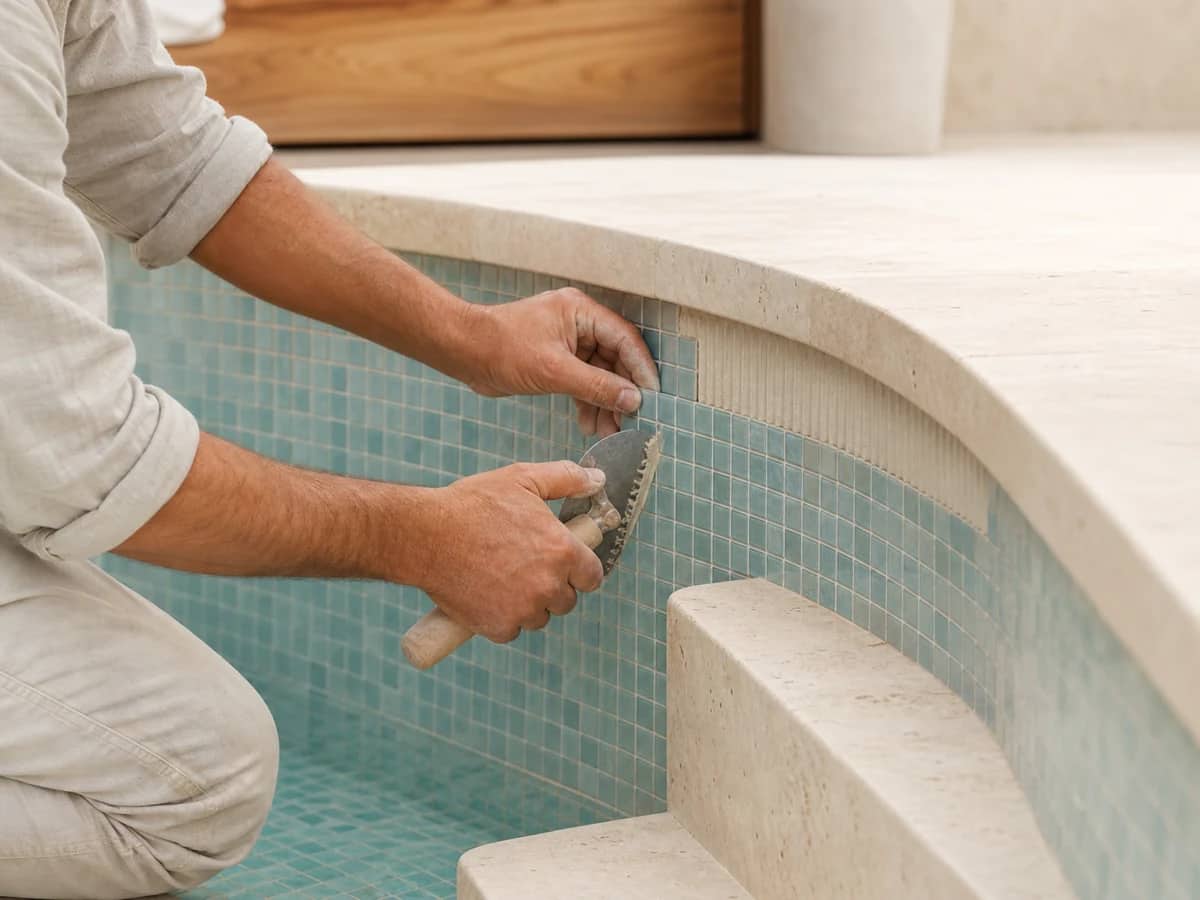 02
02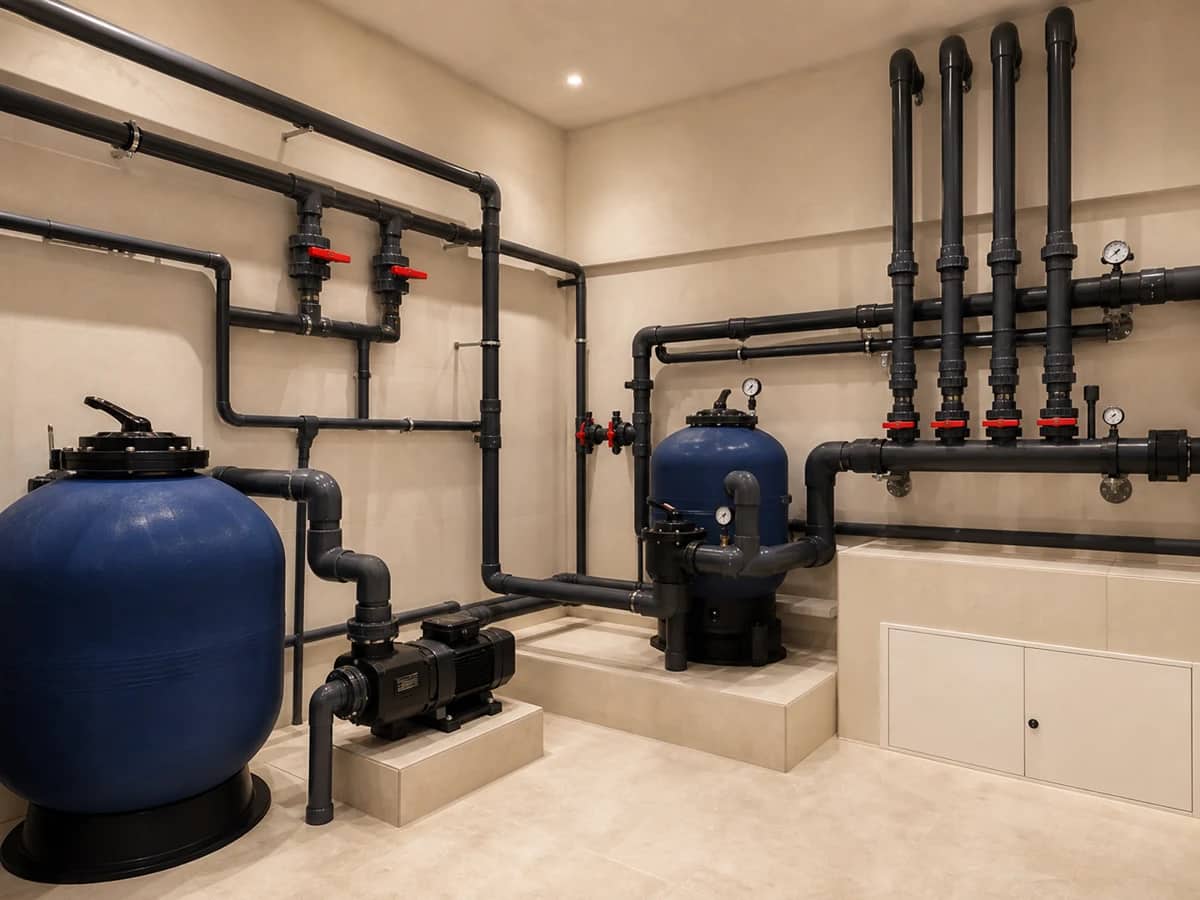 03
03 04
04// 01 · Products in this article
For the work described in this article, pool mechanical equipment.
Each card leads to the product page with its data sheet, model list and quotation.
- 6 models
- 8 models
// 02 · Product groups
Compare the products on this topic on their category pages.
Each card leads to a product category; models, technical sheets and list prices are there.
 Product category
Pool Mechanical Equipment
Circulation pumps, filters, valves and automation: the mechanical infrastructure that forms the heart of the pool.
View- 65 products
 Product category
Pool Lining Systems
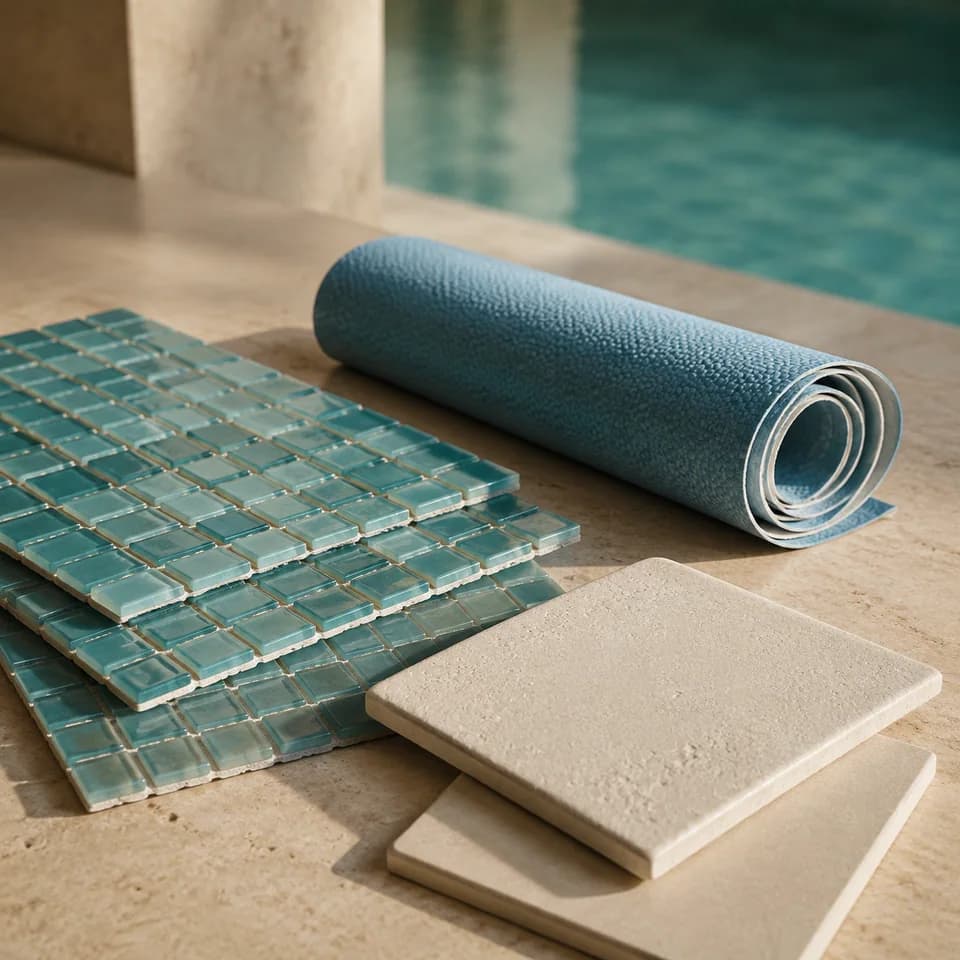
PVC liner, membrane, ceramic tile and glass mosaic: lining materials that make the pool watertight and form its finished surface.
View- 20 products
 Product category
Pool Disinfection Systems
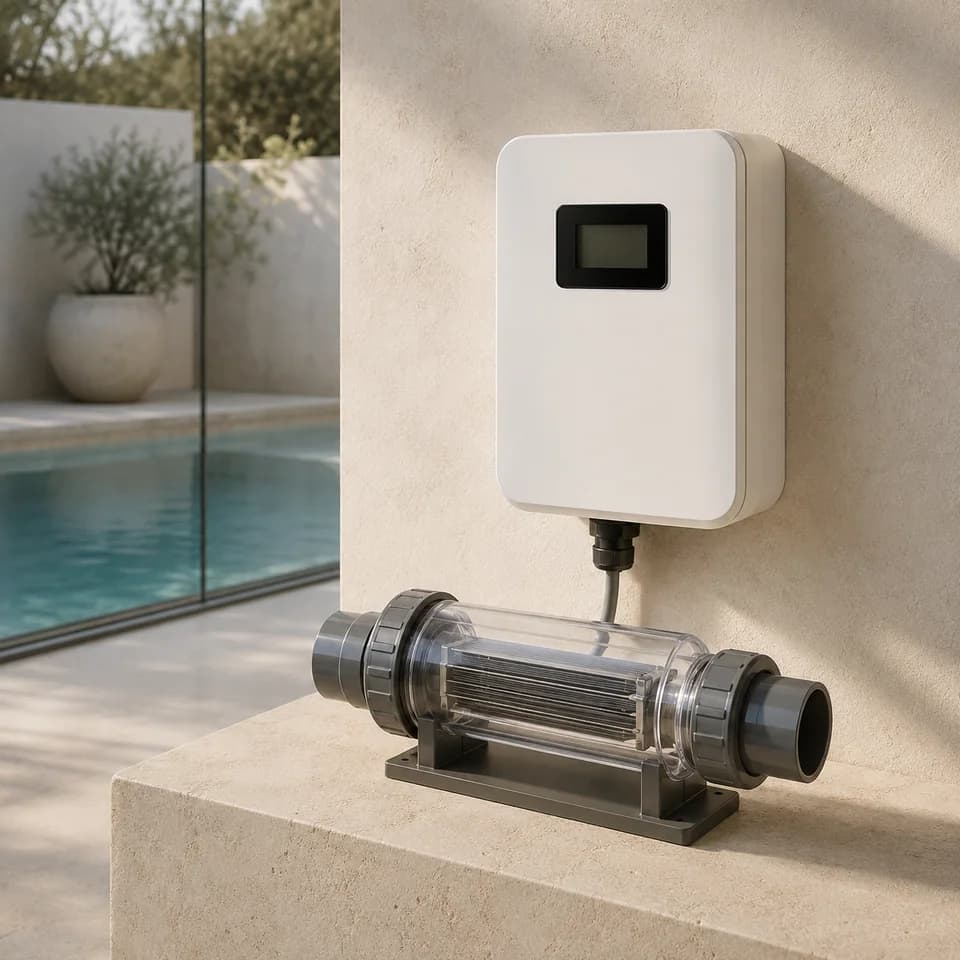
Fully automatic pool water disinfection that reduces chemical use with salt electrolysis, UV disinfection and smart dosing systems.
View- 52 products
Product category
Pool Mechanical Equipment
Circulation pumps, filters, valves and automation: the mechanical infrastructure that forms the heart of the pool.
65 productsProduct category
Pool Lining Systems
PVC liner, membrane, ceramic tile and glass mosaic: lining materials that make the pool watertight and form its finished surface.
20 productsProduct category
Pool Disinfection Systems
Fully automatic pool water disinfection that reduces chemical use with salt electrolysis, UV disinfection and smart dosing systems.
52 products
// 03 · Related service
The work in this article, we deliver from design to handover.
Çilek Havuz service
Swimming Pool Construction
Reinforced-concrete, prefabricated and infinity swimming pools, built turnkey for villa, residential and commercial projects.
Swimming pool construction is a turnkey build in which the site survey, structural and mechanical design, excavation, reinforced-concrete shell, waterproofing, finish, filtration plumbing and commissioning run under a single contract. The written project schedule follows the site survey.
How we work
- 01Initial meeting and site surveyWe inspect the site and listen to the brief.
- 02Design and quotationWe give the cost item by item, in writing.
- 03ExecutionThe same team builds to a written schedule.
- 04Handover and commissioningWe start the systems and explain their use.
- 05Maintenance and technical supportWe provide periodic maintenance and support.
// 04 · Guides
On Pool Construction, more articles to read.
First the articles directly related to this one, then the newest articles on the topic.
 Pool Construction
Swimming pool construction stages: the order of 12 steps from site survey to stage payment
Pool construction starts with a site survey and a ground investigation; each of the 12 steps through design, excavation, shell, pipework, waterproofing, finish and handover closes with a checkpoint.
View- 9 September 2026
- 10 min read
 Pool Construction
What turnkey pool construction is, what it covers and what it leaves out
In a turnkey pool, design, procurement, construction and commissioning go to one contractor under one contract; the scope schedule draws the line.
View- 9 September 2026
- 9 min read
 Pool Construction
Building a Pool Without a Permit in Turkey: Risks and How the Legal Process Works
A villa pool in Turkey usually needs a building permit. We cover the risks of unpermitted construction, how the process works and why a permit is safer.
View- 28 August 2026
- 6 min read
 Pool Construction
Choosing Pool Showers and Waterfalls: Shower Types, Water Curtains and Plumbing Needs
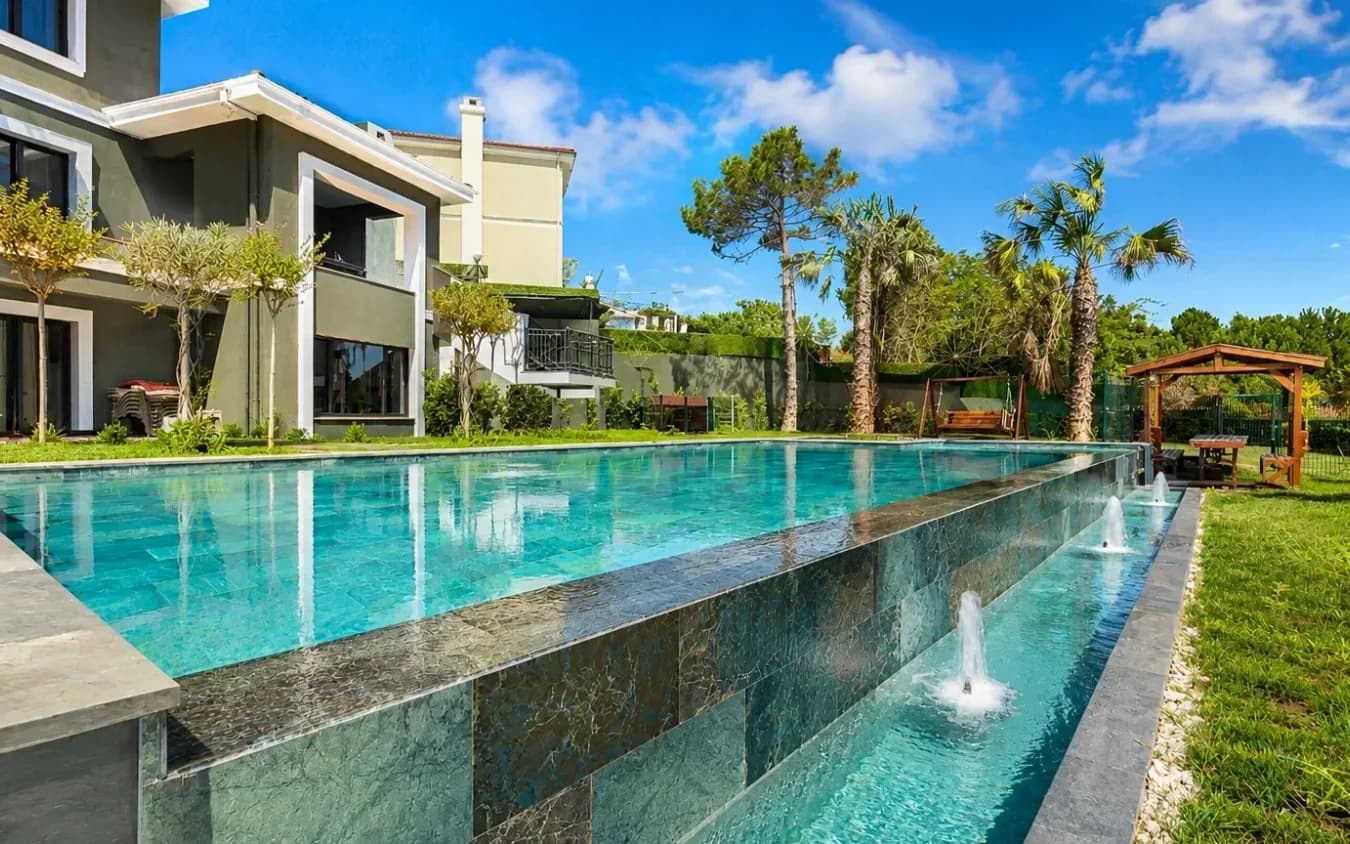
Choosing a pool shower, waterfall or water curtain depends on the material, where the water comes from and where it is mounted. We compare solar and stainless steel shower types and their pump and plumbing needs.
View- 2 October 2026
- 8 min read
 Pool Construction
Competition Pool Equipment: Which Pool Needs Which Equipment?
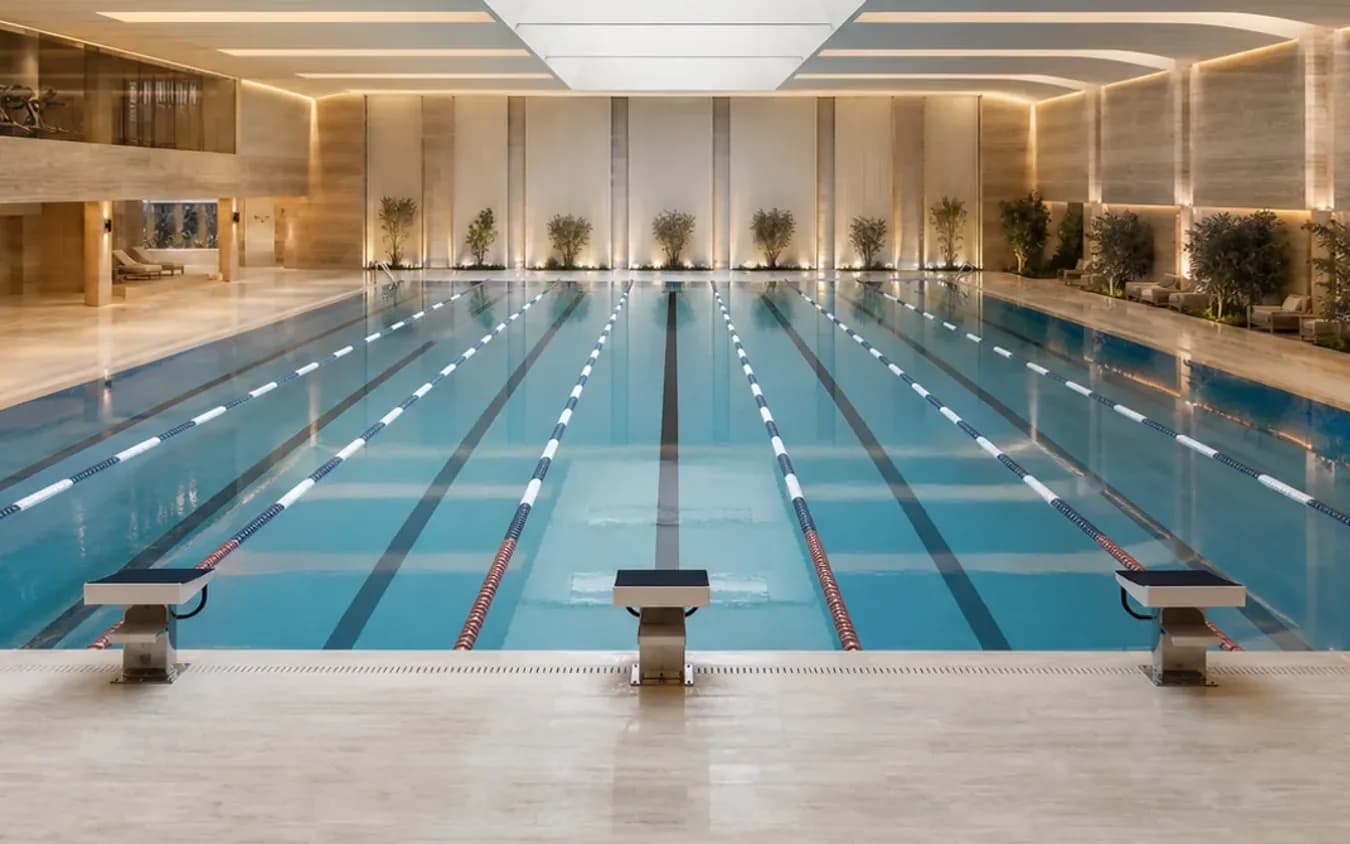
Starting blocks, lane ropes, warning and turn systems, underwater speakers and water polo goals are chosen according to how the pool is used. We explain which dimensions we check for each item.
View- 2 October 2026
- 7 min read
 Pool Construction
Building a pool or spa abroad: what drives the cost of an international project?
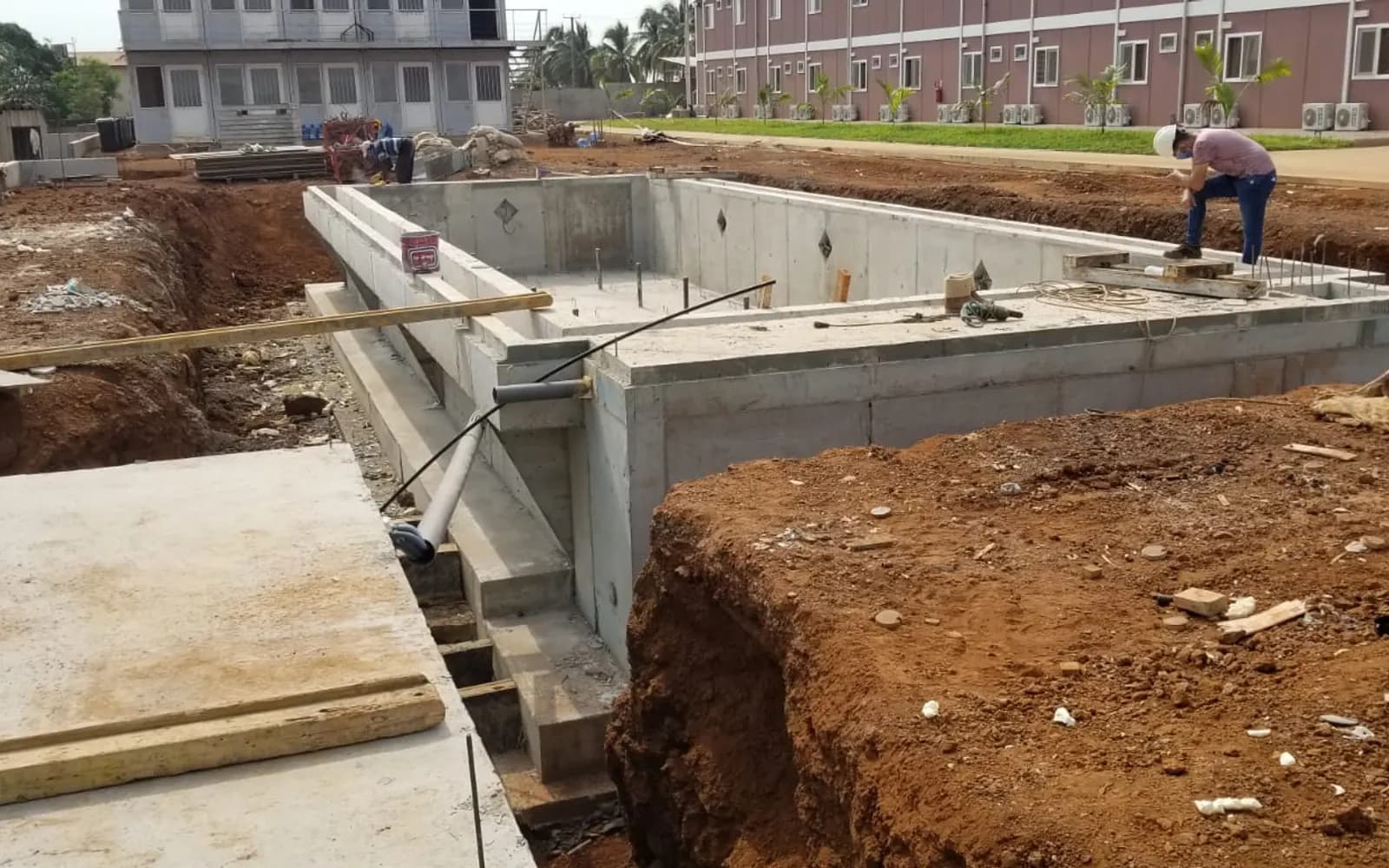
A pool, hammam or spa project delivered abroad from Turkey has no single price per square metre. We cover design, equipment, shipping, customs and schedule.
View- 29 September 2026
- 8 min read
- Pool Construction · 9 September 2026Swimming pool construction stages: the order of 12 steps from site survey to stage paymentPool construction starts with a site survey and a ground investigation; each of the 12 steps through design, excavation, shell, pipework, waterproofing, finish and handover closes with a checkpoint.10 min read
- Pool Construction · 9 September 2026What turnkey pool construction is, what it covers and what it leaves outIn a turnkey pool, design, procurement, construction and commissioning go to one contractor under one contract; the scope schedule draws the line.9 min read
- Pool Construction · 28 August 2026Building a Pool Without a Permit in Turkey: Risks and How the Legal Process WorksA villa pool in Turkey usually needs a building permit. We cover the risks of unpermitted construction, how the process works and why a permit is safer.6 min read
- Pool Construction · 2 October 2026Choosing Pool Showers and Waterfalls: Shower Types, Water Curtains and Plumbing NeedsChoosing a pool shower, waterfall or water curtain depends on the material, where the water comes from and where it is mounted. We compare solar and stainless steel shower types and their pump and plumbing needs.8 min read
- Pool Construction · 2 October 2026Competition Pool Equipment: Which Pool Needs Which Equipment?Starting blocks, lane ropes, warning and turn systems, underwater speakers and water polo goals are chosen according to how the pool is used. We explain which dimensions we check for each item.7 min read
- Pool Construction · 29 September 2026Building a pool or spa abroad: what drives the cost of an international project?A pool, hammam or spa project delivered abroad from Turkey has no single price per square metre. We cover design, equipment, shipping, customs and schedule.8 min read
// 05 · Company & Contact
To talk about your project, call or write to us.
Legal Name
Çilek Havuz
Founded
1998 · Istanbul
Head Office
Çilek Plaza, Eyüp Sultan Mah. Yakacık Cd. Feshane Cd. No: 2 D:4 D:1, 34885 Sancaktepe / İstanbul
Service Area
All of Türkiye · exports to 14 countries
Branches
Kyrgyzstan · Egypt · Algeria · Iraq
Showroom
Plan a showroom visit
At our showroom in Çilek Plaza, Sancaktepe, you can discuss your project with our team. We recommend booking an appointment by phone before your visit.
Working Hours
- Monday – Friday · 08:00 – 17:30
- Saturday · 08:00 – 12:30
- Closed on Sunday
Frequently Asked Questions
About Building a Pool From Scratch, frequently asked questions.
Çilek Havuz Corporate
Pool and Wellness Engineering
- Response Time
- Same day
- Channels
- Phone · Email · WhatsApp
If the answer you are looking for is not here, send your question directly to us and our team will reply as soon as possible.
+90 216 475 39 37Spring and autumn are the most favorable seasons for excavation and concrete works. Midsummer heat accelerates concrete curing excessively, while winter freeze risks hinder site operations. If you want your pool ready for summer, we recommend initiating discovery and design during winter, allowing a comfortable construction schedule.
Çilek Havuz Corporate
Dimensions and depth depend on user count and on whether active swimming or casual lounging is the priority. Child safety requirements and available garden space also play a part. A longer pool suits lap swimming, while wider and shallower zones benefit family relaxation. We help refine these dimensions collaboratively during discovery.
Çilek Havuz Corporate
Excavation, earthmoving transport and equipment access temporarily impact part of the garden. However, planning access routes and plant room locations during initial discovery minimizes disruption. Addressing landscaping holistically upon handover limits lasting damage.
Çilek Havuz Corporate
In professional pool contracting, payments follow transparent project milestones. These are contract signing, rough structure, mechanical installation and final handover. We recommend confirming the payment milestone schedule in writing at the contract stage.
Çilek Havuz Corporate
The most common mistakes are skipping site discovery and structural engineering and skimping on waterproofing membranes. Undersizing pump and filter capacities and allocating insufficient plant room space are also frequent. These initial shortcuts inevitably turn into expensive repair bills a few seasons later. Choosing the right engineering contractor prevents them from the start.
Çilek Havuz Corporate
Routine cleaning and basic chemical checks can be handled using the user guide we provide. However, seasonal opening/closing, equipment overhauls and troubleshooting benefit greatly from regular service support. You can manage maintenance yourself or delegate it entirely via our periodic maintenance agreements.
Çilek Havuz Corporate
A typical quote covers excavation, the concrete shell, waterproofing, the finish, basic mechanical equipment and commissioning. A heat pump, automation, a pool cover, landscaping and perimeter lighting are separate items at most firms. Rather than guessing the scope, ask for it in writing item by item; we issue quotes with included and excluded lists.
Çilek Havuz Corporate
It may not be a formal requirement on every plot. But starting without one on fill ground, a marked slope, high groundwater or a position adjoining a basement is risky. On firm, level ground the survey observation can be enough; the land decides. In every doubtful case we recommend the study ourselves.
Çilek Havuz Corporate
The safeguard for this risk is the contract. Tying payments to progress, recording each finished stage in a signed report and having the equipment invoiced in your name strengthen your hand on an unfinished job. The firm's track record matters as much as the contract; always ask how long it has been in the field and for finished projects.
Çilek Havuz Corporate
Five questions clear the picture: Who prepares the structural and hydraulic design? Is a watertightness test performed? Will equipment brands and models be written into the quote? How do the work schedule and payment plan operate? Do you provide service and maintenance after handover? A firm without clear answers is unlikely to deliver a clear pool.
Çilek Havuz Corporate
A well-built, well-kept pool raises sale and rental value, above all in the villa segment. In holiday regions a pool is a search filter of its own in rental listings. What loses value is not the pool but its neglect. Choosing the size with running costs in mind keeps that balance.
Çilek Havuz Corporate