


Water Hardness and Calcium Balance in Pools
Calcium hardness is the overlooked third pillar of pool water chemistry. We explain the ideal range, corrosion from low calcium and scaling from high calcium.
Project Manager · Mechatronics Engineer · Çilek Havuz
- Published
- Updated
- Reading
- 5 min read
- Category
- Maintenance
Calcium hardness is the overlooked third pillar of pool water chemistry. We explain the ideal range, corrosion from low calcium and scaling from high calcium.
Talk about pool water balance and most people think of pH and chlorine; the third leg, and the one most often neglected, is calcium hardness.
Calcium hardness is the amount of calcium dissolved in the water and a key parameter for how the water treats the materials around it. Water with too little calcium behaves like 'hungry' water and makes up the shortfall by dissolving calcium out of the surrounding materials.
Calcium hardness is one of the three values that set the overall balance of the water: pH, alkalinity and calcium hardness together decide whether water is corrosive or scale-forming. So even if you manage pH and chlorine correctly, ignoring calcium can cause permanent damage to the pool surface and equipment.
The generally accepted calcium hardness range for residential pools is approximately 200 to 400 ppm (parts per million).
This range represents the balanced zone where the water is neither too corrosive nor too calcifying. While concrete or plaster lined pools generally aim for the mid-to-upper part of this range, the ideal value may vary slightly depending on the type of coating and local water conditions.
It is important to emphasize that calcium hardness should not be evaluated alone, but should be considered in a integrated balance with pH and alkalinity. The tendency of water to scale or corrode is determined by the combined effect of these three parameters and water temperature. For this reason, it is necessary to look at the general saturation balance as well as the calcium value of the water. It is important to measure the value regularly as it may change with seasonal water losses and supplements.
Water becomes 'aggressive' or corrosive when calcium hardness falls below the ideal range.
Chemically, water tends to attract from its environment the calcium it lacks. This means that calcium dissolves from concrete and plaster surfaces, the joint fillers wear out, and the surface becomes rough and stained over time. Corrosion accelerates on metal parts. Heating elements, fittings and armatures are damaged by this situation.
The effects of low calcium proceed insidiously. It is not noticeable at first, but over time it manifests itself as deterioration of the surface coating and shortening of equipment life. Calcium can easily fall below the ideal level, especially in pools fed from soft water sources or frequent water changes. Therefore, detecting corrosive water early is one of the most valuable protective investments you will make in your coating and mechanical equipment.
When calcium hardness rises above the ideal range, water becomes calcifying.
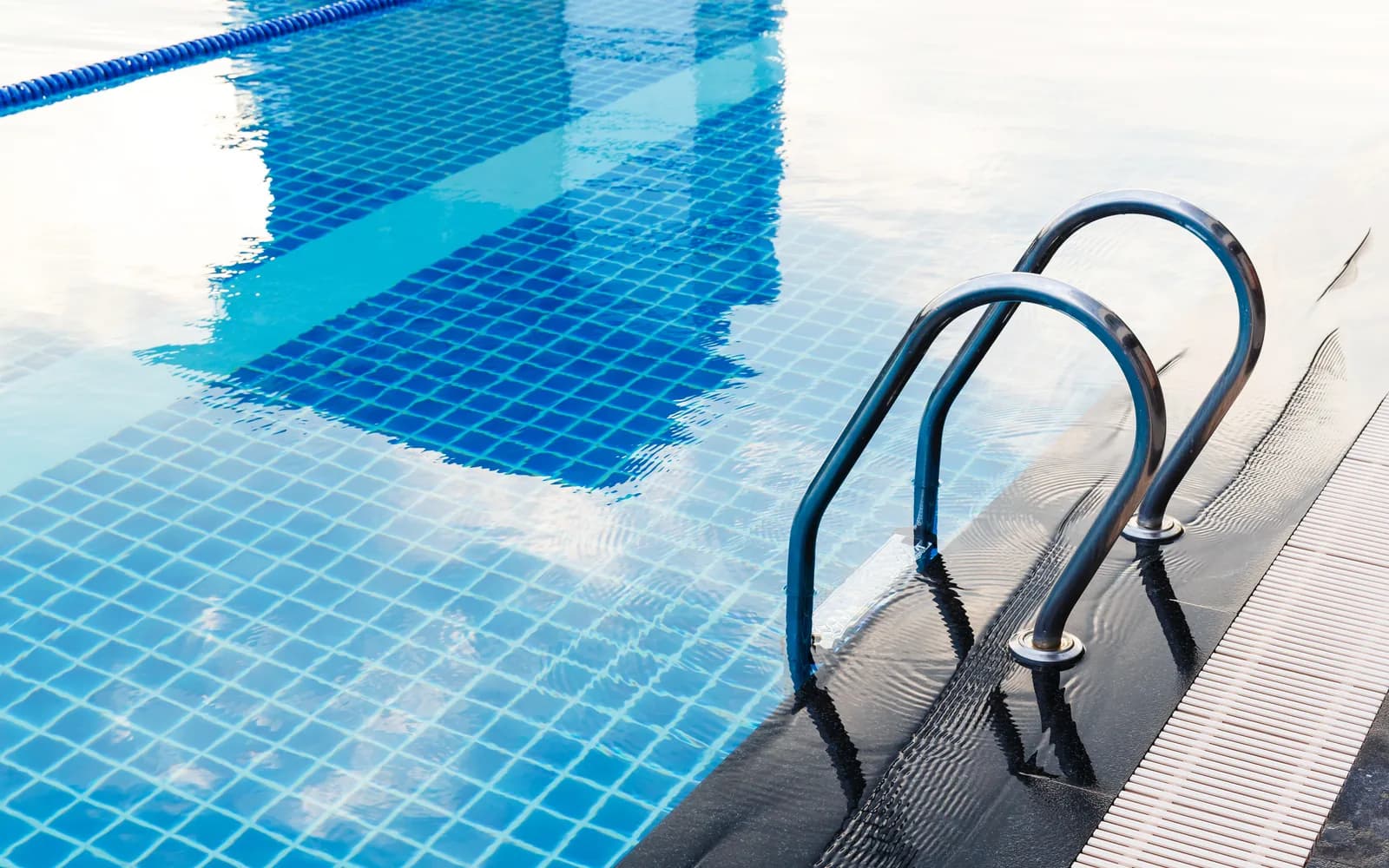
Excess calcium, especially if pH and temperature are also high, cannot remain dissolved and precipitates on surfaces as calcium carbonate. The result of this; white lime stains on the pool walls and water line, rough crust formations and turbidity in the water. Beyond being a visual problem, these accumulations are difficult and stubborn to clean.
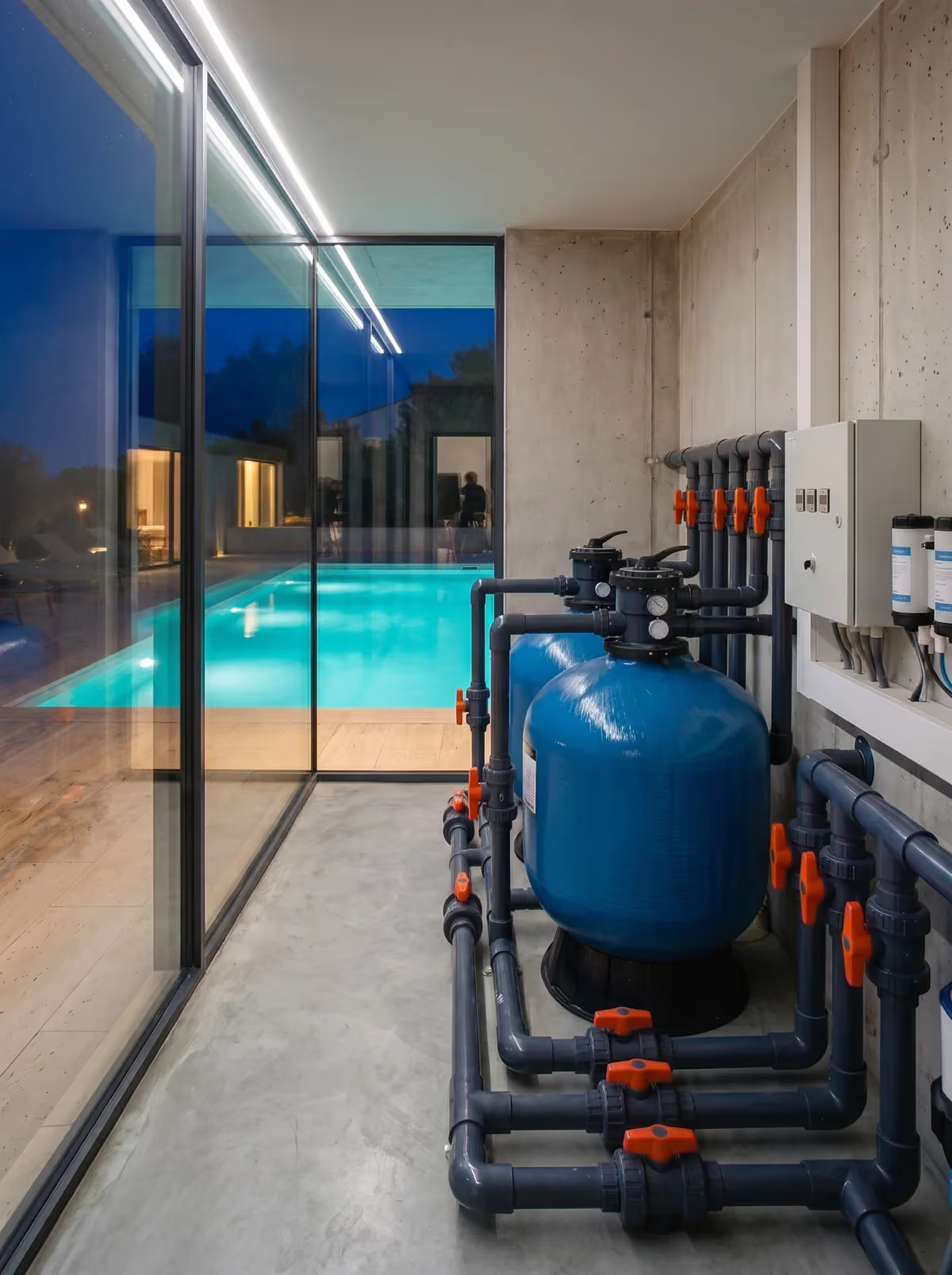
The most damaging aspect of calcification is that it occurs in places invisible to the naked eye. Scale accumulated in filter media, heater exchangers, and narrow plumbing lines restricts flow, reduces heat transfer, and reduces equipment efficiency. In pools using salt chlorine generators, lime accumulation on the cell plates directly negatively affects chlorine production. High calcium is just as serious a problem as low calcium and needs to be brought into balance.
If the calcium hardness is low, the solution is relatively simple: by adding a calcium hardness enhancer (calcium chloride-based product) to the water, the value is brought to the ideal range.
The product should be administered into the water gradually, under good circulation, in accordance with the manufacturer's dosage instructions. The value should be increased slowly and verified by measuring again after a while; Hasty and excessive addition may lead to reverse calcification.
If calcium hardness is high, the situation is more troublesome because calcium cannot be easily reduced by adding it to water. The most practical way to reduce high calcium is to replace some of the water with fresh water of lower hardness, that is, to perform a partial water change (dilution). At very high hardness, additional appropriate cleaning treatments may be required for existing lime deposits on the surface. In both cases, it is important to check pH and alkalinity together before and after correction, as these parameters jointly determine the overall balance of the water.
Calcium hardness is not a value to be managed alone; pH, together with alkalinity and water temperature, creates the saturation balance of the water.
For example, even in water with ideal calcium value, if pH and alkalinity are high, calcification may begin. Conversely, even though calcium is ideal, water can act corrosive if pH is low. For this reason, it is necessary to manage water chemistry holistically, not fragmentarily.
In routine water chemistry management, pH and chlorine dosage are essential daily monitoring issues. Since calcium hardness changes more slowly, it is generally checked less frequently but at regular intervals. Good practice is to monitor calcium hardness and alkalinity with periodic measurements and verify after seasonal water supplements, while keeping the pH and chlorine balance daily. Our company helps you keep water in a protective balance by determining the target calcium range according to your coating type and local water source.
Next step
Let us discuss your project in the way that suits you best.
You can fill in the form for a written quote, schedule a video project presentation or ask us to survey your project site.
Get a Quote
Send us your dimensions and expectations in writing.
Online presentation
Video project presentation
On-site survey
Inspection at your project site
Image gallery
Photos: 04
 01
01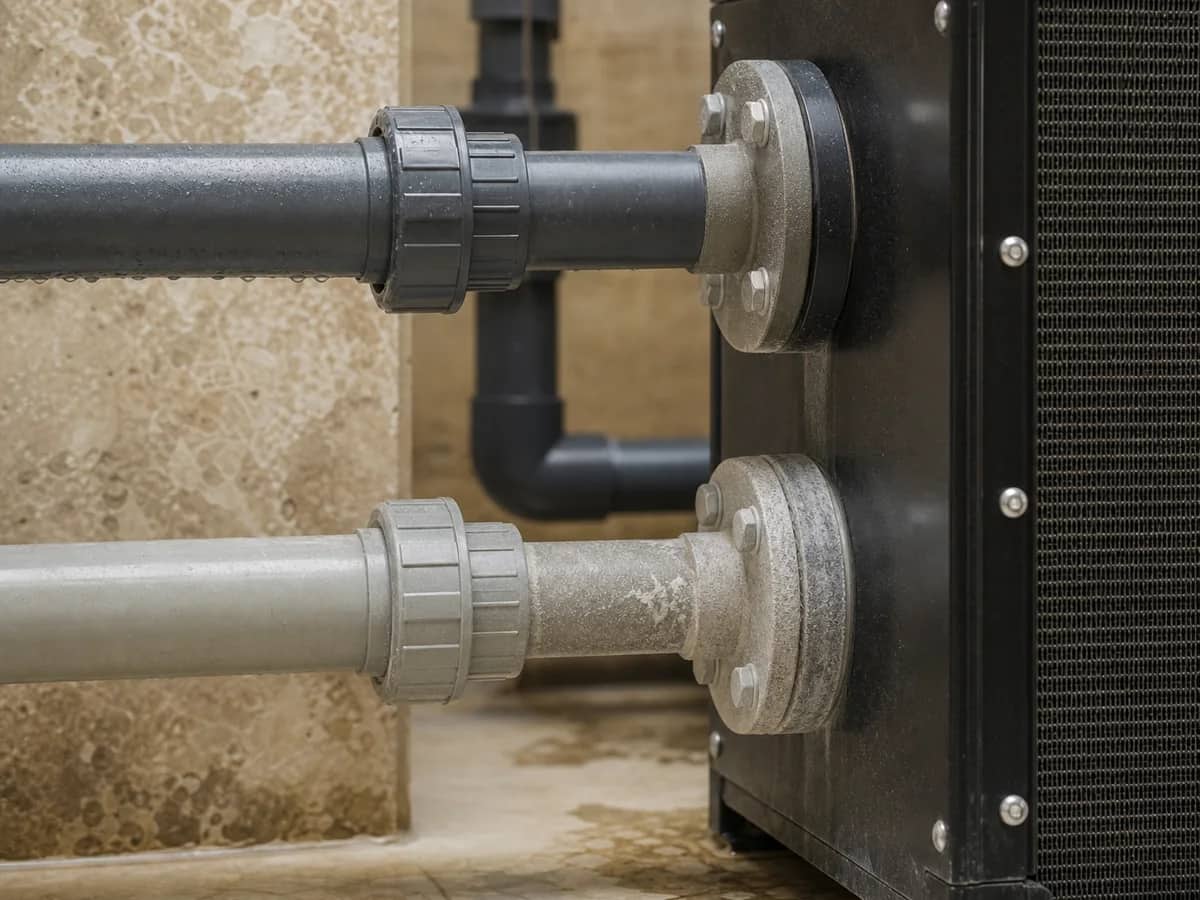 02
02 03
03 04
04// 01 · Products in this article
For the work described in this article, pool chemicals.
Each card leads to the product page with its data sheet, model list and quotation.
- 10 models
- 2 models
// 02 · Product groups
Compare the products on this topic on their category pages.
Each card leads to a product category; models, technical sheets and list prices are there.
 Product category
Pool pH Reducer and pH Increaser
Granular pH reducer and pH increaser that bring pool water to a pH of 7.2 to 7.6, together with powder pH increaser and alkalinity increaser. The product is chosen from the pH and alkalinity reading; reducer and increaser are never applied at the same time.
View- 4 products
- Product category
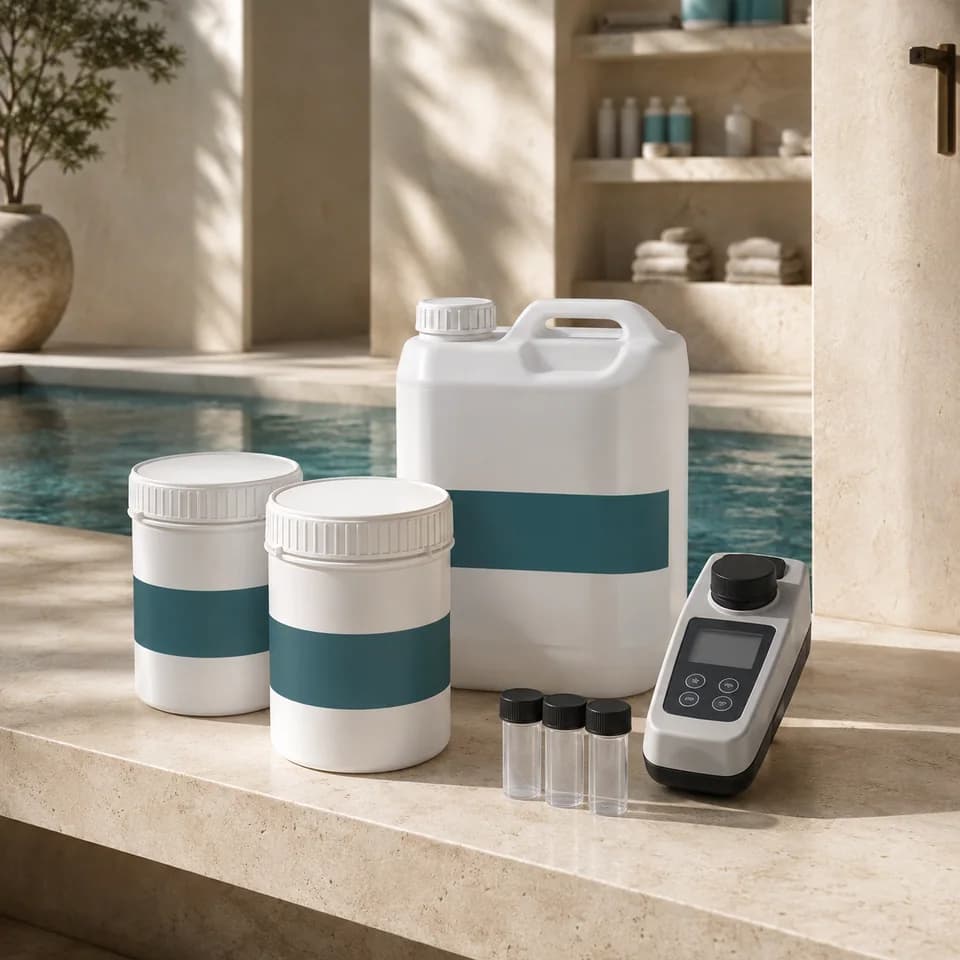
Pool Chemicals
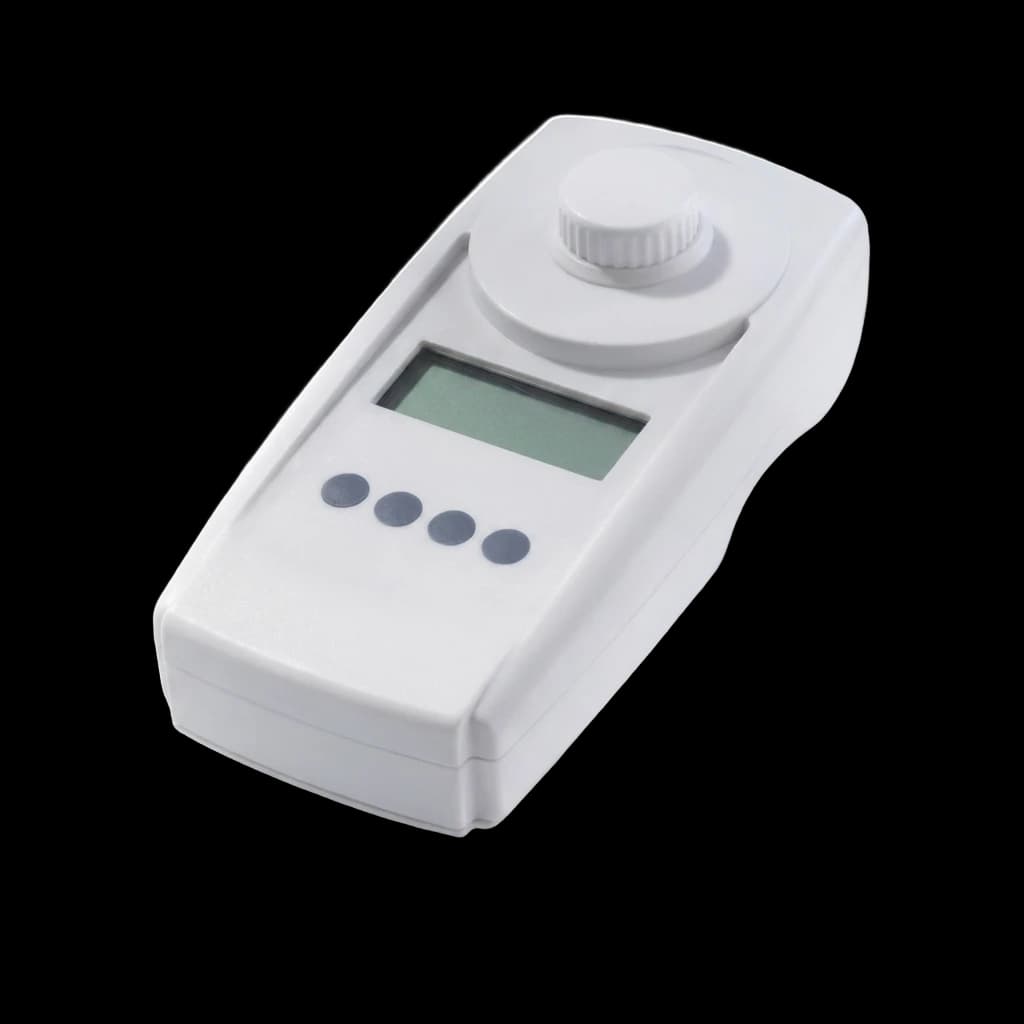
From chlorine, pH regulators, algaecides and clarifiers to digital testers: full-range water chemistry products that keep your pool crystal clear.
View- 19 products
 Product category
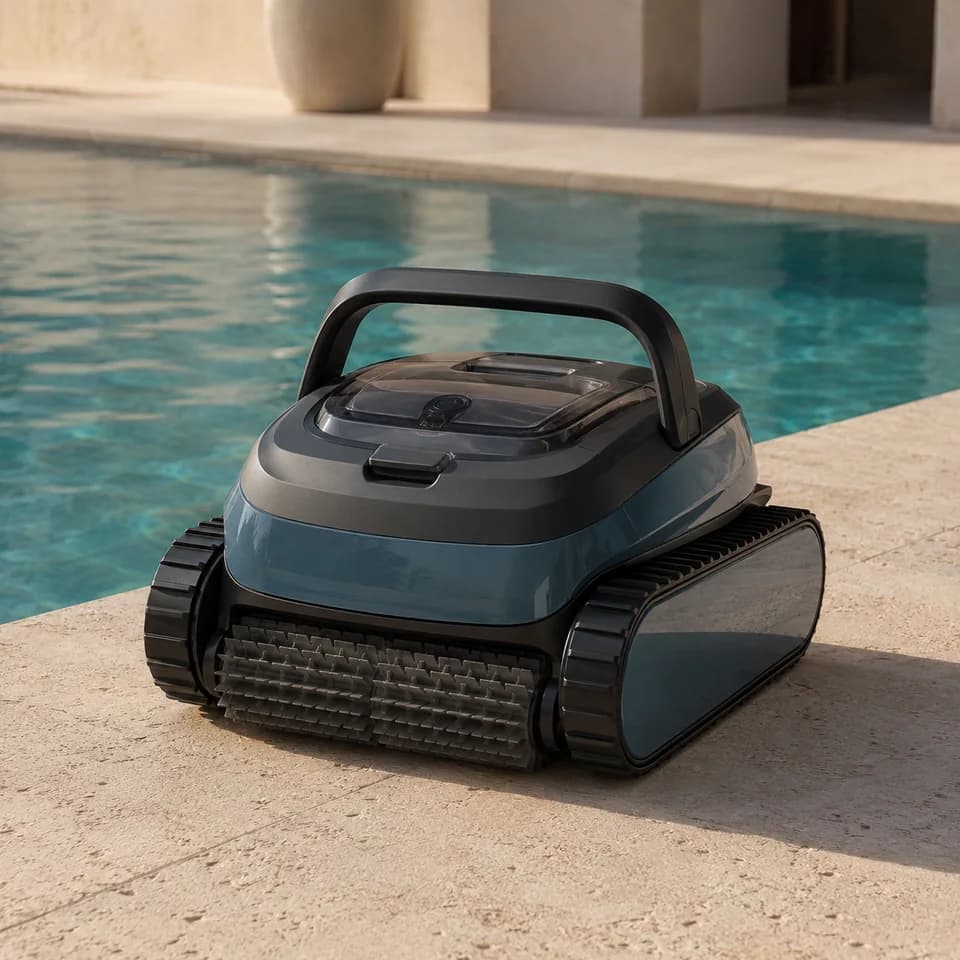
Pool Cleaning Robots
Automate floor, wall and waterline maintenance without manual cleaning, using cordless, intelligent pool cleaning robots.
View- 24 products
Product category
Pool pH Reducer and pH Increaser
Granular pH reducer and pH increaser that bring pool water to a pH of 7.2 to 7.6, together with powder pH increaser and alkalinity increaser. The product is chosen from the pH and alkalinity reading; reducer and increaser are never applied at the same time.
4 productsProduct category
Pool Chemicals
From chlorine, pH regulators, algaecides and clarifiers to digital testers: full-range water chemistry products that keep your pool crystal clear.
19 productsProduct category
Pool Cleaning Robots
Automate floor, wall and waterline maintenance without manual cleaning, using cordless, intelligent pool cleaning robots.
24 products
// 03 · Related service
The work in this article, we deliver from design to handover.
Çilek Havuz service
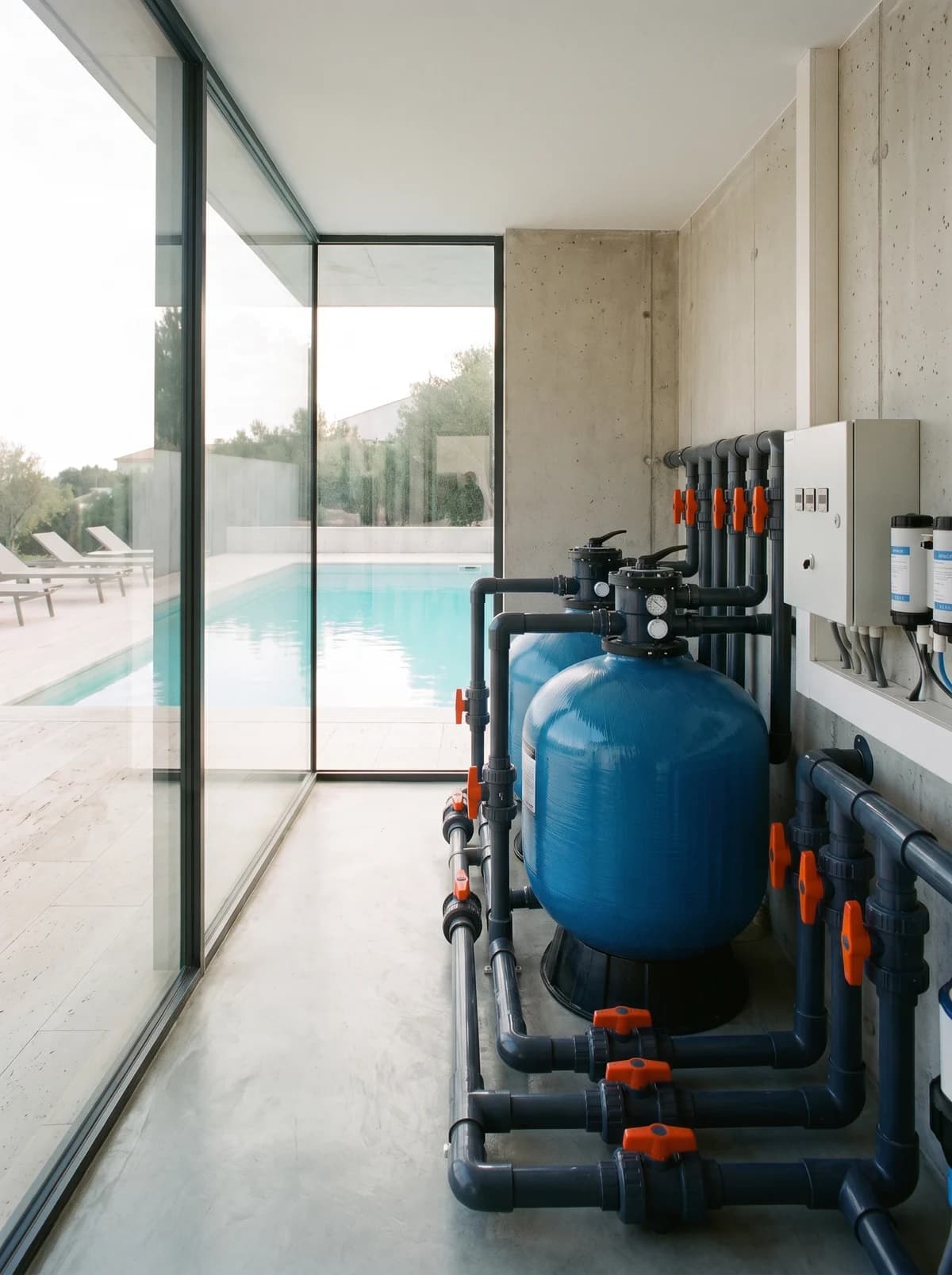
Pool Maintenance
Water chemistry, equipment and periodic maintenance.
How we work
- 01Initial meeting and site surveyWe inspect the site and listen to the brief.
- 02Design and quotationWe give the cost item by item, in writing.
- 03ExecutionThe same team builds to a written schedule.
- 04Handover and commissioningWe start the systems and explain their use.
- 05Maintenance and technical supportWe provide periodic maintenance and support.
// 04 · Guides
On Maintenance, more articles to read.
First the articles directly related to this one, then the newest articles on the topic.
 Maintenance
Pool water chemistry and water balance: pH, alkalinity and LSI
In pool water chemistry, water balance is the state in which the water neither dissolves nor deposits calcium carbonate; pH, alkalinity, hardness, temperature and TDS set it together.
View- 9 September 2026
- 10 min read
 Maintenance
Pool equipment: how to choose each item and what to base it on
Pump flow rate, filter diameter, chemicals, robot type and lighting should be chosen by calculation, not guesswork. Here is how to size each item.
View- 4 September 2026
- 9 min read
 Maintenance
Pool Filter Backwashing: A Step-by-Step Multiport Valve Guide
Backwashing cleans your sand filter, but done wrong it drains and damages it. We explain each 6-way valve position and when to read the pressure gauge.
View- 25 June 2026
- 6 min read
 Maintenance
Pool clarifier and flocculant: differences, uses and selection
Clarification, flocculation and filter compatibility compared for cloudy pool water. The right choice follows the product instructions, not the name.
View- 13 September 2026
- 3 min read
 Maintenance
Chlorine tablets and granules: dissolution, use and selection
Chlorine products differ in active ingredient, concentration and intended use. Shape alone does not determine strength or dosing method.
View- 13 September 2026
- 3 min read
 Maintenance
Winter pool chemicals: purpose, limits and product selection
Winter treatment depends on the actual pool system and product formulation. Water care, equipment freeze protection and ongoing checks are separate tasks.
View- 13 September 2026
- 3 min read
- Maintenance · 9 September 2026Pool water chemistry and water balance: pH, alkalinity and LSIIn pool water chemistry, water balance is the state in which the water neither dissolves nor deposits calcium carbonate; pH, alkalinity, hardness, temperature and TDS set it together.10 min read
- Maintenance · 4 September 2026Pool equipment: how to choose each item and what to base it onPump flow rate, filter diameter, chemicals, robot type and lighting should be chosen by calculation, not guesswork. Here is how to size each item.9 min read
- Maintenance · 25 June 2026Pool Filter Backwashing: A Step-by-Step Multiport Valve GuideBackwashing cleans your sand filter, but done wrong it drains and damages it. We explain each 6-way valve position and when to read the pressure gauge.6 min read
- Maintenance · 13 September 2026Pool clarifier and flocculant: differences, uses and selectionClarification, flocculation and filter compatibility compared for cloudy pool water. The right choice follows the product instructions, not the name.3 min read
- Maintenance · 13 September 2026Chlorine tablets and granules: dissolution, use and selectionChlorine products differ in active ingredient, concentration and intended use. Shape alone does not determine strength or dosing method.3 min read
- Maintenance · 13 September 2026Winter pool chemicals: purpose, limits and product selectionWinter treatment depends on the actual pool system and product formulation. Water care, equipment freeze protection and ongoing checks are separate tasks.3 min read
// 05 · Company & Contact
To talk about your project, call or write to us.
Legal Name
Çilek Havuz
Founded
1998 · Istanbul
Head Office
Çilek Plaza, Eyüp Sultan Mah. Yakacık Cd. Feshane Cd. No: 2 D:4 D:1, 34885 Sancaktepe / İstanbul
Service Area
All of Türkiye · exports to 14 countries
Branches
Kyrgyzstan · Egypt · Algeria · Iraq
Showroom
Plan a showroom visit
At our showroom in Çilek Plaza, Sancaktepe, you can discuss your project with our team. We recommend booking an appointment by phone before your visit.
Working Hours
- Monday – Friday · 08:00 – 17:30
- Saturday · 08:00 – 12:30
- Closed on Sunday
Frequently Asked Questions
About Water Hardness and Calcium Balance in Pools, frequently asked questions.
Çilek Havuz Corporate
Pool and Wellness Engineering
- Response Time
- Same day
- Channels
- Phone · Email · WhatsApp
If the answer you are looking for is not here, send your question directly to us and our team will reply as soon as possible.
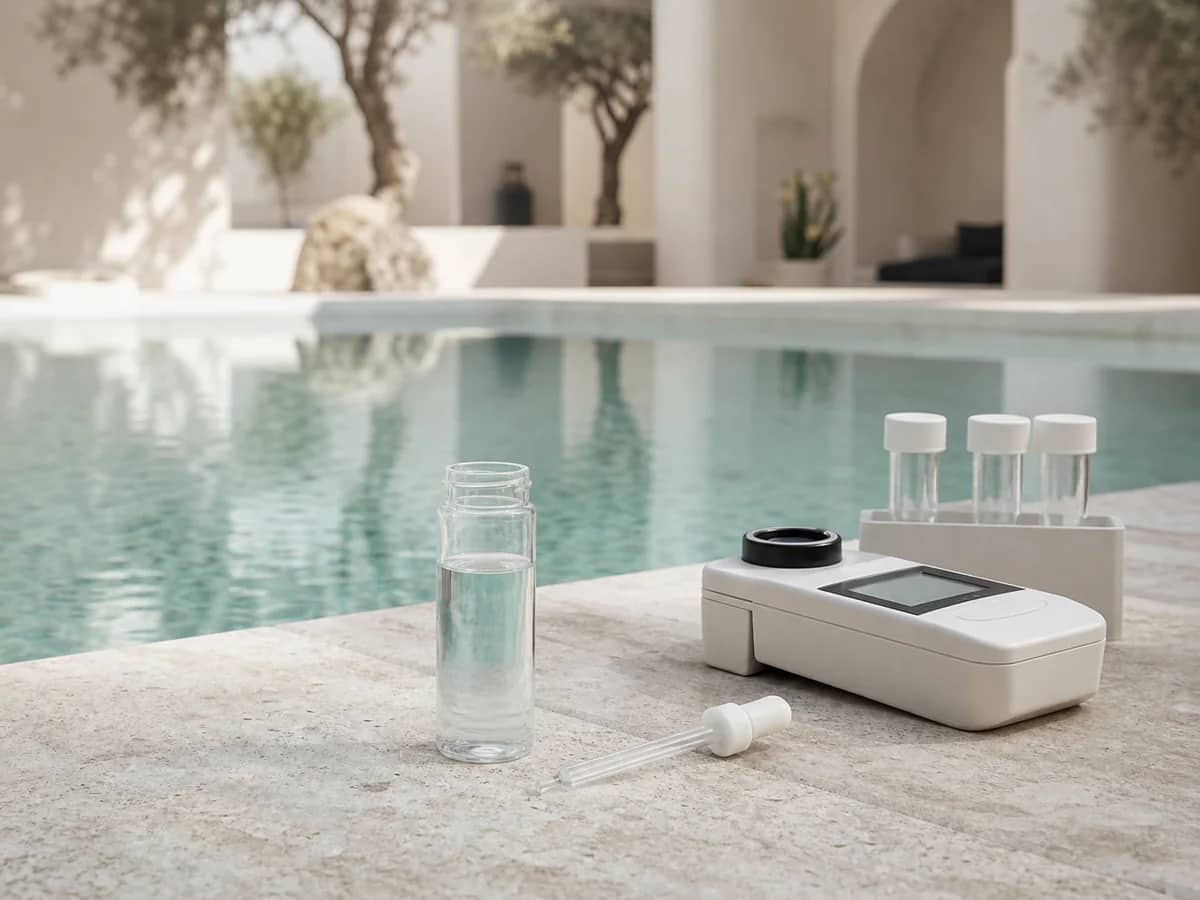
+90 216 475 39 37Calcium hardness. It can be measured with drop counting (titration) kits, test strips or digital photometers. While test strips give a quick idea, drop counting kits and digital devices generally provide a more precise result. For accurate results, it is best to check the expiration date of the test reagents and collect the sample from the elbow depth of the pool.
Çilek Havuz Corporate
The hardness of your mains or well water varies greatly by region. You can find this value from the analysis of the local water authority or test it directly. A hard fill water will quickly move the pool to high calcium, while soft water, on the contrary, requires constant replenishment. Knowing the starting value of your filling water allows you to plan the target range correctly.
Çilek Havuz Corporate
Calcium hardness and total alkalinity are often confused, but they measure different things. Calcium hardness refers to the amount of calcium dissolved in water, and total alkalinity refers to the buffering power of water against acid changes. Both affect the overall balance of water, but are tested separately and adjusted with separate products. Trying to fix one over the other upsets the balance.
Çilek Havuz Corporate
Temporary turbidity may occur when a calcium chloride-based product is added; this usually clears within a few hours under good circulation. It is recommended to add the product gradually, from the deep end of the pool while the circulation is running, to avoid direct precipitation. If the turbidity does not disappear for a long time, you need to check that pH and alkalinity are in balance.
Çilek Havuz Corporate
As the water temperature increases, the tendency for calcium to precipitate and calcify increases. For this reason, limescale accumulation may occur more easily in heated pools and especially around the heater exchanger. While the same calcium value does not cause any problems in a cold pool, it may start to accumulate in a heated pool. Observing calcium, pH and temperature together in heated systems protects your equipment.
Çilek Havuz Corporate
Bringing the water chemistry to the ideal range stops new buildup. It does not, however, automatically remove scale or corrosion spots that have already formed on the surface. Existing deposits often also require appropriate mechanical or chemical surface cleaning. The best approach is to first balance the water and then plan a special cleaning of the surface for permanent stains.
Çilek Havuz Corporate