

Overflow pool or skimmer pool: how the two systems differ
In a skimmer pool the water sits 10-15 cm below the coping. In an overflow pool the water is level with the coping and runs into a perimeter channel and balance tank. Here is what changes in cost, plant room size and day-to-day running.
Project Manager · Mechatronics Engineer · Çilek Havuz
- Published
- Updated
- Reading
- 5 min read
- Category
- Pool Construction
In a skimmer pool the water sits 10-15 cm below the coping. In an overflow pool the water is level with the coping and runs into a perimeter channel and balance tank. Here is what changes in cost, plant room size and day-to-day running.
In a skimmer pool the water level is held 10 to 15 cm below the coping stone.
Skimmer units built into the wall draw water from the surface, and leaves, insects and the surface film collect in the skimmer basket. From there the water reaches the pump, passes the filter and returns to the pool through floor and wall inlets.
The build is simple: no extra tank, no overflow channel, no grating fabrication. The plant room stays small and the pipe run is short. That is why it is the most common solution for residential pools.
Skimmer count is set by surface area. On a 5 by 10 metre pool, two skimmers clean noticeably better than one. Wind direction is taken into account as well: skimmers are placed on the side the prevailing wind sweeps towards, where the surface debris collects.
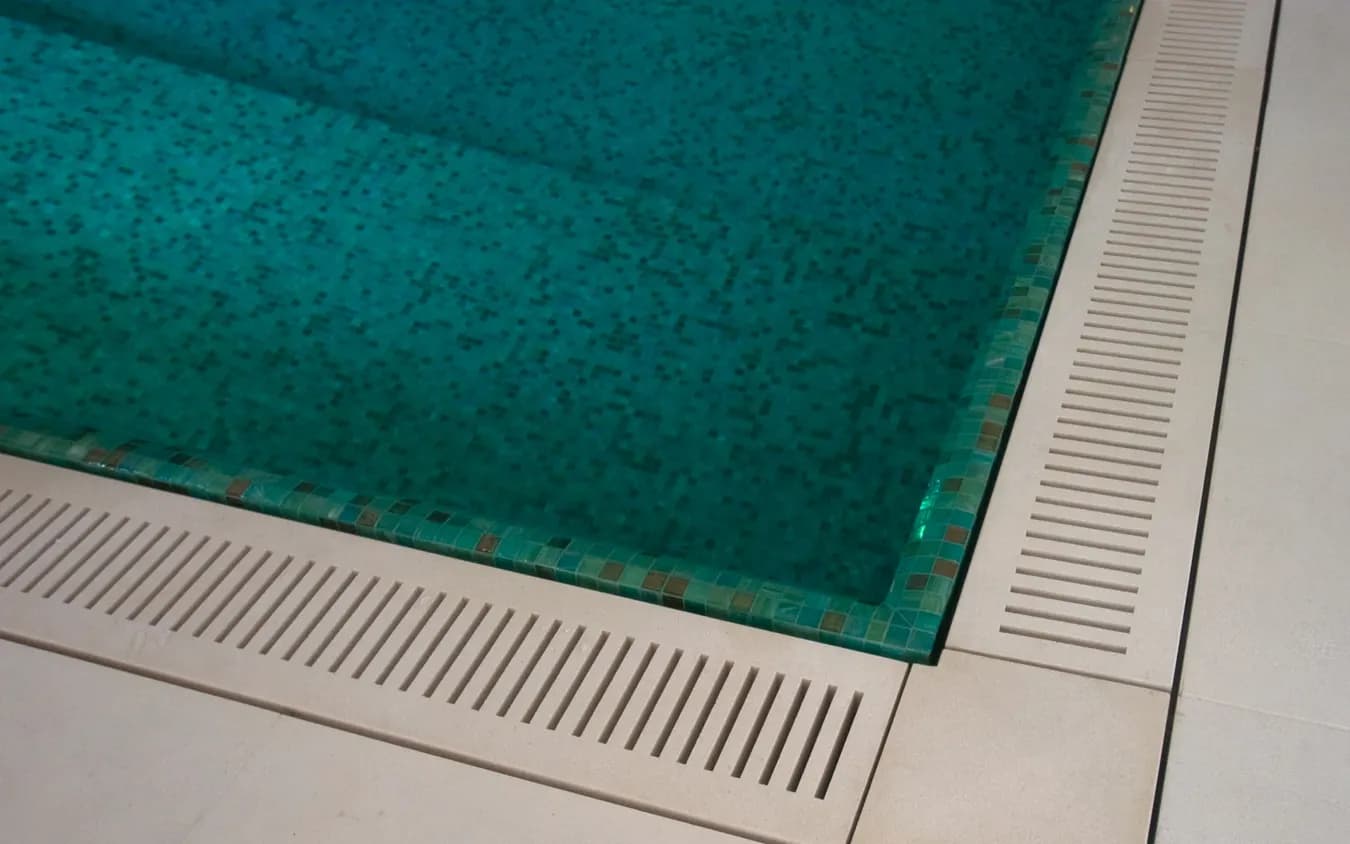
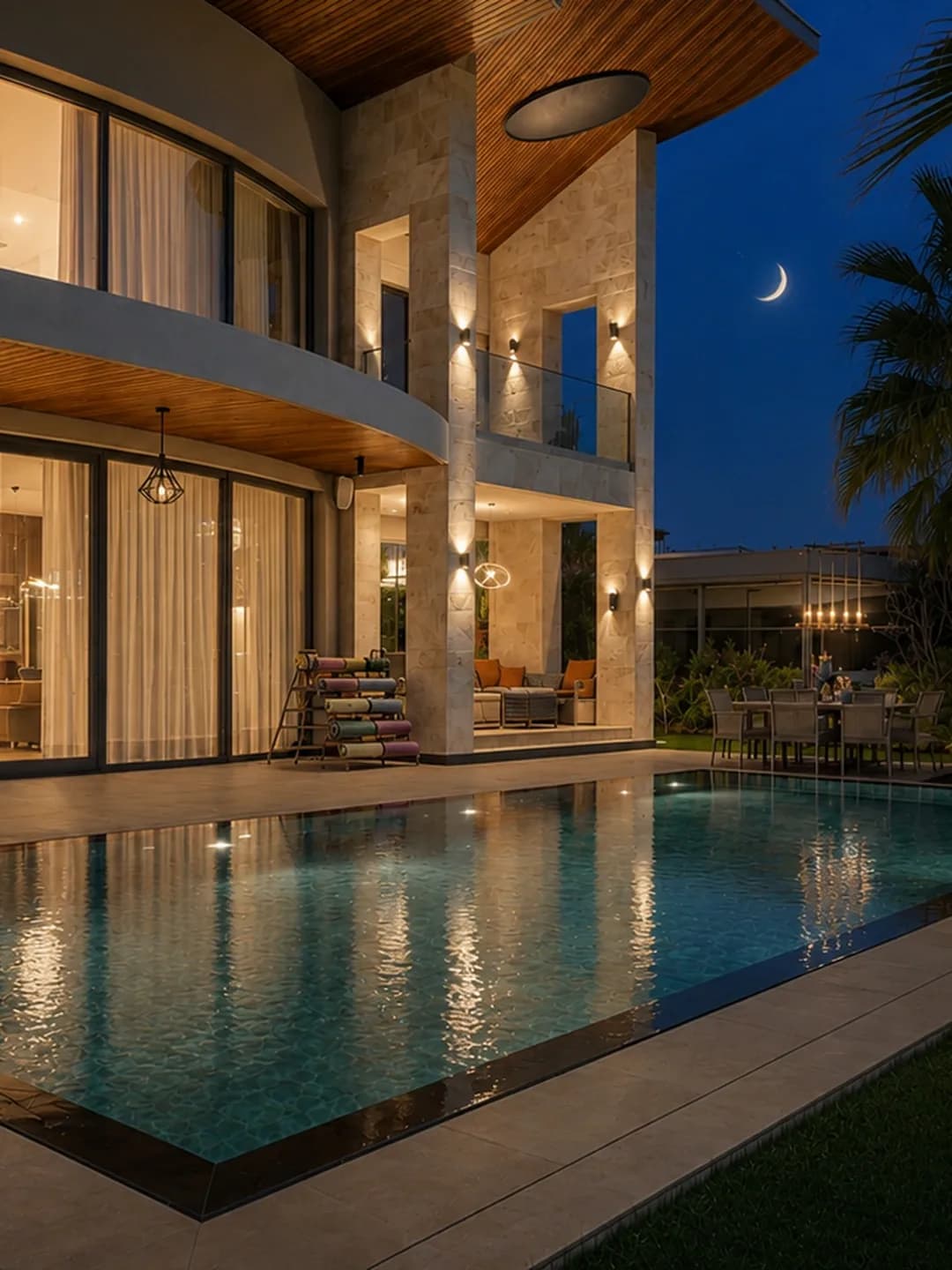
In an overflow pool the water sits flush with the coping and spills over the edge continuously.
A channel runs around the perimeter under a grating, and the collected water drains to a balance tank. The pump draws from that tank, sends the water through the filter and returns it to the pool.
Because the whole surface is swept continuously, surface debris flows into the channel by itself. The 'line building up on the surface' seen in skimmer pools does not form in an overflow system. The waterline also reads as one continuous line, with no visible gap between the pool edge and the water.
The balance tank is the heart of the system. When someone enters the pool, the displaced volume goes to the tank; when they leave, it returns. Tank volume is sized from surface area: roughly 60 to 80 litres per square metre. For a 50 square metre pool that means a separate 3 to 4 cubic metre vessel.
Five items come with the overflow layout: the balance tank, the perimeter channel and grating, level control automation, a longer pipe run and a higher duty pump.
Each of them lands on both the material and the labour side of the budget.
The plant room grows too. A skimmer system needs 4 to 6 square metres for the pump and filter, while in an overflow system with a balance tank added, that area increases. The mistake we correct most often on villa projects is choosing an overflow system and leaving the plant room at skimmer size.
The external dimensions of the pool change as well. The overflow channel and grating add 40 to 50 cm to the pool's outer dimensions around the perimeter. On projects close to the plot boundary, this difference is large enough to affect the permit. Do not decide the size before you have chosen the system.
In an overflow pool the surface renews constantly, so the film of oil, cream and dust on the surface clears quickly.
This lowers chemical consumption somewhat. On the other hand, because the water surface in contact with the open air and the channel volume are larger, water loss from evaporation is slightly higher.
In a skimmer pool, surface cleanliness depends on the wind and on skimmer placement. With the right number of skimmers in the right positions the result is trouble-free; in pools fitted with too few skimmers, a line forms on the surface and the robot cleaner has more work to do.
In terms of heating there is no decisive difference between the two systems; heat is lost through the water surface, and the surface is the same in both. In either system, a pool cover is the investment that pays back fastest.
For a homeowner who will swim with their family in their own garden, a skimmer system is sufficient and the right choice.
It delivers the same water quality for a smaller investment; the difference lies in appearance, and not everyone needs to pay for that.
Villas facing a view, projects that call for an infinity edge, hotels and commercial facilities are built with an overflow system. In hotel pools under heavy use, a surface that cleans itself is a real advantage for the operation.
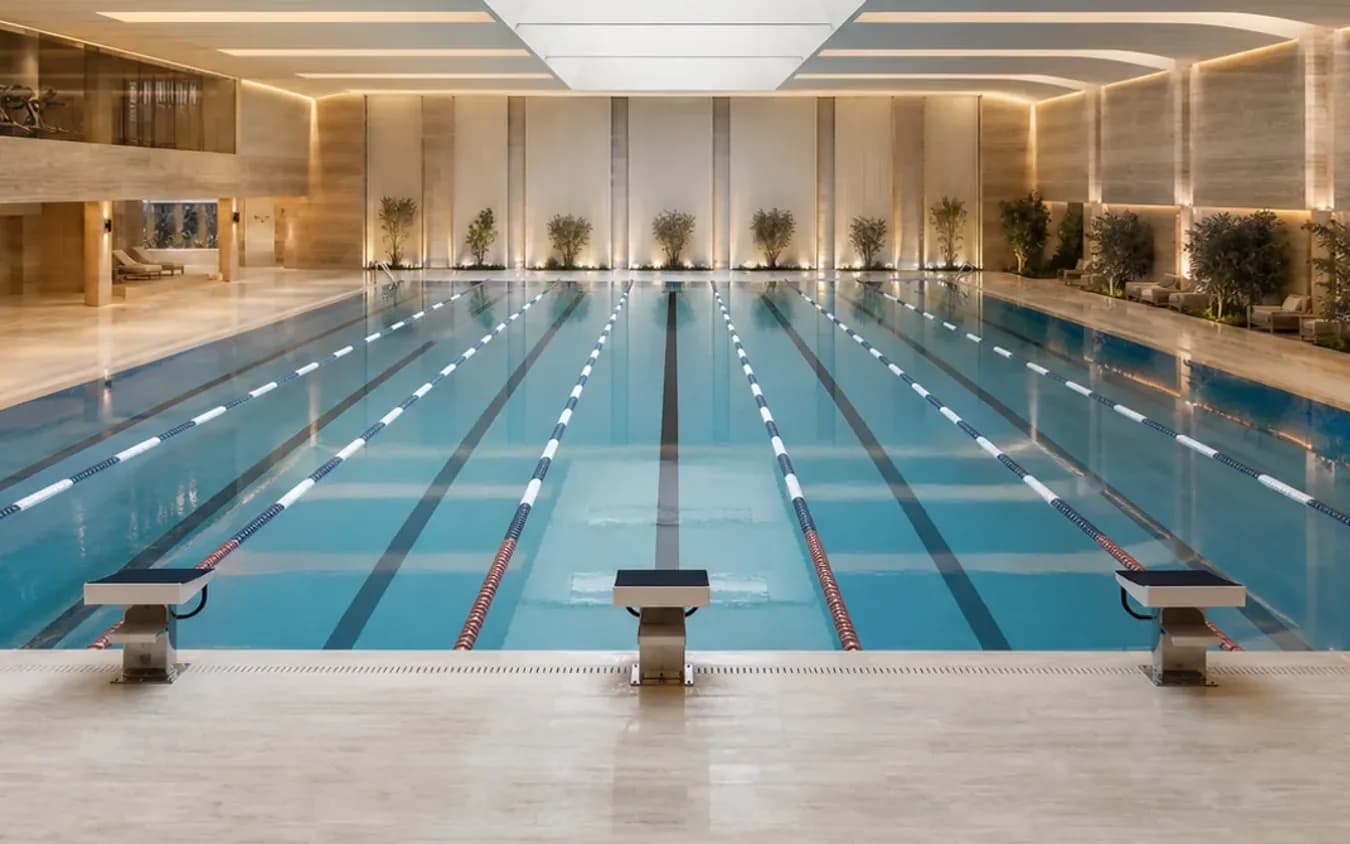
For competition pools there is no debate: an overflow system is mandatory. The water flows from the edge into the channel so that the wave a swimmer creates does not hit the wall and bounce back. On Olympic and semi-Olympic pools this is not a preference but part of the standard.
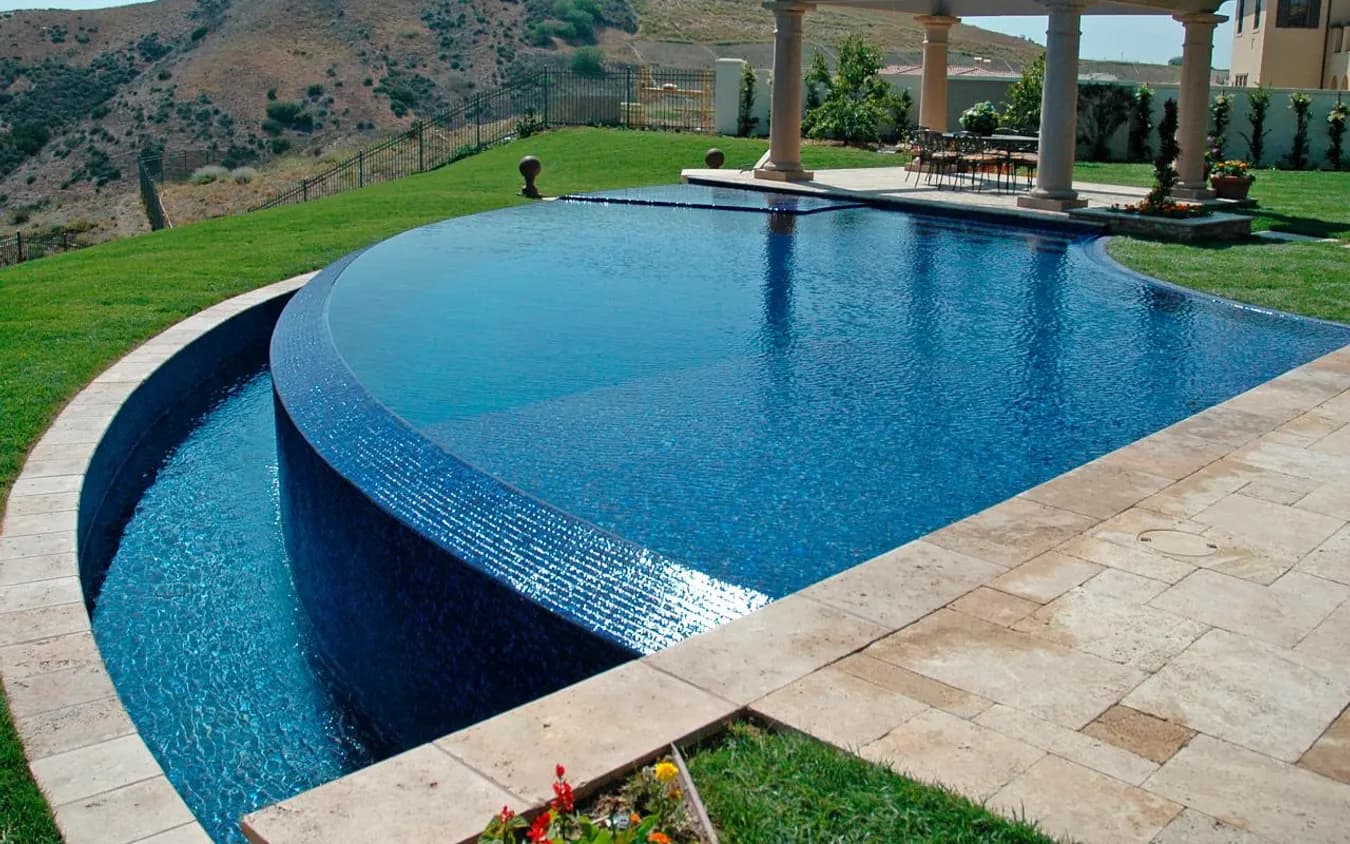
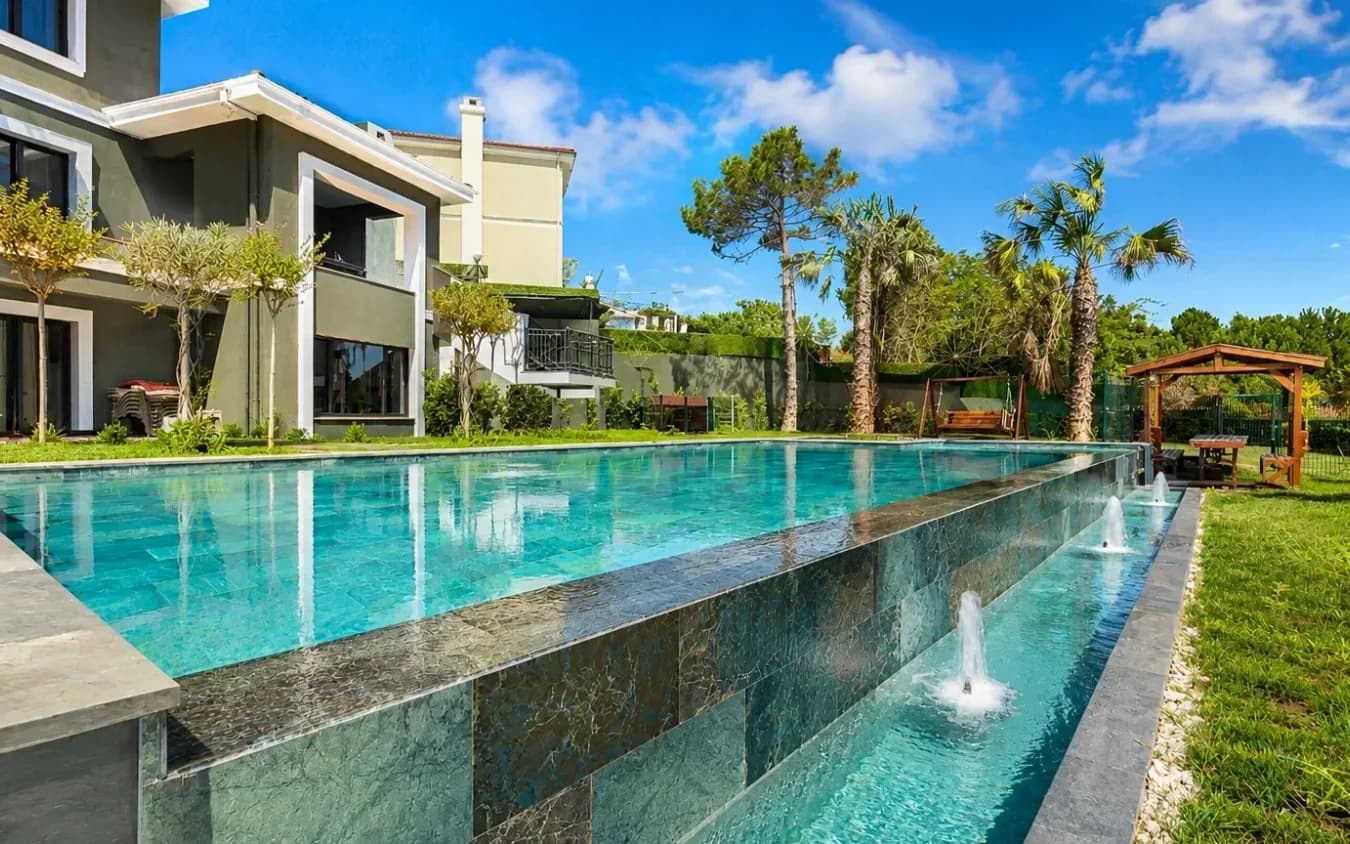
An infinity pool is an overflow system applied to a single edge for visual effect.
One edge of the pool has no coping; the water falls from that edge into a catch basin below and from there goes to the balance tank.
The other three edges can be skimmer or overflow. We build solutions with an infinity edge on the view side and skimmers on the remaining edges; compared with a full overflow system, this gives a similar look on a more measured budget.
An infinity edge needs a slope in the land. On a flat garden an infinity pool produces no effect, because there is no change in level behind the spill edge to break the line of sight. If there is no slope, spend the money elsewhere.
Next step
Let us discuss your project in the way that suits you best.
You can fill in the form for a written quote, schedule a video project presentation or ask us to survey your project site.
Get a Quote
Send us your dimensions and expectations in writing.
Online presentation
Video project presentation
On-site survey
Inspection at your project site
// 01 · Product groups
Compare the products on this topic on their category pages.
Each card leads to a product category; models, technical sheets and list prices are there.
 Product category
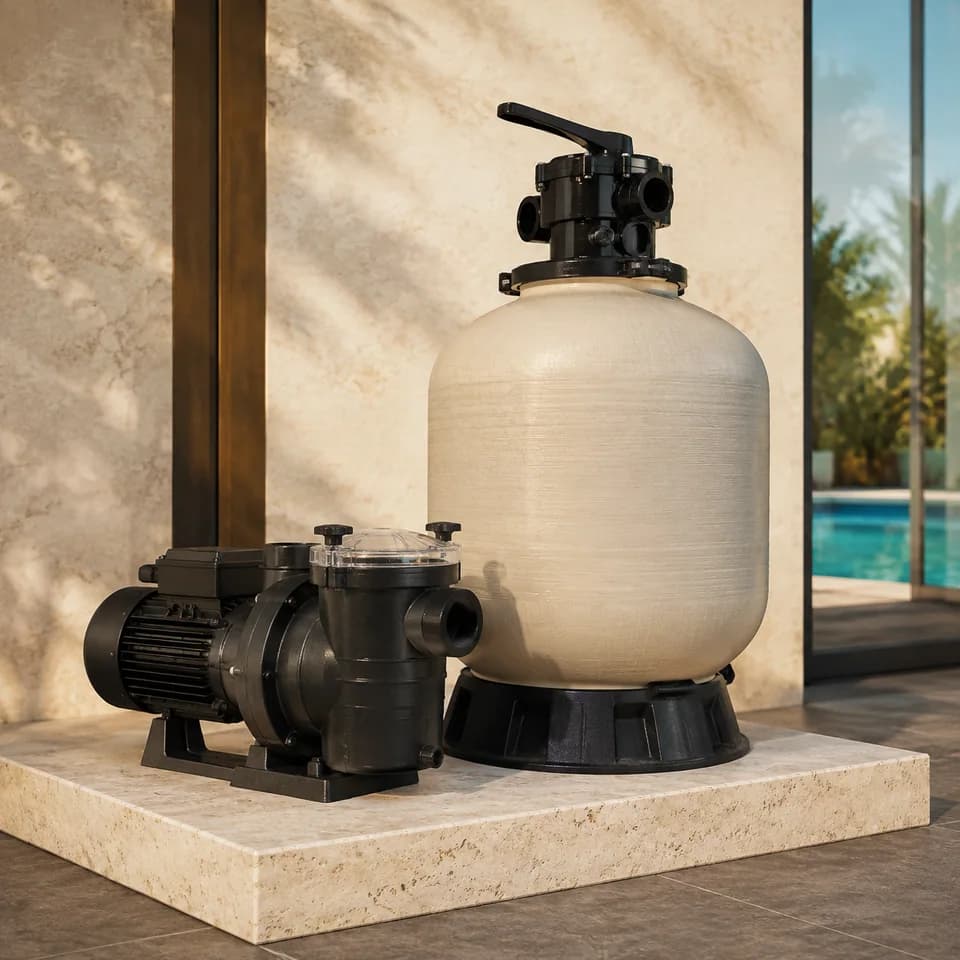
Pool Mechanical Equipment
Circulation pumps, filters, valves and automation: the mechanical infrastructure that forms the heart of the pool.
View- 65 products
- Product category
Pool Skimmers and Pool Fittings
ABS and AISI-316L stainless steel pool skimmers, a cartridge filter skimmer, a main drain and return inlets. The skimmer is chosen by pool construction and filtration flow rate, with separate models for concrete, liner and prefabricated pools. The difference between skimmer pools and overflow pools is covered in our guide.
View- 6 products
 Product category
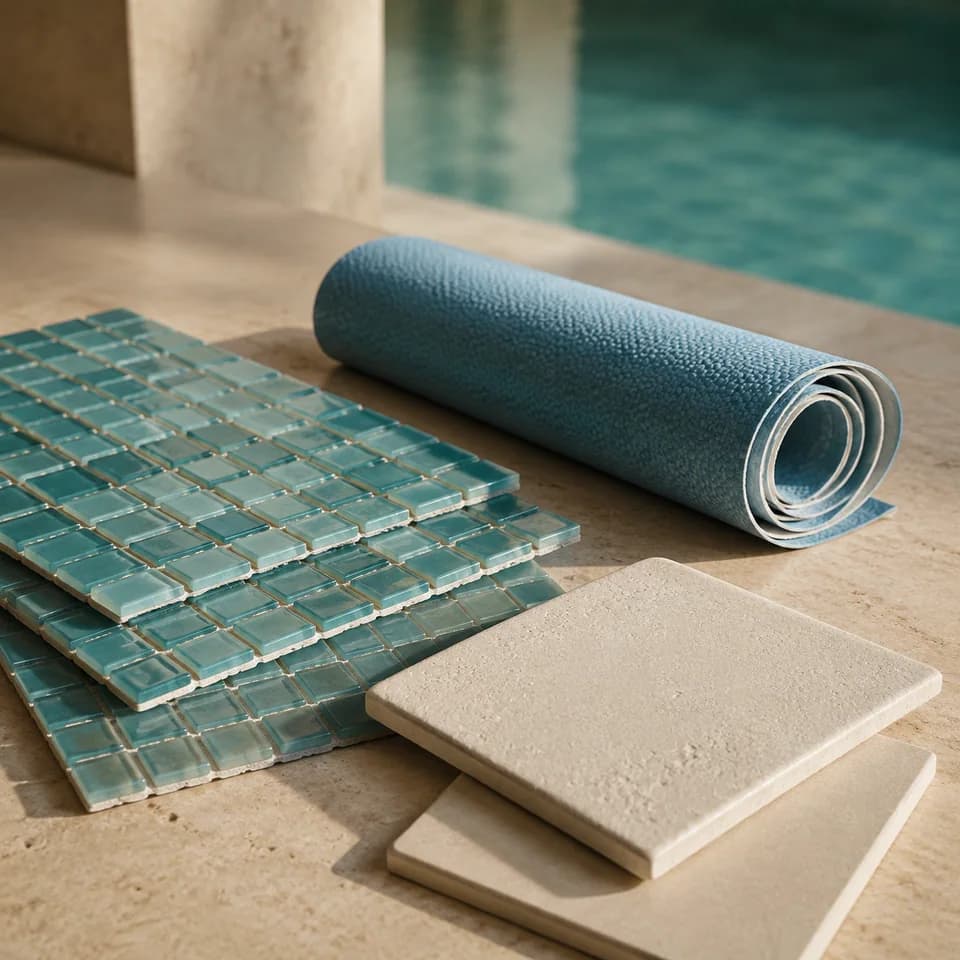
Pool Lining Systems
PVC liner, membrane, ceramic tile and glass mosaic: lining materials that make the pool watertight and form its finished surface.
View- 20 products
Product category
Pool Mechanical Equipment
Circulation pumps, filters, valves and automation: the mechanical infrastructure that forms the heart of the pool.
65 productsProduct category
Pool Skimmers and Pool Fittings
ABS and AISI-316L stainless steel pool skimmers, a cartridge filter skimmer, a main drain and return inlets. The skimmer is chosen by pool construction and filtration flow rate, with separate models for concrete, liner and prefabricated pools. The difference between skimmer pools and overflow pools is covered in our guide.
6 productsProduct category
Pool Lining Systems
PVC liner, membrane, ceramic tile and glass mosaic: lining materials that make the pool watertight and form its finished surface.
20 products
// 02 · Related service
The work in this article, we deliver from design to handover.
Çilek Havuz service
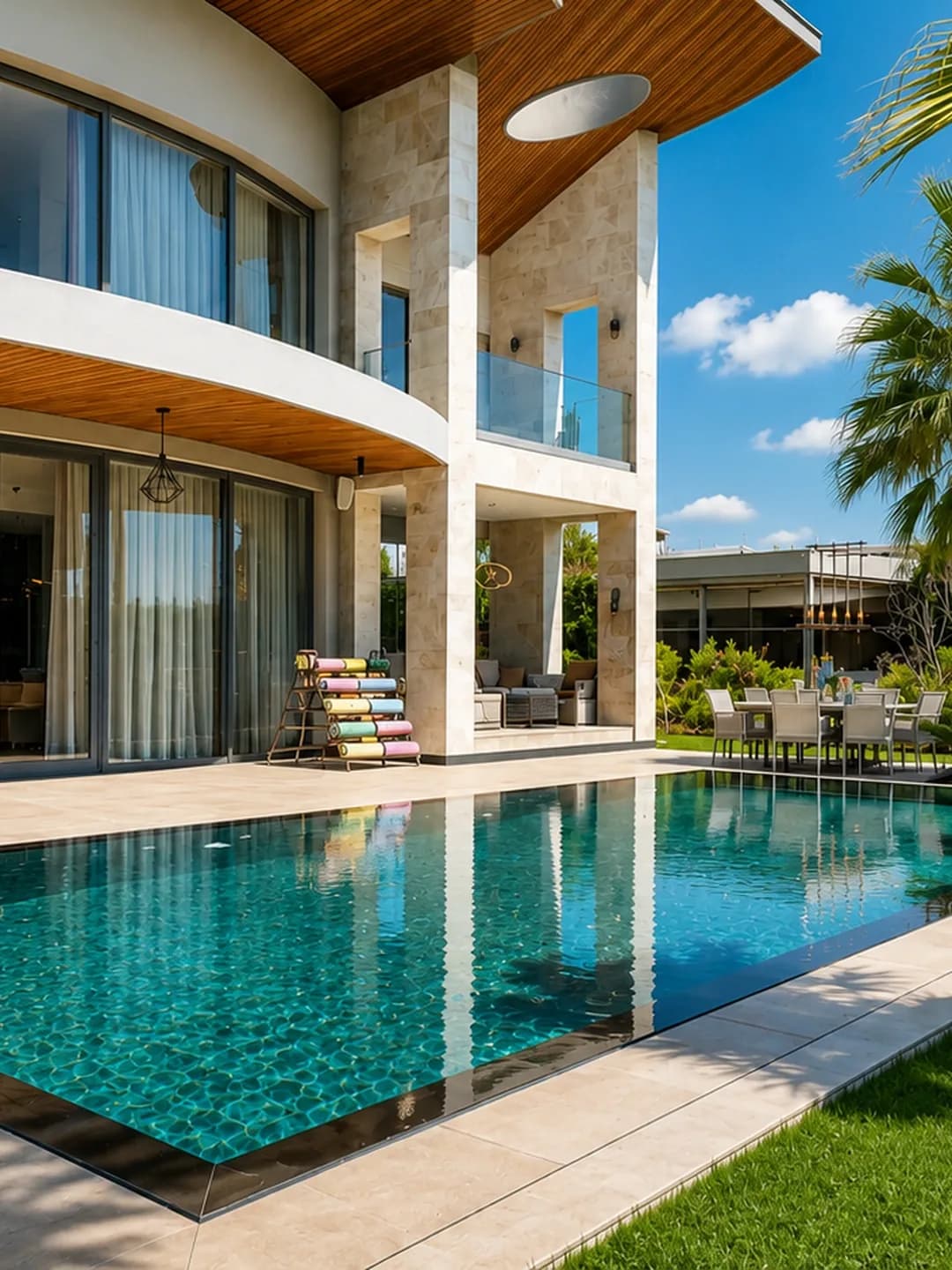
Swimming Pool Construction
Reinforced-concrete, prefabricated and infinity swimming pools, built turnkey for villa, residential and commercial projects.
Swimming pool construction is a turnkey build in which the site survey, structural and mechanical design, excavation, reinforced-concrete shell, waterproofing, finish, filtration plumbing and commissioning run under a single contract. The written project schedule follows the site survey.
How we work
- 01Initial meeting and site surveyWe inspect the site and listen to the brief.
- 02Design and quotationWe give the cost item by item, in writing.
- 03ExecutionThe same team builds to a written schedule.
- 04Handover and commissioningWe start the systems and explain their use.
- 05Maintenance and technical supportWe provide periodic maintenance and support.
// 03 · Guides
On Pool Construction, more articles to read.
First the articles directly related to this one, then the newest articles on the topic.
 Pool Construction
Types of swimming pools: which pool type works where?
Pools are classified by construction method, circulation system, location and intended use. We have brought the four classifications together on one page, along with which type suits which project.
View- 4 September 2026
- 8 min read
 Pool Construction
Thermal Pool Solutions: Systems Designed for Mineral Water
Hot, mineral-rich thermal water quickly wears out standard pool materials. We explain how material selection, filtration, corrosion and scale control, and heat management must be engineered for it.
View- 28 February 2026
- 5 min read
 Technology
Automatic Pool Covers for a Private Home Pool: Systems and How to Choose
Choosing an automatic cover for a private home pool: slatted and track systems, underwater and above-ground types, safety, water savings, cost and installation.
View- 13 September 2026
- 9 min read
 Pool Construction
Choosing Pool Showers and Waterfalls: Shower Types, Water Curtains and Plumbing Needs
Choosing a pool shower, waterfall or water curtain depends on the material, where the water comes from and where it is mounted. We compare solar and stainless steel shower types and their pump and plumbing needs.
View- 2 October 2026
- 8 min read
 Pool Construction
Competition Pool Equipment: Which Pool Needs Which Equipment?
Starting blocks, lane ropes, warning and turn systems, underwater speakers and water polo goals are chosen according to how the pool is used. We explain which dimensions we check for each item.
View- 2 October 2026
- 7 min read
 Pool Construction
Building a pool or spa abroad: what drives the cost of an international project?
A pool, hammam or spa project delivered abroad from Turkey has no single price per square metre. We cover design, equipment, shipping, customs and schedule.
View- 29 September 2026
- 8 min read
- Pool Construction · 4 September 2026Types of swimming pools: which pool type works where?Pools are classified by construction method, circulation system, location and intended use. We have brought the four classifications together on one page, along with which type suits which project.8 min read
- Pool Construction · 28 February 2026Thermal Pool Solutions: Systems Designed for Mineral WaterHot, mineral-rich thermal water quickly wears out standard pool materials. We explain how material selection, filtration, corrosion and scale control, and heat management must be engineered for it.5 min read
- Technology · 13 September 2026Automatic Pool Covers for a Private Home Pool: Systems and How to ChooseChoosing an automatic cover for a private home pool: slatted and track systems, underwater and above-ground types, safety, water savings, cost and installation.9 min read
- Pool Construction · 2 October 2026Choosing Pool Showers and Waterfalls: Shower Types, Water Curtains and Plumbing NeedsChoosing a pool shower, waterfall or water curtain depends on the material, where the water comes from and where it is mounted. We compare solar and stainless steel shower types and their pump and plumbing needs.8 min read
- Pool Construction · 2 October 2026Competition Pool Equipment: Which Pool Needs Which Equipment?Starting blocks, lane ropes, warning and turn systems, underwater speakers and water polo goals are chosen according to how the pool is used. We explain which dimensions we check for each item.7 min read
- Pool Construction · 29 September 2026Building a pool or spa abroad: what drives the cost of an international project?A pool, hammam or spa project delivered abroad from Turkey has no single price per square metre. We cover design, equipment, shipping, customs and schedule.8 min read
// 04 · Company & Contact
To talk about your project, call or write to us.
Legal Name
Çilek Havuz
Founded
1998 · Istanbul
Head Office
Çilek Plaza, Eyüp Sultan Mah. Yakacık Cd. Feshane Cd. No: 2 D:4 D:1, 34885 Sancaktepe / İstanbul
Service Area
All of Türkiye · exports to 14 countries
Branches
Kyrgyzstan · Egypt · Algeria · Iraq
Showroom
Plan a showroom visit
At our showroom in Çilek Plaza, Sancaktepe, you can discuss your project with our team. We recommend booking an appointment by phone before your visit.
Working Hours
- Monday – Friday · 08:00 – 17:30
- Saturday · 08:00 – 12:30
- Closed on Sunday
Frequently Asked Questions
About Overflow pool or skimmer pool, frequently asked questions.
Çilek Havuz Corporate
Pool and Wellness Engineering
- Response Time
- Same day
- Channels
- Phone · Email · WhatsApp
If the answer you are looking for is not here, send your question directly to us and our team will reply as soon as possible.
+90 216 475 39 37In terms of surface cleanliness, yes; in an overflow system the surface is swept continuously, so no film of oil and dust builds up. In a skimmer system, with the right number of skimmers in the right positions, the difference closes in practice.
Çilek Havuz Corporate
Roughly 60 to 80 litres are calculated for each square metre of pool surface. For a 50 square metre pool this means a separate volume of 3 to 4 cubic metres, and the plant room is sized for this volume.
Çilek Havuz Corporate
It is kept 10 to 15 cm below the coping stone, at the mid-height of the skimmer mouth. If the level drops, the skimmer draws in air and the pump is damaged; if it rises, surface suction weakens.
Çilek Havuz Corporate
Converting an existing pool is technically possible, but in practice it is a major renovation. The coping level changes, an overflow channel is cut around the perimeter, space is found for a balance tank, and the pipework and pump are renewed. On most projects the work is comparable to building a new pool; it should be assessed on site before a decision is made.
Çilek Havuz Corporate
For the visual effect to appear, yes. If there is no change in level behind the edge the water spills over, the infinity effect is not visible. On a flat garden, putting the same budget into the finish or the landscaping gives a better result.
Çilek Havuz Corporate