

Types of swimming pools: which pool type works where?
Pools are classified by construction method, circulation system, location and intended use. We have brought the four classifications together on one page, along with which type suits which project.
Project Manager · Mechatronics Engineer · Çilek Havuz
- Published
- Updated
- Reading
- 11 min read
- Category
- Pool Construction
Pools are classified by construction method, circulation system, location and intended use. We have brought the four classifications together on one page, along with which type suits which project.
Pools are classified by four separate criteria: construction method, circulation system, location and intended use; every pool takes one value from each of the four.
Construction method means a reinforced concrete, prefabricated panel, fibreglass or polyester shell. The circulation system is skimmer, overflow or infinity edge. Location is outdoor, indoor, terrace or rooftop. Intended use is residential, residential complex, hotel, competition or therapy. A villa pool, for example, might be reinforced concrete, overflow, outdoor and residential; a hotel's indoor pool might be reinforced concrete, overflow, indoor and commercial.
When you ask for a quote, we recommend settling these four choices at the outset, because most of the price difference between two quotes comes from them. Below we cover each class separately; under each heading there is a separate guide of ours that goes deeper into the subject.
By construction method there are three main types: reinforced concrete cast on site, panels assembled on site, and fibreglass or polyester pools that arrive from the factory in one piece.
A reinforced concrete pool is built on site. Size, shape and depth are set entirely by the design; freeform shapes, beach entries, seating ledges and infinity edges are built this way. It has the longest time on site and the widest design freedom of any system. When deciding between a reinforced concrete and a prefabricated pool, ground conditions, access and timescale are assessed together.
In a prefabricated panel pool, steel or composite panels are assembled on site and the interior is finished with a liner. It allows some flexibility in size, has a short time on site and needs no crane. Panel systems are also used at commercial scale; 25-metre semi-Olympic pools can be built this way. We explain the difference between panel and fibreglass prefabricated systems in detail in our prefabricated pool guide.
Fibreglass and polyester pools come out of a one-piece mould; no shell is built on site, only the excavation, base slab and plumbing. It is the system with the shortest time on site, and its jointless surface makes cleaning easier. On the other hand, size and shape are limited to the mould dimensions, and access for a lorry and crane is essential. In our article comparing ready-made, fibreglass and polyester pools, we set out in a table when each of the three is chosen.
| Method | How the shell is formed | Freedom of shape | Repair on site |
|---|---|---|---|
| Reinforced concrete, sprayed concrete | Concrete sprayed onto a rebar cage | Fully free, any plan and depth | Finish can be renewed |
| Reinforced concrete, cast in formwork | Concrete poured into formwork | Free, economical for angular shapes | Finish can be renewed |
| One-piece fibreglass or polyester | Shell taken from a mould in the factory | Limited to the mould dimensions | Gelcoat repair needs a skilled hand |
| Panel and liner | Steel or composite panels with a membrane inside | Depends on the panel module | Renewed by replacing the liner |
| Prefabricated concrete module | Ready-made parts joined on site | Depends on the module dimensions | Joints are the weak points |
In a one-piece pool, the depth also comes with the mould. In our article on depth flexibility in ready-made pools, we set out separately which systems allow the depth to be changed and which do not.
In a skimmer pool the water sits 12-15 cm below the edge and is drawn off from the surface; in an overflow pool the water is level with the edge and spills into the surrounding grating.
A skimmer pool needs no extra tank, so the plant room stays small. Most residential pools are built with this system. The skimmer opening is usually placed on the edge towards which the wind pushes leaves; one skimmer serves an average of 25-35 square metres of surface. We cover the difference between skimmer and overflow systems in terms of budget and water quality in a separate article.
In an overflow pool, the water spilling along the perimeter collects in a balance tank and goes from there to the filter. The surface cleans itself and the waterline looks unbroken. A balance tank, an overflow channel and a larger pump are needed. This system is preferred for heavily used hotel, residential complex and competition pools.
| Aspect | Skimmer | Overflow |
|---|---|---|
| Water level | 12-15 cm below the edge | Level with the edge |
| Surface cleaning | Debris gathers in front of the skimmer opening | Drawn off continuously around the whole perimeter |
| Balance tank | Not needed | Needed |
| Plant room | Smaller | Grows with the tank |
| Heavy use | Level drops, suction weakens | Level stays constant |
| Investment | Lower | Higher |
| Typical use | Homes and villas | Hotels, residential complexes, competition pools |
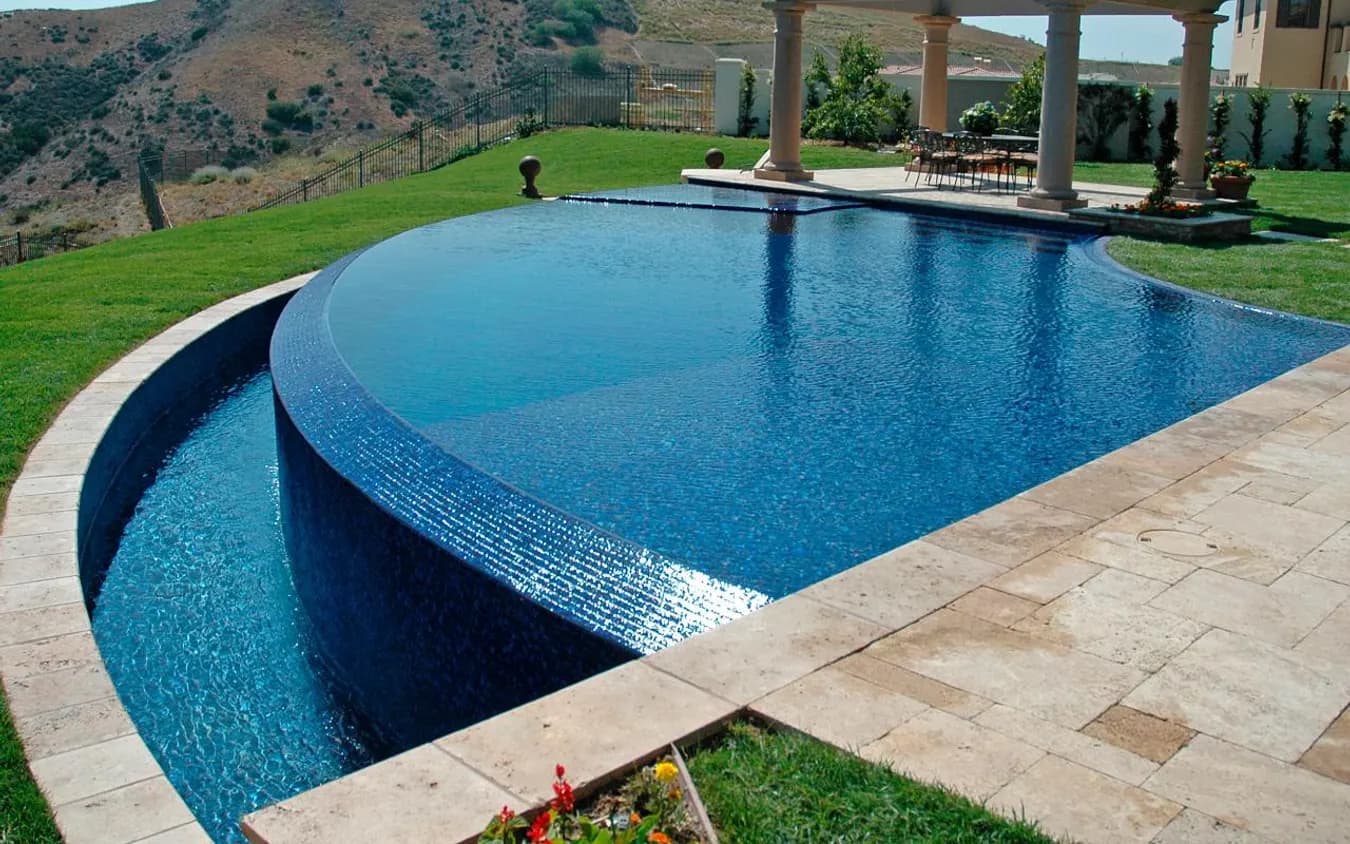
An infinity pool is the overflow system applied on one or two edges for visual effect; no coping is visible on the edge where the water spills over. A difference in ground level is needed for the effect to work. How an infinity pool works is the subject of a separate article; the items an infinity pool adds are also listed one by one in our cost article. By keeping skimmers on the other edges, a similar look can be achieved on a more moderate budget.
By location there are outdoor, indoor, terrace and rooftop pools; in each the deciding factor is different: climate outdoors, air indoors, structure on a terrace.
The outdoor pool is the most common type and is used seasonally. With a heat pump the season extends into April and October; a cover reduces both heat loss and evaporation loss. It is not drained in winter; the water level is lowered and the pool is winterised.
With an indoor pool the real issue is not the water but the air. Moisture evaporating from the pool surface condenses on cold surfaces and wears down the ceiling and steel components. Air temperature is kept 1-2 degrees above the water temperature, and relative humidity in the 50-60 percent range. We explain humidity and ventilation calculations for indoor pools with figures in a separate article.
For terrace and rooftop pools, structure is the deciding factor. A water depth of 1.2 metres means a load of 1.2 tonnes per square metre; finishes, the shell and user loads are added to this. The load of a terrace or rooftop pool is checked by structural calculation, and the load-bearing system is strengthened where necessary. Here the waterproofing is applied in two layers, as a second layer of protection for the space below.
By intended use there are residential, residential complex, hotel, competition, children's, therapy and natural pools; as the purpose changes, turnover time, depth and equipment change.
Residential pools cluster around 4x8 and 5x10 metres; a constant depth of 1.40-1.50 metres is the most popular layout. For families with children, a separate children's section, or one divided off by a step, is planned. We give pool size selection by garden, together with volume calculations, in our article on sizes and depths.
In residential complexes and apartment blocks the number of users is high and variable. Turnover time is kept shorter than for a private pool, and automation with automatic dosing and record keeping is necessary. In hotel and commercial pools, an overflow system, high turnover capacity and a redundant pump are standard; a second line is installed so that the pool does not have to close when a pump fails. Competition pools are subject to separate rules on dimensions, depth, lanes and timing equipment.
Pool types that differ by purpose
- Swimming pool: constant depth, length comes first; 1.40-1.50 m is common in homes
- Children's pool: a shallow shell of 0.20-0.90 m, with circulation separate from the adult pool
- Diving pool: a separate, deep shell; roughly 5 m of depth for a 10-metre tower
- Infinity pool: on one or two edges the water appears to stretch to the horizon, and the overflowing water drops into a lower basin
- Beach entry pool: slopes from the deck into the water, with no steps
- Natural pool: treated with a biological filter and a plant bed instead of chemicals
- Hot tub and spa: a small-volume body of hot water operating at 36-39 °C
- Thermal pool: mineral-rich spring water, requiring wear-resistant materials and plumbing
A natural pool may seem like a world of its own, but the construction logic is the same: shell, waterproofing, circulation. The difference lies in the treatment. In our article on natural ponds with biological filtration, we explain how the swimming zone and the treatment zone are separated.
On a sloping villa plot with a view, an overflow system with an infinity edge is the most balanced choice; in a flat garden it is a skimmer system and a 5x10 metre size.
We recommend positioning the pool in relation to the house, not the view. A pool that cannot be seen from the living room and kitchen gets little use after the first summer, and supervision becomes harder. The direction of the afternoon sun, the edge towards which the wind pushes leaves and the distance from the plant room to the pool determine the position.
In a flat garden, moving part of the budget that would go into an overflow system to the surrounding paving, lighting and landscaping often gives a more visible result. Adding a raised hot tub beside the pool is one of the most requested layouts on villa projects. The condition is separate circulation: since the hot tub runs at 36-38 degrees and the pool at 26-28 degrees, a separate pump, heater and filter are needed.
A garden under 100 square metres can take a 3x6 metre pool or a 2.5x5 metre plunge pool; those who want to swim choose a swim spa.
The most concrete advantage of a small pool is its low water volume. A 3x6 metre pool with a depth of 1.40 metres holds about 25 cubic metres, a third of a 5x10 metre pool. It heats quickly, needs few chemicals and is quick to maintain. The difference is felt in running costs every month.
A one-piece polyester or fibreglass pool is also considered for a small garden, but first we check whether the crane arm can reach the garden. In terraced houses and narrow streets, crane access often makes a reinforced concrete or panel system the only option.
A swim spa allows stationary swimming against a counter-current in a 4-6 metre body, and because it is heated it can be used in winter too. It may not satisfy someone who expects a classic pool; we discuss this at the outset.
Once the type is chosen, the work proceeds in this order: site survey, ground investigation, design, permit, excavation, shell, plumbing, finishes and commissioning.
At the survey we check the slope of the plot, the soil class, groundwater, crane and lorry access, and the electricity and water connections. These data sometimes change the chosen type: a one-piece pool is not possible in a garden with narrow access, and on a plot with high groundwater we recommend a reinforced concrete shell instead of a panel system. Our guide to having a pool built, from survey to handover, describes each of these steps with its duration and responsibilities.
In our pool construction service, we finalise the type decision after the survey, once we have seen the site. A decision made from a catalogue or gallery often changes on site; seeing this already at the survey saves both time and budget.
Next step
Let us discuss your project in the way that suits you best.
You can fill in the form for a written quote, schedule a video project presentation or ask us to survey your project site.
Get a Quote
Send us your dimensions and expectations in writing.
Online presentation
Video project presentation
On-site survey
Inspection at your project site
// 01 · Product groups
Compare the products on this topic on their category pages.
Each card leads to a product category; models, technical sheets and list prices are there.
 Product category
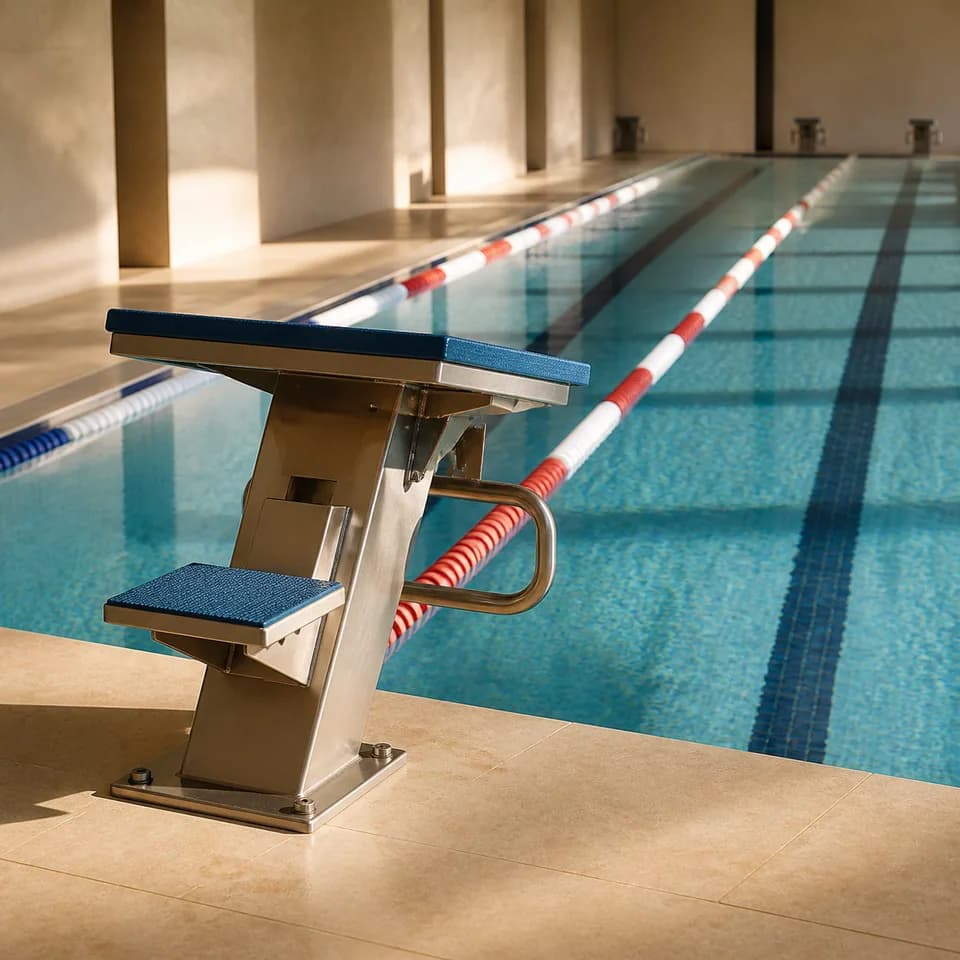
Olympic Pool Equipment
Olympic pool equipment built to official competition standards, with lane dividers, starting blocks, timing systems and water polo goals.
View- 8 products
 Product category
Pool Skimmers and Pool Fittings
ABS and AISI-316L stainless steel pool skimmers, a cartridge filter skimmer, a main drain and return inlets. The skimmer is chosen by pool construction and filtration flow rate, with separate models for concrete, liner and prefabricated pools. The difference between skimmer pools and overflow pools is covered in our guide.
View- 6 products
- Product category
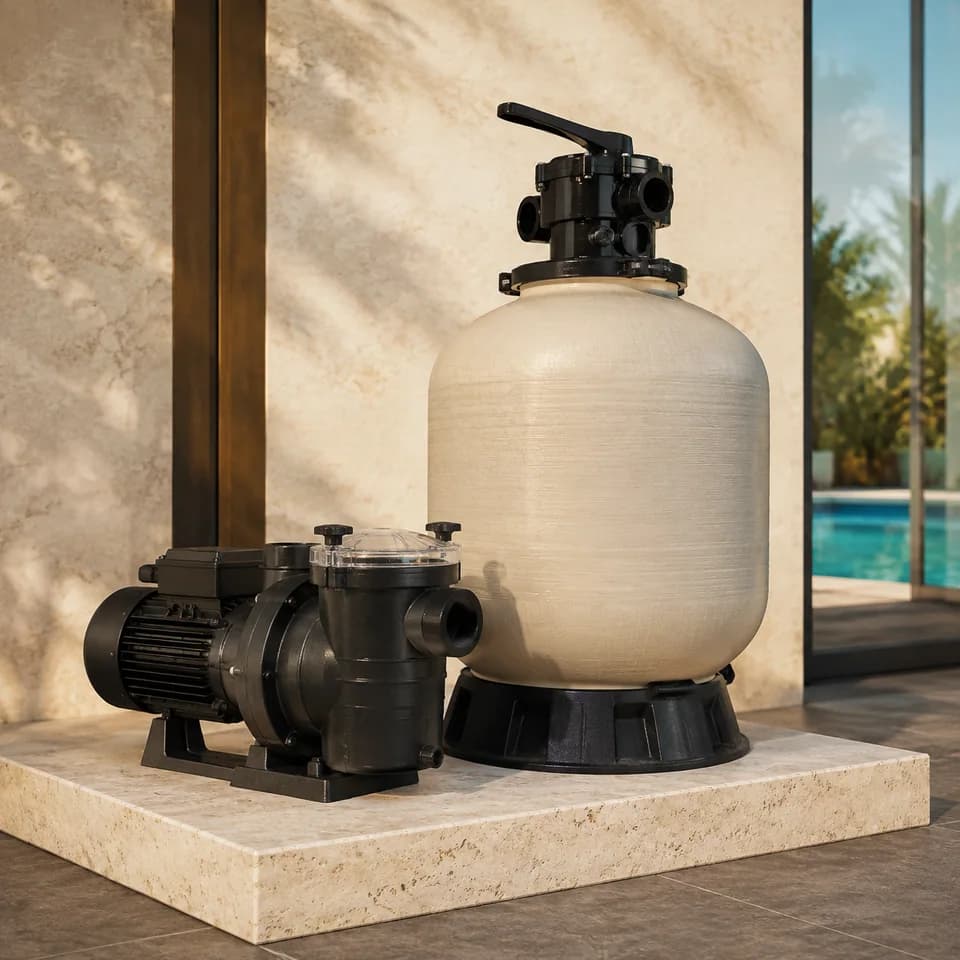
Pool Mechanical Equipment
Circulation pumps, filters, valves and automation: the mechanical infrastructure that forms the heart of the pool.
View- 65 products
Product category
Olympic Pool Equipment
Olympic pool equipment built to official competition standards, with lane dividers, starting blocks, timing systems and water polo goals.
8 productsProduct category
Pool Skimmers and Pool Fittings
ABS and AISI-316L stainless steel pool skimmers, a cartridge filter skimmer, a main drain and return inlets. The skimmer is chosen by pool construction and filtration flow rate, with separate models for concrete, liner and prefabricated pools. The difference between skimmer pools and overflow pools is covered in our guide.
6 productsProduct category
Pool Mechanical Equipment
Circulation pumps, filters, valves and automation: the mechanical infrastructure that forms the heart of the pool.
65 products
// 02 · Related service
The work in this article, we deliver from design to handover.
Çilek Havuz service
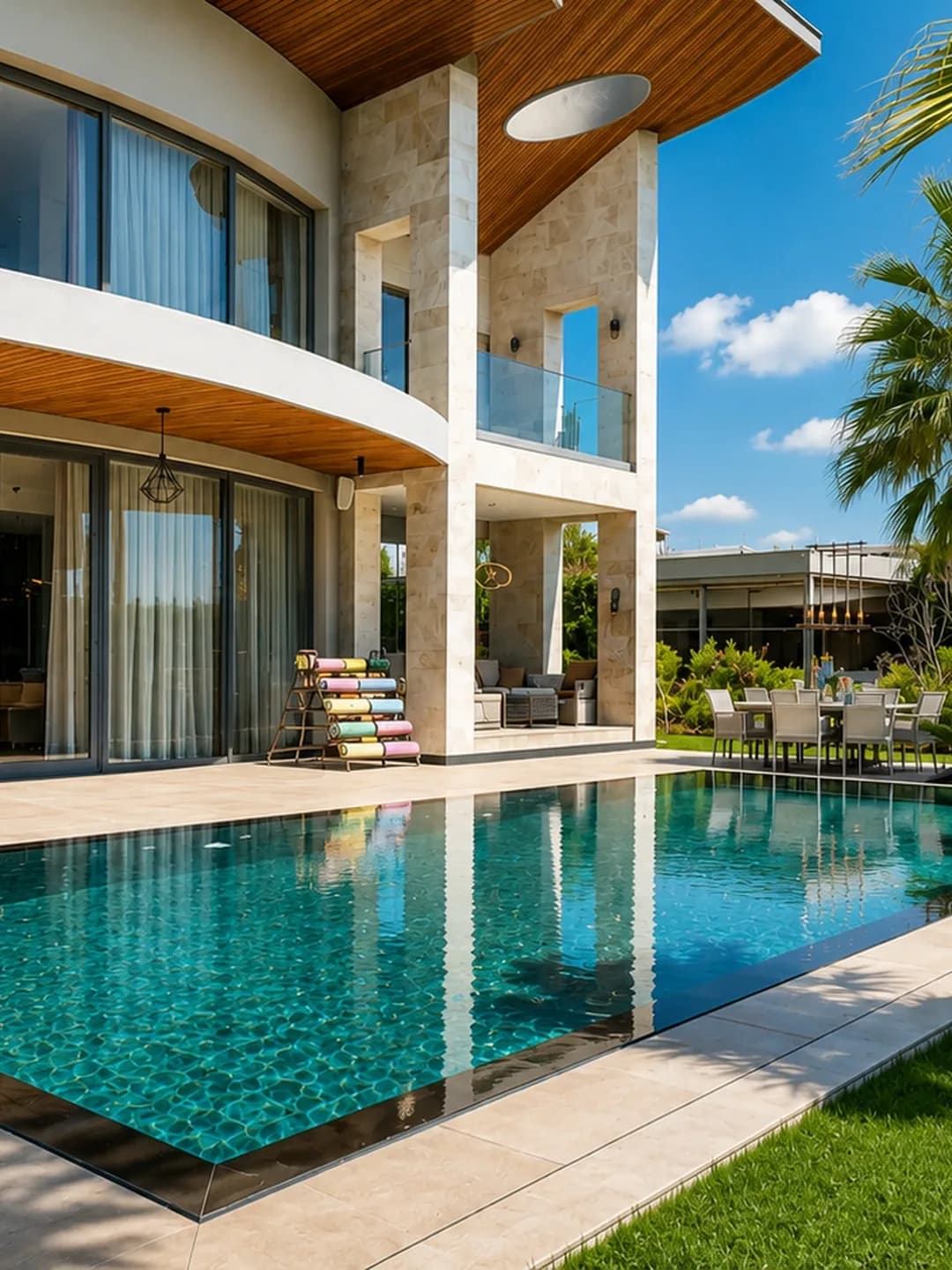
Swimming Pool Construction
Reinforced-concrete, prefabricated and infinity swimming pools, built turnkey for villa, residential and commercial projects.
Swimming pool construction is a turnkey build in which the site survey, structural and mechanical design, excavation, reinforced-concrete shell, waterproofing, finish, filtration plumbing and commissioning run under a single contract. The written project schedule follows the site survey.
How we work
- 01Initial meeting and site surveyWe inspect the site and listen to the brief.
- 02Design and quotationWe give the cost item by item, in writing.
- 03ExecutionThe same team builds to a written schedule.
- 04Handover and commissioningWe start the systems and explain their use.
- 05Maintenance and technical supportWe provide periodic maintenance and support.
// 03 · Guides
On Pool Construction, more articles to read.
First the articles directly related to this one, then the newest articles on the topic.
 Pool Construction
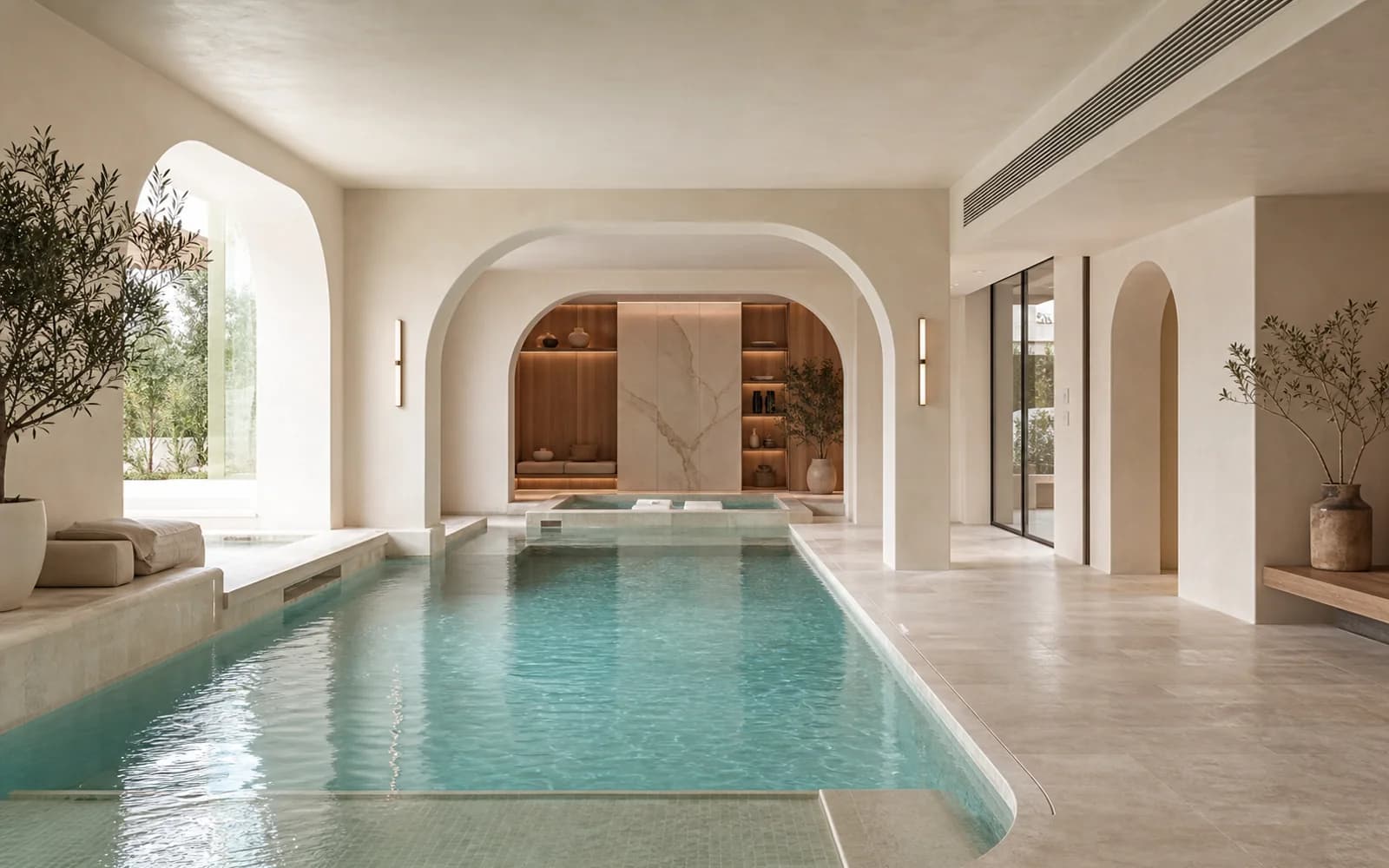
Indoor Pool Construction: The Engineering of Four-Season Use
What makes a covered pool comfortable year-round is not the water itself but the volume that surrounds it.
View- 29 April 2026
- 7 min read
 Pool Construction
Choosing Pool Showers and Waterfalls: Shower Types, Water Curtains and Plumbing Needs
Choosing a pool shower, waterfall or water curtain depends on the material, where the water comes from and where it is mounted. We compare solar and stainless steel shower types and their pump and plumbing needs.
View- 2 October 2026
- 8 min read
 Pool Construction
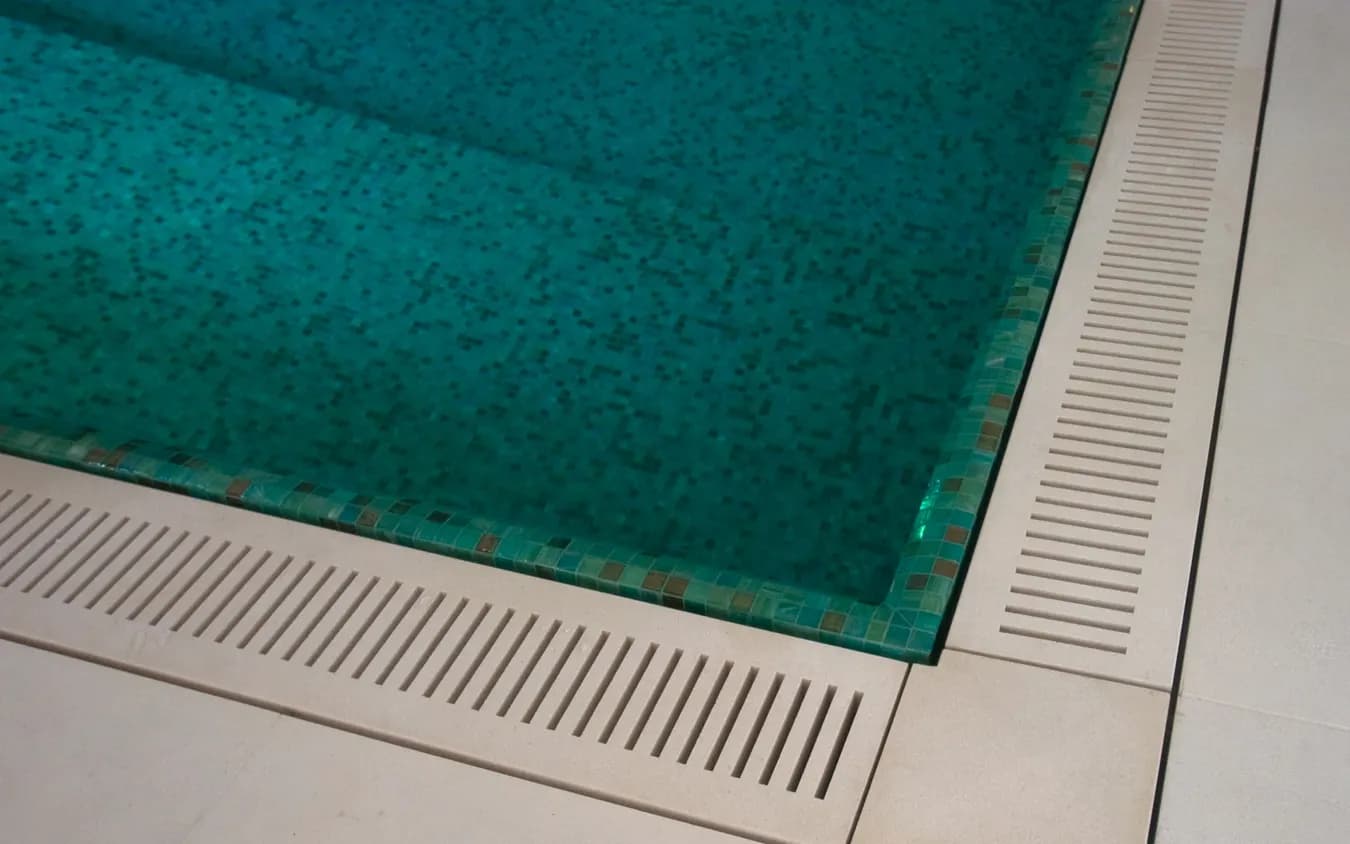
Overflow pool or skimmer pool: how the two systems differ
In a skimmer pool the water sits 10-15 cm below the coping. In an overflow pool the water is level with the coping and runs into a perimeter channel and balance tank. Here is what changes in cost, plant room size and day-to-day running.
View- 4 September 2026
- 7 min read
 Pool Construction
Competition Pool Equipment: Which Pool Needs Which Equipment?
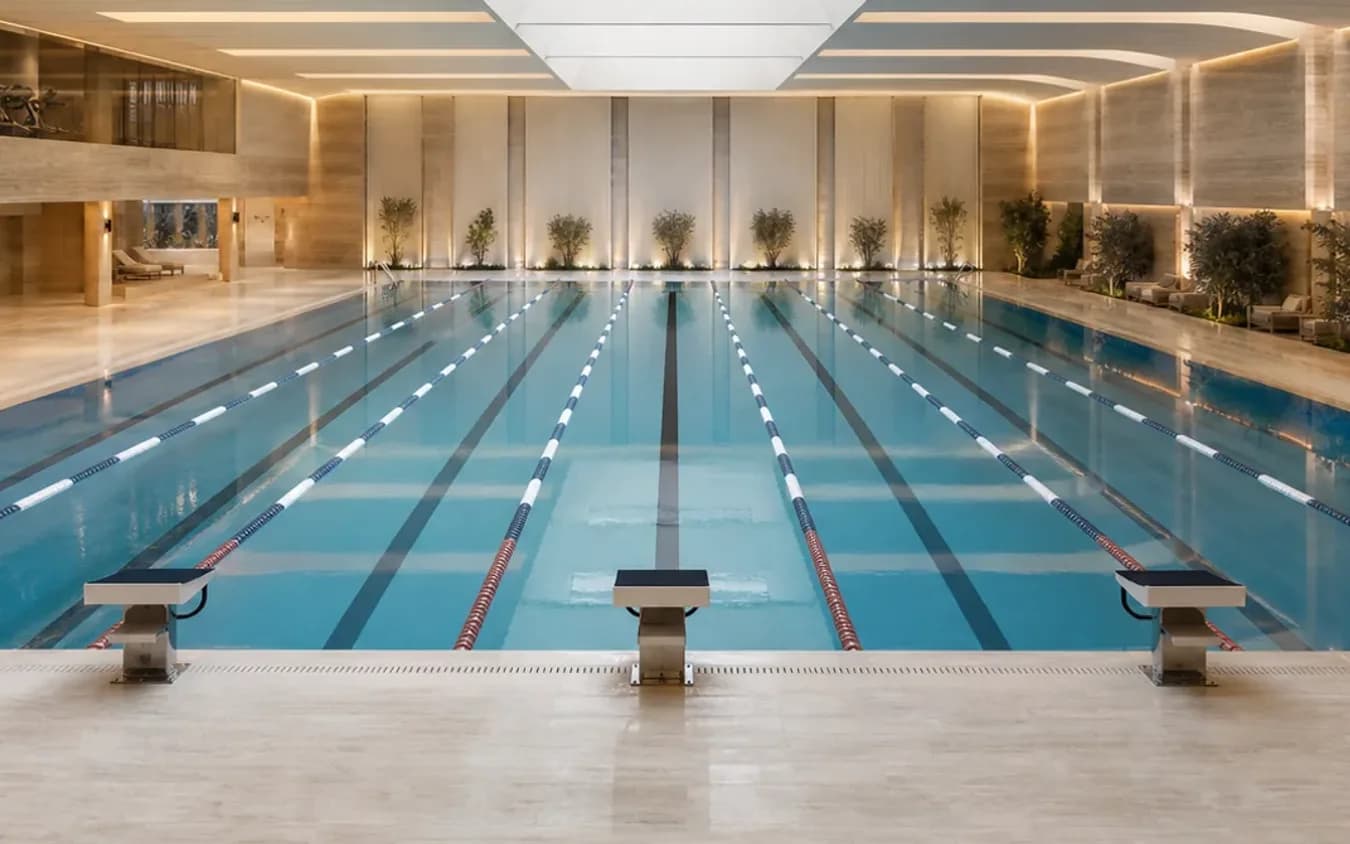
Starting blocks, lane ropes, warning and turn systems, underwater speakers and water polo goals are chosen according to how the pool is used. We explain which dimensions we check for each item.
View- 2 October 2026
- 7 min read
 Pool Construction
Building a pool or spa abroad: what drives the cost of an international project?
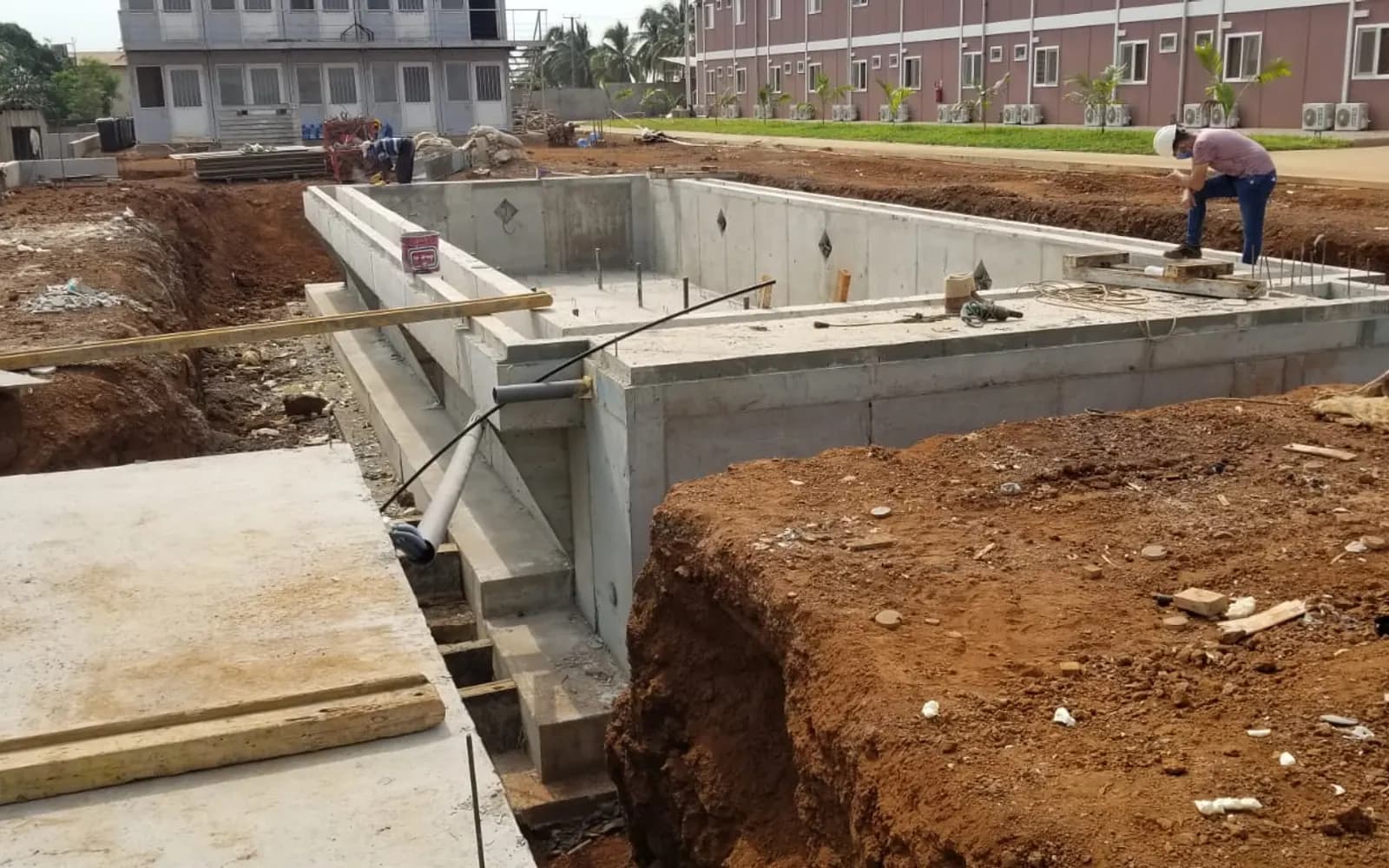
A pool, hammam or spa project delivered abroad from Turkey has no single price per square metre. We cover design, equipment, shipping, customs and schedule.
View- 29 September 2026
- 8 min read
 Pool Construction
Can the Depth of a Prefabricated Pool Be Changed?
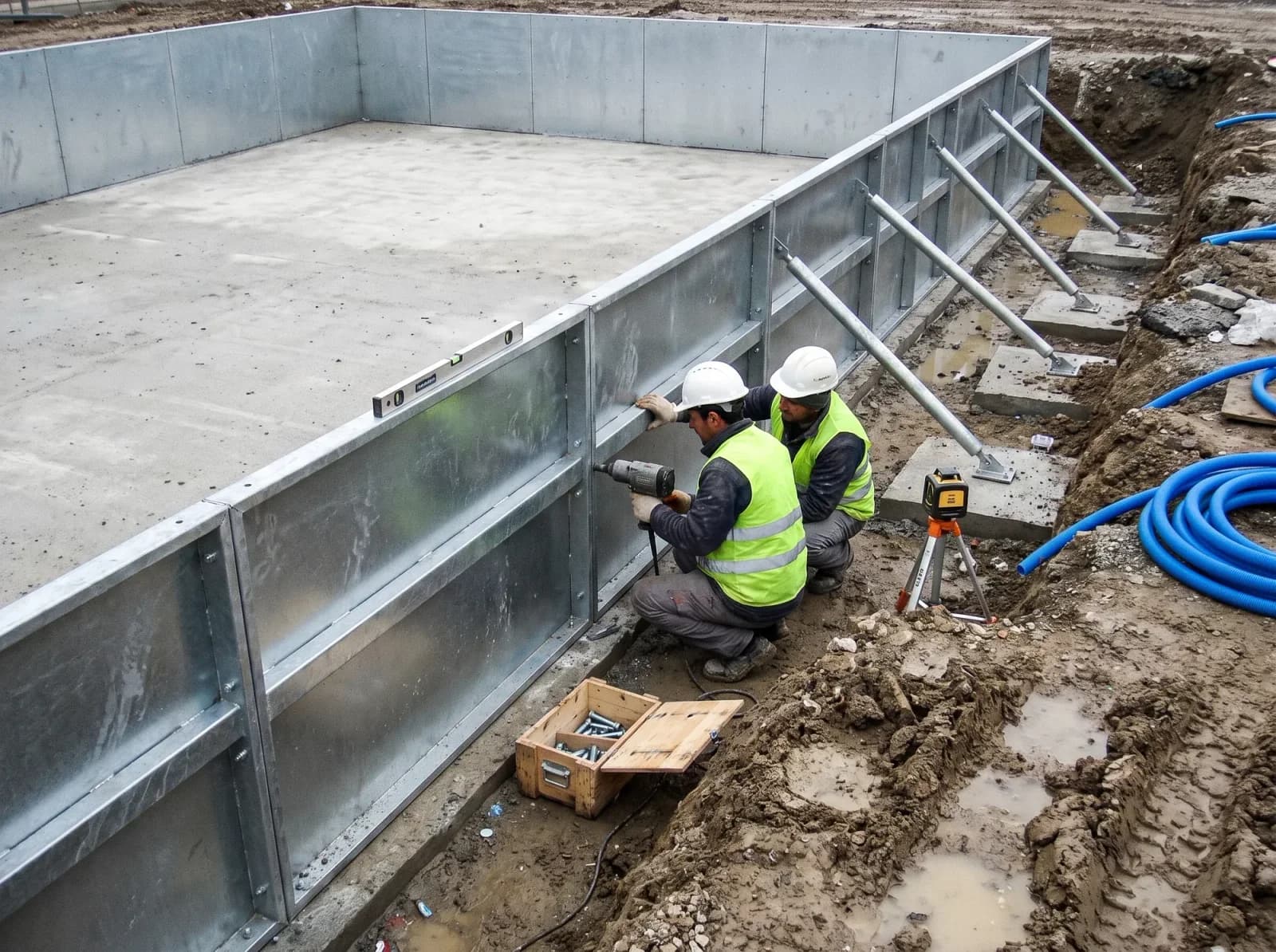
How much can depth change in one-piece fiberglass, polyester and panel prefab pools? Options before and after installation, water volume and safety.
View- 17 September 2026
- 8 min read
- Pool Construction · 29 April 2026Indoor Pool Construction: The Engineering of Four-Season UseWhat makes a covered pool comfortable year-round is not the water itself but the volume that surrounds it.7 min read
- Pool Construction · 2 October 2026Choosing Pool Showers and Waterfalls: Shower Types, Water Curtains and Plumbing NeedsChoosing a pool shower, waterfall or water curtain depends on the material, where the water comes from and where it is mounted. We compare solar and stainless steel shower types and their pump and plumbing needs.8 min read
- Pool Construction · 4 September 2026Overflow pool or skimmer pool: how the two systems differIn a skimmer pool the water sits 10-15 cm below the coping. In an overflow pool the water is level with the coping and runs into a perimeter channel and balance tank. Here is what changes in cost, plant room size and day-to-day running.7 min read
- Pool Construction · 2 October 2026Competition Pool Equipment: Which Pool Needs Which Equipment?Starting blocks, lane ropes, warning and turn systems, underwater speakers and water polo goals are chosen according to how the pool is used. We explain which dimensions we check for each item.7 min read
- Pool Construction · 29 September 2026Building a pool or spa abroad: what drives the cost of an international project?A pool, hammam or spa project delivered abroad from Turkey has no single price per square metre. We cover design, equipment, shipping, customs and schedule.8 min read
- Pool Construction · 17 September 2026Can the Depth of a Prefabricated Pool Be Changed?How much can depth change in one-piece fiberglass, polyester and panel prefab pools? Options before and after installation, water volume and safety.8 min read
// 04 · Company & Contact
To talk about your project, call or write to us.
Legal Name
Çilek Havuz
Founded
1998 · Istanbul
Head Office
Çilek Plaza, Eyüp Sultan Mah. Yakacık Cd. Feshane Cd. No: 2 D:4 D:1, 34885 Sancaktepe / İstanbul
Service Area
All of Türkiye · exports to 14 countries
Branches
Kyrgyzstan · Egypt · Algeria · Iraq
Showroom
Plan a showroom visit
At our showroom in Çilek Plaza, Sancaktepe, you can discuss your project with our team. We recommend booking an appointment by phone before your visit.
Working Hours
- Monday – Friday · 08:00 – 17:30
- Saturday · 08:00 – 12:30
- Closed on Sunday
Frequently Asked Questions
About Types of swimming pools, frequently asked questions.
Çilek Havuz Corporate
Pool and Wellness Engineering
- Response Time
- Same day
- Channels
- Phone · Email · WhatsApp
If the answer you are looking for is not here, send your question directly to us and our team will reply as soon as possible.
+90 216 475 39 37Pools are divided in four ways: by construction method, circulation system, location and intended use. Construction method is reinforced concrete, panel, fibreglass or polyester; the system is skimmer, overflow or infinity; the location is outdoor, indoor or terrace. Every pool takes one value from each of these four classes.
Çilek Havuz Corporate
In homes the most common layout is a reinforced concrete shell with skimmer circulation. The typical size is 4x8 or 5x10 metres with a constant depth of 1.40-1.50 metres. On villa and hotel projects the overflow system comes to the fore.
Çilek Havuz Corporate
If the plot is sloping with a view, an overflow system and an infinity edge pay off. In a flat garden a skimmer system and a 5x10 metre size are balanced; the budget difference can be moved to the surrounding paving and lighting.
Çilek Havuz Corporate
With an indoor pool the main investment is in ventilation and dehumidification. If air temperature is not kept 1-2 degrees above the water temperature and relative humidity in the 50-60 percent range, condensation wears down the building.
Çilek Havuz Corporate
It can, but a structural calculation is essential. 1.2 metres of water brings a load of 1.2 tonnes per square metre; finishes and user loads are added to this, and the load-bearing system is strengthened if necessary.
Çilek Havuz Corporate
A one-piece fibreglass or polyester pool is the fastest to install, because the shell arrives ready from the factory. Excavation, base slab, plumbing and surrounding concrete are done on site; crane access is essential.
Çilek Havuz Corporate
In a garden under 100 square metres, a 3x6 metre pool or a 2.5x5 metre plunge pool is suitable. For those who want to swim but lack the space, a swim spa with a counter-current is chosen.
Çilek Havuz Corporate