

Pool Chemical Dosage: Chlorine, pH and Algaecide per Cubic Meter
Calculate pool treatment from real water volume, test results and the product label. Avoid universal doses and keep a clear maintenance record.
Project Manager · Mechatronics Engineer · Çilek Havuz
- Published
- Updated
- Reading
- 8 min read
- Category
- Maintenance
Calculate pool treatment from real water volume, test results and the product label. Avoid universal doses and keep a clear maintenance record.
Clear water is not the same as safe water; this is the mistake we see most often in pool care.
Chemical imbalances, such as depleted chlorine, pH drift or high combined chloramines, cannot be seen until biological fouling or bather irritation has already developed. In every pool we have built since 1993 we see the same thing: water is protected by measured doses, not guesswork.
Accurate dosing begins with knowing your pool water volume in cubic meters (m³): length × width × average depth for rectangular pools. For example, an 8 m × 4 m pool with 1.5 m average depth holds 48 m³ of water. Every chemical dosage calculation is anchored to this baseline volume.
Sloped floors, steps, shallow seating areas or the balance tank of an overflow pool change the actual water volume. In these pools, volume is calculated section by section or taken from the project drawings; otherwise the dose calculation is off from the start.
Active ingredient concentrations vary across chemical formulations (e.g. 56% vs 90% stabilized chlorine). Always read package labels alongside standard dosing guidelines to calculate exact gram amounts.
A label may give separate doses for start-up, routine maintenance and problem correction. Two chlorine products of equal weight may provide different amounts of available chlorine. A correct volume does not make the wrong type of treatment appropriate, so do not move on to grams or litres until the test result and the exact product are known.
| Information | Why it is needed |
|---|---|
| Active ingredient and its concentration | Products sold under the same name can differ in concentration. |
| Current water test results | Shows whether a correction is needed at all. |
| Actual pool water volume | Needed to scale the reference dose. |
| Purpose of the treatment | Start-up, routine and corrective doses may differ. |
| Equipment and surface compatibility | Defines the dosing route and material limits. |
| Label and safety data sheet | Explains protection, storage and application conditions. |
The target free chlorine concentration for private pools is 1.0-3.0 ppm (mg/L).
Concentrations below 1.0 ppm result in inadequate disinfection, while levels above 3.0 ppm cause eye and skin irritation. In practice, keeping most pools at 1.5-2.0 ppm is enough.
In routine chlorination, raising free chlorine by 1.0 ppm in 10 m³ of water requires about 10 grams of available chlorine, which corresponds to roughly 18 grams of 56% sodium dichlor granules. For a 48 m³ pool, raising chlorine by 1 ppm therefore requires roughly 85 grams. These are typical calculation values: if your product has a different available chlorine content, the quantity changes and the product label takes precedence. During hot summer peaks, test water daily at sunset, once direct sunlight has passed.
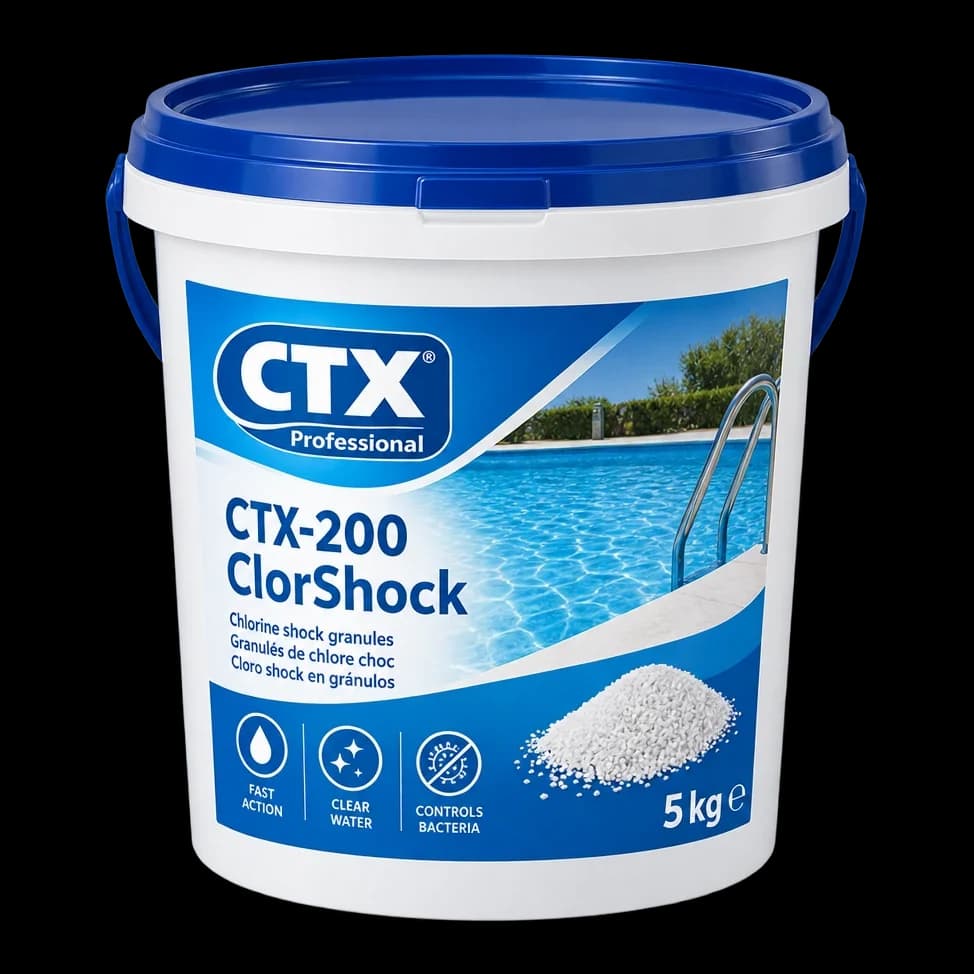
Shock (superchlorination) raises chlorine to 5.0-10.0 ppm to eliminate chloramines, bacteria and algae spores. For a rapid-dissolving product with around 56% available chlorine, the typical shock range is 10-20 grams per m³; for other concentrations, follow the label. Shock is applied at dusk with continuous filtration overnight, because daytime UV breaks down most of the chlorine before it can work. Never swim until chlorine drops below 3.0 ppm.
pH measures water's acid-base equilibrium and acts as the master regulator of pool chemistry.
The target range is strictly 7.2-7.6. Outside this band, chlorine efficacy drops sharply: at pH 8.0, chlorine loses over 50% of its sanitizing power. Dosing chlorine without balancing pH first is like carrying water in a perforated bucket.
When pH rises, pH Minus (sodium bisulfate or dilute acid) is dosed. As a baseline rule, lowering pH by 0.2 units in 10 m³ requires roughly 100-150 grams of pH Minus, depending on total alkalinity and product composition; the product label takes precedence. When pH is low, pH Plus (sodium carbonate) is added. Circulate water 4-6 hours before re-testing.
Total Alkalinity (TA) must be monitored alongside pH; the target range is 80-120 ppm. Alkalinity acts as the chemical buffer stabilizing pH: when TA is balanced, pH remains steady; when TA is low, pH fluctuates wildly. Stabilize alkalinity first to lock in pH.
Test results, water balance and disinfection are assessed together. A pH deviation changes how chlorine performs and can also affect how pool finishes and equipment surfaces behave. A chlorine reading alone therefore cannot guide every maintenance decision.
Algaecide is a preventative barrier, not a standalone cure.
Once an active algae bloom establishes, algaecide alone cannot clear it; its function is inhibiting algae spores from germinating. Algaecide must be used as a routine weekly preventative.
Algaecide concentrations vary widely between products, so the following figures are a typical range and the label takes precedence. Standard preventative maintenance dosing is 3-5 ml of non-foaming algaecide per m³ weekly (approx. 150-250 ml weekly for a 48 m³ pool). A higher initial dose (8-10 ml/m³) is applied at spring opening. Dose algaecide with pumps running for uniform distribution.
Always specify non-foaming algaecides; foaming products leave persistent surface foam and a film on the water. Base the selection on the product label and safety data sheet.
Chemical sequencing is just as important as dosage.
Adding chemicals in the wrong sequence can neutralize active ingredients or produce dangerous chemical reactions. The correct protocol: first balance Total Alkalinity and pH; once water stabilizes, dose chlorine; and finally add algaecides or clarifiers.
Never mix different dry or concentrated liquid chemicals together. Always add each chemical separately directly into the pool over return jets with the pump running, allowing at least several hours between treatments.
Always add chemicals to water, never water to concentrated chemicals. Where the label recommends this method, dissolving granular products in a clean bucket of pool water prior to distribution prevents concentrated granules from settling onto and bleaching PVC liners or colored mosaic grout.
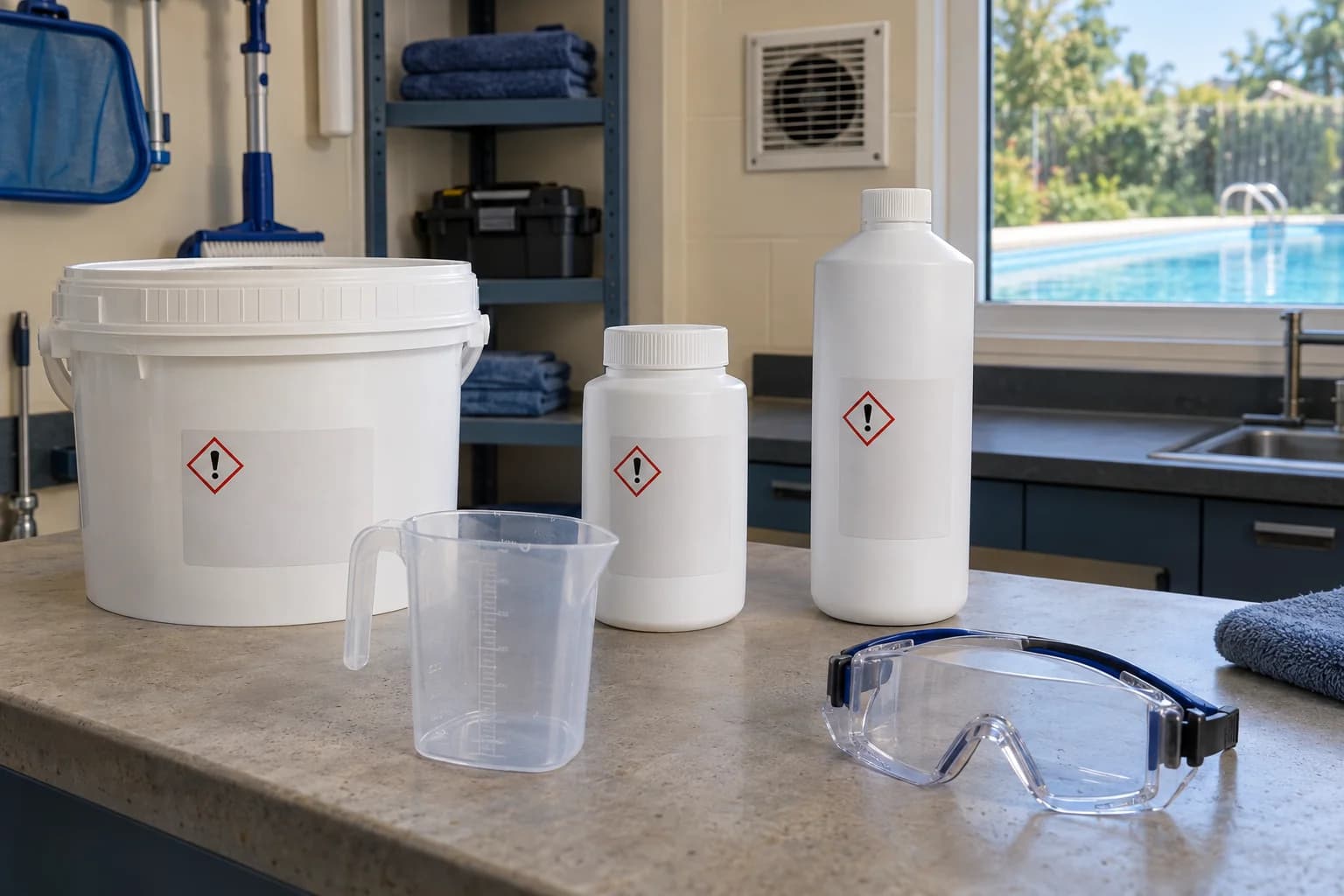
Do not combine acid, chlorine or different types of chlorine in the same container, and do not use the same measuring cup for them; even residues can react. Keep a separate, clean measuring cup for each product.
Do not work with a chemical whose label is unreadable or that has been transferred to another container. Store products in their original packaging, under the conditions stated by the manufacturer and out of reach of unauthorised people, especially children. Protection, storage and application conditions are set out in the product's safety data sheet.
If you add chlorine regularly but the water never clears or readings stay low, one possible cause is the condition known as 'chlorine lock.' The primary culprit is excessive cyanuric acid (CYA), the stabilizer used in trichlor tablets.
While ideal CYA is 30-50 ppm to protect chlorine from sunlight UV breakdown, levels exceeding 80-100 ppm over-stabilize the water, binding chlorine and slowing disinfection considerably. Stabilized tablet users inadvertently build up CYA because stabilizer never evaporates.
Common pool chemicals cannot lower cyanuric acid; the reliable solution in practice is draining a portion of pool water and refilling with fresh water. Prevent chlorine lock by alternating stabilized tablets with unstabilized liquid chlorine and testing CYA monthly.
A correct dosing calculation is worthless if the test is wrong.
Always collect water samples at elbow depth (approx. 40 cm below surface) away from return jets and skimmer mouths; surface water does not reflect bulk water chemistry.
Chemical reagents degrade over time; replace test tablets and liquid reagents annually and store testing kits in a cool, dark cabinet. DPD photometers or liquid drop kits provide far greater precision than test strips for important balancing decisions.
Never test immediately after adding chemicals; allow 4-6 hours of continuous filtration for complete homogenization, although the time can vary with the system's turnover period and the product instructions. Testing prematurely leads to false readings and accidental double-dosing.
Record the product, quantity, time and pump status for every treatment. If the result differs from what you expected, check the test method, volume calculation and product concentration again before adding a second dose. Also check the test kit's measuring range and the reagents' expiry date; a total chlorine reading does not give the same information as a free chlorine reading.
Pool volume, the latest free chlorine and pH readings, filter type, a photo of the product label and a record of previous treatments make the initial assessment easier.
Please also state which test method you used.
With this information, the problem usually turns out to be the measurement rather than a lack of product. It also shows whether routine maintenance or an on-site inspection is needed.
// Comparison
Pool chemicals, in one table.
| Model | Pack Size | List price |
|---|---|---|
| CTX-200 Pool Shock Chlorine Granules3 models | 1 kg | · |
| CTX-10 Pool pH Minus Granules2 models | 1.5 kg | · |
| CTX pro AlgaStop & Flocculant Series4 models | 5 l | · |
Next step
Let us discuss your project in the way that suits you best.
You can fill in the form for a written quote, schedule a video project presentation or ask us to survey your project site.
Get a Quote
Send us your dimensions and expectations in writing.
Online presentation
Video project presentation
On-site survey
Inspection at your project site
Image gallery
Photos: 04
 01
01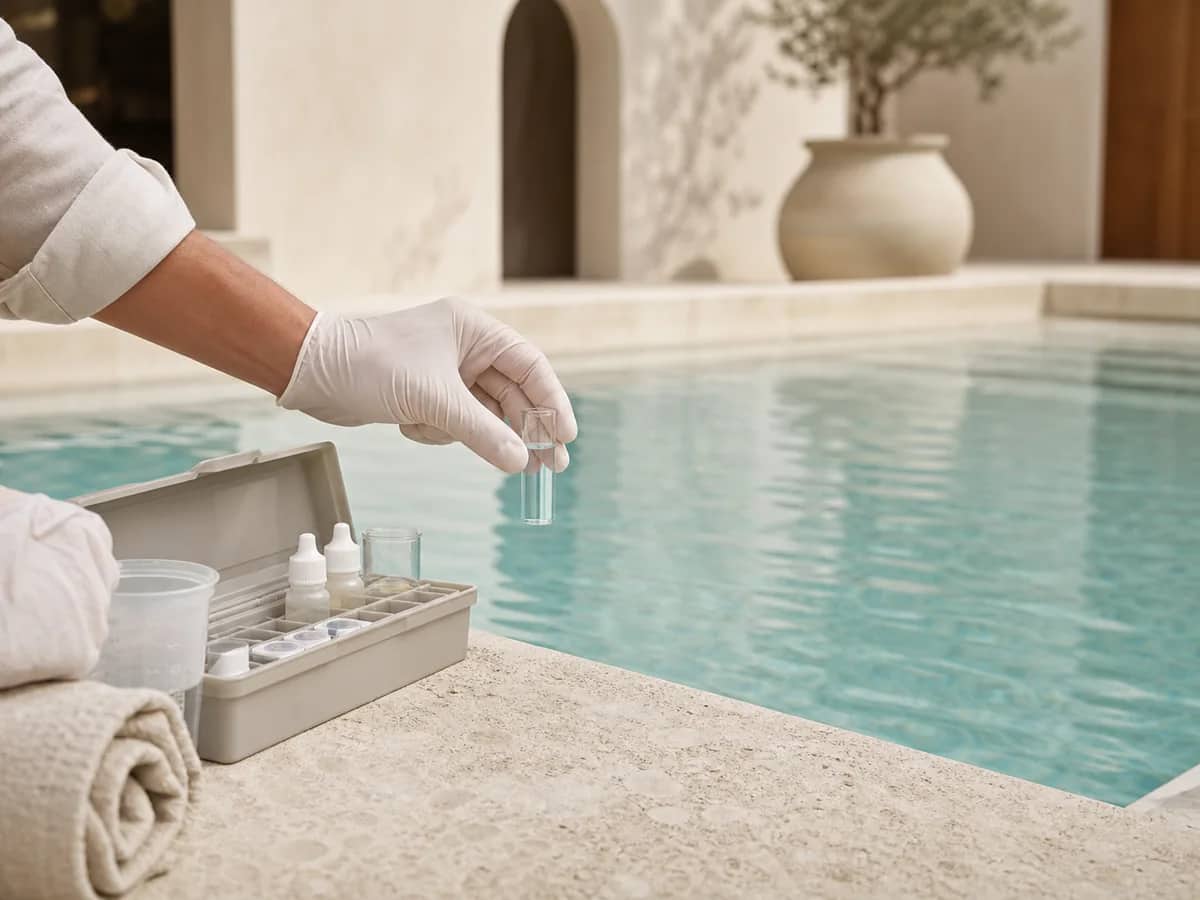 02
02 03
03 04
04// 01 · Products in this article
For the work described in this article, pool chemicals.
Each card leads to the product page with its data sheet, model list and quotation.
- 3 models
- 2 models

- 4 models
// 02 · Product groups
Compare the products on this topic on their category pages.
Each card leads to a product category; models, technical sheets and list prices are there.
 Product category
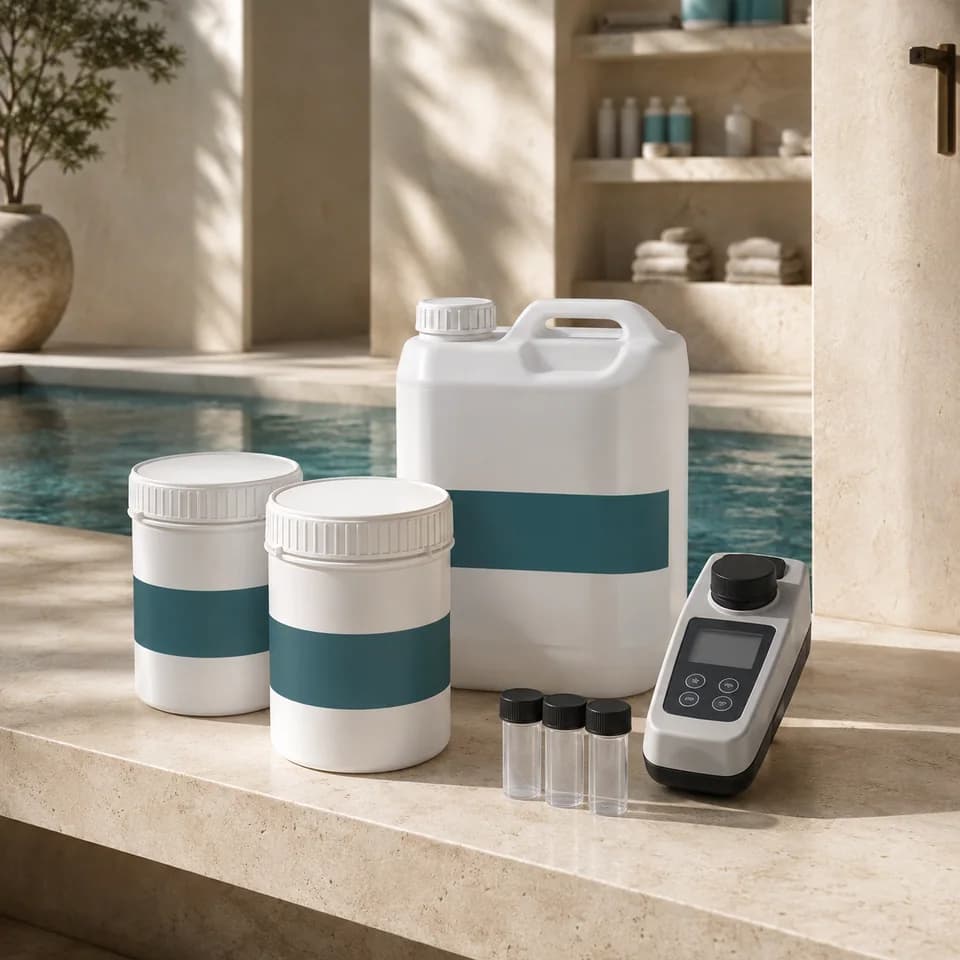
Pool Chemicals
From chlorine, pH regulators, algaecides and clarifiers to digital testers: full-range water chemistry products that keep your pool crystal clear.
View- 19 products
 Product category
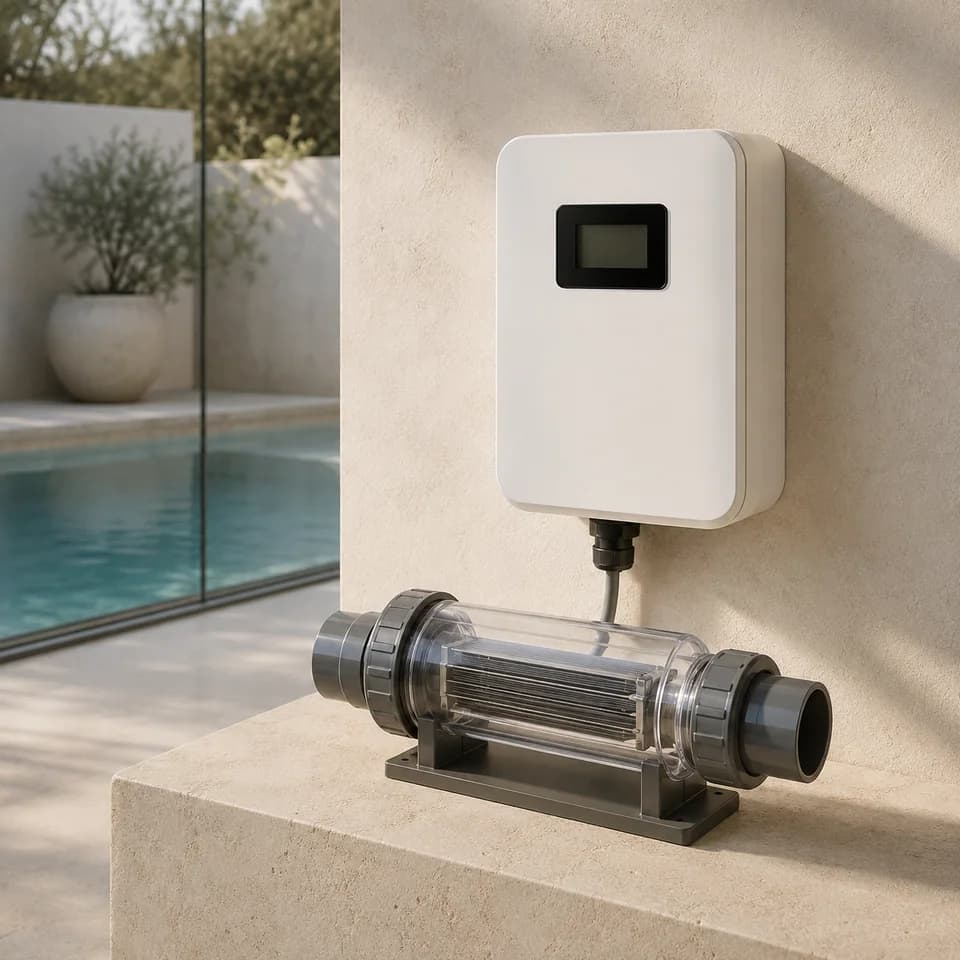
Pool UV Disinfection Systems
Low-pressure and medium-pressure UV-C disinfection units for residential and commercial pools. A UV system works in the circulation line together with chlorine and is sized by the line flow rate and the target UV dose. Each model has its technical table on the product page.
View- 6 products
- Product category
Pool Dosing Pump Models
Manual, proportional and pH/Redox measuring dosing pumps that feed pool chemicals into the circuit in metered amounts. The pumps cover 5 to 32 l/h flow and 4 to 10 bar back pressure. Chemical tanks and a tank mixer are also on this page.
View- 6 products
Product category
Pool Chemicals
From chlorine, pH regulators, algaecides and clarifiers to digital testers: full-range water chemistry products that keep your pool crystal clear.
19 productsProduct category
Pool UV Disinfection Systems
Low-pressure and medium-pressure UV-C disinfection units for residential and commercial pools. A UV system works in the circulation line together with chlorine and is sized by the line flow rate and the target UV dose. Each model has its technical table on the product page.
6 productsProduct category
Pool Dosing Pump Models
Manual, proportional and pH/Redox measuring dosing pumps that feed pool chemicals into the circuit in metered amounts. The pumps cover 5 to 32 l/h flow and 4 to 10 bar back pressure. Chemical tanks and a tank mixer are also on this page.
6 products
// 03 · Related service
The work in this article, we deliver from design to handover.
Çilek Havuz service
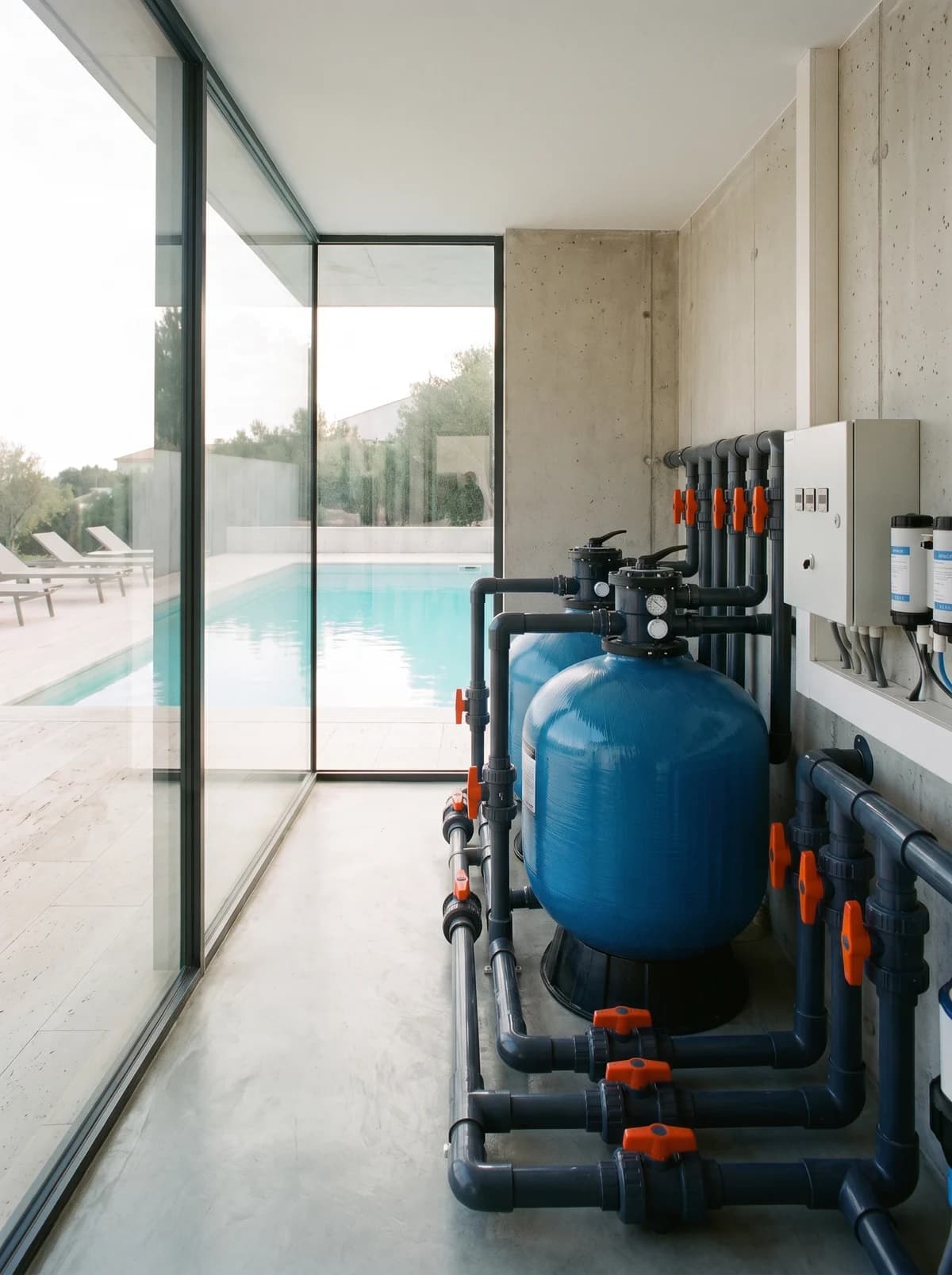
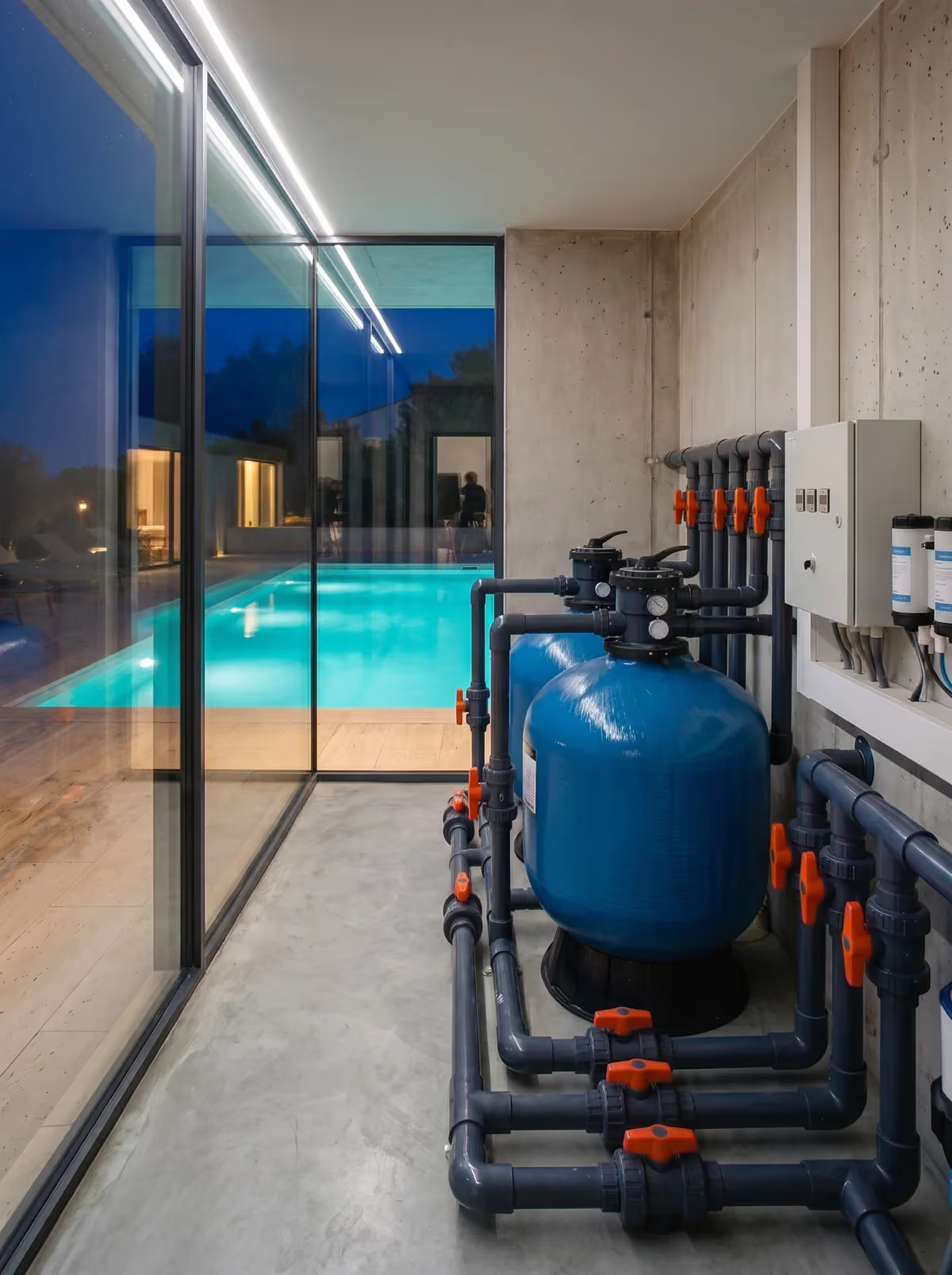
Pool Maintenance
Water chemistry, equipment and periodic maintenance.
How we work
- 01Initial meeting and site surveyWe inspect the site and listen to the brief.
- 02Design and quotationWe give the cost item by item, in writing.
- 03ExecutionThe same team builds to a written schedule.
- 04Handover and commissioningWe start the systems and explain their use.
- 05Maintenance and technical supportWe provide periodic maintenance and support.
// 04 · Guides
On Maintenance, more articles to read.
First the articles directly related to this one, then the newest articles on the topic.
 Maintenance
Pool water chemistry and water balance: pH, alkalinity and LSI
In pool water chemistry, water balance is the state in which the water neither dissolves nor deposits calcium carbonate; pH, alkalinity, hardness, temperature and TDS set it together.
View- 9 September 2026
- 10 min read
 Maintenance
Pool water regulation: pH, chlorine and analysis values
The pool water regulation sets physical, chemical and microbiological limits for swimming pool water in Turkey, including pH, chlorine and analysis frequency.
View- 9 September 2026
- 10 min read
 Maintenance
What are pool chemicals? Product identity, function and storage
Pool chemicals are the consumables that disinfect pool water, set the pH and alkalinity balance, adjust hardness and stabiliser level, and clarify the water.
View- 9 September 2026
- 10 min read
 Maintenance
Pool clarifier and flocculant: differences, uses and selection
Clarification, flocculation and filter compatibility compared for cloudy pool water. The right choice follows the product instructions, not the name.
View- 13 September 2026
- 3 min read
 Maintenance
Chlorine tablets and granules: dissolution, use and selection
Chlorine products differ in active ingredient, concentration and intended use. Shape alone does not determine strength or dosing method.
View- 13 September 2026
- 3 min read
 Maintenance
Winter pool chemicals: purpose, limits and product selection
Winter treatment depends on the actual pool system and product formulation. Water care, equipment freeze protection and ongoing checks are separate tasks.
View- 13 September 2026
- 3 min read
- Maintenance · 9 September 2026Pool water chemistry and water balance: pH, alkalinity and LSIIn pool water chemistry, water balance is the state in which the water neither dissolves nor deposits calcium carbonate; pH, alkalinity, hardness, temperature and TDS set it together.10 min read
- Maintenance · 9 September 2026Pool water regulation: pH, chlorine and analysis valuesThe pool water regulation sets physical, chemical and microbiological limits for swimming pool water in Turkey, including pH, chlorine and analysis frequency.10 min read
- Maintenance · 9 September 2026What are pool chemicals? Product identity, function and storagePool chemicals are the consumables that disinfect pool water, set the pH and alkalinity balance, adjust hardness and stabiliser level, and clarify the water.10 min read
- Maintenance · 13 September 2026Pool clarifier and flocculant: differences, uses and selectionClarification, flocculation and filter compatibility compared for cloudy pool water. The right choice follows the product instructions, not the name.3 min read
- Maintenance · 13 September 2026Chlorine tablets and granules: dissolution, use and selectionChlorine products differ in active ingredient, concentration and intended use. Shape alone does not determine strength or dosing method.3 min read
- Maintenance · 13 September 2026Winter pool chemicals: purpose, limits and product selectionWinter treatment depends on the actual pool system and product formulation. Water care, equipment freeze protection and ongoing checks are separate tasks.3 min read
// 05 · Company & Contact
To talk about your project, call or write to us.
Legal Name
Çilek Havuz
Founded
1998 · Istanbul
Head Office
Çilek Plaza, Eyüp Sultan Mah. Yakacık Cd. Feshane Cd. No: 2 D:4 D:1, 34885 Sancaktepe / İstanbul
Service Area
All of Türkiye · exports to 14 countries
Branches
Kyrgyzstan · Egypt · Algeria · Iraq
Showroom
Plan a showroom visit
At our showroom in Çilek Plaza, Sancaktepe, you can discuss your project with our team. We recommend booking an appointment by phone before your visit.
Working Hours
- Monday – Friday · 08:00 – 17:30
- Saturday · 08:00 – 12:30
- Closed on Sunday
Frequently Asked Questions
About Pool Chemical Dosage, frequently asked questions.
Çilek Havuz Corporate
Pool and Wellness Engineering
- Response Time
- Same day
- Channels
- Phone · Email · WhatsApp
If the answer you are looking for is not here, send your question directly to us and our team will reply as soon as possible.
+90 216 475 39 37Both serve distinct purposes. Granular chlorine (dichlor) dissolves rapidly for quick level adjustments and shock treatments, while slow-dissolving trichlor tablets provide continuous maintenance in skimmers or erosion feeders. Alternating them prevents excessive cyanuric acid accumulation.
Çilek Havuz Corporate
Wait until free chlorine returns to the safe 1.0-3.0 ppm range and water has completed at least one full circulation turnover. Following shock chlorination, this can take many hours. Always test water before swimming.
Çilek Havuz Corporate
Total Alkalinity serves as the pH buffer. If TA is below 80 ppm, pH will fluctuate erratically with every bather or rainfall. Correct TA to 80-120 ppm using sodium bicarbonate first; pH adjustments will subsequently remain stable.
Çilek Havuz Corporate
Intense solar UV radiation breaks down free chlorine. Higher water temperatures and bather sweat accelerate organic loading and bacterial reproduction. Testing daily at sunset and maintaining optimal stabilizer levels reduces summer chlorine loss.
Çilek Havuz Corporate
The issue is not brand names, but chemical compatibility and active ingredient concentrations. Never mix dry chemicals in the same bucket or feeder; always add products individually into circulating pool water.
Çilek Havuz Corporate
DPD drop kits and digital photometers provide high accuracy when reagents are fresh. Test strips are convenient for quick daily screening but have wider tolerances. Replace testing reagents at the start of each season.
Çilek Havuz Corporate
Not without knowing the product type, active ingredient content, current test results and treatment purpose. The cubic-meter figures in this article are typical ranges that show the calculation logic; in practice, your own product label and a current test result take precedence.
Çilek Havuz Corporate
No. Doses above the label instructions can push the water out of balance, irritate eyes and skin, and damage pool finishes and equipment surfaces. If results are slower than expected, check the test, volume calculation and product concentration before increasing the dose.
Çilek Havuz Corporate