

The Annual Running Cost of a Pool: How to Calculate It Item by Item
The cost of a pool does not end with construction; energy, water, chemicals and maintenance continue for years. We show how to work out the annual running cost for your own pool.
Project Manager · Mechatronics Engineer · Çilek Havuz
- Published
- Updated
- Reading
- 5 min read
- Category
- Maintenance
The cost of a pool does not end with construction; energy, water, chemicals and maintenance continue for years. We show how to work out the annual running cost for your own pool.
Two pools can be built for the same price, yet one can cost twice as much to run as the other.
The difference lies in equipment choice, insulation and usage habits. We will not hand you a ready-made figure to memorise here; electricity tariffs, water prices and climate vary from city to city, so a memorised figure misleads. Instead we will show how each item is calculated, so that you can draw up a realistic budget for your own pool.
The annual cost of a villa pool is made up of four main items: energy, water, chemicals, and maintenance and service. Let us take them in turn.
The circulation pump is the only device in a pool that runs continuously, and it is the backbone of the energy item.
The calculation is simple: pump power (kW) × daily running hours × 30 days × your electricity unit price. For example, a 1.1 kW pump running 8 hours a day uses about 264 kWh a month; multiply this by your own tariff and you have your monthly pump cost.
Variable speed pumps change this calculation fundamentally: a pump running at low speed circulates the same water with far less energy and cuts consumption substantially compared with a single-speed pump. If you use heating, the equation grows: a heat pump produces the same heat with far less electricity than an electric heater, and the real decision that sets the annual total is the target: extending the season, or using the pool all year. For details, see our article on heat pumps.
Pool water is not completely replaced once a year; the cost comes from topping up the level.
There are three sources: evaporation (a few millimetres of water depth a day in summer sun), filter backwashing (each backwash sends out water in proportion to the tank volume) and losses from splashing and overflow.
A rough calculation for your own pool: pool surface area (m²) × evaporation depth (m) gives you the loss in m³; add the water from a few backwashes a month and multiply by your local water tariff. A pool cover reduces this item considerably because it cuts most of the evaporation; since the cover reduces heat loss at the same time, it saves on two items at once.
Consumption of chlorine, pH adjusters and algaecide rises with pool volume, water temperature and how heavily the pool is used.
That is why the chemical budget should be thought of per m³, not as "so much a month": a pool of 50 m³ uses roughly half as much chemical as a 100 m³ pool. For the details of dosing logic, see our per-m³ dosing guide.
A saltwater system changes the structure of this item: the unit produces chlorine from salt and greatly reduces chlorine purchases; in return, replacing the cell every few years is added to the budget. Automatic dosing does less to reduce consumption than to prevent imbalance: excess chemical added by hand also has a cost, and it is usually invisible.
If you do the routine cleaning yourself, this item shrinks but does not disappear: season opening, winter closing and at least one equipment inspection a year should be budgeted as specialist work.
Renewing the filter sand or glass media every few years, worn seals and lamp replacements also go under this item.
A periodic maintenance agreement turns these scattered costs into a single, predictable item. Which option suits you depends on how you use the pool: a pool at a summer house you visit once a month and a pool you use every day do not have the same maintenance needs.
The first is a pool cover: it cuts evaporation and heat loss together, saving on both water and energy.
The second is a variable speed pump: it lowers pump electricity, the largest item. The third is LED lighting: it gives the same light as halogen with far less energy. The fourth is automation: it runs the pump and dosing only as much as needed and takes human error out of the loop. The fifth is correct sizing: a pool larger than needed makes every item bigger for its whole life.
What these five decisions have in common is that they are all cheapest when made at the construction stage. Running cost is really decided at the survey table; that is why, at the survey, we explain the construction budget together with the cost profile of the equipment you choose over the years.
On the construction side, the reference price is as follows: 10 × 5 m concrete pool costs 1,850,000 TL in October 2026 (excluding VAT). Running costs come on top of the construction price every year and are calculated for your own pool with the items above.
The itemised budget, size examples from 5x3 to 10x20 and the engineering quantities are in a separate guide: Pool construction cost guide
Pool Cost CalculatorNext step
Let us discuss your project in the way that suits you best.
You can fill in the form for a written quote, schedule a video project presentation or ask us to survey your project site.
Get a Quote
Send us your dimensions and expectations in writing.
Online presentation
Video project presentation
On-site survey
Inspection at your project site
// 01 · Product groups
Compare the products on this topic on their category pages.
Each card leads to a product category; models, technical sheets and list prices are there.
 Product category
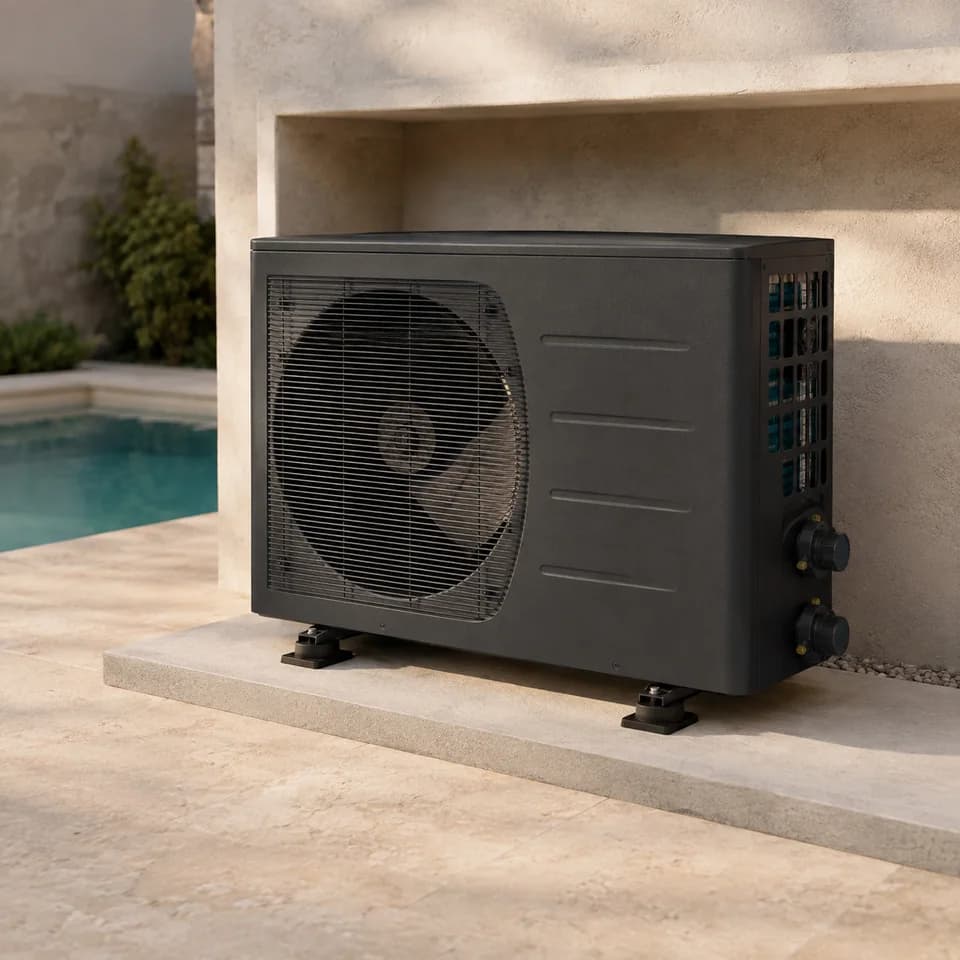
Pool Heating Systems
Inverter heat pumps, solar and electric systems: pool heating solutions that extend your swim season and lower operating costs.
View- 27 products
 Product category
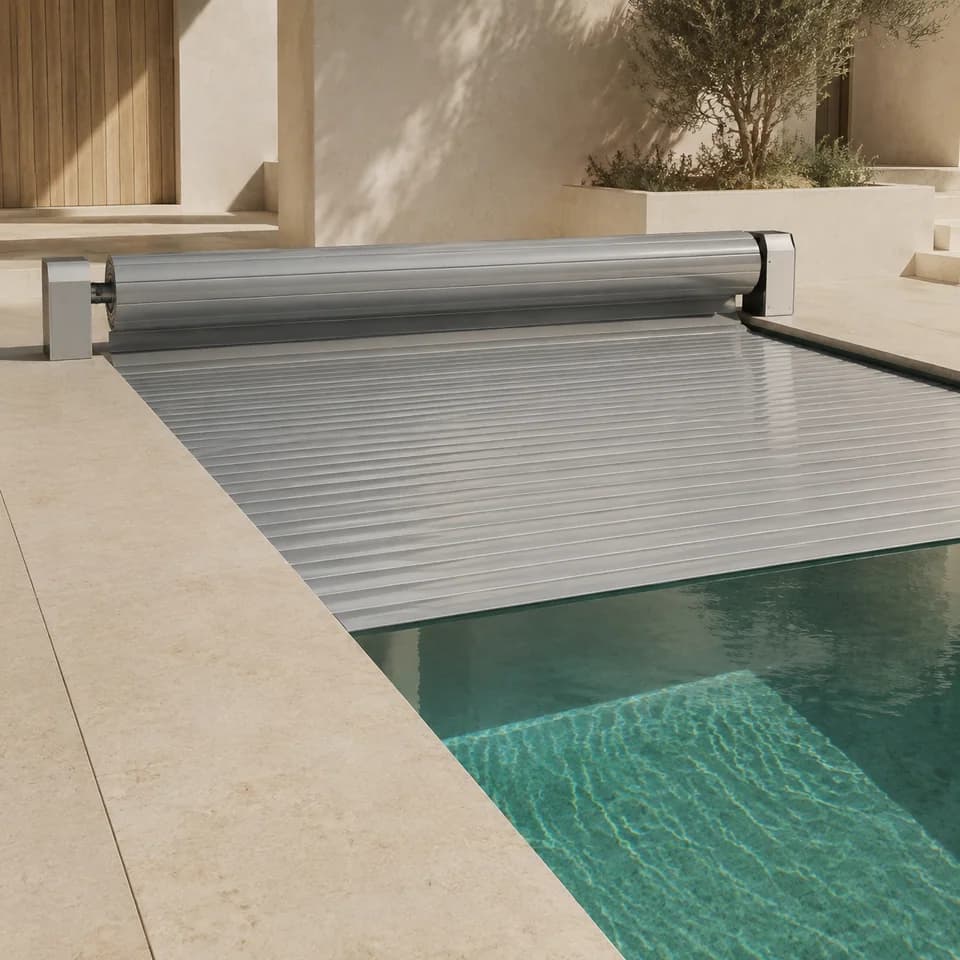
Pool Cover Systems
Automatic covers, safety lids and shaft systems, cover solutions that cut heat loss while protecting your pool against accidents.
View- 10 products
Product category
Pool Heating Systems
Inverter heat pumps, solar and electric systems: pool heating solutions that extend your swim season and lower operating costs.
27 productsProduct category
Pool Cover Systems
Automatic covers, safety lids and shaft systems, cover solutions that cut heat loss while protecting your pool against accidents.
10 products
// 02 · Related service
The work in this article, we deliver from design to handover.
Çilek Havuz service
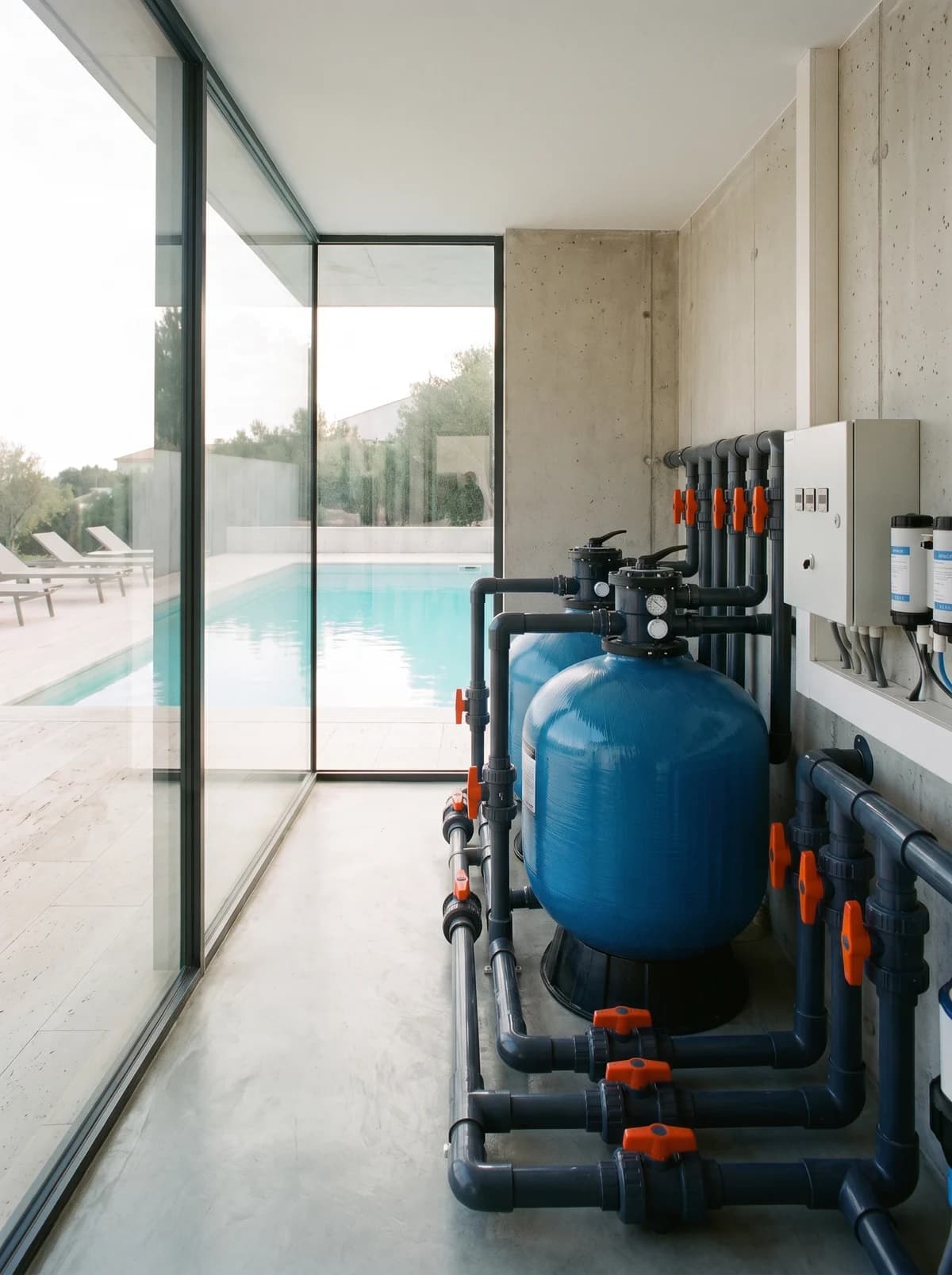
Pool Maintenance
Water chemistry, equipment and periodic maintenance.
How we work
- 01Initial meeting and site surveyWe inspect the site and listen to the brief.
- 02Design and quotationWe give the cost item by item, in writing.
- 03ExecutionThe same team builds to a written schedule.
- 04Handover and commissioningWe start the systems and explain their use.
- 05Maintenance and technical supportWe provide periodic maintenance and support.
// 03 · Guides
On Maintenance, more articles to read.
First the articles directly related to this one, then the newest articles on the topic.
 Technology
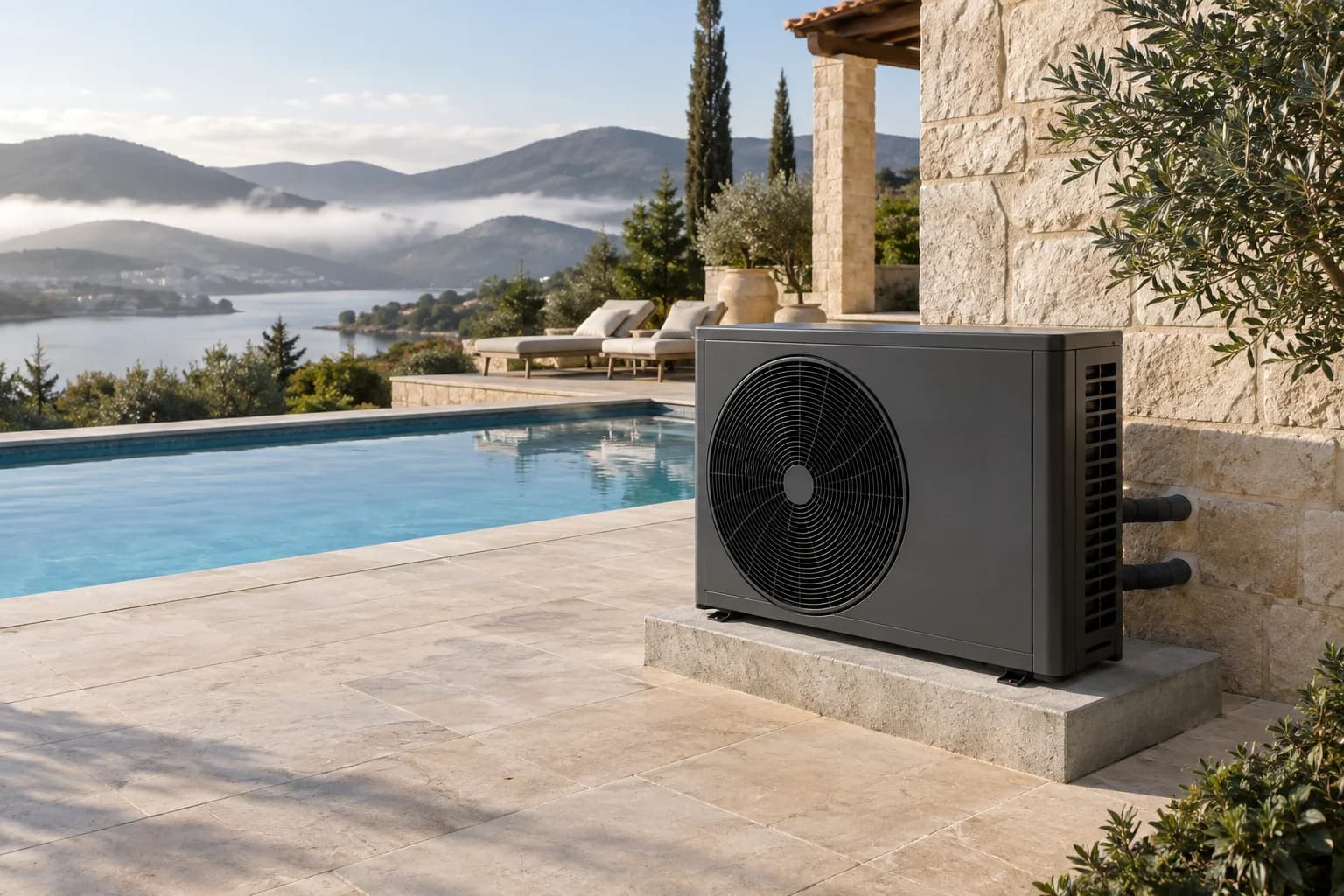
Pool heat pump electricity use: calculation with COP
Heating output, electrical input and kWh are different quantities. A realistic estimate uses operating conditions, cover use and the applicable tariff.
View- 13 September 2026
- 3 min read
 Sauna
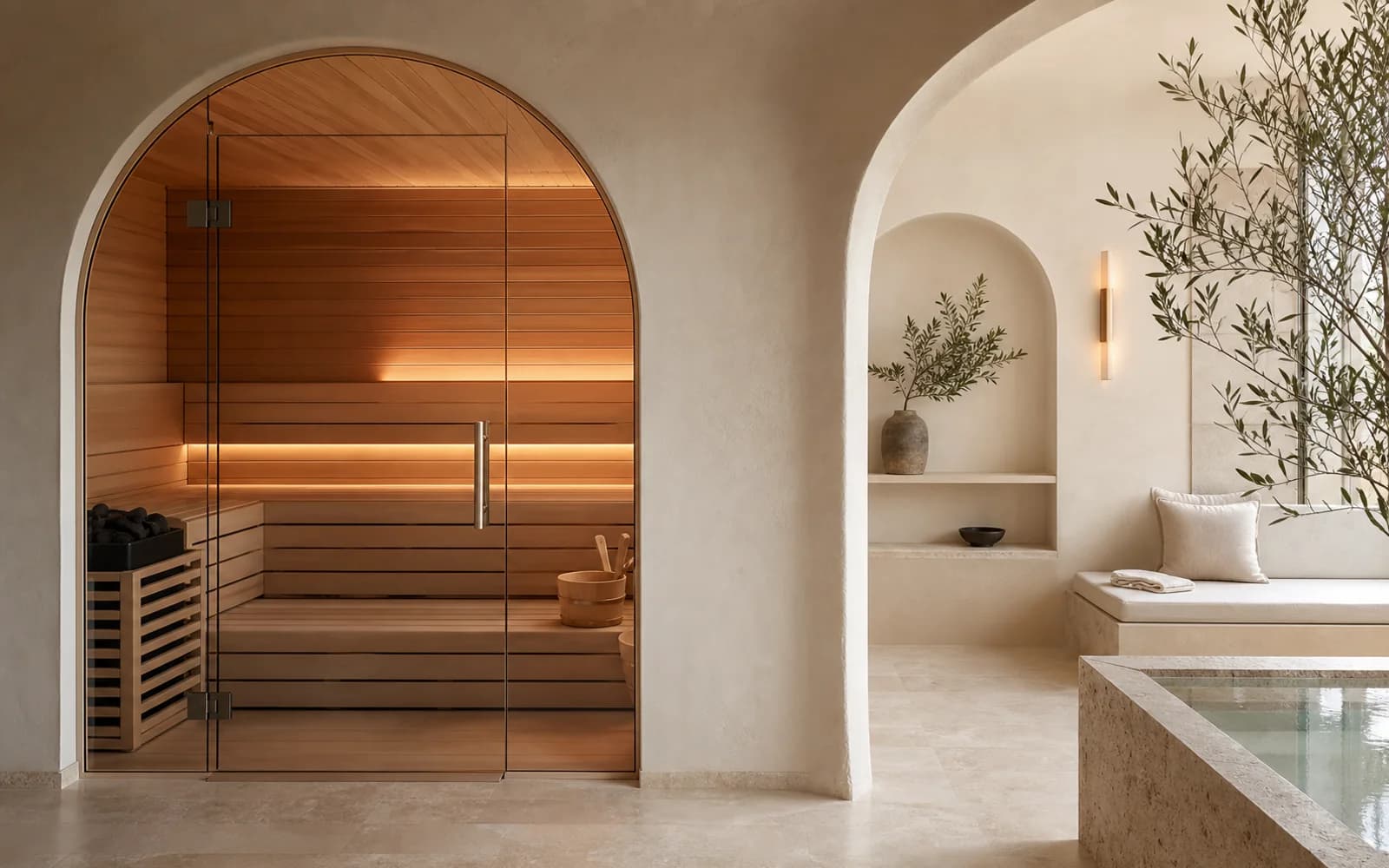
SaunaSauna Installation Guide: Sizing, Materials and Cost Factors (2026)
Everything to know before building a sauna: correct sizing, a comparison of sauna woods, transparent per-cubic-meter pricing logic, and why fixed-price offers deserve caution.
View- 19 June 2026
- 7 min read
 Pool Construction
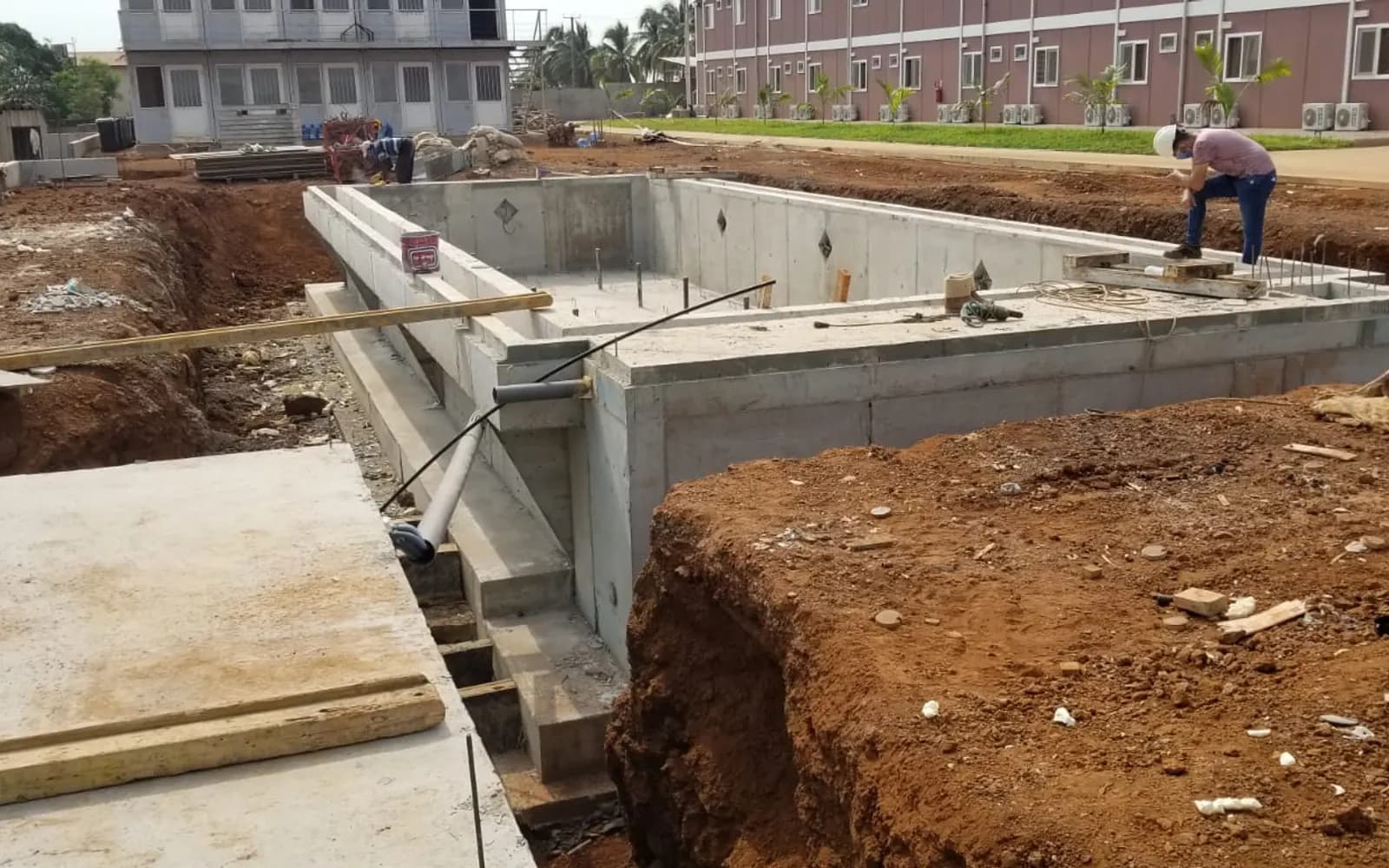
Building a pool or spa abroad: what drives the cost of an international project?
A pool, hammam or spa project delivered abroad from Turkey has no single price per square metre. We cover design, equipment, shipping, customs and schedule.
View- 29 September 2026
- 8 min read
 Maintenance
Pool clarifier and flocculant: differences, uses and selection
Clarification, flocculation and filter compatibility compared for cloudy pool water. The right choice follows the product instructions, not the name.
View- 13 September 2026
- 3 min read
 Maintenance
Chlorine tablets and granules: dissolution, use and selection
Chlorine products differ in active ingredient, concentration and intended use. Shape alone does not determine strength or dosing method.
View- 13 September 2026
- 3 min read
 Maintenance
Winter pool chemicals: purpose, limits and product selection
Winter treatment depends on the actual pool system and product formulation. Water care, equipment freeze protection and ongoing checks are separate tasks.
View- 13 September 2026
- 3 min read
- Technology · 13 September 2026Pool heat pump electricity use: calculation with COPHeating output, electrical input and kWh are different quantities. A realistic estimate uses operating conditions, cover use and the applicable tariff.3 min read
- Sauna · 19 June 2026Sauna Installation Guide: Sizing, Materials and Cost Factors (2026)Everything to know before building a sauna: correct sizing, a comparison of sauna woods, transparent per-cubic-meter pricing logic, and why fixed-price offers deserve caution.7 min read
- Pool Construction · 29 September 2026Building a pool or spa abroad: what drives the cost of an international project?A pool, hammam or spa project delivered abroad from Turkey has no single price per square metre. We cover design, equipment, shipping, customs and schedule.8 min read
- Maintenance · 13 September 2026Pool clarifier and flocculant: differences, uses and selectionClarification, flocculation and filter compatibility compared for cloudy pool water. The right choice follows the product instructions, not the name.3 min read
- Maintenance · 13 September 2026Chlorine tablets and granules: dissolution, use and selectionChlorine products differ in active ingredient, concentration and intended use. Shape alone does not determine strength or dosing method.3 min read
- Maintenance · 13 September 2026Winter pool chemicals: purpose, limits and product selectionWinter treatment depends on the actual pool system and product formulation. Water care, equipment freeze protection and ongoing checks are separate tasks.3 min read
// 04 · Company & Contact
To talk about your project, call or write to us.
Legal Name
Çilek Havuz
Founded
1998 · Istanbul
Head Office
Çilek Plaza, Eyüp Sultan Mah. Yakacık Cd. Feshane Cd. No: 2 D:4 D:1, 34885 Sancaktepe / İstanbul
Service Area
All of Türkiye · exports to 14 countries
Branches
Kyrgyzstan · Egypt · Algeria · Iraq
Showroom
Plan a showroom visit
At our showroom in Çilek Plaza, Sancaktepe, you can discuss your project with our team. We recommend booking an appointment by phone before your visit.
Working Hours
- Monday – Friday · 08:00 – 17:30
- Saturday · 08:00 – 12:30
- Closed on Sunday
Frequently Asked Questions
About The Annual Running Cost of a Pool, frequently asked questions.
Çilek Havuz Corporate
Pool and Wellness Engineering
- Response Time
- Same day
- Channels
- Phone · Email · WhatsApp
If the answer you are looking for is not here, send your question directly to us and our team will reply as soon as possible.
+90 216 475 39 37Multiply pump power (kW) by daily running hours and by 30; multiply the resulting kWh by your own electricity tariff. If there is heating, the heat pump's seasonal consumption is added separately. Variable speed pumps do the same job with noticeably fewer kWh.
Çilek Havuz Corporate
In a well-balanced pool the water is not completely changed; losses from evaporation and backwashing are topped up. A full change only comes up after long neglect or a breakdown. What makes the water item grow is not changing the water but summer evaporation in an uncovered pool.
Çilek Havuz Corporate
It greatly reduces chlorine purchases and improves water comfort; in return, the electrolysis cell is replaced every few years. Overall it is a balanced or favourable choice for most users; an exact comparison is made with the cell life and local chemical prices.
Çilek Havuz Corporate
Yes. It is the one piece of equipment that reduces two items with a single investment: by cutting evaporation it lowers the water cost, and by reducing heat loss it lowers the heating cost. In heated pools, the cover is usually the investment that pays for itself fastest.
Çilek Havuz Corporate
The cheaper winter option depends on the climate. In regions with harsh winters, properly done winterising both protects the equipment and brings costs close to zero. In mild regions, low-speed circulation can work out cheaper than rescuing a pool that has turned green by spring. We cover both scenarios in our four-season maintenance article.
Çilek Havuz Corporate
Yes, and that is exactly the right time. Once the pool volume, equipment options and your usage goals are clear at the survey, we present the consumption profile of the selected equipment together with the construction quotation; you see the running cost difference between two options before signing.
Çilek Havuz Corporate