

Pool Winterizing: Shock Treatment, Closing and Equipment Care
Plan winter pool care around water balance, equipment and cover requirements. Check what needs professional attention before closing your pool.
Project Manager · Mechatronics Engineer · Çilek Havuz
- Published
- Updated
- Reading
- 8 min read
- Category
- Maintenance
Plan winter pool care around water balance, equipment and cover requirements. Check what needs professional attention before closing your pool.
Proper winterization is far more than simply turning off the pump and pulling a tarp over the pool.
The pool remains unattended for months; every correct step taken during winter closing halves the labor required in spring. An improperly closed pool reopens as a green swamp with cracked underground plumbing.
Winterization fulfills two core objectives: maintaining chemical equilibrium to prevent algae and mineral scaling, and protecting equipment from freeze damage. Ice expansion cracking pumps, filters, and pipes represents the single most expensive winter disaster.
We recommend treating shock treatment and winter chemical closing as a unified sequential protocol. Sanitizing water with shock chlorination first and immediately following with winter algaecides keeps the cleaning and protection steps working together.
This procedure applies to pools closed for the season. A pool that runs through winter needs continued testing, filtration and maintenance. For a seasonal closing, water treatment and protecting equipment from freezing are planned as separate tasks; a winter treatment product does not remove the risk created by water left in the plumbing.
Local climate, whether the pool is indoor or outdoor, pool construction, the skimmer or overflow arrangement and the equipment all prevent one procedure from being applied identically to every pool. We therefore assess water level, cover and draining decisions together rather than one by one.
Winter closing starts with clean, balanced water.
Adjust pH to 7.2-7.6, Total Alkalinity to 80-120 ppm, and calcium hardness to balanced levels. Closing a pool with unbalanced water causes scaling or etched plaster over winter.
Thoroughly vacuum the floor, brush walls, and clean the waterline. Remove all leaves and organic matter; decaying organic debris consumes residual chlorine and fuels algae under the cover.
Clean the filter so the media remains clean throughout winter: a sand filter gets a complete backwash and rinse, while a cartridge is removed and washed as the manufacturer recommends; the two methods are not interchangeable. Thorough preparation is the true foundation of successful winterizing.
Alongside testing and cleaning, we prepare a winter closing record: the latest water test results, recent chemical applications, filter condition and the equipment list. The information below directly affects both the closing decisions and the spring opening.
| Information | Effect on the decision |
|---|---|
| Pool shell and water level | Limits for draining or lowering the water level |
| Cover type and fixing | Conditions of use under water, snow and wind loads |
| Pump, filter, heater and salt chlorinator | Shutdown, draining and storage instructions |
| Latest water tests and product labels | Water treatment required |
| Local frost and rainfall conditions | Inspection and protection plan |
After balancing chemistry, apply shock chlorination at sunset, when sunlight no longer accelerates chlorine loss.
Chlorine products differ in composition and active content, so there is no universal grams-per-cubic-metre dose; calculate the shock dose from the current label of the product you use and the pool volume. The objective is thorough disinfection of dormant bacteria and algae spores before water temperatures drop.
Run the pump continuously overnight following shock dosing to ensure complete distribution throughout all piping circuits. Never mix different treatment chemicals together or add them one after another at the same point.
Allow free chlorine to fall to the level stated on the label of the winterizing product before adding it, as very high chlorine levels can react with some winterizing products and algaecides.
Whether shock treatment is needed at all depends on test results, water condition and the disinfection system in use; it is not applied automatically at every closing. Instead of one waiting period or fixed chlorine value for all pools, we read the instructions for the chlorine product and the winterizing product together. The timing of closing the cover should also be compatible with these products.
Dose specialized winter algaecide and scale inhibitor with the pump running.
Depending on the product, winterizing formulations are designed to remain active at low temperatures over extended months.
Winter treatment products are available with or without copper; compatibility with the existing treatment system and pool surfaces is assessed separately. Because concentrations differ, the dose of one product is never transferred to another. These products help protect the water through the season and make spring cleaning easier; they do not protect the pump, filter or pipes against mechanical freeze damage.
Never drain the pool completely; an empty pool risks being lifted out of the ground by hydrostatic groundwater pressure or suffering liner shrinkage. On many skimmer pools, water is lowered approximately 10-15 cm below the bottom of the skimmer throats.
This general rule is not applied the same way to every pool. Groundwater level, lining type, steps, the skimmer or overflow system and the water support the cover needs all affect the decision; some cover types require water to stay at a specific level. We decide whether to drain the pool or lower water to a given line only after assessing this information together.
Insert rubber expansion plugs into return inlets and skimmer ports. In freeze-prone regions, install foam compensator bottles (Gizzmos) inside skimmers to absorb ice expansion pressure.
Freeze damage occurs when trapped water expands as ice, cracking pump volutes, filter tanks, and underground pipes.
The non-negotiable rule of winterization is draining all water circuits completely.
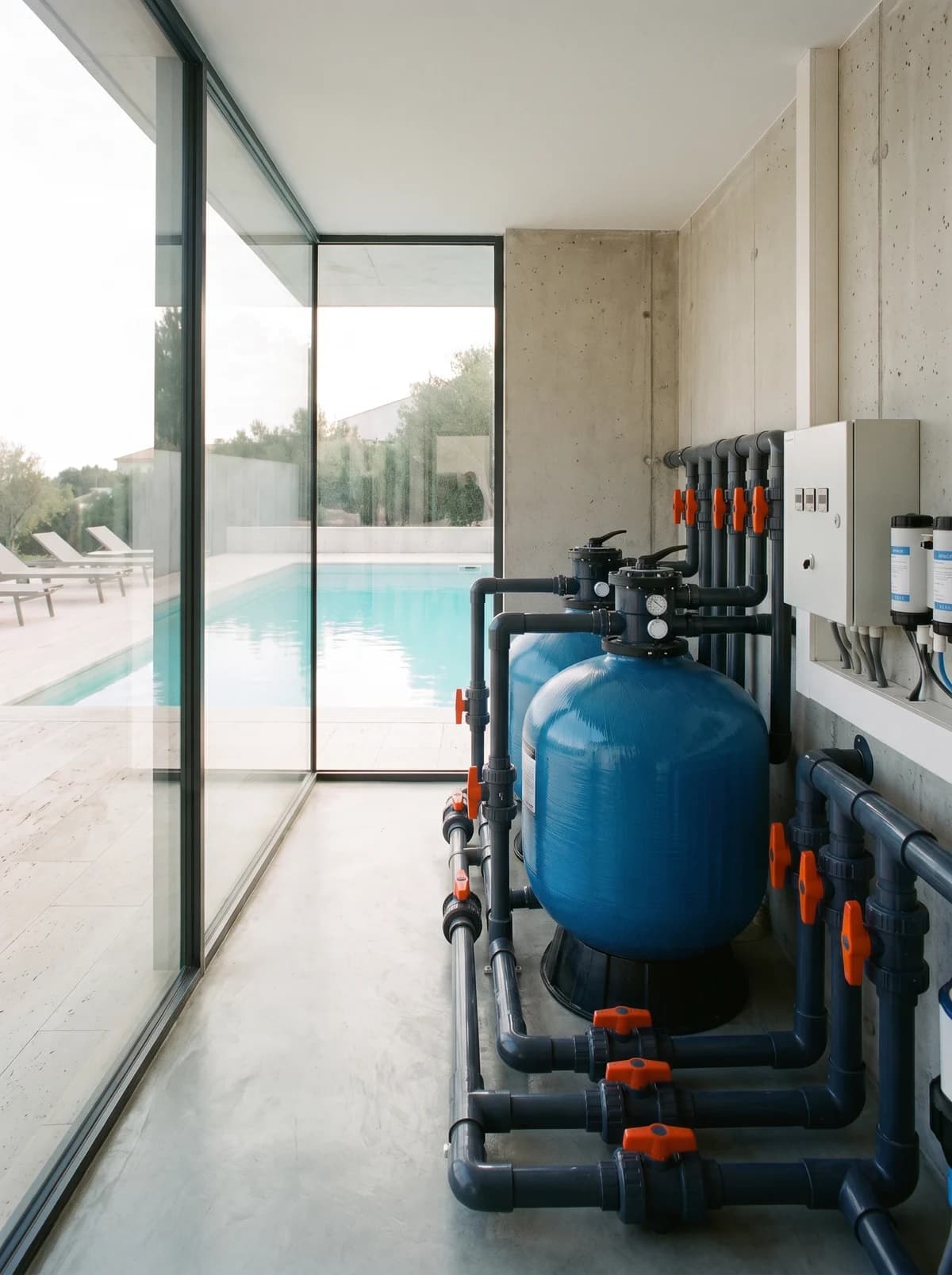
Switch off power to the pump at the panel and relieve system pressure first. Then remove drain plugs from the pump hair-and-lint pot, filter tank and chlorinator cells, and drain a heat pump or heat exchanger according to the manufacturer's winter instructions. Store drain plugs safely in the pump strainer basket. Set multiport valves to the 'WINTERIZE / CLOSED' position.
A technician blows out underground suction and return plumbing lines using an air compressor, then seals them with expansion plugs. For un-drainable lines, use non-toxic propylene glycol pool antifreeze; never use toxic automotive antifreeze. Where equipment can be removed, pumps and chlorinators are stored in a covered, frost-free place after a qualified electrician or technician has disconnected them.
For electrical and pressurised equipment such as heaters, heat pumps and salt chlorinators, our technical team plans shutdown, draining, isolation and storage according to each device's own manual. Opening a running or pressurised system is not a user task; it is carried out by an authorised technical service.
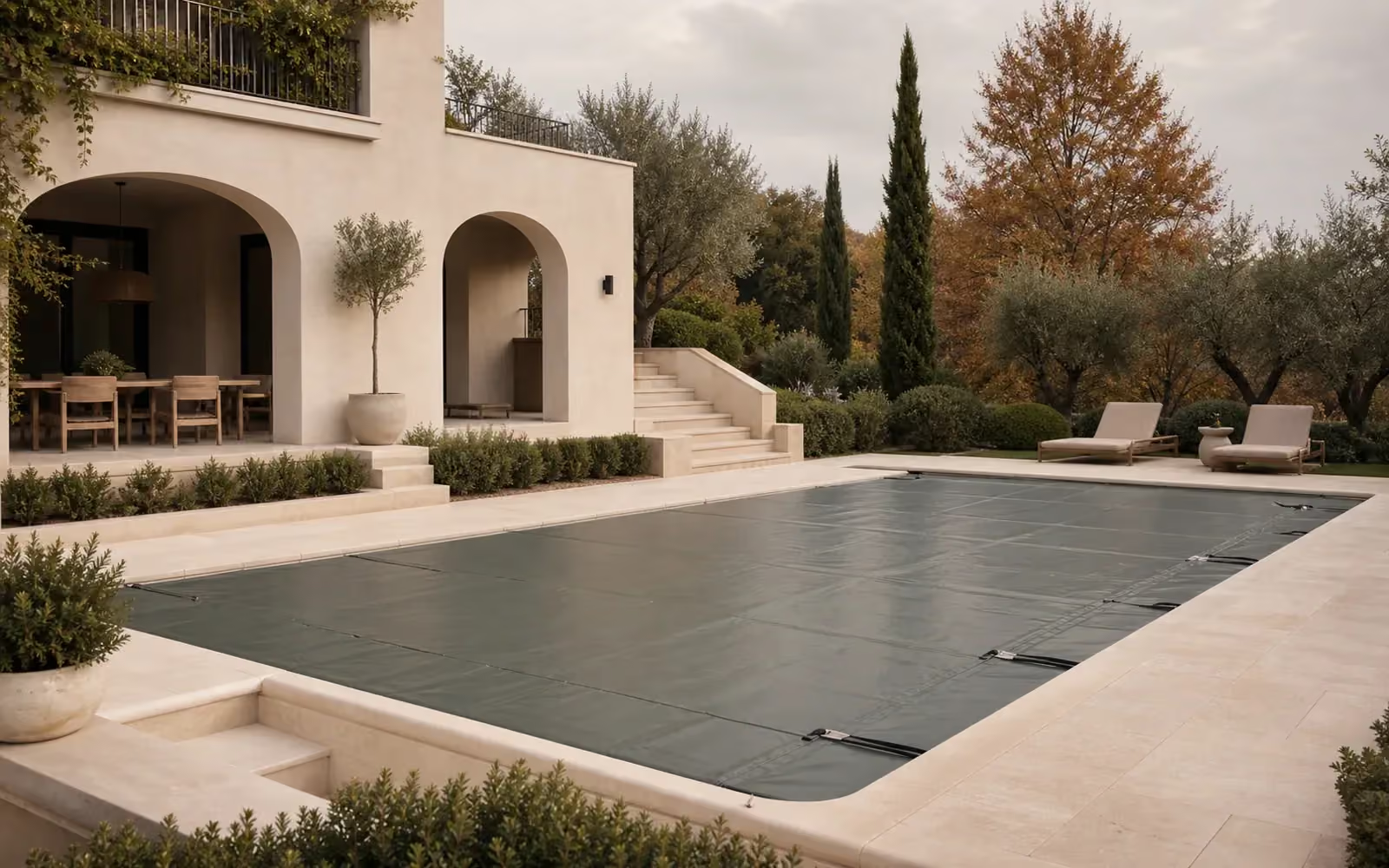
A winter cover serves two roles: blocking leaves, dust, and organic debris, and eliminating sunlight penetration to halt algae photosynthesis.
Light-transmitting tarps invite algae growth regardless of chemical dosing.
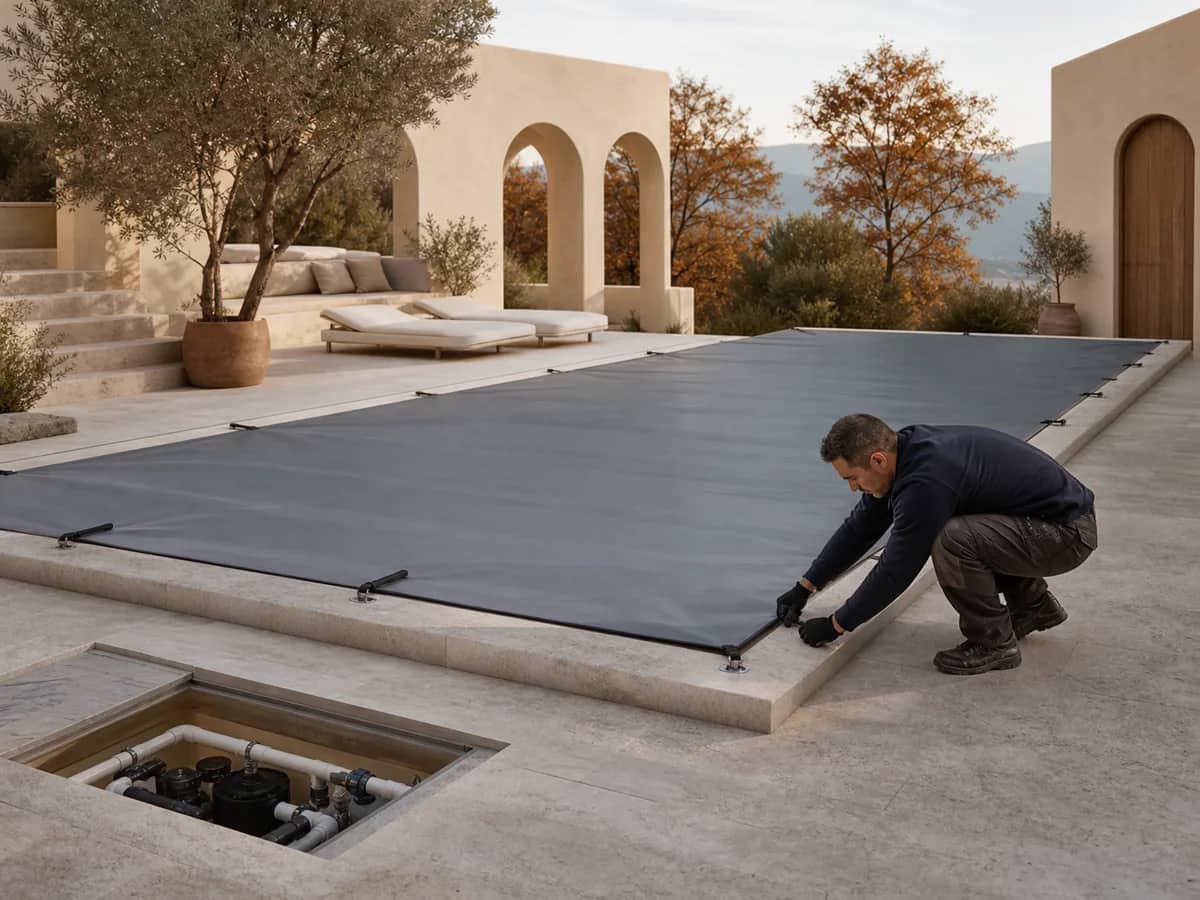
Tension and anchor the cover securely across coping stones. Loose tarps flap in winter storms, accumulate windblown debris, and sag dangerously under water weight. Solid safety covers, correctly tensioned and anchored, give better protection and are manufactured to carry the load if a child or pet falls onto them; in gardens with children or pets this is a decisive safety criterion.
Pump standing rainwater and melted snow off the cover periodically. A properly anchored safety cover ensures that reopening in spring reveals clean, clear water rather than an unpleasant surprise.
No cover is a walkway or play area, and not every cover is suitable for winter. We follow the conditions in the cover's own product documentation for fixing, rainwater drainage and snow load. Forcing a frozen part, straining the system or moving accumulated load off the cover without control can injure people and damage the cover. Access to the pool area by children and unauthorised persons is controlled separately, independent of the cover.
Winterization requires occasional periodic oversight throughout the cold months.
Check cover tension after heavy storms and drain excess standing rainwater from the cover surface.
We plan the inspection interval according to the pool's location and cover type. After unusual weather such as storms, heavy snowfall or prolonged frost, an additional check is made without waiting for the planned interval. Cover condition, water level after rain, the pool surroundings and access safety are all part of these checks.
In regions with heavy snowfall, ensure that water levels beneath the cover have not risen above skimmer freeze lines due to precipitation ingress.
A pool properly balanced, shocked, drained, and covered in autumn usually reopens in spring with clear water within a few days. The test and maintenance records kept before closing show where water balancing should start. Taking winterization seriously in autumn reduces the workload waiting in spring.
You can share your pool type, location, cover and equipment list with us. In our assessment at Çilek Havuz, we clarify the scope of winter care and the work that requires technical service together with you.
Next step
Let us discuss your project in the way that suits you best.
You can fill in the form for a written quote, schedule a video project presentation or ask us to survey your project site.
Get a Quote
Send us your dimensions and expectations in writing.
Online presentation
Video project presentation
On-site survey
Inspection at your project site
Image gallery
Photos: 04
 01
01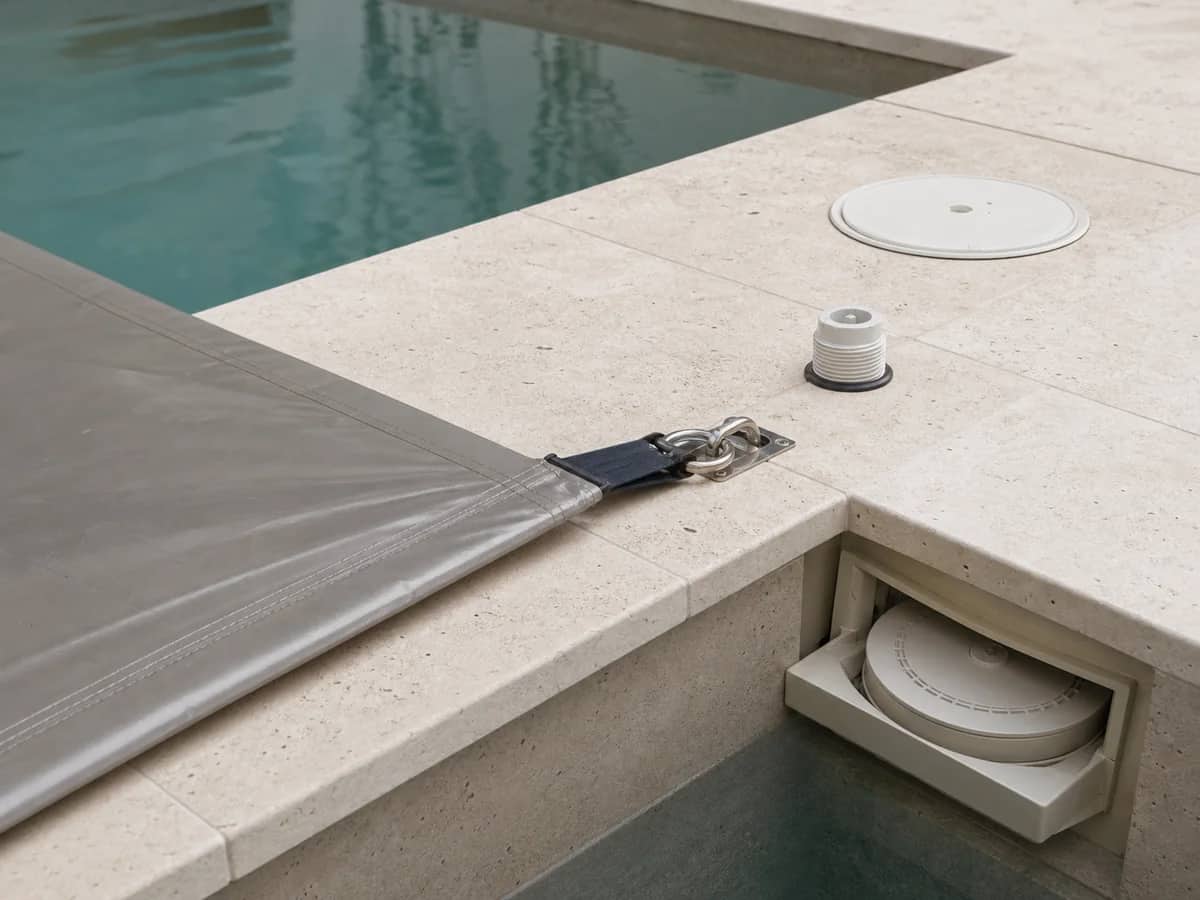 02
02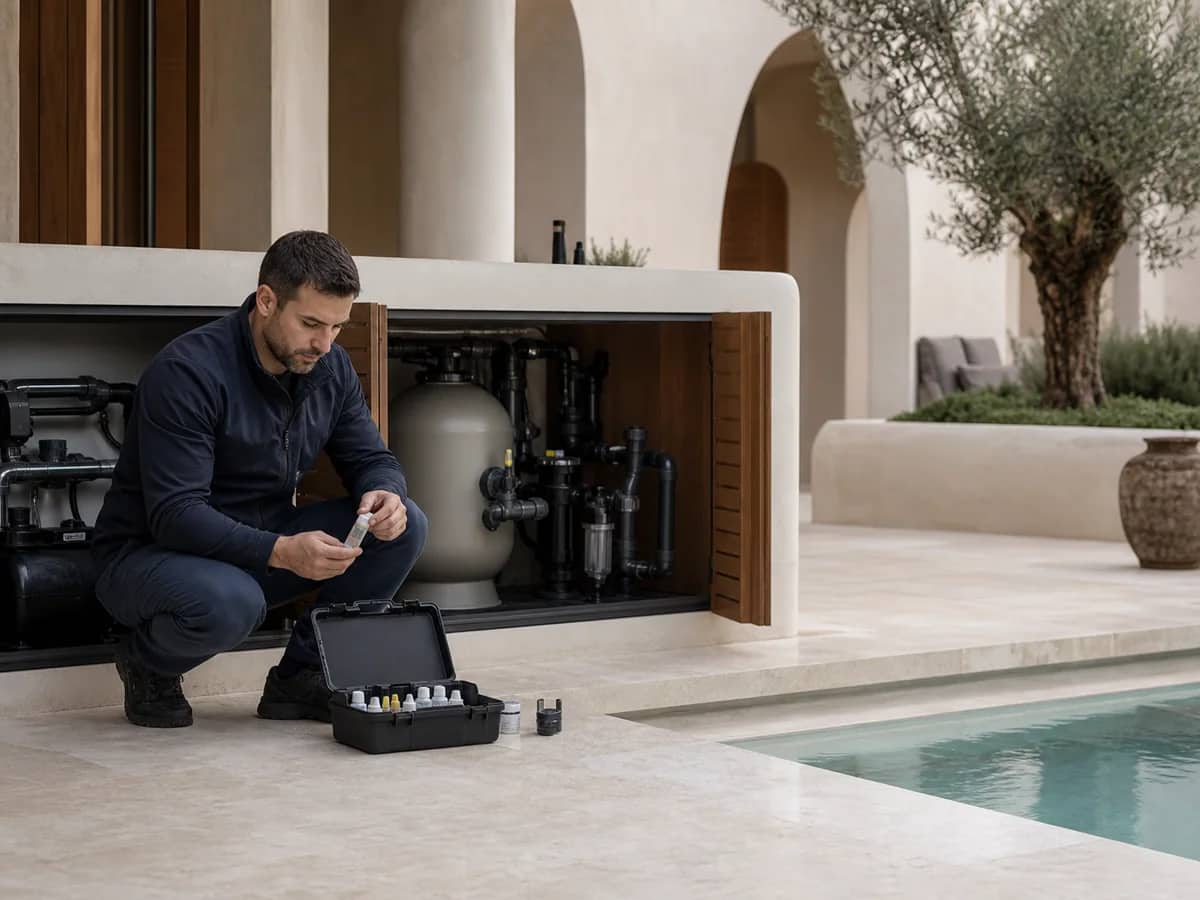 03
03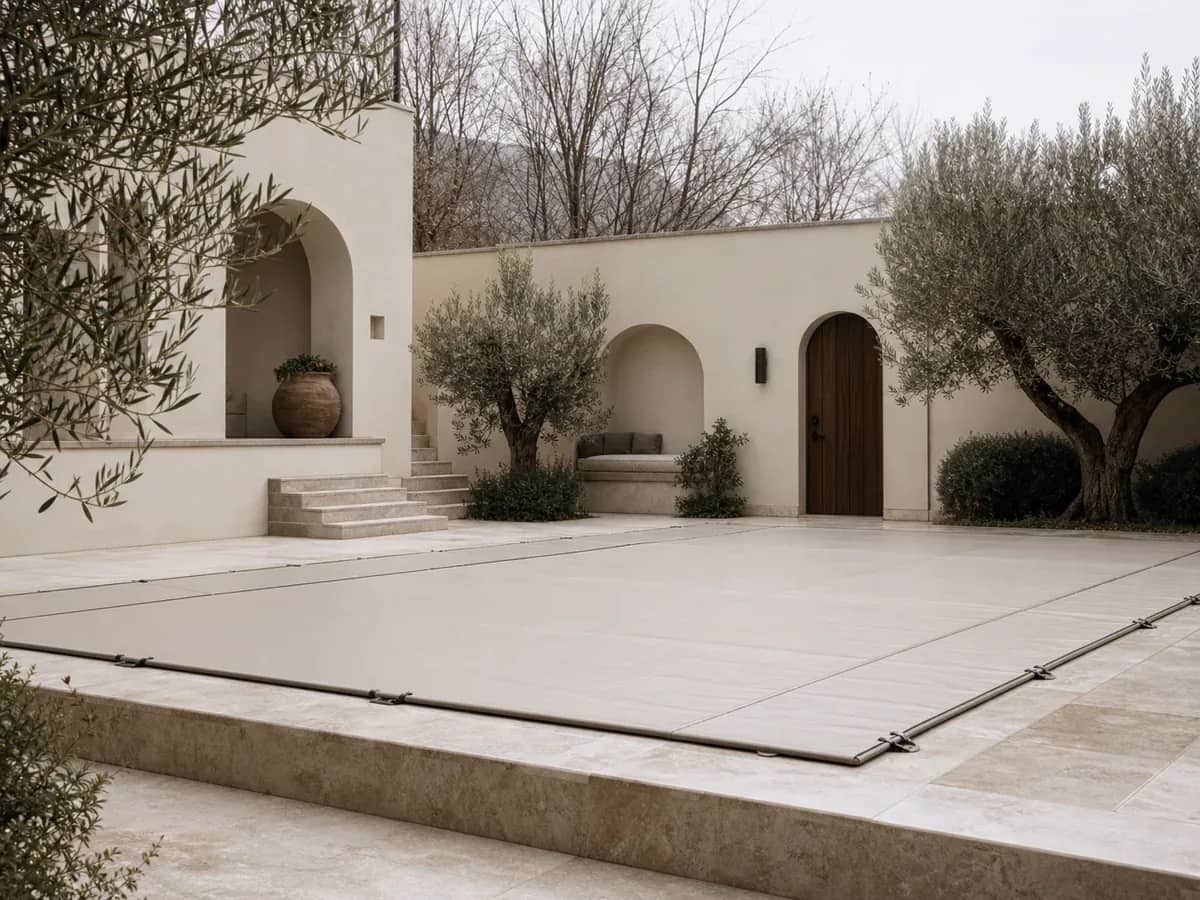 04
04// 01 · Product groups
Compare the products on this topic on their category pages.
Each card leads to a product category; models, technical sheets and list prices are there.
 Product category
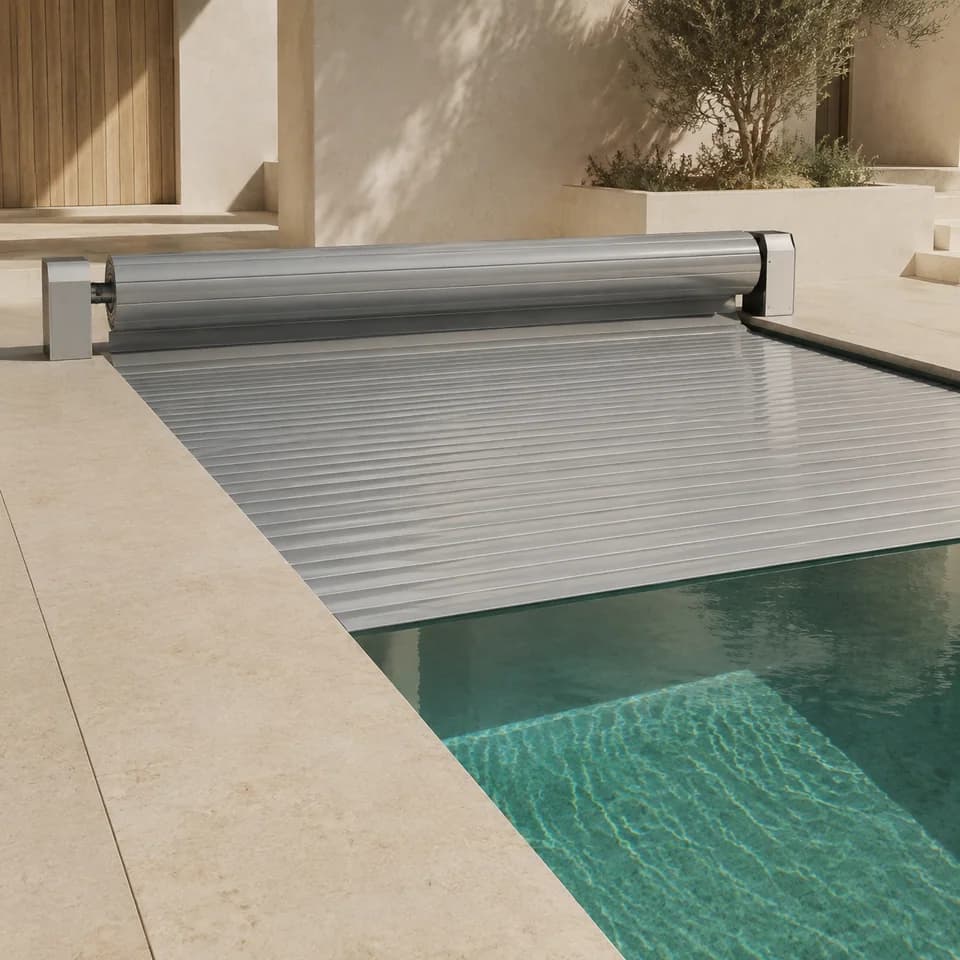
Pool Cover Systems
Automatic covers, safety lids and shaft systems, cover solutions that cut heat loss while protecting your pool against accidents.
View- 10 products
- Product category
Automatic Pool Cover Models
Underwater and above-ground automatic pool covers. The underwater cover sits in a separate compartment inside the pool; above-ground covers are installed at the pool edge and run on a motor, by hand or on solar power. The cover is chosen by the inner pool size and the available power supply.
View- 5 products
 Product category
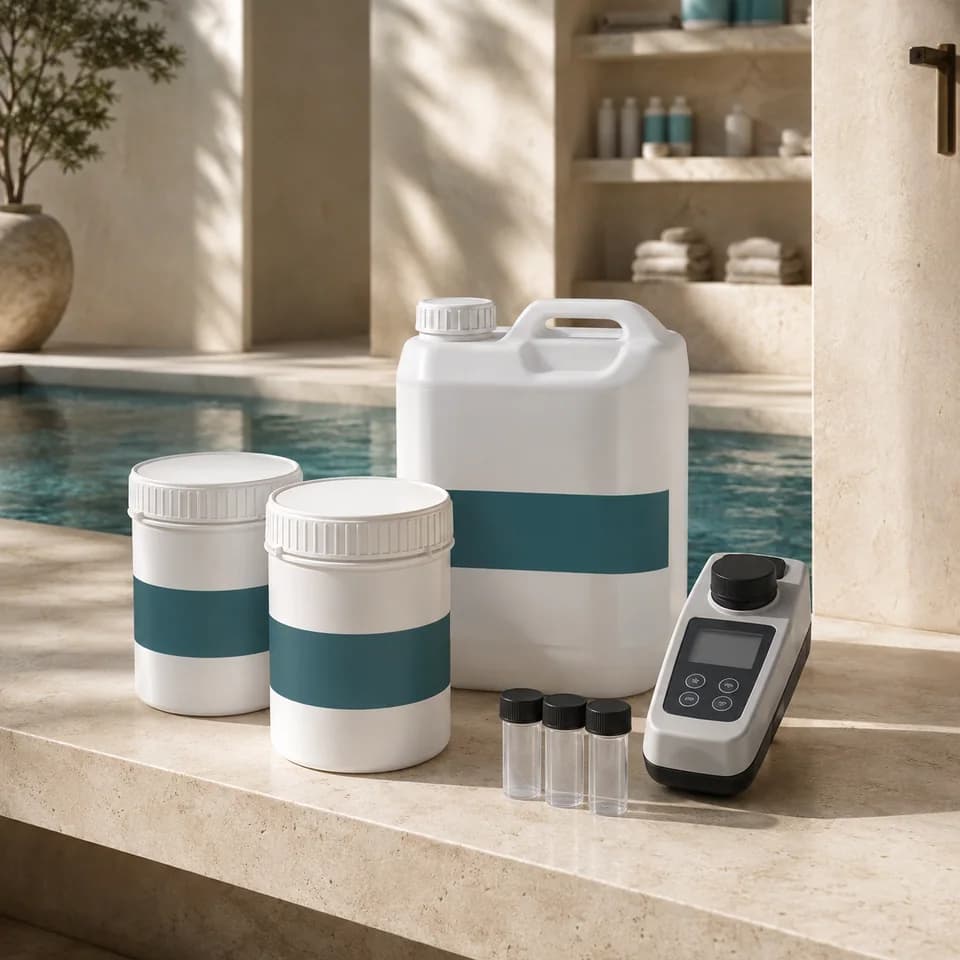
Pool Chemicals
From chlorine, pH regulators, algaecides and clarifiers to digital testers: full-range water chemistry products that keep your pool crystal clear.
View- 19 products
Product category
Pool Cover Systems
Automatic covers, safety lids and shaft systems, cover solutions that cut heat loss while protecting your pool against accidents.
10 productsProduct category
Automatic Pool Cover Models
Underwater and above-ground automatic pool covers. The underwater cover sits in a separate compartment inside the pool; above-ground covers are installed at the pool edge and run on a motor, by hand or on solar power. The cover is chosen by the inner pool size and the available power supply.
5 productsProduct category
Pool Chemicals
From chlorine, pH regulators, algaecides and clarifiers to digital testers: full-range water chemistry products that keep your pool crystal clear.
19 products
// 02 · Related service
The work in this article, we deliver from design to handover.
Çilek Havuz service
Pool Maintenance
Water chemistry, equipment and periodic maintenance.
How we work
- 01Initial meeting and site surveyWe inspect the site and listen to the brief.
- 02Design and quotationWe give the cost item by item, in writing.
- 03ExecutionThe same team builds to a written schedule.
- 04Handover and commissioningWe start the systems and explain their use.
- 05Maintenance and technical supportWe provide periodic maintenance and support.
// 03 · Guides
On Maintenance, more articles to read.
First the articles directly related to this one, then the newest articles on the topic.
 Pool Construction
Can the Depth of a Prefabricated Pool Be Changed?
How much can depth change in one-piece fiberglass, polyester and panel prefab pools? Options before and after installation, water volume and safety.
View- 17 September 2026
- 8 min read
 Maintenance
Pool Cleaning: Choosing the Right Equipment and Building a Routine
Clear water is chemistry's job; a clean pool is mechanics'. We explain which vacuum, brush and skimmer net you need and how to build a lasting routine.
View- 22 June 2026
- 7 min read
 Pool Construction
Prefab, fibreglass or polyester pool: which one is right for you?
Fibreglass and polyester pools come from a one-piece mould and are installed on site within days. A concrete pool gives you freedom of size and shape. We compare honestly where each one has the advantage.
View- 4 September 2026
- 8 min read
 Maintenance
Pool clarifier and flocculant: differences, uses and selection
Clarification, flocculation and filter compatibility compared for cloudy pool water. The right choice follows the product instructions, not the name.
View- 13 September 2026
- 3 min read
 Maintenance
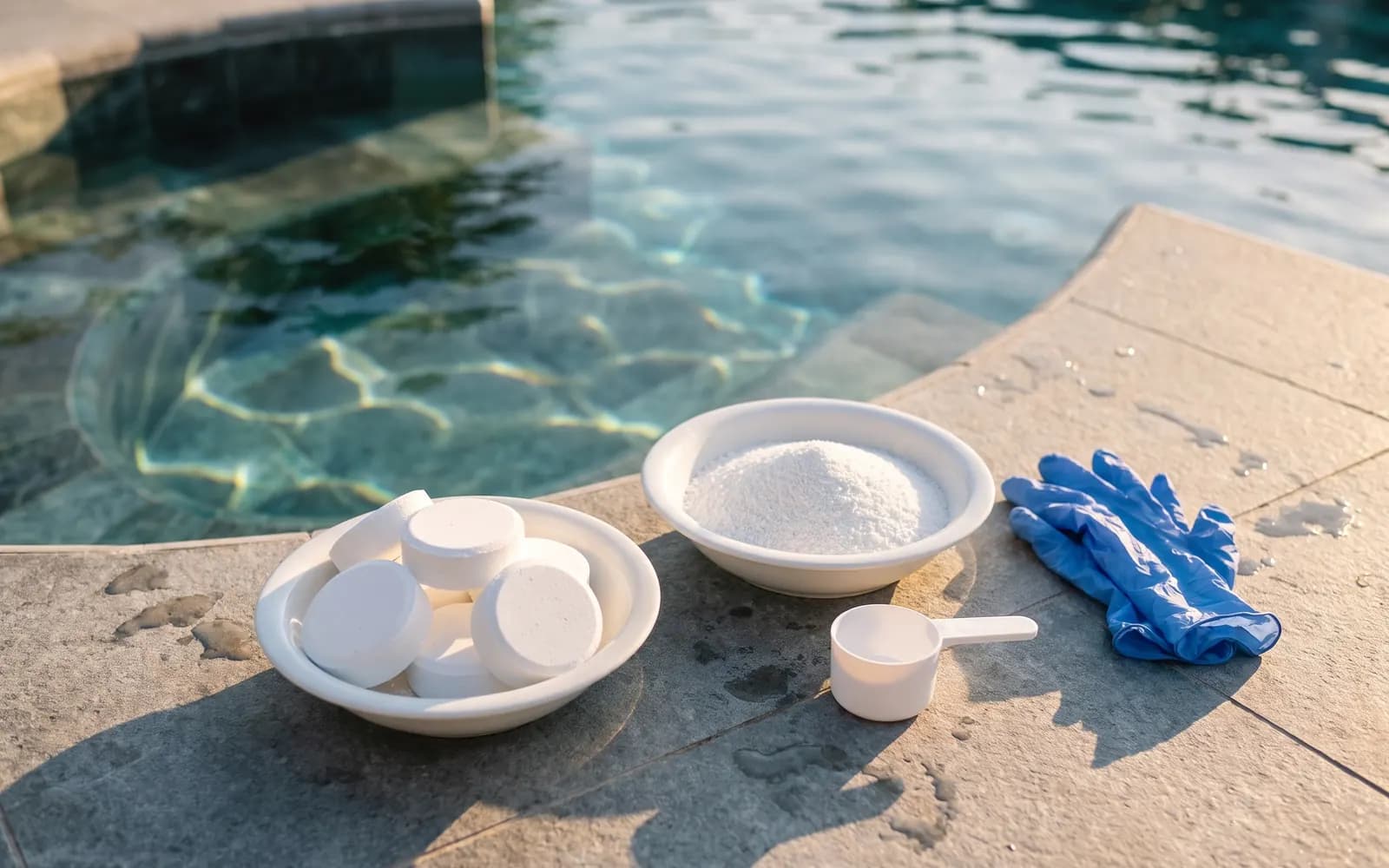
Chlorine tablets and granules: dissolution, use and selection
Chlorine products differ in active ingredient, concentration and intended use. Shape alone does not determine strength or dosing method.
View- 13 September 2026
- 3 min read
 Maintenance
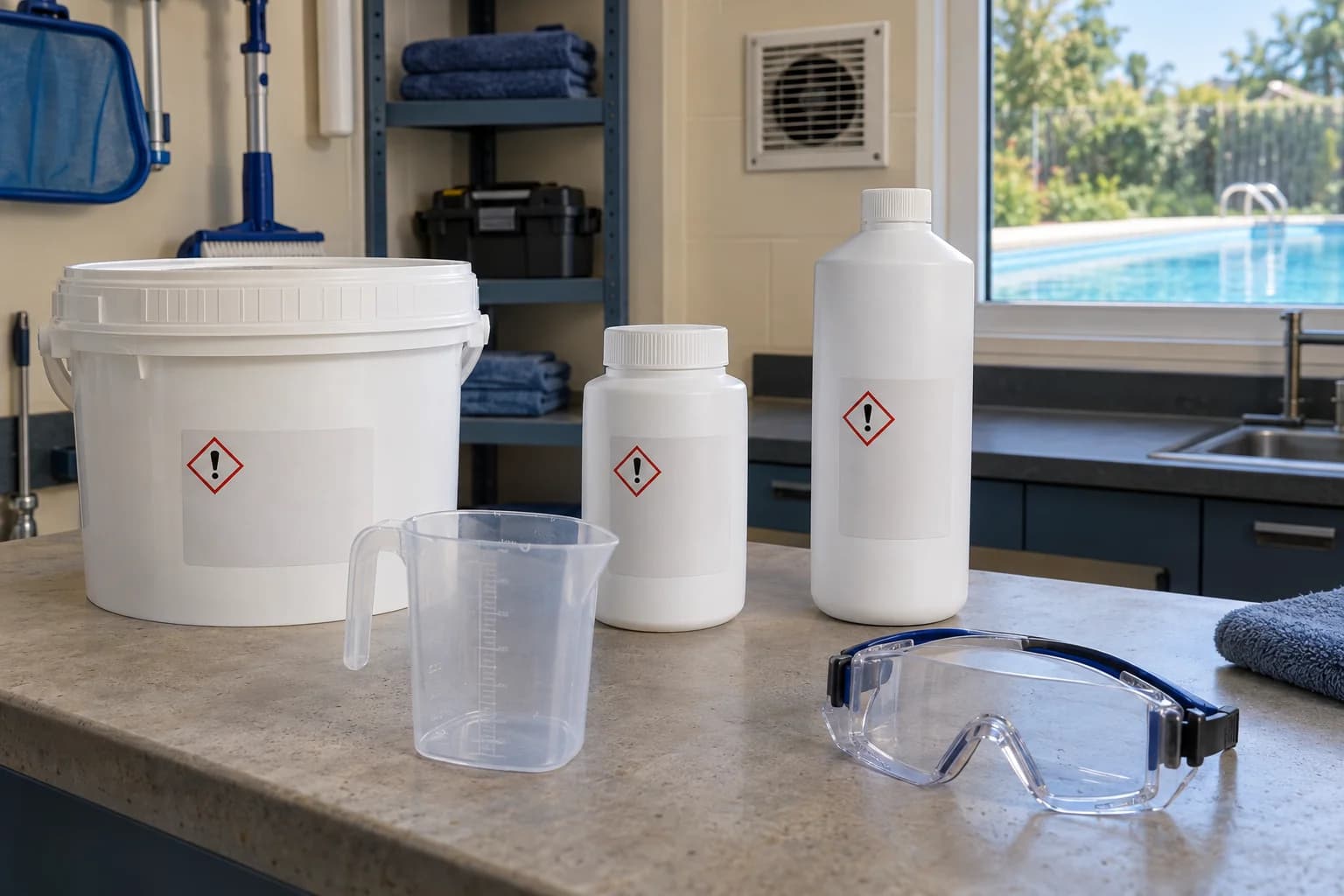
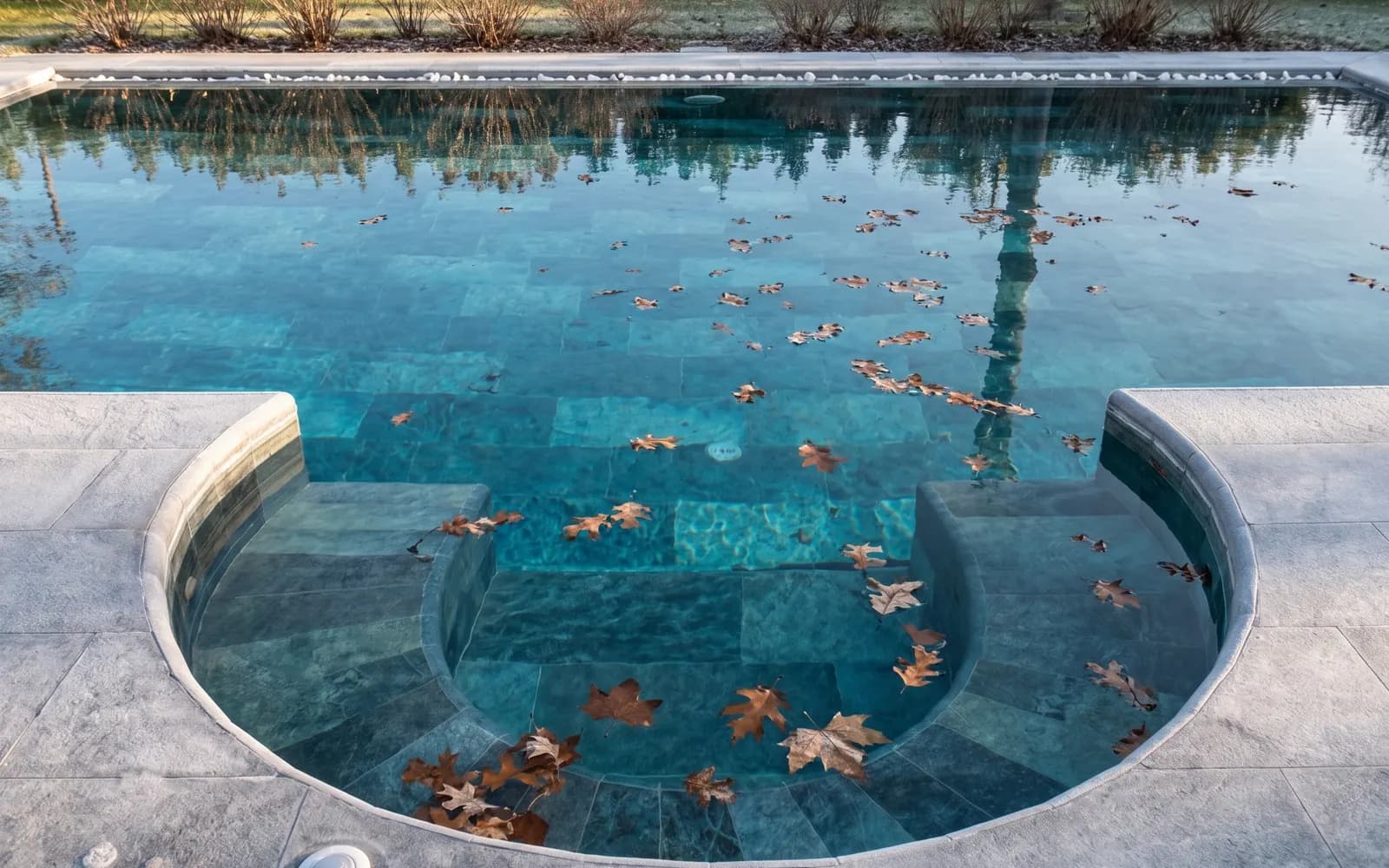
Winter pool chemicals: purpose, limits and product selection
Winter treatment depends on the actual pool system and product formulation. Water care, equipment freeze protection and ongoing checks are separate tasks.
View- 13 September 2026
- 3 min read
- Pool Construction · 17 September 2026Can the Depth of a Prefabricated Pool Be Changed?How much can depth change in one-piece fiberglass, polyester and panel prefab pools? Options before and after installation, water volume and safety.8 min read
- Maintenance · 22 June 2026Pool Cleaning: Choosing the Right Equipment and Building a RoutineClear water is chemistry's job; a clean pool is mechanics'. We explain which vacuum, brush and skimmer net you need and how to build a lasting routine.7 min read
- Pool Construction · 4 September 2026Prefab, fibreglass or polyester pool: which one is right for you?Fibreglass and polyester pools come from a one-piece mould and are installed on site within days. A concrete pool gives you freedom of size and shape. We compare honestly where each one has the advantage.8 min read
- Maintenance · 13 September 2026Pool clarifier and flocculant: differences, uses and selectionClarification, flocculation and filter compatibility compared for cloudy pool water. The right choice follows the product instructions, not the name.3 min read
- Maintenance · 13 September 2026Chlorine tablets and granules: dissolution, use and selectionChlorine products differ in active ingredient, concentration and intended use. Shape alone does not determine strength or dosing method.3 min read
- Maintenance · 13 September 2026Winter pool chemicals: purpose, limits and product selectionWinter treatment depends on the actual pool system and product formulation. Water care, equipment freeze protection and ongoing checks are separate tasks.3 min read
// 04 · Company & Contact
To talk about your project, call or write to us.
Legal Name
Çilek Havuz
Founded
1998 · Istanbul
Head Office
Çilek Plaza, Eyüp Sultan Mah. Yakacık Cd. Feshane Cd. No: 2 D:4 D:1, 34885 Sancaktepe / İstanbul
Service Area
All of Türkiye · exports to 14 countries
Branches
Kyrgyzstan · Egypt · Algeria · Iraq
Showroom
Plan a showroom visit
At our showroom in Çilek Plaza, Sancaktepe, you can discuss your project with our team. We recommend booking an appointment by phone before your visit.
Working Hours
- Monday – Friday · 08:00 – 17:30
- Saturday · 08:00 – 12:30
- Closed on Sunday
Frequently Asked Questions
About Pool Winterizing, frequently asked questions.
Çilek Havuz Corporate
Pool and Wellness Engineering
- Response Time
- Same day
- Channels
- Phone · Email · WhatsApp
If the answer you are looking for is not here, send your question directly to us and our team will reply as soon as possible.
+90 216 475 39 37Winterize when water temperature drops steadily and regular swimming concludes; water staying below about 15 °C is a common reference point. Closing too early while water is warm promotes algae growth; waiting too late risks early frost damage. Complete closing before the first hard freeze; local climate sets the exact timing.
Çilek Havuz Corporate
Yes, winter algaecides and scale inhibitors are formulated for extended efficacy at low temperatures over months without chlorine replenishment. Standard summer algaecides break down much faster.
Çilek Havuz Corporate
Occasional checks are necessary. Pump standing water off the cover, inspect cover springs/straps, and verify that water levels remain below skimmer mouths. A 5-minute monthly check prevents major spring surprises.
Çilek Havuz Corporate
Water trapped inside the pump casing, filter tank, or pipes expands as it freezes, splitting plastic housings and cracking pipes. Completely draining all equipment is mandatory.
Çilek Havuz Corporate
Solid anchored safety covers are manufactured to carry the load if a child or pet falls onto them. They also block debris and sunlight more effectively. Standard tarps are economical but require water bags and closer maintenance. Whichever type you choose, a cover is not a walkway.
Çilek Havuz Corporate
No, automotive ethylene glycol is highly toxic and dangerous if it enters pool water. Only use non-toxic propylene glycol pool antifreeze designed specifically for swimming pool plumbing.
Çilek Havuz Corporate
No. Winter treatment products help protect the water against algae and scaling, but they do not stop water left in the pump, filter and pipes from freezing. Draining, isolating or storing equipment is a separate technical procedure that chemicals do not replace.
Çilek Havuz Corporate
Generally no. The decision depends on the pool structure, groundwater level, lining, equipment and the water support the cover needs; an empty pool can shift under groundwater pressure or suffer lining damage. One draining instruction is therefore not applied to every pool.
Çilek Havuz Corporate