

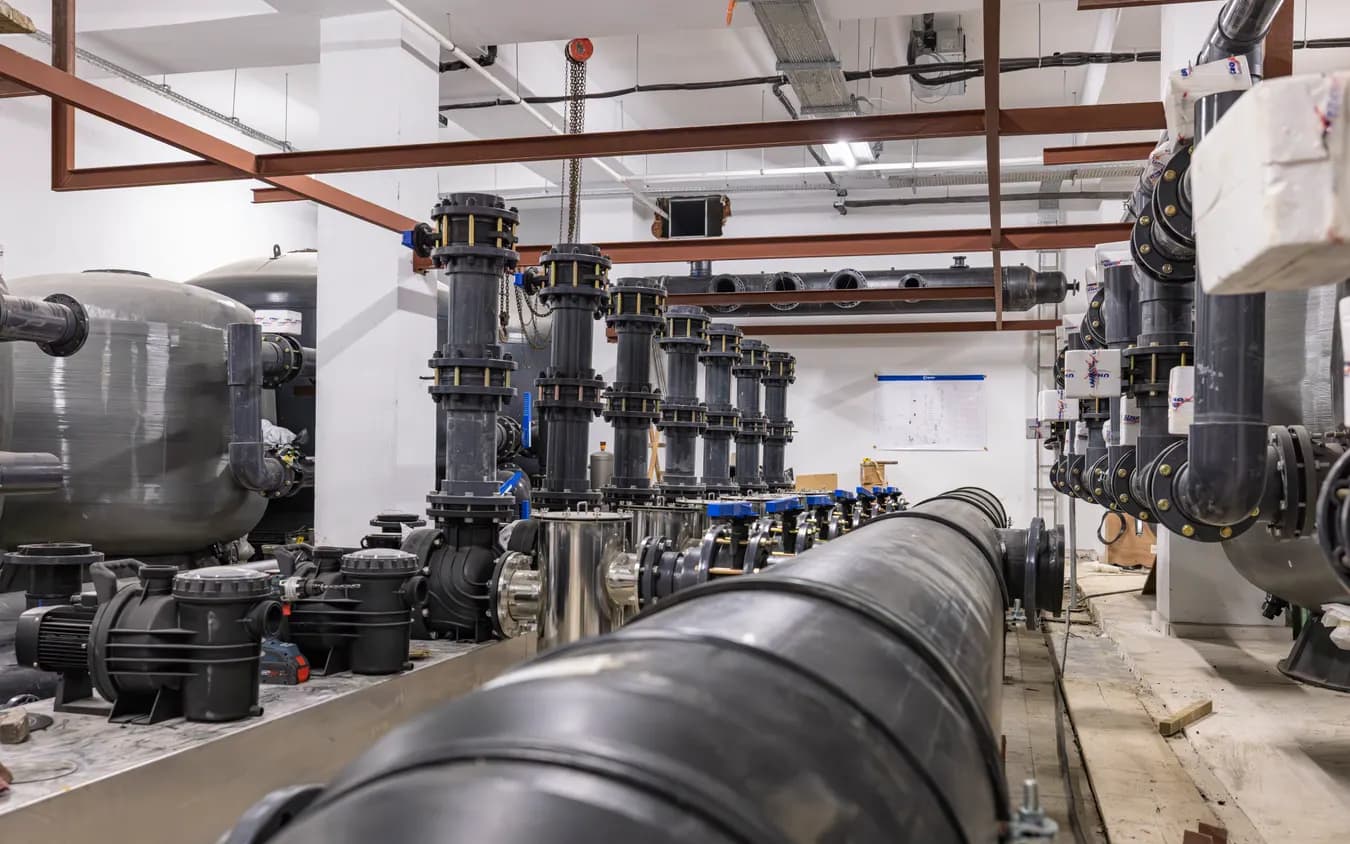
Pool plumbing and plant room: how should they be built?
The hidden half of a pool is in the plant room. We explain how the pump, filter, pipe diameter, dosing and heating are sized, and where the plant room should go and how many square metres it needs.
Project Manager · Mechatronics Engineer · Çilek Havuz
- Published
- Updated
- Reading
- 7 min read
- Category
- Pool Construction
The hidden half of a pool is in the plant room. We explain how the pump, filter, pipe diameter, dosing and heating are sized, and where the plant room should go and how many square metres it needs.
Pool water runs in a continuous cycle.
Water is drawn from the pool (through the skimmer openings and main drain in a skimmer pool, or from the balance tank in an overflow pool), reaches the pump, passes through the pre-filter basket, is pushed into the main filter, goes through the heater and dosing line if needed, and is then returned to the pool through the return inlets.
The speed of this cycle is set by the turnover time. In residential pools, the target is for the entire volume of water to pass through the filter once every 6 hours. In commercial pools and hotels this time is shorter; heavy use calls for faster turnover.
The position of the return inlets is the most neglected part of the plumbing. If the inlets are not placed to create a circular flow in the pool, dead zones remain in the corners; the water there stagnates and that is where algae starts. If you keep vacuuming the same corner, the problem is not the cleaning, it is the return inlets.
The calculation starts with the pool volume.
A 5x10 metre pool with an average depth of 1.50 metres holds 75 cubic metres; for a 6-hour turnover, 75 divided by 6 gives a required flow rate of 12 to 13 cubic metres per hour. The pump must deliver this flow against the pressure loss of the plumbing.
The filter is selected for this flow rate. In sand filters the filtration rate is kept below a set limit per square metre; for 12 cubic metres per hour, a Ø600 mm tank is the typical solution. An undersized filter leaves the water cloudy, while an unnecessarily large one wastes extra water during backwashing.
With a variable-speed (inverter) pump, the difference shows up on the electricity meter. A single-speed pump is either at full power or off; a variable-speed pump spends most of the day at low speed and consumption drops accordingly. The upfront cost is higher, and the payback shows up on the electricity bill.
Pipe diameter is the cheapest item in the plumbing, yet it is where most mistakes are made.
A narrow pipe increases the water velocity; as velocity rises, friction loss and noise increase, and the pump has to work harder to deliver the same flow. That means the small amount saved during installation is paid back every month in electricity.
At a flow rate of 12 cubic metres per hour, a Ø50 mm pipe is at its limit, while Ø63 mm runs comfortably. The suction line is chosen one size larger than the discharge line; a pump that struggles on the suction side suffers cavitation and a shorter service life.
The number of elbows is also taken into account. Each elbow adds some pressure loss; the further the plant room is from the pool, the more pipe length and elbows there are. Placing the plant room close to the pool therefore also lowers running costs.
For a residential pool with a skimmer system, 4 to 6 square metres is enough.
This space fits the pump, filter, dosing unit, control panel and, if there is one, the indoor unit of the heat pump. The clear height should not drop below 1.80 metres; there must be enough headroom to open the filter lid and change the sand.
In an overflow system the area grows because a balance tank is added. The balance tank is sized at 60 to 80 litres per square metre of pool surface area; for a 50 square metre pool, that means a volume of 3 to 4 cubic metres, which sits inside or next to the plant room.
The location rule: do not go further than 8 metres from the pool edge, and stay below the pool water level if possible. Having the pump below the water level makes suction easier. In installations above the water level the pump has to self-prime, and that does not always go smoothly.
A plant room is a humid space with an electrical panel inside.
Without ventilation, condensing moisture corrodes the panel and the motors. For natural ventilation, two vents are placed on opposite sides, with a fan added if needed.
Floor drainage is a must. Water released during filter backwashing, a possible leak or maintenance has to go somewhere. In plant rooms without a floor slope and drain, the first fault lets water get into the equipment.
If chemical storage and the electrical panel share the same space, keep a distance between them and store chemicals in a closed cabinet. Chlorine fumes quickly eat away at metal parts and electronic boards. It is a cause of failure we see often, and preventing it is as simple as a cabinet.
Adding chemicals by hand is possible in small pools, but the results fluctuate: too much one day, too little the next.
An automatic dosing system measures pH and chlorine levels and doses only as much as is needed. The result is more balanced water and usually lower total chemical consumption.
The second benefit of automation is the pump running schedule. Instead of a pump that runs at fixed hours, a control unit that schedules operation according to temperature and use reduces electricity consumption. Systems with remote monitoring let you see the state of the pool while you are away from home.
For hotel and residential complex pools, automation is not an option but a necessity. Heavy and changing use cannot be tracked by hand, and systems that keep records also help you during inspections.
The heat pump or heat exchanger is connected on the line after the filter and before the return to the pool.
A heater connected before the filter collects dirt. A bypass valve is fitted on the heater line so that when heating is off, water does not pass through the heater and there is no unnecessary pressure loss.
The outdoor unit of the heat pump draws heat from the air and blows out cold air. Do not point this airflow towards seating areas or the neighbour's boundary. Space must be left around the unit for air circulation; a unit squeezed into a narrow recess loses efficiency.
The capacity calculation is based on the pool surface area, not the volume. Most heat loss happens through evaporation from the surface. If a pool cover will be used, the calculation can be reduced; include the cover from the start, because a cover bought later means you will have chosen an unnecessarily large heat pump.
One: building the plant room far from the pool.
The pipes get longer, elbows increase, the pump gets bigger and the bill goes up. Two: choosing too small a pipe diameter. Three: placing the return inlets at random and leaving dead zones in the corners.
Four: a plant room without floor drainage. Five: chemicals and the electrical panel in the same cabinet. None of these five mistakes can be fixed cheaply once the pool is finished; four of them are decided at the excavation and shell construction stage.
That is why you should ask for the plumbing design together with the pool design. A quote with pool drawings but no plumbing diagram is telling you that half of the job will be improvised on site.
Next step
Let us discuss your project in the way that suits you best.
You can fill in the form for a written quote, schedule a video project presentation or ask us to survey your project site.
Get a Quote
Send us your dimensions and expectations in writing.
Online presentation
Video project presentation
On-site survey
Inspection at your project site
// 01 · Products in this article
For the work described in this article, pool mechanical equipment.
Each card leads to the product page with its data sheet, model list and quotation.
- 15 models
- 16 models

- 9 models

// 02 · Product groups
Compare the products on this topic on their category pages.
Each card leads to a product category; models, technical sheets and list prices are there.
 Product category
Pool Control Panels and Automation
Electrical panels for pump protection and lighting control, app-controlled smart panels and cabinets, gateways and a smart plug. The panel type is chosen by the current and phase of the pump motor. The technical table of each model is on its product page.
View- 11 products
- Product category
Pool Valve Models
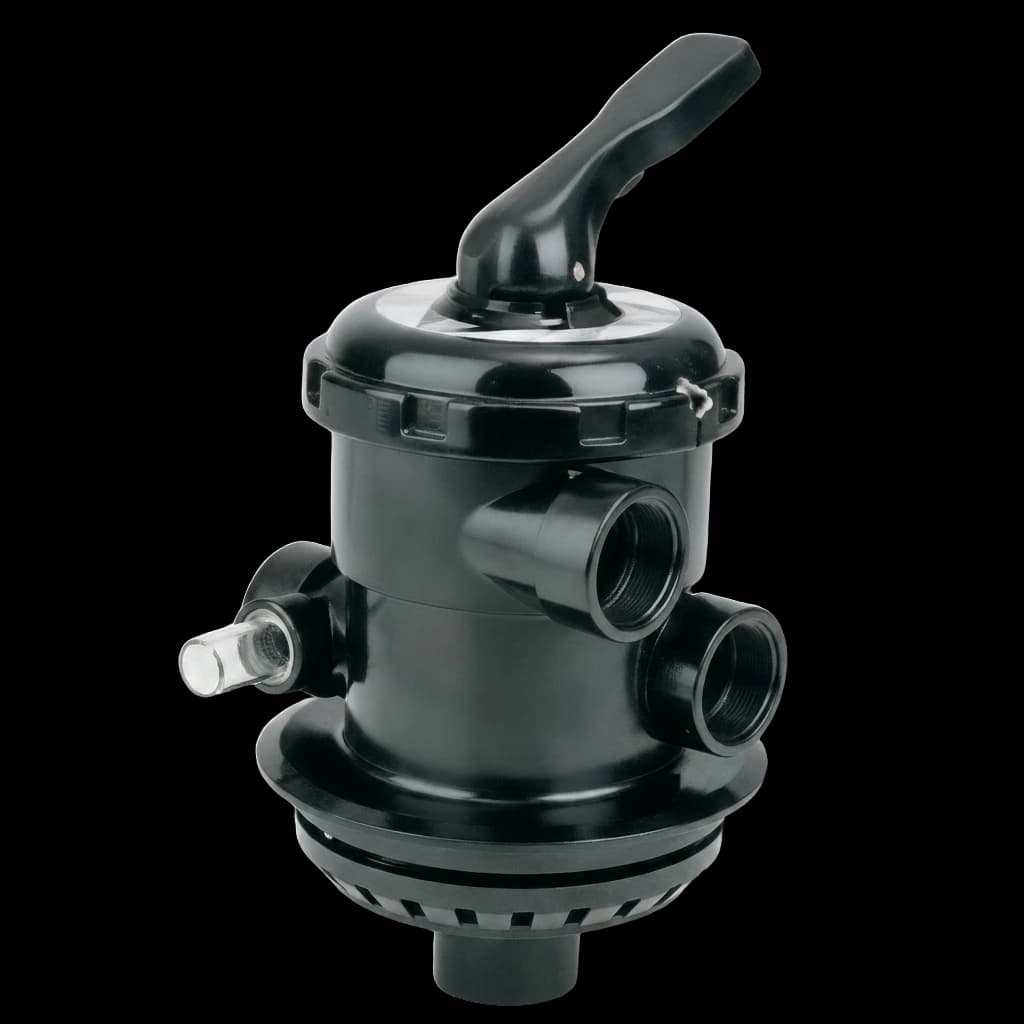
Manual and automatic multiport valves for sand filters, a hydraulic safety valve for the waste line of the automatic valve, and PVC ball valves for the pipework. The multiport valve is chosen by the filter's valve inlet, the ball valve by the pipe diameter. The pressure gauge panel and PVC pipe clamp set are on this page too.
View- 6 products
- Product category
Pool Skimmers and Pool Fittings
ABS and AISI-316L stainless steel pool skimmers, a cartridge filter skimmer, a main drain and return inlets. The skimmer is chosen by pool construction and filtration flow rate, with separate models for concrete, liner and prefabricated pools. The difference between skimmer pools and overflow pools is covered in our guide.
View- 6 products
Product category
Pool Control Panels and Automation
Electrical panels for pump protection and lighting control, app-controlled smart panels and cabinets, gateways and a smart plug. The panel type is chosen by the current and phase of the pump motor. The technical table of each model is on its product page.
11 productsProduct category
Pool Valve Models
Manual and automatic multiport valves for sand filters, a hydraulic safety valve for the waste line of the automatic valve, and PVC ball valves for the pipework. The multiport valve is chosen by the filter's valve inlet, the ball valve by the pipe diameter. The pressure gauge panel and PVC pipe clamp set are on this page too.
6 productsProduct category
Pool Skimmers and Pool Fittings
ABS and AISI-316L stainless steel pool skimmers, a cartridge filter skimmer, a main drain and return inlets. The skimmer is chosen by pool construction and filtration flow rate, with separate models for concrete, liner and prefabricated pools. The difference between skimmer pools and overflow pools is covered in our guide.
6 products
// 03 · Related service
The work in this article, we deliver from design to handover.
Çilek Havuz service
Swimming Pool Construction
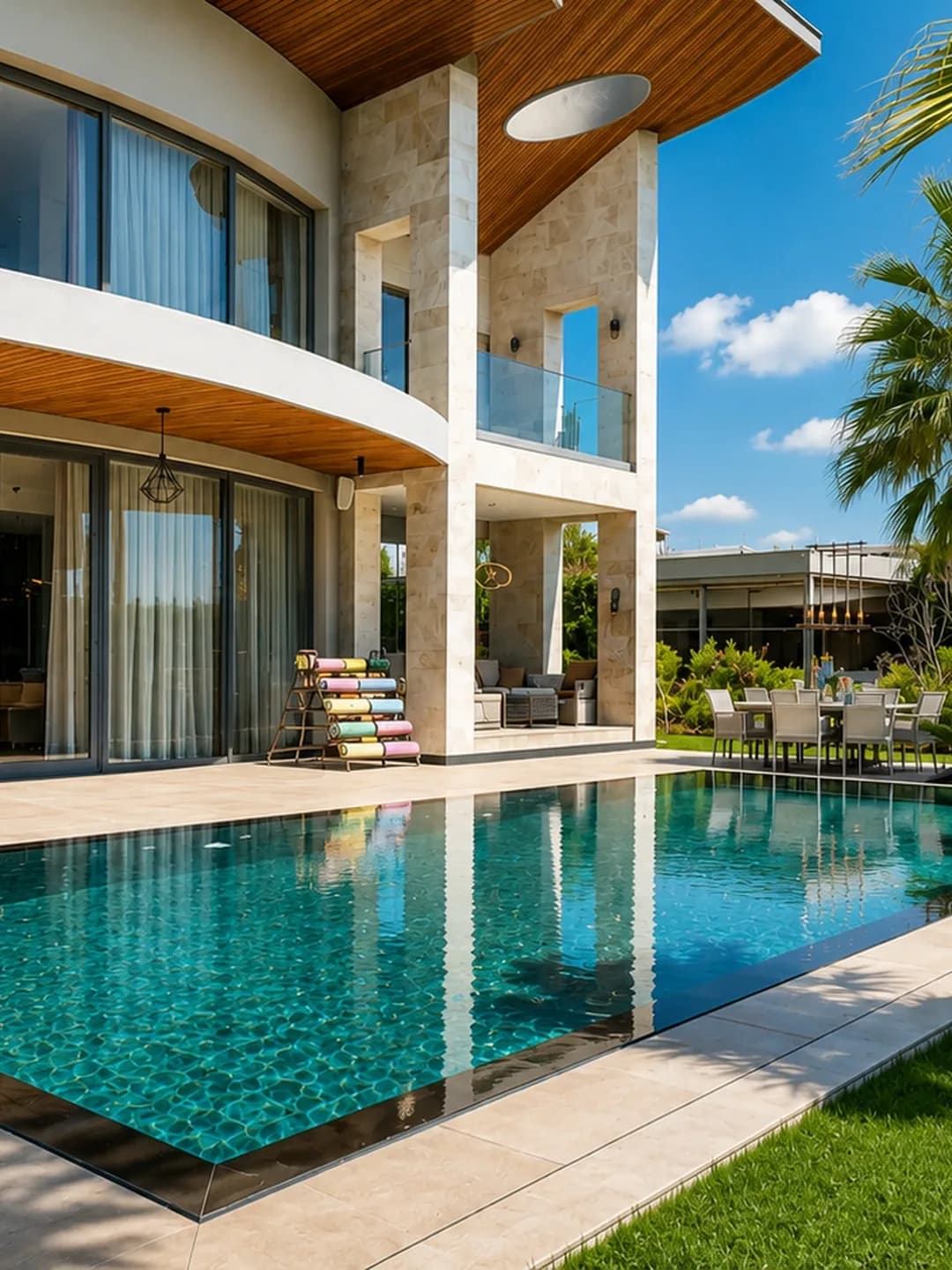
Reinforced-concrete, prefabricated and infinity swimming pools, built turnkey for villa, residential and commercial projects.
Swimming pool construction is a turnkey build in which the site survey, structural and mechanical design, excavation, reinforced-concrete shell, waterproofing, finish, filtration plumbing and commissioning run under a single contract. The written project schedule follows the site survey.
How we work
- 01Initial meeting and site surveyWe inspect the site and listen to the brief.
- 02Design and quotationWe give the cost item by item, in writing.
- 03ExecutionThe same team builds to a written schedule.
- 04Handover and commissioningWe start the systems and explain their use.
- 05Maintenance and technical supportWe provide periodic maintenance and support.
// 04 · Guides
On Pool Construction, more articles to read.
First the articles directly related to this one, then the newest articles on the topic.
 Pool Construction
Choosing Pool Showers and Waterfalls: Shower Types, Water Curtains and Plumbing Needs
Choosing a pool shower, waterfall or water curtain depends on the material, where the water comes from and where it is mounted. We compare solar and stainless steel shower types and their pump and plumbing needs.
View- 2 October 2026
- 8 min read
 Pool Construction
Commercial Pool Construction for Hotels, Resorts and Public Facilities
Commercial pool construction follows different rules from a private build: turnover rates are shorter, the overflow system is standard, equipment is duplicated for redundancy, and hygiene records are inspected. Here is what changes at each stage.
View- 14 May 2026
- 7 min read
 Turkish Bath
Home Hammam: A Guide to Building a Turkish Bath in Your Villa or Apartment
A home hammam is a wet-space engineering decision, not a decorating one. We explain floor loads, moisture in adjoining walls, heating and the order of works.
View- 4 June 2026
- 6 min read
 Pool Construction
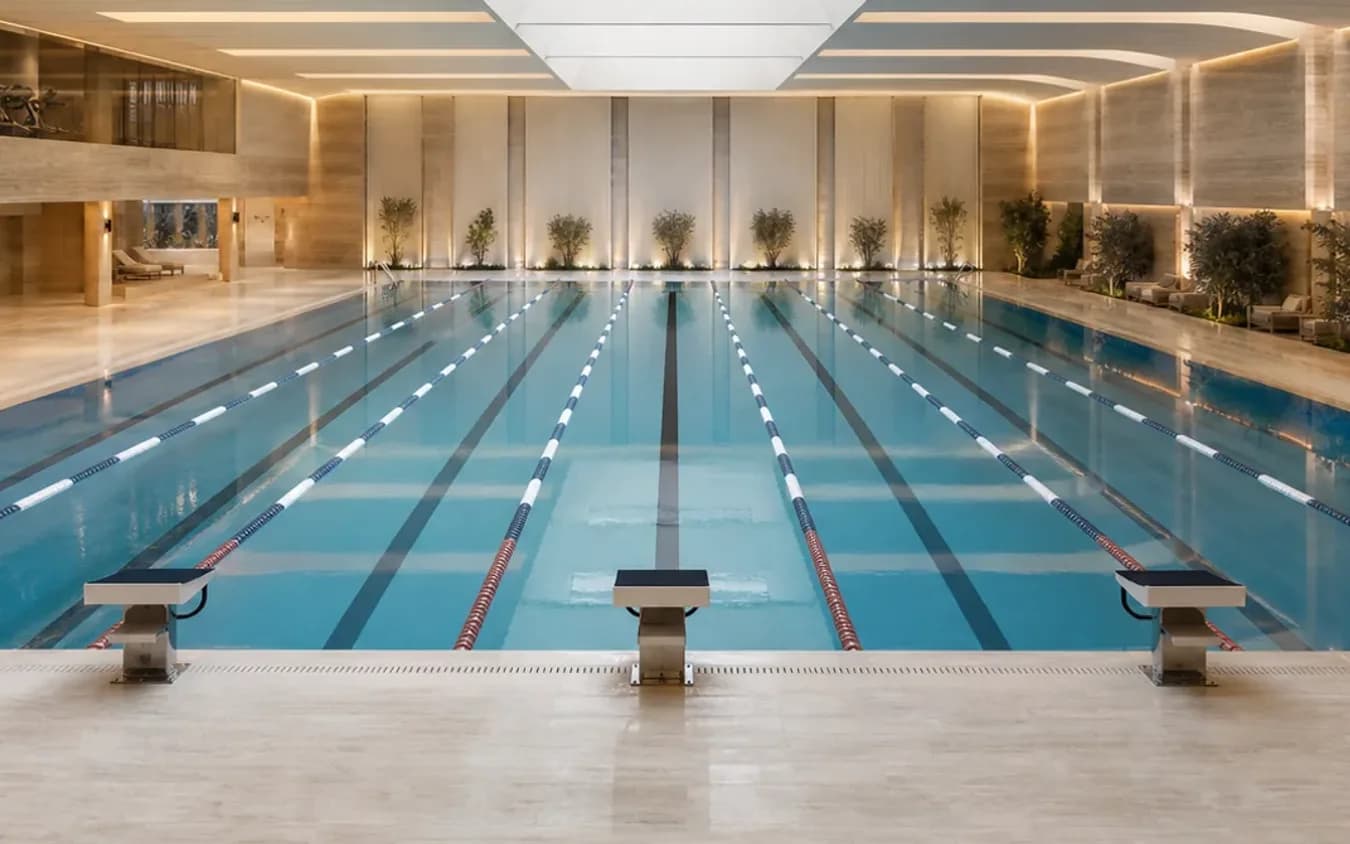
Competition Pool Equipment: Which Pool Needs Which Equipment?
Starting blocks, lane ropes, warning and turn systems, underwater speakers and water polo goals are chosen according to how the pool is used. We explain which dimensions we check for each item.
View- 2 October 2026
- 7 min read
 Pool Construction
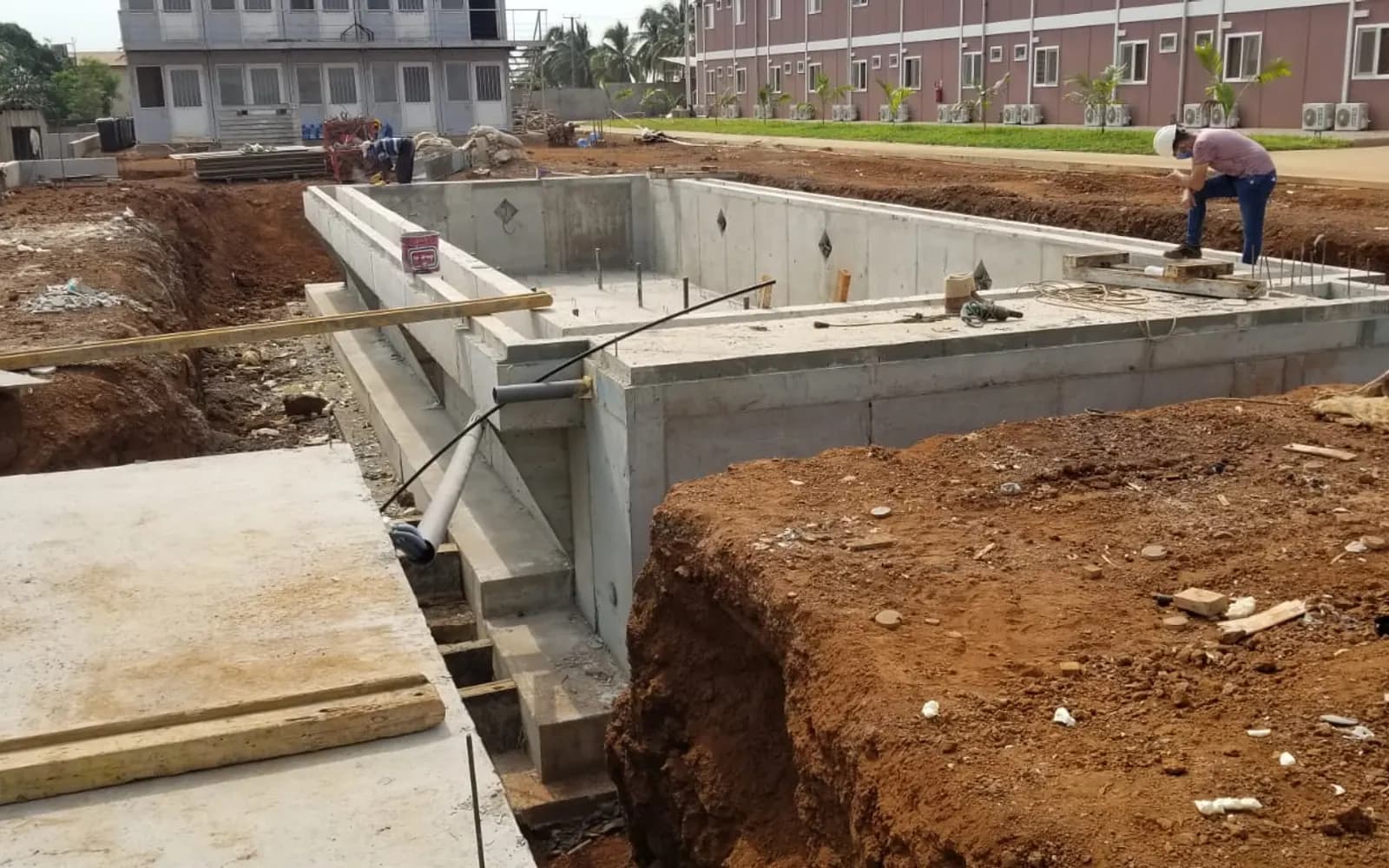
Building a pool or spa abroad: what drives the cost of an international project?
A pool, hammam or spa project delivered abroad from Turkey has no single price per square metre. We cover design, equipment, shipping, customs and schedule.
View- 29 September 2026
- 8 min read
 Pool Construction
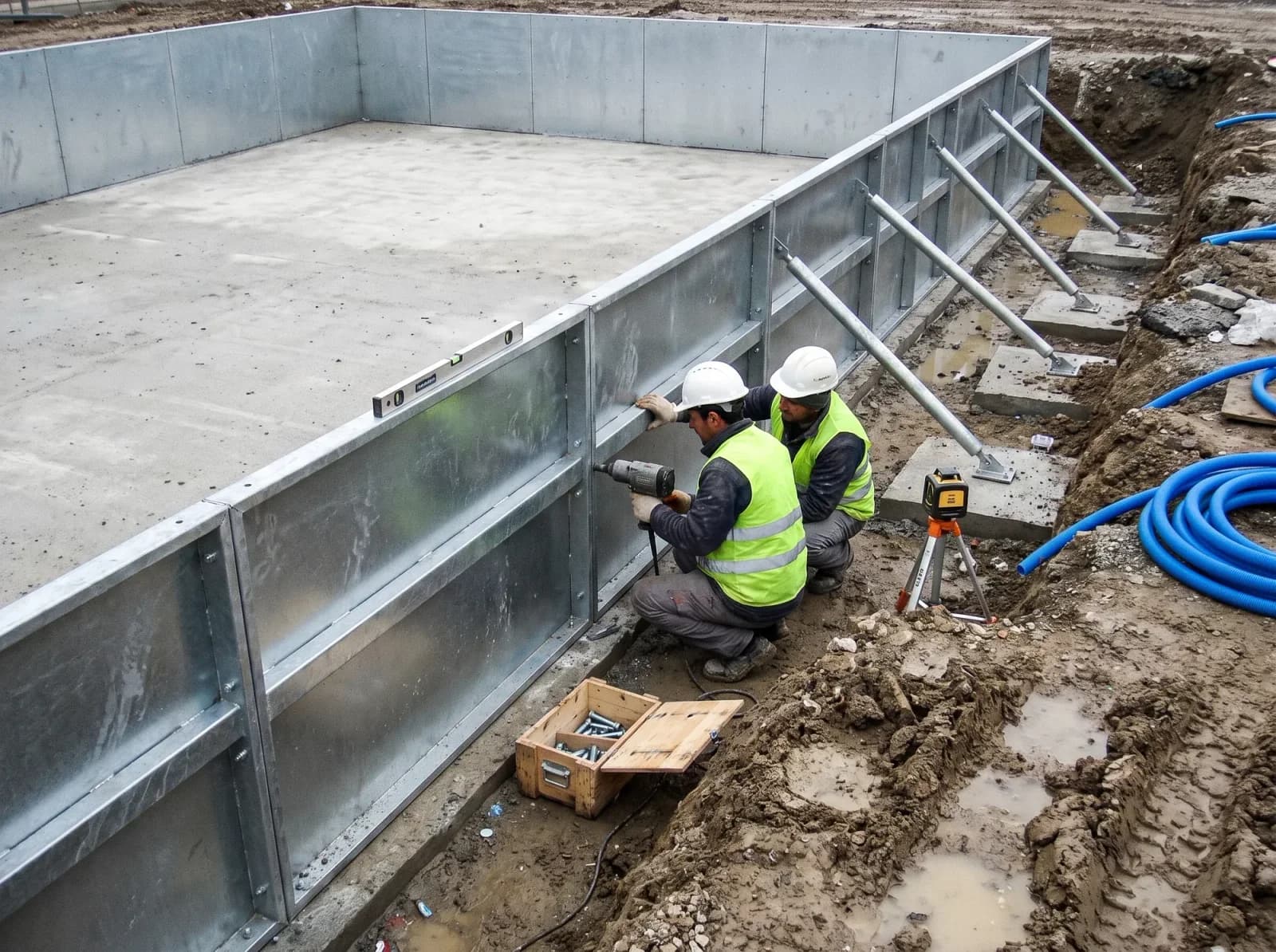
Can the Depth of a Prefabricated Pool Be Changed?
How much can depth change in one-piece fiberglass, polyester and panel prefab pools? Options before and after installation, water volume and safety.
View- 17 September 2026
- 8 min read
- Pool Construction · 2 October 2026Choosing Pool Showers and Waterfalls: Shower Types, Water Curtains and Plumbing NeedsChoosing a pool shower, waterfall or water curtain depends on the material, where the water comes from and where it is mounted. We compare solar and stainless steel shower types and their pump and plumbing needs.8 min read
- Pool Construction · 14 May 2026Commercial Pool Construction for Hotels, Resorts and Public FacilitiesCommercial pool construction follows different rules from a private build: turnover rates are shorter, the overflow system is standard, equipment is duplicated for redundancy, and hygiene records are inspected. Here is what changes at each stage.7 min read
- Turkish Bath · 4 June 2026Home Hammam: A Guide to Building a Turkish Bath in Your Villa or ApartmentA home hammam is a wet-space engineering decision, not a decorating one. We explain floor loads, moisture in adjoining walls, heating and the order of works.6 min read
- Pool Construction · 2 October 2026Competition Pool Equipment: Which Pool Needs Which Equipment?Starting blocks, lane ropes, warning and turn systems, underwater speakers and water polo goals are chosen according to how the pool is used. We explain which dimensions we check for each item.7 min read
- Pool Construction · 29 September 2026Building a pool or spa abroad: what drives the cost of an international project?A pool, hammam or spa project delivered abroad from Turkey has no single price per square metre. We cover design, equipment, shipping, customs and schedule.8 min read
- Pool Construction · 17 September 2026Can the Depth of a Prefabricated Pool Be Changed?How much can depth change in one-piece fiberglass, polyester and panel prefab pools? Options before and after installation, water volume and safety.8 min read
// 05 · Company & Contact
To talk about your project, call or write to us.
Legal Name
Çilek Havuz
Founded
1998 · Istanbul
Head Office
Çilek Plaza, Eyüp Sultan Mah. Yakacık Cd. Feshane Cd. No: 2 D:4 D:1, 34885 Sancaktepe / İstanbul
Service Area
All of Türkiye · exports to 14 countries
Branches
Kyrgyzstan · Egypt · Algeria · Iraq
Showroom
Plan a showroom visit
At our showroom in Çilek Plaza, Sancaktepe, you can discuss your project with our team. We recommend booking an appointment by phone before your visit.
Working Hours
- Monday – Friday · 08:00 – 17:30
- Saturday · 08:00 – 12:30
- Closed on Sunday
Frequently Asked Questions
About Pool plumbing and plant room, frequently asked questions.
Çilek Havuz Corporate
Pool and Wellness Engineering
- Response Time
- Same day
- Channels
- Phone · Email · WhatsApp
If the answer you are looking for is not here, send your question directly to us and our team will reply as soon as possible.
+90 216 475 39 37For a residential pool with a skimmer system, 4-6 square metres is enough, and the clear height should not drop below 1.80 metres. In an overflow system the area grows because a balance tank is added; the balance tank is sized at 60-80 litres per square metre of pool surface area.
Çilek Havuz Corporate
Pool pipe size depends on the flow rate. For a 5x10 metre pool with a target flow of 12-13 cubic metres per hour, Ø50 mm is at its limit and Ø63 mm runs comfortably. The suction line is chosen one size larger than the discharge line.
Çilek Havuz Corporate
The aim is for the entire volume of water to pass through the filter once every 6 hours. The pump's daily running time is set by this turnover target, the pool volume and the pump's flow rate. With variable-speed pumps, running for a long time at low speed is both quieter and more economical than running for a short time at full power.
Çilek Havuz Corporate
Staying within 8 metres of the pool edge is a practical limit. The further away it is, the more pipe length and elbows there are, the greater the friction loss, and the pump moves up to the next power size. Keeping the pump below the pool water level also makes suction easier.
Çilek Havuz Corporate
In residential pools, tracking chemicals by hand is possible but gives fluctuating results. Automatic dosing provides more balanced water and usually lower total chemical consumption. In hotel and residential complex pools, tracking by hand under heavy use is not practical.
Çilek Havuz Corporate